
Category: Written Media / Books
Sex Redefined: The Idea of 2 Sexes Is Overly Simplistic
https://www.scientificamerican.com/article/sex-redefined-the-idea-of-2-sexes-is-overly-simplistic1/
The information presented here is not new, in fact I have posted it before. But it is something that medical science show to be true that some people just can not accept. It is sad, but some people can not accept when new research with tools that may not have been available before change what they always assumed to be just the way things were. Just as any new discovery or change is fought against on the idea that it might change what was traditional. Enjoy. Hugs
Biologists now think there is a larger spectrum than just binary female and male
- By Claire Ainsworth, Nature magazine on October 22, 2018

As a clinical geneticist, Paul James is accustomed to discussing some of the most delicate issues with his patients. But in early 2010, he found himself having a particularly awkward conversation about sex.
A 46-year-old pregnant woman had visited his clinic at the Royal Melbourne Hospital in Australia to hear the results of an amniocentesis test to screen her baby’s chromosomes for abnormalities. The baby was fine—but follow-up tests had revealed something astonishing about the mother. Her body was built of cells from two individuals, probably from twin embryos that had merged in her own mother’s womb. And there was more. One set of cells carried two X chromosomes, the complement that typically makes a person female; the other had an X and a Y. Halfway through her fifth decade and pregnant with her third child, the woman learned for the first time that a large part of her body was chromosomally male. “That’s kind of science-fiction material for someone who just came in for an amniocentesis,” says James.
Sex can be much more complicated than it at first seems. According to the simple scenario, the presence or absence of a Y chromosome is what counts: with it, you are male, and without it, you are female. But doctors have long known that some people straddle the boundary—their sex chromosomes say one thing, but their gonads (ovaries or testes) or sexual anatomy say another. Parents of children with these kinds of conditions—known as intersex conditions, or differences or disorders of sex development (DSDs)—often face difficult decisions about whether to bring up their child as a boy or a girl. Some researchers now say that as many as 1 person in 100 has some form of DSD.
When genetics is taken into consideration, the boundary between the sexes becomes even blurrier. Scientists have identified many of the genes involved in the main forms of DSD, and have uncovered variations in these genes that have subtle effects on a person’s anatomical or physiological sex. What’s more, new technologies in DNA sequencing and cell biology are revealing that almost everyone is, to varying degrees, a patchwork of genetically distinct cells, some with a sex that might not match that of the rest of their body. Some studies even suggest that the sex of each cell drives its behaviour, through a complicated network of molecular interactions. “I think there’s much greater diversity within male or female, and there is certainly an area of overlap where some people can’t easily define themselves within the binary structure,” says John Achermann, who studies sex development and endocrinology at University College London’s Institute of Child Health.
These discoveries do not sit well in a world in which sex is still defined in binary terms. Few legal systems allow for any ambiguity in biological sex, and a person’s legal rights and social status can be heavily influenced by whether their birth certificate says male or female.
“The main problem with a strong dichotomy is that there are intermediate cases that push the limits and ask us to figure out exactly where the dividing line is between males and females,” says Arthur Arnold at the University of California, Los Angeles, who studies biological sex differences. “And that’s often a very difficult problem, because sex can be defined a number of ways.”
THE START OF SEX
That the two sexes are physically different is obvious, but at the start of life, it is not. Five weeks into development, a human embryo has the potential to form both male and female anatomy. Next to the developing kidneys, two bulges known as the gonadal ridges emerge alongside two pairs of ducts, one of which can form the uterus and Fallopian tubes, and the other the male internal genital plumbing: the epididymes, vas deferentia and seminal vesicles. At six weeks, the gonad switches on the developmental pathway to become an ovary or a testis. If a testis develops, it secretes testosterone, which supports the development of the male ducts. It also makes other hormones that force the presumptive uterus and Fallopian tubes to shrink away. If the gonad becomes an ovary, it makes oestrogen, and the lack of testosterone causes the male plumbing to wither. The sex hormones also dictate the development of the external genitalia, and they come into play once more at puberty, triggering the development of secondary sexual characteristics such as breasts or facial hair.
Changes to any of these processes can have dramatic effects on an individual’s sex. Gene mutations affecting gonad development can result in a person with XY chromosomes developing typically female characteristics, whereas alterations in hormone signalling can cause XX individuals to develop along male lines.
For many years, scientists believed that female development was the default programme, and that male development was actively switched on by the presence of a particular gene on the Y chromosome. In 1990, researchers made headlines when they uncovered the identity of this gene, which they called SRY. Just by itself, this gene can switch the gonad from ovarian to testicular development. For example, XX individuals who carry a fragment of the Y chromosome that contains SRY develop as males.
By the turn of the millennium, however, the idea of femaleness being a passive default option had been toppled by the discovery of genes that actively promote ovarian development and suppress the testicular programme—such as one called WNT4. XY individuals with extra copies of this gene can develop atypical genitals and gonads, and a rudimentary uterus and Fallopian tubes. In 2011, researchers showed that if another key ovarian gene, RSPO1, is not working normally, it causes XX people to develop an ovotestis—a gonad with areas of both ovarian and testicular development.
These discoveries have pointed to a complex process of sex determination, in which the identity of the gonad emerges from a contest between two opposing networks of gene activity. Changes in the activity or amounts of molecules (such as WNT4) in the networks can tip the balance towards or away from the sex seemingly spelled out by the chromosomes. “It has been, in a sense, a philosophical change in our way of looking at sex; that it’s a balance,” says Eric Vilain, a clinician and the director of the Center for Gender-Based Biology at the University of California, Los Angeles. “It’s more of a systems-biology view of the world of sex.”
According to some scientists, that balance can shift long after development is over. Studies in mice suggest that the gonad teeters between being male and female throughout life, its identity requiring constant maintenance. In 2009, researchers reported deactivating an ovarian gene called Foxl2 in adult female mice; they found that the granulosa cells that support the development of eggs transformed into Sertoli cells, which support sperm development. Two years later, a separate team showed the opposite: that inactivating a gene called Dmrt1 could turn adult testicular cells into ovarian ones. “That was the big shock, the fact that it was going on post-natally,” says Vincent Harley, a geneticist who studies gonad development at the MIMR-PHI Institute for Medical Research in Melbourne.
The gonad is not the only source of diversity in sex. A number of DSDs are caused by changes in the machinery that responds to hormonal signals from the gonads and other glands. Complete androgen insensitivity syndrome, or CAIS, for example, arises when a person’s cells are deaf to male sex hormones, usually because the receptors that respond to the hormones are not working. People with CAIS have Y chromosomes and internal testes, but their external genitalia are female, and they develop as females at puberty.
Conditions such as these meet the medical definition of DSDs, in which an individual’s anatomical sex seems to be at odds with their chromosomal or gonadal sex. But they are rare—affecting about 1 in 4,500 people. Some researchers now say that the definition should be widened to include subtle variations of anatomy such as mild hypospadias, in which a man’s urethral opening is on the underside of his penis rather than at the tip. The most inclusive definitions point to the figure of 1 in 100 people having some form of DSD, says Vilain.
But beyond this, there could be even more variation. Since the 1990s, researchers have identified more than 25 genes involved in DSDs, and next-generation DNA sequencing in the past few years has uncovered a wide range of variations in these genes that have mild effects on individuals, rather than causing DSDs. “Biologically, it’s a spectrum,” says Vilain.
A DSD called congenital adrenal hyperplasia (CAH), for example, causes the body to produce excessive amounts of male sex hormones; XX individuals with this condition are born with ambiguous genitalia (an enlarged clitoris and fused labia that resemble a scrotum). It is usually caused by a severe deficiency in an enzyme called 21-hydroxylase. But women carrying mutations that result in a milder deficiency develop a ‘non-classical’ form of CAH, which affects about 1 in 1,000 individuals; they may have male-like facial and body hair, irregular periods or fertility problems—or they might have no obvious symptoms at all. Another gene, NR5A1, is currently fascinating researchers because variations in it cause a wide range of effects, from underdeveloped gonads to mild hypospadias in men, and premature menopause in women.
Many people never discover their condition unless they seek help for infertility, or discover it through some other brush with medicine. Last year, for example, surgeons reported that they had been operating on a hernia in a man, when they discovered that he had a womb. The man was 70, and had fathered four children.
CELLULAR SEX
Studies of DSDs have shown that sex is no simple dichotomy. But things become even more complex when scientists zoom in to look at individual cells. The common assumption that every cell contains the same set of genes is untrue. Some people have mosaicism: they develop from a single fertilized egg but become a patchwork of cells with different genetic make-ups. This can happen when sex chromosomes are doled out unevenly between dividing cells during early embryonic development. For example, an embryo that starts off as XY can lose a Y chromosome from a subset of its cells. If most cells end up as XY, the result is a physically typical male, but if most cells are X, the result is a female with a condition called Turner’s syndrome, which tends to result in restricted height and underdeveloped ovaries. This kind of mosaicism is rare, affecting about 1 in 15,000 people.
The effects of sex-chromosome mosaicism range from the prosaic to the extraordinary. A few cases have been documented in which a mosaic XXY embryo became a mix of two cell types—some with two X chromosomes and some with two Xs and a Y—and then split early in development. This results in ‘identical’ twins of different sexes.
There is a second way in which a person can end up with cells of different chromosomal sexes. James’s patient was a chimaera: a person who develops from a mixture of two fertilized eggs, usually owing to a merger between embryonic twins in the womb. This kind of chimaerism resulting in a DSD is extremely rare, representing about 1% of all DSD cases.
Another form of chimaerism, however, is now known to be widespread. Termed microchimaerism, it happens when stem cells from a fetus cross the placenta into the mother’s body, and vice versa. It was first identified in the early 1970s—but the big surprise came more than two decades later, when researchers discovered how long these crossover cells survive, even though they are foreign tissue that the body should, in theory, reject. A study in 1996 recorded women with fetal cells in their blood as many as 27 years after giving birth; another found that maternal cells remain in children up to adulthood. This type of work has further blurred the sex divide, because it means that men often carry cells from their mothers, and women who have been pregnant with a male fetus can carry a smattering of its discarded cells.
Microchimaeric cells have been found in many tissues. In 2012, for example, immunologist Lee Nelson and her team at the University of Washington in Seattle found XY cells in post-mortem samples of women’s brains. The oldest woman carrying male DNA was 94 years old. Other studies have shown that these immigrant cells are not idle; they integrate into their new environment and acquire specialized functions, including (in mice at least) forming neurons in the brain. But what is not known is how a peppering of male cells in a female, or vice versa, affects the health or characteristics of a tissue—for example, whether it makes the tissue more susceptible to diseases more common in the opposite sex. “I think that’s a great question,” says Nelson, “and it is essentially entirely unaddressed.” In terms of human behaviour, the consensus is that a few male microchimaeric cells in the brain seem unlikely to have a major effect on a woman.
Scientists are now finding that XX and XY cells behave in different ways, and that this can be independent of the action of sex hormones. “To tell you the truth, it’s actually kind of surprising how big an effect of sex chromosomes we’ve been able to see,” says Arnold. He and his colleagues have shown that the dose of X chromosomes in a mouse’s body can affect its metabolism, and studies in a lab dish suggest that XX and XY cells behave differently on a molecular level, for example with different metabolic responses to stress. The next challenge, says Arnold, is to uncover the mechanisms. His team is studying the handful of X-chromosome genes now known to be more active in females than in males. “I actually think that there are more sex differences than we know of,” says Arnold.
BEYOND THE BINARY
Biologists may have been building a more nuanced view of sex, but society has yet to catch up. True, more than half a century of activism from members of the lesbian, gay, bisexual and transgender community has softened social attitudes to sexual orientation and gender. Many societies are now comfortable with men and women crossing conventional societal boundaries in their choice of appearance, career and sexual partner. But when it comes to sex, there is still intense social pressure to conform to the binary model.
This pressure has meant that people born with clear DSDs often undergo surgery to ‘normalize’ their genitals. Such surgery is controversial because it is usually performed on babies, who are too young to consent, and risks assigning a sex at odds with the child’s ultimate gender identity—their sense of their own gender. Intersex advocacy groups have therefore argued that doctors and parents should at least wait until a child is old enough to communicate their gender identity, which typically manifests around the age of three, or old enough to decide whether they want surgery at all.
This issue was brought into focus by a lawsuit filed in South Carolina in May 2013 by the adoptive parents of a child known as MC, who was born with ovotesticular DSD, a condition that produces ambiguous genitalia and gonads with both ovarian and testicular tissue. When MC was 16 months old, doctors performed surgery to assign the child as female—but MC, who is now eight years old, went on to develop a male gender identity. Because he was in state care at the time of his treatment, the lawsuit alleged not only that the surgery constituted medical malpractice, but also that the state denied him his constitutional right to bodily integrity and his right to reproduce. Last month, a court decision prevented the federal case from going to trial, but a state case is ongoing.
“This is potentially a critically important decision for children born with intersex traits,” says Julie Greenberg, a specialist in legal issues relating to gender and sex at Thomas Jefferson School of Law in San Diego, California. The suit will hopefully encourage doctors in the United States to refrain from performing operations on infants with DSDs when there are questions about their medical necessity, she says. It could raise awareness about “the emotional and physical struggles intersex people are forced to endure because doctors wanted to ‘help’ us fit in,” says Georgiann Davis, a sociologist who studies issues surrounding intersex traits and gender at the University of Nevada, Las Vegas, who was born with CAIS.
Doctors and scientists are sympathetic to these concerns, but the MC case also makes some uneasy—because they know how much is still to be learned about the biology of sex. They think that changing medical practice by legal ruling is not ideal, and would like to see more data collected on outcomes such as quality of life and sexual function to help decide the best course of action for people with DSDs—something that researchers are starting to do.
Diagnoses of DSDs once relied on hormone tests, anatomical inspections and imaging, followed by painstaking tests of one gene at a time. Now, advances in genetic techniques mean that teams can analyse multiple genes at once, aiming straight for a genetic diagnosis and making the process less stressful for families. Vilain, for example, is using whole-exome sequencing—which sequences the protein-coding regions of a person’s entire genome—on XY people with DSDs. Last year, his team showed that exome sequencing could offer a probable diagnosis in 35% of the study participants whose genetic cause had been unknown.
Vilain, Harley and Achermann say that doctors are taking an increasingly circumspect attitude to genital surgery. Children with DSDs are treated by multidisciplinary teams that aim to tailor management and support to each individual and their family, but this usually involves raising a child as male or female even if no surgery is done. Scientists and advocacy groups mostly agree on this, says Vilain: “It might be difficult for children to be raised in a gender that just does not exist out there.” In most countries, it is legally impossible to be anything but male or female.
Yet if biologists continue to show that sex is a spectrum, then society and state will have to grapple with the consequences, and work out where and how to draw the line. Many transgender and intersex activists dream of a world where a person’s sex or gender is irrelevant. Although some governments are moving in this direction, Greenberg is pessimistic about the prospects of realizing this dream—in the United States, at least. “I think to get rid of gender markers altogether or to allow a third, indeterminate marker, is going to be difficult.”
So if the law requires that a person is male or female, should that sex be assigned by anatomy, hormones, cells or chromosomes, and what should be done if they clash? “My feeling is that since there is not one biological parameter that takes over every other parameter, at the end of the day, gender identity seems to be the most reasonable parameter,” says Vilain. In other words, if you want to know whether someone is male or female, it may be best just to ask.
This article is reproduced with permission and was first published on February 18, 2015.
WATCH THIS NEXT
ABOUT THE AUTHOR(S)
Recent Articles by Claire Ainsworth
‘There were no benefits to being a slave’: Florida St. Sen. slams Florida’s new slavery curriculum
‘Poisoning the well’: Florida middle schoolers to be dragged into DeSantis’ war on history
Jen Psaki reveals what ‘Moms for Liberty’ is all about
Oh my dogs that love gravy! I caught up. I will explain below.
I have not been able to get to all the news tabs I had opened, so each night I pushed them into the next morning. I had several hundreds of open tabs, at least past the beginning of the month into last June. Maybe 300+ But Ron left Sunday morning to go to NC to pick up his family and take them to see their brother in a nursing home under hospice care. He does this at least once a year, often more. This year with everything going on, it is a huge hardship drain on our finances. But it is family, so …
So with Ron gone, no distractions over the simple needed chores (feeding cats, cleaning cat boxes, doing dishes, taking out trash) I have had all the free time to work on the computer. I am now with this post caught up to Friday night / Saturday morning. I hope to finish the next few days worth quickly, so I can tell everyone what my medical tests showed. Spoiler I have minor heart damage, but seem to have a bad lung problem. The first meme is my fav. More later. Best wishes and hugs
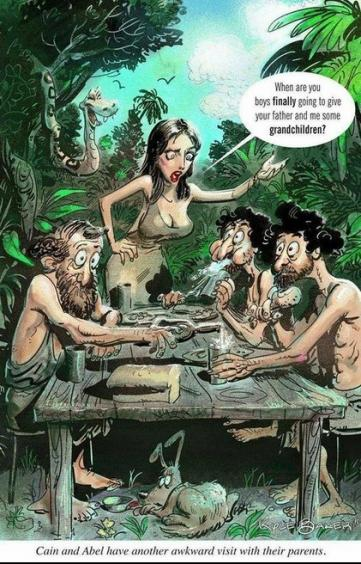


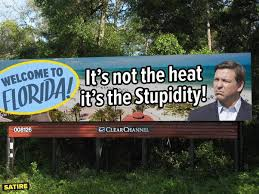
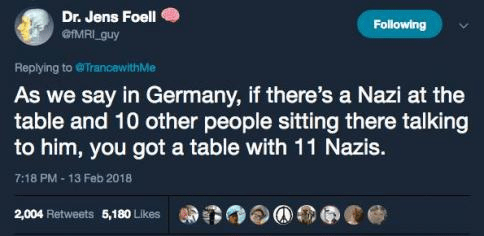
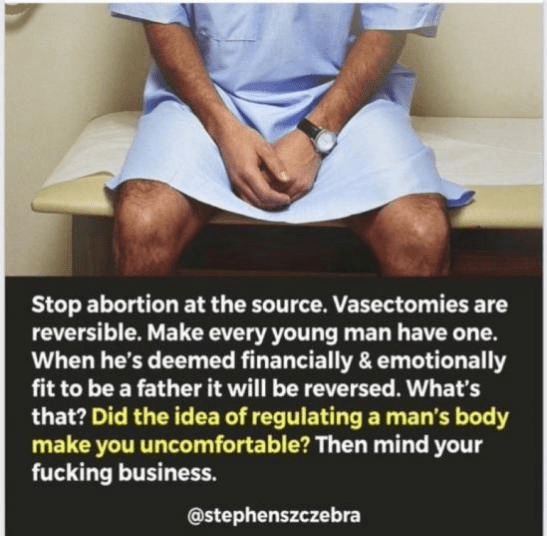
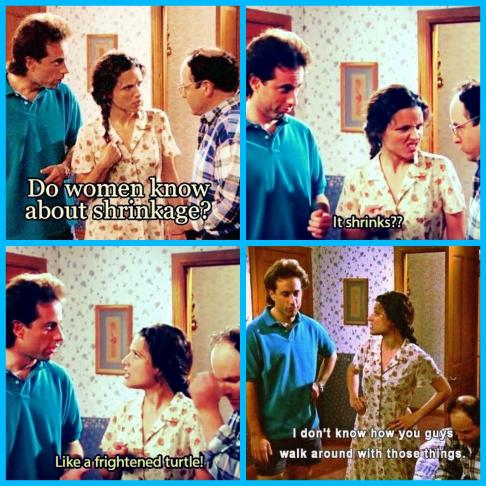

This used to be him. Hate does some strange shit to you…


A ‘new breed’ of charter schools is spreading Christian nationalism — at taxpayers’ expense
https://www.alternet.org/christian-nationalism-2661573247/
A ‘new breed’ of charter schools is spreading Christian nationalism — at taxpayers’ expense
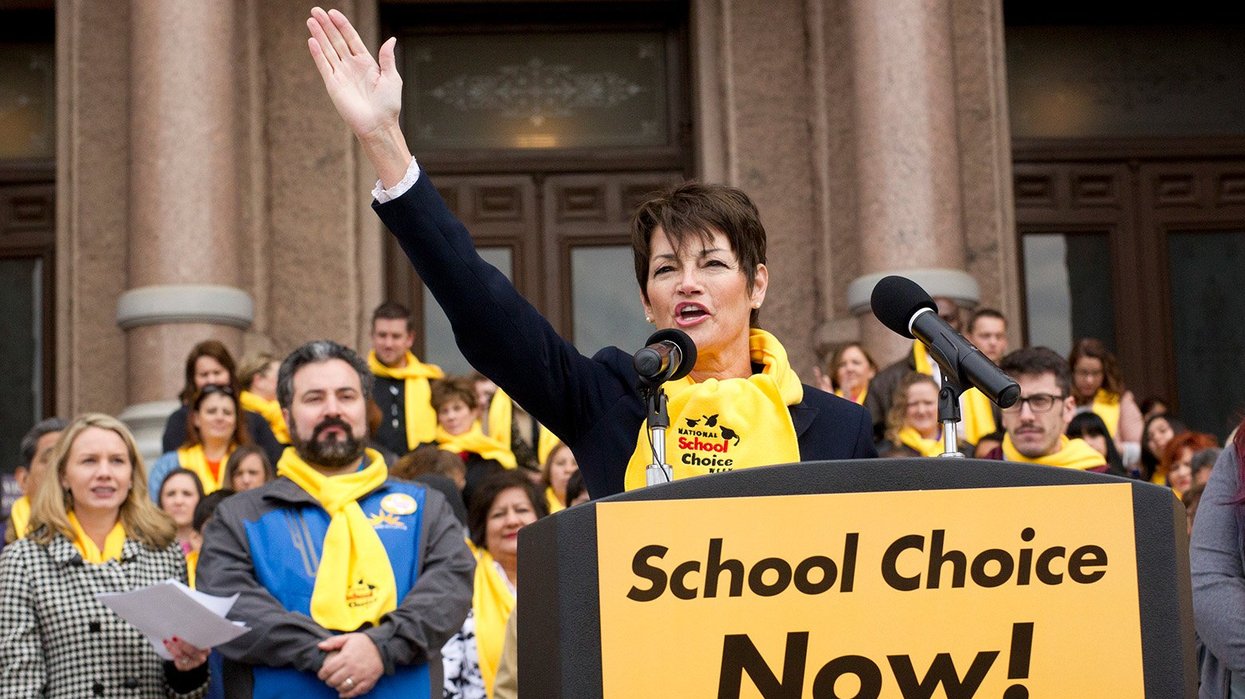
Texas Sen. Donna Campbell, R-New Braunfels, speaks as students, educators and policy makers rally for school choice at the Texas Capitol on Friday advocating a voucher plan where parents could choose to remove children from low-performing public schools into better charter schools. (Photo by Robert Daemmrich Photography Inc/Corbis via Getty Images)
Writen by Jeff Bryant and Independent Media Institute June 19, 2023
Charges that public schools are subjecting children to leftwing indoctrination are proving to be mostly over-hyped or not at all based in fact. Yet, there’s evidence, according to a new report, that a fast-growing sector of the charter school industry is engaged in indoctrination, only, in this case, the schools are instructing children in white, conservative ideology.
The report, “A Sharp Turn Right: A New Breed of Charter Schools Delivers the Conservative Agenda” by the Network for Public Education (NPE), finds that charter schools that market to families a “classical” or “traditional” approach to schooling are essentially catering to parents and politicians that follow “right-wing ideology.”
Using keyword searches, news stories from local and national media, and examinations of charter school websites and other resources, the authors claim to have “identified a representative sample”—273 currently open charter schools—that resemble their definition of what constitutes a right-wing educational agenda.
The report authors offer this number with the caveat that “we are confident there are schools and even chains we missed.”
Two principal criteria the authors used to determine the political leanings of the schools were whether they offered what’s commonly called a “classical” curriculum or a “back-to-basics” curriculum and/or whether the schools’ websites made politically conservative or religious references or were “designed to attract white conservative families.”
Other evidence the authors looked for to determine a school’s political orientation was whether the charters’ owners or founders had publicly stated overtly conservative political beliefs or had substantial connections to right-wing individuals or advocacy groups.
Some charters blatantly signaled their education agendas by, for example, having a cross on their buildings or exhibiting religious symbols or hyper-patriotic messages in school common areas.
The report also accuses this sector of the charter school industry of enrolling mostly white and middle-class and wealthy families and discouraging attendance of low-income and non-white families.
“Unlike the entire charter school sector, the overall student body of these charter schools is disproportionately white,” the report states, citing evidence from the 2021-2022 school year that “more than 52 percent of the students who attended these charter schools were white, compared with 29 percent of all charter school students. Nationally, nearly one in four charter students is Black. In right-wing charters, Black students comprise only seven percent of enrollment.”
Students who were eligible to receive free or reduced-price lunch, a typical measurement of poverty, were also under-represented in these schools, making up only 17 percent of students enrolled in these charters “compared with 48 percent of all charter school students and 43 percent of the students in democratically-governed public schools.”
Moreover, these schools are a growing presence in the nation’s education system since the election of Donald Trump as president. “Since the inauguration of Donald Trump, the number of classical and right-wing charter schools has grown by 90 percent with 66 more schools in the pipeline,” the report assesses. “Forty-seven percent of the schools we identified opened since [his] inauguration.”
The report challenges the notion that charter schools are a bipartisan or even progressive issue, as they are often framed, and calls into question whether public school tax dollars should continue to pour into the charter industry.
“Charter schools took a sharp turn right and now serve a purpose never imagined by their early proponents,” the report concludes. “[T]hese new laboratories of right-wing thought are flourishing with the silent accord of charter school supporters on both the left and right ends of the political spectrum.”
A Threat to ‘Upend American Education’
The report comes at a critical time as the nation’s first religion-based charter school has been allowed to open in Oklahoma.
Up until now, “[charter] schools [were] deemed public by state law, and must be secular just like any other public school,” according to Chalkbeat reporter Matt Barnum. Allowing a religious charter to open—in this case, an online charter school affiliated with the Catholic Church—“is a direct challenge to existing charter laws, which critics say discriminate against churches and other religious entities,” Barnum states.
“The prospect of religious charter schools threatens to upend American education, far beyond Oklahoma,” Barnum continues, contributing to “the successful conservative campaign to allow more public funding to go to religious education.”
Also hanging in the balance, Barnum writes, is a current U.S. Supreme Court case—Charter Day School, Inc. v. Peltier—that would potentially rule whether charter schools are public or private actors. Should the court rule that charter schools are private entities, the ideologically conservative charters that NPE examines in its report would not only flourish; they would become even more blatant in their instruction of right-wing ideology and more restrictive in denying non-Christian, non-conservative, and LGBTQ+ students to enroll in their schools.
Indeed, the charter school chain at the center of this supreme court case, the Roger Bacon Academy, is examined extensively in the NPE report.
The report calls attention to the daily oath students at the schools are required to chant, in which they pledge to, among other things, “[guard] against the stains of falsehood from the fascination with experts … and from over-reliance on rational argument.”
The report also notes that the schools run by the company “emphasize a ‘traditional curriculum, traditional manners, and traditional respect’—‘more like schools were 50 years ago compared to now,’ according to one of its board members.”
While these calls for “traditional” education can seem non-controversial, NPE warns they are a type of “dog whistle” to convey a right-wing political agenda and a marketing strategy to “attract conservative families with Christian nationalist identities anxious to place their children in schools that reflect early- and mid-20th century values, pedagogy, and curriculum.”
Dog Whistles That Signal Right-Wing Ideology
Among the dog whistles the report cites are uses of the word “classical” in the schools’ branding and marketing and promises on their websites and other marketing materials to “[emphasize] Eurocentric texts and the study of Latin and Greek.” The report says these are signals for attracting conservative families and discouraging families who’d want their children instructed in a broader range of viewpoints and perspectives.
In classical schools that have overtly Christian personae, “the curriculum focuses not only on the Western canon—Homer to C.S. Lewis—but also on scripture,” the report states.
Other dog whistles the report describes include the use of “red, white, and blue decor, patriotic insignia, white students and teachers featured almost exclusively on [the schools’] websites, and the generous use of the word ‘virtue,’” in their marketing.
These are meant to “signal to families which students would be a ‘good fit’ for the school,” the report states.
According to NPE, “more than 80 percent of the new classical charter schools have websites designed to attract Christian nationalist families.”
Another type of charter school the report designates as overtly conservative offers a “‘back to basics’ curriculum without necessarily identifying the curriculum as classical.”
These charters use a similar marketing strategy of “[including] right-wing clues on their website[s] to attract families with Christian nationalist beliefs. Such clues include red, white, and blue school colors, patriotic logos, pictures of the founding fathers, using terms such as virtue, patriotism, and even outright references to religion.”
Sometimes the dog whistles the report describes come from the founders or leaders of the schools. One example came from the founder of the Tulsa Classical Academy who said his school is “a school that’s about justice, not ‘social justice.’ Virtue, not ‘virtue-signaling.’ Objective truth, not ‘your truth’ and ‘my truth.’”
As a result of these marketing tactics, the NPE report finds, “[These charter schools] are whiter and infused with Christian nationalist leanings and aligned with right-wing leaders who make no secret of their plans to turn back progress.”
Schools With Strong Ties to Conservative and Christian Ideology
The NPE report also cites numerous anecdotes showing the strong ties that many of these charters have to conservative, Christian ideology and right-wing advocacy groups.
One example the report points to is Great Hearts Academies, a company operating an extensive network of 34 classical charter schools in Texas and Arizona. In 2018, the report notes, Great Hearts enforced a policy requiring students to use bathrooms “corresponding to the gender listed on their birth certificates.” The company eventually reversed the policy after students formed groups to protest the policy, according to NPE.
Also, Great Hearts launched a network of “micro-schools,” as alternatives to public schools during the pandemic, according to NPE, some of which are “located in churches.” And the company announced in 2023 that it was opening a network of Christian private schools.
Another charter school chain the report identifies as being a conveyor of right-wing ideology is the extensive network of schools operated by Hillsdale College and its Barney Charter School Initiative.
The report references a 2022 series of articles by Kathryn Joyce in Salon, that reported that Hillsdale College, a small private college based in Michigan, “has inconspicuously been building a network of ‘classical education’ charter schools, which use public tax dollars to teach that systemic racism was effectively vanquished in the 1960s, that America was founded on ‘Judeo-Christian’ principles and that progressivism is fundamentally anti-American.”
Hillsdale’s Barney Charter School Initiative, according to the NPE report, was started with funding from the Barney Family Foundation and the fortune of Stephen Barney and his wife Lynne, who control the foundation.
The report states, “An examination of the foundation’s 990s reveals that in addition to its health and child-centered charities, it also generously funds right-wing think tanks, foundations, and even organizations that exist to create right-wing model legislation. Beneficiaries include Americans for Prosperity, the Cato Institute, Hoover Institution, the Heartland Institute, State Policy Network, [EdChoice], and the Heritage Foundation.”
The Barney Foundation’s political leanings are reflected in the Hillsdale College’s curriculum, according to NPE. Hillsdale charters often teach the college’s 1776 curriculum, which, the report states, “disparages the New Deal and affirmative action while downplaying the effects of slavery. Climate change is not mentioned in the science curriculum; sixth-grade studies include a single reference to global warming.”
“Another feature of Hillsdale schools is the relative homogeneity of their student body: whiter and wealthier than public schools and other charter schools,” according to NPE. “During the 2021 school year, 66 percent of all Hillsdale-affiliated charter school students were white, and only 12 percent were eligible to receive a subsidized lunch, making Hillsdale charter families not only less diverse and more affluent than the public and charter sectors but even whiter and wealthier than the right-wing charter sector as a whole.”
What the Charter School Coalition Got Wrong
Although the NPE report asserts that the rise of right-wing charter schools “serve[s] a purpose never imagined by their early proponents,” it doesn’t fully explain how conservatives were able to hijack that purported original intent to serve their political means instead.
NPE credits the origins of the charter school idea to education professor Ray Budde, who, in the 1970s, had a “vision [that] states would give schools the authority to create innovative, experimental programs at existing schools.” But there is another origin story that more fully explains how charters became so vulnerable to right-wing co-option.
In her 2017 article for Democracy, journalist Rachel Cohen traced the origin of the charter school idea to, not Budde, but Ted Kolderie.
Cohen describes Kolderie as “quintessentially neoliberal” and a self-described “policy entrepreneur” who was “in the middle of discussions over school reform” in “the 1970s, ’80s, and ’90s.”
Under his direction, the Minnesota-based Citizens League, was “a powerful, centrist Twin Cities policy group,” according to Cohen, that advocated for “different ways to provide government services, including education.”
“One of Kolderie’s central ideas,” Cohen wrote, “was to ‘end the exclusive franchise’ of school districts providing public education. In several reports, he described the decline of public education as the direct consequence of public districts’ monopolistic power over schooling. His proposal: independent schools, accountable to parents through free market choice, and to the government through a set of contractual obligations. He specified that many different types of entities—universities, corporations, public school districts, nonprofits—should be able to manage these new schools, state law permitting.”
Among the proposals Kolderie and his organization pushed for was “cooperatively managed schools,” which Cohen described as being “strikingly similar to modern-day charters.”
Cohen described Kolderie not as a political operative but as a prominent leader of “technocratic centrists” who “focused on deregulation, disruption, and the hope of injecting free market dogmas into the public sector.”
Their vision, as Cohen described it, is that getting education right is not so much an ideological issue as it is about better systems engineering.
This vision, according to Cohen, was adopted by prominent policy leaders and politicians of both parties in the 1990s and brought about the powerful coalition of business leaders and moderate Democrats and Republicans that created and spread the charter school movement.
But what the charter school coalition got wrong is that education is not just about getting the system “right.” It’s also about values.
Sure, students need to learn how to read and do math. But students also need to learn how to interact with one another; how to care, not just for themselves, but for their fellow human beings; and how to contribute positively to their families and communities.
And if we want to live in a democratic society, that means teaching students about the values of an inclusive democracy that includes people of diverse cultures and beliefs.
But by creating an approach to education that was determined to be apart from, even opposed to, democratic values that are often imposed by public governance of schools, charter school proponents created empty vessels of education institutions that are void of the principles that are shared in a society that upholds a common good.
And we know what happens when there’s a void. As NPE’s report shows, the void is rapidly being filled by the same politically extremist faction that elected Trump and now threatens to impose an authoritative vision for the country.
“The only question that remains,” the report concludes, “is whether moderate, progressive, and liberal-minded voters and politicians recognize where the runaway charter movement is headed.”
This article was produced by Our Schools. Jeff Bryant is a writing fellow and chief correspondent for Our Schools. He is a communications consultant, freelance writer, advocacy journalist, and director of the Education Opportunity Network, a strategy and messaging center for progressive education policy. His award-winning commentary and reporting routinely appear in prominent online news outlets, and he speaks frequently at national events about public education policy. Follow him on Twitter @jeffbcdm.
FROM YOUR SITE ARTICLES
Weeks of news over hundreds of open tabs. I only have 0ne more open window with 39 open tabs and I will be caught up as of Saturday. Only taken three days so far. Hugs

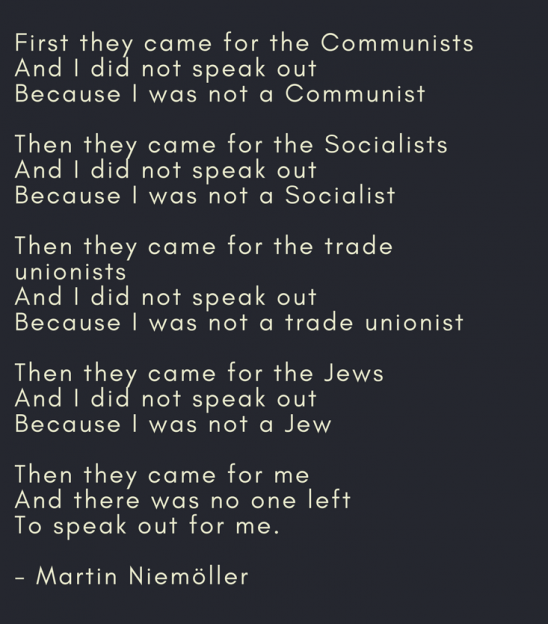
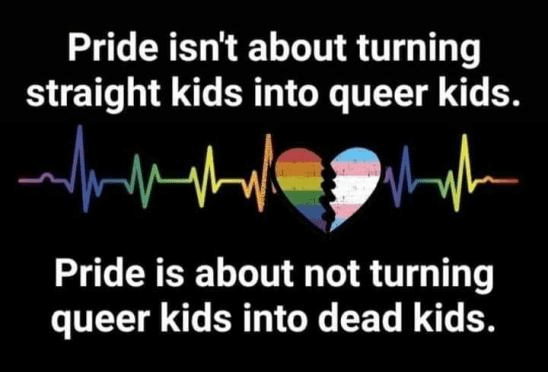
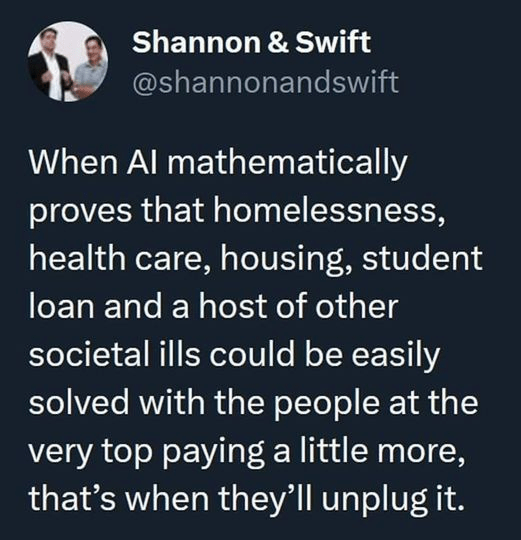

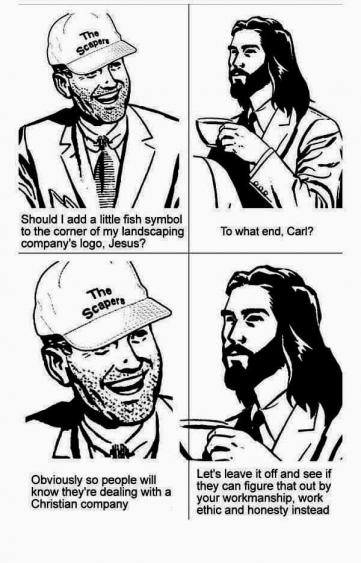






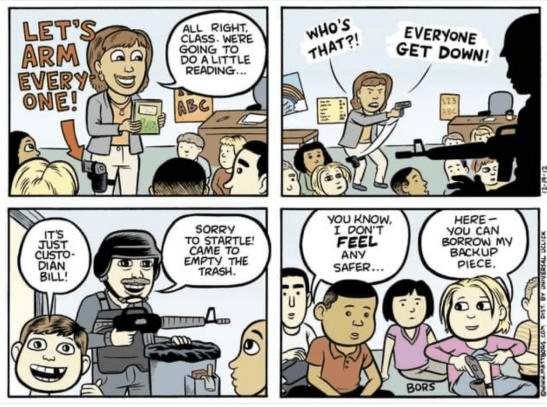



Next time, instead of arguing whether America was founded on ‘christianity”, ask them why it is so important for them to make their (incorrect) point.
Okay, we were founded on Christian principles of slavery, and women as chattel with no vote, natives were stripped of their land and other rights, and only white male property owners could vote. Not to mention child labor was rampant, the majority of the country were small farmers, divorce was nearly impossible and so on.
Hurray! What is you want NOW? You want to reinstitute all of that? No, they will likely say, they just want “Christian principles” reinstitute. Like what? Name them, specifically. They will be likely more in line with Christian nationalism — no LBGT rights, minorities voting is restricted, reduction in social safety net, more deregulation and so on.
So now you can drill down — what does Christianity have to say about laws that control pollution, radioactive waste, plastics in our food, chemicals in the water you drink? They will give you mumbo jumbo about freedom, and all that. “”So why do we have to be a Christian nation” to achieve your goals of less regulation?
What it will likely come down to is morals and values. Again, we can hit hard back — you mean no divorce? Because Jesus had a lot to say about it. Premarital sex? Birth control? IF you want to talk about morals, let’s talk about children going to bed or to school hungry, of which millions do. What about the homeless? Again, we don’t need Christian nationalism to tackle those issues.
It wil come down to nothing at all — just a vague desire to make people go to church more, pray more, and be more aligned with god or something. “So you want to force people to pray?”
I could go on, but you just have to nail them down on specifics. Hawley is just about control — they don’t want drag queens, people having wanton sex, abortion, and all that. Force them to admit that.


I remember in 2020 when they used the flag of the Russian Federation to decorate the Republican National Convention, which inspired me to make this meme.

Wintercat11 days ago edited
GQP ads constantly have Russian troops, ships and MiGs because they use creative agencies in Russia, because few US agencies often full of GQP intended victims will do work for them.
Creative houses use the stock images they have on hand. That’s why so much Russian stuff shows up in their ads.

Flora DeMann Stogiebear11 days ago
When children first are taught the letters of the alphabet, the letters are capitalized. Maybe the MAGAs never got farther than that.

Reminds me of the time Megyn Kelly got so flummoxed that Santa Claus was presented as black because in her worldview, Santa Claus was clearly white. What is it with conservatives and fictional characters?
Houndentenor Elagabalus2 days ago
It’s that thing when someone is so racist they can’t hear how racist they sound.
Chucktech Elagabalus2 days ago
See also: White Jesus
I found this picture of the real new Snow White online.

perversatile Rebecca Gardner2 days ago edited
Heads will crack open when they learn about the Black Madonna(s)

Tick Tock





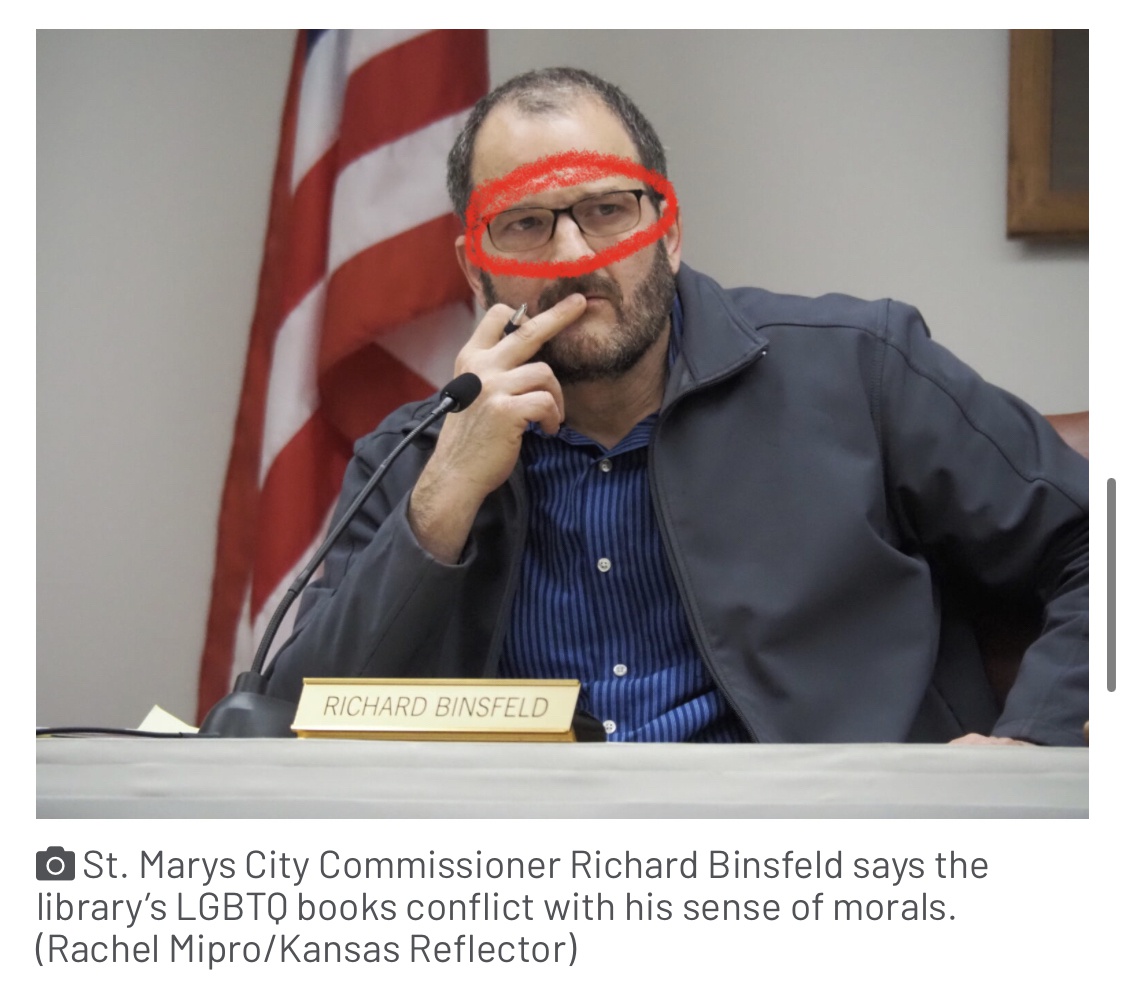
“Library staffers were deluged with harassment and a bomb threat.”







“God doesn’t make mistakes”
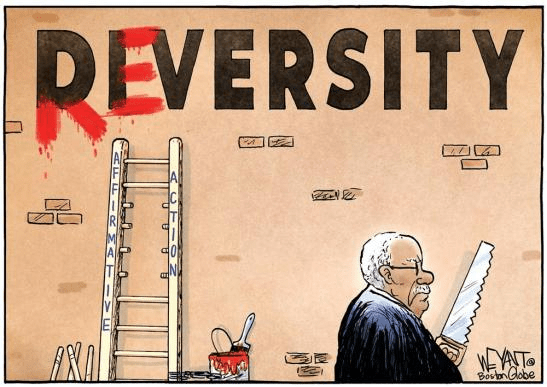
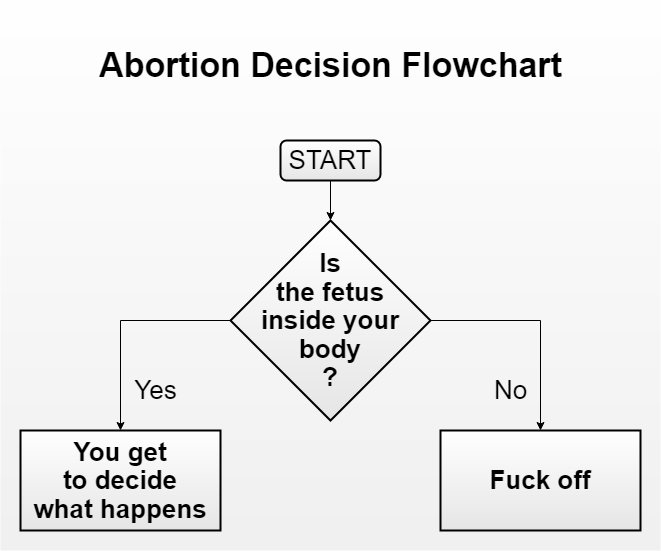
Abortion should be freely available at any stage of pregnancy, on demand, without apology.
Reposting:
“The very concept of sin comes from the Bible. Christianity offers to solve a problem of its own making! Would you be thankful to a person who cut you with a knife in order to sell you a bandage?”
― Dan Barker, Losing Faith in Faith: From Preacher to Atheist


The current law states that all persons either born in the US or (with few exceptions) legally resident when they turn 18, and identified as male at birth are required to register for the Selective Service when they turn 18, no exceptions. If you are an American citizen living abroad, you must still register. If you are a legal resident alien, you must still register. If you are in a prison or mental asylum, you must still register. If you are here under a diplomatic passport (say, a parent works at an embassy or consulate) or have a tourist or student visa, you do not need to register. People who were identified as female at birth are NOT required to register for the Selective Service, and in fact trying to register can get you in legal trouble for filing a “frivolous” legal document (not sure if it has ever been prosecuted, but it is in the regulations.)
If they are going to make transmen register, then they must also make transwomen exempt. They will also need to clarify at what point relative to the age of 18 this will kick in: is it enough to identify as trans, or will they need to have passed some benchmark in transitioning? What if a person comes out as trans after they are 18, but before they turn 25 (the age that your registration remains in effect)? And if transwomen are not exempt, they they should make registration mandatory for ALL 18 year olds regardless of gender identity: there is no longer any restriction from women serving in combat, after all. Maybe if their precious daughters are required to register, and fact the very serious penalties for not registering, we can finally get rid of this whole Selective Service idiocy once and for all.
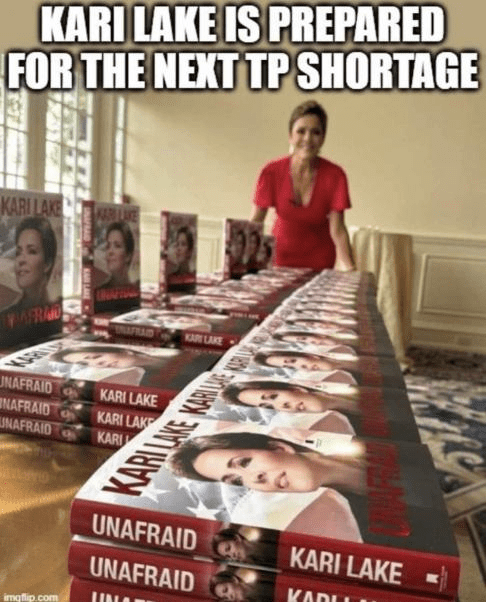

I guess it was done the same way the former idiot allowed a bunch of Russian spies into the building.

Because if you don’t acknowledge LBGTs exist, kids will stop being gay
This year in the U.S. the majority of books most often banned are by LGBT writers and writers of color.
Here’s a good report from the writers’ organization PEN on the state of censorship in the U.S.
https://pen.org/report/bann…

I think they claimed she was ineligible for some reason. And it was a provisional ballot and was not counted. Further it was a poll worker that told her to fill out a provisional ballot.


A couple great short clips Randy sent me
How a Saudi firm tapped a gusher of water in drought-stricken Arizona
https://www.washingtonpost.com/politics/2023/07/16/fondomonte-arizona-drought-saudi-farm-water/
Another example of out of control capitalism hurting the US people. This should be illegal, hurting US public to provide for a foreign government. Yet a large part of the Republican Party are paid by Putin to support the Russian position. How much longer will the US sell out our own country, our own people, our own needs? Hugs
Lax rules let the foreign-owned company pump water from state land to grow alfalfa for the kingdom’s cattle. After almost a decade, the deal is in jeopardy.
For nearly a decade, the state of Arizona has leased this rural terrain west of Phoenix to a Saudi-owned company, allowing it to pump all the water it needs to grow the alfalfa hay — a crop it exports to feed the kingdom’s dairy cows. And, for years, the state did not know how much water the company was consuming.
The lack of information was a choice.
Soon after the company, Fondomonte Arizona, arrived in the Butler Valley in 2015, state planners suggested asking the company to install meters and report its water use, according to a memo reviewed by The Washington Post. That way, the memo argued, the state could “at least obtain accurate information” on water drained from the valley — water that could otherwise serve as backup for booming urban areas.
But the proposal “hit a stone wall,” John Schneeman, one of the planners, told The Post. It was spurned, he said, by officials in the administration of then-Gov. Doug Ducey (R) who were “cautious of tangling with a powerful company.” The proposal also ran headlong into a view, deeply held in the rural West, that water is private property that comes with access to land, rather than a public resource.
The inaction was an early sign of how state officials gave leeway to Fondomonte as a global fight for water took root in the Arizona desert. Leaving water unprotected amid a drought worsened by climate change has been a boon to Saudi Arabia, where industrial-scale farming of forage crops such as alfalfa is banned to conserve the Persian Gulf nation’s limited water supply.
A Post investigation — based on government documents and interviews with public officials, ranchers in the valley, farmworkers, and townspeople who live near the alfalfa fields — found that Arizona’s lax regulatory environment and sophisticated lobbying by the Saudi-owned company allowed a scarce American resource to flow unchecked to a foreign corporation. To advance its interests before the state, Fondomonte hired an influential Republican lawyer as well as a former member of Congress. And it sought to win over its rural neighbors, providing a high school with donations that included Fondomonte-sponsored sports bags and face masks emblazoned with the company logo to protect students from covid.
93
ARIZONA
CALIF.
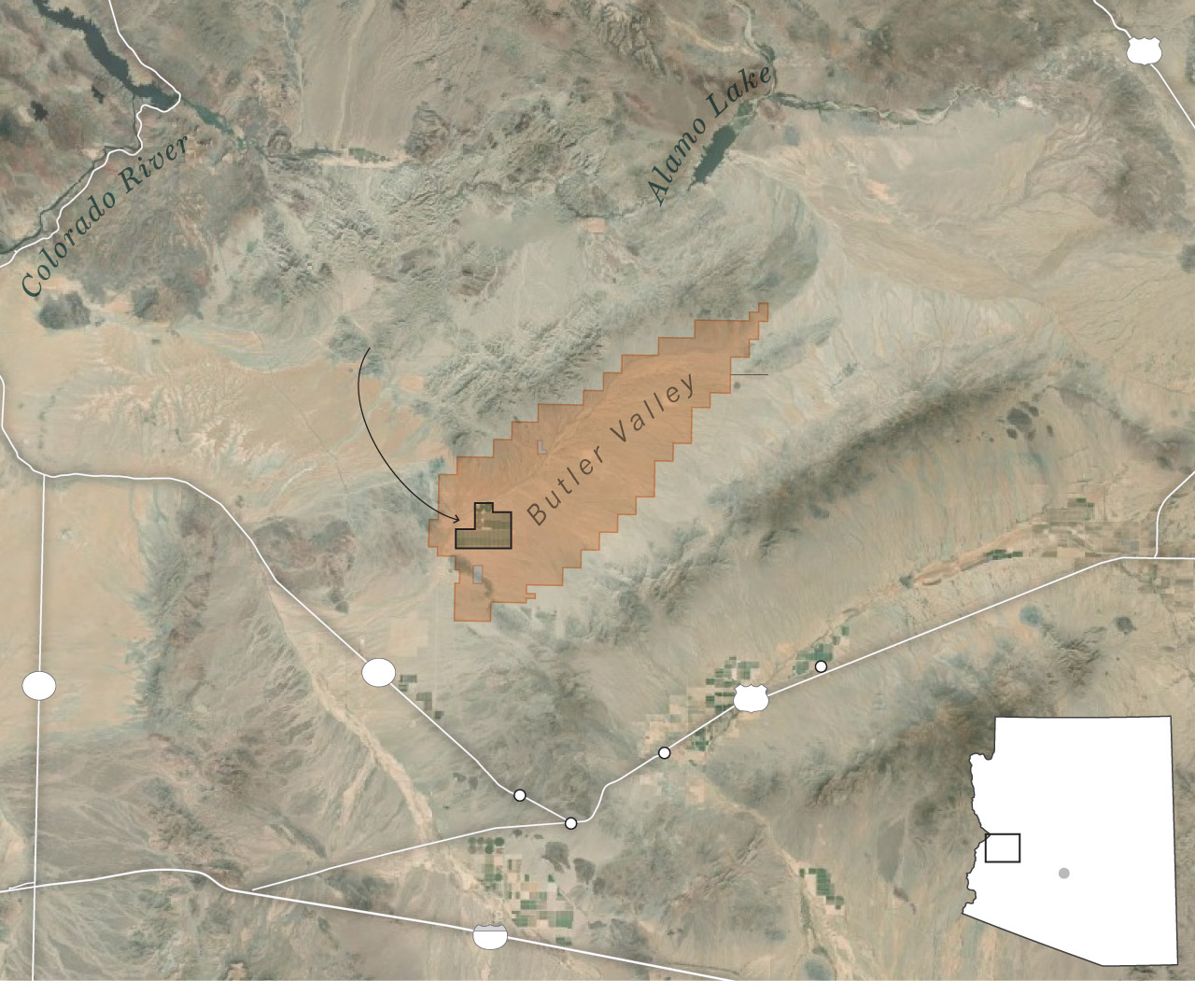
Fondomonte’s farm in the Butler Valley uses water otherwise designated for possible transport to the state’s population centers
State Trust Land
Love
72
95
60
Salome
Vicksburg
Arizona
Hope
Phoenix
10
HANNA ZAKHARENKO/THE WASHINGTON POST
David Kelly, Fondomonte’s general manager, said the company follows the same rules that govern farming operations throughout the state while going out of its way to save water and serve the community.
“All we ask is to be measured according to the same standards as every other farming leaseholder on state land,” he said in an email. “Fondomonte has developed Butler Valley to be one of the most efficient and highly productive farms in not only Arizona, but the entire Southwest. Our Butler Valley operation utilizes best-in-class irrigation technology and equipment with the oversight and diligence of an experienced management team.”
Fondomonte, he said, “should be heralded for its water efficiency.”
State officials now acknowledge that decades of farming and explosive growth have dangerously diminished Arizona’s water reserves. The rising scarcity has deepened rifts between urban and rural communities and turned Fondomonte into a political flash point. The company is hardly alone in using state-owned land to irrigate crops: Fondomonte holds four of the roughly 20 state agricultural leases across Arizona’s three major transport basins, where state law allows transfer of water to cities. But its foreign ownership and strict limits on water use in its home country have fueled outrage here.
Last month, the new governor, Democrat Katie Hobbs, unveiled a long-awaited study showing that groundwater in parts of the Phoenix area was insufficient to meet projected demand over the next century. Her administration also recently sought details about water use on state-owned land. Only after the state threatened to cancel Fondomonte’s leases last month did the company disclose how much it pumps annually in the Butler Valley, according to communications released as part of a public-records request. Its consumption is equivalent to that of a city of more than 50,000 people, experts said.
The governor’s aides are now preparing plans not to renew Fondomonte’s leases in the Butler Valley when they expire next year, according to a staff recommendation obtained by The Post. A decision has not been finalized. If Hobbs acts, a confrontation with the company could follow, with implications not just for foreign companies with interest in American natural resources but also for the future of agriculture as drought intensifies in the Southwest and cities clamor for rural water reserves.
The Saudi-owned farm has split the local community, where Holly Irwin, a La Paz County supervisor who has opposed Fondomonte’s presence for years, said that “foreign companies have come to take our water because they don’t have any left back home.”
But Fondomonte has unlikely allies, including a cattle rancher in the Butler Valley whose land abuts Fondomonte’s farm. Boyce Andersen said he generally is “an ‘America first’ type of person” but is now just as concerned about the valley’s water being “taken by Phoenix” instead of flowing to livestock and crops. He faulted Arizona, not the foreign-owned firm, for the grim trade-offs facing the state.
“Why did our government leadership allow this to happen?” he asked.
A Saudi conservation strategyFondomonte’s lush alfalfa fields represent a decades-old Saudi strategy.
An American engineer, Karl Twitchell, who cut his teeth in Arizona’s copper mines, served as an adviser to the first king of Saudi Arabia and led a U.S.-sponsored agricultural mission to the kingdom in 1942. That mission set in motion a years-long process of adapting desert farming methods honed in the American Southwest to similar conditions in Saudi Arabia.
Fondomonte’s parent company, Riyadh-based Almarai, was founded three decades later by a Saudi royal and businessman, Mohammed bin Saud Al Kabeer, and two Irish brothers. The food and beverage giant is still chaired by a member of the Saudi royal family. In 2011, it acquired Luxembourg-based Fondomonte, which was operating farms in Argentina at the time, capitalizing on rising global food demand.
The following year, the company incorporated Fondomonte Arizona and soon moved into La Paz County, one of the poorest and least-populated parts of the state. In 2014, it paid $47.5 million to purchase nearly 10,000 acres in Vicksburg, a town of about 500. In 2015, in the nearby Butler Valley, Fondomonte took over several agricultural leases, for the below-market rate of about $25 per acre. Those leases, totaling 3,500 acres of state land, will expire in February 2024 if not renewed.
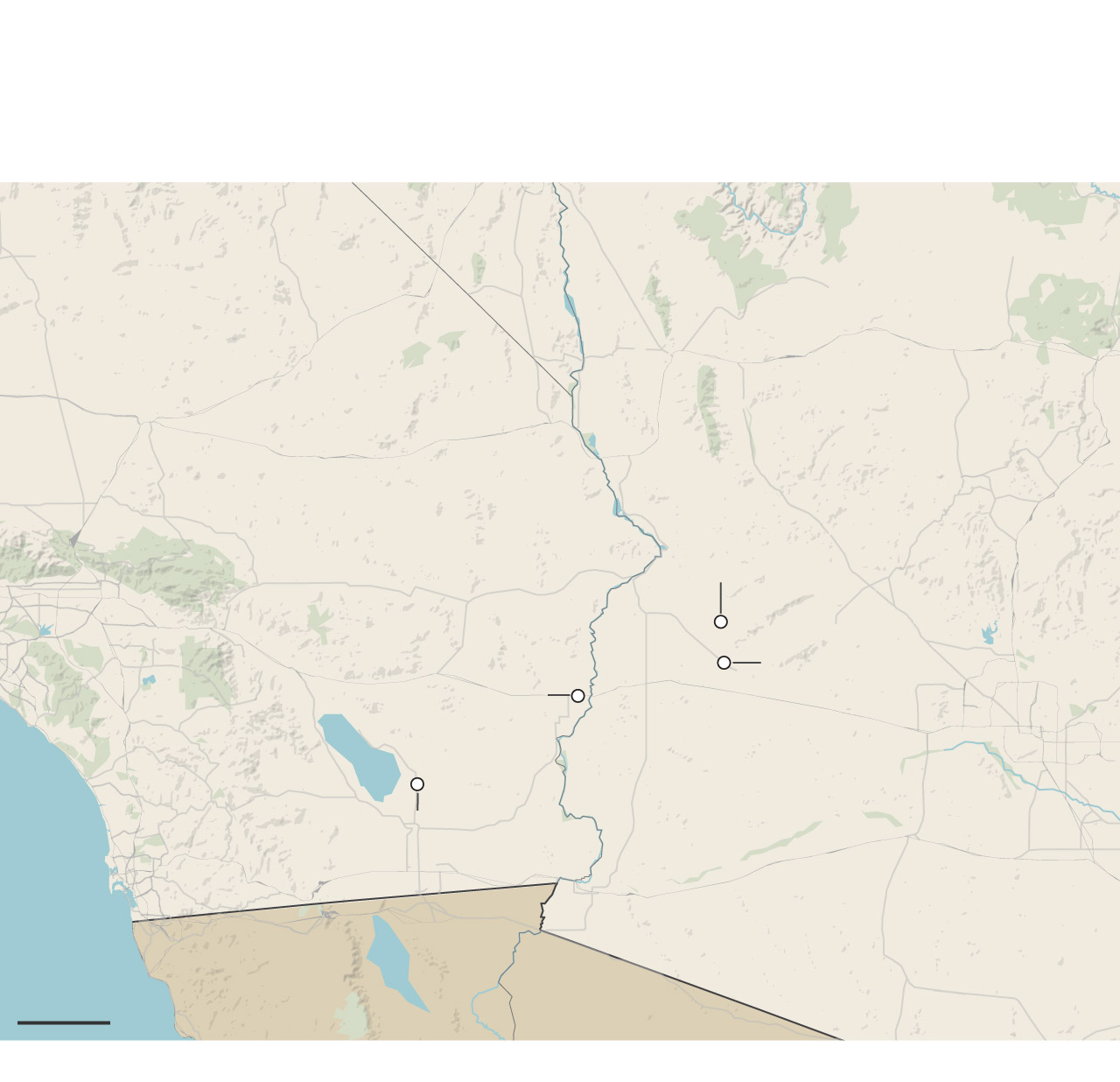
Fondomonte also expanded to California, eventually purchasing more than 3,000 acres across the border from Arizona, near the town of Blythe. Its farming operation there is built on another precious water source, the Colorado River, a key artery for several states that governments have allowed to dwindle to dangerously low levels amid hotter, drier conditions and chronic overuse by farming regions in the Southwest.
640
MANDATORY SIZE
Fondomonte’s footprint
In Arizona, the company has farms in the Butler Valley and Vicksburg, while its California operation includes farmland near Blythe and a hay processing and storage facility in Calipatria.
NEVADA
ARIZONA
CALIFORNIA
Butler Valley
Farms
Vicksburg
Farms
Blythe
Farms
Phoenix
Calipatria
Hay processing
San Diego
U.S.
MEXICO
30 MILES
HANNA ZAKHARENKO/THE WASHINGTON POST
To advance its interests in Arizona, Fondomonte hired Jordan Rose, a lawyer and land-use specialist who leads one of the state’s top lobbying shops. Rose, a former finance chair of the Arizona GOP, helped run Ducey’s inaugural committee when he was elected governor in 2014. Ducey soon named her to a committee developing state groundwater policy, according to her website.
Rose later told an agribusiness trade association that Fondomonte “chose to invest” in La Paz County because of its favorable conditions for growing alfalfa, according to emails obtained through a public-records request. Those conditions include an average 310 sunny days per year and the ability to have a fresh cutting almost every month.
The Saudi firm’s arrival in Arizona showed how trade liberalization and improvements in transportation and logistics have allowed companies to control arable land all over the world and manage scarcity back home. Rising global food demand has put pressure on freshwater resources sucked from the ground in such large quantities that, according to a recent study, the Earth’s tilt has shifted.
In a 2014 corporate report, Almarai celebrated that Fondomonte’s expansion in Arizona put the company on track to import 100 percent of its animal feed — part of a “strategy for conservation of the Kingdom’s water resources.”
By contrast, Arizona groundwater is unregulated across rural swaths of the state. That includes the Butler Valley, bordered by the Buckskin Mountains to the northwest and the Harcuvar Mountains to the southeast, forming a 288-square-mile expanse known as a basin because of the water lacing underground sediment. Agriculture is possible in the valley, smack in the middle of the Sonoran Desert, thanks only to the water drawn through wells like soda through straws. Because of minimal natural recharge and scarce rainfall, water pumped from the basin is essentially mined, with no replacement.
The area is significant as shortages deepen because it’s one of the few basins from which water can be transported to growing urban areas. And the Butler Valley, where Fondomonte is the lone company leasing state land for agriculture, is key to planning because most of the land there is government-owned.
A failure to planArizona land planners raised alarms soon after Fondomonte’s arrival in the Butler Valley.
In the 2015 memo, state planner Schneeman and three others argued that Arizona was squandering a key water supply that could one day slake intensifying urban thirst.
A 2012 study had found that the basin held about 22 million acre-feet of water, or enough water to cover 22 million acres to a depth of one foot; but estimates have varied widely, with the volume also pegged at about 6.5 million. That would still be enough to supply all single-family homes in the Phoenix area for about 14 years. Whatever the exact supply, it was being sucked away every day by water-intensive crops.
A lot of money was on the line. The state was receiving about $50,000 a year by leasing the land to Fondomonte, the memo noted, but could make at least $1.2 million a year by selling the water to thirsty Phoenix. Such transfers are rare and procedurally complex, as well as deeply controversial, breeding resentment in rural parts of the state.
At the very least, the planners argued, Fondomonte should tell the state how much water it was pumping in the Butler Valley. Fondomonte, the memo advised, “may claim they are being unfairly singled out.”
The memo was addressed to Ducey’s land commissioner, Lisa Atkins, who did not follow its recommendations, Schneeman said. Kelly, the Fondomonte manager, said the company installed meters of its own accord but had not disclosed its consumption because its leases do not require such reporting.
Atkins said she could not remember the memo and declined to comment. Ducey, who recently launched a group promoting free enterprise, also declined to comment.
Two months later, as the Saudi-owned farm came under local criticism, Tom Buschatzke, the water resources director appointed by Ducey, published an op-ed telling readers of the Arizona Republic, “Don’t freak out about Saudi alfalfa.”
“Those folks have as much right as any other individual in the state of Arizona to grow their produce, grow their crops, sell them, export them,” he told the Associated Press at the time.
Emails obtained through a public-records request show that Buschatzke received a note of praise from Rose, Fondomonte’s lobbyist. He thanked her, writing, “I know certain parties will continue to push at us on this.” Buschatzke declined to comment for this article.
Others in the state felt that Fondomonte was the one pushing — outmaneuvering understaffed agencies as it repeatedly made requests to add hay barns and employee accommodations while altering state land with new high-powered wells. Fondomonte’s leases entitle the company to reimbursement from taxpayers for certain upgrades — a sum that stands at about $7.4 million in the Butler Valley, company representatives say.
“My conclusion is that we should either cancel these leases or somehow get compensated for the staff time,” Chuck Vencill, a leasing specialist with the state’s land department, wrote to colleagues in 2016. He added that monetary penalties were “largely ineffective” because of the company’s wealth.
Kelly said the company’s upgrades were necessary for “a first-class farming operation with the best available technology.” He stressed that all improvements were approved by state officials and argued that the process was onerous only because the state “may not have been accustomed to its ag lessees being willing to invest in that level of improvement.”
A farm’s worthFiguring out the value of Fondomonte’s farms falls to La Paz County’s assessor, whose findings determine how much the company pays in taxes that support public schools and emergency services in the hardscrabble area.
County Assessor Anna Camacho and her small staff have struggled to keep up with Fondomonte’s upgrades, she said, because of infrequent access to the farms and the sophistication of the company’s equipment.
After a site visit in 2017, county appraisers decided that the cash value of the company’s operations had jumped from $7.8 million to $32.9 million. But Camacho said her office is still woefully undervaluing the company’s assets, on its owned and leased land alike.
Wells in particular are “extremely undervalued,” wrote one of her employees in 2019, in an email released as part of a public-records request. Handwritten notes on appraisal documents reflect difficulty understanding the fast-growing enterprise. “Housing?” a county official scrawled in pen on a valuation document for one parcel.
Eager for an accurate inventory of the company’s hay barns, Camacho took to the skies above Fondomonte’s farms in her husband’s Cessna plane last year to survey the property. She said she would like to audit all agricultural properties but does not have the resources to do so.
Fondomonte, whose consultants say the company has invested more than $270 million in its farms since arriving in Arizona, paid about $650,000 in taxes and other assessments to the county last year, records show. Kelly said Fondomonte has always been transparent with appraisers and pays its taxes “based on the assessed value of our assets.”
The company also is paying a modest rate to use state land. A 2018 study commissioned by the land department found that the market price per acre in La Paz County was $125, five times the amount Fondomonte was paying, according to a copy of the study, which was first reported by the Arizona Republic last year.
Current and former state officials said low land rents are not unique to Fondomonte and are meant to ensure that the land is leased and generates revenue. Kelly said Fondomonte has never negotiated rental rates but simply accepted the terms set by the state.
The real value of the land lies in the water underneath the desert terrain. Since 2015, state officials periodically have returned to the idea of asking leaseholders to report their water consumption, according to emails and interviews.
Repeatedly, they faced stiff opposition, not just from Fondomonte, but also from domestic farming and ranching interests, and from conservative state lawmakers, who believe water is a commodity controlled by individual property owners, not a resource to be managed collectively. Rusty Bowers, the former Republican speaker of the Arizona House, who was associated locally with his interest in water policy before becoming known nationally for resisting Donald Trump’s entreaties to overturn the result of the 2020 election in Arizona, said he was sympathetic to the opposition to metering and reporting water usage.
Farmers and ranchers, he said, worry that the state will one day divert water for public use. “Once it’s metered, it’s going to be taken,” he said.
A company townAs scarcity sets in, Fondomonte is working hard to show locals the advantages of having a wealthy neighbor.
Andersen, the rancher who leases the acreage surrounding Fondomonte’s Butler Valley farm, has come to depend on water trucked from the company’s Vicksburg land after a shortage declaration on the Colorado River meant he no longer was allowed to siphon water from a diversion canal snaking through his ranch.
“Saudi Arabia is hauling water into that tank right there for us,” said Andersen, in a denim work shirt and with white hair poking out from under a cowboy hat, as he gestured at a 10,000-gallon storage tank.
Later, he corrected himself: “They want me to say ‘Fondomonte.’” Company leaders active in Arizona are all American or European, and Andersen said he has never met one of the farm’s Saudi owners.
“I would have preferred it was an American rancher” using the land, he said. “But, truthfully, there wasn’t an American rancher who was rich enough to be able to do what these guys have done.”
The company also has used its resources to supplement deficient public services in the area, building goodwill in the tiny towns that surround its fields.
One town is called Love, named for a veteran of World War I. Another is named Hope, where a sign advises departing travelers that they’re “now beyond hope.” And then there’s Salome, where local legend tells of a woman by that name who walked barefoot on the hot desert floor, dancing to her destination and giving the town the slogan “Salome — where she danced.”
On a mountain peak overlooking each town is the first letter of its name, painted in bright white. The paint for the “S” in Salome was paid for by Fondomonte, according to emails released by Salome High School.
The emails show how the high school, home of the Frogs, benefits from Fondomonte. When the company promised a $2,500 donation, the school’s superintendent and former athletic director, Kari Avila, wrote, “I want to cry right now lol.”
The school helped identify prospective employees for Fondomonte — in warehouse, field, maintenance, welding and construction roles, as well as for office duties that required a “good work ethic,” as Fondomonte’s commercial director, Padraig Lawlor, wrote to Avila. Company managers sought out Spanish lessons through the school and gained permission to use the weight room. “We need to get fit,” Lawlor quipped in an email.
Avila declined to comment. Kelly said multiple senior company managers live in La Paz County and value their ties to the community. (They did not use the school weight room, he said.)
Local tensions riseFondomonte says it employs 225 people at its farms in Arizona, making it one of the largest private employers in La Paz County. The workforce is supplemented by dozens of seasonal workers brought in on temporary visas from Mexico and the Philippines.
Three current employees who work the company’s alfalfa fields in Vicksburg said they complete 10-hour shifts, from 7 a.m. to 5 p.m., six days a week, with no overtime pay.
“All employees are compensated fairly and equitably in compliance with all local, state and federal labor laws,” said Kelly, the general manager. “Fondomonte prides itself as a quality employer within the communities in which we operate and the wider agricultural sector, and we provide industry-competitive pay and benefits packages for our employees.”
Some employees live in a sprawling trailer park arranged along dirt roads stippled by cactuses. Residents of these trailers say they have faced regular water interruptions, requiring them to buy bottled water and haul buckets to wash themselves.
“We go to Salome and fill up gallons of water, and we shower with that,” said Sebastian Esparza, 15, who lives in the trailer park across the road from Fondomonte’s Vicksburg farm.
Problems are plaguing the town of Salome, too. The well at a budget motel there is dry, locals said.
The drought punishing Salome and other parts of the Southwest began in 2000 and has resulted in what experts say is one of the region’s driest periods in the past 1,200 years. The warming atmosphere has scorched landscapes, diminished the snowpack and reduced the amount of runoff that makes it into the major reservoirs that sustain Arizona and Southern California. Although this past winter was unusually wet, scientists predict that water shortages will intensify as the climate continues to warm.
Local engineer Jim Downing, who manages the distribution of electricity to farms in the area, said Fondomonte has been unfairly singled out and cannot be blamed for all nearby water shortages, because different valleys have distinct aquifers. But pumping by Fondomonte and its predecessors in Vicksburg has affected adjacent wells, Downing said.
“They can impact other people’s wells, and they have,” he concluded.
Kelly, the Fondomonte manager, said the company doesn’t pump water in the towns with the most acute shortages and so can’t be blamed for interruptions there. “Water in the Southwest has always been an emotional topic, and we understand some individuals in the media and politics find benefit in blaming Fondomonte for regional water challenges,” he said.
The company’s foreign ownership adds to the outrage some locals feel. Andy Granger, a retired machinist stopping for groceries in Salome, said his view of Fondomonte “sounds racist” but can be summed up this way: “foreign people coming in and tapping into our resources and making a profit.”
Local anger is reaching a boiling point, warned Steve Hilsz, a former telephone repairman. As more and more people find their wells drying up, he said, “we’re going to have civil war out here.”
A complaint goes nowhereThe community’s anger is channeled by Irwin, a Republican and one of three elected supervisors in La Paz County. Because revenue generated from state land goes toward public education and other beneficiaries, the “discounted rate they’re getting on those leases takes away from the education of our kids,” she said during an interview at a diner in Salome.
Fed up, she sought an investigation last summer by the state’s then-attorney general, Mark Brnovich, a Republican.
Days later, Brnovich’s office assigned La Paz’s county attorney to review the complaint, according to emails released as part of a public-records request. But a deputy county attorney, Jason Mitchell, told The Post that the office did not act. “Unfortunately, we were not able to look into the issues since, as a small office, we lacked the resources and an investigator to thoroughly do so,” he wrote in an email.
Irwin soon gained a new ally. During a campaign news conference last summer outside the state land department, Kris Mayes, a Democrat running to succeed Brnovich, vowed to investigate Fondomonte’s leases.
“We can’t afford to do dumb things with our water anymore,” Mayes, who took office in January, said in an interview. “And allowing a Saudi-owned corporation to stick a straw in the ground and pump millions of gallons of water to grow alfalfa for their cows in the Middle East is nothing short of outrageous.”
Fondomonte also mobilized. In August, Rose, the lobbyist, emailed what she called “some facts about Fondomonte” to an agribusiness trade association. She ticked through details of the company’s conservation methods and its impact on the regional economy.
“The fact that this farm has been singled out over all other similar sized State Land Dept farm leases that are sending crops overseas or to other parts of our country seems xenophobic at best,” she wrote.
This year, Fondomonte commissioned an economic and fiscal impact report from a Scottsdale-based consulting firm, according to records obtained by The Post. Fondomonte’s annual business activities in Arizona and California, the memo asserted, support 2,761 jobs, nearly $173 million in wages and more than $475 million in economic activity.
The company also stepped up its outreach to state lawmakers. Emails show that former congressman John Shadegg (R-Ariz.), a lobbyist newly hired by Fondomonte, sought a meeting in January with the chair of the state House’s natural resources committee, saying he was “assisting Fondomonte Arizona in its efforts to correct the misrepresentations that have been made.”
Shadegg did not respond to a request for comment, and Rose referred questions to the company.
When Hobbs took office as governor in January, she signaled that she would take on Fondomonte. In her State of the State speech that month, she pointed to a “Saudi Arabian conglomerate pumping local groundwater nearly unchecked in La Paz County” as evidence of a need to overhaul the state’s approach to groundwater management.
“We all know that’s not right,” she said.
Fondomonte took notice. Kelly, the general manager, sent a letter to the governor the following month warning her against targeting Fondomonte.
“Hasty decisions, based on misinformation, could drive Fondomonte out of Arizona and could imperil operations of all of the other farms operating with similar leases around the state,” he wrote. “Fondomonte would continue its operations in other states or other parts of the world, but hundreds of Arizona jobs and positive economic input would be wiped out and the negative implications for Arizona’s agriculture industry will be enormous.”
Meanwhile, Mayes, the new state attorney general, was putting pressure on other state agencies. During a Feb. 17 meeting, described by people present, she sharply criticized the leadership of the state land department, asking, as one person recalled, “What have you been doing for the past eight years?”
A looming showdownIn April, the land department wrote to leaseholders in the state’s transport basins saying it was conducting an analysis at the governor’s request and asking them, at long last, to provide detailed information about their water usage. At first, Fondomonte refused, responding in May that its leases did not require the company to track or disclose water usage.
But this time, Arizona’s land department insisted. On June 21, the state replied that it had the authority to obtain such information and noted that other leaseholders had voluntarily complied. The state gave Fondomonte nine days to release the data, vowing to “pursue any and all remedies,” even possibly “cancellation of your Leases.”
Fondomonte relented, telling the state that it had used 16,415 acre-feet of water last year at its farm in the Butler Valley. That’s enough to cover about 12,500 football fields with a foot of water. But Kelly said the amount is as much as a quarter less than the quantity used by the company’s predecessor in the valley.
The back-and-forth could be a prelude to a bigger break as the governor’s office draws up plans not to renew the company’s Butler Valley leases, specifically citing the importance of the basin’s groundwater as a backup for Arizona’s population centers. The company would continue to own land in Vicksburg and hold a lease in that area that runs until 2031.
The plans, which have not been finalized, would impose additional changes in transport basins, including the short-term extension of other leases combined with rent hikes, metering requirements and charges for water management. The goal, documents show, is to address the political anger over Fondomonte’s leases while not alienating other segments of the agricultural community.
The governor’s spokesman, Christian Slater, declined to comment on discussions about Fondomonte but said Hobbs was pursuing a “comprehensive and aggressive approach to managing our state’s water resources.” Kelly said the company was looking forward to continued discussions with the state.
The planning documents indicate that the governor’s office doesn’t know exactly how much water remains in the Butler Valley. But the documents say the results of a new study are imminent.
Schneeman, the state planner who first raised his concerns about Fondomonte in 2015, said he feared that any move now may be too late, after the state failed for years to put the water to its best use.
“That use,” he said, “would have been to conserve for the future.”
Alice Crites and Andrew Ba Tran contributed to this report.

