If you read the law it lets anyone claim to be offended by any media and that it doesn’t need to be declared obscene to be labeled obscene. Why is that? Because to a small group of very vocal haters just the existence of LGBTQ+ people is obscene. It offends their god so it offends them. But don’t try to claim the Bible is obscene or pushes offensive stuff it has special carve outs that make all the icky bad parts OK. I hope this will be appealed to the full appeals court as this attempt to errase an entire population of people based on bigotry must not be allowed to stand. I also just read where the education department under the hypermaga education secretary will not be enforcing or even recording the bullying and abuse of the LGBTQ+ kids at school. Her view is let the little fagots fend for themselves it seems. Remember she and her husband turned a blind eye to the many young boys being sexually assaulted by the wrestlers in their group.
Also the majority of the three judges panel said that the three patrons did not have standing to object because no books had been banned yet. They seem to have a wait and see if the victim is stabbed before taking the knife from the threatening person. That is stupid. Everyone knows what the law is intended to do and the writers of the law admit that openly. It seems the tRump appointed judges want to let attacks on the librarians and on the books that mention gay, lesbian, bisexual, transgender, non-binary, and questioning kids / people be removed as soon as possible knowing it is harder to put them back than to ban them in the first place. Hugs.
The “social section” in Crawford County Library’s Van Buren branch (Screenshot from court documents)
A federal appeals court ruled Thursday that Arkansas’ 2023 law restricting access to library materials can go into effect, three years after a judge blocked two sections of the law on First Amendment grounds.
The three-judge panel from the 8th U.S. Circuit Court of Appeals in St. Louis ruled that the 18 plaintiffs had no standing to challenge one section of Act 372 and failed to prove that the other section was unconstitutionally vague.
The two sections create criminal liability for librarians who distribute content that some consider “obscene” or “harmful to minors,” and give city and county governing bodies the final say over library content.
Republican Attorney General Tim Griffin praised the ruling, saying it “allows Arkansas to move forward in enforcing a law that protects children from obscene materials while increasing accountability for public-library curation decisions.”
The plaintiffs challenging the law include libraries, bookstores, advocacy groups and individual library patrons. Their lead attorney, John Adams, said in a statement that the legal team is “evaluating all available legal options, including further review by the courts,” after Thursday’s ruling.
“Libraries and bookstores should be places where people can freely explore ideas — not where booksellers and librarians face criminal liability for selling, checking out, or even just shelving constitutionally protected books,” Adams said. “The freedom to read is fundamental to a free society and has always been protected by the First Amendment.”
Griffin said Act 372 was meant to “to address legitimate concerns about minors’ access to obscene materials and to establish a process for reviewing challenged content.”
School and public libraries already had content challenge policies before Act 372. The law stalled in the Legislature in 2023 before it was amended to say library materials would be relocated to an area inaccessible to minors, not removed from the premises, if elected officials find them to be “obscene.”
Section 5 of Act 372 allows city and county governing bodies to relocate challenged material if a challenger disagrees with a library panel’s decision to keep it in its original section.
Another section of the law that gave school boards the same authority over school library materials had not been challenged.
Adams told the appeals court in June that Crawford County, a defendant in the case, showed what the law’s restrictions would look like in practice. The county’s five library branches separated LGBTQ+ children’s books from the rest of the collection after public outcry, and county officials cited Act 372 as a reason to maintain these “social sections,” even before the legislation became law.
Crawford County lost a separate federal lawsuit in 2024 after three parents alleged that the “social sections” violated the First Amendment.
The three library patrons who sued over the state law do not have standing because Section 5’s book challenge and relocation policies do not harm the plaintiffs, the appeals court panel said Thursday.
“Plaintiffs are speculating libraries might decide to segregate certain books as part of their curation policies, which they have not yet adopted, or in response to challenges, which have not yet been filed,” the panel wrote.
The librarian and bookstore plaintiffs have standing to challenge the other section of the law because they would be at risk of prosecution for noncompliance, according to the ruling, but the three judges disagreed with Adams’ claim that Section 1 of Act 372 was too vague.
This section makes “furnishing a harmful item to a minor” a Class A misdemeanor. Conviction would lead to a maximum prison sentence of one year.
U.S. District Judge Timothy Brooks wrote that the law’s lack of a definition for terms like “furnishing” and “harmful” could lead to violations of the First Amendment right to freedom of speech.
An unchallenged provision of Act 372 removes schools and public libraries from the part of Arkansas state code that previously exempted them from prosecution for disseminating obscene content. Another unchallenged provision made school and public library employees liable for a Class D felony if they “knowingly” distribute obscene material or inform others of how to obtain it. A Class D felony conviction carries a maximum prison sentence of six years.
However, the language of Section 1 “limit[s] its application to situations when a person knowingly furnishes an item to a minor knowing of the item’s harmful character” and therefore is not too vague, the appeals court ruled.
Chief Judge Steven Colloton wrote in a concurring opinion Thursday that he understood the plaintiffs’ vagueness claim but disagreed with it “because third-party library patrons have no constitutional right to receive unfettered access to books of their choice at taxpayer expense.”
Colloton was appointed to the court in 2003 by then-President George W. Bush and has been chief judge since 2024. President Donald Trump appointed the panel’s other two judges, Ralph Erickson and L. Steven Grasz, in 2017.
Erickson was on the three-judge panel in April that allowed a 2023 Iowa law to go into effect, requiring the removal of books containing “descriptions or visual depictions of a sex act” from Iowa public school libraries.
The removal of the injunction on Act 372 comes as the Arkansas Department of Education has been considering requiring public libraries to restrict children’s access to “sexually explicit materials” in order to receive state funding.
Dozens of Arkansans told the education department in June that they oppose requiring libraries to ensure patrons age 16 or younger cannot check out materials that depict or describe sexual contact and behavior.
The Arkansas State Library Board will meet Aug. 14 to consider sending the rules to a legislative panel for further approval. Republican Gov. Sarah Huckabee Sanders appointed all six board members.
Author Info
Tess Vrbin
Tess Vrbin came to the Advocate from the Arkansas Democrat-Gazette, where she reported on low-income housing and tenants’ rights, and won awards for her coverage of 2021 flooding and tornado damage in rural Arkansas. She previously covered local government for The Commercial Dispatch in Mississippi and state government for the Columbia Daily Tribune in Missouri.
Arkansas Advocate is part of States Newsroom, the nation’s largest state-focused nonprofit news organization.
Perhaps a silver lining in this day of hate and corruption masquerading as patriotism is the crashing realization that one day we will leave this world. Many will stumble upon a very uncomfortable discovery that their friends and neighbors would not be so very sad to see them go.
I write this today having found out that my neighbor passed away last night. She was one of those people who very acerbically met life on her own terms: loud, bitching about seeming everything, but loving anyone in need and being one of the funniest people I’ve every met – if unintentionally. And, further, she liked my dog and my dog liked her, so –
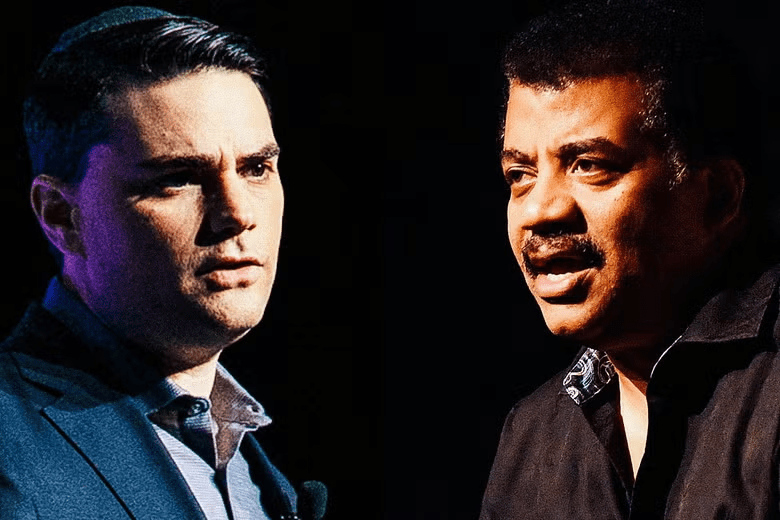
I recently had the opportunity to watch some of the interview/debate of Neil DeGrasse Tyson on Ben Shapiro’s show. Ben was really trying to push this idea that Neil could speak on the science of transsexuals’ gender, etc. One of the greatest things I took from that was Neil asking him what he was really attempting to accomplish with his banging of the gong? ‘We supposedly live in a free country. No one is obliged to be more masculine or more feminine for you, and they have no right to ask it of you’, he said.
That one line from Neil completely changed how I heard the interview. I realized that Ben spoke with a quickness and decisiveness that projected strength to those who are desperate to hear it – but was really a desperation to control something that wasn’t his to control. I found myself asking Neil’s questions of Ben, and others who seem intent to dictate how people live, how people love. What drives this desperation to dominate others? What is in that morning mirror that scares people so that the only way they can manage is to be sure others meet their rules and expectations rather than find their own?
When I think on those people like Ben Shapiro, Donald Trump, Marjory Taylor Green, Mike Lindell, Rudy Giuliani, Jeff Sessions, their lives are often filled with beautiful arm candy, money, and a dark heart that destroys them in time. Like a poison they’ve taken in, living a life of hate and corruption seems for them like a recipe for eventual disaster. But, like moths to a flame, repeatedly do these people line up to destroy their peace, their credibility, their future until only regret and hate visit them.
As a country, we lost something special and unique when Donald Trump became more than just a spectator and buyer of the political tragedy. Somehow ignorance became a virtue, and being loud meant you were right. Intelligent conversation and caring about others became synonymous with communism, or whatever the boogieman is now. Somehow we in America are supposed to despise the poor and glorify the wealthy, told it is the height of patriotism. We lost our light, and now it seems we can only find our path by blindly swinging at those stuck with us in this morass.
My apologies to everyone on today’s post that was to go out today. I tried; I really did try. I got up full of energy and made lunch, breakfast, lunch, and supper while working on the post. But the more I tried to do stuff, the more pain I ran head-on into. So I gave up and went to bed late at night, after 7 PM, and I got up at 3 am to finish. But as I sat in my chair, I just couldn’t accomplish anything to get everything done. I really tried. So when Ron got up, O made him and I breakfast, and we enjoyed that. I made potatoes, bacon, sausage, and fried potatoes I made the night before. But no matter how hard I tried, the more pain I was in. Then the pain got so bad I had to go to bed in agony. I slept for most of the morning after 8 a.m. Then I got back up at noon and tried again. But then I tried again. Every time the pain built, I had to get back up to move from the desk. So I decided maybe moving to doing the laundry while working might help. It did not. It is 4 pm and I just cannot do it today. I just couldn’t sit at my desk and the more I tried, the more I needed pain medications, which made me more tired. So I am giving up. I will schedule the post for the morning. I do apologize; there is simply nothing I can do. I just had surgery last Tuesday to help with the pain in my back and the damage to my spine. As they say, the spirit is willing, but the body is weak. I love doing the posts; I love not onlyly putting them out for everyone, but it sometimes gets to be too much. Especially during the middle of the week. But tomorrow I have an appointment with my surgeon, and the surgery went well. So I will make the post extra long to make up for the lack of the posts today and yesterday.
Oh, since I have been back on my feet, I have been trying to do more to help Ron so he can do more to rebuild the house. That means more laundry, more housework, and more meals. Hugs. Scottie.
I recently had a somewhat uncomfortable conversation with my Dad. At 88-years old, he is understandably considering what comes next, and knowing that I’m a ‘blowhard democrat and therefore think I know everything‘, lol, he made it part of my own considerations – at least out loud. But, as we talked, I began to realize that how we look at “what comes next” truly inspires how we view this thing called life, what we value and hold dear.
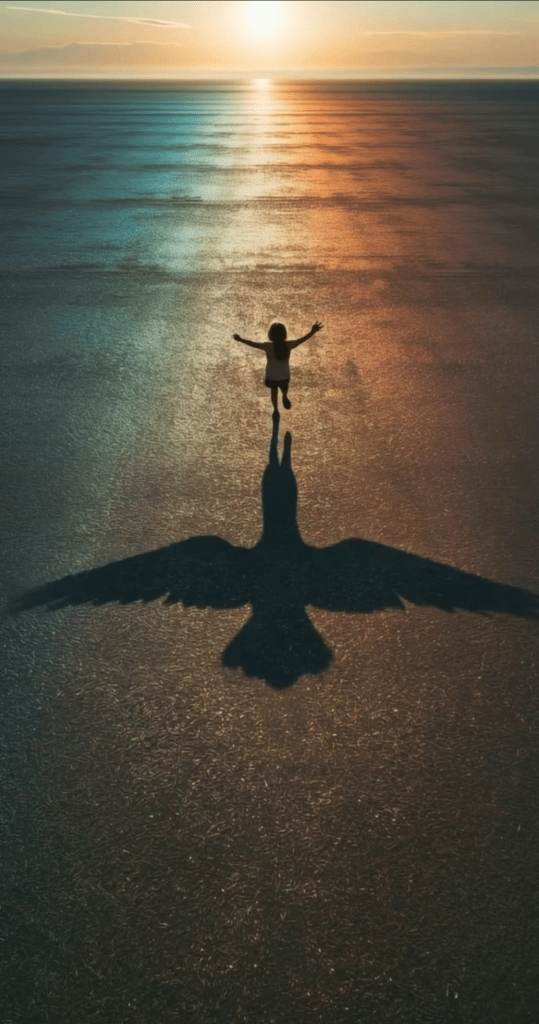
When I was much younger, I had the opportunity to read Jonathan Livingston Seagull by Richard Bach. I think I’d like to read it again. It was a story that had a great impact on a young troubled life, and while I am sure I didn’t get nearly as much from the book as was offered, I still carry some of that book within my thoughts nearly 35 years later. Chief among those ringing ideas was the consideration that we are on this world to be excellent, to fly free and powerfully, to be our best selves. It is an idea that gives me hope and conviction on the same blade, for I’ve not made much of myself. What I have done, perhaps better late than never, is I’ve begun to understand what is important to me and I’ve tried to adjust my life accordingly.
During my studies of different religions, I found a great deal of beauty. It is probably shocking to some, but Muslims have a beautiful religion filled with dedication to their God, peace and humility. I recently heard a person of influence, a politician, say publicly that he “hated the Muslim religion”. I thought that was tragic. He has painted a billion people with a the same brush and feels fully justified in his self-righteous hate. His words did not influence me to hate Muslims, they only brought me sadness. Here is a man who hopes to profit by hate, and I can only imagine what those wages bring.
Over the years, I’ve come to find a lot of hope in the Christian Faith, but I don’t find myself deluded into thinking that the Bible is definitive or that the Pulpit is infallible. Clearly humans have left their mark on both, and both have gained their insecurities and foibles. Unfortunately, most religions are marked by the greedy and deluded powerful who are sure that they know what is best for everyone and damned be those who disagree. As a result, parishioners lose their search for what is beautiful and magnificent in whatever may come next. They instead follow a set of rules, a kind of club, a group identity. They have given up on God and hope only to please the pastor and Sister Bertha Betterthanyou. They have forsaken courage to seek for the safety of the flock.
Perhaps this is just what we are. How many of us are caught in this idea that by hating someone else, we are somehow doing as God would want? I would be very curious to ask them what they value, and then would I be so brave to ask how their spoken values reflect their current words. Do they value freedom, or just their own freedom? Do they value love, or only for those like them? Do they value hope, but do performative acts some man told them would get them into Heaven? Do they seek or are they comfortable in being told what to think, what to feel, what to do? Do they look for what comes next or are they seeking identity and safety in a church, a political movement, in the acceptance of someone seeking to control them?
I don’t know what I would tell Dad if he asked me again. I don’t think the answer is in religion, any religion. I do think there is something that comes next, what I would loosely if respectfully refer to as God, and if I could quote Ghandi I’d say that God is not restricted by any single religion. I want to believe that this beautiful thing called life doesn’t end. I want to believe in Love. I want to rest in Hope. I want to live a life absolutely riddled with awe at how fabulous humanity can be, rather than live a life of judgement and insecurity. And, when I regard my final days I hope I am looking forward with eager anticipation for all the wonders I will experience.
I barely got the cartoons / memes /news post out for the morning of the 13th on time. I have been struggling the last four days. I set my alarm and pulled my old ass out of bed this morning even though Ron protested I need far more sleep and I managed to get today’s cartoons / memes / news post out around noon my time. It takes 6 or more hours to put it together as I have to sort them as I put them in the post page. And if something comes up that needs to be inserted before hitting the post I have to work that in. I am not complaining. I love doing them and it seems many love seeing them. There are over 60 separate web pages with each having many things on each one.
Yesterday I went back through the comments and opened a new tab for everyone I could see addressed to me and a few to Ali that caught my attention. I really do love the comments. I will be honest if I could have a blog of just comments I would do that and not post. I love the interaction with people, and yes even with people I disagree with.
So today dealing with everything else I got the first one out. I listened to the mostly biased bulls**t corporate broadcast media and grew ever more upset over the lies and misinformation.
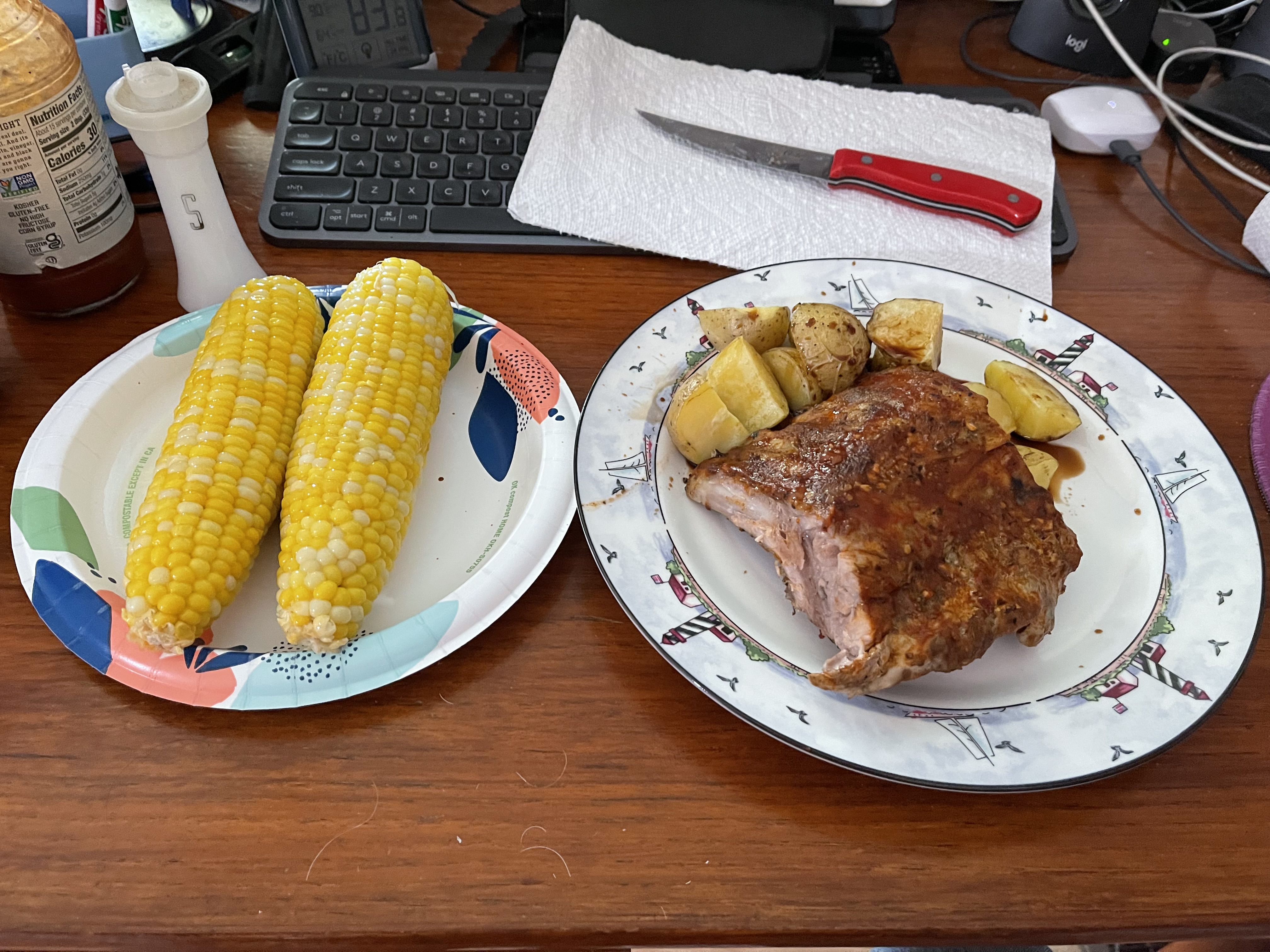
Then I started on the cartoons / memes / and news post for tomorrow. At some point Ron told me we had to do supper and we had agreed on ribs, ear corn, and small new potatoes chunked. As time for supper came near Ron had me take my blood sugar and because I am eating so little / infrequently it was 72, below what my endrochonoligest wants for me because of my pain levels. He again explained to me that the kind of pain I have causes my body to produce blood sugar to protect itself.
We started to eat. I ate two ribs, about four potato chunks and started on an ear of corn when I got so sleepy and tired. I couldn’t finish. Ron came to the door of my office and saw me sort of dozing over my plate and demanded I go to bed. I pointed to the nearly eaten ear of corn and the rest while pretending I had not fallen asleep. He asked me to eat the small amount of corn left on the ear as he knows how much I like that and then reached in front of me and took the plate with the other stuff away.
He has already set the bed up for the pile of cat towels that rest close to me on the king size bed because Ron’s cat Tupac clings to and cuddles me at night. But the multiple layers are needed because he is incontenate and when he wakes up noticing he is lying in his own pee soaked towels he will nudge me to remove them so he has fresh clean towels to then lie back down on. Why me and not Ron?
Tomorrow morning I have a pain doctor appointment where I hope they will be able to give me enough trigger point steroid injections that I will be able to walk again. After that I will try to finish the post I started today, but it will have to be after noon my time as my appointment is for 10 am. Plus I have new information on Ron’s eye surgery as well as mine.
I apologize to everyone for being so weak that I cannot get these posts out on time. My health has gotten so much better and I am starting to grow hair and fingernails again. I have more energy than even a month ago, but I still get so very tired that I need to go to bed at weird times. For example I was working on posting something a few days ago and suddenly I had to go laydown for an hour / half before I could get back up to finish it.
Thank you for understanding, especially about the comments. Please keep sending them in on posts even if you feel I have not responded. I try to go back through the WordPress dashboard to open those I missed in new tabs. I do miss some and if you think I missed your comment you want me to address please send it to me again. I am not ghosting you; I am just very tired.
Best wishes to everyone and hugs / love to all who want them. I really care about people and the people here seem like grand people to care about. Scottie