There is no CC for this one. But the voice over is clear and strong. I like the message of this short video, and I also love to bake and I must get me one of those cake stands. Scottie
A scene from “1-800-273-8255”Photo: YouTube screenshot
The 2017 music video for rapper Logic’s song “1-800-273-8255” may have saved hundreds of lives, a new study found.
The song’s title is the phone number of the U.S. National Suicide Prevention Lifeline. Its video showed a gay Black teen calling the number after being outed and receiving homophobic abuse by his track-and-field teammates.
The video gained attention for its unique story and also the celebrities who appeared in it. It featured Nickelodeon star Coy Stewart as the gay teen, Oscar-nominated actor Don Cheadle as his father, Modern Family’s Nolan Gould as his boyfriend, Emmy-nominated actor Matthew Modine as his boyfriend’s father and the boys’ dads and award-nominated character actor Luis Guzmán as a supportive coach.
The study, published in the December 2021 edition of the British Medical Association peer-reviewed trade journal BMJ, looked at suicide data from the U.S. Centers for Disease Control and Prevention (CDC) and the number of calls into the U.S. National Suicide Prevention Lifeline from the start of January 2010 until the end of December 2018.
It also looked at Twitter posts to determine the amount of attention that Logic’s song received. It found that the song received the strongest amount of public attention right after three events: the video’s initial August 17, 2017 release; the August 27, 2017 MTV Video Music Awards; and the January 28, 2018 Grammy Awards. Logic performed the song at the two latter events.
In the 34-day period following all three events, the Lifeline received 9,915 more calls than it had on average during 34-day periods in the years before. These calls were a 6.9 percent increase over the number of calls usually expected.
Furthermore, in the 34-days after these three events, there were 245 fewer suicides nationwide than usually experienced during the same time-spans in previous years.
The study’s lead researcher — Thomas Niederkrotenthaler, an associate professor at the Suicide Research Unit at the Medical University of Vienna — said his findings support the idea that media messages can have an impact on suicide prevention and crisis management, according to Psych Central.
However, Niederkrotenthaler also concedes that other factors may have contributed to the increase in Lifeline calls and reduction in suicides that his research team observed. But while Logic’s video may have saved lives, research also suggests that media reporting of suicides and suicide myths can increase suicide rates.
Regardless, the study suggests the importance and positive impact of promoting suicide lifelines in popular media. This could especially help LGBTQ individuals, who experience suicidal ideation and attempts more than the general public.
A 2016 research review by the Williams Institute revealed that 17 percent of LGB adults have attempted suicide, compared to 2.4 percent of the general population. Additionally, 82 percent of respondents to the 2015 U.S. Transgender Survey said they had seriously considered suicide at some point in their lives, with 40 percent reporting having attempted suicide at some point.
On the youth side, the Trevor Project’s 2021 National Youth Mental Health Survey found that 42 percent of LGBTQ youth seriously considered suicide in the past year, including more than half of trans and non-binary youth.
I am not a music listener normally. I prefer podcasts about current political events. But I did listen to the song and it was good. I was worried it would be head banging hard to understand the lyrics too much base song, but I was surprised. The video was riveting, and I am glad to see so many big names in it. The times they are a’ changing. Scottie
Switzerland has an encouragingly nuanced perception of gender, according to a new poll, with more than eight in 10 Swiss people agreeing that there are more than two genders.
Just 18 per cent of people are convinced that there are “only men and women”, according to research based on a survey of nearly 2,700 Swiss residents that was carried out by the Sotomo research institute on behalf of the Gender Equitable platform.
The research found that while most people identified as men or women, the idea of non-binary identities is becoming an increasingly mainstream concept.
Despite an overwhelming number of respondents seeing themselves as clearly male or female – 99.6 per cent – the survey found that people’s perception of gender is increasingly nuanced, with only 14 per cent of men considering themselves “exclusively male” and just six per cent of women saying they are “exclusively female”.
Twelve per cent of people surveyed said they are equally feminine and masculine.
The researchers also looked into how important gender is, finding that a person’s political leanings influence the importance of their own gender to them.
While 55 per cent of respondents said that gender is important or very important for their own identity, among men there was an ideological divide. Sixty-two per cent of right-wing men said being a man is important to them, while only 12 per cent of left-wing men said the same.
Women found gender more important than men did, with 60 per cent of female respondents admitting that gender “shapes who they are”, compared with 49 per cent of men.
Non-binary awareness growing as Switzerland brings in self-ID for trans citizens
Under the new law, which will go into effect on Saturday (1 January), anyone over the age of 16 and not under legal guardianship will be able to change their gender marker and legal name by self-declaration at a civil registry office.
Current rules on changing gender markers vary by region in Switzerland, but many often require a certificate from a medical professional confirming a person’s trans identity, according to Reuters.
Some require a person to undergo gender-affirming surgery or hormone treatment to legally change gender. If a trans person wants to change their name, some regions require proof that the chosen name has been unofficially used for several years.
Arizona state Republican Sen. Wendy Rogers has proposed Senate Bill 1045 to prohibit medical procedures that affirm the gender identity of children and teens who are transgender.
The law would ban medical staff from performing gender-affirming surgeries on transgender minors as well as prescribing testosterone to transgender men or estrogen to transgender women under the age of 18. Health professionals who do so would be guilty of a Class 4 felony, with a prison sentence of one to three years.
Senate bill 1045 also states that teachers, school staff, and administrators cannot “withhold from a minor child’s parent or legal guardian information related to the minor child’s perception that his or her gender or sex is inconsistent with his or her biological sex.” This would ultimately force teachers and schools to oust trans and gender non-conforming students to their parents, even at the student’s potential peril.
This proposed bill follows suit with a bill that was ushered in Texas in April 2021, one that did not pass during its legislative session.
Leading health care organizations in the state condemned the bill, including the Texas Medical Association, Texas Counseling Association and Texas Pediatric Society. The organizations all say gender-affirming care is the best way to provide care to transgender children. The American Psychiatric Association, the American Academy of Pediatrics, the American Academy of Child & Adolescent Psychiatry and others have agreed for years that gender-affirming care is the best path forward for trans youth.
Despite the common misconception, trans youth do not get surgeries either. Gender-affirming surgeries are not performed on anyone under the age of 18 in the United States.
According to the World Professional Association for Transgender Health (WPATH) guidelines for standards of care, a candidate must be age of majority in their given country (18 in the United States), and also must have received 12 continuous months of hormone therapy as appropriate to the patient’s gender goals (unless the patient has a medical contraindication or is otherwise unable or unwilling to take hormones).
Trans youth do not receive surgeries. That is not what gender-affirming care is. Gender-affirming care is more along the lines of social transitioning and hormone therapy, such as the use of puberty blockers (a treatment that is also reversible, if necessary).
Gender-affirming care saves lives
Studies have proven that both hormone therapy and social transitioning have been proven through studies to be beneficial for transgender youth— a group that is at an elevated risk of suicide due to bullying and lack of school social support.
A most recent study in 2021 found that hormone therapy has a positive effect on trans youth, reducing their risk of suicide.
Other studies have found there is a significant inverse association between rendering treatment with pubertal suppression during adolescence and lifetime suicidal ideation among the transgender adults who wanted such treatment. These results align with past literature, suggesting that pubertal suppression for transgender adolescents who wanted it is associated with favorable mental health outcomes.
Another study by the American Academy of Pediatrics reached the exact same conclusion.
It is also important to note that not everyone who is transgender can fully transition or wants to fully transition, either. The trans community often faces significant obstacles to acquiring health care, either due to lack of employment opportunities or to health insurers choosing not to cover vital healthcare procedures for transgender people.
“Access to transgender health care is challenged further by laws and policies across the country that codify myths that the care is risky, cosmetic or monolithic. For example, the federal Medicare program excludes coverage of sex reassignment surgery, deeming it “controversial” and “experimental,” despite decades of research supporting its effectiveness. Exclusions like this one are rampant in the private insurance context, with many large insurance companies excluding all coverage for “sex reassignment treatments” or equivalent care.”
Access to gender-affirming care is quite difficult in most countries, especially in the United States. Conversely, while it’s difficult for people in the trans community to access gender-affirming care, some trans people just want to socially transition, and studies show the benefits of social transitioning.
What is social transitioning and how does it help transgender people?
A social transition involves a child presenting to other people as a member of the “opposite” gender in all contexts (e.g., wearing clothes and using pronouns of that gender).
Previous studies about gender-nonconforming kids who weren’t allowed to transition found they experienced high levels of depression anxiety. A 2017 study published in the Journal of the American Academy of Child and Adolescent Psychiatry found that allowing social transition can be greatly beneficial to the mental health of trans youth.
Another study published in 2018 found that calling a student by their chosen name is linked to reduced depressive symptoms, suicidal ideation and suicidal behavior among transgender youth.
Rogers’ attempted ban on gender-affirming care as detailed by the evidence would lead to more harm than good for gender clinicians and the youth under their trusted hands. Forcing teachers to oust students to their parents and also blocking the beneficial healthcare trans youth see as necessary and vital to their livelihood has been shown to be the antithesis to what will help trans youth.
When a bill similar to the one in Arizona passed in Arkansas (the first one of its kind), one doctor, Dr. Michelle Hutchison, raised the alarm that a bill like Arizona’s SB1045 would lead to more suicide attempts by trans youth — and it turned out to be true. Arkansas saw an increased rate of suicide amongst trans youth immediately after it was passed.
“It is dangerous,” said Ryan Starzyck, a local business owner and former board member of the local LGBTQ group Phoenix Pride. “It is deadly because if (children) don’t have the foundational information, if they have nobody they can turn and oftentimes is the only one they can turn to is the professional at school before, (the legislature) is laying the foundation for students suicides.”
Starzyk also said it reminds him of the bullying he constantly faced in the military for being gay.
Rogers also has proposed a bill to ban trans students from playing sports based on their gender identity, as a way to block trans girls from playing sports. That bill would also mandate a medical review of a student’s anatomy, hormone levels and genetics if the student’s biological sex is disputed while seeking to participate in sports programs at public and private schools, community colleges and state universities.
She authored this bill despite the fact that the Arizona Interscholastic Association (AIA) said that girls in school sports are not facing disadvantages because of their transgender peers, an assertion that flies in the face of the AIA’s policies on transgender athletes.
The scare over trans people in sports is a made up myth to generate outrage. The bathroom scare is losing its ability to gin up rage so they moved on to women’s sports. These people who did not support women’s sports in anyway before are now suddenly the fierce protectors of the women. Reason says the fear of trans women winning all the time leaving other women out is misplace because it is not happening. From the Olympics on down to local sports transwomen are not winning all the contests. They simply are not. Where they do win they spend the time and effort to be better. The funny thing about those who want transwomen banned is they never mention all the times trans people lose, they only make a big deal of the few times a transwoman won. Scottie
A school district in Pennsylvania has introduced new rules that ban gender identity books from its libraries.
According to a report from WHYY,employees within the Pennridge school district were notified about the rules by an email from the Assistant Superintendent of Elementary Education, Anthony Rybarczyk.
“The district is requesting that library book with content regarding gender identity be removed from the current elementary circulations,” the email stated.
The email went on to say that the removed books will be reviewed for “sensitive topics involving foul language, intense violence, gender identity, and graphic sexual content.”
After this process, the selected titles are then “placed in an area” by counsellors and only available to parents or guardians upon request.
“Developmentally, these topics should always involve conversations between the student and trusted adults, both at home and at school,” the email continued. “Creating this resource library will ensure that our students are fully supported.”
On top of removing these informative books, the district also unveiled another set of strict guidelines regarding students pronouns and names.
In an additional email, the school district’s Director for Pupil Services – Dr Cheri Derr – said the terms “related to LGBTQ+” should not be discussed with elementary students.
The new regulations also said middle and high school students who request a change to their name or pronouns must supply “parental permission.”
Parents and students within the school district have since come out and condemned the new rules.
Witold Walczak, who is the legal director for ACLU Pennsylvania, said the policy “raises very serious concerns” regarding a student’s privacy and safety.
“From a policy perspective, you’re setting these students up for a situation where there is no adult that they can talk to,” Walczak told WHYY.
“Very often in these kinds of situations, parents are not an option. Sometimes parents are the problem.
“If you impose this disclosure requirement, you’re shutting the door to students being able to talk to school professionals. Some of these kids could really get hurt.”
LGBTQ+ youth therapist Erin Eagles, who is gay and has a two-year-old child, echoed similar sentiments and said she’s scared to send her child to school in the district.
“I’m terrified of her feeling shamed or like she can’t just talk about the most normal things, like her immediate family,” she explained.
“We’re trying to have another child, and I worry that I’m doing the wrong thing. But if we leave this community, that’s one less [family] here to normalize LGBTQ and other minority individuals.”
In terms of future legal action, Walczak said that a potential case could head to court in the new year.
“My guess is we’ll be litigating at least one of these cases in 2022 somewhere,” he said.
Because everyone knows that if we pretend that LGBTQ+ people don’t exist they will disappear, right? It is not like grade school kids know that gay people exist. It is not that some grade school kids might be LGBTQ+ themselves. All parents are understanding and helpful on subjects dealing with sex and gender, especially in places where the politicians want to ban even the reading about LGBTQ+. These kids have parents who will take time off work go to the school library and check out a book from the special banned section for their child, right? No one will spread the news about that around town, gossiping about the parents and family, will they? Everyone knows that kids are turned gay by reading about it. It well known that there are no LGBTQ+ unless the kids see it on TV in a 30 second commercial or read it in a book written for kids. It is like catching a virus we won’t wear masks or get a vaccine for to protect the kids from getting really sick or dying because that is not important as making sure all the LGBTQ+ books are out of reach of those who might need or simply want to read them. Why teach kids to be understanding, accepting, and tolerant of other kids wanting to use a name or pronoun they prefer because in these areas the adults sure are not accepting, understanding, and tolerant of other adults asking the same thing.
A man publicly identified as “John Doe” is suing South Carolina for requiring him to register as a sex offender after his 2001 sodomy arrest for having consensual sex with another man. His case is just the latest example of how anti-sodomy laws continue to harm queer people.
The U.S. Supreme Court declared all sodomy laws as unconstitutional in 2003 in the case of Lawrence v. Texas. However, South Carolina, Mississippi and Idaho all require people who were convicted of sodomy before then to register as sex offenders, even if they move to another of those three states.
Doe’s lawsuit, filed on December 22, says that the requirement violates his Fourteenth Amendment constitutional rights to due process and equal protection under the law.
Registering as a sex offender has harmed Doe’s life, he said. The registry is public and requires a person to “report to the sheriff’s office twice a year and provide detailed information about his residence, his employment status, and every online account he has, in addition to copies of his fingerprints and palm prints,” Metro Weekly reported.
At least 18 other individuals have also been impacted by the law, his suit claims. He wants his name removed from the registry and for others affected by the law to no longer have to register as sex offenders.
Doe’s lawsuit also argues that the state’s anti-sodomy law — which remains on the state’s legal code despite being overturned — is so vague that it could apply to all oral sex as well as anal sex acts.
Despite the U.S. Supreme Court’s 2003 ruling invalidating sodomy laws nationwide, such laws remain on the books of at least 16 states: Alabama, Florida, Georgia, Idaho, Kansas, Kentucky, Louisiana, Maryland, Massachusetts, Michigan, Minnesota, Mississippi, North Carolina, Oklahoma, South Carolina and Texas.
The statutes of Kansas, Kentucky and Texas are explicitly aimed at same-sex couples. The laws continue to be cited by police in justifications for sex raids against people having sex outdoors or in private businesses.
Historically, the laws have been used to persecute LGBTQ individuals, subjecting them to intrusion, punishment and public humiliation just for the “crime” of having same-sex relations.
Such laws have also been cited in courts as a pre-text to denying LGBTQ parents custody of children, firing them and denying them jobs as well as discrediting queer voices.
The American Civil Liberties Union has been working to repeal the remaining anti-sodomy laws. The group is also helping represent Doe in court. But repealing the laws has been difficult, as few politicians want to go on record for helping repeal a “sex crime” law, no matter how bigoted or archaic.
LGBT group complains to Murcia government after teenager was given report that included line: ‘Current illness: homosexual’
A Pride march in the Valencia region of Spain. LGBTI activists in Murcia want their regional authorities to apologise over a teenager’s treatment at Reina Sofía hospital, saying some in the health service ‘view sexual orientation as an illness’. Photograph: Biel Aliño/EPA
A family and an LGBT collective in south-east Spain are demanding answers and an apology after a 19-year-old gay woman who visited a gynecologist over a menstrual condition was diagnosed with “homosexuality”.
On Monday the woman went to an appointment at the Reina Sofía hospital in the city of Murcia. After being examined she was given a piece of paper that included the line: “Current illness: homosexual.”
The woman’s mother told the online paper elDiario.es that the gynaecologist had asked her daughter whether he could include her sexual orientation in his report, and that she had consented – despite her surprise – as she thought at the time it might be relevant.
“At first, I thought it was funny, but it just isn’t,” said the patient.
The mother and daughter brought the matter to the attention of the local LGBT collective, Galactyco, which has lodged a formal complaint with Murcia’s regional government, the regional health ministry, and the regional health service.
The collective said it was seeking an explanation and an apology, adding that the regional authorities had ignored the patient’s legal rights. It also said the case was far from an isolated incident.
“Our association has received countless reports of degrading treatment because of sexual or gender orientation,” the statement said. “We find it alarming, unacceptable and intolerable that there are professionals today who are responsible for our health, but who ignore the realities of LGBTI people.”
The regional health service could not be reached for comment. But a spokesperson told elDiario.es that it was aware of the incident and that “all necessary measures would be taken to properly establish the facts and to proceed accordingly”.
Initial investigations, added the spokesperson, suggested a mistake appeared to have been made “when the patient’s details were taken”. In any case, they said, the hospital would be offering an apology to the patient.

 A scene from “1-800-273-8255”Photo: YouTube screenshot
 Photo: Shutterstock
 Photo: Shutterstock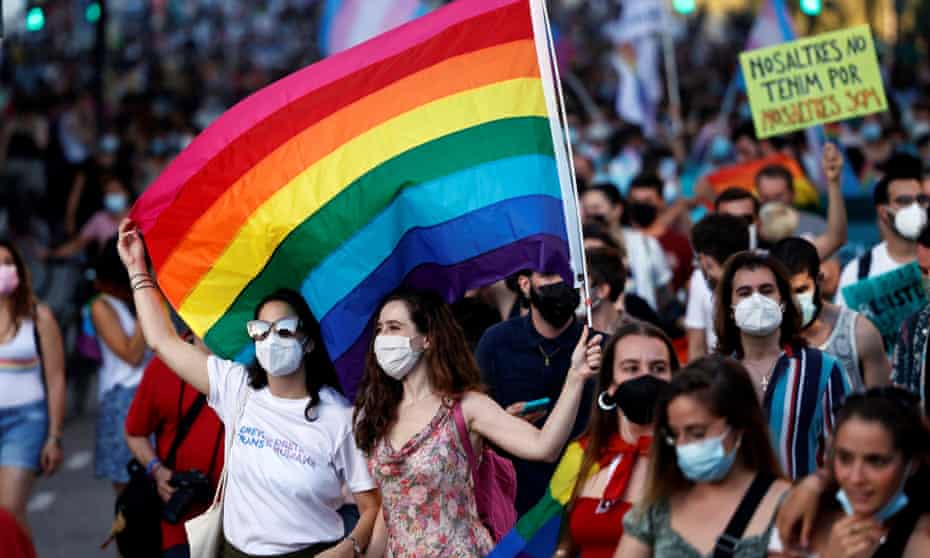
 Scottie's Playtime