On Friday, Samuel Taylor, a spokesperson with the secretary of state’s office, said the review was needed “to provide clarity on what issues need to be resolved for the next elections.”
Dallas County had a vote discrepancy of 10 across seven precincts, but the state’s report says that appeared to have resulted from a data entry error when county officials first reported the results of the partial manual count to the state.
The manual counts showed a mail-in ballot discrepancy of five votes in 10 Harris County precincts, which county officials said was caused by an “an error in the manual counting” of the ballots.
Tarrant County had zero discrepancies in the sample of seven precincts it was required to review.
In November 2020, votes from the four counties under review made up about 4 million — or about 35% — of the 11.3 million votes cast statewide.
Although the secretary of state’s office has dubbed its review a “full forensic audit” of the election, the first phase of the review includes partial manual counts of ballots and security assessments, which all counties are already required to undergo as part of the typical election process. State law requires partial manual counts to be conducted within 72 hours of polls closing after every election.
The second phase, which will take place in 2022, will be an examination of election records “to ensure election administration procedures were properly followed,” according to documentation previously released by the state. That includes reviews of records of voting machine accuracy tests, rosters for early voting, and forms detailing chain of custody for sealed ballot boxes and other election materials maintained by the counties. In its New Year’s Eve report, the state said it would also use these examinations to review the causes for the vote discrepancies captured in the partial manual counts.
The much-hyped four-county review by the secretary of state’s office, the state agency that oversees elections, was announced in September, just hours after former President Donald Trump publicly pressed Gov. Greg Abbott to add election audit legislation to the agenda for the state’s third special legislative session last fall. As part of his baseless effort to cast doubt on the outcome of his failed reelection bid, Trump’s call came despite the lack of evidence of irregularities in the state’s election — and the fact that he won the state.
The official overseeing the review, Secretary of State John Scott, previously helped Trump challenge 2020 election results in Pennsylvania. Appointed to the position by Abbott, Scott said in an October interview with The Texas Tribune that President Joe Biden won the 2020 election and that he has “not seen anything” to suggest that the election was stolen from Trump.
In a statement on Friday, Isabel Longoria, election administrator for Harris County, said the Harris County clerk’s office “processed, checked, and balanced a fair and accurate election in November 2020.” After conducting a hand count of mail-in ballots from the 2020 election, Longoria said her office “found no notable concerns.”
“Conducting a hand-count on a scale as large as the November 2020 election is an intensive process,” Longoria said. “The process included manually sorting 179,174 ballots by precinct, followed by a hand-count for 10 precincts that were designated by the Secretary of State. Despite this challenge, our team was able to match the count with a discrepancy of only five ballots.”
The state’s progress report for phase one of its audit also included data related to regular maintenance of the state’s massive list of registered voters — it surpassed 16.9 million in November 2020 — that goes beyond its four-county review. But some of the figures highlighted by the state either appear to be faulty or remain unverified.
For example, the secretary of state’s office noted it had sent counties a list of 11,737 records of registered voters it deemed “possible non-U.S. citizens.” But the Tribune previously reported that scores of citizens, including many who registered to vote at their naturalization ceremonies, were marked for review.
Although it has yet to finish investigating the records, the state also included an unverified figure of 509 voter records — about 0.0045% of the 11.3 million votes cast in November 2020 — in which a voter may have cast a vote in Texas and another state or jurisdiction. The state said the work of reviewing those records to eliminate those that were “erroneously matched” because of data issues wouldn’t be completed until January.
The state also highlighted the investigation of 67 votes — about 0.0006% of the votes cast in the 2020 general election — cast by “potentially deceased voters.” This review also has not been completed.
In its report, the secretary of state emphasized that the removal of ineligible or deceased voters from the voter rolls “in and of itself does not indicate that any illegal votes were cast.”
“These maintenance activities are prescribed by state law to ensure the integrity and accuracy of the statewide voter registration list,” the report reads. “Voter list maintenance is performed on a regular and ongoing basis in Texas to prevent ineligible voters from casting ballots and to prevent individuals from casting ballots using another person’s voter registration information.”
The state has a shoddy history of reviewing the voter rolls for ineligible individuals. In 2012, the state settled a lawsuit over its flawed effort to remove dead people from the rolls in which thousands of Texans received letters asking them to prove they were alive. The state’s first effort to scour the rolls for supposed noncitizens in 2019 produced a botched review that jeopardized the voting rights of tens of thousands of naturalized citizens, which it was forced to abandon after being sued in federal court.
Disclosure: The Texas secretary of state has been a financial supporter of The Texas Tribune, a nonprofit, nonpartisan news organization that is funded in part by donations from members, foundations and corporate sponsors. Financial supporters play no role in the Tribune’s journalism. Find a complete list of them here.














/https://static.texastribune.org/media/files/a3855050fc6c5bd8f1d7f3efbd632bb3/Early%20Voting%20Day%201%20Dallas%20MM%20TT%2017.jpg)
 Scottie's Playtime
The filibuster is not in the Constitution. But each house is allowed to make their own procedural rules. The Senate rules, unlike the House, trying to be a more “deliberative” body (and with fewer members in the early days) allowed unlimited debate on the floor and unlimited “yields” (handoffs to allies). During such speechifying, no other business could be conducted.
It took a 2/3 vote to stop a debate.
The filibuster arose when Southern conservative senators wanted to block bills, especially in the area of civil rights. Not having the votes, they simply stood and spoke under the rules allowing “unlimited debate” and kept on speaking, handing off (yielding) to accomplices as needed for breaks, and thus preventing any other business from going forward.
Finally, they made a compromise in the Senate rules: they would lower the cloture vote from 2/3 to 3/5 (60 votes in a 100-member senate) and not require senators to actually speak; just invoke filibuster by motion, and allow other business to still proceed on a “two track” basis.
Taking out the hard work of hours and hours of speaking made it easier to invoke and, once Obama became president and McConnell embarked on an unprecedented racist obstruction of the first African-American president, he made a 60-vote supermajority the de facto standard for passing any legislation, with more filibusters during the Obama years than the entire history of all prior administrations COMBINED and then, when he regained the majority, essentially did away with the filibuster for all confirmations and for budget bills (budget reconciliation).
McConnell’s unprecedented ABUSE of filibuster, coupled with the built-in (Constitutional) disproportionate allocation of senate representation, transformed it from a tool for the minority to have a voice in developing legislation, to utter tyranny of the majority, in which senators representing 16% of the population could overrule an overwhelming majority.
There are ways in which conservative Democrats could reduce the power of the filibuster to obstruct and still go on record as having saved the filibuster, and some of the Democrats who have opposed outright elimination of the filibuster (such as Joe Manchin of West Virginia and Kyrsten Sinema of Arizona) have indicated that they might be amenable to reforms such as:
a) amend the process; return to the requirement that they actually stand and hold the floor instead of just invoking by motion. When we had this in the past, filibuster was rarely used.
b) redefine filibuster; redefine what is eligible for inclusion in the budget reconciliation process which is exempt from filibuster
c) make voting rights and election security exempt from filibuster
d) limit the number of times filibuster can be invoked
e) require the speaker to remain on topic (no more reading phone books)
f) reverse the burden of invoking filibuster: right now they just make a motion to invoke filibuster and it takes a 60% vote to stop them. Reverse it. Instead of one person invoking filibuster and 60% having to agree to end it, require them to get 40% of the senate to vote to invoke filibuster — make them get the votes. Make them go on record as voting to obstruct something huge majorities of everyday people want (election reform, campaign finance reform, checks to individuals, a livable minimum wage, gun safety reform) and have to defend that in their next election.
None of these proposed reforms are mutually exclusive! You can do any or all or any combination. And there are likely other ways to reform and restructure filibuster without having to go on record as having actually eliminated it.
For those concerned about the “tyranny of the majority,” what we currently have is a “tyranny of the MINORITY.” We can protect minority interests and allow them to be heard without allowing senators who represent 16% of the population to tyrannize the rest of us.
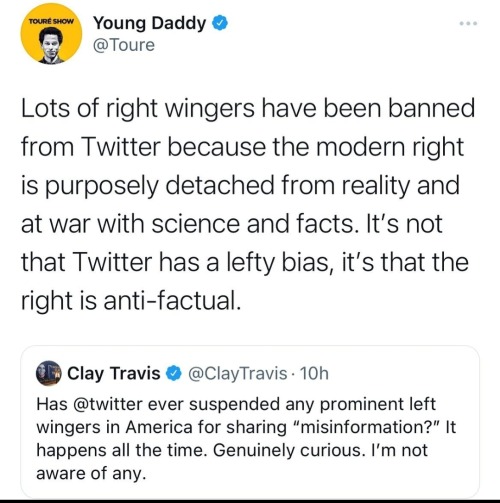
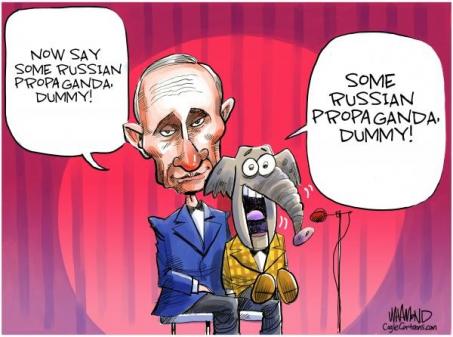
Yesterday I posted Dr. Fauci’s qualifications to make public health suggestions, and to understand the data / science behind those recommendations. Let me make clear that the right wing media doesn’t have those qualifications at all. The people who claim they did their own research are only reading some one else’s summery and the opinions of people not qualified to understand or make those public health opinions. Scottie