Again another grand post. I love the way the post starts, “Because the Republicans will never raise taxes and because the real goal is to privatize the Social Safety Net, …” So much of the harm and hurt in this country is directly caused by the greed of the wealthy craving more money than they could ever use in a lifetime while ignoring the suffering of those who struggle just to have something to eat or have shelter. As always the comments were enlightening, but fixing the funding issue is not the problem the wealthy want to address. In order to gouge as much money from the lower incomes as possible, the wealthy need a desperate work force willing to take any job at the lowest wage under the worst conditions. That maximizes the profit for corporations. That is why they conspired together to kill unions and are terrified of the current conditions giving workers the ability to demand better wages and working conditions. That is why the fed are using the false narrative they have to cause unemployment to stop inflation, rather than addressing price gouging and out of control record corporate profits. Pain for the lower incomes, luxury and joy for the upper incomes. Hugs
Because the Republicans will never raise taxes and because the real goal is to privatize the Social Safety Net, the WaPo is earnestly reporting on the latest treachery from Cracker Orbán and others in the 2024 Goat Rodeo: how to cut Social Security and Medicare so none of their voters notice:
Three of Donald Trump’s rivals for the 2024 GOP presidential nomination are pushing for cuts to Social Security benefits that would only affect younger Americans, as the party’s leaders grapple with the explosive politics of the retirement program.
In comments on Sunday as well as in interviews earlier this year, Florida Gov. Ron DeSantis said Social Security will need to be revamped — but not for people who are near or in retirement.
“Revamped” —isn’t that cute? And as Possum Hollar is one foot in the grave and the other foot on the banana peel, Republicans don’t…
This film was made to sell to high school media departments who purchased it to show to their juniors and seniors. Students in public high schools were being exposed to the concept of propaganda, especially given the context of World War II and the early Cold War. At this time there was an emphasis on educating citizens, including school children, about the role of propaganda. Would anyone make a film like this to run in schools involving media fake media or not?
Propaganda from all sides was studied including in history or social studies classes. Teachers used examples from Nazi Germany, Fascist Italy or Imperial Japan to illustrate how propaganda was used to control information and manipulate public opinion during the war.
In civics or government classes, students discussed propaganda in the context of democratic values, freedom of speech and the role of the press. This included conversations about the differences between propaganda, misinformation, and the free exchange of ideas. In English or other language arts classes propaganda was discussed as a form of rhetoric or persuasion.
The early stages of the Cold War and the 1948 presidential election were events for discussion in classrooms. Teachers used these current events to talk about the role of propaganda in politics and international relations.
High school clubs and other extracurricular activities focused on debate, journalism and politics.
Many Americans were well aware of political propaganda in 1948. Political Campaigns: Many people recognized the use of slogans, posters, and speeches during political campaigns as forms of persuasion, if not always identifying these tactics explicitly as “propaganda.”
Given the early stages of the Cold War, Americans were being exposed to constant anti-communist messaging from the government and media. Some saw this as propaganda, though others saw it as necessary information or patriotic messaging.
Newspapers, radio broadcasts, and the then relatively new medium of television would were sources of both overt and subtle propaganda. Some media outlets criticized propaganda efforts, thereby making their audiences more aware of them.
The mid-20th century was also a time when public relations and advertising were growing and becoming more sophisticated. Some people recognized that these industries used similar tactics to those found in political propaganda.
The year 1948 was especially filled with political propaganda with the presidential election and internationally with the ongoing Cold War. In 1948 President Harry S. Truman was running for re-election against Thomas E. Dewey. The now-famous “Dewey Defeats Truman” headline from the Chicago Daily Tribune was an example of premature victory claim due to inaccurate polling data which could be seen as a form of propaganda, trying to shape the narrative before the election was even over. Truman’s own campaign used the slogan “Give ‘Em Hell, Harry!” to rally the working-class vote and present Truman as a straightforward, no-nonsense candidate.
In the context of the early Cold War, both the United States & the Soviet Union used propaganda extensively to promote their respective ideologies and to denigrate the other. In the US, fear of communism was ramped up with government-sponsored propaganda, including films like “Red Nightmare” warning about the supposed dangers of communism. The government also produced numerous posters & leaflets depicting the Soviet Union as a menacing, totalitarian state that threatened American freedom.
With the establishment of Israel in 1948, there was significant propaganda on both sides of the conflict. Arab nations spread messages depicting the newly formed state of Israel as a colonial imposition, exploiting religious sentiments & framing it as a battle against Zionism. Conversely, Israeli propaganda emphasized the need for a Jewish homeland after the horrors of the Holocaust & cast their struggle as one of survival against hostile neighbors.
In 1948-1949, when the Soviet Union blocked access to West Berlin, the U.S., U.K., & their allies organized an airlift to supply the city with food, fuel, and other necessities. This event was accompanied by extensive propaganda on both sides. The West highlighted it as a humanitarian mission & an example of democratic nations stepping in to help those in need, while the Soviets depicted it as an aggressive act & an attempt to exert control over Berlin.
Organizations & companies advertise on this video clip. It is interesting to see what they are using this for. Search the words Disinformation. Public relations in business. Political advocacy. Political campaign. Public relations consulting firms. Healthcare agency. PR consultant. Best public relations. Media public relations. Political action committee.
A recent wave of book bans and curbs to educational free speech, led in part by Florida governor Ron DeSantis is hurting our children and allowing a vocal radical minority of parents and lawmakers control the narrative.
A few years old but again explains how there is neurological evidence that transgender people have the same brain scans as the gender they identify as. Even more the video explain how gender is a social construct with examples of how stereotypical female / male differs between cultures. Great short video that is both informative and easy to follow / understand. Hugs
In this episode, I discuss the neuroscience of being transgender by explaining the difference between gender identity and biology. I add studies from neuroscience and explain some fascinating findings.
Sources: Coon, D. & Mitterer, J.O. (2009). Psychology: Modules for active learning. Thomson Wadsworth. Belmont: United States. http://upload-community.kipa.co.il/17…
Wow. 2015 MRI study of 2,600 people showed that trans men and cis men have similar brain scans. Same for trans women and cis women. Yet cis men and cis women have different brain scans. Hugs
The information presented here is not new, in fact I have posted it before. But it is something that medical science show to be true that some people just can not accept. It is sad, but some people can not accept when new research with tools that may not have been available before change what they always assumed to be just the way things were. Just as any new discovery or change is fought against on the idea that it might change what was traditional. Enjoy. Hugs
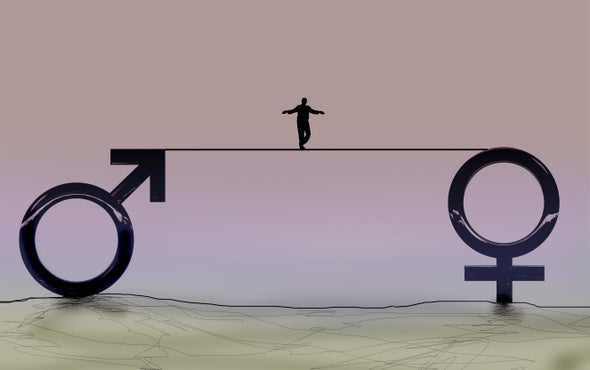
Biologists now think there is a larger spectrum than just binary female and male
As a clinical geneticist, Paul James is accustomed to discussing some of the most delicate issues with his patients. But in early 2010, he found himself having a particularly awkward conversation about sex.
A 46-year-old pregnant woman had visited his clinic at the Royal Melbourne Hospital in Australia to hear the results of an amniocentesis test to screen her baby’s chromosomes for abnormalities. The baby was fine—but follow-up tests had revealed something astonishing about the mother. Her body was built of cells from two individuals, probably from twin embryos that had merged in her own mother’s womb. And there was more. One set of cells carried two X chromosomes, the complement that typically makes a person female; the other had an X and a Y. Halfway through her fifth decade and pregnant with her third child, the woman learned for the first time that a large part of her body was chromosomally male. “That’s kind of science-fiction material for someone who just came in for an amniocentesis,” says James.
Sex can be much more complicated than it at first seems. According to the simple scenario, the presence or absence of a Y chromosome is what counts: with it, you are male, and without it, you are female. But doctors have long known that some people straddle the boundary—their sex chromosomes say one thing, but their gonads (ovaries or testes) or sexual anatomy say another. Parents of children with these kinds of conditions—known as intersex conditions, or differences or disorders of sex development (DSDs)—often face difficult decisions about whether to bring up their child as a boy or a girl. Some researchers now say that as many as 1 person in 100 has some form of DSD.
When genetics is taken into consideration, the boundary between the sexes becomes even blurrier. Scientists have identified many of the genes involved in the main forms of DSD, and have uncovered variations in these genes that have subtle effects on a person’s anatomical or physiological sex. What’s more, new technologies in DNA sequencing and cell biology are revealing that almost everyone is, to varying degrees, a patchwork of genetically distinct cells, some with a sex that might not match that of the rest of their body. Some studies even suggest that the sex of each cell drives its behaviour, through a complicated network of molecular interactions. “I think there’s much greater diversity within male or female, and there is certainly an area of overlap where some people can’t easily define themselves within the binary structure,” says John Achermann, who studies sex development and endocrinology at University College London’s Institute of Child Health.
These discoveries do not sit well in a world in which sex is still defined in binary terms. Few legal systems allow for any ambiguity in biological sex, and a person’s legal rights and social status can be heavily influenced by whether their birth certificate says male or female.
“The main problem with a strong dichotomy is that there are intermediate cases that push the limits and ask us to figure out exactly where the dividing line is between males and females,” says Arthur Arnold at the University of California, Los Angeles, who studies biological sex differences. “And that’s often a very difficult problem, because sex can be defined a number of ways.”
THE START OF SEX
That the two sexes are physically different is obvious, but at the start of life, it is not. Five weeks into development, a human embryo has the potential to form both male and female anatomy. Next to the developing kidneys, two bulges known as the gonadal ridges emerge alongside two pairs of ducts, one of which can form the uterus and Fallopian tubes, and the other the male internal genital plumbing: the epididymes, vas deferentia and seminal vesicles. At six weeks, the gonad switches on the developmental pathway to become an ovary or a testis. If a testis develops, it secretes testosterone, which supports the development of the male ducts. It also makes other hormones that force the presumptive uterus and Fallopian tubes to shrink away. If the gonad becomes an ovary, it makes oestrogen, and the lack of testosterone causes the male plumbing to wither. The sex hormones also dictate the development of the external genitalia, and they come into play once more at puberty, triggering the development of secondary sexual characteristics such as breasts or facial hair.
Changes to any of these processes can have dramatic effects on an individual’s sex. Gene mutations affecting gonad development can result in a person with XY chromosomes developing typically female characteristics, whereas alterations in hormone signalling can cause XX individuals to develop along male lines.
For many years, scientists believed that female development was the default programme, and that male development was actively switched on by the presence of a particular gene on the Y chromosome. In 1990, researchers made headlines when they uncovered the identity of this gene, which they called SRY. Just by itself, this gene can switch the gonad from ovarian to testicular development. For example, XX individuals who carry a fragment of the Y chromosome that contains SRY develop as males.
By the turn of the millennium, however, the idea of femaleness being a passive default option had been toppled by the discovery of genes that actively promote ovarian development and suppress the testicular programme—such as one called WNT4. XY individuals with extra copies of this gene can develop atypical genitals and gonads, and a rudimentary uterus and Fallopian tubes. In 2011, researchers showed that if another key ovarian gene, RSPO1, is not working normally, it causes XX people to develop an ovotestis—a gonad with areas of both ovarian and testicular development.
These discoveries have pointed to a complex process of sex determination, in which the identity of the gonad emerges from a contest between two opposing networks of gene activity. Changes in the activity or amounts of molecules (such as WNT4) in the networks can tip the balance towards or away from the sex seemingly spelled out by the chromosomes. “It has been, in a sense, a philosophical change in our way of looking at sex; that it’s a balance,” says Eric Vilain, a clinician and the director of the Center for Gender-Based Biology at the University of California, Los Angeles. “It’s more of a systems-biology view of the world of sex.”
According to some scientists, that balance can shift long after development is over. Studies in mice suggest that the gonad teeters between being male and female throughout life, its identity requiring constant maintenance. In 2009, researchers reported deactivating an ovarian gene called Foxl2 in adult female mice; they found that the granulosa cells that support the development of eggs transformed into Sertoli cells, which support sperm development. Two years later, a separate team showed the opposite: that inactivating a gene called Dmrt1 could turn adult testicular cells into ovarian ones. “That was the big shock, the fact that it was going on post-natally,” says Vincent Harley, a geneticist who studies gonad development at the MIMR-PHI Institute for Medical Research in Melbourne.
The gonad is not the only source of diversity in sex. A number of DSDs are caused by changes in the machinery that responds to hormonal signals from the gonads and other glands. Complete androgen insensitivity syndrome, or CAIS, for example, arises when a person’s cells are deaf to male sex hormones, usually because the receptors that respond to the hormones are not working. People with CAIS have Y chromosomes and internal testes, but their external genitalia are female, and they develop as females at puberty.
Conditions such as these meet the medical definition of DSDs, in which an individual’s anatomical sex seems to be at odds with their chromosomal or gonadal sex. But they are rare—affecting about 1 in 4,500 people. Some researchers now say that the definition should be widened to include subtle variations of anatomy such as mild hypospadias, in which a man’s urethral opening is on the underside of his penis rather than at the tip. The most inclusive definitions point to the figure of 1 in 100 people having some form of DSD, says Vilain.
But beyond this, there could be even more variation. Since the 1990s, researchers have identified more than 25 genes involved in DSDs, and next-generation DNA sequencing in the past few years has uncovered a wide range of variations in these genes that have mild effects on individuals, rather than causing DSDs. “Biologically, it’s a spectrum,” says Vilain.
A DSD called congenital adrenal hyperplasia (CAH), for example, causes the body to produce excessive amounts of male sex hormones; XX individuals with this condition are born with ambiguous genitalia (an enlarged clitoris and fused labia that resemble a scrotum). It is usually caused by a severe deficiency in an enzyme called 21-hydroxylase. But women carrying mutations that result in a milder deficiency develop a ‘non-classical’ form of CAH, which affects about 1 in 1,000 individuals; they may have male-like facial and body hair, irregular periods or fertility problems—or they might have no obvious symptoms at all. Another gene, NR5A1, is currently fascinating researchers because variations in it cause a wide range of effects, from underdeveloped gonads to mild hypospadias in men, and premature menopause in women.
Many people never discover their condition unless they seek help for infertility, or discover it through some other brush with medicine. Last year, for example, surgeons reported that they had been operating on a hernia in a man, when they discovered that he had a womb. The man was 70, and had fathered four children.
CELLULAR SEX
Studies of DSDs have shown that sex is no simple dichotomy. But things become even more complex when scientists zoom in to look at individual cells. The common assumption that every cell contains the same set of genes is untrue. Some people have mosaicism: they develop from a single fertilized egg but become a patchwork of cells with different genetic make-ups. This can happen when sex chromosomes are doled out unevenly between dividing cells during early embryonic development. For example, an embryo that starts off as XY can lose a Y chromosome from a subset of its cells. If most cells end up as XY, the result is a physically typical male, but if most cells are X, the result is a female with a condition called Turner’s syndrome, which tends to result in restricted height and underdeveloped ovaries. This kind of mosaicism is rare, affecting about 1 in 15,000 people.
The effects of sex-chromosome mosaicism range from the prosaic to the extraordinary. A few cases have been documented in which a mosaic XXY embryo became a mix of two cell types—some with two X chromosomes and some with two Xs and a Y—and then split early in development. This results in ‘identical’ twins of different sexes.
There is a second way in which a person can end up with cells of different chromosomal sexes. James’s patient was a chimaera: a person who develops from a mixture of two fertilized eggs, usually owing to a merger between embryonic twins in the womb. This kind of chimaerism resulting in a DSD is extremely rare, representing about 1% of all DSD cases.
Another form of chimaerism, however, is now known to be widespread. Termed microchimaerism, it happens when stem cells from a fetus cross the placenta into the mother’s body, and vice versa. It was first identified in the early 1970s—but the big surprise came more than two decades later, when researchers discovered how long these crossover cells survive, even though they are foreign tissue that the body should, in theory, reject. A study in 1996 recorded women with fetal cells in their blood as many as 27 years after giving birth; another found that maternal cells remain in children up to adulthood. This type of work has further blurred the sex divide, because it means that men often carry cells from their mothers, and women who have been pregnant with a male fetus can carry a smattering of its discarded cells.
Microchimaeric cells have been found in many tissues. In 2012, for example, immunologist Lee Nelson and her team at the University of Washington in Seattle found XY cells in post-mortem samples of women’s brains. The oldest woman carrying male DNA was 94 years old. Other studies have shown that these immigrant cells are not idle; they integrate into their new environment and acquire specialized functions, including (in mice at least) forming neurons in the brain. But what is not known is how a peppering of male cells in a female, or vice versa, affects the health or characteristics of a tissue—for example, whether it makes the tissue more susceptible to diseases more common in the opposite sex. “I think that’s a great question,” says Nelson, “and it is essentially entirely unaddressed.” In terms of human behaviour, the consensus is that a few male microchimaeric cells in the brain seem unlikely to have a major effect on a woman.
Scientists are now finding that XX and XY cells behave in different ways, and that this can be independent of the action of sex hormones. “To tell you the truth, it’s actually kind of surprising how big an effect of sex chromosomes we’ve been able to see,” says Arnold. He and his colleagues have shown that the dose of X chromosomes in a mouse’s body can affect its metabolism, and studies in a lab dish suggest that XX and XY cells behave differently on a molecular level, for example with different metabolic responses to stress. The next challenge, says Arnold, is to uncover the mechanisms. His team is studying the handful of X-chromosome genes now known to be more active in females than in males. “I actually think that there are more sex differences than we know of,” says Arnold.
BEYOND THE BINARY
Biologists may have been building a more nuanced view of sex, but society has yet to catch up. True, more than half a century of activism from members of the lesbian, gay, bisexual and transgender community has softened social attitudes to sexual orientation and gender. Many societies are now comfortable with men and women crossing conventional societal boundaries in their choice of appearance, career and sexual partner. But when it comes to sex, there is still intense social pressure to conform to the binary model.
This pressure has meant that people born with clear DSDs often undergo surgery to ‘normalize’ their genitals. Such surgery is controversial because it is usually performed on babies, who are too young to consent, and risks assigning a sex at odds with the child’s ultimate gender identity—their sense of their own gender. Intersex advocacy groups have therefore argued that doctors and parents should at least wait until a child is old enough to communicate their gender identity, which typically manifests around the age of three, or old enough to decide whether they want surgery at all.
This issue was brought into focus by a lawsuit filed in South Carolina in May 2013 by the adoptive parents of a child known as MC, who was born with ovotesticular DSD, a condition that produces ambiguous genitalia and gonads with both ovarian and testicular tissue. When MC was 16 months old, doctors performed surgery to assign the child as female—but MC, who is now eight years old, went on to develop a male gender identity. Because he was in state care at the time of his treatment, the lawsuit alleged not only that the surgery constituted medical malpractice, but also that the state denied him his constitutional right to bodily integrity and his right to reproduce. Last month, a court decision prevented the federal case from going to trial, but a state case is ongoing.
“This is potentially a critically important decision for children born with intersex traits,” says Julie Greenberg, a specialist in legal issues relating to gender and sex at Thomas Jefferson School of Law in San Diego, California. The suit will hopefully encourage doctors in the United States to refrain from performing operations on infants with DSDs when there are questions about their medical necessity, she says. It could raise awareness about “the emotional and physical struggles intersex people are forced to endure because doctors wanted to ‘help’ us fit in,” says Georgiann Davis, a sociologist who studies issues surrounding intersex traits and gender at the University of Nevada, Las Vegas, who was born with CAIS.
Doctors and scientists are sympathetic to these concerns, but the MC case also makes some uneasy—because they know how much is still to be learned about the biology of sex. They think that changing medical practice by legal ruling is not ideal, and would like to see more data collected on outcomes such as quality of life and sexual function to help decide the best course of action for people with DSDs—something that researchers are starting to do.
Diagnoses of DSDs once relied on hormone tests, anatomical inspections and imaging, followed by painstaking tests of one gene at a time. Now, advances in genetic techniques mean that teams can analyse multiple genes at once, aiming straight for a genetic diagnosis and making the process less stressful for families. Vilain, for example, is using whole-exome sequencing—which sequences the protein-coding regions of a person’s entire genome—on XY people with DSDs. Last year, his team showed that exome sequencing could offer a probable diagnosis in 35% of the study participants whose genetic cause had been unknown.
Vilain, Harley and Achermann say that doctors are taking an increasingly circumspect attitude to genital surgery. Children with DSDs are treated by multidisciplinary teams that aim to tailor management and support to each individual and their family, but this usually involves raising a child as male or female even if no surgery is done. Scientists and advocacy groups mostly agree on this, says Vilain: “It might be difficult for children to be raised in a gender that just does not exist out there.” In most countries, it is legally impossible to be anything but male or female.
Yet if biologists continue to show that sex is a spectrum, then society and state will have to grapple with the consequences, and work out where and how to draw the line. Many transgender and intersex activists dream of a world where a person’s sex or gender is irrelevant. Although some governments are moving in this direction, Greenberg is pessimistic about the prospects of realizing this dream—in the United States, at least. “I think to get rid of gender markers altogether or to allow a third, indeterminate marker, is going to be difficult.”
So if the law requires that a person is male or female, should that sex be assigned by anatomy, hormones, cells or chromosomes, and what should be done if they clash? “My feeling is that since there is not one biological parameter that takes over every other parameter, at the end of the day, gender identity seems to be the most reasonable parameter,” says Vilain. In other words, if you want to know whether someone is male or female, it may be best just to ask.
This article is reproduced with permission and was first published on February 18, 2015.
Very informative as Ethel does deep serious research into the subjects she posts on, and it is well broken down into sections if you are interested in just certain information. For example those who claim that gamates are the entire decider of sex will want to watch at 15:42 – Sex Is More Complicated Than Gametes section. For those that claim intersex is an anomality and rare should watch 20:28 – Science Is… Ignoring Contradicting Data where she points out that there are more intersex people than red heads. Something I have read before. For those that want to read and not watch they provide a written script and resouce list after the video. There is one section where her verbage is confusing and that is on gender. I understand what she is saying and she is correct that gender is an immudable part of ones person, which is why we know if we are assigned the wrong gender. And she cites the well known example of failed experiments of John Money. However what is steriotypical of each gender in a society is a social concept. What is feminine and what is masculine is dependant on culture and tradition. And it changes with time, jsut look at what was thought of as men only jobs or treaits and what women were thought incapable of doing. At some point in western culture it got to the point where men thought of women as almost a different species. Any way great video / read. If you enjoy their work please go to their chanel and watch more of their videos. Hugs
[Chapters] 00:00 – Intro & Content Warning 01:14 – Richard Dawkins’ Fall From Grace 07:12 – Richard Dawkins Promotes Creationist Rhetoric 15:42 – Sex Is More Complicated Than Gametes 20:28 – Science Is… Ignoring Contradicting Data? 25:06 – Gender Identity Is Not A Social Construct 28:56 – The Problem With ‘Evolutionary Psychology’
Watch Here
Intro & Content Warning
As bad as he is, I still didn’t expect Richard Dawkins to abandon every principle he has ever had, embracing creationism just to ‘stick it to the trans community’, yet here we are. He is living proof that nothing degrades cognitive faculties quite like unbridled bigotry; that ignorant people don’t become bigots because of their ignorance, bigots choose to become ignorant because of their bigotry. That bigotry is, as I’ve been saying for years, a willful and ideologically driven ignorance.
And we’ll discuss that further in a second, but first, a quick content warning for the following: Transmisia, Intermisia, Islamisia, Ableism, Misogyny, Sexual Harassment & Medical Violence. If you like our work and appreciate the research put into each video, please consider supporting the channel via Patreon. You can also support us by liking, commenting, and sharing this video on social media.
Hi there, my name’s Ethel Thurston (She/Her They/Them), and today we’re taking a look into Richard Dawkins’ crusade against trans people and how, in his desperation to deny the complexity of human nature, he has resorted to openly promoting creationist rhetoric.
Oh how the mighty have fallen. /s
Richard Dawkins’ Fall From Grace
Now, to be fair, I, as with many others, was someone who once respected Richard Dawkins and his work. During the late 00’s and early 10’s, Dawkins was a much celebrated evolutionary biologist, best selling author, and science communicator. For me it was his work debunking creationism, the belief that animals, people, and the natural world at large was ‘designed’ by a creator entity, that drew me to him. His work, like that seen in Channel 4’s ‘Inside Nature’s Giants’ in which Richard Dawkins displays the incompetence of the recurrent laryngeal nerve using the extreme example of the giraffe, helped me and many others go out there and combat what we saw at the time to be a very real problem. [1] Indeed, Dawkins even made an appearance in the Essence of Thought banner, alongside fellow secular icon Christopher Hitchens.
It didn’t last, however, as Dawkins’ began to act out, leading people, myself included, to question his apparent rationality. For me the cracks began with the whole honey incident in which he openly declared that: “Bin Laden has won, in airports of the world every day. I had a little jar of honey, now thrown away by rule-bound dundridges. Stupid waste.” [2] What’s a dundrige? Why, I’m glad you asked, as that allows me to show you this tweet in which Dawkins tells us that: ““Dundridge” is a coining I am trying to introduce into English. It means a petty, bossy, bureaucratic little rule-hound.” [3] So a bureaucrat… We already have a word for that.
Now, at first I’d assumed a flaw here was the fact that honey is a highly regulated substance in certain areas due to the dangers it poses native bees. I distinctly remember Dawkins having travelled to Australia around the time, so I assumed that was where the incident took place. Yet it turned out that was not the case, that it had, in fact, been a flight between Edinburgh and London Heathrow, meaning it was almost certainly seized at security. And it was whilst I went looking for more information on what happened that I came across other incidents, like this now infamous anecdote he’d written in 2011 about a mother going through security, declaring that:
“No sane person, witnessing that scene at the airport, seriously feared this woman was planning to blow herself up on a plane. The fact that she was accompanied by children gave us the first clue. Supporting evidence trickled in from the brazen visibility of her face and hair, from her lack of a Koran, prayer mat or big black beard and, finally, from the absurdity of the notion that her tub of ointment could, in a million years, be magicked into a high explosive—certainly not in the cramped facilities afforded by an aircraft loo.”
Which, yikes. What is there to say about that other than the fact that it is gross on account of being incredibly racist. Terrorism is a method used by many groups and is not limited to a specific appearance or culture. This is nothing more than racial profiling. [4]
And that’s what got me side-eying the man, leading me down a rabbit hole regarding many of his other views, including those on consent; from his comments regarding ‘mild pedophilia’ to his earlier mocking of Rebecca Watson for her crime of… Spending a minute and twenty seconds on a side note politely asking strange men not to follow her into elevators late at night and ask her back to their room for sex. [5] No, seriously, that’s all she did. That is what ‘instigated’ (and I’m doing heavy air quotes here), elevatorgate, these 80 seconds:
WATSON: “You were all fantastic and I love talking to you guys. Erm- all of you except for the one man who erm- didn’t really grasp, I think, what I was saying on the panel because, erm- at the bar later that night- actually at 4:00 in the morning, erm- we were at the hotel bar. 4:00 A.M. I said ‘you know I’ve had enough guys, I’m exhausted going to bed’ err- so I walked to the elevator and a man got on the elevator with me and said ‘don’t take this the wrong way, but I find you very interesting and I would like to talk more. Would you like to come to my hotel room for coffee?’ Um- just a word to the wise here, guys, don’t do that. Um- you know. Uh- I don’t really know how else to explain how this makes me incredibly uncomfortable. But I’ll just sort of lay it out that I was a single woman, you know, in a foreign country at 4 A.M., in a hotel elevator with you, just you, and I- don’t invite me back to your hotel room right after I finished talking about how it creeps me out and makes me uncomfortable when men sexualized me in that manner. So yeah, err- but everybody else seemed to really get it and- and thank you for getting it.” [6]
Richard Dawkins responded to this simple request by writing a reply to a fictional woman, “Muslina,” in which he clearly framed Watson’s advice as her speaking over ‘real’ victims of gender based violence and discrimination. This of course ignored how it’s not an either or situation, how a person can take issue with female genital mutilation, driving bans on women, and sexual harrasment at secular conferences. [7]
And I’m taking time to highlight all this because I don’t want people to pretend like today’s incident was a once off. Richard Dawkins has chosen to embody much of what is wrong with the secular community; the racism, the misogyny, and yes, the transmisia.
Richard Dawkins Promotes Creationist Rhetoric
Therefore it came as little surprise when, on the 20th of June 2023, Richard Dawkins tweeted out the following:
“Superb article by Jerry Coyne & Luana Maroja. Scientists, publishers & editors should grow a spine & call the bluff of dogmatic adolescent bullies. Skeptical Inquirer bravely stood up when other publishers wouldn’t touch it.” [8]
Said tweet linked an article titled ‘The Ideological Subversion of Biology’ which opens with:
“Biology faces a grave threat from “progressive” politics that are changing the way our work is done, delimiting areas of biology that are taboo and will not be funded by the government or published in scientific journals, stipulating what words biologists must avoid in their writing, and decreeing how biology is taught to students and communicated to other scientists and the public through the technical and popular press. We wrote this article not to argue that biology is dead, but to show how ideology is poisoning it. The science that has brought us so much progress and understanding—from the structure of DNA to the green revolution and the design of COVID-19 vaccines—is endangered by political dogma strangling our essential tradition of open research and scientific communication. And because much of what we discuss occurs within academic science, where many scientists are too cowed to speak their minds, the public is largely unfamiliar with these issues. Sadly, by the time they become apparent to everyone, it might be too late.” [9]
Wow, that sounds pretty bad. So what ‘political dogma’ is ‘poisoning’ biology? Well thankfully the authors list six examples, six claims that they assert have impeded or misrepresented biology. Those claims are:
“Sex in humans is not a discrete and binary distribution of males and females but a spectrum.
All behavioral and psychological differences between human males and females are due to socialization.
Evolutionary psychology, the study of the evolutionary roots of human behavior, is a bogus field based on false assumptions.
We should avoid studying genetic differences in behavior between individuals.
“Race and ethnicity are social constructs, without scientific or biological meaning.”
Indigenous “ways of knowing” are equivalent to modern science and should be respected and taught as such.”
Now, there’s a lot here meaning I can’t touch on all of them, so I’ll leave that to other people who I imagine might have something to say. And if you’re one such person watching this, hit me up and I’ll be more than happy to link your work down below.
What I want to focus on today is the first supposed ‘misrepresentation’, the claim that: “Sex in humans is not a discrete and binary distribution of males and females but a spectrum,” because, in a surprise twist that absolutely nobody saw coming, it’s about trans people, specifically non-binary folk like myself. That’s why the section ends with the authors asserting that:
“And why do people distort the truth? We suspect that some of those whose gender doesn’t correspond to one of the two biological sexes, and their allies, want to redefine sex so that, like gender, it forms more of a continuum. While jettisoning the sex binary is meant well, it also severely distorts scientific fact—and all the evolutionary consequences that flow from that fact.”
So let’s go through through the section, starting with the opening that led to the creation of this video, and that is the assertion that:
“This statement, one of the most common political distortions of biology, is wrong because nearly every human on earth falls into one of two distinct categories. Your biological sex is determined simply by whether your body is designed to make large, immobile gametes (eggs, characterizing females) or very small and mobile gametes (sperm, characterizing males). Even in plants we see the same dichotomy, with pollen producing the tiny sperm and ovules carrying the large eggs. The size difference can be huge: a human egg, for instance, has ten million times the volume of a single sperm. And each gamete is associated with a complex reproductive apparatus that produces it. It is the bearers of these two reproductive systems that biologists recognize as ‘the sexes.’”
Emphasis added by me.
Except that’s not how biology defines sex in humans at all. That is a fundamentalist Christian approach adopted in the US and elsewhere as a means to, among other things, justify the ongoing attempts to eradicate trans people and strip those capable of getting pregnant of their reproductive rights on grounds that everything is a part of god’s design. Hell, the very notion of binary sex is largely a Christian invention, with god supposedly having created all animals ‘male and female’.
The authors even tap into this in their assertion that biological sex is determined by “whether your body is designed to make” eggs or sperm. This is something known as teleology, that is the presupposition that aspects of the natural world were ‘created’ or ‘designed’ with a specific purpose in mind rather than, as in the case of evolution, the result of environmental pressure acting upon natural and random variation. Teleology is, for all intents and purposes, the exact antithesis of evolutionary biology. Evolutionary biology cannot be true under teleology, meaning a declaration of teleology is a denouncement of evolutionary biology. This reveals said assertion to be less about defending biology and more the authors forcing their beliefs, their ideology of ‘how I think nature is meant to be’ upon the natural world.
Which is why I was shocked to discover Richard Dawkins, an evolutionary biologist, promoting this argument. He spent literal decades debunking the teleological argument for god, the idea that since ‘everything is so clearly designed for a specific purpose there must be a designer’. He was at the forefront of pointing out how so much of what we observe in nature is, to put it frankly, asinine from a ‘design’ perspective.
Returning to the recurrent laryngeal nerve mentioned at the start, it’s a nerve that has its start and end point mere inches from one another, going from the brain to the larynx. Yet rather than go directly, due to said nerve having evolved early in our ancestry, before the evolution of the neck, said nerve goes down from the brain into the chest cavity and loops around the right subclavian artery before going back up to the larynx. For a human that adds about a 10cm detour, which doesn’t sound like much. But consider the fact that the same nerve is present in all vertebrates, meaning that the same detour in giraffes is around 5m long, and in the case of some sauropod dinosaurs would have been closer to 28m long. And this is merely a single example of the ‘incompetence’ behind the natural body, at least when looked at from a hypothetical design perspective.
So to see Richard Dawkins go back on that very standard, to promote arguments flagrantly reliant on framing sex as a ‘designed’ feature, is him selling out his secularism for bigotry. Which, I’ve gotta say, is a hell of a lot more dangerous to the field of evolutionary biology than any imagined ‘problem’ posed by the existence of trans people.
Sex Is More Complicated Than Gametes
Yet all this still leaves the question, how does biology define sex in humans? It does so through a collection of sexual traits including chromosomes, hormones, genitals, secondary sexual characteristics, internal sexual organs, and yes, gametes. No one trait is the ‘defining’ trait, and furthermore, these can be expanded upon or even subdivided. For example, hormones can be broken into hormone production and utilisation since someone with androgen insensitivity produces testosterone on levels equivalent to those observed in most cis endosex men yet can’t utilise it at a cellular level. [10]
This is not a controversial position, by the way, this has been the scientific standard for decades going on centuries, a fact you’ll realise the moment you consider how, at birth, doctors assign a person their gender based on their genitalia and not their gametes. Furthermore, we wouldn’t say people incapable of producing gametes were genderless or sexless. Don’t worry, we’ll get to the relation between sex and gender in a bit.
Yet the shitshow continues, with the authors asserting that:
“Beginning with an ancestral species having gametes of equal size (“isogamy”), natural selection often promotes the splitting of the population into two groups of individuals having very different gametes (“anisogamy”)—either small and mobile ones or large and immobile ones. Two sexes have thus evolved, and henceforth the species will resist the invasion of individuals having other types of gametes—that is, other new sexes. … Natural selection has independently produced diverse pathways to generate the sexes, but at the end there are just two destinations: males and females. And so we have an evolved and objectively recognized dichotomy—not an arbitrary spectrum of sexes.”
I see the phrase “natural selection often promotes the splitting of the population into two groups of individuals having very different gametes” is doing a lot of heavy lifting. Probability isn’t an ‘objective’ rule, it isn’t prescriptive, and the fact that the authors can’t state ‘always’ means they are fully aware that the assumptions they’re making about sex in humans are just flat out baseless. Nature can and does produce multiple redundancies, with diversity quite literally being a necessary component of evolution. If there is no diversity there can be no selection.
Now there are many examples of just how peculiar nature can be. One great example is the clownfish, which has recently drawn a lot of ire from anti-trans bigots who attacked the CBBC over a scientific segment on the fish. Which, if we weren’t facing literal trans genocide, would be fucking funny. Okay, it’s still a little funny. But if you’d like to know more about the science on clownfish and how changing sex is a natural part of their lifecycle, I’d suggest checking out the wonderful video put out on the topic by The Octopus Lady.
Yet to give my own example of just how strange natural selection can be when it comes to sex, look no further than side-blotched lizards, a species of small lizards that produce three distinct populations capable of carrying sperm, namely the orange, blue, and yellow populations. Oranges are the brutes of the three and secure the best breeding grounds capable of holding a group of females, blues are the calmer ones who secure smaller territories with only one female, and yellows are the sneakers who don’t secure any territory and instead sneak in to mate with the females of other lizards. This has led to the formation of a rock-paper-scissors situation in which oranges dominate the blues because of their size and aggression, the yellows prey on the oranges because the oranges can’t watch all their females, and blues chase away the yellows because of their monogamous nature. So this mere idea that nature is limited in sexual variance is patently ridiculous.
Though to be clear, I’m not saying that these lizards have a concept of gender, that takes cognitive ability they lack. All I’m doing is demonstrating how the authors of this article have a very limiting and prescriptive view of evolution. Evolution doesn’t care how something is done, hell it doesn’t even care if something is done. It just is, like gravity, and any value claims brought to discussion are brought by us, human beings.
Science Is… Ignoring Contradicting Data?
Speaking of value claims, that brings us rather nicely to the next section on the existence of intersex people, with the authors asserting that:
“Further, developmental issues can sometimes produce people who are intersex, including [redacted slur]. Developmental variants are very rare, constituting only about one in 5,600 people (0.018 percent), and also don’t represent “other sexes.” (We know of only two cases of true human [redacted slur] who were fertile, but one individual was fertile only as a male and the other only as a female.)”
First of all, this is just flat out wrong. 2% of all live births have medically recognised differences in sexual development, that is a distinct mix of those six sexual characteristics listed earlier, making them intersex. That’s one in every fifty people, which is about two secondary school classes or the same rate as ginger hair. [13] And the vast majority of them are perfectly capable of reproducing and go on to live healthy lives with zero complications. Hell, many of them never discover the fact that they’re intersex, that’s how benign being intersex can be in the evolutionary sense. So to present them as rare and their differences as ‘developmental issues’ is again, entirely baseless, forwarding the authors’ personal beliefs as something scientifically grounded.
And the reason they’re doing this is because those who acknowledge the fact that sex is more than a strict binary often reference the existence of intersex people as evidence of this. Hell, the example the authors referenced at the start for the claim they seek to debunk was an article written by Claire Ainsworth and subsequently published in the Scientific American in 2018, which did just that. So they know all this hence their desire to bury it. [14]
Because lets’ take their argument and apply it to another field of science. In the same way that 2% of all live births are intersex, being physiologically distinct from what was traditionally considered either male or female, just 2% of all matter in the known universe is something other than hydrogen or helium. [15] So to deny the relevance of intersex people in biology is akin to a chemist denying the relevance of every element on the periodic table that isn’t hydrogen or helium.
“What do you mean there are more than two elements?! This is nothing more than egalitarian ideology run amok! It is our duty to reject the notion of chemical plurality!” /s
Do you see how ridiculous that sounds? This entire section is nothing more than the authors’ desperate bid to justify cherry picking the data because they don’t like the conclusions said data leads to when taken as a whole.
Furthermore, 2% of all live births being intersex is true after accounting for eugenics. For centuries and even millenia, intersex people were either sterilised or even murdered. And whilst the latter practice is no longer as common, many intersex children are still sterilised as they go through puberty, often being lied to by parents and doctors who will tell them that they have some ailment such as cancer, hence the need to operate. This has been, and in many places still is, the standard practice. That is why the intersex community is openly fighting to ensure that intersex bodies are left alone, that their bodily autonomy and integrity is respected. And we have no idea what impact this will have on the prevalence of physiological diversity, how those numbers might rise as more intersex people are allowed to go on to become biological parents, a fact that’s worth keeping in mind when people argue that it is ‘just 2%!’ No, it’s 2% after you fucks spent millenia trying to exterminate them as a perceived abomination. It’s 2% in spite of your best attempts to eradicate sexual diversity among humans. It’s almost like what fundamentalist Christians want and what nature actually allows for are two completely different things.
But clearly we’re the ideologically driven ones for acknowledging the full range of human diversity and not cherry picking our data. /s
Gender Identity Is Not A Social Construct
Moving on we come to the authors’ claims about gender being a social construct, with them asserting that:
“But despite the facts, the dichotomy of sex—especially in humans—has recently come under ideologically based attacks. Even in apparently objective discussions of sex and gender, individuals are often said to have been assigned their sex at birth (e.g., “AFAB”: assigned female at birth), as if this were an arbitrary decision by doctors—a “social construct”—rather than an observation of biological reality. Even the Society for the Study of Evolution, which should know better, was swayed by ideology to publicly declare that biological sex should be viewed as a continuum. Teachers have been hounded out of their jobs and deprived of their classes simply for declaring that human sex is binary. As we’ll see, this controversy comes from a deliberate conflation of a biological reality, the sexes, with a social construct, genders.”
Except gender identity is not a social construct, instead being an intrinsic and immutable part of a person’s psychology. That’s why I personally include gender on the list of sexual traits as the psychological component of sex, meaning gender is sex in the same way that humans are apes, with it being a single example of a larger group.
And we can actually observe this in what happens when you deny a person their gender, with such attempts targetted at trans youth increasing attempted suicide from a baseline of 5% to a whopping 57%. [16] With cis endosex people it’s a little more difficult as said torture is not typically seen as socially acceptable on them, however, we do have the failed experiments of John Money, a psychologist who set out to prove that gender was socially taught rather than innate and immutable, that children could be convinced to live and identify as a different gender.
To do this he reassigned a male infant, David Reimer, whose phallus was destroyed during a circumcision, convincing the boy’s parents to raise him as a girl whilst using David’s twin brother as a control. Yet far from proving that gender could be socially taught, all Money managed to do was give David, a cis boy reassigned as a girl, gender dysphoria as he grew up to identify as a man. This was in spite of the fact that David was a naive participant: He had no idea he was reassigned as an infant. His father only told him when he turned 15, years after he had already begun to show signs of suicidal ideation, just like trans youth pressured into denying their gender. Sadly, the damage Money had done to David and his family was so significant that it prevented him from forming familial bonds. David died by suicide on the 4th of May, 2004. [17] All of which goes to show that, just like trans people, cis people have some inherent sense of gender and that any attempt to force them to adhere to a different gender results in the same deep psychological scarring that it does trans people, which I consider to be strong evidence for gender being the psychological component of sex.
It is also why I view gender to be the most important component of sex when dealing with social interaction, because those social interactions have very real weight. That’s why I take issue with the notion that teachers, like Jordan Peterson, harassing students regarding their gender is okay or even noble. Said abuse causes measurable harm. If you don’t want to be fired, don’t harass your students, simple.
The Problem With ‘Evolutionary Psychology’
That said, one thing I need to be clear on is the fact that I’m not asserting the existence of pink brain and blue brain; that is the idea that people’s behaviour, interests, and preferences are largely dictated by their gender. A person’s gender identity can be dictated by their brain without it having an impact on anything else, same as their sexuality. In much the same way that we’ve come to accept that a person’s sexuality is something innate and immutable whilst having abandoned the idea of a ‘rainbow brain’, the notion that sexuality dictates behaviour meaning all lesbians are butch and all gay men are effeminate, I am merely positing the same here regarding trans people and gender identity. For the core identity itself to be biological, you do not need additional baggage, just gender identity itself. Gender expression, gender norms, and gender stereotypes are all socially constructed yet are separate and distinct to gender identity.
And the reason I’m being clear on this is to avoid the very problem that plagues ‘evolutionary psychology’, which is not, as the authors assert, simply the belief that psychology is impacted by evolution. It’s a very broad set of claims about human psychology, most of which are completely untestable and seemingly forwarded as an attempt to force the proponent’s personal ideology onto the natural world, usually in an attempt to justify discrimination. ‘Evolutionary psychology’ is to psychology what ‘social Darwinism’ is to politics in that it uses the legitimacy of evolutionary biology to promote ideological views as something objective. That’s why I’m being very careful to qualify what we can demonstrate, and that’s the immutable portion of gender identity.
Speaking of ‘evolutionary psychology’, sadly the bullshit continues, with the authors asserting that:
“Denying the dichotomy of sex prevents us from understanding one of biology’s most fascinating generalizations: the difference between males and females in behavior and appearance. The color, ornamentation, large size, and weapons of males compared to their absence in females, a difference seen in species such as deer, birds, fish, and seals, result from sexual selection: the process, first suggested by Darwin, in which males compete with each other for access to females. This involves either direct antagonism between males, as in the jousting of deer, or by males appealing to female preferences through their color, ornaments, and behavior. And this near-universal observation in nature ultimately comes from females investing more in reproduction than males, starting with those big and metabolically expensive eggs.
Ultimately, this puts the burden of parental care largely on females. Tied up in offspring production and rearing, females thus become the sex less available for mating, even when the ratio of males to females is 1:1. Sexual selection also explains behavior: why, in most species—including our own—males are more promiscuous than females, who are picky about their mates. For a male, fertilization involves merely expending a teaspoon or so of sperm, while for females eggs are few and expensive, pregnancy is long, and then there are those pesky offspring to tend and feed—for years in humans. Antlers, plumes, peacock’s tails, elaborate male mating dances, bird songs: these and a host of other traits make sense only as the evolutionary results of having different-size gametes.”
So here’s some of those unverifiable assertions made by evolutionary psychology that I was talking about. The authors start by listing a number of distant species known for strong sexual dimorphism before going on to assert that the ‘generalisations’ for them must also be true for human beings, a species known for relatively weak sexual dimorphism. Deers, peacocks, and other animals are not human beings, they’re not species which have evolved complex cognitive faculties like we have. Therefore to directly compare us to them is inherently flawed. It’s like comparing the creation of something inside a universe to the formation of said universe itself. We have no other examples of lifeforms with our cognitive abilities, just like we have no other examples of universes coming into existence. To draw conclusions from unrelated occurrences is spurious by definition.
Yet it’s from this poor foundation that authors go on to further assert that the differences in energy spent on reproduction preprograms men to sow their oats far and wide whilst women are more careful, and that these things being largely true historically has absolutely nothing to do with inequality in society, specifically misogyny. Their source to back up this claim? It doesn’t exist. Like, they literally stop referencing during these paragraphs aside from Dawin’s theory of sexual selection among animals.
And in case you’re wondering whether they supply said evidence in the section specifically on ‘evolutionary psychology’, they don’t. Aside from people critiquing ‘evolutionary psychology’ or commenting on its lack of status in academia, the author’s cite a non-peer reviewed book, two articles in Areo magazine, and a single opinion piece in ‘Current Directions in Psychological Science’, titled ‘Three Laws of Behavior Genetics and What They Mean’, which was published all the way back in the year 2000. And I just want to read you a section of said opinion piece to give you an idea of its academic rigour.
After declaring that the nature-nurture debate is over and that everything is heritable, the author, Eric Turkheimer, goes on to list the titular three ‘laws’ of behavioural genetics, only to then double back in stating that:
“It is not my purpose in this brief article to defend these three laws against the many exceptions that might be claimed. The point is that now that the empirical facts are in and no longer a matter of serious controversy, it is time to turn attention to what the three laws mean to the implications of the genetics of behavior for an understanding of complex human behavior and its development.” [18]
That first line, that itis “not my purpose in this brief article to defend these three laws against the many exceptions that might be claimed,” is a pretty major problem considering that laws in science are quite literally universal constants, things which remain true no matter what. So to openly admit that there are exceptions that said laws need to be ‘defended from’ before going on to assert that the science is settled seems to be a way for ‘evolutionary psychologists’ to have their cake and eat it too.
Drawing this back to the claims about differences in sexual behaviour, this is why people have such an issue with so-called ‘evolutionary psychology’. It’s never about proving anything specific, which Darwin himself did all the time; it’s about failing to account for extraneous variables — things other than what we seek to measure having an impact on what we observe, in this instance misogyny and society in general — thus drawing spurious generalisations.
I mean, just stop and think about it; if cis women truly were ‘biologically programmed’ to be sexually reserved, why then would society need to invent slutshaming, an entire social institution, centred on forcing cis women to remain, as they see it, ‘sexually pure’? It wouldn’t. Just like theists who claim belief in God is an intrinsic part of humanity, ‘evolutionary psychologists’ ignore all of the systems and the vast amounts of wealth pumped into keeping these ideological tenets dominant in our society.
So like, it’s an interesting hypothesis, but without supporting evidence that accounts for extraneous variables, it’s just that, a hypothesis.
This is why the authors’ closing line, the assertion that: “While jettisoning the sex binary is meant well, it also severely distorts scientific fact—and all the evolutionary consequences that flow from that fact,” is so hollow. They haven’t shown any ‘evolutionary consequences’ using evidence. They haven’t demonstrated how trans people are at odds with evolutionary biology, they’ve just asserted it. And as Christopher Hitchens once said: “That which can be asserted without evidence can be dismissed without evidence.” So that’s exactly what I’m going to do.
So if this is anything to go by, which, considering how it’s the first point presented and how the authors go out of their way to assert that said statement is: “one of the most common political distortions of biology,” I think that’s highly likely, it doesn’t exactly bode well for the remaining sections. Part of me wants to go through each of them, but this video would become too unwieldy and I’m not looking for a series. This video started out as just a short piece on the teleology point, but as I read the entire article I realised that… I was gonna have to cover at least the first point as it was just that bad.
Though what do you think? Do trans people pose a risk to evolutionary biology? Were you at all surprised with Richard Dawkins’ embrace of creationism, specifically teleology? Did you learn something interesting in today’s video? Did you notice something I missed? If so, be sure to let me know down below.
And if you appreciate what we do here and want to help out, please consider becoming one of our wonderful Patrons who make our work possible. On that note, we’d just like to thank the following people: Matthew Kovach, Gerrit Van Voorst, Hannah Banghart, MarbleWings, Sosh Daniels, Flynn, Darn it Dante & Higgins the Seagull. And from myself, Udita, and Levi, take care now.
References
[1] Channel 4 (2009) “Inside Nature’s Giants – Richard Dawkins Demonstrates Laryngeal Nerve of the Giraffe”, YouTube.com
Accessed 24th June 2023:
[2] Richard Dawkins (2013) “Bin Laden Has Won”, Twitter.com
Accessed 24th June 2023:
Bin Laden has won, in airports of the world every day. I had a little jar of honey, now thrown away by rule-bound dundridges. STUPID waste.
[8] Richard Dawkins (2023) “Superb Article By Jerry Coyne & Luana Maroja”, Twitter.com
Accessed 24th June 2023:
SUPERB article by Jerry Coyne & Luana Maroja. Scientists, publishers & editors should grow a spine & call the bluff of dogmatic adolescent bullies. Skeptical Inquirer bravely stood up when other publishers wouldn't touch it.https://t.co/FvpGgqLBVy
[12] The Octopus Lady (2023) “Are Clownfish Part of the Trans Agenda?!?! | Alien Ocean”, YouTube.com
Accessed 30th June 2023:
[13] Melanie Blackless, Anthony Charuvastra, Amanda Derryck, Anne Fausto-Sterling, Karl Lauzanne andEllen Lee (2000) “How Sexually Dimorphic Are We? Review And Synthesis”, American Journal of Human Biology, 12(2), pp.151-166
[14] Claire Ainsworth (2018) “Sex Redefined: The Idea of 2 Sexes Is Overly Simplistic”, ScientificAmerican.com
[17] EssenceOfThought (2019) “The Tragic Case Of David Reimer & How It Relates To Trans/Intersex Children”, YouTube.com
Accessed 26th September 2020;
[18] Eric Turkheimer (2000) “Three Laws of Behavior Genetics and What They Mean”, Current Directions in Psychological Science, 9(5), pp.160–164.
Meta
NEW VIDEO: As bad as he is, I still didn’t expect Richard Dawkins to abandon every principle he has ever had, embracing creationism just to ‘stick it to the trans community’, yet here we are.
There really is no price too steep that bigots won’t pay.
The thumbnail for the Essence of Thought video “Richard Dawkins Promotes Creationism In Anti-Trans Crusade” which shows a crusader with the face of Richard Dawkins raising their sword to attack. Next to them bold text reads “Richard Dawkins Promotes Creationist Arguments”, with “Richard Dawkins” and “Creationist” highlighted in red for emphasis.
Richard Dawkins Sides With Creationists In Anti-Trans Crusade
Trans,Transgender,Transexual,Richard Dawkins,Creationism,Anti-Trans,Evolutionary Biology,Teleology,Atheism,Secularism,Theism,Apologetics,Argument for God,Bible,Christian,Muslim,Gender,Sex,Biology,Biological Truth,Jordan Peterson,Matt Walsh,What Is A Woman?,Queer,Essence of Thought,Ethel Thurston,Trans YouTube,Trans Rights,Women’s Rights,Feminism,News,EssenceOfThought,Debate,Bathroom Debate,Sports Debate,Trans Activist,Evolution,Evolutionary Psychology


 Scottie's Playtime