
I read about this in a few places yesterday, then last night, Joyce Vance’s came in, so here it is. She’s expert and dependable. -A.
No Bill! by Joyce Vance
The Good News You Need Read on Substack
When a grand jury returns an indictment, it’s called a true bill. On those exceedingly rare occasions where they decline to sign off on an indictment prosecutors present to them, it’s called a no bill. In 25 years at DOJ, I never had a grand jury no bill one of my cases. And I can only recall a couple of instances where it happened in the entire district.
Donald Trump’s new U.S. Attorney in the District of Columbia can’t say that. Former judge, Fox News host, and defendant in a defamation case where she is accused of spreading false information about voter fraud, Jeanine Pirro, recently received three no bills—all in the same case. The U.S. Attorney’s Office tried to charge Sydney Lori Reid with felony assault on three separate occasions this month, but the grand jury declined to do so. CNN reports that “In one case this month — related to an FBI agent and an immigration officer allegedly scrapping with a detainee — the federal grand jury in Washington voted ‘no’ three times.”
Proceedings inside of the grand jury are conducted in secret, so there is no way of knowing why the grand jury rejected the charge. Typically, if a grand jury expresses some hesitation over a case, prosecutors will bring in additional witnesses or offer counsel about relevant laws to help alleviate their concerns. To fail to indict not once, but three times, indicates a failure of both competence and judgment.
When asked about her failure, Pirro responded, “Sometimes a jury will buy it and sometimes they won’t. So be it, that’s the way the process works.” But that’s not true. The standard for obtaining an indictment is a low one: The prosecution need only persuade the grand jury that probable cause to proceed on the charges exists. That’s a far lower bar than the requirement that the government prove a crime was committed beyond a reasonable doubt before a trial jury can convict. Any prosecutor who doesn’t back off of a case where they can’t even convince grand jurors that probable cause exists, knowing that much more will be expected of them at trial, is wasting taxpayer resources. Prosecutors have plenty of cases. Move on and do a righteous one. But apparently, that’s not how the D.C. U.S. Attorney’s Office operates these days.
Prosecutors, who have 30 days following an arrest like Reid’s to obtain an indictment, told a judge they now plan to bring misdemeanor charges against Reid. Misdemeanor charges can be brought by prosecutors without the need to present them to a grand jury for approval. But we already know at least some of the facts in the case, because a statement of facts was filed in support of the arrest warrant.

The affidavit alleges that Reid assaulted FBI agent Eugenia Bates. Reid was video recording agents outside of the D.C. jail, where at least two individuals were being arrested as “known gang members” and transferred into ICE custody. Reid was directed to step back, and according to the affidavit, she “got in Officer Lang’s face.” He said she smelled of alcohol and tried to interfere with the transfer of custody. According to the government, an officer pushed her against a wall, but she continued to struggle after being told to stop.
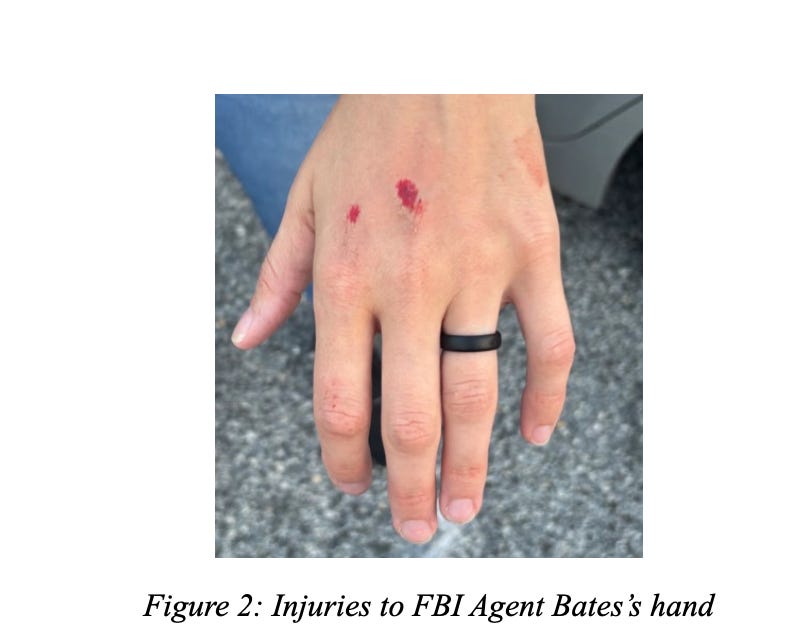
Here’s the heart of the allegation against Reid: “Agent Bates came to Office[r] Lang’s assistance in trying to control REID. REID was flailing her arms and kicking and had to be pinned against a cement wall. During the struggle, REID forcefully pushed Agent Bates’s hand against the cement wall. This caused lacerations on the back side of Agent Bates’s left hand.”
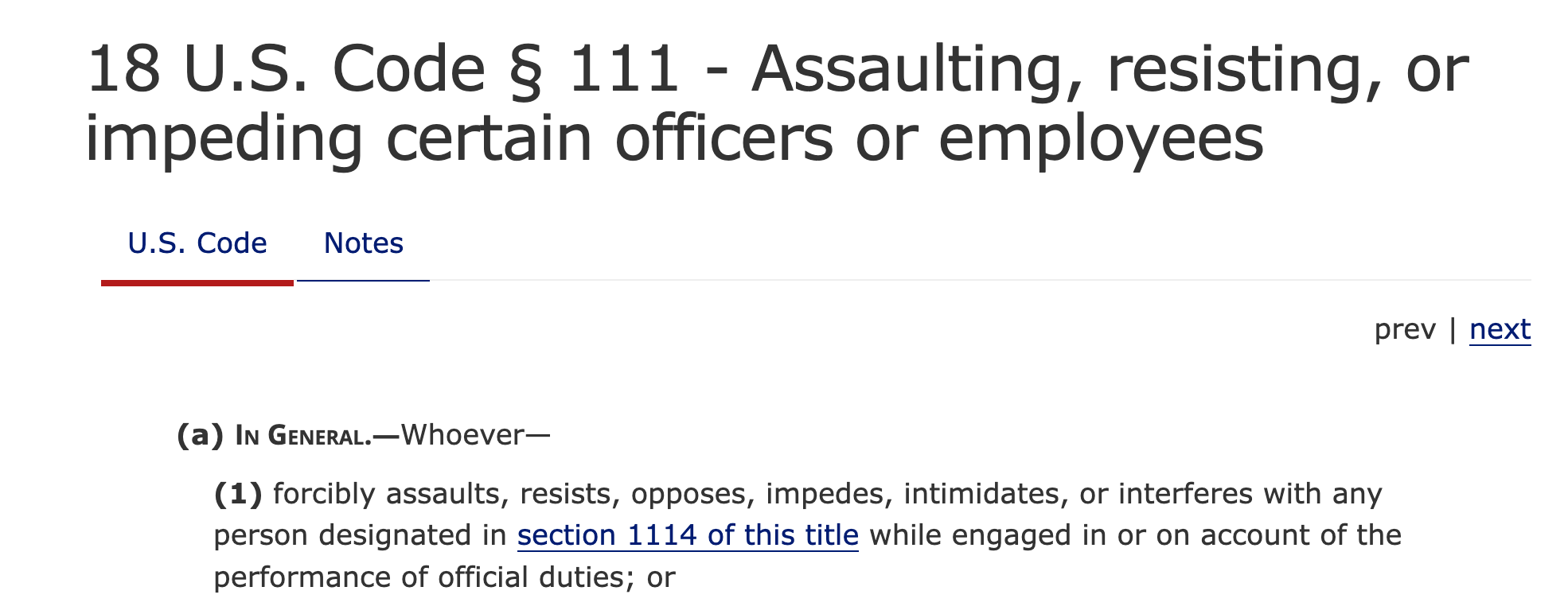
To convict on the federal felony assault charge, the government would have to establish that Reid forcibly assaulted a federal agent. A “forcible assault” is an intentional threat or attempt to cause serious bodily injury by a person who has the apparent ability to do so, including any intentional display of force that would cause a reasonable person to expect immediate and serious bodily harm or death. The statement of facts alleges that Reid “intentionally and forcibly obstructed the transfer of suspects into FBI custody and made physical contact with FBI Agent Eugenia Bates and inflicted bodily injury in violation.” The grand jury didn’t buy, despite having three opportunities to do so, that there was probable cause, let alone proof beyond a reasonable doubt, to believe that some or all of that happened.
The lacerations, which were pictured in the statement of facts and presumably shown to the grand jury, seem relatively minor. And it’s difficult to see, at least with this statement of the facts, how a grand jury could conclude, as it must, that Reid was the cause of those “lacerations” or even acting voluntarily when they happened. Assuming they could prove all of that, even small cuts like these could hypertechnically constitute assault. But it’s easy to imagine a grand jury viewing charging it as a felony as overreaching.
Judge Sparkle L. Sooknanan will hold a hearing in the matter on Thursday morning at 11:30.
The grand jury process still works as a check and balance on prosecutors, as the Constitution intends. Trump may want you to think he’s all-powerful, but guardrails are still in place. His administration can’t bring felony charges without a grand jury’s approval, an important protection not just for Ms. Reid but for others, as DOJ’s portfolio of revenge investigations continues to grow.
We talked previously about a grand jury in Los Angeles that declined to indict. Now, it’s spread to D.C. And grand juries are only the first layer of guardrails in the criminal justice system, where they are joined by trial juries, judges, and the appellate process.
You’ve heard the line—the one that says prosecutors can indict a ham sandwich, that it’s just that easy. Next stop in D.C., seeing whether they can indict a Subway sandwich. They should think twice after their experience in Ms. Reid’s case with bringing marginal prosecutions to please the president. That’s not justice.
(snip)
We’re in this together,
Joyce

 Scottie's Playtime