Envision a place overwhelmed by 80 million tons of waste – this was the state of Latin America’s largest landfill in Rio de Janeiro. A decade later, this very site has evolved into an impressive mangrove forest. The incredible change has not just given a new home to native species like crabs, birds, and fish, but has also showcased the enduring strength of nature.
The landfill faced years of continuous pollution since its inception in 1968. Efforts to curb the pollution took a serious turn in 1996 until finally the landfill was closed for good in 2012.
Photo Credit: AP Photo/Bruna Prado
Mangroves: Nature’s Healing Touch
The mangroves play a central role in this ecological restoration saga. As efforts were made to cover the landfill with clay and introduce a drainage system, the planting of these resilient trees began. Mangroves possess a unique attribute, making them perfect candidates for environmental rehabilitation projects: they flourish even in harsh environments.
These trees are climate champions, adept at capturing and storing immense amounts of carbon dioxide. They are even more efficient than tropical rainforests, making them invaluable when it comes to climate change solutions.
Challenges on the Path to Recovery
However, reviving the mangroves wasn’t without challenges. To protect them from waste from nearby communities, a barrier of clay fences was constructed around them. These barriers, though effective, demand consistent upkeep due to occasional damage.
Even as the landfill remains sealed, leachate – a hazardous byproduct from decomposing trash – continues to seep out. Proactive measures are in place to collect and treat this leachate, ensuring the restored environment remains safeguarded.
Photo Credit: AP Photo/Bruna Prado
Looking Ahead with Optimism
This success story stands as a beacon of hope, sharing the potential of collective efforts in environmental restoration. It’s a wonderful reminder that with commitment, collaboration, and a touch of nature’s magic, even the bleakest landscapes can witness a rebirth.
My thanks to Ten Bears for posting this. I think this is a very important subject that is not getting enough attention. More people want to talk about their next meal more than the fact the health of the Antarctic sea ice is seriously going to effect not only us selfish humans but every living thing starting with the ocean life. When I watch this I want to run screaming out into my neighborhood, grab people and scream do you understand not only will our homes be underwater but we won’t have anything to eat !!!! But then Ron gives me a cool drink and reminds me there are laws against that grabbing of neighbors enforced on the not republicans all the time.
I am taking this from Ten Bears’ blog / website (I never do know what is the proper term now) without his permissions.
And from what I have read on his site, he doesn’t respond well to anyone just thinking they can grab anything of his and run away, and I am not just talking on the webs. I do hope he might just give me a little grace on this one.
For those hearing impaired, do not worry. The main speaker talks fast. I used to talk that fast, but over thirty years in Florida I don’t even type fast anymore. The Closed Caption is very good, they either do it themselves or pay for it. Again well worth the 8+ minutes to understand the threat to our habitat and lives. Hugs
Antarctic sea ice is behaving very, very weirdly right now. In the same year we saw a record minimum extent, we’re now seeing a record slow freeze-up, leaving a widening gap between observations and what we expect for the time of year.
A lot of people have tried to put a number on exactly how rare the event we’re witnessing is, and come up with some insane numbers. So what’s going on? Is this really the kind of event we should only see once in 7.5 million years??
Big thanks to Zack Labe for talking to me for this video, you can check out his fantastic visualisations on his website here: http://www.zacklabe.com and follow him on socials @ZLabe.
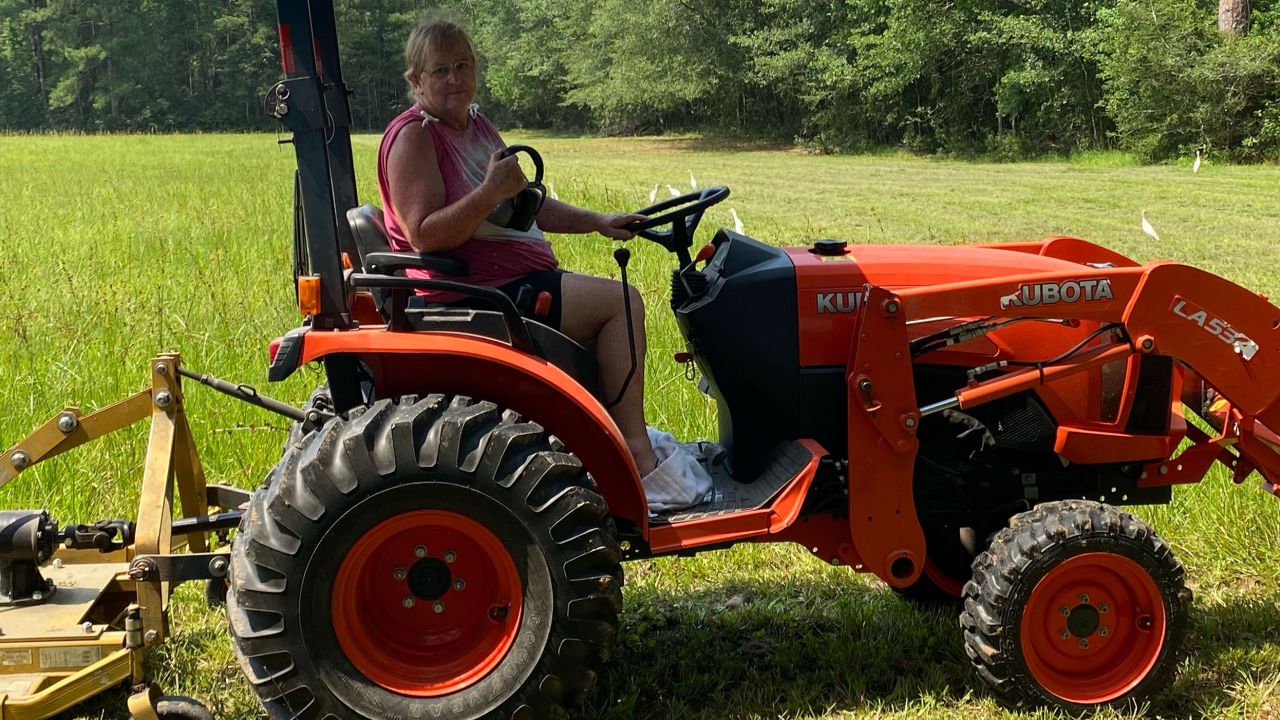
Peggy Jones sits on one of two tractors used to groom her property.Courtesy Peggy JonesCNN —
All Peggy and Wendell Jones wanted was to end their day of yard work in Texas’ triple-digit summer heat by getting cleaned up and going to the casino.
The couple – married 45 years next week – routinely splits up the three-hour job of mowing the lawn of an investment property in Silsbee, north of Beaumont, that’s been in the family since 1850, they told CNN.
The work is nothing out of the ordinary.
It’s what happened while they were at it last month – an encounter that left them at a hospital dressing blood-soaked wounds – that now has them pressing pause.
Peggy was riding a mower in the back of the property, far from the trees that line it, when “all of a sudden, out of the clear blue sky, a snake fell … and landed on my arm,” the 64-year-old recalled.
There was no mistaking it: The reptile was dark-colored and 4 1/2 feet long, she estimated.
It had fallen from nowhere and clutched her right arm.
And it wouldn’t let go.
“I immediately began thrusting my arm, trying to knock the snake off,” she said. “And as I was thrusting my arm, the snake just wrapped around my arm – and he started striking at my face.”
The more the grandmother of four tried to rip the snake off her, the tighter it would wrap and squeeze around her arm, she said.
She screamed and cried for help as the tractor kept crawling along beneath her.
Still, the snake wouldn’t let go.
Wendell, 66, was mowing the front of their property. The sound of his own tractor and the traffic on the nearby highway filled the space between them, and that’s how Peggy said she knew:
She was effectively alone.
Then, just when she thought the snake might bite her – injecting her with fatal venom and ushering in the end of her life – a brown and white hawk swooped down and tried to clench it.
But the serpent would not let go of Peggy’s arm.
Its grip was so tight that when the hawk grabbed it, Peggy’s entire arm jerked up in the air with the attempt.
The hawk tried again and again, its wings flapping in her face with each try, distorting her view of what was happening right in front of her.
All the while, the tractor kept mowing, zig-zagging Peggy – and the tug-of-war of nature unfolding upon her body – across the field in an ordeal she called “utter chaos.”
Many times in her life, Peggy had watched this exact same scenario play out in nature: Hawk sets its sights on its prey, swoops in to attack, drops it on a barbed-wire fence, then goes back to claim its prize.
But she never imagined she’d play the role of fence.
Four times, the hawk dove and bobbed at its prize – and at Peggy – before it finally scooped up the reptile and flew off, she said.
Right away, Peggy felt some relief at having been freed.
Then, she looked down.
‘Beyond anything I had ever experienced’
Her right arm was covered in blood. Claw marks. Lacerations. Cuts. Punctures.
“If you’ve ever cut yourself, think about 10 times that pain,” Peggy said. “It’s a pain you can’t describe. … It was beyond anything I had ever experienced.”
Bruises had already formed – and turned black, presumably from the snake’s squeeze.
Peggy, still processing what she had just experienced, kept screaming and yelling.
This time, Wendell heard her.
He ran over.
“She was in hysterics and shock,” he recalled.
“I just rushed her to the truck and headed to the ER,” said Wendell, who was at this point still uncertain of how such a horror had befallen his wife.
“It was probably three minutes before I actually understood what happened to her.”
Doctors in the hospital cleaned and bandaged Peggy’s wounds.
On the lens of her chipped glasses, they found some liquid the Joneses think may have been snake venom, though it was never tested, they told CNN.
The doctors gave her antibiotics and instructions to continue them at home.
Before midnight on July 25, Wendell posted online a short rundown of all his wife had endured that day, ending it: “Thank you for the prayers.”
The couple stayed up that whole night to monitor for any swelling and discoloration from a snake bite – signs Peggy knows well after a venomous snake bit her a few years ago, she said.
Thankfully, none appeared.
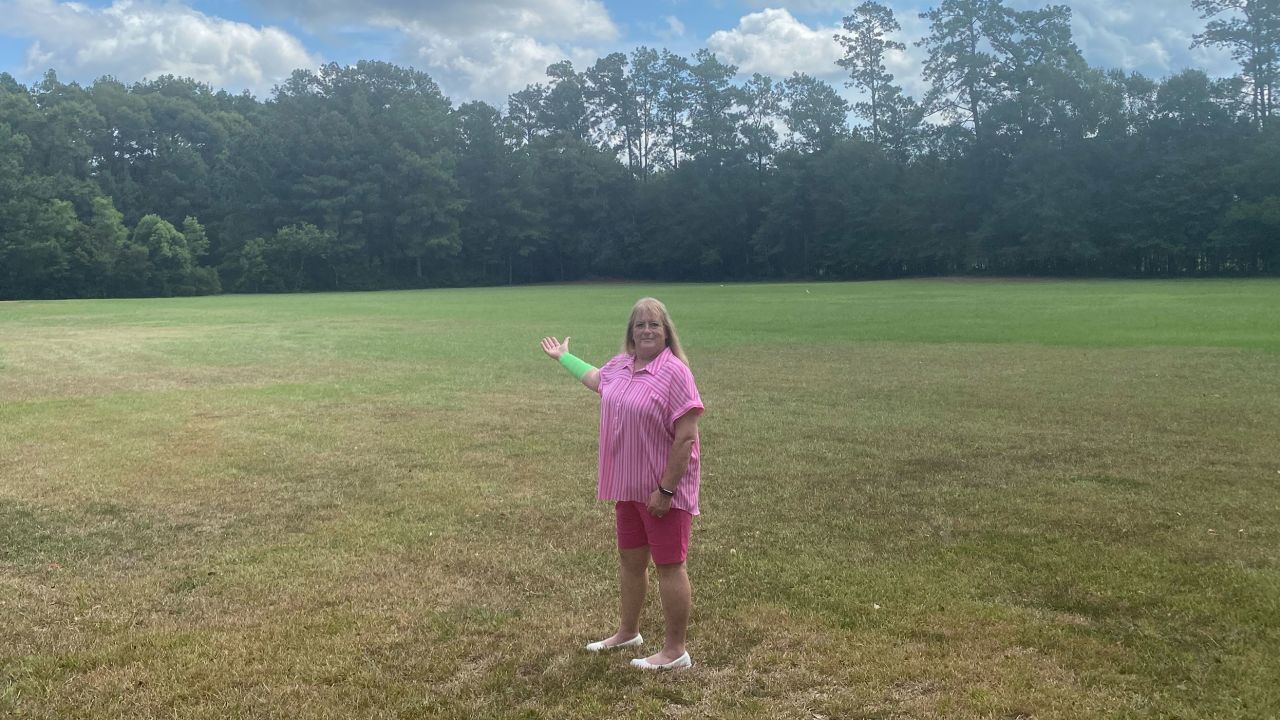
Peggy Jones stands at the 6-acre property where she was attacked July 25 by a hawk and snake.Courtesy Peggy Jones
‘I consider myself to be pretty tough’
More than two weeks later, Peggy is left with the physical reminder of the chaos, her arm wrapped from elbow to wrist in bandages that have been refreshed from white to neon green to bright pink.
Meanwhile, the ordeal is still living rent-free in her mind as she contemplates how it could have had an entirely different – potentially fatal – ending.
“She’s not sleeping well at all,” Wendell said. “When she finally goes to sleep, I’m usually having to wake her up because she’s dreaming.”
The Joneses are taking extra precautions to ensure Peggy’s wounds stay clean: Any trace of infection could portend a life-threatening turn following a past double knee replacement.
“This is the toughest young lady I’ve ever met in my life,” Wendell said. “She doesn’t worry about pain. She thinks she can do everything, and she pretty much can do everything, so I have to try and keep her slowed down because she’s blow and go.”
“I consider myself to be pretty tough,” added Peggy, “and I’m a survivor.”
As for the casino trip, it will have to wait as the Joneses aren’t making any unnecessary outings until Peggy’s wounds fully heal.
Video: It’s so hot in Arizona that beehives are melting
CNN —
As deadly, unrelenting heat scorches Arizona, some entomologists are growing concerned about theincreasing number of dead honeybees – a species vital to our ecosystem, especiallyfood production.
Temperatures in Phoenix hit 110-plus degrees for a record-breaking 31 consecutive days from June 30 to July 30, part of what was the hottest month on record for anyUS city.
This unprecedented heat has bee experts across Arizona sounding the alarm bell.
“It’s a very major concern,” Shaku Nair, an entomologist with the University of Arizona, told CNN, “Honeybees can forage up to 113 degrees. As of July, we’ve had many days over 113 degrees, so bees are taking a bad hit right now.”
This month is the planet’s hottest on record by far — and hottest in around 120,000 years, scientists say
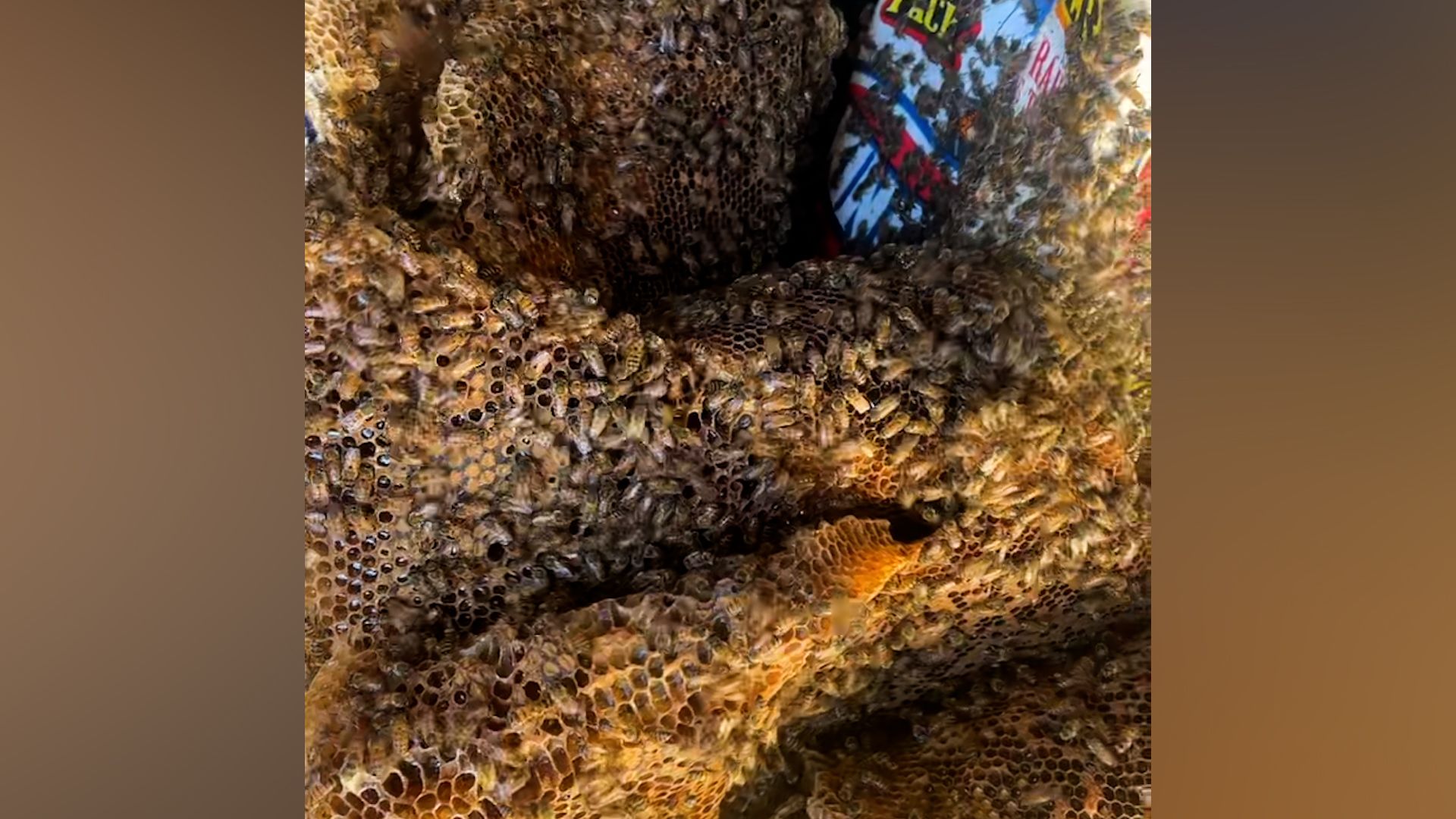
Phoenix-based beekeeper Cricket Aldridge, who now spends many of her days saving bees from the heat, told CNN “bees’ homes are being melted” and “other bee colonies are attacking honeybee colonies due to food scarcity.”
According to Dan Winter, President of the American Beekeeping Federation, it requires very extreme heat and no water for beehives to melt because they use evaporation to cool down.
Arizona honeybees battle the relentless heat by using water and their wings to cool down the hive, Nair explained, and to keep the brood alive, they must maintain a hive temperature between 92 and 104 degrees. However, with temperatures so high, there’s only so much they can do.
“We are seeing dead bees around hives,” Nair says, “That is because of the heat – it’s too hot in the hives and bees won’t let[other bees] back in.”
Cricket Aldridg
A bee colony being moved in Arizona.
When honeybees leave the hive to forage for food, options are scarce, according to Nair. Weeks of nonstop heat in Phoenix have wilted flowers and killed saguaro cactuses, important food sources for honeybees.
Nair warns that humans could see the impacts of more dead honeybees for many years to come, and a drop in pollination could lead to a disruption in food production. Foods like melons, citrus fruits, zucchini, coffee and chocolate all depend on bees.
Phoenix’s record heat is killing off cactuses
Unfortunately, heat is just another added stress on honeybee populations that are already in danger. Last year, beekeepers in the US lost an estimated 48% of their managed honeybee colonies, according to Beeinformed.org.
Winter said bee populations are on the decline due to rising threats from pests and threats to their nutrition and habitat. Winter told CNN that humans have put bee habitats in jeopardy with monoculture, which “is a big problem because it doesn’t leave a lot of nutrition for bees.”
Bee experts have a message for regions dealing with extreme heat – put out water for bees and maintain more native plant species. “Bees usually do well as long as they have water,” Winter said.
The medical science is in, the debate is over. Yes it is hard for some people to understand or change. All their lives they really thought biology of sex, who was male or female came down to if your part was an outtie or an innie. If it dangled outside the body or if you could put something in it. That is not how biologists classify male and female anymore. The notion that sex is not strictly binary is not even scientifically controversial. Among experts it is a given, an unavoidable conclusion derived from actually understanding the biology of sex. It is more accurate to describe biological sex in humans as bimodal, but not strictly binary. In order for sex to be binary there would need to be two non-overlapping and unambiguous ends to that continuum, but there clearly isn’t. There is every conceivable type of overlap in the middle – hence bimodal, but not binary.
There are two paraghraps that address the question of gametes and of sexual organs, again proving that they are not binary. Also the article address differences in sexual organs and how they are not the rare differences they once were thought to be. They are in fact much more common. This article is very informative and easy to read. It is a bit longer than some want to read but if you want to know the truth about sex, trans gender, and biology you will read it. If not you will repeat and stick to the same failed incorrect talking points. Hugs
What does the science actually say about biological sex?
The debate over how best to approach people who identify as transgender or non-binary is many-layered and can be complex. Medical questions about the evidence for the safety and efficacy of specific interventions, and the ethics of treating minors, deserve thoughtful and open discussion. The optimal way to incorporate transgender athletes into competition also could benefit from a good faith debate.
Unfortunately, discussion around transgender issues suffers from at least two sources. First, it has been coopted as part of a politically-motivated culture war. This reality is exactly the opposite of thoughtful good-faith discussion. Second, for most people wrapping their head around a reality that may not conform to traditional notions of strictly binary sex and gender takes a lot or processing. Misconceptions about the basic science are rampant, and are, in fact, encouraged by the culture warriors.
Many of those who are pushing back against trans healthcare and broader acceptance are explicitly premising their position on the claim that biological sex is strictly and obviously binary. They portray themselves as taking the scientific high ground, and anyone who questions this obvious biological fact are the ones engaged in pseudoscience.
Most of us are born male or female. This is not our “assigned gender”: it’s our biological sex. An individuals’s sex is determined in animals (and plants) via the chromosomes one is born with.
Wrong, right out of the gate (as I will detail below). He goes on:
For most of us, we ARE male, or we ARE female. Unfortunately, early scientific articles conflated “gender” and “sex”, and much of society conflate them this as well. Depending on context, someone might need to know your sex (karyotype).
He is saying that sex is strictly binary, it is entirely determined by karyotype, and it is completely distinct from gender. While these views are common, especially among those who are critical of the trans identity, they are also demonstrably scientifically wrong.
Biological sex is not binary
The notion that sex is not strictly binary is not even scientifically controversial. Among experts it is a given, an unavoidable conclusion derived from actually understanding the biology of sex. It is more accurate to describe biological sex in humans as bimodal, but not strictly binary. Bimodal means that there are essentially two dimensions to the continuum of biological sex. In order for sex to be binary there would need to be two non-overlapping and unambiguous ends to that continuum, but there clearly isn’t. There is every conceivable type of overlap in the middle – hence bimodal, but not binary.
This matters, and in fact it is the overlapping middle that is the very point of the discussion. Denying a trans identity is denying that overlapping middle. Let’s review the biology of sex to see what I mean.
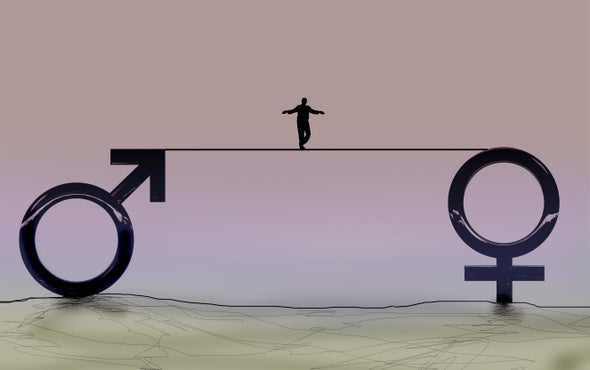
It is absolutely true that humans display sexual dimorphism, with a typical male and typical female set of traits. There is no third sex, or pole, or sexual archetype. This can be distinguished, for example, from body type which is understood as trimodal – ectomorphic, endomorphic, and mesomorphic – forming a triangle with individuals falling somewhere between the three poles. Biological sex has only two poles, with one axis of variation between them. (See the main image for a good visual representation of binary vs bimodal.)
It is also true that most people tend to cluster around one of the two poles of biological sex. At first glance, looking superficially at the human population, it may seem binary. This is because binary and bimodal can look very similar if you don’t dig down into the details – so let’s do that.
First we need to consider all the traits relevant to sex that vary along this bimodal distribution. The language and concepts for these traits have been evolving too, but here is a current generally accepted scheme for organizing these traits:
Genetic sex
Morphological sex, which includes reproductive organs, external genitalia, gametes and secondary morphological sexual characteristics (sometimes these and genetic sex are referred to collectively as biological sex, but this is problematic for reasons I will go over)
Sexual orientation (sexual attraction)
Gender identity (how one understands and feels about their own gender)
Gender expression (how one expresses their gender to the world)
Let’s start with genetic sex. This may seem like a home run for binary sex, with females being XX and males XY, but on closer inspection this is not true. Again, yes, most people fall into one of these two chromosomal patterns, but we also see other patterns, such as XXY, XYY, XXX, etc. Further, some people can be mosaics, with some cells having XX and others XY.
But I think even more important than these chromosomal states is the fact that chromosomes alone do not fully tell the story of the genetics of sexual dimorphism. There are a number of genes involved in sexual characteristics (not all located on the sex chromosomes), and they can vary dramatically within chromosomal sex types, and even among the cells in an individual person, and throughout one’s life. John Achermann, who studies sex development and endocrinology at University College London’s Institute of Child Health, characterizes the situation this way:
I think there’s much greater diversity within male or female, and there is certainly an area of overlap where some people can’t easily define themselves within the binary structure.
Another layer of genetic complexity is gene copy number. For example, XY individuals with extra copies of the WNT4 gene can develop atypical genitals and gonads, and a rudimentary uterus and Fallopian tubes.
Further still, genes alone are not the whole picture of biological sex. There are a host of epigenetic factors at play, including hormone levels at different stages of development, hormone receptor sensitivity, and metabolic factors. All of these influence the development of sexual characteristics, which can vary along a spectrum. For example, there are XY females who are chromosomal males but develop mostly or entirely female because of androgen insensitivity. There are, essentially, women walking around who have no idea they have XY chromosomes.
Let’s move on to the primary sexual characteristics, which are essentially the internal reproductive organs and external genitalia; for females that is ovaries, uterus, and vagina, for males it is testes, prostate and penis. Do these characteristics vary in a strictly binary or bimodal way? When it comes to gametes, these are strictly binary – egg or sperm. However, even here there are intersex individuals with “ovotestes”, some of which can make both eggs and sperm. It is fair to say when it comes to reproduction the system is binary, but sex is about more than reproduction.
This is another concept that many people get caught up on, thinking in evolutionarily simplistic ways. The argument often goes that “sex is only about reproduction”, and since gametes are binary, sex in total is binary. This is incredibly reductionist, and misses the fact that traits often simultaneously serve multiple evolutionary ends. Sex, for example, is also about bonding, social relationships, power, and dominance. Think about this – what percentage of the time that humans have sex is the express purpose reproduction? How many people have no desire to ever have children, but still have an active sex life? Can there be romance without sex? Why are there so many aspects of sex that are not strictly reproductive?
Beyond gametes, other primary sexual characteristics are clearly bimodal but not strictly binary. Developmentally, the penis is the male correlate of the female clitoris. Both vary significantly in size, in rare cases meeting in the middle in what is called “ambiguous genitalia”. Some labia may partially fuse into a scrotum. There is also no sharp demarcation for how large a clitoris has to be or how small a penis has to be in order to be considered “ambiguous”. Such conditions are also not uncommon. A 2000 review found:
We surveyed the medical literature from 1955 to the present for studies of the frequency of deviation from the ideal male or female. We conclude that this frequency may be as high as 2% of live births. The frequency of individuals receiving “corrective” genital surgery, however, probably runs between 1 and 2 per 1,000 live births (0.1-0.2%).
A 2015 review puts the estimate at 1.7%. Still, some may argue, this is all not relevant to the question of, for example, gender identity. However, it establishes the complexity of sexual development, which results from not only chromosomes but a host of genetic and epigenetic factors, hormone levels, hormone receptor sensitivity, and metabolic factors. There is no one measure that by itself determines biological sex. And, most importantly, even within the subpopulation who have unambiguously male or female chromosomes, gametes, and genitals, there is considerable variation in their secondary sexual characteristics, which also vary in a bimodal and not strictly binary pattern.
Some secondary sexual characteristics are present from a young age while others emerge during puberty, and include bone structure, fat distribution, shape of the pelvis, muscular development, height, pitch of voice, and degree and pattern of hairiness. For all of these characteristics there are clusters of typically male or typically female, but these are statistical with great variation within groups. For example, if the only thing you knew about someone was how tall they were, or how hairy they were, you would likely not be able to determine their sex. Men are statistically taller and stronger than women, but many men are shorter than or weaker than many women. I have less body hair than many women I know.
If what I have discussed up to this point were all there were to sex, I honestly don’t think the topic would be that controversial. All biological traits vary in a complex and messy way, and sexual characteristics are no exception (why would they be?). Most of the controversy surrounds sexual dimorphism and the brain. Again, here we see that there are statistical differences only, with greater variation within the sexes than between them.
One brain feature that gets a lot of attention, however, is sexual orientation. I know I am framing this with a conclusion that some people contest, that sexual orientation is essentially determined by brain development, but that is the current consensus of scientific evidence and opinion. People are generally born with their sexual orientation, even if it is not fully realized until they go through puberty. In fact, I would consider sexual orientation to be part of biological sex (which is why I divided up sexuality as I did above).
Especially before the science dealing with this issue was more mature, this was a controversial question. Those who opposed gay rights claimed (and some still claim) that homosexuality is a choice, or a product of social influences, perhaps even a mental disorder or pathology. Years of research has lead to the conclusion that sexual orientation among humans is simply more fluid than old-school strictly binary concepts. People are heterosexual, homosexual, bisexual, pansexual (romantic feelings are blind to sex or gender), asexual, and everything in between. I don’t think that anyone can reasonable defend today the position that sexual orientation is strictly binary, and any deviation is pathological.
If, then (as seems clear), sexual orientation is a brain function largely determined by genes, hormones, receptor sensitivity, and other epigenetic factors all affecting brain development and physiology, then it’s reasonable to consider sexual orientation an aspect of biological sex also. In a 2018 commentary published in PNAS, neurobiologist Dick F. Swaab begins:
Current evidence indicates that sexual differentiation of the human brain occurs during fetal and neonatal development and programs our gender identity—our feeling of being male or female and our sexual orientation as hetero-, homo-, or bisexual.
What does this mean for our binary vs bimodal sex question? I think it makes it pretty clear that biological sex is not strictly binary, because we can see any combination of morphological sexual characteristics and sexual orientation – you can’t know someone’s sexual orientation by looking at their genitals.
This is where communicating these ideas gets tricky, because some experts might express this reality by saying that there are more than two sexes. I think this may be counterproductive conceptually. I prefer the “bimodal but not binary” approach. But understand the real point – a strictly binary definition of biological sex cannot possibly capture all of the actual variation, which includes many possible states of sexual orientation. You can also see, on the other side, that claiming there are only two sexes because “gametes” is hopelessly reductionist and poorly informed.
And now gender
The situation gets more complex when we turn to gender identity. All the old arguments that were marshalled against homosexuality (that it is deviant, pathological, a choice, a social contagion) are now being applied to those with a non-traditional gender identity, and with just as little scientific basis. The scientific research is not as well developed as it is for sexual orientation, but what we have so far strongly suggests (just as it did in previous decades for orientation) that people are essentially born with their gender identity. Many people who identify as trans knew their gender identity from a very young age, similar to sexual orientation. The principle of parsimony would suggest gender identity is also a brain phenomenon, and therefore just another aspect of biological sex.
What researchers find when they simply describe gender in the population are people who display pretty much every combination of morphological sex, gender identity, expression, and sexual orientation. Gender identity does not appear to be binary at all, and does not even fall into categories as cleanly as sexual orientation. What we know is that a small percentage of the population does not identify with the sex that they were assigned at birth. Why would I say it that way? This too has become an issue of controversy, as if sex is an opinion. However, given everything I reviewed above, what is the alternative? “Biological sex” doesn’t work, because it probably includes gender identity, so that becomes self-contradictory. Sex is assigned at birth based entirely (in most cases – unless for some reason there was a genetic test) on examination of the external genitalia. Sure, because we are a bimodal species, this is a reasonable marker for biological sex for many people. But of course it does not capture all of the biological aspects of sex we reviewed (such as genetics and hormone levels), does not capture sexual characteristics that do not emerge until puberty, and does not capture anything to do with brain development and function.
To take the position that the gender assigned at birth is completely objective and unambiguous, the beginning and ending of biological sex, is to also believe that external genitalia as manifested at birth are 100% determinative of every other aspect of biological sex. But we know this not to be true. It’s definitely not true for secondary sexual characteristics, which can vary significantly, it’s not true for sexual orientation, and it’s not true for gender identity.
In practice, therefore, someone who is trans (or gender non-binary or gender queer) does not have a gender identity that traditionally aligns with their external genitalia (as it is apparent shortly after birth). This is no different than people who have a sexual orientation that does not traditionally align with their external genitalia. This is not at all surprising once we understand the complex messiness of sexual development. In my opinion, a reasonably thorough and objective review of the current scientific understanding of biological sex results in the unavoidable conclusion that human sex is bimodal but not strictly binary.
Denying difference out of existence
Some people, however, may accept the specific arguments but reject the conclusion with what I consider to be dubious logic. One approach is to say – what is the practical difference between bimodal and binary? Why should sexuality in any way be defined by the 2% (to use a representative round figure) rather than the 98%? But this misses the actual issue, which is how we think about the 2% – are they part of biological diversity or can we define them out of existence?
The point of promoting the fiction of strictly binary sex is that it eliminates the middle ground. There are two sexes and nothing in between. Anyone who does, in some way, fall in between is clearly an “aberration”. Further (and this is often the point) they claim that any conflict between genitals and sexuality must be a mental disorder. Given all the biological evidence, however, it seems unavoidable to conclude that human sexuality is bimodal, with lots of variation in the middle. From this perspective trans individuals are just one more manifestation of the full and demonstrably biological diversity that is human sexuality.
The other related approach is to pathologize the trans identity. Just as with homosexuality in decades past, this view holds that a trans identity must be pathological, because there are only two “correct” gender identities, the ones that traditionally align with one’s external genitalia. This position ultimately rests on either circular reasoning or a flawed appeal to nature (again, “because gametes”).
With homosexuality, the question of “nature” is easier to answer. Homosexuality exists pretty much in every animal species we examine and to similar levels. Some (like bonobos) have extremely high rates of homosexual and/or bisexual behavior. So it’s hard to argue that homosexuality is “unnatural”. There is no equivalent to gender among non-human animals, however. Because gender expression is so cultural, it is hard to scientifically examine what an animal’s gender identity might be. Attempts to infer from sexual behavior would be confounded with sexual orientation. (There is some interest in researching this question among primates, however.)
It is also possible to argue that sexual orientation, which is pretty clearly biological, may be phenomenologically different in nature from gender identity – that while sexual orientation is biological, gender identity is not. This is not impossible, and we do need further research to have a confident answer. But given what we do know the simplest answer is that gender identity is a brain function as much as sexual orientation is. Gender identity awareness is usually established by age 2-3, which itself is strong evidence it is biological. Further, the position that “gender identity is all psychocultural” should not be treated as the default answer, and it is not reasonable to place the burden of proof entirely on the biological side of the question.
We could also approach this question scientifically by looking at the brains of cis vs trans individuals to see if there is a difference. This research is preliminary, with mixed findings, but is trending in the direction of showing some differences between cis and trans brains. Overall studies do find differences in some measured features, with trans brains looking more like the identified gender than the apparent biological sex (even prior to any medical interventions). A 2015 review found:
A difference in brain phenotype of people with GI compared to natal sex controls in various brain measures suggests a sex-atypical development of the brain. However, it remains unclear whether these changes originate from prenatal organization alone. Knowledge of the development of the brain during adolescence (Giedd et al., 2012), and the importance of puberty in the clinical presentation of GI (Steensma et al., 2013), suggest that this period is pivotal in understanding the development of GI. Recent work that found subtle deviations in GM volume (Hoekzema et al., 2015), and brain activation during executive functioning from their natal sex (Staphorsius et al., 2015), as well as a response to a pheromone-like substance that was similar to their experienced gender in transgender adolescents (Burke et al., 2014), underscores the need to determine the timing and nature of sex-atypical organization.
These results on brain structure are thus partially in line with a sex-atypical differentiation of the brain during early development in individuals with GD (gender dysphoria), but might also suggest that other mechanisms are involved. Indeed, using resting state MRI, we observed GD-specific functional connectivity in the visual network in adolescent girls with GD. The latter is in support of a more recent hypothesis on alterations in brain networks important for own body perception and self-referential processing in individuals with GD.
Overall it’s too early to form a confident conclusion, but the data is trending in the exact same direction as similar research into sexual orientation – the brains of trans individuals appear to be different than their cis counterparts.
All things considered, I think an objective look at the science of biological sex indicates that humans are sexually dimorphic and bimodal, but that biological sex is much more complicated than it may at first appear and is not strictly binary. While we still need to do a lot more research to fully understand the trans / gender non-binary phenomenon, it seems that variations in gender identity are just one more manifestation of biological sexual variability. There is also no one system to categorize all of biological sex (do we use chromosomes, genes, hormone levels, genitalia, gametes?), and certainly humanity cannot be placed entirely into two categories. The binary system breaks down in the middle.
Author
Steven NovellaFounder and currently Executive Editor of Science-Based Medicine Steven Novella, MD is an academic clinical neurologist at the Yale University School of Medicine. He is also the host and producer of the popular weekly science podcast, The Skeptics’ Guide to the Universe, and the author of the NeuroLogicaBlog, a daily blog that covers news and issues in neuroscience, but also general science, scientific skepticism, philosophy of science, critical thinking, and the intersection of science with the media and society. Dr. Novella also has produced two courses with The Great Courses, and published a book on critical thinking – also called The Skeptics Guide to the Universe.View all posts
OK the last article I posted from Scientific American may not have been clear enough that it is far to simplistic to claim that there are only two distinct genders. This article is long and more detailed with science then many will want to read, but it shows the idea of binary sex is wrong. A qoute from the article. Sex can be much more complicated than it at first seems. According to the simple scenario, the presence or absence of a Y chromosome is what counts: with it, you are male, and without it, you are female. But doctors have long known that some people straddle the boundary—their sex chromosomes say one thing, but their gonads (ovaries or testes) or sexual anatomy say another. The article talks about a woman giving birth to a baby and she found out the following. The baby was fine—but follow-up tests had revealed something astonishing about the mother. Her body was built of cells from two individuals, probably from twin embryos that had merged in her own mother’s womb. And there was more. One set of cells carried two X chromosomes, the complement that typically makes a person female; the other had an X and a Y. Halfway through her fifth decade and pregnant with her third child, the woman learned for the first time that a large part of her body was chromosomally male. And here is the kicker.What’s more, new technologies in DNA sequencing and cell biology are revealing that almost everyone is, to varying degrees, a patchwork of genetically distinct cells, some with a sex that might not match that of the rest of their body.
Often those who are stuck in the only two sexes camp claim any devation is intersexs or an anomoly that is rare and a small population. But the research shows there is a lot more variation than was know before new science was available. But beyond this, there could be even more variation. Since the 1990s, researchers have identified more than 25 genes involved in DSDs, and next-generation DNA sequencing in the past few years has uncovered a wide range of variations in these genes that have mild effects on individuals, rather than causing DSDs. “Biologically, it’s a spectrum,” says Vilain. Hugs
As a clinical geneticist, Paul James is accustomed to discussing some of the most delicate issues with his patients. But in early 2010, he found himself having a particularly awkward conversation about sex.
A 46-year-old pregnant woman had visited his clinic at the Royal Melbourne Hospital in Australia to hear the results of an amniocentesis test to screen her baby’s chromosomes for abnormalities. The baby was fine—but follow-up tests had revealed something astonishing about the mother. Her body was built of cells from two individuals, probably from twin embryos that had merged in her own mother’s womb. And there was more. One set of cells carried two X chromosomes, the complement that typically makes a person female; the other had an X and a Y. Halfway through her fifth decade and pregnant with her third child, the woman learned for the first time that a large part of her body was chromosomally male. “That’s kind of science-fiction material for someone who just came in for an amniocentesis,” says James.
Sex can be much more complicated than it at first seems. According to the simple scenario, the presence or absence of a Y chromosome is what counts: with it, you are male, and without it, you are female. But doctors have long known that some people straddle the boundary—their sex chromosomes say one thing, but their gonads (ovaries or testes) or sexual anatomy say another. Parents of children with these kinds of conditions—known as intersex conditions, or differences or disorders of sex development (DSDs)—often face difficult decisions about whether to bring up their child as a boy or a girl. Some researchers now say that as many as 1 person in 100 has some form of DSD.
When genetics is taken into consideration, the boundary between the sexes becomes even blurrier. Scientists have identified many of the genes involved in the main forms of DSD, and have uncovered variations in these genes that have subtle effects on a person’s anatomical or physiological sex. What’s more, new technologies in DNA sequencing and cell biology are revealing that almost everyone is, to varying degrees, a patchwork of genetically distinct cells, some with a sex that might not match that of the rest of their body. Some studies even suggest that the sex of each cell drives its behaviour, through a complicated network of molecular interactions. “I think there’s much greater diversity within male or female, and there is certainly an area of overlap where some people can’t easily define themselves within the binary structure,” says John Achermann, who studies sex development and endocrinology at University College London’s Institute of Child Health.
These discoveries do not sit well in a world in which sex is still defined in binary terms. Few legal systems allow for any ambiguity in biological sex, and a person’s legal rights and social status can be heavily influenced by whether their birth certificate says male or female.
“The main problem with a strong dichotomy is that there are intermediate cases that push the limits and ask us to figure out exactly where the dividing line is between males and females,” says Arthur Arnold at the University of California, Los Angeles, who studies biological sex differences. “And that’s often a very difficult problem, because sex can be defined a number of ways.”
THE START OF SEX
That the two sexes are physically different is obvious, but at the start of life, it is not. Five weeks into development, a human embryo has the potential to form both male and female anatomy. Next to the developing kidneys, two bulges known as the gonadal ridges emerge alongside two pairs of ducts, one of which can form the uterus and Fallopian tubes, and the other the male internal genital plumbing: the epididymes, vas deferentia and seminal vesicles. At six weeks, the gonad switches on the developmental pathway to become an ovary or a testis. If a testis develops, it secretes testosterone, which supports the development of the male ducts. It also makes other hormones that force the presumptive uterus and Fallopian tubes to shrink away. If the gonad becomes an ovary, it makes oestrogen, and the lack of testosterone causes the male plumbing to wither. The sex hormones also dictate the development of the external genitalia, and they come into play once more at puberty, triggering the development of secondary sexual characteristics such as breasts or facial hair.
Changes to any of these processes can have dramatic effects on an individual’s sex. Gene mutations affecting gonad development can result in a person with XY chromosomes developing typically female characteristics, whereas alterations in hormone signalling can cause XX individuals to develop along male lines.
For many years, scientists believed that female development was the default programme, and that male development was actively switched on by the presence of a particular gene on the Y chromosome. In 1990, researchers made headlines when they uncovered the identity of this gene, which they called SRY. Just by itself, this gene can switch the gonad from ovarian to testicular development. For example, XX individuals who carry a fragment of the Y chromosome that contains SRY develop as males.
By the turn of the millennium, however, the idea of femaleness being a passive default option had been toppled by the discovery of genes that actively promote ovarian development and suppress the testicular programme—such as one called WNT4. XY individuals with extra copies of this gene can develop atypical genitals and gonads, and a rudimentary uterus and Fallopian tubes. In 2011, researchers showed that if another key ovarian gene, RSPO1, is not working normally, it causes XX people to develop an ovotestis—a gonad with areas of both ovarian and testicular development.
These discoveries have pointed to a complex process of sex determination, in which the identity of the gonad emerges from a contest between two opposing networks of gene activity. Changes in the activity or amounts of molecules (such as WNT4) in the networks can tip the balance towards or away from the sex seemingly spelled out by the chromosomes. “It has been, in a sense, a philosophical change in our way of looking at sex; that it’s a balance,” says Eric Vilain, a clinician and the director of the Center for Gender-Based Biology at the University of California, Los Angeles. “It’s more of a systems-biology view of the world of sex.”
BATTLE OF THE SEXES
According to some scientists, that balance can shift long after development is over. Studies in mice suggest that the gonad teeters between being male and female throughout life, its identity requiring constant maintenance. In 2009, researchers reported deactivating an ovarian gene called Foxl2 in adult female mice; they found that the granulosa cells that support the development of eggs transformed into Sertoli cells, which support sperm development. Two years later, a separate team showed the opposite: that inactivating a gene called Dmrt1 could turn adult testicular cells into ovarian ones. “That was the big shock, the fact that it was going on post-natally,” says Vincent Harley, a geneticist who studies gonad development at the MIMR-PHI Institute for Medical Research in Melbourne.
The gonad is not the only source of diversity in sex. A number of DSDs are caused by changes in the machinery that responds to hormonal signals from the gonads and other glands. Complete androgen insensitivity syndrome, or CAIS, for example, arises when a person’s cells are deaf to male sex hormones, usually because the receptors that respond to the hormones are not working. People with CAIS have Y chromosomes and internal testes, but their external genitalia are female, and they develop as females at puberty.
Conditions such as these meet the medical definition of DSDs, in which an individual’s anatomical sex seems to be at odds with their chromosomal or gonadal sex. But they are rare—affecting about 1 in 4,500 people. Some researchers now say that the definition should be widened to include subtle variations of anatomy such as mild hypospadias, in which a man’s urethral opening is on the underside of his penis rather than at the tip. The most inclusive definitions point to the figure of 1 in 100 people having some form of DSD, says Vilain.
But beyond this, there could be even more variation. Since the 1990s, researchers have identified more than 25 genes involved in DSDs, and next-generation DNA sequencing in the past few years has uncovered a wide range of variations in these genes that have mild effects on individuals, rather than causing DSDs. “Biologically, it’s a spectrum,” says Vilain.
A DSD called congenital adrenal hyperplasia (CAH), for example, causes the body to produce excessive amounts of male sex hormones; XX individuals with this condition are born with ambiguous genitalia (an enlarged clitoris and fused labia that resemble a scrotum). It is usually caused by a severe deficiency in an enzyme called 21-hydroxylase. But women carrying mutations that result in a milder deficiency develop a ‘non-classical’ form of CAH, which affects about 1 in 1,000 individuals; they may have male-like facial and body hair, irregular periods or fertility problems—or they might have no obvious symptoms at all. Another gene, NR5A1, is currently fascinating researchers because variations in it cause a wide range of effects, from underdeveloped gonads to mild hypospadias in men, and premature menopause in women.
Many people never discover their condition unless they seek help for infertility, or discover it through some other brush with medicine. Last year, for example, surgeons reported that they had been operating on a hernia in a man, when they discovered that he had a womb. The man was 70, and had fathered four children.
CELLULAR SEX
Studies of DSDs have shown that sex is no simple dichotomy. But things become even more complex when scientists zoom in to look at individual cells. The common assumption that every cell contains the same set of genes is untrue. Some people have mosaicism: they develop from a single fertilized egg but become a patchwork of cells with different genetic make-ups. This can happen when sex chromosomes are doled out unevenly between dividing cells during early embryonic development. For example, an embryo that starts off as XY can lose a Y chromosome from a subset of its cells. If most cells end up as XY, the result is a physically typical male, but if most cells are X, the result is a female with a condition called Turner’s syndrome, which tends to result in restricted height and underdeveloped ovaries. This kind of mosaicism is rare, affecting about 1 in 15,000 people.
The effects of sex-chromosome mosaicism range from the prosaic to the extraordinary. A few cases have been documented in which a mosaic XXY embryo became a mix of two cell types—some with two X chromosomes and some with two Xs and a Y—and then split early in development. This results in ‘identical’ twins of different sexes.
There is a second way in which a person can end up with cells of different chromosomal sexes. James’s patient was a chimaera: a person who develops from a mixture of two fertilized eggs, usually owing to a merger between embryonic twins in the womb. This kind of chimaerism resulting in a DSD is extremely rare, representing about 1% of all DSD cases.
Another form of chimaerism, however, is now known to be widespread. Termed microchimaerism, it happens when stem cells from a fetus cross the placenta into the mother’s body, and vice versa. It was first identified in the early 1970s—but the big surprise came more than two decades later, when researchers discovered how long these crossover cells survive, even though they are foreign tissue that the body should, in theory, reject. A study in 1996 recorded women with fetal cells in their blood as many as 27 years after giving birth; another found that maternal cells remain in children up to adulthood. This type of work has further blurred the sex divide, because it means that men often carry cells from their mothers, and women who have been pregnant with a male fetus can carry a smattering of its discarded cells.
Microchimaeric cells have been found in many tissues. In 2012, for example, immunologist Lee Nelson and her team at the University of Washington in Seattle found XY cells in post-mortem samples of women’s brains. The oldest woman carrying male DNA was 94 years old. Other studies have shown that these immigrant cells are not idle; they integrate into their new environment and acquire specialized functions, including (in mice at least) forming neurons in the brain. But what is not known is how a peppering of male cells in a female, or vice versa, affects the health or characteristics of a tissue—for example, whether it makes the tissue more susceptible to diseases more common in the opposite sex. “I think that’s a great question,” says Nelson, “and it is essentially entirely unaddressed.” In terms of human behaviour, the consensus is that a few male microchimaeric cells in the brain seem unlikely to have a major effect on a woman.
Scientists are now finding that XX and XY cells behave in different ways, and that this can be independent of the action of sex hormones. “To tell you the truth, it’s actually kind of surprising how big an effect of sex chromosomes we’ve been able to see,” says Arnold. He and his colleagues have shown that the dose of X chromosomes in a mouse’s body can affect its metabolism, and studies in a lab dish suggest that XX and XY cells behave differently on a molecular level, for example with different metabolic responses to stress. The next challenge, says Arnold, is to uncover the mechanisms. His team is studying the handful of X-chromosome genes now known to be more active in females than in males. “I actually think that there are more sex differences than we know of,” says Arnold.
BEYOND THE BINARY
Biologists may have been building a more nuanced view of sex, but society has yet to catch up. True, more than half a century of activism from members of the lesbian, gay, bisexual and transgender community has softened social attitudes to sexual orientation and gender. Many societies are now comfortable with men and women crossing conventional societal boundaries in their choice of appearance, career and sexual partner. But when it comes to sex, there is still intense social pressure to conform to the binary model.
This pressure has meant that people born with clear DSDs often undergo surgery to ‘normalize’ their genitals. Such surgery is controversial because it is usually performed on babies, who are too young to consent, and risks assigning a sex at odds with the child’s ultimate gender identity—their sense of their own gender. Intersex advocacy groups have therefore argued that doctors and parents should at least wait until a child is old enough to communicate their gender identity, which typically manifests around the age of three, or old enough to decide whether they want surgery at all.
This issue was brought into focus by a lawsuit filed in South Carolina in May 2013 by the adoptive parents of a child known as MC, who was born with ovotesticular DSD, a condition that produces ambiguous genitalia and gonads with both ovarian and testicular tissue. When MC was 16 months old, doctors performed surgery to assign the child as female—but MC, who is now eight years old, went on to develop a male gender identity. Because he was in state care at the time of his treatment, the lawsuit alleged not only that the surgery constituted medical malpractice, but also that the state denied him his constitutional right to bodily integrity and his right to reproduce. Last month, a court decision prevented the federal case from going to trial, but a state case is ongoing.
“This is potentially a critically important decision for children born with intersex traits,” says Julie Greenberg, a specialist in legal issues relating to gender and sex at Thomas Jefferson School of Law in San Diego, California. The suit will hopefully encourage doctors in the United States to refrain from performing operations on infants with DSDs when there are questions about their medical necessity, she says. It could raise awareness about “the emotional and physical struggles intersex people are forced to endure because doctors wanted to ‘help’ us fit in,” says Georgiann Davis, a sociologist who studies issues surrounding intersex traits and gender at the University of Nevada, Las Vegas, who was born with CAIS.
Doctors and scientists are sympathetic to these concerns, but the MC case also makes some uneasy—because they know how much is still to be learned about the biology of sex. They think that changing medical practice by legal ruling is not ideal, and would like to see more data collected on outcomes such as quality of life and sexual function to help decide the best course of action for people with DSDs—something that researchers are starting to do.
Diagnoses of DSDs once relied on hormone tests, anatomical inspections and imaging, followed by painstaking tests of one gene at a time. Now, advances in genetic techniques mean that teams can analyse multiple genes at once, aiming straight for a genetic diagnosis and making the process less stressful for families. Vilain, for example, is using whole-exome sequencing—which sequences the protein-coding regions of a person’s entire genome—on XY people with DSDs. Last year, his team showed that exome sequencing could offer a probable diagnosis in 35% of the study participants whose genetic cause had been unknown.
Vilain, Harley and Achermann say that doctors are taking an increasingly circumspect attitude to genital surgery. Children with DSDs are treated by multidisciplinary teams that aim to tailor management and support to each individual and their family, but this usually involves raising a child as male or female even if no surgery is done. Scientists and advocacy groups mostly agree on this, says Vilain: “It might be difficult for children to be raised in a gender that just does not exist out there.” In most countries, it is legally impossible to be anything but male or female.
Yet if biologists continue to show that sex is a spectrum, then society and state will have to grapple with the consequences, and work out where and how to draw the line. Many transgender and intersex activists dream of a world where a person’s sex or gender is irrelevant. Although some governments are moving in this direction, Greenberg is pessimistic about the prospects of realizing this dream—in the United States, at least. “I think to get rid of gender markers altogether or to allow a third, indeterminate marker, is going to be difficult.”
So if the law requires that a person is male or female, should that sex be assigned by anatomy, hormones, cells or chromosomes, and what should be done if they clash? “My feeling is that since there is not one biological parameter that takes over every other parameter, at the end of the day, gender identity seems to be the most reasonable parameter,” says Vilain. In other words, if you want to know whether someone is male or female, it may be best just to ask.
I recently posted a video on how a lot of things go into determining a person’s sex. A human’s sex is created using different ingredients, and everyone has different amounts of those ingredients. I realized I should present a non-video presentation also. I went looking for graphs or charts to explain what the video said, when I found this great article in Scientific American. It has the graphs and charts, but more importantly it addresses the issue of males have external sexual organs and females have internal ones. Here is a quote from the article. Biological sex, on the other hand, appears to leave less room for debate. You either have two X chromosomes or an X and a Y; ovaries or testes; a vagina or a penis. Regardless of how an individual ends up identifying, they are assigned to one sex or the other at birth based on these binary sets of characteristics. But of course, sex is not that simple either. Moreover, sex cannot be depicted as a simple, one-dimensional scale. In the world of DSDs, an individual may shift along the spectrum as development brings new biological factors into play.
The article is informative and pretty easy to read. Hugs
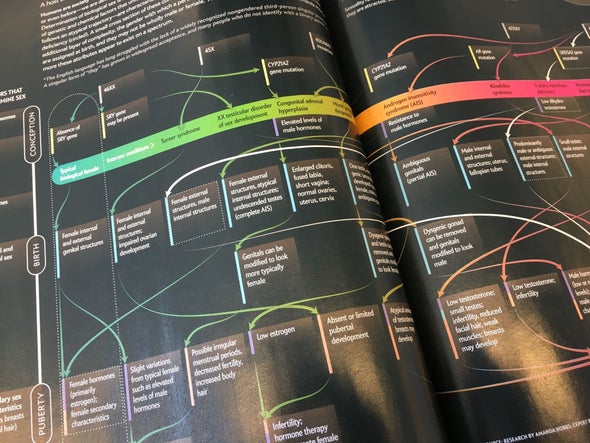
Infographic reveals the startling complexity of sex determination
Infographic by Pitch Interactive and Amanda Montañez Credit: Amanda Montañez (photo)
Sex and gender pervade nearly every aspect of our lives. Each time we use a public restroom, shop for clothes, or fill out a form, we are insistently reminded that we must be either male or female; men or women; boys or girls. Even things that ostensibly have nothing to do with sex or gender—what we eat, for example, or the books we read—are often sold to us as if they are necessarily feminine or masculine.
Some of these conventions currently face challenges, some more polarizing than others. On the milder end of things, enterprising online retailers promote gender-neutral clothing for babies, and city transport authorities mercifully abolish the phrase “ladies and gentlemen” from public announcements. And on the other side of the controversy scale, U.S. state legislators debate so-called “bathroom bills,” which would prohibit transgender individuals from using public restrooms corresponding to their gender identity. This dispute has prompted some venues to offer a gender-neutral restroom option, or simply to do away with gender distinctions altogether in their facilities.
Much of the public discourse in this arena centers on gender rather than sex, presumably because gender is understood to be somewhat subjective; it is a social construct that can be complex, fluid, multifaceted. Biological sex, on the other hand, appears to leave less room for debate. You either have two X chromosomes or an X and a Y; ovaries or testes; a vagina or a penis. Regardless of how an individual ends up identifying, they are assigned to one sex or the other at birth based on these binary sets of characteristics.
But of course, sex is not that simple either.
The September issue of Scientific American explores the fascinating and evolving science of sex and gender. One of the graphics I had the pleasure of working on breaks down the idea of biological sex as a non-binary attribute, focusing largely on what clinicians refer to as disorders of sex development (DSD), also known as intersex.
The project was originally conceived as a data-driven graphic exploring the spectra of sex and gender. I wondered, for instance, what data could tell us about the frequency of transgender and non-binary identities, what proportion of the population is intersex, and how that value might break down into rates of specific DSDs.
I hired the researcher Amanda Hobbs to look into these questions, and what she came back with, rather than answers, looked more like a series of new questions. The search for solid data on transgender and intersex populations proved challenging, and was confounded by a variety of factors. For example, surveys often lump transgender in with gay, lesbian, and bisexual identities. And DSDs, in addition to being variously defined by different entities, sometimes go undetected or emerge unexpectedly, either during sexual development or later in life.
The project abruptly transformed into an exercise in visualizing complexity. First, it seemed imperative to define a few terms. Sex, gender, and sexuality are all distinct from one another (although they are often related), and each exists on its own spectrum. Moreover, sex cannot be depicted as a simple, one-dimensional scale. In the world of DSDs, an individual may shift along the spectrum as development brings new biological factors into play. The density of science underlying this phenomenon compelled a shift towards intersex as the primary focus of the visualization.
Now that my task was clear, I set about assembling the content of the graphic and putting it down on paper. In part, this process clarified how much I could include, as the complete list of known DSDs and their various manifestations proved unwieldy for a single spread in a print magazine. I ended up with a visual outline of sorts depicting a diverse selection of conditions and their convoluted pathways of development over time. Although not an especially pretty sketch, it captured the sense of intricacy the topic demanded.
Visual outline Credit: Amanda Montañez
Next I consulted with Dr. Amy Winsiewski, a DSD specialist at the University of Oklahoma, who was kind enough to review the content of my sketch for accuracy. And finally, I called upon the visualization experts at Pitch Interactive to help bring the project to life.
Sketch Credit: Pitch Interactive
Once the aesthetic of the graphic had been established, I continued to refine both the text and design elements, guided by feedback from my colleagues who helped identify areas that were unclear or difficult to follow.
The finished print graphic Credit: Pitch Interactive and Amanda MontañezDetail of the finished print graphic Credit: Pitch Interactive and Amanda Montañez
The resulting visualization is a source of pride for me, as I hope it is for everyone who contributed to its development. (You can see a larger version here in the September digital issue.) Design and visual communication feats aside, I believe the content itself is of critical importance from a social and policy perspective.
DSDs—which, broadly defined, may affect about one percent of the population—represent a robust, evidence-based argument to reject rigid assignations of sex and gender. Certain recent developments, such as the Swedish adoption of a gender-neutral singular pronoun, and the growing call to stop medically unnecessary surgeries on intersex babies, indicate a shift in the right direction. I am hopeful that raising public awareness of intersex, along with transgender and non-binary identities, will help align policies more closely with scientific reality, and by extension, social justice.
I am still leaking fluid from my eyes and blowing my nose!Hugs
We’ve all heard that love can cross all boundaries. This dog, named Lou, raised three tiger cubs abandoned by their mother. Onlookers became amazed at the bond that unfolded between the cubs and the dog. Unfortunately, the moment arrived when they had to be separated because the tiger cubs grew larger. However, two years later, something happened that no one could have ever imagined.
A private gender neutral bathroom is normally one that is single person / family usage with a door lock. This raw outrage is what right wing lies and propaganda that trans people are just men trying to attack little girls in bathrooms. This man felt entitled enough to shout and abuse lower level employees in public over his perceived grievance. He felt he wouldn’t face any consequences for doing so. Also these people think they are the only people that have a say and they voice the opinion of the majority of people when they do not. They get to decide who has what rights in public, no one else. They are in charge in their minds. Trans people have been around forever and using public bathrooms for as long as the facilities existed. How crazy and entitled have these right wing maga outrage addicts. Hugs
A video has been making the rounds on social media of a man having a meltdown inside a Fairview, Ohio Petco because the location had a private gender-neutral bathroom.
The footage depicts the man yelling at employees: “This is stupid! People have had enough of that crap. I don’t care what your policy is.” In the meantime, his terrified (and perhaps embarrassed) dog tries to pull him in the opposite direction.
Anti-LGBTQ+ trolls Matt Walsh and Michael Knowles finally said the quiet part loud.
——————————————————————————————————-
One employee then tells him to “ask to speak with somebody.”
“I just did!” he screamed, gesturing toward the person behind the desk at the grooming department. “She just told me it didn’t matter. She’s about to talk to me like that?”
He then begins to walk out.
“Stop with the gender-neutral sh*t,” he says as he heads toward the exit. “Men and women are different.”
He then demanded the employees “pass it up the chain” because “people are tired of it.” As he says this, an employee stands at the door and emphasizes that he needs to leave.
“You’ll have to do that because it’s your concern,” the employee says.
As the man repeatedly tells him to “pass it up the chain,” the employee again responds, “I don’t have a problem with it so I’m not going to.”
The incident comes on the heels of a chaotic Pride Month during which conservatives repeatedly called for boycotts of any company that expressed support for the LGBTQ+ community or sold Pride merchandise.
In addition to posting videos of themselves walking the aisles of stores like Target and being outraged by rainbow clothing, some even threatened violence, with multiple Target locations receiving bomb threats.
If the @HouseGOP took away earmarks from the NAACP or the Urban League because they serve the Black community, they'd rightfully be called racist bigots.
Stripping funding from LGBTQI+ groups, however, is just another day in Congress for these extremists.
On the chopping block is funding for housing for queer seniors and homeless youth. Not even $2M in total but that's still too much for the avowed Christians. https://t.co/TZqHqKyFhY
WTF. These people are not coming to hurt anyone, they are not coming to destroy the US, but to share the dream of a wonderful country. Abbott is proving to be the destroyer and despicable person, as is anyone who would follow these orders. Hey think how we look at the guards at concentration camps, Texas will be thought of in the same way. Scottie
This week Rep. Angie King and I introduced a bill that would ban adult performances that are obscene from public parks, parades and other places children are present. When this bill becomes law it will be unlawful, and potentially a felony. Protect OHIO.🇺🇸 https://t.co/NPHbV6UAVg
— JoshWilliamsForOhio (@Williams4ohio) July 18, 2023
— Northwest Ohio Trans Advocacy (@OHTransAdvocacy) June 25, 2023
Drag performances in Ohio could be banned from public parks, parades and other places children might be if a bill introduced by House Republicans becomes law. House Bill 245 expands the definition of adult cabaret performers from strippers and topless dancers to include “entertainers who exhibit a gender identity that is different from the performer’s or entertainer’s gender assigned at birth.”
Diversity or diversity and inclusion programs are just words for let others than white males have a seat at the table. Seriously, this is what the republicans and MG are fighting. Why would they want to block others than whites / at one time only white males, from having a chance to be included? Racism and misogyny.
NEW: Mississippi Attorney General Lynn Fitch is demanding access to information about Mississippi residents who obtain abortions or gender-affirming care in other states.
She and 18 other GOP AGs say investigators need it to enforce their states' laws.https://t.co/r31ix6rnjr
The decision comes less than a week after the Republican-controlled Legislature passed new abortion restrictions during a special session.https://t.co/gcSyMJuyyL
Dear Media: There's no such thing as a fetal heartbeat at six weeks. Fetuses don't have hearts at 6 weeks.
Stop calling it a "fetal heartbeat bill." Stop spreading their narrative. Stop calling pols who who fight against the *actual* teachings of Jesus "Christian."
Prison rights advocates and lawmakers urge Gov. Abbott to call a special session to install air conditioning in Texas prisons amid a deadly heatwave. https://t.co/6XEZDBNJ0D
Texans are being cooked alive in our prisons! They were NOT sentenced to death & should not be subject to #Cruel&UnusualPunishment. Staff and incarcerated individuals are dying and suffering daily. It is not about comfort, but life or death. #TXPrisons#TXLegepic.twitter.com/bfLtOCg6G2
— Representative Ana-Maria Ramos (@Ramos4Texas) July 18, 2023
This time tomorrow, I will be stepping into a mock prison cell on the Capitol grounds to experience just a fraction of what the people living and working in Texas jails and prisons go through daily. Join me on the grounds or watch online at 12 noon! #txlege#85tostayalivepic.twitter.com/m1Kh7mvlXA
"In Texas, the Republican-controlled House this year proposed spending $545 million to install air-conditioning in the majority of state prisons that do not have it…The bill died in the [Republican-controlled State Senate]." https://t.co/pyjdZLKSwH















 Scottie's Playtime