Study confirms Altria, Philip Morris International, Danone, Nestlé, PepsiCo and Coca-Cola are worst offenders
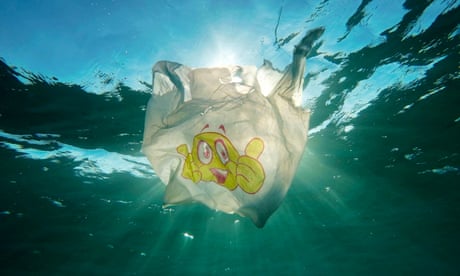
Plastic pollution on a Welsh beach. Volunteers collected and surveyed plastic waste across 84 countries over five years. Photograph: Paul Quayle/Alamy
Fewer than 60 multinationals are responsible for more than half of the world’s plastic pollution, with six responsible for a quarter of that, based on the findings of a piece of research published on Wednesday.
The researchers concluded that for every percentage increase in plastic produced, there was an equivalent increase in plastic pollution in the environment.
“Production really is pollution,” says one of the study’s authors, Lisa Erdle, director of science at the non-profit The 5 Gyres Institute.
An international team of volunteers collected and surveyed more than 1,870,000 items of plastic waste across 84 countries over five years: the bulk of the rubbish collected was single-use packaging for food, beverage, and tobacco products.
Less than half of that plastic litter had discernible branding that could be traced back to the company that produced the packaging; the rest could not be accounted for or taken responsibility for.
“This shows very, very, very well the need for transparency and traceability,” says a study author, Patricia Villarrubia-Gómez, a plastic pollution researcher at the Stockholm Resilience Centre. “[We need] to know who is producing what, so they can take responsibility, right?”
The branded half of the plastic was the responsibility of just 56 fast-moving consumer goods multinational companies, and a quarter of that was from just six companies.
The two tobacco companies Altria and Philip Morris International combined made up 2% of the branded plastic litter found, both Danone and Nestlé each produced 3% of it, PepsiCo was responsible for 5% of the discarded packaging, and 11% of branded plastic waste could be traced to the Coca-Cola company.
“The industry likes to put the responsibility on the individual,” says the study’s author, Marcus Eriksen, a plastic pollution expert from The 5 Gyres Institute.
“But we’d like to point out that it’s the brands, it’s their choice for the kinds of packaging [they use] and for embracing this throwaway model of delivering their goods. That’s what’s causing the greatest abundance of trash.”
The Guardian approached Altria, Philip Morris International, Danone, Nestlé, PepsiCo and The Coca-Cola Company.
The Coca-Cola Company said: “We care about the impact of every drink we sell and are committed to growing our business in the right way.” It has pledged to make 100% of its packaging recyclable globally by 2025, and to use at least 50% recycled material in packaging by 2030.
Nestlé said it has reduced its virgin plastic usage by 14.9% in the last five years, and supports schemes around the world to develop waste collection and recycling schemes.
“Since launching our voluntary commitments to address plastic waste five years ago, we have significantly outperformed the market at large in reducing virgin plastic and increasing recyclability, according to the most recent report from the Ellen MacArthur Foundation,” it said.
The company also supports the creation of a global legally binding regulation on plastic pollution which is being negotiated this week.
Danone said: “We continue to strive to reduce our own plastic footprint – between 2018-2023 we reduced our plastic use by 8% equivalent to 62 000 tons and increased the recyclability of our packaging (84% of our packaging is recyclable, reusable or compostable). We continue to support and push for improved collection and recycling infrastructures to help consumers recycle.” They also support “an ambitious and binding … UN Global Plastic Treaty which would represent a major opportunity to unlock and accelerate progress on plastics circularity.”
Both PMI and Altria contest the accuracy of the data collected.
Plastic in the Depths: how pollution took over our oceans
Read more
However, while many of these companies have taken voluntary measures to improve their impact on plastic pollution, the experts behind the study argue they are not working. Plastic production has doubled since the beginning of 2000 and studies show only 9% of plastic is being recycled.
When the team collected data on self-reported yearly plastic packaging production for each of these multinational companies and compared it with the data from their 1,500-plus litter surveys, their statistical analysis showed that every 1% increase in plastic production was directly correlated with approximately a 1% increase in plastic pollution.
“Actually seeing this one-to-one increase, I was like, wow,” says a study author, Kathy Willis, a marine socio-ecologist from the Commonwealth Scientific and Industrial Research Organisation in Australia.
“Time and time again from our science we see that we really need to be capping how much plastic we are producing.”
However, Kartik Chandran, an environmental engineer at Columbia University, who was not involved in the research, said that while this new data was striking, the observation that 1% plastic production was equal to 1% plastic pollution was “a bit unrealistic” and “simplistic”.
He said the data did not consider plastic pollution in China, Korea and Japan, nor take into consideration recycling or clean-up initiatives under way.
A better analysis could be based on the net plastic flows into plastic production – also accounting for credits from the reuse of plastic materials – and the net plastic load ascribed as plastic pollution.
The team behind the study, some of whom are participating in the talks being held in Ottawa this week to discuss a UN Treaty for Plastic Pollution, said their findings emphasised the urgent need for a globally binding treaty focusing on production measures.
The talks will run to Monday, and Luis Vayas Valdivieso, the Ecuadorian ambassador to the UK, told the Guardian earlier this week he was hopeful that countries would come together to secure an international legally binding instrument on plastic pollution.
“It is very important we are negotiating this treaty now. The world is in a triple crisis of climate change, biodiversity loss and pollution. But while there are agreements in place for the first two, we have no legislation, no global agreement on plastic pollution.”
Owen Jones then joins, as he and Emma reflect on the last seven months of constant scenes of devastation and genocide coming out of Gaza, and the mainstream media’s heart-wrenching insistence on downplaying the horror, denying the deaths, and running cover for Israel’s project of ethnic cleansing under the guise of victimhood.
Jones and Emma explore how the severe repression and propaganda from mainstream Western political institutions is seeing an en-masse public awakening to the genocide of Gaza, and the Western elites’ violent commitment to controlling the discourse, with supposed “liberal democracies” from the US to the EU and UK defaming anti-zionist Jews and anti-semites and uplifting actual racists and Jew-haters as legitimate actors.
He’s back in his happy place, fighting culture wars against invisible enemies conjured up in the paranoid fever dreams of right-wingers. pic.twitter.com/XxXk8sCdRi
Typical hypocrite republican business owner and wealthy person. Vote against anything to help the country and then take credit for any good it does while using it to enrich themselves. Hugs. Scottie
Rep. Mike Kelly (R-Pa.) said the Inflation Reduction Act was “loaded with bad policy and wasteful spending.”
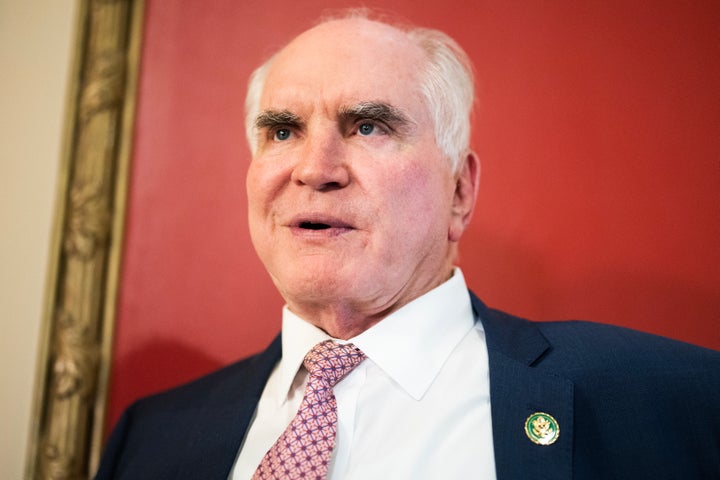
Rep. Mike Kelly (R-Pa.) in the U.S. Capitol on Thursday, Sept. 14, 2023. TOM WILLIAMS VIA GETTY IMAGES
Rep. Mike Kelly (R-Pa.), an outspoken critic of President Joe Biden’s Inflation Reduction Act, used the law to receive a grant to install solar panels at one of his car dealership locations.
The U.S. Department of Agriculture gave a Uniontown dealership owned by Mike Kelly Automotive Group a nearly $315,000 grant to install a 261.9-kilowatt solar panel array, according to the Erie Times-News, the local news outlet that first reported the grant on Monday. The grant is set to save the firm $23,700 per year in energy costs, according to the USDA.
The USDA distributed the grant through its Rural Energy for America Program (REAP). The program has existed since 2018, but the Inflation Reduction Act injected an additional $1 billion into the program dramatically expanding its scope. The federal government then announced that it would distribute that money in grants to rural businesses over the course of 2023 and 2024.
In his official statement following the bill’s passage, Kelly derided the legislation that made those grants possible as the “so-called Inflation Reduction Act,” charging that it was “loaded with bad policy and wasteful spending that will ultimately worsen inflation, expand government, and hurt the middle-class.”
His office singled out the bill’s climate provisions as damaging in bullet points accompanying the statement. “The bill provides $375 billion in so-called ‘climate change’ legislation, which include $7,500 tax credits for wealthy Americans to purchase electric vehicles (EV),” his office said.
Asked how the grant squares with Kelly’s opposition to the IRA, Kelly spokesperson Matt Knoedler referred HuffPost to the statement he provided the Erie Times-News.
“Representative Kelly’s energy policy has always supported an all-of-the-above approach,” Knoedler said. “Additionally, Rep. Kelly does not have an active role in the day-to-day operations of his family’s business.”
In his 2022 financial disclosure, Kelly reported an ownership stake in Mike Kelly Automotive Group worth between $50,001 and $100,000, and a salary from the company of just under $30,000. Kelly also reported a “note receivable” from the company worth between $500,001 and $1 million.
Mike Kelly Toyota, the dealership that got the grant, is located in GOP Rep. Guy Reschenthaler’s district south of the Erie-area seat that Kelly represents.
Preston Nouri, Kelly’s Democratic challenger, is calling on him to return the grant money. PRESTON NOURI FOR CONGRESS
Kelly has represented Pennsylvania’s northwestern corner since 2011 and has not faced a close re-election battle since 2018. Former President Donald Trump carried Kelly’s current district, Pennsylvania’s 16th, by nearly 21 percentage points in 2020.
This year, Preston Nouri, a 25-year-old legislative analyst for the Department of Defense, is the Democratic nominee to take on Kelly.
Nouri called on Kelly to return the money his family’s business received. “Mike Kelly shows his true colors once again,” Nouri said in a statement. “For over 13 years, he keeps getting caught with his hand in the cookie jar, taking taxpayer money to enrich himself while working against the interests of the people he’s supposed to represent.”
Kelly already underwent scrutiny for opposing student debt cancellation after accepting nearly $1 million in Paycheck Protection Program loans during the COVID-19 pandemic that were forgiven. “PPP loans are designed to be forgiven,” Kelly posted on X in August 2022. “Student loans are not. Big difference!”
Kelly is also a staunch Trump ally who has advocated for the rights of people arrested during the Jan. 6, 2021, riot at the U.S. Capitol. During a general election debate in 2022, he condemned the alleged mistreatment of Jan. 6 defendants, asking, “Is this America?”
This is the republican right wing authoritarian game. Silence the others, silence the other side, make everyone afraid, make everyone the enemy of their gang thug mentality base. It is right out of the 1930s Germany Hitler brownshirts playbook. It is exactly what McCarthy did in the US with the red scare. Blame all your appointees are anti-American and cast them as villains without ever proving it or saying what they had done. The accusation was enough to ruin people, to destroy their lives. This is the modern day republicans and we had better realize what they are up to. They are putting back to the future as a reality. Hugs. Scottie
There is a video at the link above.
With bogus “censorship” claims, House Judiciary Committee Chairman Jim Jordan has added Coca-Cola to the growing list of companies targeted in the right-wing culture wars.
It looks like we can add Coca-Cola (back) to the ever-changing carousel of quintessentially American companies targeted by Republicans for reprisals.
In recent years, right-wingers have raged against the NFL, Major League Baseball, M&Ms candies, Barbie dolls, American Girl dolls, Disney and Bud Light as targets in their culture wars. Now, House Judiciary Committee Chairman Jim Jordan is looking to add Coca-Cola to the list for the apparent infraction of … potentially not advertising on the “Joe Rogan Experience” podcast? (Coca-Cola drew calls for a boycott from Donald Trump in 2021 because of its defense of voting rights in Georgia.)
In recent years, right-wingers have raged against the NFL, Major League Baseball, M&Ms candies, Barbie dolls, American Girl dolls, Disney and Bud Light as targets in their culture wars.
Rogan’s podcast is quite popular among conservatives — and with conservative men, in particular — and Jordan seems to think Coca-Cola is part of some corporate conspiracy to censor Rogan by denying ad revenue to his parent company, Spotify. At least, that’s the claim the Ohio Republican makes in a letter to Coca-Cola’s CEO demanding documents from the company. Jordan’s claim is that Coca-Cola and other corporate members of an organization called the Global Alliance for Responsible Media (GARM), which is part of the World Federation of Advertisers (WFA), may have broken antitrust laws by discouraging advertising on right-wing platforms or alongside content created by right-wingers. Jordan didn’t offer any specifics to bolster his claims but merely referred to “Evidence obtained by the Committee.” Past experience would lead us to conclude this is all part of Jordan’s hapless effort to demonstrate a widespread conspiracy by government and/or private industry to suppress conservative speech.
From the letter:
Coca-Cola’s membership in GARM places Coca-Cola in a position to use GARM’s collective power to demonetize disfavored platforms and voices. Evidence obtained by the Committee suggests that Coca-Cola used its membership to coordinate with other GARM members regarding decisions about what platforms and content creators should not receive advertising money from GARM’s members. The ability to threaten a platform or content creator with a potential withdrawal of advertising spending by GARM members can have the effect of influencing platform decision making or silencing certain viewpoints.
As you see, Jordan says this coordination is part of a plot to “demonetize” conservative voices (“demonetize” is evidently what Republicans call “choosing not to give money to our preferred media figures”).He’s demanding documents related to Coca-Cola’s involvement with GARM and the WFA, as well as documents about the three entities’ discussions of misinformation, disinformation and “disfavored content” on Spotify or Rogan’s podcast. Rogan hasfaced criticism for platforming far-right conspiracy theorists, particularly at the height of the Covid-19 pandemic. (As The Atlanta Journal-Constitution notes, it’s unclear whether Coca-Cola even advertises on Rogan’s podcast currently; the company didn’t respond to the AJC’s request for comment.)
Jordan is also going on a fishing expedition at energy company Orsted, an effort that resembles his probes into other corporate members of GARM over their alleged aversion to advertising on conservative-friendly platforms, such as Elon Musk-owned X. (The companies haven’t issued public statements about the matter.) So while these attacks aren’t new, their frequency is part of the problem.
Pressure can force compliance. Disinformation experts, for example, have said Jordan’s crusade has had a chilling effect on their work. And now that he has undermined the researchers, he’s putting pressure onprivate industries to acquiesce to conservatives’ will, too.
Jordan is acting as MAGA’s attack dog in these dubious probes of free enterprise. And the message is clear: If Republicans take full control in Washington, companies could be brought to heel if they don’t placate conservatives.
Ja’han Jones is The ReidOut Blog writer. He’s a futurist and multimedia producer focused on culture and politics. His previous projects include “Black Hair Defined” and the “Black Obituary Project.”
Where I lived as a kid in Vermont, the same issue was going on. The hydro dam was important and had been there a long time but, … it was blocking all the spawning fish. So they built this huge large grand viewing gallery alongside the dam so the fish could swim up past the dam and also it was built in stages for all to see. But then … in the late 1970s or so. Hugs. Scottie
For legal purposes the title of this video is a question and not to be construed as a statement of fact. The Nex Benedict story has been tied to Libs of TikTok and its founder Chaya Raichik. Is she to blame? Why does the first amendment protect Libs of TikTok?

Plastic pollution on a Welsh beach. Volunteers collected and surveyed plastic waste across 84 countries over five years. Photograph: Paul Quayle/Alamy




 Scottie's Playtime