This is one of the more honest videos done on the subject. It shows just how much control Israel has over Gaza and the horrible living conditions Israel has forced the people there to live in. It details with facts the dates that Israeli militants took over the deported over 750,000 Palestinians from their homes and lands so they could steal the land for Israel. Then the video report shows how Israeli settlements have grown in the West Bank, and some are so large they are the size of major cities. This mistreatment is the catalyst for the rage that keeps erupting as a desperate people with no hope, no home state, see everything taken from them as they are abused. Killing of civilians is wrong, but it is just as wrong on both sides. To answer the question of where was the Israeli army, guarding illegal settlements and the settlers who attack and harass Palestinians, destroying their homes, corps, and yes even killing them in an attempt to drive them out. Why because one god says the land is Jewish, another god says the land is Muslim, and no gods are real. Hugs
For decades, Israel has prioritized illegal settlements for Jewish Israelis in the West Bank
In the early hours of Saturday, October 7, Israelis living near the border with Gaza awoke to the sounds of Hamas fighters killing and kidnapping their neighbors. As the hours stretched on and they hid, terrified, their frantic text messages contained versions of this question: Where is the army?
To answer that question, we need to travel to the West Bank.
Watch this video to better understand how Israeli Prime Minister Benjamin Netanyahu’s obsessive focus on the West Bank has left Israelis everywhere vulnerable.
There are metallic deposits scattered throughout our ocean floors — among hydrothermal vents, under the crust of seamounts, and scattered along sea plains in the form of rocks. As it happens, in our search for climate solutions, these metals have become more critical than ever to help us transition away from fossil fuels. We need them for everything like electric car batteries, copper wiring for electrification and wind turbines. Our land-based deposits have met our needs so far, but it’s unclear whether they will continue to, or whether we’ll want to keep destroying the environment to do so.
This video explains the history and the debate over mining metals in the deep sea and why one Canadian company, The Metals Company, is leading the rush there. There are huge environmental implications for digging up seafloor ecosystems as well as ethical ones: Metal-rich zones like the Clarion-Clipperton Zone lie in international waters that technically belong to everyone. A United Nations body located in Kingston, Jamaica, the International Seabed Authority, is faced with an urgent dilemma over how to regulate mining, whether the environmental harm is worth the benefits to solving our climate crisis, and how to fairly share the profits from this shared resource.
I got this like from a blog that Ali introduced me to. She left the comment with the link and I checked it out. I like the content so I decided to follow the blog. Yes it stretches my time a bit more but also broadens my knowledge level. The blog can be found here. Hugs.
The world has been flooded with misinformation. Falsehoods and conspiracy theories bubble up on everything from the weather to vaccines to the shape of the Earth. Purveyors of this garbage may be motivated by attention, money, or simply the appeal of sticking it to the educated elite. For people who try to keep both feet planted in the real world, it’s enough to make you want to scream. Even if you spend 24 hours a day pushing back against the wrongness on the Internet, it seems impossible to make a dent in it.
I’ve been pondering this, and I’ve decided that we need a way to target the worst sources of misinformation—a way to identify the people who are both the most wrong and the most dangerous. So, as a bit of a thought experiment, I started playing with a simplified scoring system for misinformation merchants.
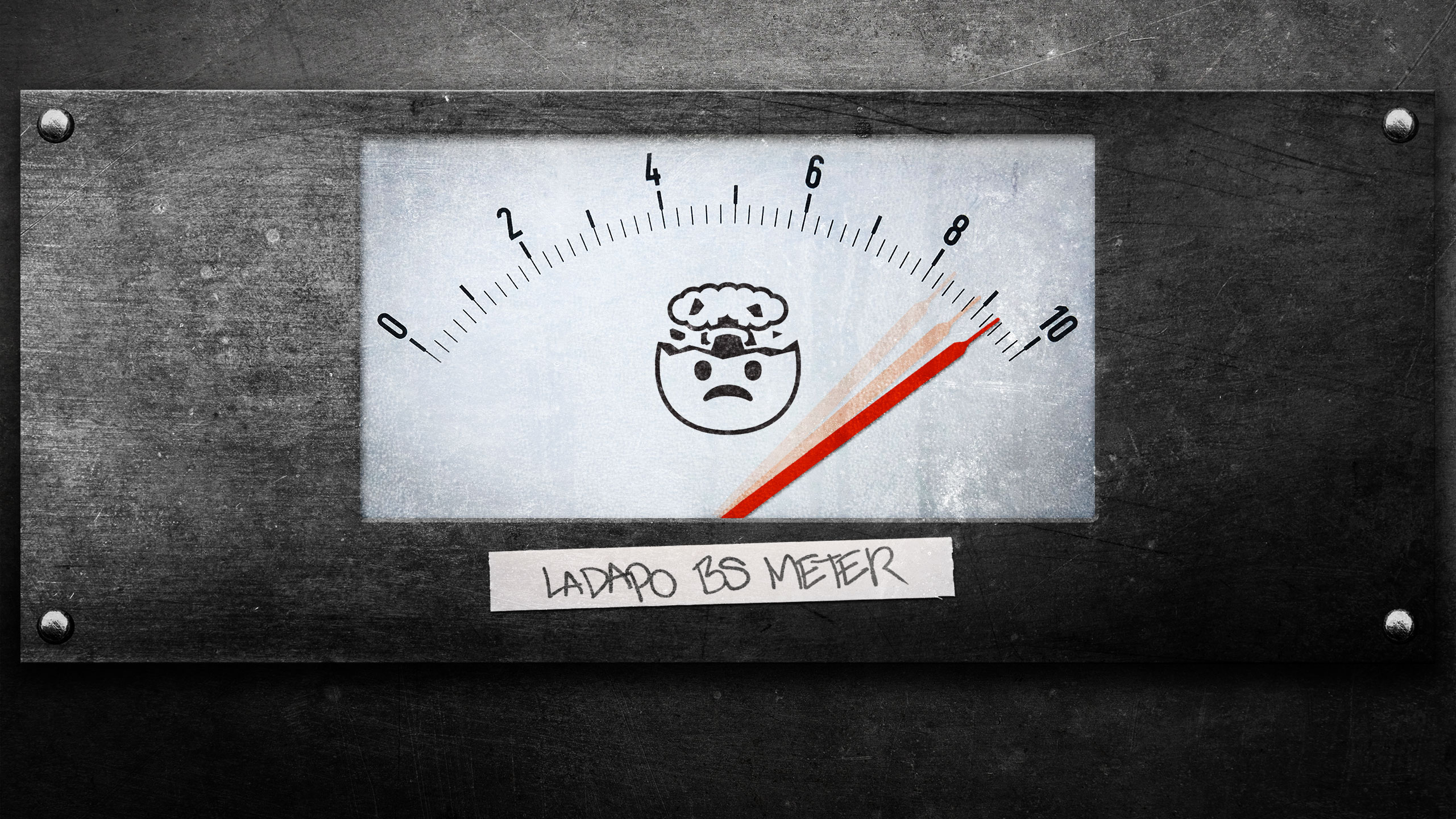
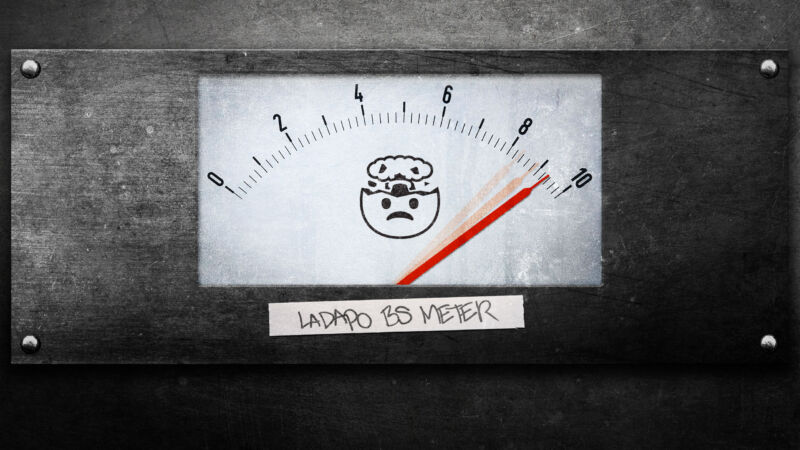
I’m calling it the 10-point Ladapo scale in honor of the surgeon general of Florida, for reasons I hope are obvious. Any person can be given a score of zero or one (fractions are discouraged) for each of the following questions; scores are then totaled to provide a composite picture of just how bad any source is. To help you understand how to use it, we’ll go through the questions and provide a sense of how each should be scored. We’ll then apply the Ladapo scale to a couple of real-world examples.
Is the person spreading misinformation where anyone will see it? A zero score here, representing a completely harmless individual, might be the person who keeps ranting to bots in an IRC channel that the last human left in 2012. Anybody who gives a press conference that the national media attends earns a one, as do people who find their place as talking heads or on the op-ed pages of The New York Times.
Does anyone care about the topic of the misinformation? If your conspiracy du jour somehow links the color of orange used on traffic cones to the sale of balsa wood model aircraft, congratulations, you pose no threat and rate a zero. If it involves who won the presidential election, you’re looking at a one here.
Is the subject easy to understand? Misunderstanding quantum chromodynamics, a subject many physicists fear, is not at all surprising. Getting things wrong about evolution, which is simple enough that textbooks explain its basics to pre-teens, is far less excusable and would thus get a one.
Is accurate information easy to find? Self-correction is only a possibility if the correct information is available. One can kind of understand holding false beliefs about a top-secret military technology. But when any search engine will pull up a dozen accurate FAQs on the topic you’re misinforming people about, you have earned your one.
Just how badly wrong is the argument? It continues to astonish me that there are people who apparently believe the greenhouse effect doesn’t exist. That level of detachment from reality should set the high end of the scale for wrongness. To get a zero (which is good here!), I’d allow even being mostly right but wrong about some details.
Is the misinformer promoting fake experts? Nobody can be an expert in everything, so we all find ourselves deferring to the expertise of others on some complicated topics. That makes assessing a source’s credibility critical. Unless you can tell an expert from a crackpot, you’re likely to find yourself relying on a climate “expert” who can’t reason scientifically. Like one who thinks dowsing works or one who happens to be a creationist or a former coal lobbyist. If so, you’ll have earned a point for relying on unreliable expertise—and increasing the reach of other serial misinformers.
Will people be harmed by the confusion created? If it turns out we’re living in a false quantum vacuum, everyone will die when the Universe finds a new ground state, and there would be nothing anyone could do about it. Misinforming people about the topic would have no influence on their ultimate fate, so you could lie to your heart’s content here and still earn a zero. That is very much not the case when it comes to issues like climate change or the pandemic. Putting people in danger earns you a one.
Should the individual know better? Anyone who is actually in the field they’re misinforming about, like Ladapo himself, obviously earns a one. But high scores also go to people who could easily access better information. It’s safe to say that every op-ed columnist at a major newspaper could easily call up scientists or other experts and have complicated topics explained to them. If someone refused to talk to experts because their feelings were hurt by people telling them they’re wrong, well, their score of one is probably best presented by a middle finger. Only the person who would struggle to access quality information truly earns their zero.
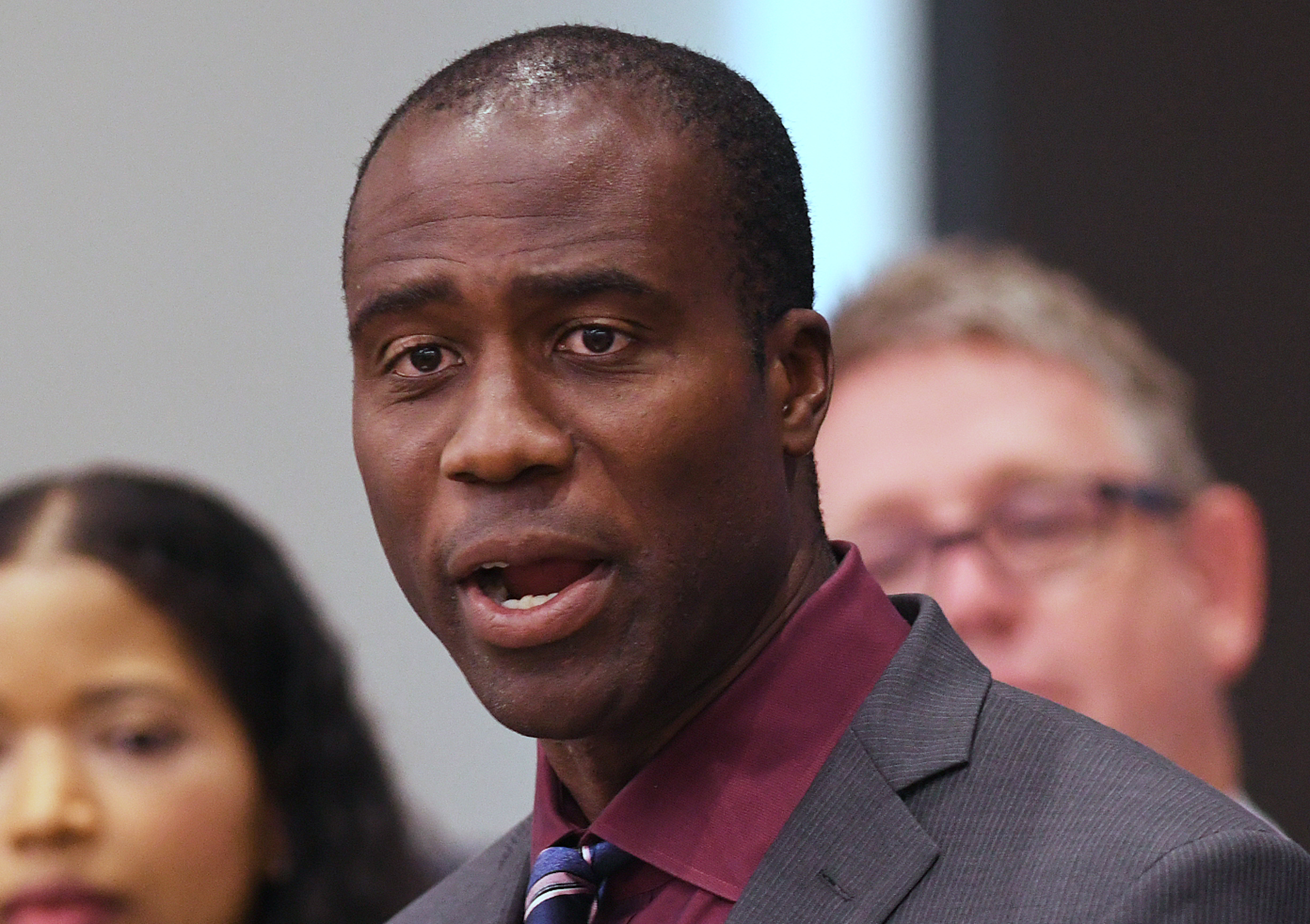
Enlarge/ Florida Surgeon General Joseph Ladapo speaks at a press conference in Rockledge, Florida, on August 3, 2022.
Is the person using their own authority to mislead? It’s one thing to rely on a fake expert like Nils-Axel Mörner to make bad arguments. It’s a different thing entirely to be Nils-Axel Mörner. Or Joseph Ladapo (who, if we allowed bonus points, would earn them for dragging down all the credentialed scientists at his agency with him). A point also goes to people who try to use their PhD in physics or similar subjects to intimidate anyone who disagrees with them. “I’ve done a lot of Googling” earns a score that is equal to the amount of respect it deserves: zero.
Is the misinformation effective? In Florida, COVID death rates were higher among Republicans after vaccines became available, which suggests that the anti-vaccine messaging from the state’s Republican leadership is doing exactly what it’s expected to do. Misinformation about the climate has been so pervasive that it took until the Biden administration for the US to have a climate policy that wasn’t predicated on making things worse. These are signs that the misinformation is working, and its purveyors deserve their ones.
Let’s look at how this works in practice. Ladapo earns a point for spewing misinformation in nationally televised press conferences, enabled by his credentials as a Surgeon General (+1 there). He gets another point for misinforming about vaccines, which people care about. Both vaccines and the protection offered by the COVID vaccines are easy to understand (“not dead” is a pretty clear concept) and easy to find, so two more points there. His argument is wrong enough that he may have violated his university’s research ethics guidelines, so another point there, plus one more for him being able to know better. Dead Floridians attest to the harm and effectiveness of his misinformation. About the only thing I haven’t seen him do is use fake experts.
A near-perfect 9 out of 10 tells us that Ladapo demonstrates an impressive combination of wrongness and risk. It raises so many questions about his judgment that he probably shouldn’t be trusted about any subject. (You may nitpick naming the scale after someone who doesn’t achieve a perfect score on it, but remember, the issue here is misinformation—it would be inappropriate for the name to be completely accurate.)
A test case
To get a better sense for the use of the scale, I’ll use it on a less obvious candidate: Washington Post opinion columnist George Will. Will is an interesting case because he has a reputation as an intellectual and deep thinker, and he remains generally popular within the establishment of what you might call traditional conservatives in the post-Trump environment. And he generally reserves his arguments for policy matters, which are more opinion-based than fact-based.
But Will has had a thing for climate change, revisiting it semi-regularly for over a decade and invariably spouting blatant misinformation when he has. Here he is back in 2009, belittling scientists for saying that an apparent pause in warming was something that’s both temporary and inevitable when you superimpose short-term randomness on a long-term trend. Despite Will claiming that “evidence of warming becomes more elusive,” it is now obvious that the scientists were right. And he was still going on in 2021, suggesting we can’t even manage to establish basic facts. “Science has limited ability to disentangle human and natural influences on climate changes,” he said at the time. He’s published a number of very stupid things in between.
But is that enough to qualify Will as laughably wrong and dangerous? Let’s find out.
First, a focus on climate change guarantees someone a substantial number of points. It’s a subject people care about, accurate information is just about everywhere, people will clearly be harmed as a result of the misinformation, and it’s painfully clear that the misinformation has helped delay any action to limit the damage. That’s four points right there.
But Will doesn’t stop grabbing points. He has published his errors in places like the Washington Post and Newsweek, ensuring that it will be widely read (another point). He’s relied on fake experts like Steve Koonin and Bjorn Lomborg, who have had their arguments widely criticized in places Will could easily find if he chose to. He could easily get scientists to explain where he’s making errors, but as noted above, he seems to be comfortable simply dismissing their statements—and apparently hasn’t learned anything from the fact that the scientists turned out to be right. So there’s another point for being in a position where he clearly should know better but can’t be bothered to learn. We’re up to seven.
How badly wrong is Will? He devoted an entire column to the idea that the climate has changed in the past without human influence, so we can’t be confident that it’s changing now because of human influence. That is mind-numbingly ignorant. It’s the equivalent of arguing that, since lakes have formed free from human intervention, we can’t be certain that dams are doing anything.
I wish I could award him more than one point for just how awful that argument is, but rules are rules. Still, it does lead to another point: it’s not difficult to understand that the argument is wrong. Nobody is likely to have any problem recognizing that some things can happen due to either natural or human causes and that we can generally tell the two apart. It should be easy to understand this, so Will earns the point for failing to do so.
That’s nine points. The only thing that keeps him from outscoring Ladapo himself is the fact that Will doesn’t seem to have any special credentials he’s using to give his misinformation added weight. He may have a reputation as an intellectual—although, given all this evidence, it astonishes me that he’s retained it—but there are no formal credentials for intellectualism.
Still, in the end, it’s hard to escape the conclusion that, like Ladapo, Will is spreading blatant misinformation about a topic that poses a great deal of danger to many people and that his arguments are so laughably bad that we should question whether he can provide quality information about anything. Yet people still give him a pass and treat his opinions as worthy of attention. It mystifies me.
There are limits
The fact that Ladapo and Will achieve the same score highlights the limits of this scale. It’s about misinformation alone, and there are factors beyond that that can be critical to understanding the threat someone poses. Ladapo is actually in a position where he can set policy, and for most people, the risks posed by COVID are more immediate than those from our changing climate. Will is just one voice in a large chorus of climate misinformers. So Ladapo is a much more dangerous figure at the moment.
Despite its limits, I think the scale is a helpful way to think about how context makes some sources of misinformation far more dangerous than others. And it reflects the finding that, in some cases, the most widely disseminated misinformation comes from a limited number of sources.
Still, I have little doubt this scoring system could be improved. Please feel free to suggest additional factors that should be considered in the comments.
Remember during lockdown, how we all got obsessed with ordering everything online and having it delivered right to our doorsteps? Yeah, turns out that isn’t going away anytime soon, and we’re starting to understand the many downsides. The delivery vans that make our next-day shipping dreams come true are driving up C02 emissions while making our streets more crowded and less safe.
Fortunately, there’s a hero waiting in the wings: the e-cargo bike. Not only can these bad boys deliver packages in urban environments just as quickly (and sometimes faster) than delivery vans, they take up far less space and are much less likely to cause pedestrian deaths. Companies like Amazon, DHL, and UPS are using them in several European cities, but American cities haven’t followed suit.
In this video, we explore why that is, and lay out some of the big steps American cities would need to take to join the e-bike delivery revolution.
Thanks to Ali for the link. This continuing assault on education by the right is an attack on democracy itself. The right doesn’t want a thinking public, they want obedient followers and soldiers who will do as told by the rulers. Notice the funding for these right wing sites comes from the ultrarich right that wants either a theocracy or a fascist dictatorship. With them in charge, of course. If you go to the link you will see several more stories of the right ring billionaires pushing the hard right idology. Hugs
PragerU is not accredited but has become a key tool in pushing false claims to youngsters – and raked in $200m from 2018 to 2022
Dennis Prager, the conservative talkshow host and founder of the Prager University Foundation, which is not an accredited education organization. Characters in PragerU’s videos downplay the horrors of slavery and make false claims about the climate crisis. Composite: Guardian Photo Composite/Getty Images/PragerU
A rightwing media outlet promoting climate-crisis denialism and other “anti-woke” staples to young students and adults via social media has become a fundraising Goliath, raking in close to $200m from 2018 to 2022 with big checks from top conservative donors, tax records reveal.
Founded in 2009 by the conservative talkshow host Dennis Prager, the eponymous Prager University Foundation is not an accredited education organization. But via online media its PragerU Kids division has become a key tool in spreading false claims to young people with short videos aimed at undercutting widely accepted science that climate crisis disasters are accelerating due, largely, to fossil-fuel usage.
PragerU’s influence in pushing false narratives about climate change and other far-right shibboleths such as airbrushing the brutal reality of American slavery gained ground when the Florida board of education in July gave the green light to using its videos and other materials in classrooms, a move that PragerU is trying to capitalize on in Texas and other states. On Tuesday, Oklahoma’s school system also approved the use of PragerU’s materials.
But some of PragerU’s expansion plans ran into trouble in August, when it was condemned by Texas education officials for announcing prematurely that Texas schools had approved the usage of its advocacy materials, generating new scrutiny and criticism of PragerU’s operations.
Prager’s website trumpets its mission and its niche in the conservative ecosystem.
“PragerU is the world’s leading conservative non-profit, focused on changing minds through the creative use of digital media.”
That sweeping mission has been fueled by big conservative money and slick marketing, and has led to PragerU’s rising influence on the right.
Among PragerU’s leading financiers are the oil and gas fracking billionaire brothers Farris and Dan Wilks, who have ponied up at least $8m over the past decade, according to Texas financial records.
Other top conservative donors to PragerU, which styles itself as alternative to the “dominant leftwing ideology in culture, media and education”, include the Lynde and Harry Bradley Foundation, the National Christian Charitable Foundation and the Dick and Betsy DeVos Foundation.
Tax records also reveal that PragerU has flourished financially in recent years as the Prager University Foundation raised $196m from 2018 through 2022. That growth is underscored by revenues rising from $17.9m in 2018 to $65.1m in 2022.
Prager’s chief executive, Marissa Streit, whose biography on LinkedIn says she once served in Israeli military intelligence, boasts on its website: “PragerU is redefining how people think about media and education. We produce edutainment – an intersection of education and entertainment. Our content is essential to shaping culture and preserving American ideals.”
Streit’s vision of “edutainment” seems to be reflected in PragerU cartoons and videos, including one about Christopher Columbus and the discovery of America, in which Columbus tries to downplay the horrors of slavery.
“Slavery is as old as time, and has taken place in every corner of the world, even amongst the people I just left. Being taken as a slave is better than being killed,” the cartoon Columbus said. “I don’t see the problem.”
Other PragerU videos about the climate crisis make various false claims: they depict solar and wind power as environmentally dangerous, liken environmental activists to Nazis and claim recent record-breaking heat is just part of the natural weather cycle.
But the edutainment being peddled by PragerU has drawn widespread criticism from academic experts and watchdog groups, who fault its videos and teaching materials for children on the climate crisis, slavery and other issues as erroneous, and unworthy of state approval for classroom usage.
Betsy DeVos and her husband, Dick DeVos Jr, in Washington in 2017. Photograph: Bloomberg/Getty Images ——————————————————- “Prager University is not a university,” said Naomi Oreskes, a Harvard professor of the history of science and the co-author of Merchants of Doubt. “By their own self-description, they are an advocacy group promoting conservative viewpoints on various political, economic and sociological topics.
“It is completely inappropriate for any state to grant them any influence, much less authority. over educational matters.
“For an American state government to authorize misleading, false and overtly biased materials for use in classrooms really crosses the Rubicon. It’s a new and alarming low.”
Other academics express related concerns.
“PragerU may be able to take advantage of overworked teachers in the classroom who are under time crunches to prepare climate-change lessons for their students, and therefore might turn to these inaccurate videos,” said Max Boykoff, an environmental studies professor at the University of Colorado.
Boykoff added that boosting public funding of education could help “keep such unsafe and menacing weapons out of the classroom”.
PragerU did not respond to a Guardian request to talk to Streit or Prager.
Critics notwithstanding, Prager, speaking at a Moms for Liberty conference in Philadelphia this summer, was blunt about PragerU’s goals, boasting that “we bring doctrines to children”, adding: “What is the bad of our indoctrination?”
Similarly, in a PragerU promotional video, Prager said: “We are in the mind-changing business, and few groups can say that.”
PragerU annual reports tout its success in spreading conservative doctrines to young people and adults. According to its most recent annual report, PragerU “edutainment” videos scored more than 1.2bn views in 2022 and over 7bn since its launch in 2009.
Until recently, PragerU content and its fight against what it labels the “woke agenda” depended mainly on Facebook and YouTube, but that is poised to expand with PragerU’s access to Florida classrooms, and other states potentially opening their classrooms too.
To keep growing its audience and operations, PragerU’s website showcases several ambitious fundraising programs. In September, PragerU is hosting a “founders’ retreat” in Nashville that seems geared to wooing more checks from major donors who give at least $100,000 a year.
The event is slated to be “an exclusive three-day experience with our innermost circle of supporters”, and will feature Dennis Prager, the conservative Daily Wire’s editor-in-chief Ben Shapiro, and other Daily Wire “personalities”. The event is “open to Donor Club members at the founders level (total annual giving of $100k or more)”.
Like PragerU, the Daily Wire has benefited mightily from billionaire and evangelical preacher Farris Wilks, who gave it $4.7m in 2015 to launch its operations. Wilks remains a co-owner.
PragerU’s fundraising and marketing success in spreading its climate crisis denialism and other misinformation is alarming watchdog groups.
“Prager U plays a significant role spreading well-packaged propaganda about numerous issues, including attacks on efforts to mitigate climate change, through promoting the disinformation peddled by notorious climate-change deniers, and more,” said Lisa Graves, executive director of the progressive watchdog group True North Research. “ It has always targeted younger adults, but in recent years it has added a massive program targeting children with its slick and deceptive videos.”
Other environmental advocates raised broader concerns.
“The danger of the Prager climate misinformation is how quickly it can spread in this era where a lot of people, including children, are being trained not to trust media sources or scientists,” said Kert Davies, who leads investigations at the Center for Climate Integrity. “That it would be in schools as curriculum is even scarier.
“The Prager YouTube library on climate change features a who’s who of career climate deniers and discredited contrarians. These folks will never admit they are wrong, and never change their minds no matter the weight of scientific evidence.”
Davies added: “Prager climate disinformation is dangerously out of step with reality. It is being disseminated just as the global consensus on the climate crisis grows stronger, as extreme weather events seemingly try to outdo each other.”
More broadly, Oreskes sees the spread of PragerU advocacy materials into Florida classrooms and possibly other states as harmful to educational values.
She said: “Every student has a basic right to an education that, as much as possible, is truthful, and, as much as humanly possible, objective. This is the opposite.”
I hope you appreciated this article. Before you move on, I was hoping you would consider taking the step of supporting the Guardian’s journalism.
From Elon Musk to Rupert Murdoch, a small number of billionaire owners have a powerful hold on so much of the information that reaches the public about what’s happening in the world. The Guardian is different. We have no billionaire owner or shareholders to consider. Our journalism is produced to serve the public interest – not profit motives.
And we avoid the trap that befalls much US media – the tendency, born of a desire to please all sides, to engage in false equivalence in the name of neutrality. While fairness guides everything we do, we know there is a right and a wrong position in the fight against racism and for reproductive justice. When we report on issues like the climate crisis, we’re not afraid to name who is responsible. And as a global news organization, we’re able to provide a fresh, outsider perspective on US politics – one so often missing from the insular American media bubble.
Around the world, readers can access the Guardian’s paywall-free journalism because of our unique reader-supported model. That’s because of people like you. Our readers keep us independent, beholden to no outside influence and accessible to everyone – whether they can afford to pay for news, or not.
If you can, please consider supporting us just once from $1, or better yet, support us every month with a little more – and you can cancel any time. Thank you.
Horrifying. I was once working in the yard before I understood what fire ants were when we first moved to Florida. They swarmed my legs before they started to sting as a group. That is what they do, the first ant doesn’t sting, they wait until they have a bunch of them when dealing with large prey. By dogs that love gravy, that is painful. Ron’s mother had to be hospitalized because of a fire ant attach. They are nothing to take lightly. They can kill a fully grown cow because they swarm the prey / threat. Hugs
Witness one of natures ancient wonders – Fire Ants! It has been adapting, evolving for 150 million years 14 000 species they are nearly everywhere thriving. This is the story of solenopsis Invicta for 80 years it has been on a ceaseless march across the United States racking up six billion dollars every year in crop damage equipment repair and Pest Control conquering 340 million acres in 13 states and it’s still on the Move globally now scientists are cracking their ancient secrets to success and survival we knew that we could speculate all day but to fully understand the ants we decided to bring them into the lab and obtain visual data.
On Mock Paper Scissors, Tengrain posted a video that shows some humans still show the empathy and caring for other creatures that people should have for those we share the planet with. Humans like to pretend we are the superior animals of all other animals. Most humans do not act worthy of such a title. These people showed we humans can do some impressive things when we are willing to help those who need our help. Please go to the site and check it out. Hugs



 Scottie's Playtime