https://www.nbcnews.com/politics/2024-election/trump-says-no-price-tag-mass-
Why is it only the southern border that the right is concerned with? Most undocumented people in the US are here on visas and flew into the country legally. They just never then went home when the visa ended. Why is it only some country the right whines about immigrating to the US? Racism and bigotry is the answer. Think about it. The right is terrified that white people will be replaced by non-white people. Elon Musk is always claiming white people need to have more babies. But only white people. Also the right fails to understand that Puerto Rico is part of the US and the Puerto Ricoian people are US citizens. But remember how tRump wanted to sell the island because it was full of … those brown people. Hugs
—————————————————————————————————————
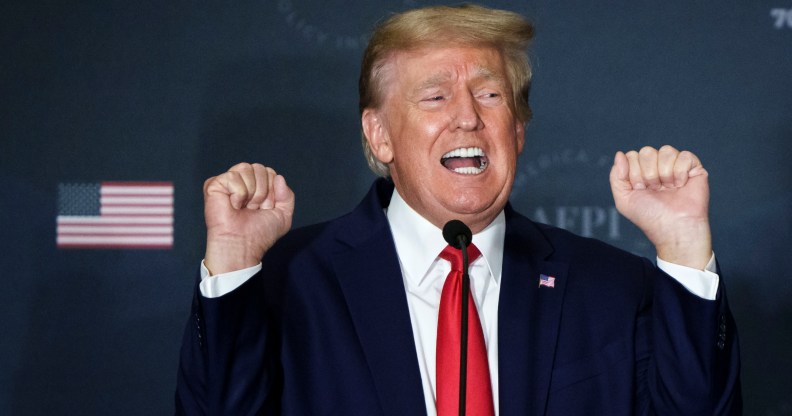
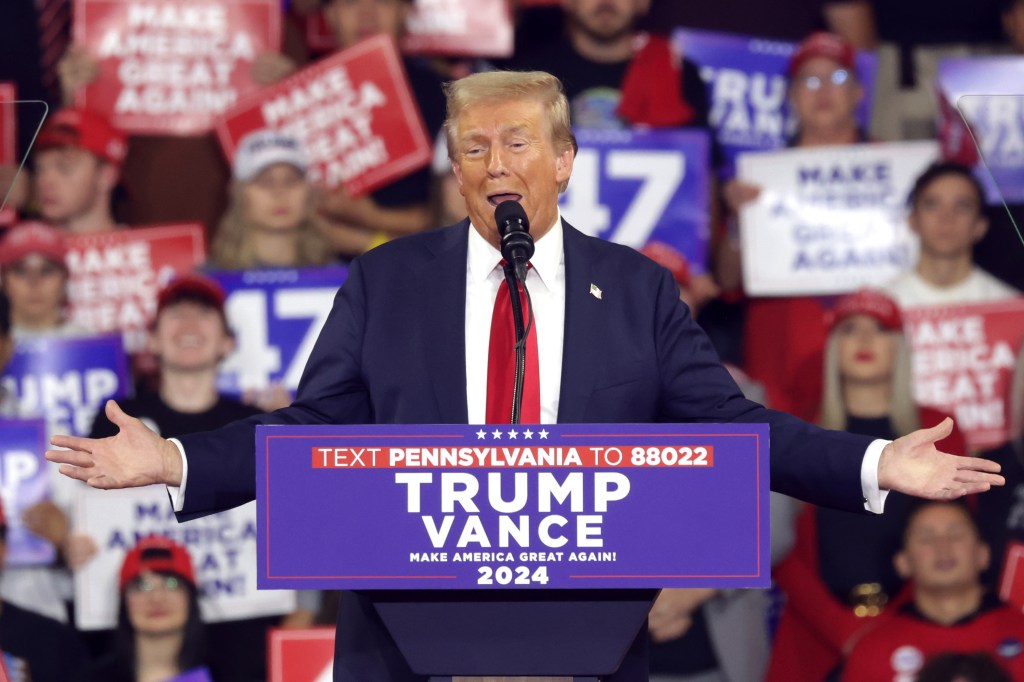
In an exclusive interview with NBC News, Trump talked about his campaign promise to carry out the largest mass deportation of immigrants in U.S. history.
Video at link above
President-elect Donald Trump told NBC News on Thursday that one of his first priorities upon taking office in January would be to make the border “strong and powerful.” When questioned about his campaign promise of mass deportations, Trump said his administration would have “no choice” but to carry them out.
Trump said he considers his sweeping victory over Vice President Kamala Harris a mandate “to bring common sense” to the country.
“We obviously have to make the border strong and powerful and, and we have to — at the same time, we want people to come into our country,” he said. “And you know, I’m not somebody that says, ‘No, you can’t come in.’ We want people to come in.”
As a candidate, Trump had repeatedly vowed to carry out the “largest deportation effort in American history.” Asked about the cost of his plan, he said, “It’s not a question of a price tag. It’s not — really, we have no choice. When people have killed and murdered, when drug lords have destroyed countries, and now they’re going to go back to those countries because they’re not staying here. There is no price tag.”
It’s unclear how many undocumented immigrants there are in the U.S., but acting ICE Director Patrick J. Lechleitner told NBC News in July that a mass deportation effort would be a huge logistical and financial challenge. Two former Trump administration officials involved in immigration during his first term told NBC News that the effort would require cooperation among a number of federal agencies, including the Justice Department and the Pentagon.
Trump’s win included record gains among Latino voters, who Democrats had tried to capture by pointing to Trump’s rhetoric on immigrants and a pro-Trump comedian’s racist joke about Puerto Rico.
In Thursday’s phone interview, he partially credited his message on immigration as a reason he won the race, saying, “They want to have borders, and they like people coming in, but they have to come in with love for the country. They have to come in legally.”
Trump also noted the diverse coalition of voters he attracted, pointing to gains he made among Latino voters, young voters, women and Asian American voters from 2020.
“I started to see realignment could happen because the Democrats are not in line with the thinking of the country,” the president-elect said. “You can’t have defund the police, these kind of things. They don’t want to give up and they don’t work, and the people understand that.”
Trump also spoke about his phone calls with Harris and President Joe Biden since the election.
“Very nice calls, very respectful both ways,” Trump said, describing the conversations, adding that Harris “talked about transition, and she said she’d like it to be smooth as can be, which I agree with, of course.”
In her concession speech at Howard University on Wednesday, Harris said she told Trump, “We will help him and his team with their transition and that we will engage in a peaceful transfer of power.”
Biden, addressing the nation in remarks from the White House on Thursday morning, urged voters to “accept the choice the country made” in re-electing Trump.
Trump also said that he and Biden on the phone agreed to have lunch together “very shortly.”
He also said he’s spoken to “probably” 70 world leaders since Wednesday morning, including Israeli Prime Minister Benjamin Netanyahu, which the president-elect described as “a very good talk.”
Trump also said that he spoken with Ukrainian President Volodymyr Zelenskyy, but didn’t divulge details about that conversation.
He added that he had not yet spoken with Russian President Vladimir Putin, but “I think we’ll speak.”
Over the course of the campaign, Trump promised to end Russia’s war with Ukraine if elected, saying in September that he would negotiate a deal “that’s good for both sides.“