
Roger and Rawgod have been helping me to understand there are a lot of trouble spots with fighting and famine all over the world, not just Gaza. This video by Beau is about Sudan. A great resource to learn about the conflicts going on is this website I got from Rawgod off Roger’s site. https://geneva-academy.ch/galleries/today-s-armed-conflicts . Hugs. Scottie
Category: Economics / Economy / Income / Financial
DONALD, JUDGE WILL FINE YOU – A Parody | John Emory & Don Caron
Executive Producers Don Caron and Jerry Pender
Jewish Columbia Student Debunks Media Narrative About Protest
Shades of Kent State …
I saw this post above, and felt it needed posting because of several other things I read and posted. But how to do it and give credit to where and the people due. A constant people with the way I post news stories. I would just do for this what I did for the Ten Bears post that referred me to it … but it is on a different platform with no ability for me to do it. Please this is what the republicans want again. The Speaker of the House has demanded that the national guard has been called out against students protesting for Palestinian aid. The Chief of police that was in charge of the force arresting the students said he saw no evidence of abuse against other students, he saw no anti-Semitism, no threats or violence at all against other students. He even said when his officers arrested and took the students away, they were cooperative and offered no violent resistance. Think about that. Hugs. Scottie
https://avedoncarol.blogspot.com/2022/03/coverup-four-dead-in-ohio.html
“My motto as I live and learn is: dig and be dug in return.” — Langston Hughes
06 March 2022
Coverup: Four dead in Ohio
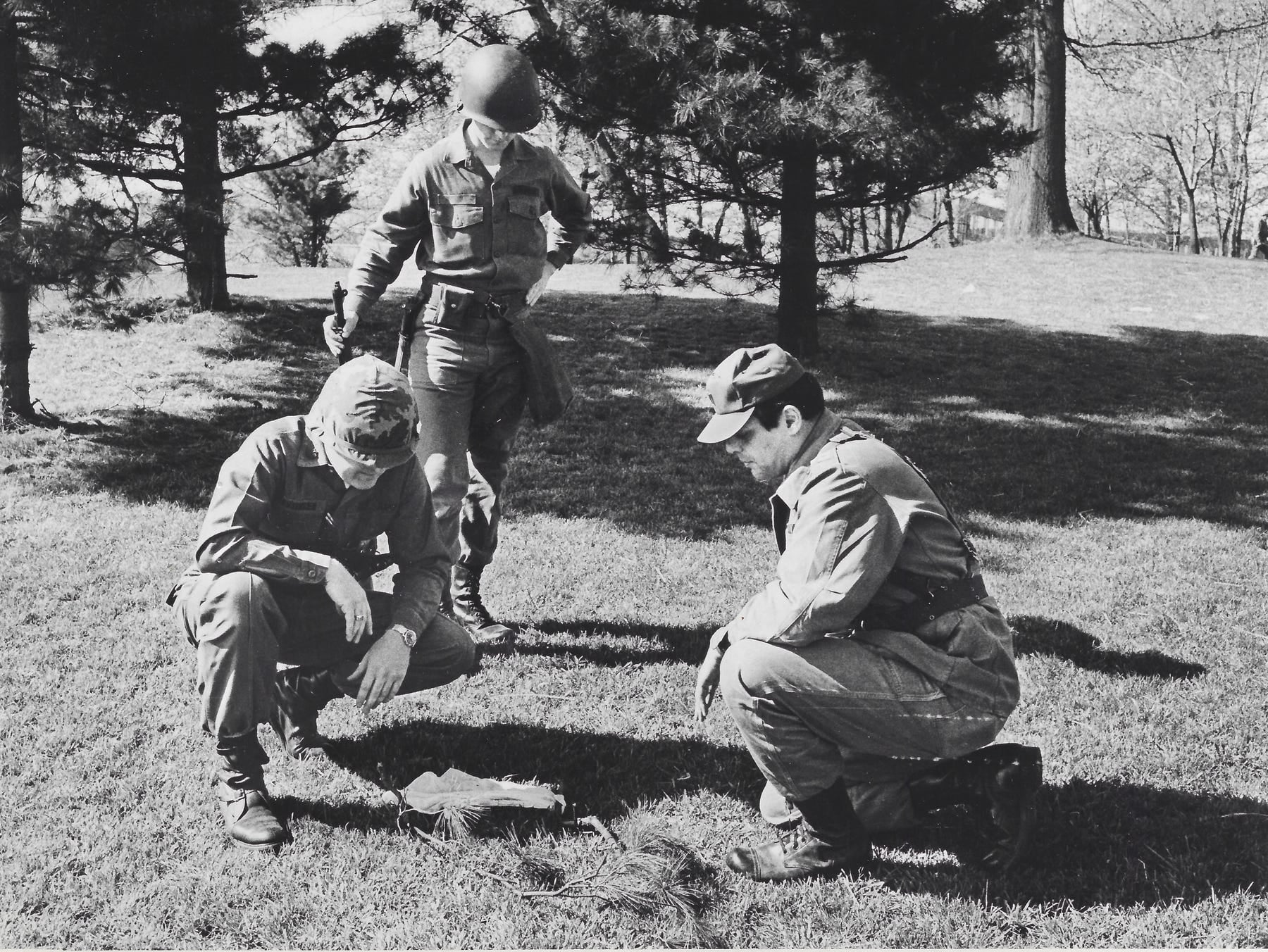
Last year, John Derf Backderf posted this on Facebook, but since everyone hates Facebook, and it is honestly a pain in the tail, I thought I’d put it here for a nice, easily-accessible link if anyone wants to link it elsewhere.
Since it’s the time of year when the events of KENT STATE unfolded, I thought I’d share some items with you.In a comment below his original post, with an accompanying photo, he says:This event didn’t end with the massacre. The days, weeks and months that followed were a depressing lesson in cover-ups, political sleaze and media manipulation. In its own way, it’s as shocking a story as the story leading up to the massacre.
The cover-up by the National Guard began within minutes, even before the blood was cleaned off the Prentice Hall parking lot.
The 22 shooters reloaded their clips, to make it appear they hadn’t fired their weapons. Guns were ditched, or switched. The armory checkout records for G Troop, the soldiers who did most of the slaughter, vanished. There was no way to ascertain who fired what weapon, or what soldier shot what student.
Almost all the shooters lied on their incident reports and insisted they had not fired. Later, most lied to the FBI, a felony for which they were not prosecuted. Within hours, all the shooters adopted the same defense.
“We thought we were about to be overrun. We felt our lives were in danger. We had no choice.”
They weren’t about to be overrun. Few of the 50 remaining protestors were anywhere near them when they fired. Most were the length of a football field away. The Guardsmen were in no danger at all. And they definitely had a choice.
The FBI also noted that it was obvious the shooters had quickly consulted attorneys and reached a group decision on what their defense was. Fifty-one years later, the surviving shooters still stick to that defense.
From Columbus, Gen. Del Corso, the reckless and reactionary leader of the National Guard, insisted a student sniper, firing from a rooftop, had caused the Guardsmen to fire in self defense. Del Corso and Gov. Rhodes were convinced the students were armed. They weren’t. It would be 3 months before the FBI stated unequivocally, “There was no sniper.”
Immediately after the massacre, Guard officers ordered 100 soldiers, some seen here, to fan out over the area and collect evidence, completely contaminating the shooting scene beyond hope. Shell casings were collected, some of which disappeared.
The soldiers were also ordered to round up all the projectiles that were thrown at them, mostly large driveway gravel from student parking lots. Instead, the soldiers went all over campus, especially to the construction area where the new library was being built, and out into surrounding city neighborhoods, and collected a fearsome array of “evidence” : bricks, concrete blocks, lumber, pieces of steel rebar, garden boulders that the school shotputter couldn’t have heaved, etc. Gen. Canterbury insisted a fire hydrant had been thrown at him! An average hydrant weighs 300 lbs.! In the photo here, soldiers are marking as evidence a bit of pine branch. Some “weapon”!
This was all displayed on long tables in a campus building and shown to the skeptical press. The FBI later threw out most of this “evidence.”
Capt. Snyder of the 145th Infantry, however, produced a pistol, which he says he found on the body of Jeff Miller. Along with a blackjack, just for good measure. He hadn’t. The untraceable gun belonged to Snyder, a county deputy by day. So did the blackjack.
It would be FOUR YEARS before Snyder admitted he planted the gun on a dead boy.
The “shocking” display of weaponry pulled from dorm rooms by county deputies, under orders from Prosecutor Ron Kane.Their names were Allison Krause (19), Jeffrey Miller (20), Sandra Scheuer (20), and William Schroeder (19). Scheuer and Schroeder were not protesting at all, they were just observing from a few hundred feet away during a break between classes. Miller and Kraus and their friends were running away from the Guard when they were shot. Nine others were reported to be injured.Baseball bats, hunting knives, fish knives, a decorative samurai sword, a couple decorative flintlock pistols, a starter’s gun, a few BB guns, art supplies mistaken for weapons, etc.
Reporters were less than impressed.
Plus the usual amount of drugs you’d expect to find, mostly pot. Some pills, which turned out to be legit prescriptions, and syringes, singled out by Kane as proof of heroin use, but which turned out to belong to diabetics.
Unfortunately for him, Kane had neglected to secure search warrants for this search. A judge quickly threw out charges.
Except one, because there was ONE crime. A deputy had stolen cash he found in the rooms. A humiliated Kane slunk away.
* * * * *
Biden gave his State of the Union address, which I didn’t watch, but apparently the Republicans managed to put on a display that made me think, “You know, it’s not just breaking government they’re up to, it’s being willing to make even themselves look like a bunch of trashy rowdies to make sure no one respects government at all.” On the Dem side, though, Rashida Tlaib gave the progressive response and creepy spiv Josh Gottheimer gave the Quisling response, and Charlie Pierce says she was the only one who told the truth, when she said, “No one fought harder for President Biden’s agenda than progressives. We rallied with our supporters, held town halls in our communities, engaged new people, and we even played hardball in Congress. But two forces stood in the way: A Republican Party that serves only the rich and powerful, and just enough corporate-backed Democratic obstructionists to help them succeed.” Says Pierce, “It is incontrovertible that they supported the president’s agenda and the Problem Solvers made only problems for it. And none of this had anything to do with Hunter Biden’s laptop.” Scott Lemieux deals with the reaction to Tlaib in “Josh Gottheimer trying to find the guy who did this: Axios is once again giving a platform to Democratic centrists to whine about colleagues who actually support Biden’s agenda: ‘Centrist House Democrats are unloading on Rep. Rashida Tlaib (D-Mich.) for her plan to give a response to President Biden’s State of the Union address on Tuesday. ‘It’s like keying your own car and slashing your own tires,’ Rep. Josh Gottheimer (D-N.J.) told Axios.’ There is, in fact, a small group of Democrats who are repeatedly keying the car and slashing the tires of the Biden administration, and Gottheimer is their ringleader: […] It’s just amazing that the Problem Creation Caucus is still trying to blame others when they’ve gotten their way. Their top priority was passed. They refuse to pass the top progressive priority, including its most popular elements. They have no further ideas but tax cuts for the affluent and no positive message at all. To the extent that the midterms go worse than expected, it hangs on them, and trying to blame the Squad is just pathetic. “
“Biden’s Big Chance to Lower Drug Prices: A decision on whether to open a costly cancer drug to generic competition will be made shortly. It doesn’t require congressional approval. […] Xtandi was invented due to grants from the U.S. Army and the NIH; all three of its patents disclose those funders. In the case of publicly developed drugs, under the Bayh-Dole Act of 1980 the government has so-called ‘march-in rights’ to effectively extinguish such patents if the drug is not being distributed on ‘reasonable terms.’ After that, generic companies could market their versions and create competition on price. Activists, public-health experts, and patients have urged the government to use march-in rights on Xtandi, which is owned by a Japanese pharmaceutical conglomerate named Astellas. (Through an acquisition, Pfizer owns half of the U.S. market for the drug, where it and Astellas share costs and profits.) The advocates’ argument is that charging U.S. patients significantly more than patients in other high-income countries for the same drug is in fact unreasonable. On January 10, the NIH said it would complete an initial review on how to proceed within a month. A decision is expected imminently.” Will he do it? The politics here are all about money. Some of the very people who are in the decision loop are patent-holders getting big royalties. “However, Love believes that ultimately, HHS and the president will decide the fate of the petition. The hope of activists is that using march-in once will discourage other drug companies that used federal grants (which is the overwhelming majority of them) from pricing their products high.“
“Judge orders new trial for US woman sentenced to six years for trying to register to vote: Pamela Moses released from prison after Guardian revealed new evidence in case that was not produced at trial. A Memphis judge has ordered a new trial for Pamela Moses, a woman who was sentenced to six years in prison for trying to register to vote. The case attracted national attention following a Guardian report, because of the severity of the sentence. Moses said she had no idea she was ineligible. Moses has been in prison since December, when her bond was revoked. On Thursday, the Guardian revealed new evidence in the case that was not produced at trial. Moses was released from custody on Friday, according to Claiborne Ferguson, her attorney.“
I’m trying to avoid the whole Trump/January 6th story, but there’s some stuff at TPM that makes me feel even more disgusted with Obama for nominating Garland.
“Documents Reveal Identities Of Three EPA Officials Who Downplayed Chemical Hazards: All three officials have played a significant role in pressuring scientists to dismiss the risks posed by products the EPA is assessing, according to whistleblowers. […] The first complaint, filed in June, explained that all four whistleblowers experienced having chemical hazards they identified — including developmental toxicity, neurotoxicity, mutagenicity, and/or carcinogenicity — removed from assessments. According to a complaint they submitted to the EPA inspector general in early August, the whistleblowers met with opposition from all three named officials in their effort to accurately account for exposure to certain chemicals. On one occasion, according to the complaint, Stedeford revised a report, changing a finding of neurotoxicity after speaking to a representative of the company that made the chemical. Another of their complaints, submitted to the inspector general in late August, described Camacho as deleting hazards from an assessment without the permission of the scientist who worked on it to make the chemical seem less hazardous. And in a complaint filed with the inspector general in November, the whistleblowers documented the case of a chemical used in paint, caulk, ink, and other products that posed health risks, including the risk of cancer. In the latter case, a risk assessor noted the hazards in the assessment, but Henry changed the document to say that the ‘EPA did not identify risk’ for the chemical.“
Andrew Bacevich at The Boston Globe, “US can’t absolve itself of responsibility for Putin’s Ukraine invasion: The conflict renders a judgment on post-Cold War US policy. That policy has now culminated in a massive diplomatic failure. […] By casually meddling in Ukrainian politics in recent years, the United States has effectively incited Russia to undertake its reckless invasion. Putin richly deserves the opprobrium currently being heaped on him. But US policy has been both careless and irresponsible.“
“Saudi-Russia Collusion Is Driving Up Gas Prices — and Worsening Ukraine Crisis: A spat between Saudi Crown Prince Mohammed bin Salman and Biden is pushing gas prices ever higher. It started under Obama. As Russia ordered troops into Ukraine on Monday, gas prices soared to their highest levels in over seven years. While the media focuses on the conflict in Ukraine, a major cause of the gas price spike has gone overlooked: Moscow’s partnership with Saudi Arabia has grown dramatically in recent years, granting the two largest oil producers in the world the unprecedented ability to collude in oil export decisions. The desert kingdom’s relationship with the U.S. has chilled in the meantime, as demonstrated earlier this month, when President Joe Biden pleaded with the Saudis to increase oil production — a move that would not only have helped to alleviate rising inflation and gas prices, but also reduced Russia’s extravagant profits amid its aggression against Ukraine. The Saudi king declined. The Saudi and Russian relationship has blossomed under Saudi Arabia’s de facto ruler, Crown Prince Mohammed bin Salman, whose first formal meeting with Russian President Vladimir Putin took place in the summer of 2015. MBS pursued the meeting after then-President Barack Obama declined to meet with him, The Intercept has learned from two sources with knowledge of the matter who were granted anonymity to describe sensitive discussions.“
Taibbi, “Putin the Apostate […] For anyone expecting me to be outraged about this — I am, after all, almost daily denounced as a Putin-lover and apologist, so surely I must want the Great Leader to stay in power forever — I have to disappoint. If Vladimir Putin were captured tomorrow and fired into space, I wouldn’t bat an eye. I would like to point out that we already tried regime change in Russia. I remember, because I was there. And, thanks to a lot of lurid history that’s being scrubbed now with furious intensity, it ended with Vladimir Putin in power. Not as an accident, or as the face of a populist revolt against Western influence — that came later — but precisely because we made a long series of intentional decisions to help put him there.“
“‘A Game-Changer’: Defying Big Pharma, WHO Expands Vaccine Tech Sharing” ‘The pharmaceutical system is being remade from the ground up by lower- and middle-income countries,’ said one public health campaigner. The World Health Organization on Wednesday announced it is expanding its mRNA technology transfer efforts to five additional countries as it works to bolster coronavirus vaccine manufacturing in the Global South, an initiative that seeks to overcome persistent obstruction from the pharmaceutical industry and rich nations.
“The Factory Town Poll […] If Democrats can’t start to do better in these counties, the Blue Wall will soon be history, and old swing states like Iowa, Missouri, and Ohio, will become as deep a shade of red as West Virginia, another Factory-Town dominated state that used to be part of the Democratic coalition. […] It is true (and no surprise) that Factory Town voters are not very happy with the Democratic Party. Democrats have a serious challenge in rebuilding a positive connection with these voters; they trail the Republicans in ratings on who handles many of the issues better; and it won’t change overnight. But the basis of that negativity is less about woke language and identity politics than it is about a feeling that, in the midst of hard times for their communities, they have been abandoned and ignored by Democrats. Democrats’ biggest problems with these voters are that they are seen as weak, ineffective, and lacking an economic plan that will make people’s lives better. […] Another big clue that it is economics that is central to winning these voters back is that the issues that voters mention as their top concern: the rising cost of living, jobs, and the economy, the rising cost of health care are their top concerns, all mentioned by more than 20% of voters. Considerably lower are the classic Republican culture war wedge issues: immigration, crime, and moral values, none mentioned by more than 13% of the voters.“
A story for our times when the company that carries digital versions of some newspapers decides to announce it’s making them free to people in Ukraine and five days later the sites are victims of a cyber attack.
“Washington Post/ABC poll asks a question from an alternate universe: Would you rather see the next Congress controlled by the (Republicans, to act as a check on Biden), or controlled by the (Democrats, to support Biden’s agenda)?“
“Charity Can’t Fix What Neoliberalism Has Broken: A British bus company recently reversed its plans to cut a bus route, but only after a wealthy local offered to fund it himself. A decent society can’t rely on wealthy do-gooders to save public services.“
Matt Stoller: “Forget the macho hawkish bleating, here’s how the West directly helped Russia invading Ukraine. First, we refused to invest in renewable energy FOR DECADES. Second, we turned the USSR into an oligarchy. Third, we made a world safe for those oligarchs. Fourth, we expanded NATO. The end of the Cold War was like the end of World War II, only instead of savvy New Deal strategists who thought ‘let’s help the vanquished rebuild’ we had Larry Summers and Andrei Shleifer who thought ‘now’s a good moment to rob and steal.’
RIP: “Autherine Lucy Foster dies at 92: Autherine Lucy Foster, the first Black student to attend the University of Alabama in 1956, has died at 92 years old. The news comes less than a week after the University dedicated the College of Education building in her honor. At the dedication ceremony on Feb. 25, the state of Alabama granted her the title of master teacher, which will never be awarded again.“
“The Impoverishing Myth of White Privilege […] When these poor whites arrived in the Americas, their masters continued these ruthless traditions. Whenever they got the chance, these white slaves, and their non-white counterparts, would runaway. The vast size of the Americas, combined with the extreme ethnic and linguistic diversity, made it impossible to tell who was a runaway slave, and who was not. Prosperous communities of former slaves of all ethnic and religious backgrounds emerged across the New World. This was a great thing for runaway slaves, not so great for the ‘landowners’ hoping to benefit from forced labor. After yet another rebellion where a coalition of ethnic groups fought to toss off the chains of colonial oppression, the ruling elite invented race to stabilize the system. Skin color of course existed before this, but there were no ideas of united races. An individual was Scottish, Irish, Dutch, Akan, Mohawk, Yoruba, etc. In this new system, those of African descent were placed at the very bottom of society to pacify white slaves who made up the majority of the forced laborers. White slaves continued living in horrid conditions, but now had someone to look down upon.“
“A Field Guide To The ‘Weapons’ Of Hostile Architecture In NYC: Earlier this month, Ya-Ting Liu was walking through Fulton Street Station when she noticed something different. The domed transportation hub in Lower Manhattan, which opened in 2014, has been praised by architecture and public space enthusiasts for its airy and light-filled design surrounded by glass and an oculus skylight. Liu, who commutes to work in Manhattan, particularly liked the low ledges by the tall windows which look out onto the streetscape. She would often come there to sit when she was in between meetings or looking for a place to take a call. But on that day, she saw that a row of steel stanchions had been installed to rope off the area. A former student of urban planning, Liu knew exactly what was going on: it was an example of ‘hostile’ architecture or design that is meant to discourage lingering and other types of public behaviors.” That would be infuriating all by itself, of course, but it’s also ugly and gives the place a look of being under construction or something. (It’s not just happening in NY, of course. Years ago I corresponded with my MP about this when the seating at a local station took an uncomfortable upward turn that made it as tiring to sit as to stand. The claim was that it was meant to discourage people sleeping on the public benches, but since you only had to cross the track to the Jubilee Line platform to find benches that were flat and spacious, this didn’t seem to make much sense – especially since my train had a lot longer wait between.)
I’m all for recycling but I never expected roads to be surfaced by used diapers.
From 2013: “Study: Politicians think voters are way more conservative than they actually are: “A new working paper published this week by two political science graduate students may help explain why Americans’ faith in Congress has dipped to historic lows: Politicians tend to vastly overestimate just how conservative their constituents really are.“
“Why People Born 1955-1964 Aren’t Baby Boomers: Ode to Generation Jones: punks, yuppies, but never hippies.”
Crosby, Stills, Nash & Young – Full Concert – 11/03/91 – Golden Gate Park
Jim Jordan backs Joe Rogan in his latest attack on free enterprise
I want to thank PERSONNELENTE at https://personnelente.wordpress.com/2024/04/26/a-right-wing-nut-attacks-coca-cola/ for the link.
This is the republican right wing authoritarian game. Silence the others, silence the other side, make everyone afraid, make everyone the enemy of their gang thug mentality base. It is right out of the 1930s Germany Hitler brownshirts playbook. It is exactly what McCarthy did in the US with the red scare. Blame all your appointees are anti-American and cast them as villains without ever proving it or saying what they had done. The accusation was enough to ruin people, to destroy their lives. This is the modern day republicans and we had better realize what they are up to. They are putting back to the future as a reality. Hugs. Scottie
There is a video at the link above.
With bogus “censorship” claims, House Judiciary Committee Chairman Jim Jordan has added Coca-Cola to the growing list of companies targeted in the right-wing culture wars.
By
It looks like we can add Coca-Cola (back) to the ever-changing carousel of quintessentially American companies targeted by Republicans for reprisals.
In recent years, right-wingers have raged against the NFL, Major League Baseball, M&Ms candies, Barbie dolls, American Girl dolls, Disney and Bud Light as targets in their culture wars. Now, House Judiciary Committee Chairman Jim Jordan is looking to add Coca-Cola to the list for the apparent infraction of … potentially not advertising on the “Joe Rogan Experience” podcast? (Coca-Cola drew calls for a boycott from Donald Trump in 2021 because of its defense of voting rights in Georgia.)
In recent years, right-wingers have raged against the NFL, Major League Baseball, M&Ms candies, Barbie dolls, American Girl dolls, Disney and Bud Light as targets in their culture wars.
Rogan’s podcast is quite popular among conservatives — and with conservative men, in particular — and Jordan seems to think Coca-Cola is part of some corporate conspiracy to censor Rogan by denying ad revenue to his parent company, Spotify. At least, that’s the claim the Ohio Republican makes in a letter to Coca-Cola’s CEO demanding documents from the company. Jordan’s claim is that Coca-Cola and other corporate members of an organization called the Global Alliance for Responsible Media (GARM), which is part of the World Federation of Advertisers (WFA), may have broken antitrust laws by discouraging advertising on right-wing platforms or alongside content created by right-wingers. Jordan didn’t offer any specifics to bolster his claims but merely referred to “Evidence obtained by the Committee.” Past experience would lead us to conclude this is all part of Jordan’s hapless effort to demonstrate a widespread conspiracy by government and/or private industry to suppress conservative speech.
From the letter:
Coca-Cola’s membership in GARM places Coca-Cola in a position to use GARM’s collective power to demonetize disfavored platforms and voices. Evidence obtained by the Committee suggests that Coca-Cola used its membership to coordinate with other GARM members regarding decisions about what platforms and content creators should not receive advertising money from GARM’s members. The ability to threaten a platform or content creator with a potential withdrawal of advertising spending by GARM members can have the effect of influencing platform decision making or silencing certain viewpoints.
As you see, Jordan says this coordination is part of a plot to “demonetize” conservative voices (“demonetize” is evidently what Republicans call “choosing not to give money to our preferred media figures”).He’s demanding documents related to Coca-Cola’s involvement with GARM and the WFA, as well as documents about the three entities’ discussions of misinformation, disinformation and “disfavored content” on Spotify or Rogan’s podcast. Rogan has faced criticism for platforming far-right conspiracy theorists, particularly at the height of the Covid-19 pandemic. (As The Atlanta Journal-Constitution notes, it’s unclear whether Coca-Cola even advertises on Rogan’s podcast currently; the company didn’t respond to the AJC’s request for comment.)
Jordan is also going on a fishing expedition at energy company Orsted, an effort that resembles his probes into other corporate members of GARM over their alleged aversion to advertising on conservative-friendly platforms, such as Elon Musk-owned X. (The companies haven’t issued public statements about the matter.) So while these attacks aren’t new, their frequency is part of the problem.
Pressure can force compliance. Disinformation experts, for example, have said Jordan’s crusade has had a chilling effect on their work. And now that he has undermined the researchers, he’s putting pressure on private industries to acquiesce to conservatives’ will, too.
Jordan is acting as MAGA’s attack dog in these dubious probes of free enterprise. And the message is clear: If Republicans take full control in Washington, companies could be brought to heel if they don’t placate conservatives.

It’s All YOUR Fault …
Thanks again to Ten Bears for emphasizing information that is known but many people don’t pay attention so it goes out of their minds. We need to stop the pollution at the source not the end product. Hugs. Scottie
It’s All YOUR Fault …
TRUMP’S PECKER TROUBLE | Christopher Titus | Armageddon Update
We’re Not Stupid
Maggoty, as bright as a 2 watt searchlight!
Israel is a war criminal doing crimes against humanity in Gaza and the West bank.
Ronnie Chatah, host of the Beirut Banyan YouTube channel and co-host of the MTV podcast, discusses the current geopolitical circumstances in Lebanon.

