WASHINGTON — The Supreme Court on Monday waded into the culture-war debate over gender-affirming care for transgender minors by agreeing to resolve challenges to a law in Tennessee that seeks to restrict it.
The justices will hear a Biden administration appeal of a court ruling that upheld the measure. Oral arguments and a ruling are expected in the court’s next term, which starts in October and ends in June 2025.
The case marks the first time the court will issue a ruling in the battle over transgender rights for teens, which has raged in both the health care and education contexts.
A young person holds a Pride Flag outside the House chambers before a legislative session, on Feb. 26, 2024, in Nashville, TN.George Walker IV / AP
“The future of countless transgender youth in this and future generations rests on this Court adhering to the facts, the Constitution and its own modern precedent,” said Chase Strangio, a lawyer at the American Civil Liberties Union, which also challenged the law.
The state measure restricts puberty blockers, hormone therapy and surgery for minors.
In a separate case, the court in April allowed Idaho to mostly enforce a similar law.
More than 20 states have enacted similar bans, according to the Movement Advancement Project, an LGBTQ rights think tank. Whatever the court rules will affect those states as well.
Major medical organizations say that gender-affirming treatments are an effective way of treating gender dysphoria, the clinical term given to the distress people can experience when their gender identity is in conflict with the gender assigned to them at birth.
Plaintiffs, including transgender teens and their families, say the law violates the Constitution’s 14th Amendment, which requires that the law apply equally to everyone, in part by barring medical treatments for transgender people that are available to others. They also say the law violates the right of parents to make health care decisions for their children.
Solicitor General Elizabeth Prelogar urged the Supreme Court to take up the issue, saying that the law “is part of a wave of similar bans preventing transgender adolescents from obtaining medical care that they, their parents, and their doctors have all concluded is necessary.”
A federal judge blocked the Tennessee ban on puberty blockers and hormone therapy but left in place a ban on surgeries.
In a separate Kentucky case the justices did not act on, a federal judge blocked the ban on puberty blockers and hormone therapy. The plaintiffs did not challenge the restrictions on surgery.
In a ruling addressing both laws, the Cincinnati-based 6th U.S. Circuit Court of Appeals ruled in favor of the states in September.
Judge Jeffrey Sutton wrote that no one was questioning “the existence of gender dysphoria or the distress caused by it,” but indicated the question of what treatments should be available to those 17 or under should be left to elected officials.
“This is a relatively new diagnosis with ever-shifting approaches to care over the last decade or two. Under these circumstances, it is difficult for anyone to be sure about predicting the long-term consequences of abandoning age limits of any sort for these treatments,” he wrote.
The plaintiffs then asked the Supreme Court to step in. The court has until now largely stayed out of disputes involving transgender students.
In 2021, the Supreme Court declined to take up a case about the question of whether transgender students can use school bathrooms that correspond with their gender identities as court battles have continued around the country. The court turned away a similar case in January.
On a related issue, the court last year allowed a transgender girl in West Virginia to participate in girls’ sports.
The court’s biggest intervention on trans issues writ large came in a surprise 6-3 ruling in 2020 written by conservative Justice Neil Gorsuch. He concluded that federal law that bars sex discrimination in employment protected transgender and gay people, a ruling that angered conservatives.
This is the second attempt to write this as I was in classic and tried to post a link to a source and well WordPress did its new magic when working with classic and wiped out an hours worth of work. So I will try again. My mind is still a bit foggy so the new post won’t be as well or have as much in it as the first. ***After I wrote the entire post I see the above was not so correct, the post is long***
I am on the maximum dosage of Baclofen and my back / leg spasms are still increasing and getting worse. This causes an increase of pain. My pain doctor who gives me my spine shots felt I needed more relief and I was not getting as much as I should be, so he told me to try a different drug that may or may not help me. He did not discuss how to stop the Baclofen but simply said try this one it might give you more relief or not. I now think I misunderstood him and he meant to use it as a back-up to the Baclofen. He is incredibly smart and well respected in his profession so the idea he would want me to do what I did doesn’t make sense.
Baclofen is a horribly unforgiving medication. It is hard to get used to using, and it can be deadly if not managed correctly. Needless to say I did not manage stopping the medication correctly at all. Here are some things that can happen and sadly I can not post the link but will have to do it below. (I hate to do it and it will mean less posting but I may have to start posting by writing the post in Word then pasting it in to WordPress somehow. What drew me to WordPress and then back to WordPress was the ease in just opening Classic and writing a post. All my extensions work and it was fun. Not so much now.)
Baclofen withdrawal symptoms can be similar to those of benzodiazepine and alcohol withdrawal. Withdrawal from all of these substances can be severe and, in some cases, deadly. People are most likely to go through baclofen withdrawal if they have been using the drug for more than a few months. Baclofen withdrawal can occur whether someone uses a low or high dose. If someone suddenly stops using the drug, withdrawal symptoms are more likely to be severe. Baclofen withdrawal symptoms can include:
Visual and auditory hallucinations
Tactile hallucinations
Confusion
Delusions
Disorientation
Delirium
Insomnia
Dizziness
Nausea
Memory problems
Anxiety
Changes in perception
Hyperthermia
Depersonalization
Psychosis
Mania
Mood disturbances
Changes in behavior
Tachycardia
Seizures
Tremors
Fever
Extreme rebound muscle rigidity and spasticity
Some of the most severe symptoms of baclofen withdrawal, such as seizures, hallucinations and organ failure, can be avoided if someone participates in a professional baclofen detox.
I stopped taking it one morning. Boy my body quickly let me know it was not happy about it. My pain levels went off the scale, and I was in agony. I struggled with the last one on the list also some of the others. Plus I did not sleep. I would lay there and toss / turn but if I slept it was in small time periods of 15 minutes or so and at most I got a total of 1 or 2 hours a day. To put it mildly, I was having nausea, struggling with the personality changes all this was causing, confusion, insomnia, tremors, and fever as the worst of the effects. By the end of the fourth day Ron was seriously concerned, he had looked up the symptoms and seen my rapid deterioration. He was begging me to go back to the baclofen or at least call the doctor to tell them. I thought it over. What I wanted and needed was not worth what I was doing through. So I took my first baclofen the end of the fourth day and went to bed.
The next day which was yesterday I woke up late but felt so much better. I was still having some symptoms but my main problem was the lack of ability to focus and confusion. I just felt tired out. At the appropriate time I took my second set of medication and … The world stopped. Well the world did not but I did. I mentioned to Ron I felt really tired and was going to go lay down. Well I lay down, and 6 hours later Ron woke me to ask if I would like to eat and maybe I should take off my headphones which I was still wearing. Which is weird as I don’t like wearing headphones which is why I need my own room for my computers, so I can listen to my stuff without the need for headphones or earbuds.
I am back. Sorry got so tired I went to lay down for an hour plus.
So after I got up yesterday, removed my headphones, we had supper. I was not really hungry but Ron had the desire to have crispy chicken strips and french fries cooked in the big deep frier. I enjoy them, but we both marveled I do not eat like I used to. I had maybe four strips and a small serving of french fries. The good news on that front is I had been stuck on a weight plateau to 184, and recently I have dropped below that into the 170s running right now between 175 and 177 pounds. After eating I offered to pick it up, Ron said he would do it, but I wanted to help so we split the work. Then I went back to bed.
I slept, then I slept some more. When Ron came to bed at 10 pm, I took my next set of medications and my nighttime insulin. Then after mumbling to Ron that I wouldn’t be able to sleep, I went right to sleep. I slept until 3 am when Tupac’s small stomach alarm went off. Every morning at that time he cries and cries until one of us gets up and feeds him half a can of wet food. He has a bowl of dry food but we got him hooked on wet food and he loves it. But if we give him as much as he wants, he will get sick and vomit it, so we give him half a can or so at a time now. Normally I do it because Ron is sleeping. This morning I did not respond and Ron asked If I wanted him to do it, his tone hopeful I would offer to get up. I did not. I did not even hear him and Tupac come back to bed. I slept until 6:15 or so when Tupac’s stomach alarm went off again. He knows now since his long time feral playtime outside friend … well the night before she was seen no more we again had a young coyote scouting around the house. We had tried so hard for two years to get her to at least come into the Florida room for the night, but she just won’t. She has disappeared. So Tupac has new rules. He is allowed outside during the day but once night fall and darkness has come he is inside now. He sometimes argues about it but, until he learns to open the doors he lives by it. In truth he doesn’t make much fuss, and even at 3 am he doesn’t ask to go out anymore, but goes right back to bed.
One last note. Over the 24 hours or so I slept Ron kept checking me. He said this morning that the only thing that bothered him was that during the times he checked on me and during the night I was very vocal. I cried, wept, moaned, groaned, and made other sounds. He said I did not seem to struggle or move around, and I was not begging like when it is really bad so he let me sleep. I asked him if I talked anything clearly that could be understood more than just sounds. He said no he was watching, I did not beg or plead for it to stop, or beg not to be hurt so he did not know if to wake me. I said he did the correct thing as I want him to know I love he cares and understands now what I lived through and still experience in dreams. He asked if I wanted to talk about the dreams, and I said no, I had them, I experienced the abuse in more mild than normal and I did not want to relive it or have him live it so no I did not want to tell him the dreams. He is so wonderful he accepted that, gave me long wonderful hugs and kisses.
So that has been the last five days. That what I went through. It is going to take days to get back on track if ever. I will not be posting the meme post today or this week, I did not work on it all week so there is not really anything to post. Love everyone who comes to my little spot on the interwebs who want to hear my opinion. Hugs to those who wish them, my heart felt best wishes to all others. Scottie
The Cass report was a complete ideological bias hit job. Yes, it got great traction at first as the anti-trans haters ran with it. But like all hate driven junk science it withered on the vine. Hugs. Scottie
Many of the largest medical and psychological organizations have rejected the Cass Review’s recommendations on trans youth. The Royal Australian and New Zealand College of Psychiatrists is the latest.
Erin In The Morning is a reader-supported publication. To receive new posts and support my work, consider becoming a subscriber.
Subscribe
Two months ago, the Cass Review was released in the United Kingdom. This review, guided and advised by individuals with ties to SPLC-designated hate groups and who met with Governor Ron DeSantis’ medical board—handpicked to ban care in Florida—has led to severe restrictions in the U.K., including criminalizing the possession of puberty blockers. The response outside the U.K. has been much more critical, with numerous medical organizations and doctors worldwide rejecting its recommendations. The latest major medical body to speak out is the Royal Australian and New Zealand College of Psychiatrists (RANZCP), the leading organization for training psychiatrists in both countries.
The Cass Review, a highly criticized evaluation of transgender care, was developed in the United Kingdom by Dr. Hillary Cass, a pediatrician without direct experience in transgender care. Although it was presented as an unbiased and neutral review, intentionally excluding transgender individuals from the decision-making process, it was later revealed that advisors with ties to the Society for Evidence-Based Gender Medicine, an SPLC-designated hate group, were involved. Dr. Cass has since controversially blamed being trans on pornography and labeled the American Academy of Pediatrics as a “left-leaning organization” due to its support for the medical care of transgender youth.
Last month, a handful of members of the RANZCP, some of which are notable figures in anti-trans activism in the country, wrote a letter to the organization stating that they had “serious concerns” about gender affirming care for transgender youth. They pointed to the Cass Review as justification for their concerns. The top signature on the letter is that of Jillian Spencer, who stated in an interview that she was fired for “being a danger to trans and gender-diverse children.” Now, the college has responded.
In a response posted to the RANZCP website, the college announced that the Cass Review is one of “a number of reviews,” and that it rejects the call for a “government inquiry” into trans care in the countries it represents. It further states that transgender care should be “patient centered” and individualized to a patient’s needs. Lastly, it expresses a full support for transgender youth and rejects claims that being transgender is a “mental health condition”:
“The College is committed to respectful, sensitive and appropriate mental health care being provided to individuals who identify as LGBTIQ+. Being Trans or Gender Diverse is not a mental health condition, and the RANZCP unequivocally supports the rights of trans and gender diverse people to have equal access to safe and effective mental health care that is underpinned by dignity, empathy and respect.
…
The College emphasises that assessment and treatment should be patient centred, evidence-informed and responsive to and supportive of the child or young person’s needs and that psychiatrists have a responsibility to counter stigma and discrimination directed towards trans and gender diverse people.”
The statement from the Royal Australian and New Zealand College of Psychiatrists is the latest in a series of rejections of the Cass Review’s findings by medical organizations worldwide. Last month, the American Academy of Pediatrics responded to the review, disagreeing with many of its claims and asserting that the organization supports “individualized health care for each patient, in consultation with their family and health care team” when it comes to transgender youth. The Endocrine Society also dismissed the recommendations, stating, “Medical evidence, not politics, should inform treatment decisions.”
In Canada, the Canadian Pediatric Society rejected the Cass Review’s recommendations, announcing that “current evidence shows puberty blockers to be safe when used appropriately, and they remain an option to be considered within a wider view of the patient’s mental and psychosocial health.” Children’s Healthcare Canada, which oversees the country’s children’s hospitals, concurred, stating, “Our position remains unchanged on the topic.”
Evidence continues to support the use of gender affirming care for transgender youth. A Cornell review of more than 51 studies found “gender transition is effective in treating gender dysphoria and can significantly improve the well-being of transgender individuals.” Numerous studies show lower suicidality, with as much as a 73% reduction in suicidality for trans youth who are allowed care. In a recent article that was not considered by the Cass Review in the Journal of Adolescent Health, puberty blockers reduced depression and anxiety significantly. In Germany, a recent review by over 27 medical organizations has judged that “not providing treatment can do harm” to transgender youth. Due to strong evidence around transgender care, the American Psychological Association released a historic policy resolution condemning bans on gender affirming care. Notably, they are the largest psychological association in the world, with representatives elected to represent 157,000 members.
The lack of credibility given to the Cass Review outside the United Kingdom, especially in the United States, has frustrated its proponents. In a recent article published in The BMJ titled “Gender medicine in the US: how the Cass review failed to land,” anti-trans writer Jennifer Block laments that Erin Reed, the author of this article, highlighted the review’s anti-trans political ties with DeSantis’ picks, which hampered its acceptance. Although Block incorrectly claims that only a single meeting took place (Cass advisor Dr. Kaltiala attended several meetings and even advocated for the ban as a primary witness), she accurately demonstrates that the document’s political roots have been detrimental to its acceptance among credible scientific organizations. These political roots were recently confirmed when Conservative Women and Equalities Minister, Kemi Badenoch, admitted that “gender critical” individuals were placed in health roles to facilitate the Cass Review—a mechanism remarkably similar to how Florida’s review led to the banning of care in the state, borrowing from DeSantis’ strategy.
Despite its lack of acceptance abroad, the Cass Review continues to do tremendous damage in places predisposed to targeting transgender healthcare. It has already been cited in the United States to ban care in South Carolina, a Republican-controlled state. In the United Kingdom, it has led to the criminalization of possessing puberty blockers. As more medical organizations reject its findings, politicians will undoubtedly use its conclusions to push forward with bans on gender-affirming care for transgender youth, despite having little evidence to justify such decisions.
Erin In The Morning is a reader-supported publication. To receive new posts and support my work, consider becoming a subscriber.
I have been following Ethel for years. In this very short for her video she points out more mistakes of the Cass Review, the preformed biases, and the sneaky way the outgoing government managed to implement a ban on puberty blockers without following the laws. I know a lot of TERFS and other anti-trans people love to claim the UK is seeing the truth and banning trans care, but that is not the truth. Just like in the US, there are groups including political groups using everything they can to make it harder, but now the rest of the country is fighting back hard and getting treatment reinstituted. Just like the book banners in the US are now being pushed back and books being put back on shelves, trans care for minors is happening in the UK. Hugs. Scottie
It can be difficult as a trans person to hold onto the hope that things will get better, yet we are not alone in our struggle for survival. Today’s video explores efforts by the Good Law Project to restore gender affirming care for trans youth.
The situation in the UK has broken down such that Labour is now reinforcing far-right sentiments. They’re calling for anti-trans segregation whilst promoting the idea that a Jewish conspiracy is decreasing white fertility by turning ‘naive girls’ trans.
I am watching a video by Ethel of Essence of Thought debunking the Cass report and showing how the fear of trans people assaulting women were actively created to cause as much hate and anger at trans women as possible despite there being no evidence it is real or happening. The people who fought to get the message in the media admitted in writing that they had no evidence such violence or attacks had happened or were happening, but they thought it was a wonder why to stop the acceptance of trans people. That is their goal, make trans people the villain’s before they can be accepted like gay people are. Again they admitted this in writing, they felt they needed to move against trans people / kids because they lost the fight against gay people because they started to late they thought. Hugs. Scottie
Key parts of a Florida law that bans gender transition care for minors and imposes hurdles on adults seeking transition care are unconstitutional, a federal judge ruled on Tuesday. Judge Robert L. Hinkle of Federal District Court in Tallahassee sided with advocacy groups and three families who had said that the law stripped them of parents’ rights to make medical decisions for their transgender children.
In a 105-page order, Judge Hinkle said that “gender identity is real” and that a “widely accepted standard of care” includes puberty blockers and hormone treatments that Florida unlawfully banned. “The state of Florida can regulate as needed but cannot flatly deny transgender individuals safe and effective medical treatment — treatment with medications routinely provided to others with the state’s full approval so long as the purpose is not to support the patient’s transgender identity,” Judge Hinkle wrote.
A small victory for our trans community, but we need to get to a place where trans rights aren’t up to the whims of legislatures, the courts, and the whims of despotic southern governors.
And Eastern Washington would gladly join in the tomfoolery if they could get away with it. We always joke that the Cascade Curtain keeps out the riff raff.
You will soon have the haters screech about the Judge condoning “gender confusion”.
Hey, you so-called experts. Trans folks are not “confused”. They know exactly who they are and what they need to do. If you truly care you’d STFU and get out of the way.
I know. Bashing Trans people is good for building up your brand within the Republican party and the Christian Right.
It’s amazing how some cis people can claim to know more about trans people and gender identity than trans people themselves. I mean, the sheer arrogance of it!
The only thing the screechers care about is imposing their hate on everyone else. It is not and never has been about doing what is in a child’s best interest.
A few years ago I mentioned having used multi-person all-gender restrooms (designated that way for an LGBTQ+ community choir concert, and a pride festival, and a science-fiction convention), and I turned out fine. Someone asked, “Did it turn you straight? (Or gay, whichever you weren’t before?)” Nope!
As the host notes, this group is a hate group of anti-LGBTQ+ who formed in 2002 in an attempt to block same sex marriage and adoption of children by gay people. They attacks on gay and trans people are not drive by any science but by their religious ideology. Yes they are a small group of mostly Christian people who use the bible written 2,500 years ago instead of modern science and medical studies to make judgments. Remember when the bible was written people did not know about germs, did not know anything about the world around them. They thought the world raced around the sun and other nonsense, yet they think medical treatments should be based on that book. Hugs. Scottie
A clip from a press conference held by the American College of Pediatricians is being circulated on Twitter, where so-called medical “experts” call for an end to gender-affirming healthcare for trans youth. Even though these doctors with white lab coats may look legitimate, they’re not. The American College of Pediatricians is a hate group that pushes anti-LGBTQ+ pseudoscience. In this video we’ll look at the harmful things they’ve pushed.
I love that they say Vermont doesn’t care about vulnerable children when these people want to abuse vulnerable LGBTQ+ children by forcing a religion on them that calls them an abomination. They want the right to force these kids into conversion therapy or to not let them transition. This is seriously scary shit. Hugs. Scottie
They claim it’s religious discrimination to not let them foster children they say they will refuse to accept.
Two Christian families in Vermont, alongside the Southern Poverty Law Center-designated hate group Alliance Defending Freedom, are suing the state after it stripped their foster care licenses over their homophobic and transphobic beliefs.
“Vermont says they’re unfit to parent any child because of their traditional religious beliefs about human sexuality,” said ADF legal counsel Johannes Widmalm-Delphonse in a press release. “Vermont seems to care little about the needs of vulnerable children, much less the constitutional rights of its citizens. That’s why we’re suing them in federal court.”
Roger Gannam said that trans-inclusive anti-discrimination policy would lead to sexual assaults against women.
The Wuoti and Gantt families filed the lawsuit along with the ADF on Tuesday, initiating a formal complaint against the state.
Vermont changed its policies regarding foster families in recent years to better support LGBTQ+ youth. It requires that foster parents are supportive of young people’s identities – such as properly gendering trans youth or allowing kids to embrace their sexual orientation.
It strictly prohibits “discrimination and bias based on a child or youth’s real or perceived sexual orientation, gender identity, or gender expression.”
The lawsuit argues that both families are required by their religion to misgender any foster children, stating that “a person’s sex is binary and fixed by God at conception.” It goes further in arguing that, in the case of the Gantt family, they believe that trans people must detransition and that people should not gender trans people correctly.
The lawsuit also claims that Kaitlyn Wuoti had gender dysphoria as a child, leading her to be filled with “compassion” for children. Both Brian and Kaitlyn Wuoti believe that they cannot even associate with a Pride parade or those in it because “they convey a message about human sexuality that goes against their faith.”
Radke emphasized in a statement that while DCF does not comment on pending lawsuits, the lawsuit was nevertheless filed at the beginning of Pride Month, a time normally dedicated to celebrating LGBTQ+ people.
“It is a human right for all to be valued and supported, regardless of sexual orientation or gender identity,” Radke said. “The Family Services Division is here to serve all and upholds that expectation for both its staff, as well as the foster parents who agree to take on the care of the youth in our custody.”
This lawsuit comes at a time when LGBTQ+ youth are especially vulnerable, facing attacks on their healthcare across the world. This atmosphere contributes to stigma against these youths. Moreover, LGBTQ+ youth are more likely to be homeless and in the foster system.
“It’s the role of families to provide that kind of affirmation and validation,” said Amanda Rohdenburg with Outright Vermont. She says it’s impossible to tell who is LGBTQ+ just by looking at them, so LGBTQ+ youth might be placed with anti-LGBTQ+ foster parents. “They are at high risk of experiencing rejection or internalizing homophobia or transphobia that impacts their sense of sense over their lifetime.”
The named defendants in the suit are Department for Children and Families (DCF) Commissioner Christopher Winters, Deputy Commissioner of the DCF’s Family Services Division Aryka Radke, and DCF’s Director of Residential Licensing & Special Investigations Stacey Edmunds.
The lawsuit was filed in the U.S. District Court for the District of Vermont, Windham Division and has Gretchen M. Wade of Wadleigh, Starr & Peters, P.L.L.C as additional legal counsel.
The Alliance Defending Freedom is known for its ties to the book The Homosexual Agenda: Exposing the Principal Threat to Religious Freedom Today, which was written by former ADF CEO Alan Sears and ADF member Craig Osten. They group also supports banning LGBTQ+ individuals from the military and the Boy Scouts of America.
The ADF has filed lawsuits across the country, such as in the case of 303 Creative vs. Elenis, where they defend an individual trying to discriminate against LGBTQ+ individuals based on religion.
By my dogs that love gravy I love Barry’s post. I can not think of a better way to present the facts. The most needed facts about trans people, facts about pride parades, and about young people knowing who they are. Please read the post. Also please subscribe to Barry’s blog, he present things with a view point that is often refreshing compared to what we normally hear about things. In honor of Barry, Best wishes. Scottie
I want to thank Ali for the link to this story. I will try to post the comment she left pointing me to it. I do not mind a link here or there in the comments if it leads me to new good article on issues. Ali has offered me many links in the comments and all of them so far have been worth reading, and yes many I end up posting like this one. Thank you Ali. Hugs Scottie Below is Ali’s comment.
All is well. So many things tend to work out for the very best.
Here’s a new link. I’ve been reading Oliver Willis for years, and I really like his work. You’ve probably seen his work around. I now subscribe (for free) to his work on Substack, and here is the one he posted today. Bonus on each post is a photo of his doggy Kal-El, who looks like our Chrissy back when she was that age (she crossed the bridge in 2020 at age 21.) Anyway, back to the link: https://www.oliverexplains.com/p/how-boring-lgbtq-people-made-america . Enjoy when you get to it!
When I was a kid and well up until into my teens in the 1990s, the right wing in America sold us a dystopian vision of what would occur if gay and lesbian people were granted equal rights, most notably, the right to marry.
According to conservative pundits and politicians, if we allowed same-sex marriage to occur, every street in America would immediately, overnight, turn into the most extreme version of a San Francisco leather parade. Innocent families would be forced, Clockwork Orange style, to watch as bulging crotches were shoved into their faces, sparkling zippers twirling before them, women dressed in men’s clothes, men wearing dresses, the kinkiest sexual acts occurring in public at the drop of a hat.
On Fox News, the propaganda arm of the Republican Party and the conservative movement, equal marriage rights would surely end up in people marrying ducks, cows, goats, etc. Certainly.
But in the decades since then, after figures like Jerry Falwell and Pat Robertson (both now thankfully six feet under) blamed LGBTQ people for events like 9/11, none of that happened. For sure, there are sometimes leather parades, but they’re mostly happening in the same places where there have always been leather parades and nobody there is bothered by them.
Instead, after the epochal event of same sex marriage becoming legal, nothing happened. Nothing at all. No forced Pride parades breaking out in rural Alabama. No kids in Montana getting instructed on the fine art of same-sex kissing. No families in Orange County, California, compelled to learn the words to “YMCA” in gender reeducation camps. Nothing at all.
Why? Because the vast majority of LGBTQ people are just as boring as straight people. They have jobs, go to school and work, take care of their kids, have marital bliss and squabbles and all the rest of it. They aren’t activists militantly marching in the streets for issues or disco, but simply want to make it through another day in peace. Boring as hell, like all of us are.
And this is a triumph. Because for all of American history, the people in power – almost always wealthy, straight, white, men – have attained power and retained power by demonizing everyone else who doesn’t look like them. Black men were after their daughters, Muslim people are terrorists, women are emotional hysterics, and on and on and on. These people profit off of the dehumanization of others and by working overtime to scare people about the horror that could happen if we treated everybody with equality and respect.
Yet every time that the country gets over itself and fulfills the words of the Founders in ways that they could not comprehend in their limited view of the world and who truly deserved “liberty,” we collectively discover that the nightmare was always total nonsense.
This is a lesson to keep in mind as we watch in horror as the right whips up fears about immigrants, transgender people, and refugees from the Middle East in our current electoral cycle. Integrating LGBTQ families into the mainstream of American life made the country stronger, not weaker. Our collective understanding increased, the rich tapestry that is the United States benefitted from increased diversity. The only ones who lost out were close-minded bigots who can’t accept that the world doesn’t look like the deranged fantasies in their brains (and never existed in reality).
Boring is good. We’re all boring. Reject the lurid fantasy world of the haters and instead embrace the mundane reality of a diverse world. And throw a leather parade, if you feel like it. This is America, where you’re free to do so if you like.
If you like this newsletter, please consider becoming a paying subscriber by clicking here to join. I won’t be putting any of my regular columns behind a paywall and they will always be free. Thanks to everyone who has subscribed so far!

 Get more newson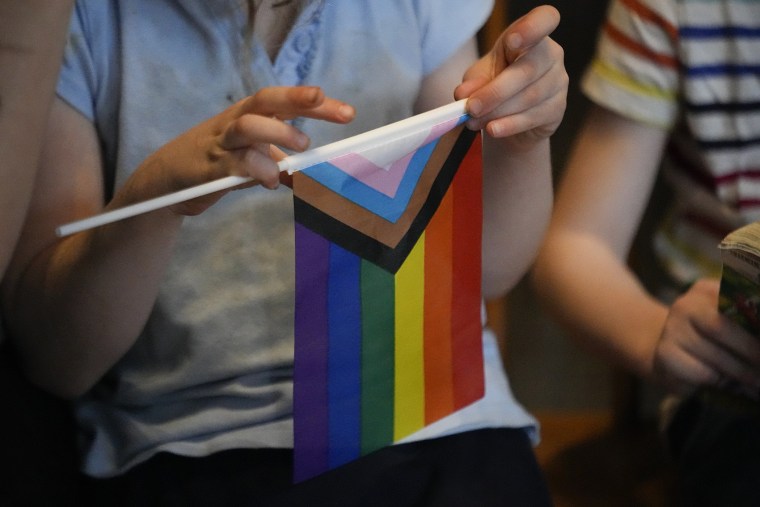



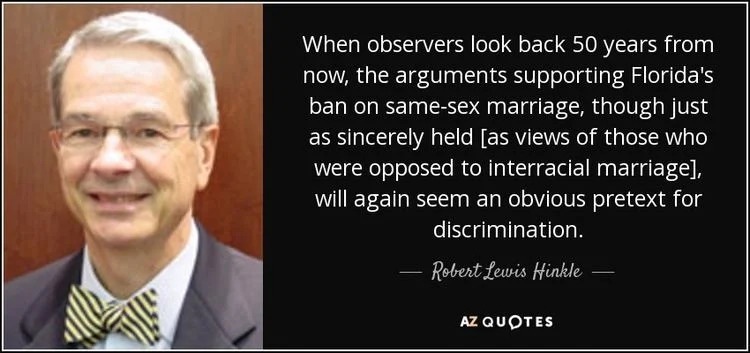

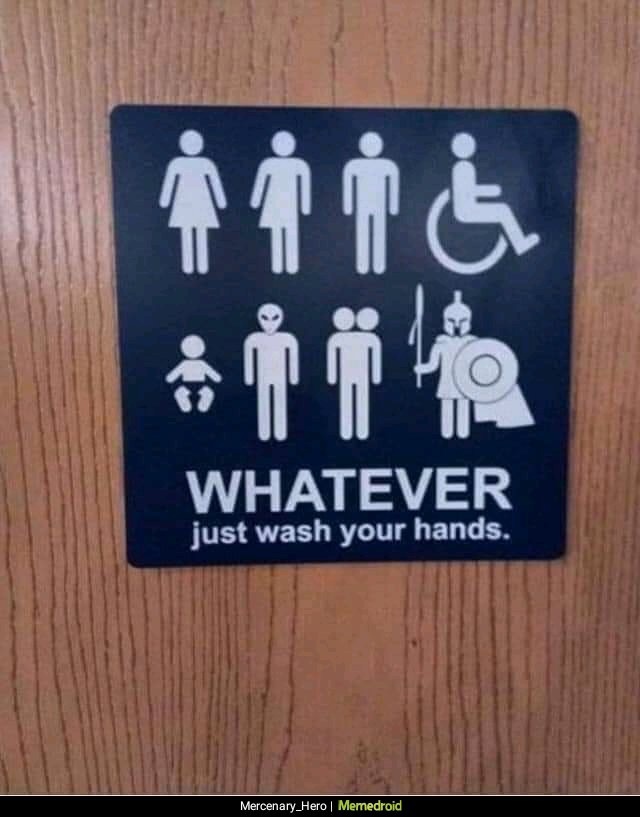

 Photo: Shutterstock


 Scottie's Playtime
All is well. So many things tend to work out for the very best.
Here’s a new link. I’ve been reading Oliver Willis for years, and I really like his work. You’ve probably seen his work around. I now subscribe (for free) to his work on Substack, and here is the one he posted today. Bonus on each post is a photo of his doggy Kal-El, who looks like our Chrissy back when she was that age (she crossed the bridge in 2020 at age 21.) Anyway, back to the link: https://www.oliverexplains.com/p/how-boring-lgbtq-people-made-america . Enjoy when you get to it!