Oh clutch my pearls, classical literature is not as pure as today’s fundamentalist Christian nationalist who just don’t want their children to get an education but they demand the right to stop your child or anyone from getting one. This is not about parental control, it is about one minor fundamentalist religious group having complete control over the education of all the children in the entire state. But only for public schools. The schools paid for with tax dollars and that educate the lower incomes. The private schools do not have to follow these stupid bigoted rules. My dogs that love gravy, this has been a Christian Taliban moral police take over. Next girls will only be allowed to attend school until the 8th grade and must wear ankle length dresses, and everyone will be in drab colors. Hugs
School district officials in Hillsborough County, Fla., have implemented a newly designed curriculum guide for English teachers that will see students reading only selections from William Shakespeare plays.
“There’s some raunchiness in Shakespeare. Because that’s what sold tickets during his time,” said Joseph Cool, a reading teacher at Gaither High School.
“I think the rest of the nation — no, the world, is laughing us,” he added. “Taking Shakespeare in its entirety out because the relationship between Romeo and Juliet is somehow exploiting minors is just absurd.”
Schools in Hillsborough County, which includes Tampa Bay and the surrounding area, are mostly assigning excerpts by the English language’s most famous writer. The schools previously required students to read two of Shakespeare’s novels or plays, in their entirety, per year.
The decision comes as educators must prepare students for a new set of state exams that cover a wide variety of subject matter, and also, “in consideration of the law,” according to a school district spokesperson, which means teaching it could open educators up to disciplinary measures if a parent were to file a complaint.
The “law” in question is the new Parental Rights in Education Act, which prohibits teaching any content that is sexual in nature.
Florida high schools are now removing Shakespeare, including the full text of “Romeo and Juliet,” to comply with Republicans’ new law restricting “sexual content.”
“I think the rest of the nation — no, the world, is laughing at us,” a teacher said.
If your kids are go to school in Tampa, thanks to bigly failing @GovRonDeSantis, they will read Shakespeare "while avoiding anything racy or sexual," i.e. "excerpts" from "Romeo & Juliet," "Othello," "A Midsummer Night's Dream," "Macbeth" not full plays https://t.co/jETfpNm6Vy
[Jerusalem] saw this, yet she was more corrupt than [Samaria] in her lusting and in her prostitutions, which were worse than those of her sister. She lusted after the Assyrians, governors and commanders, warriors clothed in full armor, mounted horsemen, all of them handsome young men. And I saw that she was defiled; they both took the same way. But she carried her prostitutions further; she saw male figures carved on the wall, images of the Chaldeans portrayed in vermilion, with belts around their waists, with flowing turbans on their heads, all of them looking like officers—a picture of Babylonians whose native land was Chaldea. When she saw them she lusted after them and sent messengers to them in Chaldea. And the Babylonians came to her into the bed of love, and they defiled her with their lust, and after she defiled herself with them, she turned from them in disgust. When she carried on her prostitutions so openly and flaunted her nakedness, I turned in disgust from her, as I had turned from her sister. Yet she increased her prostitutions, remembering the days of her youth, when she prostituted herself in the land of Egypt and lusted after her paramours there, whose members were like those of donkeys and whose emission was like that of stallions. Thus you longed for the lewdness of your youth, when the Egyptians fondled your bosom and caressed your young breasts. – Ezekiel 23:11-2
It is happening in Sarasota County too: “Teachers offloading books in DeSantis’ Florida, resellers say,” Aug. 4.
I work in a Sarasota County thrift store. This summer, the store has received thousands of books from schools and classroom libraries. They are marked with the names of teachers or schools.
It is clear from the wide variety of titles that teachers work hard to help every student feel validated and included in a diverse classroom.
I literally cried in the store when I saw the titles: Newbery Award and Honor Books, the highest award a children’s book can receive from the American Library Association, no longer available to children in their schools. Most of the books depict characters from minority and vulnerable populations.
Reading novels with characters that face struggles the reader does not experience develops empathy for others. Perhaps our governor could read a few and develop a little empathy himself.
I feel sorry for all the youngsters in Florida who are being deprived of everything except a selective education which intentionally leaves gigantic holes in their curriculum.
Those who go off to college (esp. out of state) are going to find out they’re years behind their classmates.
Only the public schools. The elite private schools are not bound by the state curriculum and will be able to teach real history, literature, art, etc. Rhonda’s children go to private school.
The ones who are exceptionally smart will find a way to get educated. I’m concerned about the others. Not every child is going to be able to do what Tara Westover did.
Tonight, a judge ruled in favor of the 15 women who sued Texas after the state’s abortion ban put their health and lives at risk. Travis County District Judge Jessica Mangrum issued a temporary injunction that will stop the law from being enforced against doctors who provide abortions using “good faith judgement” that a pregnancy is unsafe for the pregnant person, or that a fetus is unlikely to survive.
Texas will definitely appeal; but for now, people in the state with dangerous or doomed pregnancies should be able to get care.
I am so grateful for the women who laid their pain bear in public for the chance to change this law just a little—but so distressed that they had to fight so hard to be given this bare minimum of humanity. It makes me feel a bit ill, to be honest, that these are the kinds of ‘wins’ we have to hope for.
The lawsuit, brought by the Center for Reproductive Rights, required women to relive the horrors they were forced to endure because of the state’s abortion ban. One woman, Samantha Casiano—who was forced to give birth despite the fact that her baby had anencephaly and was missing parts of her brain and skull—ended up vomiting while recounting her experience. She said that talking about what happened “just makes my body remember and it just reacts.”
Lawyers defending the state, meanwhile, were extraordinarily cruel. One attorney said, “Plaintiffs simply do not like Texas’ restrictions on abortion.” Another not only frequently interrupted as the women spoke about their experiences, she also asked each one individually if Attorney General Ken Paxton had personally denied them an abortion. Plaintiff Amanda Zurawski, who nearly died after being denied an abortion, said, “I survived sepsis and I don’t think today was much less traumatic than that.”
There is a reason Texas tried to stop these women from telling their stories: there is no arguing with their experiences, no turning away from the horror these laws have caused. As happy as I am for the people in Texas who might be able to get the care they need as a result of this decision, I keep thinking about Terry—the young woman I spoke to in June—and how this ruling came too late to help her:
An American Nightmare: Young, pregnant & living in Texas
Very interesting, wonderful calm delivery. Informative. Well reasoned with out a lot of science or medical jargon, just cutting through the bullshit. Towards the end she even addresses those that still claim gametes are the real determining factor of a persons sex. I enjoyed this. Hugs
TERFs say the LGBTQ community is harming women by erasing biological sex. But can they even agree on what biological sex IS?
Two teenagers in a marriage they did not want simply because they had sex and she got pregnant. They are unhappy, her schooling stopped, he was forced to join the military, and they are admitting they are not mature enough to get married or have children. It is a horrifying true tale that the fascist Christian fundamentalist insist must be the only way in an advanced country for kids that have sex. They had sex so it should screw up their entire life. She thought she went to a real clinic, but it was an anti-abortion setup that told her lies to convincer not to get an abortion. They have each talked divorce and I will bet good money in 7 or 8 years they will separate. He talks about how if it were not for the kids, she dropped out of school and she also talks if she had just had an abortion …
Warning when I copied the article it started video audio I couldn’t figure out how to stop. The original site did not have that audio.
Hugs
This is life two years later.
Deep Reads features The Washington Post’s best immersive reporting and narrative writing.
TAMPA — Brooke High was not ready to face her family. Sitting on the edge of her bed, hair dripping wet, the 19-year-old listened to her twin daughters cry in their high chairs on the other side of the door. One hurled what sounded like a plate. Then a bottle.
Her husband, Billy High, also 19, was supposed to be watching them. But Brooke could hear one of his TV shows playing on his phone.
She waited a few minutes, reminding herself of everything their marriage counselor had told her. Treat your partner as you would want to be treated. Soften your tone. Don’t yell.
She heard Billy finally take the girls out of their chairs. Then came a loud splash.
Brooke rushed toward the sound of her daughters, stepping over flecks of scrambled eggs and Pop-Tarts from the girls’ breakfast. One of the twins ran out of the bathroom, crying and drenched in toilet water.
“I told you to put the dishes in the dishwasher, and you stood here for 30 minutes,” Brooke said to Billy. “And then while you weren’t watching the girls they got into the damn toilet.”
“Are you going to give them a bath?” she said.
Brooke vacuums and Billy watches skateboarding videos as their daughters play at home in Tampa in June.
When Brooke met Billy at a skate park in Corpus Christi, Tex., in May 2021, she could not have predicted any piece of the life she was now living. She’d been gearing up for real estate school, enjoying long days at the beach with her new boyfriend. Then she found out she was three months pregnant. And because of a new law, she could no longer get an abortion in Texas. The closest clinic that could see her was in New Mexico, a 13-hour drive away.
She gave birth to Kendall and Olivia six months later.
Brooke, Billy and their baby girls appeared in a story in The Washington Post just days before Roe v. Wade was overturned last summer, thrusting the family into a polarized national debate and turning them into symbols they never imagined they’d become.
For many readers, Brooke and Billy’s story was a Rorschach test, with each side of the abortion debate claiming the teenagers’ experiences as validation of their own views. Sen. Ted Cruz (R-Tex.) called the story “powerfully pro-life.” Abortionrights advocates decried the Texas law that compelled an ambitious young woman to abandon her education and raise two kids on the $9.75 an hour her then-boyfriend made working at a burrito restaurant. People on both sides of the issue donated more than $80,000 to a GoFundMe account that Brooke created, providing a financial cushion the couple says has kept them out of debt.
At the center of the abortion debate is the question of how an unwanted pregnancy, carried to term, reverberates through the lives of those directly involved. The most prominent study on the subject, conducted by a pro-abortion-rights research group at the University of California at San Francisco, included interviews with nearly 1,000 women over the course of eight years. The study, which was published as a book in 2020, found that women who are denied abortions experience worse financial, health and family outcomes than those who are able to end their pregnancies.
Brooke’s future is still uncertain. After her daughters were born, she and Billy got married and moved into a two-bedroom apartment more than 1,000 miles away from South Texas, the only home they’d ever known.
If they didn’t have the babies, Brooke and Billy both concede that they probably wouldn’t still be together. Their teen romance would have flamed and faded, remembered by a few Instagram posts and the pink-wheeled skateboard Billy chose for Brooke at the skate shop by the bay.
Now, with two children, they are permanently linked.
Brooke and Billy play “rock paper scissors” to decide whose turn it is to change their girls’ diapers.The hours Billy spends playing video games are a point of contention for the couple.Billy and Brooke play with Kendall in their Tampa apartment as Olivia watches.Brooke stays at home with her daughters full time.
Brooke is proud of the decisions she and Billy have made for their family. Billyis now a mechanic for the Air Force, where he enlisted so he could secure a steady income for his family, while Brooke cares for the girls full time. The twins are healthy and happy, absorbed by weekly swim lessons and the bedtime stories Brooke and Billy read aloud every night. At their one-year checkup, Brooke swelled with pride when the doctor called her daughters “really smart.”
But standing in her kitchen one morning in late May, listening to Billy run the bath for the twins,Brooke also recognized how quickly it could all fall apart. She and Billy fought often — about the messes he left her to clean, the hours he spent playing video games — and she knew they couldn’t manage without his $60,000-a-year military salary. She’d dropped out of real estate school without another career plan in mind.
“It’s a little bit scary,” Brooke said. “Billy and I haven’t been together that long.”
She doesn’t understand why some antiabortion activists see them as the ultimate success story.
“It doesn’t make sense to me that we would be that shining example.” Their lives, she said, were “so imperfect.”
In their Tampa apartment,Brooke could hear Billy blowing kisses to Kendall and Oliviaas they sloshed around in the bathtub, shrieking in delight. It was one of the things she loved most about him: He could always make them laugh.
Brooke gave her husband a half-smile when he reappeared in the doorway — a small reminder, she hoped, that she was still the freckle-faced girl he’d fallen for, not just the angry mother always making demands.
Billy picked up his phone without looking at her.
After Billy graduated from basic training for the Air Force last summer, the family moved across the country in the fall for his new job at a Florida military base.
Brooke and Billy made the long journey from Texas to Tampajust after Thanksgiving last year. They packed everything they owned into a U-Haul and drove 18 hours toward the promise of a new life.
Brooke couldn’t imagine a better military assignment. Florida was blue skies and theme parks, long sandy beaches with turquoise waves — far from her mother’s judgment and the same roads she’d driven down thousands of times.
In the passenger seat, she tried to absorb the changing landscapes speeding past her window. The French spellings in Louisiana. A sign that welcomed her to “Sweet Home Alabama.” The towering pine trees she craned her neck to see as they finally crossed into Florida. In 19 years, Brooke had spent just one week outside Texas.
“We’re moving to Florida!” she or Billy would say out loud every few hours, flashing the other a big smile.
They were really leaving, she kept thinking to herself. Even with two babies, she’d made it out.
Four years reporting on people affected by abortion laws
Washington Post reporter Caroline Kitchener has covered abortion for more than four years. She spends a lot of her time traveling across the South, reporting from the states most affected by the fall of Roe v. Wade. In addition to her coverage of abortion-related laws and court cases, she strives to tell the stories of people at the center of it all.
Caroline has made three trips to see Brooke and Billy High in both Texas and Florida since she first met the couple in Corpus Christi in May 2022, following them as they went about their daily lives. She wrote a story about the couple and their twin daughters in June 2022.
Caroline kept in touch with Brooke over the following year. Readers would frequently ask for updates on the young parents — which prompted Caroline to continue her reporting.
1/3
End of carousel
For a few weeks, Tampa was bliss. Brooke made frequent trips to Target, happily selecting items to furnish their first home together — pots and silverware, a shower curtain covered in pink flowers. She felt that she was doing everything right as she chopped vegetables on her granite countertop, preparing a healthy meal for her family.
In the evenings, after Billy got home from the base, they’d sometimes take a picnic to a nearby soccer field, letting the girls run in circles while they lay on their backs and looked up at the sky.
“I love you,” she’d tell him at least once a day.
Billy would respond as he always had: “Love you more.”
Then, slowly, Brooke felt something shift between them. At first, she blamed a change in Billy’s schedule. He switched to working nights, leaving her alone with the babies from 2 p.m. until after 11.
Billy prepares for his shift as a mechanic, working on the KC-135 tanker.Billy checks to see if he needs to shave.Billy gets ready for work. He wasn’t excited to join the military but thought it was the only way he could provide for his family.Olivia and Kendall play with their father’s hat. “I felt more able to take care of them,” Billy said about getting his Air Force job.
Every time he walked out the door in his uniform, she felt crushed by the prospect of the next nine hours. The babies were too mobile to take them almost anywhere without help. At the playground, they would shoot off in different directions — Olivia clawing her way up the jungle gym stairs while Kendall teetered on the edge of the platform — and Brooke couldn’t be in two places at once.
Her life quickly started to feel like an endless cycle of tasks, entirely predictable and stretching out into infinity. Cook lunch. Clean up. Play with the girls. Put the girls down for a nap. Change diapers. Cook dinner. Clean up. Repeat.
To get through it, Brooke would play reruns of “Friends” on the TV in the background, comforted by the voices of characters she felt like she knew in a city where she knew almost no one. In her first twomonths in Tampa, she watched all 10 seasons.
Brooke missed her husband desperately, but as the weeks wore on, she worried he wasn’t missing her back. She tried to keep her texts casual — “hey, how’s your day?” — hoping he would respond with the validation she needed: “I miss you, baby” or “Just a few hours until we’re together again.” Instead, he’d dash off a quick “work’s good” or, “it’s fine.”
Once Billy got home, he was often too tired to talk.
Sometimes she would call her dad, Jeremy Alexander, for advice, worried about how Billy seemed to check out other girls. Just like Billy, Alexander had his first child, Brooke’s older brother, as an 18-year-old skater kid in Corpus.
“Look, boys are boys,” he said he would tell her. “Give him time to be a man.”
Brooke was eager to give her life structure — to put concrete plans on the calendar and break up the long days. She’d thought about going back to school, but it didn’t seem possible with the girls at home. She worried about leaving them with strangers — and they couldn’t afford day care anyway. The GoFundMe money, which they’d used in part to furnish their apartment and pay off Brooke’s car, was already running low.
Eventually, she posted a message on a Facebook group for local military wives.
“My name is Brooke and these are my twin daughters,” she wrote, attaching pictures of her and the girls. “We moved here in December and haven’t had any luck finding friends. If anybody would like to get coffee, workout, or have a play date please let me know!”
Brooke drives to meet a new friend for a walk in Tampa.Brooke stops to rest while out for a walk with her twins and her friend.Brooke knew almost no one in Tampa when her family first moved there. She eventually sought out friends through a Facebook group for military wives.Brooke pushes Kendall and Olivia in a stroller as she and her friend take a walk.
Until she arrived in Tampa, Brooke hadn’t fully appreciated how much support she had in Corpus Christi. They’d lived with Billy’s dad, and her mom was a 10-minute drive away. Someone was always around to watch Kendall and Olivia.
Brooke thought she and Billy needed time to reconnect — a few softly lit hours away from the babies, laughing with each other, lingering long after dessert.
She was thrilled when a new friend volunteered to babysit.
When Brooke arrived at her friend’shouse on the night of the date, she said, she noticed a few extra cars parked outside. Her friend’s husband opened the door with a bottle of tequila in his hand, a group of people drinking in the room behind him.
Brooke recalled handing over the girls, trying to focus on the night ahead. The deep conversation and the romance. She’d spentover an hour getting ready, pulling her hair back with a ribbon and donning the flowery sundress she’d worn the day they got married.
“I think they’re gonna be fine,” Billy recalled assuring her as they drove away.
But Brooke couldn’t shake the image of her baby girls plopped in an unfamiliar place, reaching for their mother.
“I’m just not okay with it,” she said she told him. “We have to turn around.”
Billy takes a break after struggling to land a skateboard trick. The marriage counselor he and Brooke were seeing encouraged each of them to take time for themselves.
Billy put his hands on his knees and looked down at the concrete quarter-pipe, the hot Florida sun beating down on his back.
He’d tried the same skateboard trick at least 30 times already, his phone perched on a nearby ledge, recording every failure.
“Commit or go home,” he said to himself in an empty skate park at 11 o’clock on a Sunday morning. “Commit, right here.”
But it was hard to commit without his friends around him, as they’d always been in Corpus. Sometimes he’d try to zero in on a stranger passing by. “This one’s for you,” he’d say under his breath, telling himself they were watching, even when he knew they weren’t.
Their marriage counselor had encouraged Billy and Brooke to take time for themselves — for him, a trip to the skate park; for her, an hour working out at the gym.
They’d started seeing the counselor in April, after one of their worst fights. And while Billy appreciated the counselor’s advice, he still felt a little guilty every time he came to the park. Especially in moments like this, struggling to land trickshe’d done before, he wondered whether skating was worth the extra hours away.
Back home, Billy had proudly counted himself among the Corpus Christi “park rats,” often heading to the skate park around noon with a tripod and a Tupperware of watermelon. His friends would scream his name when he pulled up in his car, coming over to talk through the tricks they might try together. When the skating was good, they’d stay for eight hours, leaving well after the sun went down.
Billy and Brooke met at a skate park in Corpus Christi, Tex., where they would spend days hanging out with a big group of friends.
Before he met Brooke two years ago, Billy had planned to live in Corpus forever, skating with his friends whenever they weren’t working. Then Brooke got pregnant.
At first, he wanted her to get an abortion. But he wasn’t going to push.
It was Billy’s idea to join the military. He wasn’t excited about it, but he couldn’t see another way to support a wife and twins. Everyone in his life — his parents, his favorite teacher — told him it was the right thing to do. So Billy committed, marrying Brooke at the courthouse last summer and signing an Air Force enlistment contract that would keep him in uniform for the next six years.
That was something he’d learned from skateboarding: You go for it, or you don’t.
Soon Billy was waking up to a loudspeaker at 5 a.m. at a basic-training camp in San Antonio, hustled out of bed with 43 other guys to do push-ups and run circles around a track. Every day he stood at attention, head shaved, right arm outstretched, for what felt like hours, waiting for an instructorto look him over from head to toe.
At night, Billy would lie in his cot and think of his girls back in Corpus Christi. Kendall and Olivia had just turned four months, old enough to wrap their tiny hands around his index finger. He would imagine Brooke’s blond curls, wishing he could get her advice on whatever he’d struggled with that day. His wife, he said, was one of the smartest people he knew.
“I miss you and our beautiful girls so much to the point that whenever I think of y’all, my eyes water or it feels like I need to cry,” he wrote in a letter after his first week of basic training. “I think about you every day and I wonder what you’re thinking of.”
Before he left to go back to Corpus, Billy got Kendall’s and Olivia’s names tattooed on his chest.
Billy adjusts a hand-painted skateboard with the twins’ names on it at home in Tampa.After several attempts, Billy completes a trick at a skate park in St. Petersburg, Fla.
Returning home in his military fatigues, he wasn’t the kid at the skate park anymore. He was the man ready to show his commitment.
“I felt more able to take care of them,” he said. “I felt like I could do anything if I wanted to.”
Six months into his life in Florida, Billy felt proud to flash his credentials at the base gates. As an airman first class, he spent hours every day burrowed deep inside his assigned plane — the KC-135 aerial refueling tanker — inspecting the electrical and hydraulic systems. After two months of technical school, he could help fix most problems and send the plane on its way. (Billy was careful to say that his views do not represent the Department of Defense.)
But as much as Billy appreciated his new job, there were moments when he allowed himself to imagine a different life. If he didn’t have kids, he might be sharing an apartment with a few friends from the skate park, he said, moving on from the burrito place to Walmart, where the pay was better. Skating every day. Partying at night. No worries.
Those thoughts usually surfaced after Brooke yelled at him. Sometimes Billy knew he deserved it — he acknowledged that he probably did play too many video games — but other times he really felt like he didn’t. They would fight about money, especially toward the end of the month when they had to dip into savings for groceries. Most often, he said, they would fight about the babies, with Brooke accusing him of not doing his fair share.
“Once you’re put under all that pressure, you don’t want to be there anymore,” Billy said.
Kendall eats a cookie at home.Kendall reaches for her father as he tries to clean her face after a meal.Brooke and Billy rest in bed while their girls nap.Billy puts his daughters down for a nap; he says he loves being a dad.
Some nights, he would go sit in his hot car, the lights and the engine turned off so Brooke couldn’t see him. There, he would consider the logistics of leaving, where the girls would go. To keep them with him, he’d have to switch to a day shift and figure out a way to pay for day care.
More likely, Brooke would take the girls back to Corpus. She would be miserable, he thought, probably living with her mom and resenting her lack of freedom, raising two babies alone.
And he would be without them.
Billy said he loved being a dad. He liked to lie on the floor of the girls’ room and feel the weight of his daughters as they climbed on his chest. When he threw them up in the air and caught them in his arms, they looked at him like he was the most important person in the world.
Kendall and Olivia made him feel good about himself and the choices he’d made. Walking through the aisles at the grocery store, tattooed arms holding two baby girls, he knew people were looking at him, impressed. He was proud of all the ways he defied their expectations.
After an hour at the empty skate park, Billy was ready to head home. His daughters met him at the door, holding up their arms for him to lift them up.
“Billy, will you put them to bed?” Brooke asked.
Of all the chores in his new life, this was one of his favorites.
One at a time, he held his daughters to his chest, kissed them on the cheek and laid them down.
Brooke goes underwater for a moment at a pool. She often thinks others are judging her when she’s out with her daughters.
When Brooke arrived for the girls’ weekly swim lesson, the other mothers were already in the pool. No matter how much extra time she allotted, somehow she and Billy were always late.
“I’m so sorry,” Brooke said, holding Olivia as she lowered herself into four feet of tepid water.
Brooke nodded vigorously as the swim coach rehashed the first round of instructions, eager to do exactly as she was told. She was acutely aware of the three other moms in black one-pieces, who all looked around 30. Between activities, they would chat among themselves, discussing their favorite jewelry stores and the habits of their doctor husbands.
Brooke wanted to impress them — to prove to them that the 19-year-old in a white bikini was actually a great mom.
While Billy had grown accustomed to approving smiles, Brooke knew to expect judgment everywhere she went. Receptionists whispered to each other when she walked in for medical appointments, wide eyes shifting from her to the twins. She’d always wonder whether they could tell how young she was, if they somehow knew she dropped out of high school.
Even her own mother, who helped convince her to have the babies, still seemed to judge the way Brooke was raising them, Brooke said. When they spoke on FaceTime, her mom would sometimes criticize the clothes Brooke chose for them or the way she did their hair.
Just once, Brooke wished she could be brave enough to say out loud the words she rehearsed when she was alone:
“Regardless of how I look, I’m f—ing doing it. So think whatever the f— you want.”
Brooke’s mother, Terri Thomas, said she is “very proud” of Brooke and Billy.
“They are doing an amazing job as parents and as young adults,” she wrote in a text message.
Brooke was determined to do a better job than her own parents, who she said sometimes left her to care for herself.Her dad gave her a cellphone at age 10, she and her father recalled, allowing her to hole up in her room for hours, staring at a screen. Soon after that, she said, she got a Facebook message from a much older guy who seemed friendly. A few days later, when he asked for a naked picture, Brooke sent him one.
“I’ll never forget about that,” she said. “I saw a lot of things I shouldn’t have seen, things I never want them to see.”
More than almost anything else from her childhood, Brooke said, she remembered the arguments — people throwing things through windows and punching walls. Someone was always yelling.
Brooke and Billy go swimming with Kendall and Olivia in Tampa.At the end of basic training for the Air Force, Billy got his daughters’ names tattooed on his chest.One thing Brooke says she wants for her girls: parents who stay together.
As she watched the girls sleep, Brooke would think through the promises she’d made to them. Kendall and Olivia would always feel safe in their own home. They would wake up every day and know, without a doubt, how much they were loved.
But there were other things Brooke wanted for her daughters that she could not control or guarantee. At the top of the list: two parents who loved each other — or, at the very least, parents who stayed together.
Brooke still thought about the night, back in March, when Billy suggested they split up.
The fight had started at the beach, when Brooke saw Billy’s eyes lingering on a girl in a bikini. He denied looking at the girl, promising he wasn’t interested in anyone else — which just made Brooke angrier.
“You’re not going to gaslight me when I saw you doing it,” Brooke remembered saying as they drove home, twins in the back seat.
Brooke had worried about other girls ever since they got together. Anxious about losing Billy, she fixated on every pretty girl he knew from work or messaged on Snapchat. Especially now that she and her daughters relied on him completely, her deepest fear was that he might find someone he liked better.
Back at their apartment, Brooke wasn’t interested in hearing Billy’s apologies.
“I don’t want to see you,” she remembered saying. “I don’t want to sleep next to you.”
Then Billy came right out with it: “I think we should get a divorce.”
They both froze as soon as he said it, they each recalled, absorbing the shock of hearing something they’d both privately considered but assumed they’d never say out loud.
“How is that even an option at this point?” Brooke said. “Where am I going to go? What’s going to happen to us?”
Billy got quiet, then left to go sit in his car.
Billy does a backflip as he and Brooke play with Kendall and Olivia at a playground in Tampa.
Brooke and Billy rarely think about the new laws that led them to this moment. Even on June 24, the first anniversary of the Supreme Court ruling that overturned Roe v. Wade, the abortion issue was just a passing thought.
“If I see it on the news, I’m like, ‘Yeah, that’s why I have two kids today,’” Billy said. “I think that for like a split second, then I move on.”
“Me too,” Brooke said. “I don’t really dwell on it.”
“If you’re not planning on having a kid,” Billy said, “abortion is much cheaper than raising people.” The new laws, he added, “create not a good situation to be in.”
But then he thought about Kendall and Olivia, and shook his head.
“I don’t know,” he said. “I’m tired.”
In the almost two years since Brooke and Billy ran up against the Texas abortion law — a novel statute that circumvented Roe months before it was overturned — more than a dozenother states have halted all or most abortions. The Texas law, which banned the procedure after about six weeks of pregnancy, has likely resulted in at least 9,000 extra live births, according to a recent study, making Brooke and Billy an early example of a family compelled into existence by an abortion ban. It’s too early to know how many babies were born becauseof the fall of Roe.
Back in August 2021, Brooke called an abortion clinic as soon as she found out she was pregnant. But it had no open slots, overwhelmed with patients racing to end their pregnancies before the new law took effect less than 48 hours later. Instead, Brooke got an ultrasound at a local crisis pregnancy center, not knowing that it was an antiabortion organization. There, employees told her she was 12 weeks along — far enough into her pregnancy, they said, that the babies had“heartbeats.”
She decided not to make the drive to New Mexico.
Now, at home in Tampa, Brooke stared at the wall, clutching a pillow to her chest.
“If I would have had the abortion …”
She stopped.
“I can’t even think of it that way now,” she said. “Those are our babies, and they’re people.”
Still, Brooke said, she felt sick thinking of all the young girls forced to carry pregnancies they didn’t want.
“If you really didn’t want something, and then you’re forced to go through with it … it’s still really very hard,” she said.
Kendall and Olivia run around at the playground.Brooke plays with her daughters.Billy has started to talk about having a son. Brooke says she wants to first make sure their relationship is strong.
Lately, Billy had started to talk about having a son. He wanted a little boy he could teach to change a tire, he said — a sidekick for what he called “boy things.”
When Brooke thought about it, sometimes the idea of another kid didn’t seem so crazy.
After their fight in March, Brooke and Billy had started weekly marriage counseling sessions. With the girls asleep in the next room, they’d sit in bed and FaceTime with the counselor, Brooke’s phone propped up on a plastic bin.
The counselor offered concrete suggestions for how to work through their conflict and move forward. Billy should try to be more communicative; Brooke, more trusting.
The sessions seemed to be helping, Brooke said. She and Billy were talking more, laying plans for their future. They would live in a blue house with a white fence one day, they’d recently decided — with a porch swing and a skate ramp in the backyard. The twins would follow their dad outside with pink skateboards and matching pink helmets.
But it was too early to be sure of any of that. Before Brooke brought another child into their family, she said, she needed to know their foundation was strong.
As soon as the girls were born, she’d gone to her doctor to get an IUD.
She had no plans to remove it.
Brooke listens on a call with a career coach at home in Tampa.
Brooke sat cross-legged on her bed and stared at her phone. Any second, it would light up with an unknown number. She’d been rehearsing what she would say all day.
“Be confident,” she’d written in her Notes app that morning. “Call within two minutes if they don’t call.”
The call was with a career coach, one of the final steps required to sign up for an online education program for military spouses. If she completed therecommended20 hours of work every week, Brooke learned, she could become a licensed personal trainer and nutritionist in less than five months — and then start earning $25 an hour.
Since she moved to Tampa, she’d seen the same advertisement pop up on her phone again and again: a photo of a man in uniform, lifting up a woman in Keds and skinny jeans. “No cost for education,” the ad said.
For months, Brooke had stopped herself from clicking on it. Why get all excited if she couldn’t make it work?
Butlately she had started to think about school differently: less as a luxury, more as a way to reclaim power over her life.
She attributed at least some of her newfound resolve to Judge Judy, whom she’d watched regularly since she was a kid. Sometimes, after a fight with Billy, she would hear the judge’s voice in her head, as she remembered it: “Always make sure you can support yourself,” Brooke recalled her saying to women who appeared in her courtroom. “Do not put yourself in a vulnerable position.”
As optimistic as Brooke felt after each counseling session with Billy, she knew there were still no guarantees.
While Billy is at work, Brooke reads the twins a story.Brooke washes Olivia, who got dirty during a diaper change.Brooke comforts Kendall after playtime with Olivia got too rough.Brooke said she remembered advice that Judge Judy would give to women in her TV courtroom: “Always make sure you can support yourself.”
When the call came, Brooke picked up on the second ring. She told the coach why she wanted to be a personal trainer, just as she’d practiced.
“I think it would be a good fit for me,” she said. “As for goals, I’d love to complete the program, pass my exam and just learn a whole bunch of new things I didn’t know before.”
The program would help her find a job, the career coach promised. But when he walked her through a preliminary search for personal-trainer positions in Tampa, nothing came up.
“No, I don’t see …” the coach said. “There’s hairstylist, personal assistance provider …”
Brooke tried not to feel discouraged. When she hung up, and Billy asked her how the call went, she smiled.
“It’s really exciting,” she said. “It was a little scary, but I feel like I did good.”
As her husband kissed her goodbye and walked out the door in his uniform, Brooke imagined what it would be like to leave the house on her own every day — to drive to her own job and get her own paycheck.
She opened an email from the career coach and started filling out her forms.
The medical science is in, the debate is over. Yes it is hard for some people to understand or change. All their lives they really thought biology of sex, who was male or female came down to if your part was an outtie or an innie. If it dangled outside the body or if you could put something in it. That is not how biologists classify male and female anymore. The notion that sex is not strictly binary is not even scientifically controversial. Among experts it is a given, an unavoidable conclusion derived from actually understanding the biology of sex. It is more accurate to describe biological sex in humans as bimodal, but not strictly binary. In order for sex to be binary there would need to be two non-overlapping and unambiguous ends to that continuum, but there clearly isn’t. There is every conceivable type of overlap in the middle – hence bimodal, but not binary.
There are two paraghraps that address the question of gametes and of sexual organs, again proving that they are not binary. Also the article address differences in sexual organs and how they are not the rare differences they once were thought to be. They are in fact much more common. This article is very informative and easy to read. It is a bit longer than some want to read but if you want to know the truth about sex, trans gender, and biology you will read it. If not you will repeat and stick to the same failed incorrect talking points. Hugs
What does the science actually say about biological sex?
The debate over how best to approach people who identify as transgender or non-binary is many-layered and can be complex. Medical questions about the evidence for the safety and efficacy of specific interventions, and the ethics of treating minors, deserve thoughtful and open discussion. The optimal way to incorporate transgender athletes into competition also could benefit from a good faith debate.
Unfortunately, discussion around transgender issues suffers from at least two sources. First, it has been coopted as part of a politically-motivated culture war. This reality is exactly the opposite of thoughtful good-faith discussion. Second, for most people wrapping their head around a reality that may not conform to traditional notions of strictly binary sex and gender takes a lot or processing. Misconceptions about the basic science are rampant, and are, in fact, encouraged by the culture warriors.
Many of those who are pushing back against trans healthcare and broader acceptance are explicitly premising their position on the claim that biological sex is strictly and obviously binary. They portray themselves as taking the scientific high ground, and anyone who questions this obvious biological fact are the ones engaged in pseudoscience.
Most of us are born male or female. This is not our “assigned gender”: it’s our biological sex. An individuals’s sex is determined in animals (and plants) via the chromosomes one is born with.
Wrong, right out of the gate (as I will detail below). He goes on:
For most of us, we ARE male, or we ARE female. Unfortunately, early scientific articles conflated “gender” and “sex”, and much of society conflate them this as well. Depending on context, someone might need to know your sex (karyotype).
He is saying that sex is strictly binary, it is entirely determined by karyotype, and it is completely distinct from gender. While these views are common, especially among those who are critical of the trans identity, they are also demonstrably scientifically wrong.
Biological sex is not binary
The notion that sex is not strictly binary is not even scientifically controversial. Among experts it is a given, an unavoidable conclusion derived from actually understanding the biology of sex. It is more accurate to describe biological sex in humans as bimodal, but not strictly binary. Bimodal means that there are essentially two dimensions to the continuum of biological sex. In order for sex to be binary there would need to be two non-overlapping and unambiguous ends to that continuum, but there clearly isn’t. There is every conceivable type of overlap in the middle – hence bimodal, but not binary.
This matters, and in fact it is the overlapping middle that is the very point of the discussion. Denying a trans identity is denying that overlapping middle. Let’s review the biology of sex to see what I mean.
It is absolutely true that humans display sexual dimorphism, with a typical male and typical female set of traits. There is no third sex, or pole, or sexual archetype. This can be distinguished, for example, from body type which is understood as trimodal – ectomorphic, endomorphic, and mesomorphic – forming a triangle with individuals falling somewhere between the three poles. Biological sex has only two poles, with one axis of variation between them. (See the main image for a good visual representation of binary vs bimodal.)
It is also true that most people tend to cluster around one of the two poles of biological sex. At first glance, looking superficially at the human population, it may seem binary. This is because binary and bimodal can look very similar if you don’t dig down into the details – so let’s do that.
First we need to consider all the traits relevant to sex that vary along this bimodal distribution. The language and concepts for these traits have been evolving too, but here is a current generally accepted scheme for organizing these traits:
Genetic sex
Morphological sex, which includes reproductive organs, external genitalia, gametes and secondary morphological sexual characteristics (sometimes these and genetic sex are referred to collectively as biological sex, but this is problematic for reasons I will go over)
Sexual orientation (sexual attraction)
Gender identity (how one understands and feels about their own gender)
Gender expression (how one expresses their gender to the world)
Let’s start with genetic sex. This may seem like a home run for binary sex, with females being XX and males XY, but on closer inspection this is not true. Again, yes, most people fall into one of these two chromosomal patterns, but we also see other patterns, such as XXY, XYY, XXX, etc. Further, some people can be mosaics, with some cells having XX and others XY.
But I think even more important than these chromosomal states is the fact that chromosomes alone do not fully tell the story of the genetics of sexual dimorphism. There are a number of genes involved in sexual characteristics (not all located on the sex chromosomes), and they can vary dramatically within chromosomal sex types, and even among the cells in an individual person, and throughout one’s life. John Achermann, who studies sex development and endocrinology at University College London’s Institute of Child Health, characterizes the situation this way:
I think there’s much greater diversity within male or female, and there is certainly an area of overlap where some people can’t easily define themselves within the binary structure.
Another layer of genetic complexity is gene copy number. For example, XY individuals with extra copies of the WNT4 gene can develop atypical genitals and gonads, and a rudimentary uterus and Fallopian tubes.
Further still, genes alone are not the whole picture of biological sex. There are a host of epigenetic factors at play, including hormone levels at different stages of development, hormone receptor sensitivity, and metabolic factors. All of these influence the development of sexual characteristics, which can vary along a spectrum. For example, there are XY females who are chromosomal males but develop mostly or entirely female because of androgen insensitivity. There are, essentially, women walking around who have no idea they have XY chromosomes.
Let’s move on to the primary sexual characteristics, which are essentially the internal reproductive organs and external genitalia; for females that is ovaries, uterus, and vagina, for males it is testes, prostate and penis. Do these characteristics vary in a strictly binary or bimodal way? When it comes to gametes, these are strictly binary – egg or sperm. However, even here there are intersex individuals with “ovotestes”, some of which can make both eggs and sperm. It is fair to say when it comes to reproduction the system is binary, but sex is about more than reproduction.
This is another concept that many people get caught up on, thinking in evolutionarily simplistic ways. The argument often goes that “sex is only about reproduction”, and since gametes are binary, sex in total is binary. This is incredibly reductionist, and misses the fact that traits often simultaneously serve multiple evolutionary ends. Sex, for example, is also about bonding, social relationships, power, and dominance. Think about this – what percentage of the time that humans have sex is the express purpose reproduction? How many people have no desire to ever have children, but still have an active sex life? Can there be romance without sex? Why are there so many aspects of sex that are not strictly reproductive?
Beyond gametes, other primary sexual characteristics are clearly bimodal but not strictly binary. Developmentally, the penis is the male correlate of the female clitoris. Both vary significantly in size, in rare cases meeting in the middle in what is called “ambiguous genitalia”. Some labia may partially fuse into a scrotum. There is also no sharp demarcation for how large a clitoris has to be or how small a penis has to be in order to be considered “ambiguous”. Such conditions are also not uncommon. A 2000 review found:
We surveyed the medical literature from 1955 to the present for studies of the frequency of deviation from the ideal male or female. We conclude that this frequency may be as high as 2% of live births. The frequency of individuals receiving “corrective” genital surgery, however, probably runs between 1 and 2 per 1,000 live births (0.1-0.2%).
A 2015 review puts the estimate at 1.7%. Still, some may argue, this is all not relevant to the question of, for example, gender identity. However, it establishes the complexity of sexual development, which results from not only chromosomes but a host of genetic and epigenetic factors, hormone levels, hormone receptor sensitivity, and metabolic factors. There is no one measure that by itself determines biological sex. And, most importantly, even within the subpopulation who have unambiguously male or female chromosomes, gametes, and genitals, there is considerable variation in their secondary sexual characteristics, which also vary in a bimodal and not strictly binary pattern.
Some secondary sexual characteristics are present from a young age while others emerge during puberty, and include bone structure, fat distribution, shape of the pelvis, muscular development, height, pitch of voice, and degree and pattern of hairiness. For all of these characteristics there are clusters of typically male or typically female, but these are statistical with great variation within groups. For example, if the only thing you knew about someone was how tall they were, or how hairy they were, you would likely not be able to determine their sex. Men are statistically taller and stronger than women, but many men are shorter than or weaker than many women. I have less body hair than many women I know.
If what I have discussed up to this point were all there were to sex, I honestly don’t think the topic would be that controversial. All biological traits vary in a complex and messy way, and sexual characteristics are no exception (why would they be?). Most of the controversy surrounds sexual dimorphism and the brain. Again, here we see that there are statistical differences only, with greater variation within the sexes than between them.
One brain feature that gets a lot of attention, however, is sexual orientation. I know I am framing this with a conclusion that some people contest, that sexual orientation is essentially determined by brain development, but that is the current consensus of scientific evidence and opinion. People are generally born with their sexual orientation, even if it is not fully realized until they go through puberty. In fact, I would consider sexual orientation to be part of biological sex (which is why I divided up sexuality as I did above).
Especially before the science dealing with this issue was more mature, this was a controversial question. Those who opposed gay rights claimed (and some still claim) that homosexuality is a choice, or a product of social influences, perhaps even a mental disorder or pathology. Years of research has lead to the conclusion that sexual orientation among humans is simply more fluid than old-school strictly binary concepts. People are heterosexual, homosexual, bisexual, pansexual (romantic feelings are blind to sex or gender), asexual, and everything in between. I don’t think that anyone can reasonable defend today the position that sexual orientation is strictly binary, and any deviation is pathological.
If, then (as seems clear), sexual orientation is a brain function largely determined by genes, hormones, receptor sensitivity, and other epigenetic factors all affecting brain development and physiology, then it’s reasonable to consider sexual orientation an aspect of biological sex also. In a 2018 commentary published in PNAS, neurobiologist Dick F. Swaab begins:
Current evidence indicates that sexual differentiation of the human brain occurs during fetal and neonatal development and programs our gender identity—our feeling of being male or female and our sexual orientation as hetero-, homo-, or bisexual.
What does this mean for our binary vs bimodal sex question? I think it makes it pretty clear that biological sex is not strictly binary, because we can see any combination of morphological sexual characteristics and sexual orientation – you can’t know someone’s sexual orientation by looking at their genitals.
This is where communicating these ideas gets tricky, because some experts might express this reality by saying that there are more than two sexes. I think this may be counterproductive conceptually. I prefer the “bimodal but not binary” approach. But understand the real point – a strictly binary definition of biological sex cannot possibly capture all of the actual variation, which includes many possible states of sexual orientation. You can also see, on the other side, that claiming there are only two sexes because “gametes” is hopelessly reductionist and poorly informed.
And now gender
The situation gets more complex when we turn to gender identity. All the old arguments that were marshalled against homosexuality (that it is deviant, pathological, a choice, a social contagion) are now being applied to those with a non-traditional gender identity, and with just as little scientific basis. The scientific research is not as well developed as it is for sexual orientation, but what we have so far strongly suggests (just as it did in previous decades for orientation) that people are essentially born with their gender identity. Many people who identify as trans knew their gender identity from a very young age, similar to sexual orientation. The principle of parsimony would suggest gender identity is also a brain phenomenon, and therefore just another aspect of biological sex.
What researchers find when they simply describe gender in the population are people who display pretty much every combination of morphological sex, gender identity, expression, and sexual orientation. Gender identity does not appear to be binary at all, and does not even fall into categories as cleanly as sexual orientation. What we know is that a small percentage of the population does not identify with the sex that they were assigned at birth. Why would I say it that way? This too has become an issue of controversy, as if sex is an opinion. However, given everything I reviewed above, what is the alternative? “Biological sex” doesn’t work, because it probably includes gender identity, so that becomes self-contradictory. Sex is assigned at birth based entirely (in most cases – unless for some reason there was a genetic test) on examination of the external genitalia. Sure, because we are a bimodal species, this is a reasonable marker for biological sex for many people. But of course it does not capture all of the biological aspects of sex we reviewed (such as genetics and hormone levels), does not capture sexual characteristics that do not emerge until puberty, and does not capture anything to do with brain development and function.
To take the position that the gender assigned at birth is completely objective and unambiguous, the beginning and ending of biological sex, is to also believe that external genitalia as manifested at birth are 100% determinative of every other aspect of biological sex. But we know this not to be true. It’s definitely not true for secondary sexual characteristics, which can vary significantly, it’s not true for sexual orientation, and it’s not true for gender identity.
In practice, therefore, someone who is trans (or gender non-binary or gender queer) does not have a gender identity that traditionally aligns with their external genitalia (as it is apparent shortly after birth). This is no different than people who have a sexual orientation that does not traditionally align with their external genitalia. This is not at all surprising once we understand the complex messiness of sexual development. In my opinion, a reasonably thorough and objective review of the current scientific understanding of biological sex results in the unavoidable conclusion that human sex is bimodal but not strictly binary.
Denying difference out of existence
Some people, however, may accept the specific arguments but reject the conclusion with what I consider to be dubious logic. One approach is to say – what is the practical difference between bimodal and binary? Why should sexuality in any way be defined by the 2% (to use a representative round figure) rather than the 98%? But this misses the actual issue, which is how we think about the 2% – are they part of biological diversity or can we define them out of existence?
The point of promoting the fiction of strictly binary sex is that it eliminates the middle ground. There are two sexes and nothing in between. Anyone who does, in some way, fall in between is clearly an “aberration”. Further (and this is often the point) they claim that any conflict between genitals and sexuality must be a mental disorder. Given all the biological evidence, however, it seems unavoidable to conclude that human sexuality is bimodal, with lots of variation in the middle. From this perspective trans individuals are just one more manifestation of the full and demonstrably biological diversity that is human sexuality.
The other related approach is to pathologize the trans identity. Just as with homosexuality in decades past, this view holds that a trans identity must be pathological, because there are only two “correct” gender identities, the ones that traditionally align with one’s external genitalia. This position ultimately rests on either circular reasoning or a flawed appeal to nature (again, “because gametes”).
With homosexuality, the question of “nature” is easier to answer. Homosexuality exists pretty much in every animal species we examine and to similar levels. Some (like bonobos) have extremely high rates of homosexual and/or bisexual behavior. So it’s hard to argue that homosexuality is “unnatural”. There is no equivalent to gender among non-human animals, however. Because gender expression is so cultural, it is hard to scientifically examine what an animal’s gender identity might be. Attempts to infer from sexual behavior would be confounded with sexual orientation. (There is some interest in researching this question among primates, however.)
It is also possible to argue that sexual orientation, which is pretty clearly biological, may be phenomenologically different in nature from gender identity – that while sexual orientation is biological, gender identity is not. This is not impossible, and we do need further research to have a confident answer. But given what we do know the simplest answer is that gender identity is a brain function as much as sexual orientation is. Gender identity awareness is usually established by age 2-3, which itself is strong evidence it is biological. Further, the position that “gender identity is all psychocultural” should not be treated as the default answer, and it is not reasonable to place the burden of proof entirely on the biological side of the question.
We could also approach this question scientifically by looking at the brains of cis vs trans individuals to see if there is a difference. This research is preliminary, with mixed findings, but is trending in the direction of showing some differences between cis and trans brains. Overall studies do find differences in some measured features, with trans brains looking more like the identified gender than the apparent biological sex (even prior to any medical interventions). A 2015 review found:
A difference in brain phenotype of people with GI compared to natal sex controls in various brain measures suggests a sex-atypical development of the brain. However, it remains unclear whether these changes originate from prenatal organization alone. Knowledge of the development of the brain during adolescence (Giedd et al., 2012), and the importance of puberty in the clinical presentation of GI (Steensma et al., 2013), suggest that this period is pivotal in understanding the development of GI. Recent work that found subtle deviations in GM volume (Hoekzema et al., 2015), and brain activation during executive functioning from their natal sex (Staphorsius et al., 2015), as well as a response to a pheromone-like substance that was similar to their experienced gender in transgender adolescents (Burke et al., 2014), underscores the need to determine the timing and nature of sex-atypical organization.
These results on brain structure are thus partially in line with a sex-atypical differentiation of the brain during early development in individuals with GD (gender dysphoria), but might also suggest that other mechanisms are involved. Indeed, using resting state MRI, we observed GD-specific functional connectivity in the visual network in adolescent girls with GD. The latter is in support of a more recent hypothesis on alterations in brain networks important for own body perception and self-referential processing in individuals with GD.
Overall it’s too early to form a confident conclusion, but the data is trending in the exact same direction as similar research into sexual orientation – the brains of trans individuals appear to be different than their cis counterparts.
All things considered, I think an objective look at the science of biological sex indicates that humans are sexually dimorphic and bimodal, but that biological sex is much more complicated than it may at first appear and is not strictly binary. While we still need to do a lot more research to fully understand the trans / gender non-binary phenomenon, it seems that variations in gender identity are just one more manifestation of biological sexual variability. There is also no one system to categorize all of biological sex (do we use chromosomes, genes, hormone levels, genitalia, gametes?), and certainly humanity cannot be placed entirely into two categories. The binary system breaks down in the middle.
Author
Steven NovellaFounder and currently Executive Editor of Science-Based Medicine Steven Novella, MD is an academic clinical neurologist at the Yale University School of Medicine. He is also the host and producer of the popular weekly science podcast, The Skeptics’ Guide to the Universe, and the author of the NeuroLogicaBlog, a daily blog that covers news and issues in neuroscience, but also general science, scientific skepticism, philosophy of science, critical thinking, and the intersection of science with the media and society. Dr. Novella also has produced two courses with The Great Courses, and published a book on critical thinking – also called The Skeptics Guide to the Universe.View all posts
Talked about Barbie bein woke this weekend at my shows. (I’m new to posting these vertical standup clips on YT so forgive me if it’s weird or not workin right.) See me live: http://www.traecrowder.com
I recently posted a video on how a lot of things go into determining a person’s sex. A human’s sex is created using different ingredients, and everyone has different amounts of those ingredients. I realized I should present a non-video presentation also. I went looking for graphs or charts to explain what the video said, when I found this great article in Scientific American. It has the graphs and charts, but more importantly it addresses the issue of males have external sexual organs and females have internal ones. Here is a quote from the article. Biological sex, on the other hand, appears to leave less room for debate. You either have two X chromosomes or an X and a Y; ovaries or testes; a vagina or a penis. Regardless of how an individual ends up identifying, they are assigned to one sex or the other at birth based on these binary sets of characteristics. But of course, sex is not that simple either. Moreover, sex cannot be depicted as a simple, one-dimensional scale. In the world of DSDs, an individual may shift along the spectrum as development brings new biological factors into play.
The article is informative and pretty easy to read. Hugs
Infographic reveals the startling complexity of sex determination
Infographic by Pitch Interactive and Amanda Montañez Credit: Amanda Montañez (photo)
Sex and gender pervade nearly every aspect of our lives. Each time we use a public restroom, shop for clothes, or fill out a form, we are insistently reminded that we must be either male or female; men or women; boys or girls. Even things that ostensibly have nothing to do with sex or gender—what we eat, for example, or the books we read—are often sold to us as if they are necessarily feminine or masculine.
Some of these conventions currently face challenges, some more polarizing than others. On the milder end of things, enterprising online retailers promote gender-neutral clothing for babies, and city transport authorities mercifully abolish the phrase “ladies and gentlemen” from public announcements. And on the other side of the controversy scale, U.S. state legislators debate so-called “bathroom bills,” which would prohibit transgender individuals from using public restrooms corresponding to their gender identity. This dispute has prompted some venues to offer a gender-neutral restroom option, or simply to do away with gender distinctions altogether in their facilities.
Much of the public discourse in this arena centers on gender rather than sex, presumably because gender is understood to be somewhat subjective; it is a social construct that can be complex, fluid, multifaceted. Biological sex, on the other hand, appears to leave less room for debate. You either have two X chromosomes or an X and a Y; ovaries or testes; a vagina or a penis. Regardless of how an individual ends up identifying, they are assigned to one sex or the other at birth based on these binary sets of characteristics.
But of course, sex is not that simple either.
The September issue of Scientific American explores the fascinating and evolving science of sex and gender. One of the graphics I had the pleasure of working on breaks down the idea of biological sex as a non-binary attribute, focusing largely on what clinicians refer to as disorders of sex development (DSD), also known as intersex.
The project was originally conceived as a data-driven graphic exploring the spectra of sex and gender. I wondered, for instance, what data could tell us about the frequency of transgender and non-binary identities, what proportion of the population is intersex, and how that value might break down into rates of specific DSDs.
I hired the researcher Amanda Hobbs to look into these questions, and what she came back with, rather than answers, looked more like a series of new questions. The search for solid data on transgender and intersex populations proved challenging, and was confounded by a variety of factors. For example, surveys often lump transgender in with gay, lesbian, and bisexual identities. And DSDs, in addition to being variously defined by different entities, sometimes go undetected or emerge unexpectedly, either during sexual development or later in life.
The project abruptly transformed into an exercise in visualizing complexity. First, it seemed imperative to define a few terms. Sex, gender, and sexuality are all distinct from one another (although they are often related), and each exists on its own spectrum. Moreover, sex cannot be depicted as a simple, one-dimensional scale. In the world of DSDs, an individual may shift along the spectrum as development brings new biological factors into play. The density of science underlying this phenomenon compelled a shift towards intersex as the primary focus of the visualization.
Now that my task was clear, I set about assembling the content of the graphic and putting it down on paper. In part, this process clarified how much I could include, as the complete list of known DSDs and their various manifestations proved unwieldy for a single spread in a print magazine. I ended up with a visual outline of sorts depicting a diverse selection of conditions and their convoluted pathways of development over time. Although not an especially pretty sketch, it captured the sense of intricacy the topic demanded.
Visual outline Credit: Amanda Montañez
Next I consulted with Dr. Amy Winsiewski, a DSD specialist at the University of Oklahoma, who was kind enough to review the content of my sketch for accuracy. And finally, I called upon the visualization experts at Pitch Interactive to help bring the project to life.
Sketch Credit: Pitch Interactive
Once the aesthetic of the graphic had been established, I continued to refine both the text and design elements, guided by feedback from my colleagues who helped identify areas that were unclear or difficult to follow.
The finished print graphic Credit: Pitch Interactive and Amanda MontañezDetail of the finished print graphic Credit: Pitch Interactive and Amanda Montañez
The resulting visualization is a source of pride for me, as I hope it is for everyone who contributed to its development. (You can see a larger version here in the September digital issue.) Design and visual communication feats aside, I believe the content itself is of critical importance from a social and policy perspective.
DSDs—which, broadly defined, may affect about one percent of the population—represent a robust, evidence-based argument to reject rigid assignations of sex and gender. Certain recent developments, such as the Swedish adoption of a gender-neutral singular pronoun, and the growing call to stop medically unnecessary surgeries on intersex babies, indicate a shift in the right direction. I am hopeful that raising public awareness of intersex, along with transgender and non-binary identities, will help align policies more closely with scientific reality, and by extension, social justice.
Again a biologist destroys the idea that gender is binary, male / female. Really just as science moved on from the ideas of 2,500 years ago of biblical writers that couldn’t understand the solar system or have an idea of germ theory, it has moved on from the 1950s stereotypical two genders model of male / female only model popular in the 1950s, where men were automatically at the top of the chart. Science from a scientist destroys tradition. Female / male brains develop differently in the womb. Well it was never this way before or hey tradition was this all my life so it should still be. It is not just feelings, it is based in science facts. Hugs
How exactly does gender work? It’s not just about our chromosomes, says biologist Karissa Sanbonmatsu. In a visionary talk, she shares new discoveries from epigenetics, the emerging study of how DNA activity can permanently change based on social factors like trauma or diet. Learn how life experiences shape the way genes are expressed — and what that means for our understanding of gender.
How does this make any sense? What is the causal effect between gay people existing and showing revenge nudes in public of someone without their consent. She asks why people are upset over her pushing them on her supporters and displaying them in a committee hearing but not upset Hunter put them on the internet. Because Marge, they are his pictures or him / his genitals so he has the right to do that, you don’t have that right without his permission. Plus the Federal House of Representatives is not the place for such disrespect and disregard for decorum. This is again an internet troll trying to justify doing something that hurts others for her own gratification. Hugs
It’s OK for Greene to send a link to a pornographic video to her followers because some schools have a book about a penguin with two dads.
Rep. Marjorie Taylor Greene (R) laughs when asked if she feels any responsibility for the deaths caused by her vaccine misinformation.Photo: Screenshot
Rep. Marjorie Taylor Greene (R-GA) continues to face blowback for her decision to show naked pictures of President Joe Biden’s son Hunter Biden at a House Oversight Committee hearing last week, and now she’s arguing that it was OK to show the pictures in Congress because LGBTQ+ kids exist.
“The same people offended by this,” she wrote, sharing a screenshot of the pictures with some parts blacked out, “support genital mutilation of children, sexualizing kids with LGBTQ agenda books in school, support men dressed in drag showing their genitals to kids at parades and drag shows and would give anything to have this kind of proof to use against” Donald Trump’s elder sons Eric and Donald Jr.
He said he opposed book bans, and she responded by sharing out-of-context pictures from sex education books.
———————————————————————————————————-
“But they aren’t offended at Hunter Biden for making sex videos with prostitutes and uploading his sex tapes onto porn sites himself.”
Last week, the Republican House Oversight Committee held a hearing that was ostensibly about two IRS whistleblowers who claimed that the Department of Justice slow-walked prosecution of the president’s son over a tax matter because he was receiving preferential treatment.
House Republicans convened the hearing despite the fact that Hunter Biden agreed to plea guilty to two charges of failing to pay federal income taxes and one charge related to gun possession in an agreement with federal prosecutors this past June. He does not work in the White House, and he holds no public office.
The hearing devolved when Greene claimed to have pictures of Hunter Biden allegedly having sex with sex workers, screenshots from a video he uploaded to a website, and she showed the pictures at the Oversight hearing. Democrats were quick to point out that the pictures didn’t prove wrongdoing and that they’re a form of the “pornographic content” that Greene herself has built a reputation of opposing, even referring to sex education books as pornography and saying that they “groom” children.
“Today’s hearing is like most of the majority’s investigations and hearings: a lot of allegations, zero proof, no receipts, but apparently some d**k pics,” out Rep. Robert Garcia (D-CA) said at the hearing.
Greene then sent a fundraising email to her supporters that included a link to a video with the nude pictures of Hunter Biden, sharing the pornographic images with a large audience of unknown ages, leading to accusations of possibly distributing pornography to minors.
She has faced criticism since last week for her actions. Hunter Biden’s lawyer, Abbe David Lowell, filed a complaint with the House Ethics Committee, saying that Greene “lowered herself, and by extension the entire House of Representatives, to a new level of abhorrent behavior that blatantly violates House Ethics rules and standards of official conduct.”
“Rather than evaluate the credibility of the IRS agents’ testimony or review our tax laws, Ms. Greene sought to use the power of her office to generate some clicks online, fundraise, and provide sensationalist clips for Fox News at the expense of harassing and embarrassing Mr. Biden, a private citizen,” Lowell wrote. “This political stunt by Ms. Greene will go down as a historic event unbecoming of any member of Congress and beneath the dignity of the House of Representatives.”
In her tweet, Greene claimed that “the corrupt DOJ has not prosecuted Hunter Biden” even though he was charged by federal prosecutors last month and agreed to a plea deal with the DOJ.
Gay and trans people exist, get over it! Gay and trans kids exist. LGBTQ+ people are real and in every part of society. We deserve equality and our civil rights. We deserve representation in media as much as white religious people. These programs are not sexual acts or positions instructions. These programs do not teach kids how to change their genders and flaunt their parent’s god. What they do is give kids information on what some feelings they are having might be, they teach that different people exist. These programs increase understanding, acceptance, and tolerance for people that are different. That is what really is horrifying to these religious bigots. They seem to think if they deny that LGBTQ+ people are real, if they wipe out any representation of them in media of all kinds, they can make the LGBTQ+ disappear. Poof, gone. It doesn’t work that way! It is like claiming that redheads don’t exist and removing books and movies that have redheads in them that redheads will disappear. Do they think if they ignore people of color, they will just stop existing? It doesn’t happen that way. Like red hair and skin color being LGBTQ+ is something you are born as, it is not learned or a lifestyle choice. Remember there have been gay and trans kids / people in all the history of the human existence. I grew up in a time and place where there were no books about gay kids, there were no movies with gay kids, there were no out gay people among anyone I knew. Yet I was gay, I knew it in every part of me that I was attracted to boys growing up. I felt it, I was experiencing it, but I had no understanding of what it was. As I got near my teens, I thought I was the only one in the world that felt this way. How great it would have been for me in school to have been able to see a movie with a gay boy and have it be accepted as normal. How great it would have been to read stories of gay boys instead of straight boys and girls only all the time. It is like if you were black and had to watch movies or read books with only white people in them. And think how great it would have been had a teacher explained to me and my classmates what those feelings were, and that there was a world of good role models for people like me. Think of the years of teenage bullying that could have been avoided or tempered if the schools / teachers had inclusion and acceptance programs. These religious bigots want their kids to be able to shame and insult / bully LGBTQ+ kids without any push back or consequences. These bigots have to learn to coexist with others. They are not living in a bubble, in isolation. They are like the Amish except they are not happy with themselves being allowed to ignore advances / changes in the world but they are demanding that everyone else do so also. They are demanding that everyone live as they do and the world pretend that only they are real. Hugs
A group of parents is suing the school board to allow them to opt their children out of LGBTQ+-inclusive lessons.
Parents protest Montgomery County Public Schools no opt-out policy.Photo: Screenshot/WUSA9
Parents are demanding that a Maryland school district allow them to opt their children out of its LGBTQ+-inclusive curriculum.
As Axios reported last month, in March, Montgomery County Public Schools (MCPS) in Rockville, Maryland, ended a policy allowing parents to opt their students out of the district’s pre-K–12 language arts curriculum, which had been updated to include books featuring LGBTQ+ characters.
States across the country are banning discussions of LGBTQ people in schools. Not Maryland.
———————————————————————————————————————-
According to a district statement on its “Inclusive and Welcoming Learning” initiative, the LGBTQ+-inclusive materials are part of the district’s efforts to cultivate “an inclusive and welcoming learning environment” and “to create opportunities where all students see themselves and their families in curriculum materials.”
In a Frequently Asked Questions section of the statement, the district notes that there is no “explicit instruction on gender and sexual identity in elementary school as part of content instruction,” adding that the LGBTQ+-inclusive books “include a diversified representation of people.”
The decision to end the opt-out policy, which the district instituted last October, led to an outcry from religious groups and members of the community. Protesters began showing up at Montgomery County School Board meetings in late March.
In May, a group of Christian and Muslim families sued the Montgomery County school board and superintendent, arguing that not allowing them to opt out of the lessons violates their First Amendment rights.
“Our clients represent families from all across Montgomery County with diverse religious faiths,” Will Haun, senior counsel at the Becket Fund for Religious Liberty which is representing the families, told KATV in May. “And while they have differences on those issues, they share one thing in common, which is the right of parents to direct their children’s religious upbringing and their education, especially when it comes to sensitive issues, like a person’s identity, their child’s own identity.”
According to WUSA9, the lawsuit points to a Maryland law that requires school systems to establish opt-out policies for students. But in its own court filing, MCPS said that the school administrators are allowed to deny opt-out requests if they become too burdensome.
“Individual schools could not accommodate the growing number of opt-out requests without causing significant disruptions to the classroom environment and undermining MCPS’s educational mission,” MCPS’s response read.
Last Thursday, both protesters and counter-protesters again descended on a Montgomery County School Board meeting. As WUSA9 reported, the protest against the no opt-out policy was led by Muslim parents, one of whom argued that religious children were being bullied and labeled as bigots by their peers.
“You say you want to protect the rights of trans children and their families while simultaneously you violate the rights of other children and their families,” Nadhira Rasheed said.
Rachel Hull, the parent of a non-binary child, was among the counter-protesters. “Much of the opt-out arguments are couched as parental rights and religious freedom,” she told WUSA9. “But what it boils down to is that the LGBT+ community is being told that their very existence is abnormal. And that their identity should be a source of shame.”


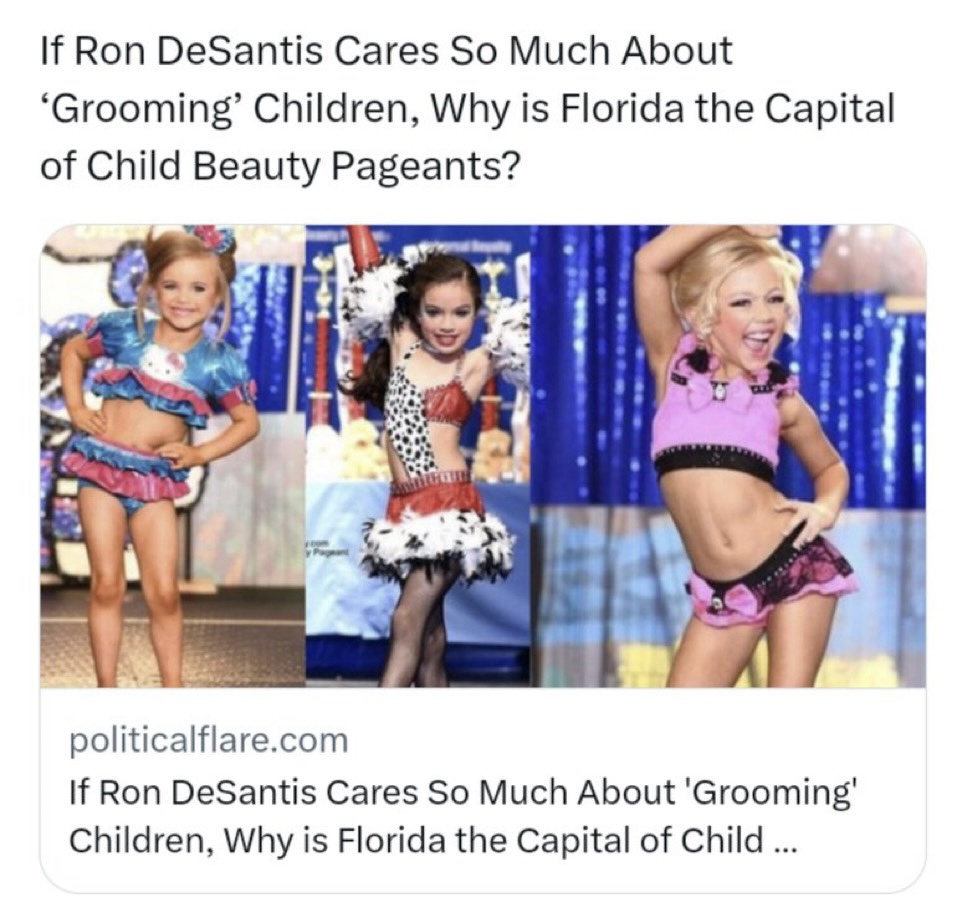
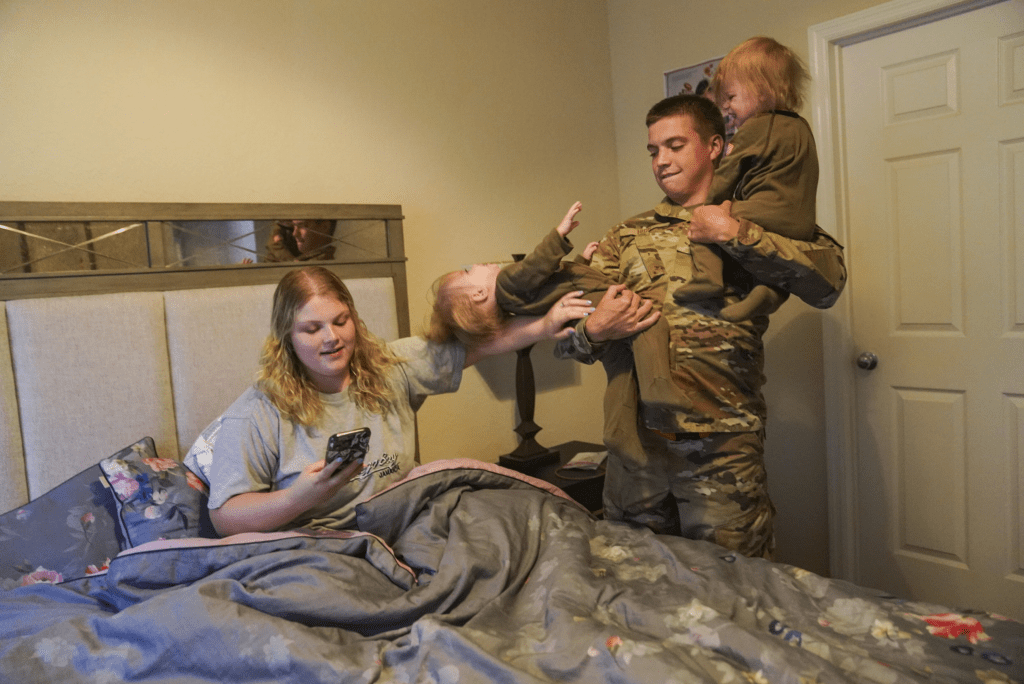





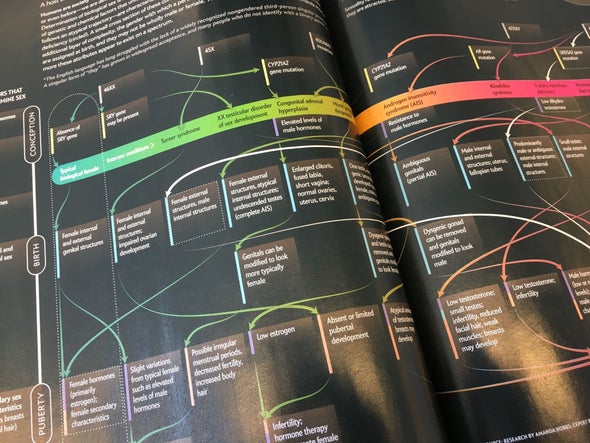


 Scottie's Playtime