How Trump’s allies stoked Brazil Congress attack

https://www.bbc.com/news/world-us-canada-64206484

The fascist that ran the Jan 6th insurrection / coup did not go away.   The plan to install a strongman dictatorship one party rule in the US that disregards the constitution is still on going.   Plus what most people don’t understand is these same people are pushing this form of fascism authoritarian government worldwide in every country they can.  The funding for this all comes from a few very wealthy people who push this form of government for their own benefit and from wealthy religious fanatics who plan to install a government to enforce the religious rules and morality of their versions of Christianity.   These people see what Putin and Xi Jinping as role models and want to do here what they did in their countries.  It is the loss of personal freedoms and the rule of strict government these people are demanding for the US, and they have started on the way to getting it.   Hugs   OT: I have a doctor’s appointment today and three days this week.   They are testing me for heavy metal poisoning.   Hugs

How Trump’s allies stoked Brazil Congress attack

 
Protesters smash windows as they invade the presidential palace in scenes reminiscent of the US Capitol riot in January 2021IMAGE SOURCE,GETTY IMAGES
Image caption,
Protesters smash windows as they invade the presidential palace in scenes reminiscent of the US Capitol riot in January 2021

The scenes in Brasilia looked eerily similar to events at the US Capitol on 6 January two years ago – and there are deeper connections as well.

“The whole thing smells,” said a guest on Steve Bannon’s podcast, one day after the first round of voting in the Brazilian election in October last year.

The race was heading towards a run-off and the final result was not even close to being known. Yet Mr Bannon, as he had been doing for weeks, spread baseless rumours about election fraud.

Across several episodes of his podcast and in social media posts, he and his guests stoked up allegations of a “stolen election” and shadowy forces. He promoted the hashtag #BrazilianSpring, and continued to encourage opposition even after Mr Bolsonaro himself appeared to accept the results.

Mr Bannon, the former White House chief strategist, was just one of several key allies of Donald Trump who followed the same strategy used to cast doubt on the results of the 2020 US presidential election.

And like what happened in Washington on 6 January 2021, those false reports and unproven rumours helped fuel a mob that smashed windows and stormed government buildings in an attempt to further their cause.


‘Do whatever is necessary!’

The day before the Capitol riot, Mr Bannon told his podcast listeners: “All hell is going to break loose tomorrow.” He has been sentenced to four months in prison for refusing to comply with an order to testify in front of a Congressional committee that investigated the attack but is free pending an appeal.

Along with other prominent Trump advisers who spread fraud rumours, Mr Bannon was unrepentant on Sunday, even as footage emerged of widespread destruction in Brazil.

“Lula stole the Election… Brazilians know this,” he wrote repeatedly on the social media site Gettr. He called the people who stormed the buildings “Freedom Fighters”.

Ali Alexander, a fringe activist who emerged after the 2020 election as one of the leaders of the pro-Trump “Stop the Steal” movement, encouraged the crowds, writing “Do whatever is necessary!” and claiming to have contacts inside the country.

The BBC is not responsible for the content of external sites.View original tweet on Twitter

Bolsonaro supporters railed online about an existential crisis and a supposed “communist takeover” – exactly the same type of rhetoric that drove the rioters in Washington two years ago.

Supporters of former President Jair Bolsonaro clash with security forces as they raid the National Congress in BrasiliaIMAGE SOURCE,GETTY IMAGES
Image caption,
Supporters of former President Jair Bolsonaro clash with security forces as they raid the National Congress in Brasilia

Casting doubt on voting systems

The links between Mr Bolsonaro and the Trump movement were highlighted by a meeting in November between the former president and Mr Bolsonaro’s son at Mr Trump’s Florida resort.


During that trip, Eduardo Bolsonaro also spoke to Mr Bannon and Trump adviser Jason Miller, according to reports in the Washington Post and other news outlets.

As in the US in 2020, partisan election-deniers focused their attention on the mechanisms of voting. In Brazil, they cast suspicion on electronic vote tabulation machines.

A banner displayed by the rioters on Sunday declared “We want the source code” in both English and Portuguese – a reference to rumours that electronic voting machines were somehow programmed or hacked in order to foil Mr Bolsonaro.

The BBC is not responsible for the content of external sites.View original tweet on Twitter

A number of prominent Brazilian Twitter accounts which spread election denial rumours were reinstated after the election and acquisition of the company by Elon Musk, according to a BBC analysis. The accounts had previously been banned.

Mr Musk himself has suggested some of Twitter’s own employees in Brazil were “strongly politically biased” without giving details or evidence.

Mr Bolsonaro's supporters smashed windows and trashed government officesIMAGE SOURCE,GETTY IMAGES
Image caption,
Mr Bolsonaro’s supporters smashed windows and trashed government offices

Some of Mr Trump’s opponents in the US were quick to put the blame on the former president and his advisers for encouraging the unrest in Brazil.


Jamie Raskin, a Democratic Party member of the US House of Representatives and a member of the committee that investigated the Capitol riot, called the Brazilian protesters “fascists modeling themselves after Trump’s Jan. 6 rioters” in a tweet.

The BBC attempted to contact Mr Bannon and Mr Alexander for comment.

With reporting from the BBC’s disinformation team


Conservative Hotline to “Report” Drag Shows Flooded with Messages About Predator Pastors

A conservative hotline in Texas was created for concerned citizens to “report” any and all drag shows happening in the state. Once LGBTQ allies learned about it, well, this hotline got a little bit more than it bargained for.

Proposed GOP select panel would be empowered to review ‘ongoing criminal investigations’

https://www.politico.com/news/2023/01/07/gop-panel-criminal-investigations-00076890

tRump was desperate to first get his hands on and then get back or keep the highly classified documents he stole.   Now Jim Jordan one of his biggest as kissers is going to be able to access and get briefed on some of the nations biggest highly classified secrets.   Why?  What does he need that information for, and who will he share it with?   He normally wouldn’t have the clearance for it.  McCarthy gave away the country to get the Speakers gavel.  Hugs

The proposed “select subcommittee” would operate under the Judiciary Committee expected to be chaired by Rep. Jim Jordan (R-Ohio).

Rep. Jim Jordan (R-Ohio), pictured, nominates Rep. Kevin McCarthy (R-Calif.) to be Speaker of the House.
 

A proposed subcommittee to investigate “weaponization” of the federal government — a key demand of House conservatives who delivered Speaker Kevin McCarthy the gavel — would be given sweeping investigatory powers that include explicit authority to review “ongoing criminal investigations.”

The language of the proposed “select subcommittee,” which would operate under the Judiciary Committee expected to be chaired by Rep. Jim Jordan (R-Ohio), also gives the panel power to access any information shared with the House Intelligence Committee. That panel typically receives the highest-level classified intelligence and briefings of any committee in Congress.

Both provisions appear to have been added during final negotiations between McCarthy and a band of hardline detractors that briefly denied him the speakership. An earlier version of the proposal made no mention of ongoing criminal investigations or the Intelligence Committee and limited the probe to the FBI, Department of Homeland Security and the Department of Justice.


The panel’s expected formation comes as the Justice Department continues to arrest and prosecute hundreds of rioters charged with breaching the Capitol on Jan. 6, 2021, and amid two ongoing criminal investigations connected to former President Donald Trump. Those include the probe of his effort to overturn the 2020 election and his decision to warehouse highly sensitive national security documents at his Mar-a-Lago estate after leaving office.

Both Trump-related probes are now overseen by special counsel Jack Smith, who was appointed by Attorney General Merrick Garland in November to manage the sensitive grand jury investigations.

The subcommittee proposal would permit McCarthy to name 13 members to the panel, including five after consultation with Democratic Leader Hakeem Jeffries — a structure similar to the Jan. 6 select committee. Pelosi opted to reject two of McCarthy’s picks to that panel, prompting him to withdraw from any participation.

Unlike the Jan. 6 committee, however, the GOP-led probe would be housed under Jordan’s committee. Subpoenas issued by the panel would be authorized by Jordan.

The panel would also be empowered to investigate how executive branch agencies “obtain information from, and provide information to the private sector, non-profit entities, or other government agencies to facilitate action against American citizens,” a likely harbinger of a review of FBI interactions with social media companies in advance of the 2020 election and more broadly.

The proposal also includes blanket clauses permitting the panel to pursue “any other issues related to the violation of the civil liberties of citizens of the United States” and “any other matter relating to information collected pursuant to the investigation conducted under this paragraph at any time during the One Hundred Eighteenth Congress.”


Want to Understand L.G.B.T.Q. Life in America? Go to Alabama.


A drag queen wearing a white wig, heavy makeup and a form-fitting outfit, standing with three patrons at a bar, with a colorful mural behind them.

Miss Majesty Divine, a drag performer, collects tips and dances among the crowd at Phat Sammy’s tiki bar in Huntsville, Ala.Credit…D’Angelo Lovell Williams for The New York Times

It was an unusually chilly Thursday night in December, and a drag queen named Miss Majesty Divine was putting the final touches on her show makeup. She was about to go onstage for her regular gig at a basement tiki bar, one of the last performances before Christmas.

Up at street level, two unwelcome guests had arrived. They were not fans. They were men with bushy beards, one holding a bullhorn, the other a placard that depicted a drag queen holding a screaming baby and the hashtag #stopdragqueenstoryhour.

“Repent, you filthy dog! You are going to burn in hell!” the one with the bullhorn shouted. “God sent AIDS to deal with people like you!”

Madge, as she is known to her friends and adoring fans, was unfazed.

“I teach math to middle schoolers,” Madge deadpanned. “You think I haven’t been called some things?”


By the end of the next workday, Madge, who in the classroom was known as Mr. James Miller, would call himself something new: retired. In the middle of the school year, the teacher, 52 years old, abruptly put in his papers. His career was over.

“It’s funny — all these people who complain about cancel culture, and now they are trying to cancel my whole existence,” Madge told me.

Miller’s troubles began on Oct. 12, when the conservative social media account known as Libs of TikTok, which specializes in finding and spreading videos, often out of context, of supposedly outrageous liberal behavior, posted an edited video of him performing in drag as Madge at charity events, some of which had children in attendance.

The video went viral, landing Miller on The Daily Mail’s website and many conservative news sites, falsely portraying his tame performances as lewd and overtly sexual. An avalanche of hate came down on Miller. Amid the maelstrom he realized that he could not continue teaching in Alabama. He had already been thinking of retiring soon, and this cataclysm prompted him to accelerate his plans.

 
Image
A man in a black T-shirt with short hair, applying heavy pink and purple eye makeup.
Miss Majesty Divine applies her makeup backstage before her performance, transforming from middle school math teacher to drag queen.
 
A man in a black T-shirt with short hair, applying heavy pink and purple eye makeup.
 
Image
A drag queen wearing a large red wig and short, silver- fringed dress and holding a microphone.
Miss Majesty Divine struts to her last number, a Tina Turner mix that ends with “Proud Mary.”
 
A drag queen wearing a large red wig and short, silver- fringed dress and holding a microphone.
 
 
Image
Kirstin Orlando, in a short blond wig and black leotard, striding through Phat Sammy’s and holding a handful of cash.
Kirstin Orlando, a drag performer, dances onstage in a dominatrix-themed outfit, complete with a riding crop.
 
Kirstin Orlando, in a short blond wig and black leotard, striding through Phat Sammy’s and holding a handful of cash.
 
Image
Tsunami, a drag queen in a shoulder-length blond wig, wearing a red lace and sequined leotard and fishnet stockings and crouching next to costumes.
Tsunami Rayne, a drag performer, does a final check of her outfit backstage at Phat Sammy’s.
 
Tsunami, a drag queen in a shoulder-length blond wig, wearing a red lace and sequined leotard and fishnet stockings and crouching next to costumes.

I traveled to Alabama last month to try to understand the state of queer America today, to try to understand this unsettling whiplash I’ve been feeling lately as a queer person. The world watched a gay congressman lead the vote to codify national recognition of same-sex and interracial marriage, and the grandees of the L.G.B.T.Q. community gathered at the White House to watch President Biden sign that bill into law and to listen to Cyndi Lauper croon “True Colors.”

At the same time, queer people are being hounded by vigilantes and targeted by bigoted laws. On TV I watch queer people as protagonists but also hear them vilified as groomers and child molesters by right-wing news organizations and lawmakers. A web designer would rather go all the way to the Supreme Court than make a wedding website for a theoretical queer couple. Queer spaces, from clinics serving transgender youth to nightclubs, are under attack. These past few years have been a time of head-spinning backlash.

I chose to come here not because Alabama has one of the strongest records of homophobic legislation in the country or because it is one of the few states where less than half of the population supports federal protections for gay marriage. I came here because the last time I was in Alabama, in 2017, I had one of the best nights of my life, at a gay bar with a bunch of queer people I had just met.

At the time, I was the editor of HuffPost, and I was in town with a group of colleagues as part of a cross-country bus tour we did, interviewing people about the state of America along the way. We met and interviewed a man named Michael Meadows who had just been named Mr. Leather Birmingham. He invited us back to the local leather bar, Spike’s. It is hard to explain how good it feels to walk into a queer space when you are a queer person in a strange place — the warm embrace and recognition of a shared experience, no matter how different our lives might be. A night of karaoke, dancing in faux cages and rounds of shots ensued. My memories are hazy, but the pictures and videos on our phones don’t lie: We had a blast.

When I went to Birmingham in 2017, we were less than a year into the Trump administration. It was long before the phrase “don’t say gay” entered the popular vernacular and before the word “groomer” came roaring back into circulation as a slur hurled at queer people. It was before the tsunami of book bans and, Lord help us, long before Libs of TikTok.

It was a time when major TV shows featuring transgender actors were started. “RuPaul’s Drag Race” had become a cultural phenomenon, and drag performances drew wider audiences. Gay bars had become prime destinations for straight bachelorette parties, much to the chagrin of many gay patrons.


And it wasn’t just media and society. Supreme Court decisions affirming the right to same-sex marriage seemed to have paved the way to mainstream acceptance of gays and lesbians. Polling showed consistent majority support for same-sex marriage. Some of the hottest debates within the queer community every June were over whether Pride had become too mainstream and corporate.

That year Alabama, a blood-red state, stunned the nation by electing a Democrat to the Senate, choosing Doug Jones, a former prosecutor who had brought two of the Klan bombers of the 16th Street Baptist Church to justice, over the right-wing Republican Roy Moore. Jones spoke proudly of having a gay son.

 
ImageThree drag queens in full regalia facing the camera.
Miss Majesty Divine, Kirstin Orlando and Tsunami Rayne before going onstage at Phat Sammy’s.
 
Three drag queens in full regalia facing the camera.

The late 2010s were a pivotal time in James Miller’s life, too. He was interviewing for a teaching job at Mountain Gap Middle School in Huntsville.

“When I was interviewing, I said to myself: I don’t want to spend another 20 years in the closet,” Miller told me as he got ready for the drag show. So when he got the job offer, he pointedly told the hiring committee that he would need to discuss it with his husband and son. It was a test, and the school passed, welcoming him with open arms.

“I thought, ‘I found where I want to be,’” Miller said.

At that point, Miller had also been performing as a drag queen for roughly two decades, though like any good teacher, he kept a strict divide between his classroom and his life outside of school. He said he got his start in drag performing at a charity event to raise money for an AIDS hospice.

“A friend of mine said, ‘Why don’t you do drag? You’ve got a big mouth and a bad attitude,’” Miller said.


Over time, he built a loyal following, performing at local nightclubs and at charitable events. As drag grew more popular with broader audiences, he started performing at story hours for kids. He said he took care to tailor his performance to the audience, keeping it PG whenever children were around, though like any kids’ entertainer, he said he liked to slip in double entendres that would fly over children’s heads but give the grown-ups a chuckle. It was a fun side hustle.

Until now. After Libs of TikTok released the video of him performing, he was placed on paid leave from his job. His email inbox filled with hateful messages.

“People said things like, ‘Why are they letting this thing breathe?’” he told me. Other messages called for him to be prosecuted for child abuse.

But he also got warm and supportive messages from parents and students.

“I heard today about the stupid issue happening, and I just wanted to say as a parent that has had three of their own children in your classroom, we fully support you,” said one such message Miller showed me.

The crowd at the tiki bar that December night whooped when Majesty Divine finally pranced onstage, lip-syncing along to Lizzo.

“It’s bad bitch o’clock. Yeah, it’s thick-thirty,” she sang, thrusting out an ample hip and tossing a bewigged shrug. “I’ve been through a lot, but I’m still flirty.”

Then Madge shared some news.

“Y’all keep up with the news? Well, don’t. It’s too depressing,” she said. “Tomorrow at 3:15 is the end of 30 years of teaching for me. I’m retiring.”


The crowd let out a cacophony of supportive boos and cheers.

“I love you all so much,” Madge purred. She brought down the house with a Tina Turner mash-up that ended in a barn-burning rendition of “Proud Mary.”

Amber Portwood, the manager of the bar, said it was a huge loss for the children of Huntsville.

“Madge is such a wonderful teacher and community person,” she said. “Her students were the first to come to her defense. It is absolutely shameful what happened.”

Asked about Miller, Huntsville City Schools sent this statement: “The district addressed a personnel matter several months ago following viral posts on social media involving a teacher. While we are limited in what we can share for privacy reasons, this was not a school-related event, it did not take place on school property, it did not occur during school hours, and it has no connection to any instruction that occurs in our classrooms.”

 
Image
A person with short black hair and glasses, wearing a T-shirt that says, “I am who I am” with a heart on it, stands in front of bookcases topped by a sparkly rainbow.
Lauren Jacobs, the assistant director of the Magic City Acceptance Center, in the center’s library. It stocks L.G.B.T.Q. books, which are banned in many Alabama schools.
 
A person with short black hair and glasses, wearing a T-shirt that says, “I am who I am” with a heart on it, stands in front of bookcases topped by a sparkly rainbow.

How did we get here? Looking back, I cannot help wondering now whether what looked in the 2010s like an unstoppable march toward mainstream acceptance of gay and lesbian people was perhaps more of a wobble. Perhaps the wanton cruelty of the Trump era uncorked something that was there all along. Right-wing, nativist parties espousing what they describe as traditional values have made electoral gains across many continents, and almost all of them have found queer people an easy target to use to whip up support for their agenda.

What looked in American polls like widespread acceptance of gay and lesbian people came in large part from a highly effective campaign to show that gay people are just like everyone else, save one small difference that likely was genetic and immutable, and that we wanted the same things: the American dream of marriage, conventional career success, military service.

But like all liberation movements, the fight for queer liberation contained multitudes of different people with different beliefs, including those who wanted revolution — to overthrow the entire heteronormative patriarchal system built around monogamy and the nuclear family within capitalism. They saw that system as the root of oppression not just of queer people but also of women and all kinds of marginalized people.


But the vanguard’s demand for revolution inevitably runs up against the majority’s urgent need for safety and basic rights. Much of the L.G.B.T.Q. rights movement’s efforts moved toward reforming rather than remaking. And so we have decriminalized gay sex, legalized gay marriage and allowed gay people to serve openly in the military. And a lot of us slipped into a kind of complacency. We once chanted, “Silence equals death.” Now we cooed, “Love is love.”

As many more queer people have come out into the light, parts of the community that were more hidden from the mainstream are demanding their visibility, too, especially transgender and nonbinary people, among them many children and teenagers who in previous generations would not have dreamed of coming out. And that has made a lot of people of many different political stripes very uncomfortable.

“A lot of the improvements in L.G.B.T.Q. life that the pollsters point to and on which we base our conclusion that there has been significant progress — they don’t really tell us much about what people are privately feeling,” said Martin Duberman, a leading historian of the gay rights movement who, at 92, has some long-term perspective on this issue. “And I think what we are seeing now is those private feelings coming out again.”

For much of modern history in the United States, queerness had to be carefully hidden to avoid police harassment and violence. Eventually queerness came to be tolerated if it emulated heterosexual norms — gender appropriate, couple-focused, monogamous. Now the insistence on recognition from queer people who don’t conform to expectations about gender seems to have been a bridge too far.

We’ve been here before. Urvashi Vaid, the lionhearted activist who tragically died at the age of 63 last year, wrote about this in her prescient book, “Virtual Equality,” which was published in 1995. As a candidate, Bill Clinton had courted the gay vote, but he ultimately triangulated his way to the Defense of Marriage Act and the abominable “don’t ask, don’t tell” policy in the military.

In a 1994 speech Vaid warned us, “By aspiring to join the mainstream rather than continuing to figure out the ways we need to change it, we risk losing our gay and lesbian souls in order to gain the world.”

Years of effective activism culminated with the dismantling of the Defense of Marriage Act by the Supreme Court. But as supporters of voting and abortion rights will tell you, a Supreme Court decision turns out to be a flimsy scaffold on which to build your freedom. The court has gutted the Voting Rights Act and overturned Roe. The battles for the ballot and bodily autonomy have moved mostly to the state and local levels. It is clear that queer people will receive a frosty reception from the emboldened majority of the highest court in the land.


So what now? I posed this question to the organizer and writer Dean Spade, who has worked relentlessly as an advocate for queer and trans people.

“The only social movements that have ever won any liberation or even reduced the conditions of harm were made up of millions of ordinary people, gumming up the works, throwing wrenches into the machines of oppression and then helping each other survive the systems along the way so that they could keep organizing,” he told me.

Queer people have never sat around and waited for rights and dignity to be handed to them — from the first stirrings of gay resistance in the early 20th century to the Stonewall uprising to the horrors of the AIDS epidemic, we have built our own systems of mutual aid and care. In Alabama, that spirit and the people who carry it refuse to give in to the backlash.

I saw that spirit at the Magic City Acceptance Center, an organization that provides a safe space and supportive programming for queer youth in Birmingham. There I met a 31-year-old queer Black woman named Lauren Jacobs, who was born and raised in Birmingham. When she was trying to decide where to go to college, she could have done what generations of young queer people have done: Get a one-way ticket out of Alabama, head for one of the meccas on the coasts and never look back.

But she didn’t. After checking to make sure it had an L.G.B.T.Q. student organization, she chose to attend the University of Alabama in Tuscaloosa and joined the vibrant queer community there.

“We have a long, long track record of activism here,” Jacobs told me.

 
Image
A person with long hair, wearing a black coat and boots, stands outside Take Resource Center at dusk.
Elizabeth Danielle Marceille Allen, a transgender woman who found shelter and support at TAKE.
 
A person with long hair, wearing a black coat and boots, stands outside Take Resource Center at dusk.
 
Image
Two people smiling next to each other outside TAKE Resource Center in front of a pink wall.
Daroneshia Duncan-Boyd, TAKE’s founder and director, with her husband, Logan Boyd, a transgender man, who helps run the center’s programming.
 
Two people smiling next to each other outside TAKE Resource Center in front of a pink wall.
 
Image
A person with long braided hair, sitting on a pink bench in front of a pink wall outside the TAKE Resource Center.
Aniya Nicole, a member of the TAKE community, outside the center.
 
A person with long braided hair, sitting on a pink bench in front of a pink wall outside the TAKE Resource Center.
 
Image
A person wearing a black TAKE T-shirt sitting in a red plush chair shaped like a high-heeled shoe outside TAKE Resource Center.
Corey Oden, the program coordinator for the health program at TAKE, which helps transgender people get H.I.V. prevention, treatment information and medication and other medical care.
 
A person wearing a black TAKE T-shirt sitting in a red plush chair shaped like a high-heeled shoe outside TAKE Resource Center.

After graduation she decided to move back home to Birmingham, roll up her sleeves and fight for queer people in her home state.


“It felt like there was so much work to do in Alabama,” she said. “There is so much I like about how we organize in Alabama.”

The center now serves hundreds of queer youth in Birmingham and across the state. It offers space for them to hang out, play video games and be with their peers. Every year, the center holds a prom for queer kids; they can dress as they like and bring a date of whatever gender they prefer. Jacobs was among a couple of dozen attendees at the first one in 2014. Around 200 kids attended the most recent one.

The work of the center could not be more urgent. According to the Trevor Project, a mental health and suicide prevention organization focused on L.G.B.T.Q. youth, 47 percent of Alabama’s queer kids seriously considered suicide in the past year, and 20 percent of transgender kids attempted suicide.

“For young people who feel that Alabama doesn’t have spaces like this, for them to be able to walk into a place like this and feel they deserve it — that is always a joy,” Jacobs said.

I found another answer at the TAKE Resource Center, an organization in Birmingham’s East Lake neighborhood supporting transgender people of color. It was started by a transgender woman, Daroneshia Duncan-Boyd, who felt that too many trans people were suffering from poverty, homelessness and violence. She built TAKE in the mold of queer mutual aid organizations throughout history, with the knowledge that a hostile society would do little to save them.

“We started TAKE with sex-work dollars and unemployment checks,” Duncan-Boyd told me with a chuckle. Now the organization operates an emergency shelter, life-skills classes, legal clinics and a drop-in center.


“Other organizations provide surface-level services, but we get down into the nitty-gritty,” said Logan Boyd, a transgender man who works at the center. He moved to Alabama in 2017, and the following year he and Duncan-Boyd married. They are now trying to have a baby, a head-spinning but enticing prospect for Boyd.

“We’re trying to change the image of what the American dream can be,” he said. “I’ll have to wrap my head around being a pregnant man, I guess.”

Reimagining what life could be for transgender people in the South is central to TAKE’s mission. But first, it must attend to the most basic, urgent needs. I met one of TAKE’s clients, a 41-year-old trans woman named Marcy Allen. In November she had found herself penniless and homeless on the streets of southern Alabama after a string of bad luck.

“It was getting colder, so I needed somewhere indoors to sleep,” Allen told me. “I was doing things I didn’t want to do to pay for hotel rooms.”

News of her plight made its way to Duncan-Boyd, who leaped into action.

“The next thing I know, I am on a bus headed here,” Allen said. She told me she had been living in the group’s emergency shelter and was looking for a job. She had already made an appointment at the local gender clinic to begin her long-sought medical transition.

“March 4,” she said. “I have been on bootleg hormones, and now I can finally get the real thing.”

She attended a legal workshop to begin the process of changing her name. She said Marcy was a temporary name, a place holder. Now she is known as Elizabeth Danielle Marceille Allen.

“It suits me, don’t you think?” she asked, with a flick of her blond hair.

On my last night in Birmingham, I was invited to a party by the Magic City Sisters of Perpetual Indulgence. They are a charitable organization that raises money for mostly queer causes. The Sisters have their roots in a raucous and raunchy group of queer activists in San Francisco who dressed in nuns’ habits and behaved outrageously.


Birmingham’s Sisters throw elaborate parties every year, and this one, the Fire and Ice Red Dress Party, was to raise money for the Gender Health Clinic in Birmingham, which provides care for transgender and nonbinary people. They also give out awards to people who have done great service to the queer community.

“The Sisters promulgate universal joy and expiate stigmatic guilt,” the group’s leader, or abbess, Robert King Dodge, told me, decked out in a dazzling red frock and a bejeweled top hat.

It was held at an Arts and Crafts mansion in a fancy part of Birmingham, and all the grandees of the local gay community turned out in force. I thought about that carefree Birmingham night in 2017 and how different things felt now. Everyone I talked to was worried — about the terrible laws that would oppress queer people and the hateful message that sends to queer kids. They all thanked me for coming to Alabama to write about what’s happening.

As the award ceremony wound down, I was surprised to hear my name over the loudspeaker. King Dodge beckoned me up, a wrapped gift in his hand.

“Open it,” he urged.

It was a framed certificate naming me an honorary Sister of Perpetual Indulgence in the house of the Magic City Sisters of Birmingham.

I didn’t quite know what to say. My eyes filled with tears as I looked around the room, filled with people who were proud of all our community has accomplished but terrified of the gathering threats.

“Thank you,” I said. “It’s an honor to be your sister.”

I am so fortunate to have lived in a time and place that permitted me to live my whole adult life out and to be proud of being a lesbian. Increased visibility was supposed to make queer people more recognizable and accepted, and there is no question that it did. But I now wonder if, for some, the sheer volume and range of people coming out have had the opposite effect: making it seem that queer people are omnipresent and a threat.


I get it. When people who are alien to you tell you that deep down, they are just like you, it saves you from having to confront how you might actually be like them. How you might envy their freedom, the strength of their communities. As any decent psychoanalyst will tell you: The flip side of fear is desire.

As I left Birmingham the next morning, I thought about the extraordinary people I had met and the fights they were waging for the lives of queer people in their communities. I knew that this era’s slogan, that wan tautology “Love is love,” was no match for resurgent bigots reclaiming hateful chants about AIDS ridding the world of the homosexual scourge. We need to reach into our past as well and remember the time we chanted, “Silence equals death.” And an old favorite, a mantra for all time: “We’re here. We’re queer. Get used to it.”


Trying to catch up with news after spending most of the last four days in bed

https://www.thedailybeast.com/herschel-walker-staffer-matt-schlapp-groped-my-crotch?ref=home

And is it worth it? How to make it better?

image

Conservative lawyers/judges are the worst.

—————————————————————————-
image

Republicans need the lies to keep their party afloat. The simple truth would sink them all.


image


image

Maybe 48 hours, maybe!

FOX pundit?

(via justsayin59)


image

Maybe 48 hours, maybe!

FOX pundit?

(via justsayin59)


image

This is America. #voteblue https://www.instagram.com/p/Cmy3ANJMakK/

They’re not pro-life. They’re pro-tribalism.

They’re pro cruelty, pro suffering, anti autonomy.


image


image

No loyalty. No virtue. No shame. #MAGAValues


image


image


image

Republicans on asylum: follow the rules, do things the right way. Dont follow the rules? You are illegal. Respect or get out!

Republicans on Santos breaking rules: …


image

Millions suffered for Trump’s illegal privileges.


image

Language matters. No person is illegal. Stop the dehumanization.


image


image
image
image
image

And by “purged” we mean…purged. With extreme prejudice.

B-b-b-but prosecuting these people would be divisive.

– democratic “leadership”

That they failed despite having all the advantages is hilarious.

That they are still there to try again is not funny at all.

Hang em high and burn what’s left.

Christopher Miller’s signature, though.


image

They have rigid rules for others, none for themselves. They forgive no one.


image

Authoritarians create refugees.


image


image


image


image


image


image


image


image


image—————————————————————————–


image


image


Let’s talk about cities, counties, and rates….

Trans rights activist Imara Jones on the anti-trans hate machine the far right has assembled

https://www.lgbtqnation.com/2022/12/trans-rights-activist-imara-jones-anti-trans-hate-machine-far-right-assembled/

For those who had any doubts that this was not really the people rising up but actually a well funded well organized by right wing billionaires’ effort to stop society from progressing further from the bible views of how to live.   This article points out how these groups get started and funded.   It points out the ones driving these issues are the religious ones founded by Christian fundamentalist billionaires with the goal of creating a repressive society that will conform to a hierarchical theocracy with them at the top being the rulers.   It is not so much about god as it is power to rule over others as god’s messengers.  The interview is not long but really informative.  Hugs

Imara Jones accepting the NABJ-NAHJ Journalist of Distinction Award
Imara Jones accepting the NABJ-NAHJ Journalist of Distinction AwardPhoto: Screenshot

Imara Jones is an award-winning journalist, thought leader, and content creator whose work focuses on trans people and the intersection of religious fundamentalism, the LGBTQ+ community, and civil rights. The sequel to her award-winning podcast The Anti-Trans Hate Machine drops in March.

Jones shared some time on a chilly afternoon in Brooklyn to describe the state of the far right’s campaign targeting trans kids, drag queens, and “groomers,” from a billionaire Christian cabal spreading nationalist gospel and unlimited cash to a new and made-to-order frontline hate group called Gays Against Groomers.

LGBTQ Nation: I imagine for your work it’s got to be a full-time job just keeping up with all the connections between attacks and protests and media fueling them, and the money fueling the organizations. Do you have a giant bulletin board in your office, like a detective, with pictures and pushpins and strings connecting everything?

IJ: Yes, we have. Generally, we create what we call sitemaps. And we kind of look for who’s where, and who are they connected to, and how they link back. And at a certain point it, you know, you don’t even have to do that as much anymore because you hear a name, or you see an organization, and you go, “Oh yeah, there are links to X.” In the right-wing space that fuels a lot of his hate, you see the usual suspects and don’t have to look that hard.

LGBTQ Nation: There’s been a recent focus on drag shows and story time hours by frontline groups and media outlets like Libs of TikTok and Project Veritas. Is that a shift away from casting young people as villains, like the ones playing girls’ sports and 10-year-olds testifying in state legislatures, and moving to adults as villains or what they’re calling groomers? Is that an easier sell for hate groups and far-right media than attacks on kids and parents?

IJ: I don’t see it as an either/or. I see it as an expansion of the battlespace rather than a conversion of it from one thing to the other. We have to understand from the perspective of the right that these distinctions about gender and gender identity, it’s like blurred into one thing. Drag is very threatening because it has wide acceptance. It’s about bending gender, right? And about the part of gender that’s an illusion. And so for them that fits very much in the space of trans people.

And when I look at conservative media, they haven’t let up at all on trans people and trans kids. You know, we have anti-trans bills that were passed this year in Georgia and in Florida, and as a centerpiece of the campaigns of [Republican Gov. of Texas] Greg Abbott and [Republican Gov. of Florida] Ron DeSantis, and on and on and on. There was a huge emphasis in Uvalde in an online campaign that moved to conservative media that then moved to a member of Congress to say that the shooter was trans. So, I don’t think that it’s a flip. It’s looking new to us because it’s greatly expanded, but it’s actually not.

LGBTQ Nation: Tell us about the Betsy DeVos/Prince clan, and why we don’t hear about their influence.

IJ: Can I take those questions in reverse? I would say why don’t we hear about it, one, because they’re powerful people and people are afraid of powerful people, including newspapers, and we know that. Secondly, I think it’s because they have a degree of mainstream credibility because she was a secretary of education, even in the midst of a controversial administration. And one of the reasons why they’re so effective is because their extremism is cloaked behind this air of comity and rectitude. There’s a certain way in which she composes herself, which I think doesn’t scream extremist.

LGBTQ Nation: And how about the DeVos/Prince clan itself?

IJ: When we say the DeVos family, we’re talking about the fusion of two billionaire families into one. Betsy DeVos was born Betsy Prince into the really wealthy Prince family. And then she married Richard DeVos. It’s actually a giant clan, a billionaire clan. And there is not a far-right organization, and in many cases designated hate groups, who exist without the largess of that family. Betsy DeVos, or Betsy Prince and her husband, Richard DeVos are the second generation in this billionaire kind of clan.

Richard DeVos’ father, for example, was extremely important to the founding of the Heritage Foundation. The Prince family, which is Betsy DeVos, helped to fund the headquarters of the Family Research Council, which is designated by the SPLC [Southern Poverty Law Center] as a hate group. And they’ve been involved in so many far-right organizations throughout the decades. And so what you have here in this second generation is kind of a sophistication of their operation and particularly in Betsy Prince, this kind of fusion of strategy, of money and a whole host of other things.

LGBTQ Nation: How does that manifest itself?

IJ: So this family is kind of the royal family of the Christian nationalist movement. And they set the example for how to move money throughout the right wing for all of the other really wealthy families. They participated in an annual gathering of Christian nationalist billionaires called The Gathering, in which Betsy DeVos is on tape coaching them in terms of how, as a wealthy person in this far-right movement, you move money to other things, and encouraging them to do so. There is religious extremism in their views, which is what’s driving a lot of this.

As well, all of the Trump administration’s anti-trans policies came out of the DeVos Center for Family and Religion that’s housed in the Heritage Foundation. People were moved from that center into the Trump administration where they began to disseminate these policies. I think that we have to keep in mind that Betsy DeVos is just the most visible person of this large, far-right billionaire clan that has been active for over 40 years.

LGBTQ Nation: How did DeVos end up as education secretary in the Trump Administration?

IJ: They didn’t know who to appoint to anything because their win was a surprise, right? So they were like, “What in the world are we going to do?” So they turned to Erik Prince. It’s gonna sound familiar, younger brother of Betsy. And he’s like, okay, we’ll get you linked up with the right people. And one, he clued them into his sister and, two, they went to the Heritage Foundation, and the Heritage Foundation said, “Boy, you know, this is actually what we’ve wanted to do for a really long time.”

And so it flows that the Heritage Foundation would recommend Betsy DeVos because their family is a longtime founder at that center and they know that she’s been really active in education and educational circles. And then they basically started to populate the entire administration with people recommended by a combination of the Heritage Foundation and Erik Prince and that’s literally how she got in the mix.

LGBTQ Nation: The DeVos family are adherents of Dominionism. What is that?

In Ecclesiastes, there is the charge to basically create theocracies that are based on kind of a real religious caste system. And so how do you do that? The way you do that is something called Dominionism. And that is to say that you seize the seven mountains of society, you gain control of those things. And once you have control of them, you can then move society towards this theocratic vision. And so what are some of the seven mountains? They’re business and finance, they’re education, they’re the media, arts, etc. So the charge for Betsy DeVos at this epic gathering in the early 2000s was to charge really wealthy people and billionaires to pick their mountain, and then focus on it. As people who have been told over and over and over that their wealth flows from the fact that they are chosen and special, you can see how they gravitate towards something like Dominionism, and they have. Their whole family has.

LGBTQ Nation: I’d like to zero in on one particular group as an example of one at the bottom of this organizational hierarchy. What can you tell us about Gays Against Groomers? It appeared out of nowhere about six months ago, fully formed and led by a woman named Jaimee Michell. Do you think it’s organic?

IJ: There’s very little on the right that’s organic. It’s really funny, because I have to explain this a lot to mainstream and even the liberal funders, where, you know, on the left, a lot of things are organic, and people just form them and then they get funded. A lot of times, what happens on the right is, they’ll say, “Who’s gonna start an organization that will do X?” And then someone raises their hand.

This is one of the things we’re going to document next year on the podcast, but one of the things that they do on the right is that they go out and they shop for people from the communities that they’re targeting who are willing to essentially carry the message that they want them to carry if they give them a large enough check. And so they will go out and they’ll look for a Jaimee Michell — this is not uncommon — they’ll be actively looking for these people online or elsewhere. And once they find them, they will either engage them or platform them or say, “Can we introduce you to other people?” and that’s literally how it gets started.

A lot of the TERFs that you see platformed, and TERF organizations, it’s all because the Heritage Foundation went and found them and put them on a panel, and after that, all those people began to be kind of off to the races in terms of their public voice and platforming and a whole host of other things.

LGBTQ Nation: It says very prominently on the Gays Against Groomers website that they’re “a 100% independent, self-funded nonprofit organization.”

IJ: They’re not an official 501(c)(3). I think they claim that. I don’t think there are any 990’s on them. So, to self-assert that you’re self-funded, without in any way showing that you’re self-funded, and the fact that they have so many people — I can look at it right now and say they have a budget of close to a million dollars? Or over a million dollars? So where did that come from? There’s not a million dollars-worth of Gays Against Groomers money in the gay community, right? It’s not an organic conversation. Whereas like, okay, Gays Against Guns. Can they go out and do a GoFundMe campaign amongst people, raise money? Yeah. There’s support for that. But no, there’s nothing organic about this. It reads to me like a slick version of the ex-gay organizations that were funded and founded by Focus on the Family in the 1980’s.

LGBTQ Nation: What’s in store for Season 2 of Anti-Trans Hate Machine?

IJ: We are focusing on the way that the right has manufactured a cultural and media debate about the validity and worthiness of trans people and trans kids, and then has gone on to weaponize that to justify both political and actual violence.

LGBTQ Nation: What do you mean by weaponize, exactly?

IJ: So, you create a conversation. It’s like what happened in the 1930s — and there’s nothing analogous to the Holocaust — but there is an analogy to how you got there as a society. And one of the things that happened in the 1930s is that they just started a conversation about the bad people that needed to be separated from Germany. And that conversation was actually started by the Nazis. Once that conversation had reached a certain level, they use it as justification — they weaponized it — to then begin this campaign of physical separation and then targeting. You create the conversation, and then you recognize the conversation that you created, in order to take the action that you really want to take.

Let’s talk about infrastructure troubles….

How Drag Artists Became the Far Right’s Ultimate Villains

https://www.them.us/story/drag-gop-right-wing-attacks-explained

I wonder if the far right republican fascist hate drag because it is the opposite of what they are.   Drag is about exploring boundaries, about expressing yourself, about color and fun.  What is authoritarian fascism about?  doing what you are told, stay in the line, don’t be an individual, don’t be colorful, always fit nicely in the boxes.  Hugs

Over the past year, the sense of safety and joy experienced at drag performances has been punctured and replaced.

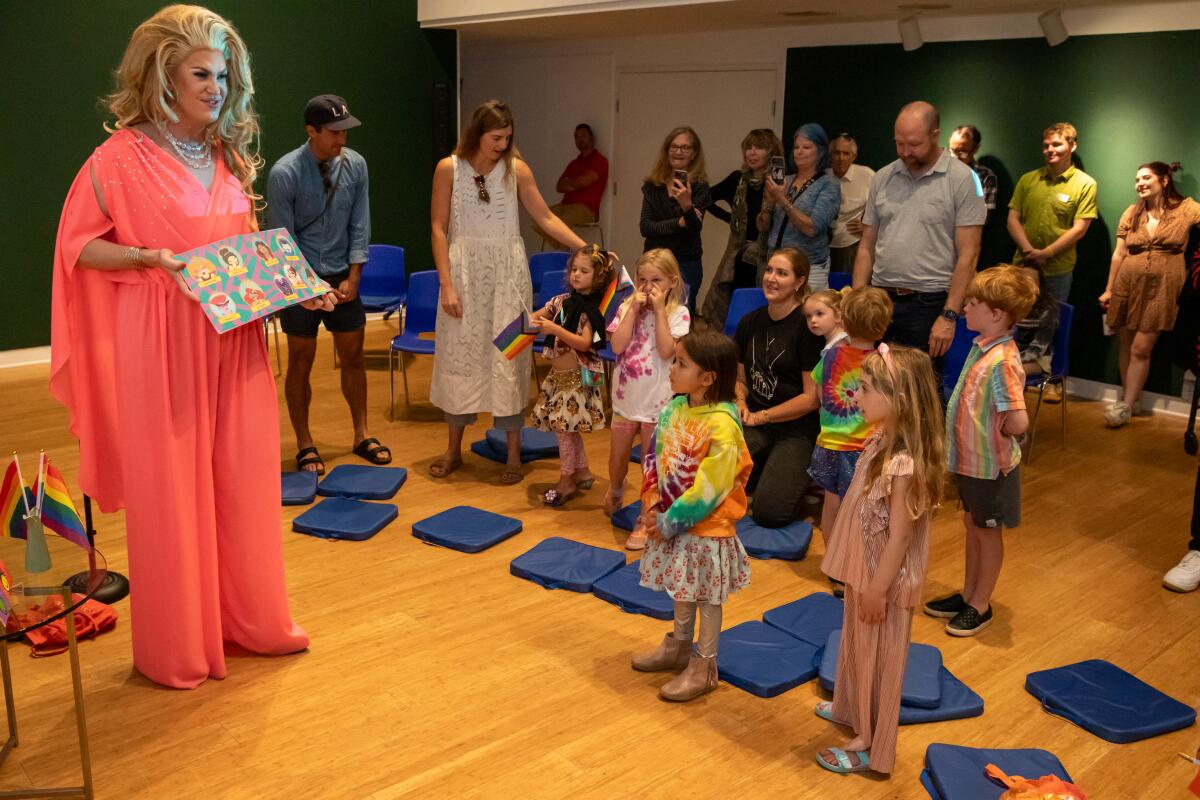
“Baby, you’re a plaaaaaaastic bag,” sings the drag queen Per Sia, parodying Katy Perry’s “Firework” as reusable tote bags sail around a usually-silent library in San Francisco. The children around her delight in the chaos, hanging on to Sia’s every word. Between sermons on the importance of reducing plastic and loving yourself, the kids leap up, grab the floating tote bags, and begin to dance. Their bodies wiggle with glee as they experience the joy — costumes! music! dance! — of drag. 

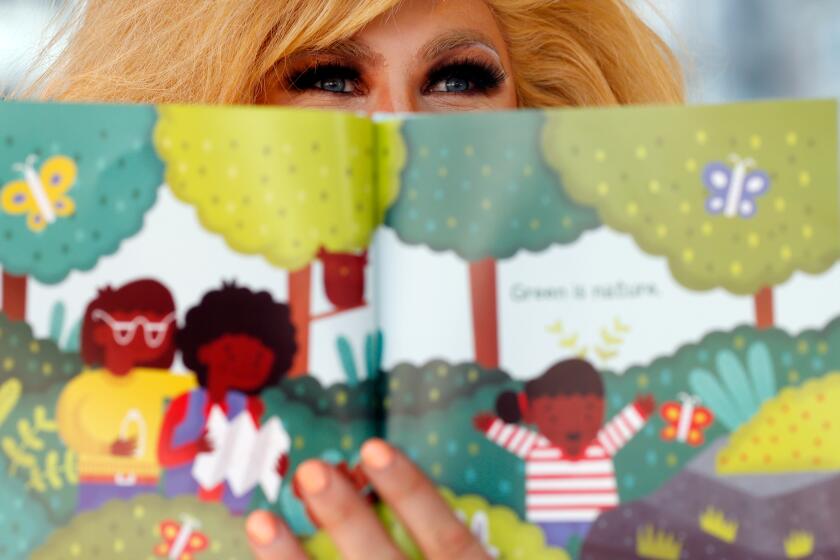
The scene would be familiar to any kindergarten teacher: “It’s the play and pleasure of reading time, but dialed up a few notches,” says Harper Keenan, a Professor of Education and Pedagogy at the University of British Columbia. Keenan is referring to Drag Story Hour, events where drag performers read, sing, and make crafts with children in schools, libraries, and bookstores across the country. 

Sia, who is an elementary school teacher, says that when she began performing for Drag Story Hours, “we would walk into schools and get treated like royalty.” Initially the opportunity to integrate her expertise in early childhood education with drag was a dream come true. It was a chance to embody her full humanity and show students that a world existed in which they could unapologetically be themselves, too.


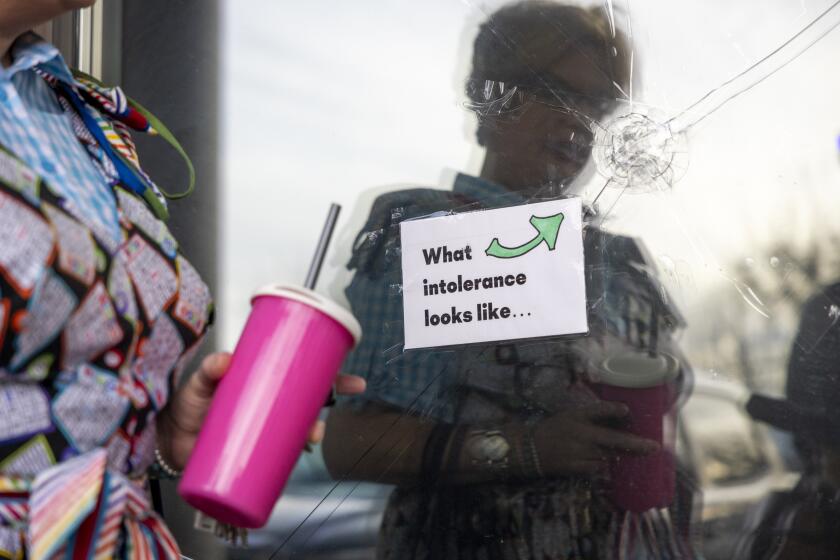
Over the past year, however, that sense of safety and joy has been punctured and replaced with a miasma of fear and danger. A year ago, a sizeable backlash against the art form seemed an improbability, but this year, threats against drag performances across the country, including Drag Story Hours, have increased in number and hostility. In Oklahoma, a donut shop was fire-bombed for the second time this year after hosting a drag performance. In Nevada, a man identified as a member of the Proud Boys, a white nationalist group, interrupted a Drag Story Hour reading with a gun, forcing the children in attendance to flee for safety. And in California, a group of eight Proud Boys stormed into a library where drag performer Panda Dulce was reading to children. The men made white power hand gestures and hurtled homophobic and transphobic comments at Dulce, who was rushed out of the room, along with the children. According to several parents in attendance, the far-right protesters were traumatizing the children they claimed to want to protect. 

These are just some specific examples of a worsening trend. This already-horrific year, which saw at least 124 significant threats and protests against drag performances, according to a November report from GLAAD, was punctuated by immense tragedy on November 19, when a shooter killed five people during a “Drag Divas” night at Club Q in Colorado Springs. An art form that has provided LGBTQ+ people a sense of community for decades has been weaponized against them, and has forced drag queens to question what safety means in a culture intent on causing them harm. 

Per Sia courtesy of the artist.

Per Sia, courtesy of the artist.

The current string of attacks against drag performers is part of a broader movement by the far-right to demonize LGBTQ+ people, including by claiming they are “groomers” and “pedophiles,” and therefore a threat to young children. Across the media landscape, from Fox News host Tucker Carlson to the far-right podcast InfoWars, conservative pundits are increasingly perpetuating the dangerous, harmful lie that proximity to drag queens and trans and nonbinary people increases the likelihood of child abuse. 


Accounts like Libs of TikTok, a conservative social media account that has become notorious for anti-queer and anti-drag rhetoric, post videos making fun of LGBTQ+ people and drag performers without context or consent. The video has also been caught posting doctored videos that make it seem as if drag queens are performing sexually in front of children, even if the videos are blatantly false. Criminal investigators even believe that Libs of TikTok may have provoked the Proud Boys attack on Drag Story Hour in California. In a segment from October, Carlson, who has been a vocal supporter of the social media account, called on his three million nightly viewers to “arm” themselves against drag performers. This messaging has been dangerously effective: according to the Human Rights Campaign, there was a 406% increase in tweets using “groomer” or “pedophile” in the first six months of 2022. Tragically, there has been accompanying escalation of attacks on drag performers during the same period. 

“The LGBTQ+ community is constantly at the whim of disinformation and misinformation,” activist Raquel Willis wrote on Instagram the day after the Colorado Springs shooting. “Hateful politicians craft dangerous narratives about us and encourage the general public to continue to do the same. Ignorance is disgusting AF and we need to be vigilant about confronting it.”  

As Willis notes, these in-person acts of violence are often stoked — and, in some cases, engineered — by far-right politicians. Florida Governor Ron Desantis has stated that parents who bring children to drag shows should be investigated for child abuse. Florida Senator Marco Rubio even featured Lil Miss Hot Mess, a member of Drag Story Hour, in a reelection campaign video in which he claimed that the “radical left” seeks to “indoctrinate children and turn boys into girls.” These politicians foster a climate of fear in which hatred and misinformation proliferates. 

However, as many drag performers are quick to point out, this rhetoric obscures the fact that gender identity and drag are distinct, though sometimes overlapping, categories. Both cisgender men and transgender women, for example, can do drag. Crucially, though, “drag generally refers to a kind of consciously artistic performance intended for an audience. In contrast, trans people do not seek primarily to entertain,” wrote Keenan and Lil’ Miss Hot Mess in a June 2021 academic article about Drag Story Hour. 

According to Keenan, though, violence against drag queens is rooted in transmisogyny, or the intersection of transphobia and misogyny as experienced by trans women and transfeminine people. In videos such as Rubio’s, the phrase “turning boys into girls” exemplifies this trans and femme-phobic line of attack, and the underlying truth that the far-right’s goal is not simply to stop all-ages drag performances. It is to exploit transphobia for political points, no matter the cost to human life. 

In a year in which over 300 state bills have been introduced to curb LGBTQ+ student and teacher rights, what’s become clear is that a rising right-wing moral panic against LGBTQ+ people — including smearing drag performers as groomers, nonbinary children as mentally ill, and gender-affirming healthcare providers as pedophiles — has ensnared the drag community. Today, after Club Q, it’s become increasingly clear that this rhetoric has concrete, real-world ramifications. 

How Drag Artists Became the Far Right's Ultimate Villains
Guy Smallman/Getty Images

“It’s the scariest it’s ever been. I fear for my safety, even when I’m not doing Story Hour,” said Sia. The attacks have left many drag performers feeling torn between doing what they love and subjecting themselves to the possibility of violence, leading some drag queens to pause or stop their performances altogether. Programmers at one San Antonio music venue, were forced to cancel an entire season of drag performances due to violent threats. In North Carolina, when the power went out during a drag performance, performers said their immediate instinct was to listen for gunfire.  

Paradoxically, some experts believe that the far-right has taken such extreme steps against drag performances because drag has become so popular. The visibility of shows such as RuPaul’s Drag Race, drag brunches, and online drag personalities have enabled performers to share their unique vision of liberation—and millions of people have found that vision appealing. 


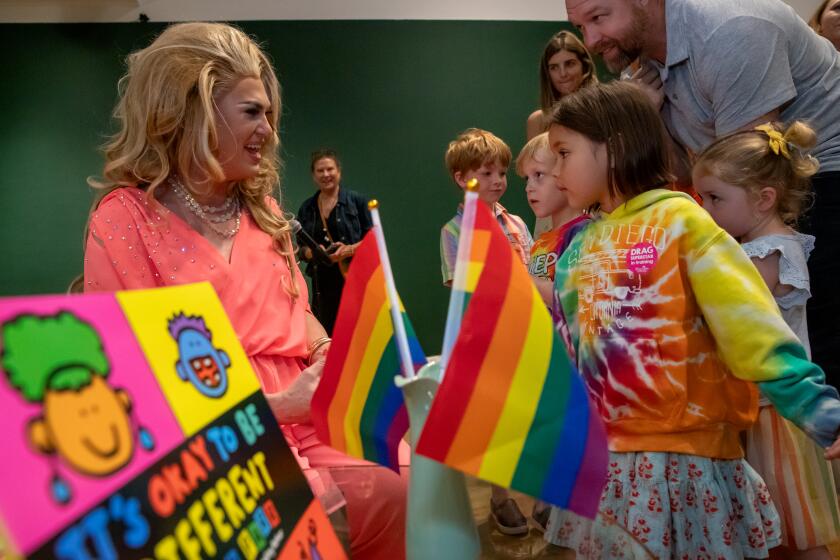
Drag Story Hours and family brunches, in particular, have helped LGBTQ+ youth feel accepted and seen. Keenan notes the surprising number of straight parents among attendees of drag story hours and brunches nationwide. “They’re looking for resources,” he says, to provide their children with a LGBTQ+ affirming space that they may not know how to cultivate at home. It is a chance to move past the rigid expectations of gender they were raised with, and offer their children something new.

All of this visibility comes at a cost. It has drawn attention to some of the most vulnerable members of the LGBTQ+ community, such as the trans, queer, and femme people of color who pioneered the “iconic” dance moves and looks we now associate with drag, without protection. “If what you really want is to target queerness and transness, then drag is a huge part of that. It’s a visible celebration of culture,” said the attorney Chase Strangio in a recent interview with The Atlantic.

How Drag Artists Became the Far Right's Ultimate Villains
Boston Globe/Getty Images

Indeed, in the midst of escalating fear and violence, drag performances continue to offer a unique form of celebration as resistance. This impulse toward new worlds was on full display during a recent prom for LGBTQ+ youth in Birmingham, Alabama. During the drag portion of the night, performer Sharon Cocx unexpectedly stopped in the middle of her set. 

“You can be anything you want to be. You can be president, you can change the world,” she told the crowd. After such a difficult year in the state — Alabama has passed some of the strictest anti-trans legislation in the country — it was a cathartic moment of release for the directly-impacted teens there. According to several people who attended the event, many were in tears by the end of the speech. This is drag’s unique power: to challenge the conditions of the present, and embody a longed-for future. 

The day after the attack in San Lorenzo, Per Sia had a performance a few miles away in Piedmont, CA. When she arrived at the library, half a dozen police officers were outside with their sirens on, “which was triggering in and of itself,” she said. Since many performers, like Sia, are queer people of color, the presence of police at performances can feel like a compounding of the violence they face, not an alleviation of it. As a result, organizers across the country have created safety plans rooted in abolitionist frameworks. These plans seek to keep children and performers safe without involving the police. 


As Sia entered the library, several staff members walked her through a hastily developed safety plan, which Sia had never experienced before. They walked up a claustrophobic flight of stairs. “If anything happens, I will bring you up here,” the librarian said, “Then go down this hall and hide under that desk. If anything happens, do not come out until you hear my voice.” In her decades of teaching children and performing drag, it was unlike anything Sia had experienced before. It was terrifying in a visceral, cruel way. 

“It was a hard pill to swallow,” she said, “but queer folks are resilient. We have always had to fight for our basic needs to be met, and simply to exist.” The performance took place in the library’s parking lot during a cloudless, blue summer day. The sunlight streamed over Sia as she read to the jam-packed crowd, who hung on her every word. Many had come to support Drag Story Hour in response to the previous day’s violence. “It was beautiful,” she said. “It really, really was.”