Racism is on the rise

OH High School Coach Resigns After “Nazi” Play Calls

DeSantis Calls Reports On FL Slavery Lessons A “Hoax”

Read the full article. So it’s a hoax and it was written by descendants of slaves? Of note, those “scholars” are notorious right wing nutjobs.

Boy, it sure would be embarrassing if someone quoted the Florida curriculum standard, which explicitly states that “Instruction includes how slaves developed skills which, in some instances, could be applied for their personal benefit.” ( https://www.fldoe.org/core/… )

Or, at least it would be to anyone with a conscience.

GOP Rep Gets Snippy as Reporter Presses Him on Biden Evidence

https://www.thedailybeast.com/gop-rep-jason-smith-gets-snippy-as-reporter-presses-him-on-biden-evidence-timeline?ref=home

Republicans don’t care about truth, in fact it seems they hate it as it doesn’t say what they claim.  Republicans are so desperate to force the narrative that Biden is as corrupt as trump, so it doesn’t matter as they are the same.   This is wrong.  While the evidence is clear that did the crimes he is accused of, the evidence is equally clear, Biden is innocent of what the republicans accuse him of.   And when called out on it, they get angry at the reporters for showing their lies.  Hugs


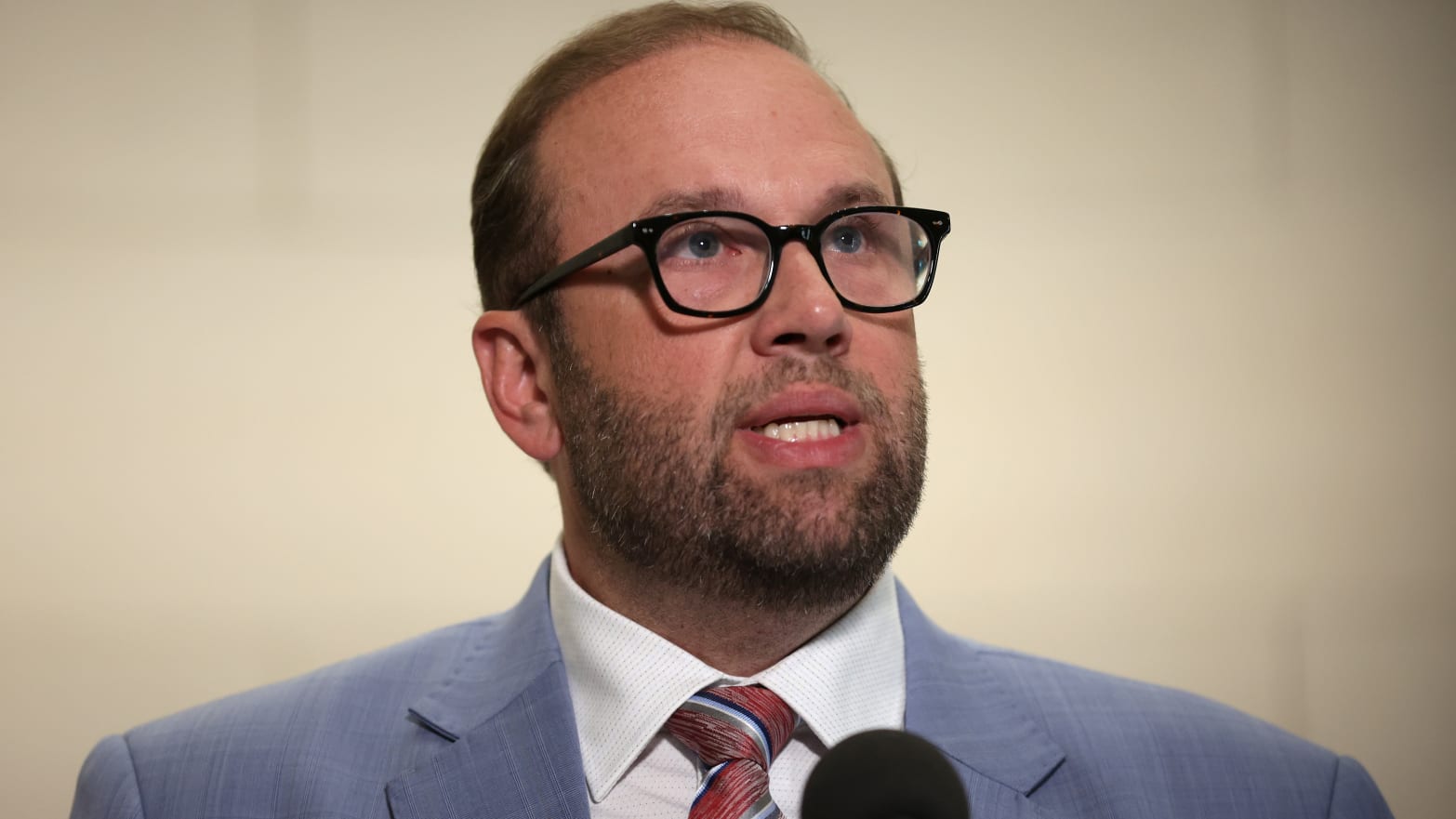
“I’m not an expert on the timeline,” Rep. Jason Smith said after he was asked about a text message sent before Joe Biden was a presidential candidate.

Rep. Jason Smith

Alex Wong/Getty Images

The Republican chairman of the House Ways and Means Committee got testy with a NBC reporter during a Wednesday press conference after the journalist challenged him on the timeline of supposed evidence of President Joe Biden’s misconduct.

The journalist pointed out that a WhatsApp message that Rep. Jason Smith (R-MO) had presented as potential evidence of Biden’s use of his political influence to help Hunter Biden was dated to June 6, 2017—before Biden was a presidential candidate, let alone president.

“I’m not an expert on the timeline,” Smith replied. “I would love to have President Biden or his family tell us all about the timeline.”

When the reporter pressed him, Smith asked what outlet he worked for. Hearing the answer, the congressman snapped, “So apparently, you’ll never believe us.”


Smith then spluttered that he was “definitely not going to pinpoint one item” of evidence when the journalist again asked him how the message demonstrated misuse of political influence. Shortly after, without having provided an answer, Smith demanded the next question.


The exchange was just the latest example of Republican politicians and right-wing media figures asserting a less-than-stellar knowledge of the Biden-related misconduct allegations they want to indict him on.

Just this week, Fox News buried an interview with former Ukrainian President Petro Poroshenko that largely demolished a longtime conspiracy theory asserting that a Ukrainian prosecutor was fired at the behest of then-Vice President Joe Biden to protect his son, Hunter, who sat on the board of a Ukrainian energy firm at the time.

Poroshenko instead dismissed the prosecutor, Viktor Shokin, as a “completely crazy person” who didn’t utter a “single word of truth” about the Bidens and “played [a] very dirty game.”

According to Media Matters for America, the interview hasn’t been mentioned a single time on Fox ever since.

Even Hunter Biden’s ex-business partner Devon Archer was forced to clear up Republican-spread rumors in July that an administrative request from the Department of Justice in a separate case was an attempt to intimidate him out of testifying in front of a Republican-led congressional committee.

Once there, he was unable to provide evidence that the president was involved in his son’s business dealings—saying he discussed “nothing of material” with Joe Biden—though that didn’t stop House Oversight Committee Chair James Comer from going on a victory lap.

In actuality, as The Daily Beast first reported, Comer hadn’t even bothered to show up to the hearing he’d spent weeks touting.

Florida school district orders librarians to purge all books with LGBTQ characters

https://popular.info/p/florida-school-district-orders-librarians

Now do you see the point?  This attack on woke is just the same old attack on LGBTQIA people.  This is the same right wing attack on people who are different.  It is the same right wing attack on gays, lesbians, and trans people that was happening in the1960s and 1970s.  It is about removing us, people like me, the entire LGBTQIA from society.  Basically a genocide.  There are LGBTQIA kids in schools and that go to libraries.  These kids need to see people like them, need the information in those books.   Plus kids own books that have gay characters are not permitted even for scielent reading by themselves.   Removing the books won’t stop kids being born LGBTQIA, it will just increase the targeting and harassment, the bullying along with increasing the isolation / shame these kids will feel about themselves for being different.  It is cruel.   Especially as science has proven beyond a doubt people are born with their sexual orientations and gender identity already set.  DeathSantis said it was a hoax, that no books were being banned only pornographic ones, this order to remove the books specifically says remove them even if there is no sexual content. 

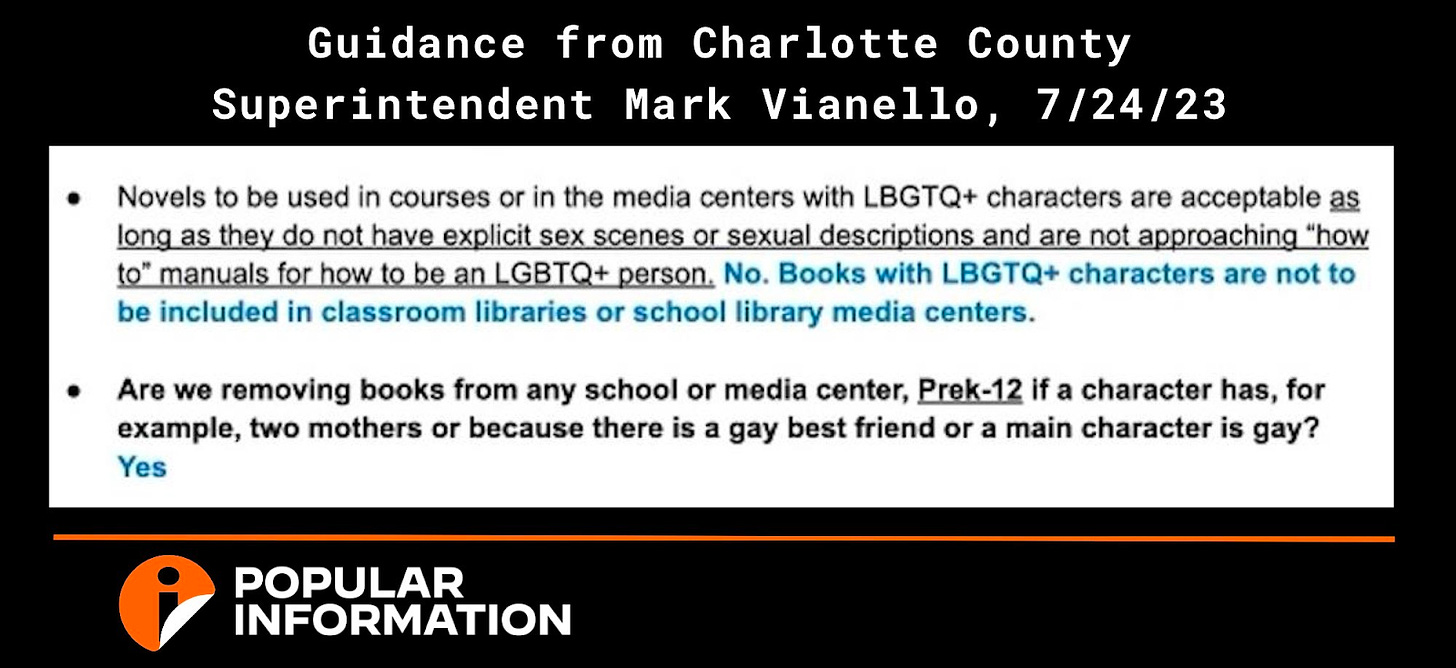
The guidance made clear that all books with LGBTQ characters are to be removed even if the book contained no sexually explicit content. The librarians asked if they could retain books in school and classroom libraries with LGBTQ characters “as long as they do not have explicit sex scenes or sexual descriptions and are not approaching ‘how to’ manuals for how to be an LGBTQ+ person.” Vianello responded, “No. Books with LBGTQ+ characters are not to be included in classroom libraries or school library media centers.”  

DeathSantis claimed that his anti-woke doesn’t equal don’t say gay.  But that is the way the law is written and the goal of the fundamentalist Christian nationalists people that he is a member of and leads.  Hugs

——————————————————————————————————————————–


SEP 26, 2023


Librarians in public schools in Charlotte County, Florida, were instructed by the school district superintendent to remove all books with LGBTQ characters or themes from school and classroom libraries. 

Charlotte County school librarians sought guidance from the school district about how to apply an expansion of the Florida Parental Rights in Education Act, better known as the “Don’t Say Gay” law, to all grades. “Are we removing books from any school or media center, Prek-12 if a character has, for example, two mothers or because there is a gay best friend or a main character is gay?” the librarians asked. Charlotte County Superintendent Mark Vianello answered, “Yes.” 

The guidance by Vianello and the school board’s attorney, Michael McKinley, was obtained by the Florida Freedom to Read Project (FFTRP) through a public records request and shared with Popular Information. FFTRP requested “electronic records of district and school decisions regarding classroom and library materials.” In response, FFTRP received a document memorializing a July 24 conversation between Vianello and district librarians, known in Florida as media specialists. 

The guidance made clear that all books with LGBTQ characters are to be removed even if the book contained no sexually explicit content. The librarians asked if they could retain books in school and classroom libraries with LGBTQ characters “as long as they do not have explicit sex scenes or sexual descriptions and are not approaching ‘how to’ manuals for how to be an LGBTQ+ person.” Vianello responded, “No. Books with LBGTQ+ characters are not to be included in classroom libraries or school library media centers.”

Vianello also says teachers must ensure that books with LGBTQ characters and themes do not enter the classroom, even if they are self-selected by students for silent reading. According to Vianello, books with “[t]hese characters and themes cannot exist.” 

The librarians were seeking guidance on how to interpret a revised version of The Principles of Professional Conduct for the Education Profession in Florida. The revised rules, issued by the Florida Department of Education earlier this year, expanded the restrictions imposed by the”Don’t Say Gay” law. According to revised Rule 6A-10.081, educators in Florida “[s]hall not intentionally provide classroom instruction to students in prekindergarten through grade 8 on sexual orientation or gender identity.” (A similar provision was included in a law Governor Ron DeSantis (R) signed in May.) The revised rule also extends that prohibition through grade 12, except where explicitly required by state standards or as part of “a reproductive health course or health lesson for which a student’s parent has the option to have his or her student not attend.”

Governor Ron DeSantis (R) has insisted that allegations that his policies, including the “Don’t Say Gay” law, are being used to ban a wide range of books is a “hoax.” DeSantis claimed that the only books being removed from Florida libraries are “pornographic and inappropriate materials that have been snuck into our classrooms and libraries to sexualize our students violate our state education standards.” But in Charlotte County, DeSantis’ policies are being used to justify purging all books with LGBTQ characters, even if there is no sexual content.

In response to a request for comment, a spokesperson for Charlotte County Schools told Popular Information that books with LGBTQ characters were removed from libraries because “there are elementary schools that utilize their school library media center as classrooms… [for] elective courses that our students are officially scheduled into and attend on a regular basis.” Therefore, the library “is considered a classroom setting.” As a result, “our school board attorney advises that we do not make books with these themes available in media centers that serve as classrooms since this would be considered ‘classroom instruction’ and such instruction and/or availability of these themes may not occur in PreK- grade 8.” The spokesperson acknowledged that “high school media centers are not designated as classrooms,” but books with LGBTQ characters were excluded anyway because “if a teacher were to bring a class of students to the media center and provide instruction, books with these themes cannot be included in that instructional time unless supported by the academic standards of that course of study.”

The problem with banning all books with LGBTQ characters


There are serious legal issues with banning all books with LGBTQ characters.

In June, the authors of the children’s book And Tango Makes Three, and several students sued the Lake County School Board, the Florida Department of Education, and other state officials for removing the book from K-3 library shelves. And Tango Makes Three is the true story of two male Penguins, Roy and Silo, who lived in the Central Park Zoo and raised an adopted chick. It has no sexual content. The lawsuit contends that the removal of And Tango Makes Three violates student rights under the First Amendment to the United States Constitution, and by “discriminating based on content and viewpoint, it infringes the authors’ right to freedom of expression.” 

In response, the Lake County School Board filed an affidavit on July 13, 2023, from its superintendent, Diane Kornegay. She stated that, on June 21, 2023, she received guidance from the Florida Department of Education that the “age restriction on sexual orientation and gender identity does not apply to library books.” The guidance included a legal memorandum by the Florida Attorney General filed in a separate case challenging the “Don’t Say Gay” law, which contends that the law “does not even arguably restrict library books.” 

As a result, And Tango Makes Three was returned to the shelves in Lake County. 

The Florida Department of Education has been repeatedly asked to clarify the application of “Don’t Say Gay” and other laws and regulations restricting LGBTQ instruction to library books. But it has refused to do so, despite the urging of FFTRP and others. 

“Every child deserves to have their lives reflected in the books available in their public school classroom or library,” Stephana Ferrell, co-founder of the FFTRP told Popular Information. “The Florida Department of Education was informed of Charlotte County’s overreaction to the law and state rule over two weeks ago, and has not acted to correct it. Public school families in Florida deserve better. We cannot tolerate this discriminatory exclusion.”

The result of the Department of Education’s inaction has been chaos. And Tango Makes Three remains banned in Escambia County and elsewhere. While Charlotte County is the only school district known to have a formal ban on all books with LGBTQ characters, other Florida school districts have the same policy in practice

In the Broward County School District, the sixth-largest school district in the country, nearly half of the books that have been removed or restricted feature LGBTQ themes. One of the books banned from all school libraries is the children’s book A Day in the Life of Marlon Bundo, a fictional story about former Vice President Mike Pence’s family bunny. In the story, Marlon Bundo falls in love with another bunny named Wesley, and the two decide to get married. The book does not contain any sexual or explicit content whatsoever. The Broward County School District ordered that all school libraries remove Bundo, because it contained “gender identity content.” 

The Broward County School District told Popular Information that it was aware of the state’s position in the Lake County lawsuit. But, as of last month, Bundo remained unavailable in Broward County schools. 

A survey of Florida school districts by Popular Information revealed that at least 16 school districts in Florida have banned books with LGBTQ characters.

Idaho library board chair demands Sunday closures to “keep the Sabbath day holy”

https://www.friendlyatheist.com/p/idaho-library-board-chair-demands

Please see the intro to my last post.  I am going to simply copy and paste it here as it is the same thing.   Also there are videos in the article that I am unable to copy, so to see them please go to the link above.  Hugs

The Christian Taliban moral police strike again.  When are people in the US going to get tired of the Christian nationalist trying to take over the country and force everyone to live under the doctrines of their churches.  Think about it, this is not religious freedom, this is religious dictatorship.   Religious freedom is everyone gets to practice and live their life according to their religion as long as it doesn’t harm others.  By the Christians insisting everyone honor their idea of the holy day, they deny the religious freedom of others.  What about religious sects and religions that have Saturday as the holy day?  What about atheist that don’t have a holy day, and their ability to enjoy each day without the religious entanglements is also part of religious freedom.  I know that some fundamental religious leaders like to claim there is no right to not be religious, but that is stupid.  To be free to practice one’s personal beliefs, one must be free to have no set religious restrictions.  People this is a fringe fundamentalist group of very vocal, very driven people willing to rule over every aspect of other peoples lives.  They are the worst busybody nosey neighbors ever in existence.  Their goal in life is to make you follow their ways, their ideas of right and wrong no matter what you believe, no matter what you think, in fact you are not important as a person for them.  You need to comply so their god is happy, that is it.  They don’t care if you’re happy or if things are good for you.  They only care if their god is happy and they think they know the secret to making their god happy.   Fight back.   Hugs


The conservative majority on the Community Library Network board voted to close libraries on Sundays, despite threats of litigation

SEP 13, 2023
 

This newsletter is free, but it’s only able to sustain itself due to the support I receive from a small percentage of regular readers. Would you please consider becoming one of those supporters? You can use the button below to subscribe to Substack or use my usual Patreon page!


The Community Library Network in Post Falls, Idaho, on the western part of the panhandle, oversees seven buildings and a bookmobile. Its Board of Trustees, like any board, has to keep an eye on the budget.

On July 20, those Trustees held a discussion about whether it would be prudent to reduce or eliminate Sunday hours. On one hand, closing the library on Sunday would reduce one part-time position per location, saving a total of nearly $28,000. On the other hand, a lot of people use the library on Sunday. Trustees were told how often people accessed the internet, how many times the study rooms were booked, etc. They ended that discussion without taking action but requesting more information.

All of that is a perfectly routine conversation for the board of a library.

What’s unusual is that the Board’s Chair, Rachelle Ottosen, argued that the library should remain closed on Sunday because it’s the Sabbath.


Well, I know many others at these tables don’t subscribe to this, but the Lord blesses people [who] keep the Sabbath day holy. I think having people work on Sunday is actually to our detriment.

One board member politely chimed in to say (I’m paraphrasing) that was a batshit crazy idea. “I’m pretty sure not everybody in this community holds [to] that, so I think we need to look at the whole community concerning hours.”

Ottosen was thankfully on her own. But still, it was a ridiculous suggestion that never should have been offered from a Trustee.

Then, just five days later, Ottosen did it again. This time she came prepared with a Bible verse:


As far as closing on Sundays, most other government entities are closed on Sundays. This is not an emergency service. No one’s gonna [freak] out if they don’t get a book on Sunday.

Anyway, Exodus 20:8-10 says “Remember the Sabbath day, to keep it holy. Six days shalt thou labour, and do all thy work: But the seventh day is the sabbath of the Lord thy God: in it thou shalt not do any work, thou, nor thy son, nor thy daughter, thy manservant, nor thy maidservant, nor thy cattle, nor thy stranger that is within thy gates.”

So it sounds like we shouldn’t be causing other people to work, as well as not working ourselves.

Once again, another Trustee chimed in to shoot down that explanation: “I’m sorry, this is a government agency, and we need to be available for everyone.” Another Trustee later brought up the fact that some religions consider Sabbath day to be Saturday; Ottosen had no response to that.

She did, however, do her best David Barton impression, citing the Founding Fathers to pretend she wasn’t crossing some church/state separation barrier. She closed her comments by saying, “It’s in our best interests to not dishonor God.”

Last month, Americans United for Separation of Church and State stepped in to warn the Board that it was heading down a dangerous path by listening to Ottosen’s suggestion:

The board received a letter dated Aug. 9 from the nonprofit Americans United for Separation of Church and State, which asserts that closing libraries based on Ottosen’s religious beliefs violates the Establishment Clause of the First Amendment to the U.S. Constitution.

“Ms. Ottosen is entitled to her religious beliefs, but she is not entitled to use the power of the government to enshrine those beliefs into law and to thereby force them on her constituents,” the letter said in part. “The board has a legal obligation to refuse to act on Ms. Ottosen’s religious grounds.”

The Freedom From Religion Foundation has now gotten involved too.

In a letter to Ottosen, attorney Chris Line wrote that she needs to stop using her elected position to “promote your personal religious beliefs.”

While Board members are certainly free to express their religious beliefs in their private capacity outside of their role on the Board, it is unconstitutional for public officials to push their personal religious beliefs during public meetings and to adopt policies based on those beliefs with no secular justification. We request that members of the Board refrain from discussing their religious beliefs during meetings in order to uphold the rights of conscience embodied in our First Amendment. Please inform us in writing at your earliest convenience with an assurance that this won’t happen again in the future.

It’s such a sensible request the two groups are making here. This isn’t about whether or not the library system should close on Sundays. That’s up to the Trustees to decide. But whatever the decision is, it needs to be secular in nature. Someone’s religious beliefs shouldn’t dictate the outcome.

Everyone else on the board seems to understand that. Just not Ottosen.

Incidentally, three of the five board members—Ottosen, Tom Hanley, and Tim Plass—voted to close the libraries on Sundays, but after the board’s attorney mentioned that this could open the door to litigation, the same board then voted 4-1 to table the Sunday closures… even though they had already voted to close them.

The same conservative trifecta took over the board earlier this summer after running on a campaign promoting censorship and keeping books they deemed explicit out of the hands of kids.

Hanley and Plass campaigned on keeping explicit books out of children and teen sections…

Ottosen has been vocal against LGBTQ programs and books for children. She also testified to the Idaho Legislature in support of recent obscenity bills targeting libraries and librarians.

Last month, the three of them also suggested disaffiliating from the American Library Association, calling it “ultra liberal” and criticizing it for opposing censorship. “The ALA has a clear animosity and resentment toward the family and traditional religious values,” Hanley said during an August meeting.

All of that’s to say the move to shut down the libraries on Sundays because some Christians take Sabbath day seriously isn’t just one crazy board member’s wacky suggestion. It’s part of a larger plan to inject Christian Nationalism into a public library system no matter how much that harms people in the community.

School fires teacher for assigning lesbian readings from “Diary of Anne Frank”

https://www.lgbtqnation.com/2023/09/school-fires-teacher-over-lesbian-passages-from-the-diary-of-anne-frank/

Remember these were 8th grade students. Children in 8th grade in the United States are 13 or 14 years old. They enter 8th grade at 13 years of age and leave at 14 years of age under normal circumstances.  These students should by then known parts of the human body, both male and female.  Yet one mother claimed the teacher was making a little girl talk about feeling each other’s breasts.   Also by then most people clearly know their sexual attractions and feelings.  Yes there are gay kids in those schools and in those classrooms.  Remember kids have computer, TV, Movies, they have books with LGBTQIA people in them … well in some states still, they know of same sex couples and families.  Some people think young people simply are blank slates with no desires or sexual feelings until either they’re married at 12 or they suddenly get them when they turn 18.  These are the same people that think little girls should be forced to carry to term a pregnancy, giving birth, but are too fragile to know that some girls like other girls?  How stupid has this country gotten?   The last paragraph of the article says: “The book has long been used to teach students about the Holocaust. Its sexual passages reflect similar experiences that teenagers undergo throughout puberty.”  Hugs


School fires teacher for assigning lesbian readings from “Diary of Anne Frank”
Anne FrankPhoto: Public domain, via Wikipedia

A Texas school district has fired an 8th-grade English teacher for having students read a passage from The Diary of Anne Frank in which the titular writer describes her genitals and lesbian attraction.

The Hamshire-Fannett Independent School District (HFISD) of Jefferson County, Texas — a near coastal region about 80 miles east of Houston — fired the unnamed teacher after she assigned students a reading from Anne Frank’s Diary: The Graphic Adaptation. The adaptation is an illustrated, comic book version of the diary that Frank, a German-born Jewish teen, wrote in the late 1940s while hiding from Nazis. Frank was 13 to 16 years old when writing the diary.

In one section of the graphic adaptation, Frank asks a female friend if she’d feel comfortable exposing their breasts to each other. In the three-panel scene, Frank’s friend refuses and they both remain clothed. In another section, Frank walks amongst nude female statues and admits, “I must admit, every time I see a female nude, I go into ecstasy. If only I had a girlfriend!”

In yet another section, Frank writes about her own genitals, describing their changing physical appearance as she experiences puberty. This section was omitted from the book’s 1952 English edition but eventually restored in its 1980s republication.

HFISD notified parents on Tuesday via email, “It was brought to the administration’s attention tonight that 8th-grade students were reading content that was not appropriate. The reading of that content will cease immediately. Your student’s teacher will communicate her apologies to you and your students soon, as she has expressed those apologies to us.”

By Wednesday, the district fired the teacher. While district officials said the book had never been approved, “it was on a reading list sent to parents at the start of the school year,” KFDM reported, and the middle school’s principal reportedly approved the syllabus that mentioned the book.

Nevertheless, one parent told the aforementioned news station, “It’s bad enough, [the teacher is] having them read this for an assignment, but then she also is making them read it aloud and making a little girl talk about feeling each other’s breasts and when she sees a female she goes into ecstasy — that’s not ok.”

The fired teacher has reportedly hired an attorney, but this isn’t the first time that the book’s lesbian content has angered parents.

A Florida principal removed the book from the Vero Beach High School library for being “not age appropriate” after a local chapter of the anti-LGBTQ+ group Moms for Liberty complained the book was “not a true adaptation of the Holocaust” and contained “graphic” and “sexually explicit” illustrations.

In August 2022, the Keller Independent School District of Texas also banned it, along with 41 books mostly focused on LGBTQ+ and Black characters that it called “pornographic.” After a public outcry, the district returned the Anne Frank book to school libraries.

The book has long been used to teach students about the Holocaust. Its sexual passages reflect similar experiences that teenagers undergo throughout puberty.

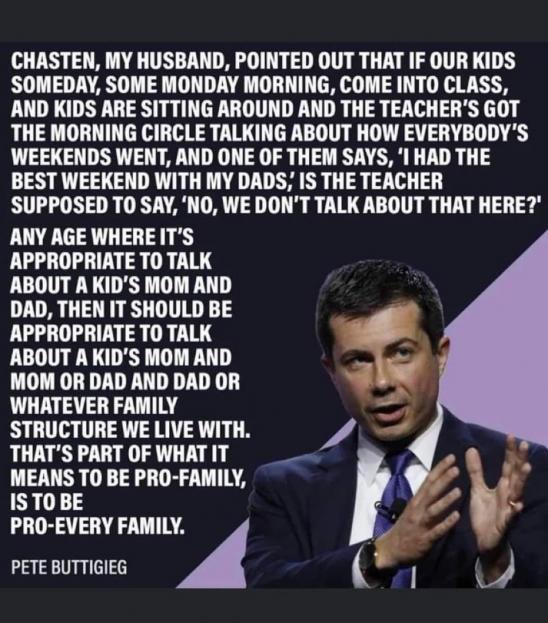
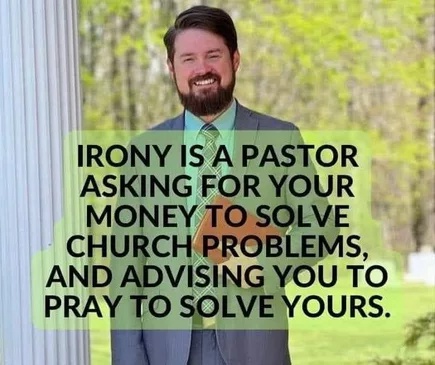
This was on twitter, it is what the supporters of DeathSantis, tRump, and other fundmentlist republican racist bigots.

A thought about not being allowed to mention anything same sex related in schools.

kids talking about parents

Irony is a pastor

Social Security denies disability benefits based on list with jobs from 1977

https://www.msn.com/en-us/news/politics/social-security-denies-disability-benefits-based-on-list-with-jobs-from-1977/ar-AA15HEyp

I got a comment I want to answer on the post I made about this.  I used The Washington Post article but when I went to reread it I no longer had access to the article.  So I found another report on what the Social Security hearings are like.  I have been through them.  The report is telling the truth.  It is ridiculous the way they try to prevent disabled people from getting much needed government assistance.  Hugs


Story by Lisa Rein •8mo


Social Security denies disability benefits based on list with jobs from 1977
Social Security denies disability benefits based on list with jobs from 1977© Bettman Archive

He had made it through four years of denials and appeals, and Robert Heard was finally before a Social Security judge who would decide whether he qualified for disability benefits. Two debilitating strokes had left the 47-year-old electrician with halting speech, an enlarged heart and violent tremors.

There was just one final step: A vocational expert hired by the Social Security Administration had to tell the judge if there was any work Heard could still do despite his condition. Heard was stunned as the expert canvassed his computer and announced his findings: He could find work as a nut sorter, a dowel inspector or an egg processor — jobs that virtually no longer exist in the United States.


Nut sorter job description from Dictionary of Occupational Titles

“Whatever it is that does those things, machines do it now,” said Heard, who lives on food stamps and a small stipend from his parents in a subsidized apartment in Tullahoma, Tenn. “Honestly, if they could see my shaking, they would see I couldn’t sort any nuts. I’d spill them all over the floor.”

How a Social Security program piled huge fines on the poor and disabled

He was still hopeful the administrative law judge hearing his claim for $1,300 to $1,700 per month in benefits had understood his limitations.

But while the judge agreed that Heard had multiple, severe impairments, he denied him benefits, writing that he had “job opportunities” in three occupations that are nearly obsolete and agreeing with the expert’s dubious claim that 130,000 positions were still available sorting nuts, inspecting dowels and processing eggs.


Laura Parsons of Fortescue, N.J., who has a connective tissue disorder known as Ehlers Danlos Syndrome, was denied disability benefits based on outdated jobs she was told she could do. Her appeal is pending.
Laura Parsons of Fortescue, N.J., who has a connective tissue disorder known as Ehlers Danlos Syndrome, was denied disability benefits based on outdated jobs she was told she could do. Her appeal is pending.© Mark Makela for The Washington Post

Every year, thousands of claimants like Heard find themselves blocked at this crucial last step in the arduous process of applying for disability benefits, thanks to labor market data that was last updated 45 years ago.

The jobs are spelled out in an exhaustive publication known as the Dictionary of Occupational Titles. The vast majority of the 12,700 entries were last updated in 1977. The Department of Labor, which originally compiled the index, abandoned it 31 years ago in a sign of the economy’s shift from blue-collar manufacturing to information and services.

Social Security, though, still relies on it at the final stage when a claim is reviewed. The government, using strict vocational rules, assesses someone’s capacity to work and if jobs exist “in significant numbers” that they could still do. The dictionary remains the backbone of a $200 billion disability system that provides benefits to 15 million people.

It lists 137 unskilled, sedentary jobs — jobs that most closely match the skills and limitations of those who apply for disability benefits. But in reality, most of these occupations were offshored, outsourced, and shifted to skilled work decades ago. Many have disappeared altogether.


Workers shell pecans in a union plant in San Antonio in 1939. Nut sorting is among the jobs in a Labor Department publication that Social Security relies on to decide disability benefits, even though most of the sedentary, unskilled jobs it lists have been automated.
Workers shell pecans in a union plant in San Antonio in 1939. Nut sorting is among the jobs in a Labor Department publication that Social Security relies on to decide disability benefits, even though most of the sedentary, unskilled jobs it lists have been automated.© Corbis via Getty Images

Since the 1990s, Social Security officials have deliberated over how to revise the list of occupations to reflect jobs that actually exist in the modern economy, according to audits and interviews. For the last 14 years, the agency has promised courts, claimants, government watchdogs and Congress that a new, state-of-the-art system representing the characteristics of modern work would soon be available to improve the quality of its 2 million disability decisions per year.

But after spending at least $250 million since 2012 to build a directory of 21st century jobs, an internal fact sheet shows, Social Security is not using it, leaving antiquated vocational rules in place to determine whether disabled claimants win or lose. Social Security has estimated that the project’s initial cost will reach about $300 million, audits show.

Social Security offices critical to disability benefits hit breaking point

“It’s a great injustice to these people,” said Kevin Liebkemann, a New Jersey attorney who trains disability attorneys and has written extensively on Social Security’s use of vocational data. “We’re relying on job information from the 1970s to say thumbs-up or thumbs-down to people who desperately need benefits. It’s horrifying.”

Obsolete jobs

In 2022, it is not easy to find a nut sorter (code 521.687-086) in the national economy who “observes nut meats” on a conveyor belt and picks out broken, shriveled, or wormy nuts. How many workers in America inspect dowel pins (code 669.687-014), searching for flaws from square ends to splits, then discard them by hand? And even if Heard were qualified to remove virus-bearing fluid from fertile chicken eggs for use in vaccines by sawing off the end of an egg and removing its fetal membrane, that work is largely automated today.

The Bureau of Labor Statistics, which is part of the Labor Department, has built a new, interactive system for Social Security using a national sample of 60,000 employers and 440 occupations covering 95 percent of the economy. But Social Security still has not instructed its staff to use it.


Very few jobs still exist for manual scoreboard operators, but they remain on the list of unskilled, sedentary jobs that Social Security considers in disability claims.
Very few jobs still exist for manual scoreboard operators, but they remain on the list of unskilled, sedentary jobs that Social Security considers in disability claims.© Brian Bahr/Getty Images

“They regularly tell us they plan on using the data,” Hilery Simpson, the labor bureau’s associate commissioner for compensation and working conditions, said of Social Security officials. The data collection and estimation “have gone through extensive testing and use the best-in-class statistical methods,” he said. The survey is available to the public on the labor bureau’s website.

Social Security has not explained why it has yet to implement the labor bureau survey.

Acting Social Security commissioner Kilolo Kijakazi declined to be interviewed. In a statement, she said, “To date, the best available source for occupational information has been the Dictionary of Occupational Titles. We have enlisted vocational experts to provide more detailed and current information about the jobs available in the national economy, while we continue to work on creating our own occupational data source informed by [the Bureau of Labor Statistics] that best reflects the current job market.”

A spokeswoman for the agency declined to answer questions about a timeline for putting the modern data into use.

Social Security’s delays in updating the database of job titles are rooted in conflicting political considerations, shifting leadership, and the drift that can bedevil large federal projects, according to current and former officials, auditors and disability advocates.

A modern list of occupations would create new winners and losers in the application process — posing political sensitivities for a program that has long drawn judgment that the government is either too generous or not generous enough. Over two decades, Social Security has been led by six acting commissioners and just three Senate-confirmed leaders, leaving power vacuums at the top that can delay costly projects. Many advocates believe the agency is motivated to delay the project so it can deny more claimants benefits.

“The scandal is that everybody wants this data discussed in terms of who will be hurt and who will be helped,” said David Weaver, a former Social Security associate commissioner who helped lead the early effort to modernize. “But a lot of money has been spent. You have the gold-standard of federal data, and Social Security is not producing anything.”


Social Security denies disability benefits based on list with jobs from 1977
Social Security denies disability benefits based on list with jobs from 1977© Provided by The Washington Post

Congress continues to approve more than $30 million per year for the survey of modern jobs without asking hard questions about why the data sits unused, congressional aides and former Social Security officials said.

Senate Finance Committee Chairman Ron Wyden (D-Ore.) called on Social Security to move forward.

“Occupational definitions used by the federal government need to reflect the reality of the work Americans are doing today,” Wyden said in a statement. He warned that data on modern jobs “must be handled with care to ensure that nobody is wrongly denied their earned benefits.”

Federal courts, meanwhile, keep sending denied claims back to Social Security to redo its decisions, raising alarms that the government is shortchanging disabled Americans with arbitrary judgments that put it at legal risk.

“Does anyone use a typewriter anymore?” Richard Posner, a judge for the U.S. Court of Appeals for the 7th Circuit, asked in a 2015 decision reversing an administrative law judge’s denial of benefits to a disabled man the judge claimed could work as an “addresser” — one who “addresses cards” by hand or typewriter. Posner called a vocational expert’s claim that 200,000 such jobs still exist today a “fabrication.”


Addresser job description from Dictionary of Occupational Titles
Addresser job description from Dictionary of Occupational Titles© TWP/TWP

Others have not been as fortunate. Few claimants without attorneys are aware that the jobs used to deny them benefits have been pulled from obscurity. And many lawyers representing them lack the expertise and resources to take a case to federal court, say advocates, vocational experts and judges who rule in these cases.

“Every day we made decisions we don’t necessarily agree with,” said George Gaffaney, an administrative law judge in the Chicago area. “It’s troubling.”

A need to modernize

The Dictionary of Occupational Titles was first published in 1938 to help a country pulling out of the Great Depression match workers with jobs. Each entry contained the time to train for the job, the aptitude required, physical demands, the work performed — but not any recognition of which jobs match with the cognitive impairments common among the disabled today.

With its benefit decisions hinging largely on whether someone’s impairment limits them from doing past jobs or other jobs, Social Security needed a resource with accurate information about available work. But by the time the Labor Department retired the red hardcover book three decades ago, it was already stocked with jobs that, if not already gone, were quickly vanishing from the economy: elevator operators, thaw-shed heater tenders, window shade ring sewers. And it did not include a host of emerging information-economy jobs, from web designers to employment recruiters.

Pandemic struggles still afflict Social Security, a last lifeline for many

Inside Social Security, the publication’s 1991 demise set off a decade of hand-wringing. Workgroups, panels and committees of experts formed — all while the agency continued to rely on the outdated jobs list. By 1998, the Labor Department had developed a new database of jobs and what was required to do them. Social Security brought in another round of experts to determine whether that system, dubbed O*NET, could serve its disability program.

It took until 2008 — a full decade — to reach consensus: the agency needed to develop its own vocational information because existing federal data lacked enough characteristics of jobs disabled people could do. So in 2012 Social Security signed a contract with the Bureau of Labor Statistics to design a modern system that would help make accurate disability determinations.


A closed gun retailer's records are photographed for duplication to microfilm at the ATF National Tracing Center on June 23, 2010, in Martinsburg, W.Va. Few document preparers are left in the U.S.
A closed gun retailer’s records are photographed for duplication to microfilm at the ATF National Tracing Center on June 23, 2010, in Martinsburg, W.Va. Few document preparers are left in the U.S.© The Washington Post

The same year, the Government Accountability Office began questioning the project’s cost estimates and schedule. After three years of tests, field economists began their surveys in 2015. When that data was delayed, government watchdogs began warning that the project was in danger of becoming a case study in the challenges of large federal investments.

In 2018, the agency’s inspector general wrote in an audit, “It remains crucial that [Social Security] leadership commit to ensuring appeal applications receive fair and consistent treatment.” In response, a Social Security official set a target of fiscal 2020 to put the modern data into use and wrote, “we continue to work diligently to avoid delays in its implementation.”

The labor bureau now says it will finish a second wave of data collection next year. A third is planned.

“We thought we could do it in 10 years. It might take 20 years,” said Byron Haskins, who worked on the project as a branch chief from 2010 to 2016. “In the meantime, we’re not standing on solid ground on these decisions.”

When New York art collector and apparel company investor Andrew Saul was confirmed as President Donald Trump’s Social Security administrator in June 2019, his team drew up plans to start using the modern jobs data, concluding that disabled people, particularly older Americans, could learn new skills in an economy with more sedentary, skilled jobs. The new survey could tighten eligibility for benefits, Saul believed — a White House priority.

“It was going to make the system fairer,” Saul said in an interview. “People who deserved disability would get it, and those who didn’t would not.”

But the plan set off a furor among advocates, who opposed a provision that would have made it harder for older workers to qualify for benefits. The Biden administration quickly shelved it and the president fired Saul in 2021.

Old data

Even so, advocates and opponents agree on one thing: A disability system that relies on obsolete jobs to decide claims is gambling with taxpayers and with the courts.

“It’s never really been blessed by Social Security,” said David Camp, president of the National Organization of Social Security Claimants’ Representatives, reflecting the view of many advocates. “The agency won’t take the step to clean up the system because they know we’ll win more cases.”


A worker inspects pistachio nuts for quality control at the IberoPistacho S.L.U. farm and processing plant in Manzanares, Spain. The job is now often automated, but Social Security experts frequently cite it to disability claimants as work they can find in the modern economy.
A worker inspects pistachio nuts for quality control at the IberoPistacho S.L.U. farm and processing plant in Manzanares, Spain. The job is now often automated, but Social Security experts frequently cite it to disability claimants as work they can find in the modern economy.© Manaure Quintero/Bloomberg News

Mark Warshawsky, deputy commissioner for retirement and disability policy under Saul, described the antiquated vocational policy as “an arbitrary system.”

“How hard is it for the federal government to make change?” he asked. “That’s not a political thing. Spending almost $300 million with nothing to show for it is embarrassing.”

The current system is leading thousands of disability claims per year to be denied that would otherwise have a good chance of approval, data suggests. The inspector general’s 2018 audit showed that from fiscal 2013 through 2017, occupational information was used to decide more than half of all initial claims and in four in five decisions at the hearing level when decisions are appealed. The data does not show if it was the deciding factor.

But a 2011 study commissioned by Social Security found the 11 jobs most commonly cited by disability examiners when denying benefits. The top job was addresser, used in almost 10 percent of denials. Twelve years later, little has changed, advocates say.

Estimates by Social Security’s experts of how many of these outdated jobs remain in the economy are also widely off the mark, courts have found.

The U.S. Supreme Court held in 2019 that Social Security judges could uphold agency decisions even when vocational experts refuse to provide data on how they come up with job numbers. But the decision led to a blistering dissent from Justice Neil M. Gorsuch, who cited dubious expert claims that 120,000 “sorter” and 240,000 “bench assembler” jobs are available to the disabled without clear evidence.

Earlier this year, the U.S. Court of Appeals for the 7th Circuit noted a similar problem while overturning a Social Security judge’s denial of benefits to a Wisconsin man.

“All three judges on this panel, assisted by very talented law clerks, read the transcript of the [vocational expert’s] testimony multiple times,” the court wrote. “And yet nobody can explain with coherence or confidence what the [vocational expert] did to arrive at her job-numbers estimate. … There has to be a better way.”

The expert claims can be equally baffling to claimants.

At his hearing before an administrative law judge in Pennsauken, N.J., in July 2019, Sean Dooley described the chronic pain and limited stamina from diabetes, thyroid issues and degenerative disk disease that had kept him from working as a jewelry salesman for three years.


Sean Dooley suffers from diabetes, thyroid issues and degenerative disk disease. His claim for disability benefits was denied on the basis of vocational testimony that he could work as an order clerk, addresser or call-out operator. A federal court remanded his appeal to Social Security for a new hearing. He lives in his sister's garage in Pennsville, N.J.,
Sean Dooley suffers from diabetes, thyroid issues and degenerative disk disease. His claim for disability benefits was denied on the basis of vocational testimony that he could work as an order clerk, addresser or call-out operator. A federal court remanded his appeal to Social Security for a new hearing. He lives in his sister’s garage in Pennsville, N.J.,© Mark Makela for The Washington Post

His mother testified that at 400 pounds, her son struggled to sit, stand, bend over and lift. Yet a vocational expert said Dooley could work as an order clerk, an addresser or a call-out operator  a job he had never heard of. An expert whose software is used by many vocational experts has calculated that 2,000 addressers are left in the U.S., 2,060 call-out operators who compile credit information and 424 order clerks.

In a written decision three months later, Judge Lisa Hibner Olson denied Dooley benefits, overruling his lawyer’s arguments that the jobs were obsolete.

“It was like I’m hit with a torpedo,” recalled Dooley, 46, who is living on his mother’s meager retirement savings in his sister’s garage in Pennsville, N.J. “With these goofy jobs, there was no way they were ever going to approve me. If I could work, I would be working.”

Dooley’s denial was overturned by a U.S. district court and remanded to the same Social Security judge, who has scheduled a new hearing for January.

The problem is not limited to appeals heard before judges. State offices that first decide disability claims place blame for a historic backlog exceeding 1 million cases in part on the obsolete jobs system, which requires expertise most do not have.

“We’ve heard the message from Social Security, ‘We’re working on vocational policy changes,’ for 10 years,” said Jacki Russell, director of Disability Determination Services in North Carolina and president of the National Council of Disability Determination Directors. “ ‘It’s very sensitive,’ they say. Meanwhile, we’re over here trying to make the best decisions we can with a massive backlog.” Russell’s office of 600 employees has just two vocational experts.

In Maryland last spring, Larry Underwood quit in despair after 25 years testifying for Social Security as a vocational expert. He had concluded that there was no valid method to determine what work a disabled claimant could still do, and that it was impossible to project jobs in that field.

“I realized that a lot of vocational experts, including myself, have been giving false testimony for years,” Underwood said. “The numbers are not accurate. I decided I can’t do that anymore.”

A few advocates with expertise in vocational evidence have begun training disability attorneys, warning that if they aren’t savvy enough to rebut the job claims, they will lose.


Laura Parsons was told by a vocational expert at a hearing before a Social Security judge that she could find a job hand-addressing envelopes or preparing documents for microfilming. The judge denied her claim for benefits.
Laura Parsons was told by a vocational expert at a hearing before a Social Security judge that she could find a job hand-addressing envelopes or preparing documents for microfilming. The judge denied her claim for benefits.© Mark Makela for The Washington Post

Laura Parsons — a former medical assistant from Fortescue, N.J., with a connective tissue disorder known as Ehlers Danlos syndrome — saw that problem firsthand at her hearing in April 2021, in which a vocational expert testified that she could get jobs as an addresser or document preparer. The judge ended the hearing without allowing Parsons to testify.

“They want me to get a job addressing envelopes that doesn’t exist anymore,” Parsons said.

Social Security plans to ask the labor bureau to refresh its occupational information every five years. The next wave is scheduled to start in 2023 at a cost of $167 million, auditors found. Congressional staff have not been briefed on the project in at least three years, aides said. It is not clear if they have asked for a briefing. Meanwhile, courts continue to overturn denials based on the old data — even pleading with Social Security to modernize its system.

“It’s not our place to prescribe a way forward,” the Court of Appeals concluded in the case of the Wisconsin man who had been denied benefits. “Perhaps the Commissioner will read this opinion as an invitation to bring long-awaited and much-needed improvement to this aspect of administrative disability determination.”


“If God Was Real He Would’ve Flicked Hitler’s Head Off” | Eddie Izzard’s Stripped | Universal Comedy

ddie Izzard has a lot to talk about, from their reason why God probably doesn’t exist, to dinosaurs not having a clue about order and life.

Evidence Against God

Hello all.  I have many grand religious followers who come to this blog.  I do respect what they comment but when it comes to the supernatural, the bible specifically, and all fables and myths I prefer reality.  I am sadly not able to accept things that can not be shown to exist with all the science available to us at this time.  I once had a really nice but “dumb” woman I do like, say to me she knew her god existed.  When I demanded proof she said she felt him.  I then demanded to know where her god was when as a child I was being raped, she had no answer, yet still kept existing her god not only was real but was constantly in her life.  She could feel him.  I gave up.  She couldn’t even set aside her Catholic faith long enough to feel sympathy for a raped child.   That told me why so many people stay with the religion that has the highest child abuse statistics.  Just before I left her home she touched my arm, told me she would talk to her priest, and asked me to come to her church with her that she went to four times a week.  If I did I would see her god was real, alive, and wanting to be part of my life.  She had just set aside what I had told her, that her god had ignored I was being raped as a child.  She couldn’t reconcile it with her faith so she just lost it, shut it out, ignored it and instead still pushed for her deity.  

On every blog I read dealing with a case of a religious figure of any faith abusing a child, the question comes up “How can anyone still support that religion, how can they give them more money”?  As I found out it is simple.  They simply deny or refuse to deal with facts.  This was a woman I have known for 15 years, helped out repeatedly, even gave her a printer when she did not have one.  I later found out she was using it to print the church bulletins for the services, but I did not care.  I gave it to her because she claimed to need one and couldn’t afford it.  Yet where was her wealthy church in giving her a printer to do their work for them? Yet it was up to me, an atheist child abuse survivor that gave her the means to do a service for her wealthy church.  

Anyway enjoy the video.  Again this is not an attack on those that have a spiritual code or belief that leads them through their daily life, this is to refute those that claim the bible is the literal word of an all knowing god and never wrong.   Hugs