Right wing governments working with Christian churches to deny rights to LGBTQ+ people. To stop equality, to stop same sex marriage. To deny family status at the same time as right governments and churches claim family units are best for children. We already know that children raised in same sex households do as well as or better than children in traditional opposite sex households. This is an attempt to make anything but the traditional male / female relationship status meaningless. Sure you can have civil partnerships but you get no rights with it, same with same sex marriage in the US if the republican fundamentalist religious right has its way. Because it is not good enough for those people to be able to do their things, do their beliefs, follow their own doctrines, their goal is to force everyone else to live by their church rules also. Hugs
One mom said she cried for 10 days after hearing she was being removed from her daughter’s birth certificate.
In conjunction with its crackdown on the rights of same-sex parents, the Italian government has begun retroactively stripping same-sex parents of their legal connection to their children.
Michela Leidi told the Daily Mail that she “cried for ten days” after receiving a letter informing her she would be removed from her daughter’s birth certificate. “It was as if I did not exist.”
Biomedical CEO believes it’ll soon be possible for same-sex couples to share biological children
But in addition to the energy surrounding their progress, there are also concerns, like people stealing DNA to make babies.
Liedi and her wife Viola are reportedly one of the first three lesbian couples to have their children’s birth certificates changed after the country’s right-wing government announced in March that state agencies should no longer register the children of same-sex couples.
The couple doesn’t know why they were targeted as one of the first to have their legal status changed retroactively, as in most cities the policy has been focused on new babies born. They said their community, friends, and family have always supported them.
“I suspect the government is afraid that a family that looks different, like ours, can be as happy – maybe even happier sometimes – as a traditional family,” Liedi said. “On paper, they say Giulia has one mother but we know she has two. We will do everything possible to prove we are a good family.”
Her wife added, “No one from the government or the prosecutors came to see that we are a happy family with a happy baby.”
While same-sex civil unions have been legal in the country since 2016, same-sex couples do not have the right to adopt, thanks in part to opposition from the Catholic Church. Surrogacy remains illegal in Italy and there are restrictions that prevent the adoption of “stepchildren” by one parent. Medically assisted reproduction, like in vitro fertilization (IVF), is only available to heterosexual couples.
Viola became pregnant through artificial insemination, and the couple had to travel to Spain to receive the treatment.
Until March, there were several Italian cities where same-sex couples could be listed as “parents”—as opposed to “mother” and “father”—on birth registrations. But the Interior Ministry began sending letters ordering an end to the practice.
Italy’s Prime Minister Giorgia Meloni, leader of the far-right Brothers of Italy party, made anti-LGBTQ+ rhetoric a cornerstone of her campaign for office. She opposes allowing same-sex couples to adopt as well as marriage quality, calling civil union “good enough” for LGBTQ+ couples.
“Yes to the natural family, no to LGBT lobbies,” she declared last summer.
Under current Italian law, the member of a same-sex couple who is not legally recognized as a child’s parent could lose custody if the legally recognized parent dies or the relationship ends.
This is particularly horrific for another couple, Vanessa Finesso and Cristina Zambon. Finesso is the one who gave birth to their daughter after undergoing IVF in Spain. Even though she used Zambon’s egg, Zambon has been threatened with the loss of parental rights by the government. Finesso has cancer and is worried that if she dies, her wife will lose custody of their daughter.
The order also leaves the children of same-sex couples in jeopardy in other ways. “Children end up having limited access to key services and benefits, such as healthcare, inheritance, and child support,” Angelo Schillaci, a law professor at Sapienza University in Rome, told BBC when the policy was first announced. “At present, only one parent is recognized by law, the other one is a ghost. In real life, parents and children play together, cook together, play sports, and go on holiday together. But on paper, they are apart, the state does not see them. It’s a paradoxical situation.”
In the city of Padua, where Finesso and Zambon live, 27 families (33 children) have gotten warning letters that one parent may lose parental rights and be stripped of their place on their kids’ birth certificates. Some plan to leave the country for good.
But the mayor of Padua, Sergio Giordani, is defying the government’s orders and continuing to issue birth certificates recognizing two-mom families.
“My phone is full of pictures of happy families with shining eyes,” he said. “I’m really proud of what I’ve done.”
German socialists saw nudism as a weapon of class struggle. George Hull investigates how nudist movements grew out of the crowded, dirty cities of the late 19th century before being co-opted by the Nazis in their quest for racial purity
Published: October 20, 2021 at 7:05 am
There can’t be many sources of genuine culture shock left for a Brit travelling in western Europe. In Germany there is at least one: stumbling upon naked people in the most unlikely places.
On a hot summer day, it isn’t just at nudist beaches on the Baltic coast or in designated zones beside bathing lakes inland that naked sunbathers are to be found. Take a lunch-hour stroll in Frankfurt’s Grüneburgpark or Munich’s Englischer Garten and there they’ll be, a stone’s throw from the traffic and bustle of the city centre, nonchalantly applying their sun cream. Visit a German sauna in winter and, likely as not, you’ll be asked to remove your towel. Go for a dip in the Berlin municipal baths and you may discover it’s naked swimming day.
Beyond noting that the Germans are decidedly comfortable with nudity, the British tourist might be tempted to see in this phenomenon the legacy of an atavistic Romanticism or even the reactionary ‘folkish’ currents in German culture on which the kitsch paganism sponsored by the Nazis drew. This wouldn’t be entirely wrong, but it is only part of the truth. For one thing, far and away the most successful organised nudist movement in German history stemmed from the progressive left. For another, one of the first things the Nazis did upon being elected into office was to ban nudism.
The colourful history of nudism in Germany encompasses the best and worst aspects of this complex nation.
The final quarter of the 19th century was for Germany a time of swift industrialisation and mass internal migration. During the Second Empire (1871–1918) half of all Germans left their place of birth for the city. This vast influx to the new urban centres, mostly in west Germany, gave rise to a burgeoning civil society made up of diverse neighbourhood associations, social and political subcultures and organised movements, in which new arrivals sought to carve a niche for themselves. It also gave rise to crowded, damp and unhealthy living conditions for the majority.
Many of the associations and subcultures grew up precisely as a response to these substandard living conditions, which they saw as creating a public health crisis. The ‘life reform’ groups experimented with a variety of measures to confront the perceived crisis, ranging from vegetarianism, abstinence from alcohol and nicotine, natural healing and Buddhism to the building of rural communes and ‘garden cities’. Some of them embraced what the Swiss physician Arnold Rikli called ‘Lichtluftbäder’ (‘light and air baths’) – naked sunbathing – as an effective natural therapy.
Classical inspiration
Karl Diefenbach was the first life reformer to advocate nudity not just as a therapy but as a way of life. A strict vegetarian, he moved with his family to live in an abandoned quarry not far from Munich, naked, or wearing just a hair tunic in winter. In 1888 he was taken to court for being naked in public with his son. Undertaking his own defence, he persuaded the jury to acquit him. Diefenbach was an influential painter, for whom the summit of beauty was represented by the nude sculptures of ancient Greece. In his mind the benefits of nudity from a life-reform perspective coincided with an ideal he felt had been attained in ancient Greece, but which modern Europeans fell sadly short of: a perfect harmony between body and mind.
In urban artistic circles secret societies with a handful of members began growing up and strove to realise precisely this ideal. The members of Deutsch-Hellas, for example, went out into the woods and photographed one another naked in the poses of discus hurlers and Greek goddesses. Otherwise they held ‘beauty evenings’ in town, where they would pose nude as living statues or watch visiting celebrities such as Olga Desmond dance naked. They published their photos and musings in the magazine Die Schönheit (Beauty).
Diefenbach’s most famous pupil, Hugo Höppener, known as ‘Fidus’, took his inspiration from an idealised version of, not the Greek, but the German past. The Roman historian Tacitus had written of the German tribes that had fought the imperial legions fiercely – and often with success – in mixed ranks of men and women, all fully nude. It was these naked warrior ancestors of the German people whom Fidus depicted as an ideal Nordic type in his popular etchings, which blended the erotic with the esoteric and were published in nudist magazines.
As the years went on Fidus also wrote articles calling for a new disciplined German culture founded on pure racial descent from these Teutonic warriors. This resonated with people who had themselves concluded that the current public health crisis was a symptom of racial degeneration.
A lifestyle formula
While the living conditions of urban workers undoubtedly caused sickness and death, overall the second half of the 19th century had seen life expectancy and quality of life for most Germans increase to unprecedented heights. People who would once have been worried about survival were, by the turn of the century, more concerned with success. A new middle class was emerging, made up of those who had not received a classical education at a ‘gymnasium’ (selective, academically focused schools). Such people would probably not have read Tacitus and would spend little, if any, time thinking about ancient Greece. Die Schönheit would leave them cold.
They were impressed, however, by life reformers such as Richard Ungewitter, who had made a success of themselves against the odds and were offering a lifestyle formula that would give anyone who followed it an edge on the competition. Ungewitter’s bestselling autobiography told how a combination of veganism and nudism had allowed him to overcome his natural frailty and become a strong, successful man, able to “hike for 10 to 14 hours” and “perform daily the most strenuous mental work”.
Ungewitter performed nude gymnastics every day and worked naked at his desk, standing up, as proved by plentiful photographic illustrations in his numerous books.
On his epic hikes, Ungewitter became increasingly preoccupied with the health of the German race, which, he thought, had been “poisoned” by Jews, Africans and other “inferior racial riffraff”. Nudism was the answer to this problem, in his opinion, because in their naked state superior breeding partners would recognise one another straightaway and genetically inferior types would not be able to disguise themselves. The challenge, he thought, was to overcome the hypocritical prudery of Wilhelmine Germany of the late 19th and early 20th century.
He is at his most sympathetic when pointing out that the elaborate dress worn by bourgeois women, putatively out of natural modesty, was not just cumbersome and physically deforming but positively calculated to ratchet up sexual desire by exaggerating the bust and bottom. He suggested a law be passed prohibiting tight corsets on penalty of flogging.
Ungewitter’s nudist colleague, the former pastor and mystic Heinrich Pudor went one better. (His name, the Latin word for ‘a sense of modesty or shame’ was adopted to make a point.) For a start, he encouraged nudists to hiss at corset-wearers in the street and call them ‘whores’. What he thought was really needed, however, was a revival of the ancient German punishment for unchaste behaviour: being sunk alive in a bog. But then, for Pudor, more was at stake. As he explained in volume 3 of his book, Nacktkultur, if people started living naked this would ultimately allow humans to become immortal.
A lake in the March of Brandenburg, Motzener See, within easy reach of Berlin, became a centre for the naked scene after the First World War. On the east bank there gathered bourgeois nudist groups of the Ungewitter/Pudor persuasion. South of these were Freisonnland, founded by Fedor Fuchs as a dedicated area for naked sport, and Charly Strässer’s Birkenheide, a naked area exclusively for young people – measured, as he used to stress, “not in years, but in vitality”.
Strässer himself had been involved in the Wandervögel (literally ‘hiking birds’) before the war – a camping and hill walking youth group bearing some resemblance to the Boy Scouts and Girl Guides, except that it was a rebellious movement with no adult supervision.
It was the spirit of the Wandervögel (who recognised themselves in Fidus’s etchings of youthful Nordic warriors) that Strässer tried to recreate in Birkenheide. The boys and girls who met there to swim naked and play ball had nothing but scorn for the prissy vegetarian moralism and ‘light and air baths’ of the bourgeois groups further along the lakeside.
They also had little to do with the rapidly growing League of Free Men, a nudist group founded by Adolf Koch that met on Motzener’s north-east bank. Whereas Charly Strässer’s group was formed largely of rich kids from west Berlin, the League of Free Men comprised workers from the squalid housing blocks in the city’s eastern half.
A fitter proletariat
Koch had started as an elementary school teacher in Berlin where he encountered first-hand the worst effects of industrialisation and urbanisation on the young. Like many life reformers before him, he thought that sunlight and gymnastics were needed to improve the health of the workers, but he realised these on their own would not be enough. What was needed, in his opinion, was for the growing proletarian class to take collective action, removing the societal causes of poverty and disadvantage. But for this to happen, he thought, individual proletarians would need to become fitter, better-informed and more rational – particularly in their approach to sex and reproduction.
So Koch began keeping his class behind after school for nude gymnastics, political discussion and sex education. One fateful day a Catholic cleaning woman told her priest she’d “happened to catch sight through a keyhole” of what Koch and his pupils were up to. The priest informed the press and a scandal erupted. This experience radicalised Koch, who thought it was just one example of how vested interests like the Catholic church were preventing the self-development of the working class.
In 1924 he set up his own private School for Healthy Pedagogy and Body Culture in Berlin. By the end of the 1920s, 13 Koch schools had been established in cities around Germany for working-class people of all ages.
Members of the Koch schools performed two hours of nude gymnastics weekly, regularly took part in political discussions and received a full medical check-up every three months. American observers Frances and Mason Merrill reported as many girls as boys at Koch schools, respect between the genders and hygiene standards equal to those of “the most up-to-date hospital clinic”. Unlike any of the bourgeois nudist associations, Koch schools never barred entry to anyone because they were fat, ugly or disabled. The membership fee was also much lower than that of the bourgeois associations. Koch set it at five per cent of an adult’s yearly income, but his schools were free to children, the unemployed, pregnant women and mothers of infants.
Though the various bourgeois nudist associations published more literature and have consequently left a larger documentary trace, membership numbers at the Koch schools were far higher: so much so that his socialist nudism was by far the most popular nudist movement in German history. By 1933, 3,947 people had gone through the Berlin Koch school alone. In the early 1930s there were around 80,000 practising nudists in Germany; 20,000 belonged to the bourgeois nudist groups and the remaining 60,000 or so belonged either to Koch schools or to affiliated socialist nudist groups.
Nazi appropriation
On 3 March 1933 Hermann Göring passed a decree abolishing the “naked culture movement”, which, he said “deadens women’s natural feelings of shame and kills men’s respect for women”. The Hitler Youth was despatched to wreck the grounds of nudist clubs. Koch tried a variety of strategies to keep his schools open, including renaming them and himself joining the ill-fated SA, but in the end he was forced underground. It is rumoured that, like a Catholic priest in Elizabethan England, he travelled secretly from town to town, gathering adherents in a safe house for a session of nude gymnastics where he could.
A few nudist associations under the umbrella title, League for Body Discipline, were ultimately tolerated by the Nazi regime after an SS major, Hans Surén, won them over to it. Surén had been in charge of physical training in the German army, where he’d introduced such innovations as caber tossing and naked cross-country running. In 1924 he published a book, Man and the Sun, in which he outlined the benefits of his trademark gymnastic regimen, the mystical rewards of nudity and the advantages of oiling oneself all over when naked. The official justification for the oil was that it enabled one to withstand low temperatures when nude, but the illustrations in his book suggest it was at least partly a pretext for Surén to be photographed naked holding a spear or discus, doing an impression of a gleaming bronze statue.
Man and the Sun was reissued in 1936 – with racist additions – as Man and Sun: Aryan-Olympian Spirit, and was something of a hit in Nazi circles. By the end of the 1930s Richard Darré, Reinhard Heydrich and Rudolf Hess had all concluded that the nudism advocated by Surén was in line with Nazi thinking. In 1942 Heinrich Himmler introduced an ordinance officially permitting nude bathing. Surén’s own fortunes took a turn for the worse in the same year, however, as he was expelled from the Nazi Party for masturbating in public.
After the war Adolf Koch re-emerged and was instrumental in revitalising a liberal, denazified nudism in the new Federal Republic. But even in this changed political climate his ideas did not fit into the mainstream. His socialist emphasis on preparing the working class to claim what was theirs became an embarrassment to German nudist associations, as did his insistence that sex education should have a central place in nudism. Despite his decades of inspiring dedication to working-class nudism, he was expelled from the German Association for Free Body Culture in the early 1960s.
In any case, the era of organised German nudism was coming to an end. Himmler’s 1942 ordinance remained in force in both East and West Germany, meaning that people no longer had to join a club or enter a special enclosure to be nude outdoors. It is ironic, given the Nazis’ initial attitude towards nudism, that this law accounts in no small part for the widespread informal nudity in Germany today.
George Hull is currently completing a PhD in the history of philosophy at UCL. He has written for The Economist, The Spectator, Left Foot Forward, Time Out and The London Magazine among others
Remember these racist bigots are a minority. They have been so since they lost the war to keep black people as property. Think about what the reporting says the majority turned out against this, yet the Board of education did it anyway. Der DeathSantis handpicked board. Think of what he would do if president. They are driven white supremacists who want real history erased and a fake nice version of slavery taught instead. Ask why? What is the gain, to not feel guilty? That is stupid, no current white person should feel guilty of racism unless they are promoting / practicing racism. And that is the point. These white people want to keep practicing racism, and a lot of them want to make it worse by returning to a time before the civil rights act that gave people of color a voice and a right to some equality in the country that the constitution says they are equal citizens. Seriously scary how deeply racism is in the red states and especially Florida and Texas.
As a side note when we first got to Florida we had a black friend visit us. I mention the skin color only because when we all went out to eat, the waitress at the restaurant refused to take his order, instead asking both Ron and then myself what the other (pointing to our friend) wanted to eat. This was in 1994. We complained but our friend who was experienced in the south did not want us to make a scene, so we agreed when management only offered to change the waitress. It was the first time I had experienced / seen that, and it really stuck in my mind. Totally horrible any person had to go through that dehumanizing experience that our friend did. I can not image how it makes one feel to be treated that way in front of friends. Hugs
The Florida Board of Education approved a new curriculum for African American history on Wednesday, but not without pushback.
After more than an hour of public comment, with a majority of speakers opposed, the board voted unanimously to approve the social studies standards for African American history for kindergarten through 12th grades. Opponents say the curriculum leaves out Florida’s role in slavery and the oppression of African Americans, victim blames Black communities and uses outdated language.
In a letter to board member Ben Gibson, a group of 11 organizations, including the NAACP and the Florida Education Association, criticized the state for omitting or rewriting “key historical facts about the Black experience.”
More than a dozen speakers at Wednesday’s board meeting opposed the changes, including state Sen. Geraldine Thompson (D), who helped pass a law in 2020 that requires schools to teach lessons about the Ocoee Massacre. The incident in 1920 began when several Black residents attempted to vote, and ended with as many as 60 people dead, making it the deadliest instance of Election Day violence in U.S. history.
Thompson said the new curriculum “suggests that the massacre was sparked by violence from African Americans. That’s blaming the victims. ” State Rep. Anna Eskamani (D) said she was concerned about inaccuracies in the new standards, including instructing that enslaved people “developed skills” that could be helpful. “That is inaccurate and a scary standard for us to establish,” she said.
Florida's new African American history standards include a requirement that middle schoolers learn "how slaves developed skills which, in some instances, could be applied for their personal benefit." @goni_lessanhttps://t.co/DCjauBVLbV
Enslavers defended slavery by claiming it was a “positive good” for Black people. Today Florida’s Board of Education approved new Black history standards that note enslaved Black people developed skills that “could be applied for their personal benefit.”https://t.co/xNEIZoK4o3
We’re here at the Board of Education Meeting where there are at least five super problematic proposed rules that target African American History and LGBTQ+ schools. Public education is being sabotaged in Florida. 1/2 pic.twitter.com/GKmP4qhGWC
— Rep. Anna V. Eskamani 🔨 (@AnnaForFlorida) July 19, 2023
Yes, there were benefits of slavery…for the slaveholders who got free labor and people they could beat and rape and even kill without any penalties. Nothing about that was good. Nothing.
♪♫ “We don’t need indoctrination We don’t need no thought control No dark agendas in the classroom Teacher, leave them kids alone Hey! Teacher! Leave those kids alone! All in all, fascism just needs to fall All in all, fascism just needs to fall” ♪♫
Where have we heard this before? “We took them out of the darkness of idolatry and brought them to Jesus! They are so child-like, they’re incapable of governing themselves. They need a firm hand. We’ve given them the benefit of living in a civilized country.” Yeah, we’ve heard it all before, and it is STILL stomach turning. I fucking HATE conservatives!!!!
Politicians, Republican ones, seem to think they’re experts in everything from gynecology to curriculum development. Get back in your box , fucking politicians.
If the @HouseGOP took away earmarks from the NAACP or the Urban League because they serve the Black community, they'd rightfully be called racist bigots.
Stripping funding from LGBTQI+ groups, however, is just another day in Congress for these extremists.
On the chopping block is funding for housing for queer seniors and homeless youth. Not even $2M in total but that's still too much for the avowed Christians. https://t.co/TZqHqKyFhY
WTF. These people are not coming to hurt anyone, they are not coming to destroy the US, but to share the dream of a wonderful country. Abbott is proving to be the destroyer and despicable person, as is anyone who would follow these orders. Hey think how we look at the guards at concentration camps, Texas will be thought of in the same way. Scottie
This week Rep. Angie King and I introduced a bill that would ban adult performances that are obscene from public parks, parades and other places children are present. When this bill becomes law it will be unlawful, and potentially a felony. Protect OHIO.🇺🇸 https://t.co/NPHbV6UAVg
— JoshWilliamsForOhio (@Williams4ohio) July 18, 2023
— Northwest Ohio Trans Advocacy (@OHTransAdvocacy) June 25, 2023
Drag performances in Ohio could be banned from public parks, parades and other places children might be if a bill introduced by House Republicans becomes law. House Bill 245 expands the definition of adult cabaret performers from strippers and topless dancers to include “entertainers who exhibit a gender identity that is different from the performer’s or entertainer’s gender assigned at birth.”
Diversity or diversity and inclusion programs are just words for let others than white males have a seat at the table. Seriously, this is what the republicans and MG are fighting. Why would they want to block others than whites / at one time only white males, from having a chance to be included? Racism and misogyny.
NEW: Mississippi Attorney General Lynn Fitch is demanding access to information about Mississippi residents who obtain abortions or gender-affirming care in other states.
She and 18 other GOP AGs say investigators need it to enforce their states' laws.https://t.co/r31ix6rnjr
The decision comes less than a week after the Republican-controlled Legislature passed new abortion restrictions during a special session.https://t.co/gcSyMJuyyL
Dear Media: There's no such thing as a fetal heartbeat at six weeks. Fetuses don't have hearts at 6 weeks.
Stop calling it a "fetal heartbeat bill." Stop spreading their narrative. Stop calling pols who who fight against the *actual* teachings of Jesus "Christian."
Prison rights advocates and lawmakers urge Gov. Abbott to call a special session to install air conditioning in Texas prisons amid a deadly heatwave. https://t.co/6XEZDBNJ0D
Texans are being cooked alive in our prisons! They were NOT sentenced to death & should not be subject to #Cruel&UnusualPunishment. Staff and incarcerated individuals are dying and suffering daily. It is not about comfort, but life or death. #TXPrisons#TXLegepic.twitter.com/bfLtOCg6G2
— Representative Ana-Maria Ramos (@Ramos4Texas) July 18, 2023
This time tomorrow, I will be stepping into a mock prison cell on the Capitol grounds to experience just a fraction of what the people living and working in Texas jails and prisons go through daily. Join me on the grounds or watch online at 12 noon! #txlege#85tostayalivepic.twitter.com/m1Kh7mvlXA
"In Texas, the Republican-controlled House this year proposed spending $545 million to install air-conditioning in the majority of state prisons that do not have it…The bill died in the [Republican-controlled State Senate]." https://t.co/pyjdZLKSwH
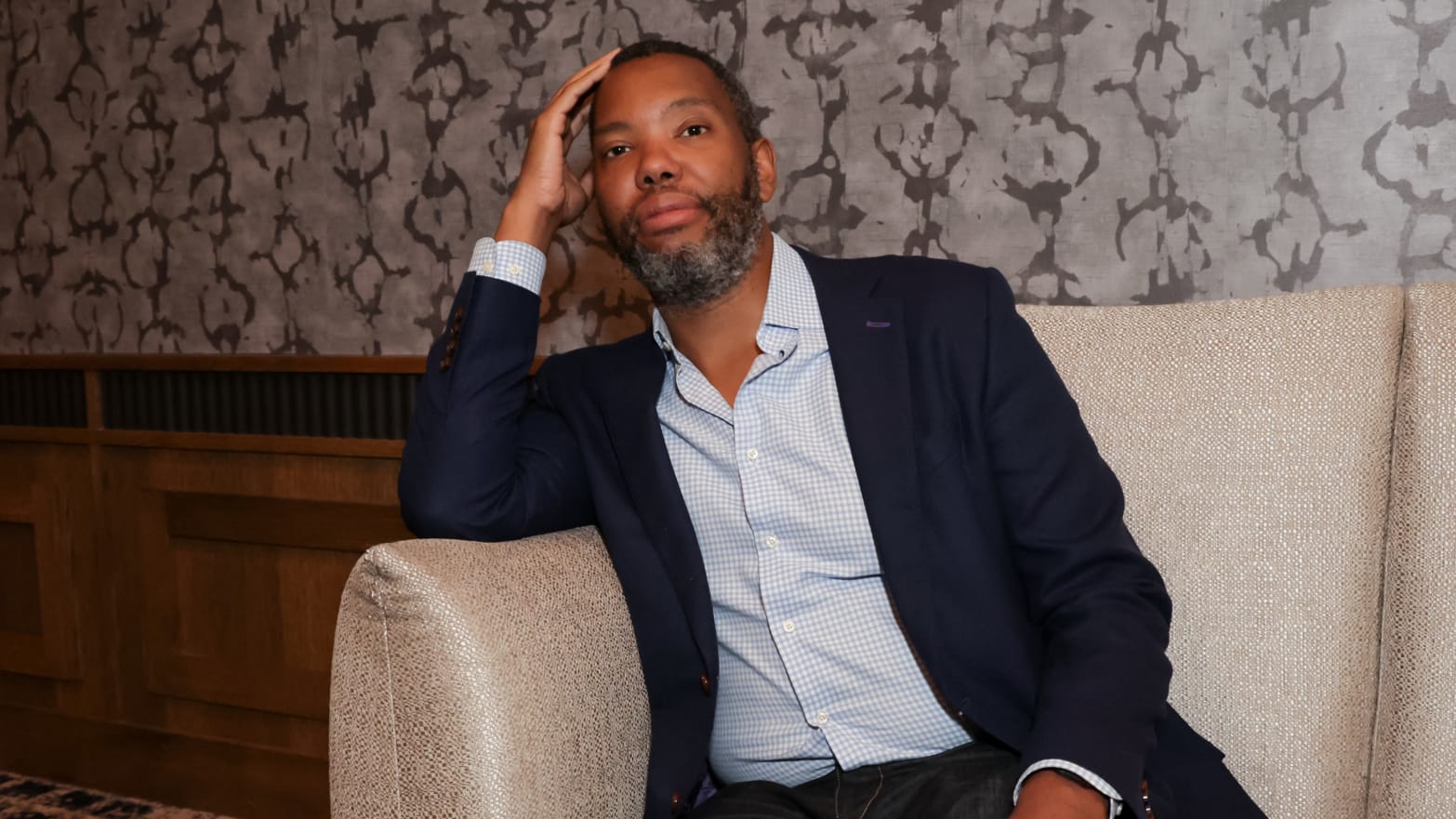
A South Carolina school board meeting, in which community members railed against an African American culture writer’s award-winning memoir about racial injustice, featured a special guest appearance: Ta-Nehisi Coates, the famed author in question.
On Monday evening, the Lexington-Richland District 5 School Board met to discuss the outrage concerning Coates’ 2015 nonfiction bestseller, Between the World and Me, which has repeatedly caused political literary mayhem among reactionary right-wing communities and been placed on book ban lists.
In February, after getting approval from higher-ups, an AP Language teacher at Chapin High School conducted a lesson involving Between the World and Me. The book, written as an essay to Coates’ son to prepare him for the life he will live as a Black man, details personal accounts of Coates’ life and his first-hand experiences with racism. However, the lesson was shut down and the book was removed from the course after students filed a complaint claiming the book made them feel “guilty for being white,” local news outlet CBS 19 Columbia reported.
According to footage obtained by CBS 19, a slew of people wearing blue rallied in support for the book and for academic freedom during the board hearing. And Coates sat in the back of the room next to the teacher who assigned the book as a sign of solidarity.
“What matters most to me is that my students have the ability to hear six or seven opinions on one topic and come up with their own thesis, supported with evidence, and come up with an independent conclusion,” said Superintendent Dr. Akil Ross. “Sometimes there’s going to be topics you agree with, and there’s going to be topics you disagree with. Academic freedom says even if you disagree, there’ll be another opinion presented to our children. Our democracy needs that.”
PEN America, a literary human-rights organization, called the book’s removal “an outrageous act of government censorship and a textbook example of how educational gag orders corrupt free inquiry in the classroom.”
“We cannot become critical thinkers without being uncomfortable in some way,” one student declared while directly addressing the Lexington-Richland board. “If students can’t learn these things in a safe space, like school, how are they—we—meant to make good decisions and think critically?”
The board did not conduct a vote after public discussion.
In a statement to The Daily Beast, Lexington-Richmond District 5 wrote that it is “important to understand” that Between the World and Me “is not banned in our school district.”
“Superintendent Ross is committed to providing additional training on how to use books like Between the World and Me,” said communications director Amanda Taylor, referring to International Baccalaureate courses and policies on teaching about controversial and sensitive issues. “This training will cover how to determine if the material is appropriate for the course and the maturity of the students. District administration will also provide training to ensure materials are based on state standards and protect the academic freedom of the students.”
Coates did not respond to The Daily Beast’s request for comment on Tuesday.
A recent wave of book bans and curbs to educational free speech, led in part by Florida governor Ron DeSantis is hurting our children and allowing a vocal radical minority of parents and lawmakers control the narrative.
The information presented here is not new, in fact I have posted it before. But it is something that medical science show to be true that some people just can not accept. It is sad, but some people can not accept when new research with tools that may not have been available before change what they always assumed to be just the way things were. Just as any new discovery or change is fought against on the idea that it might change what was traditional. Enjoy. Hugs
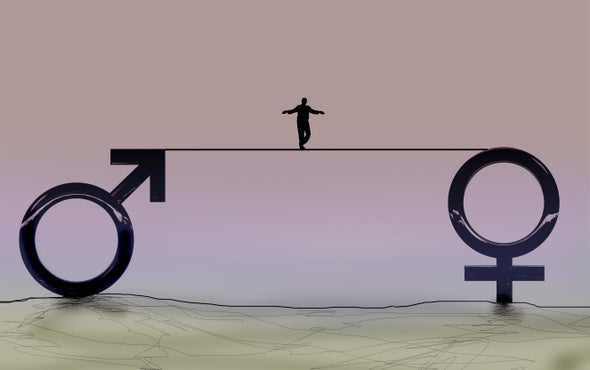
Biologists now think there is a larger spectrum than just binary female and male
As a clinical geneticist, Paul James is accustomed to discussing some of the most delicate issues with his patients. But in early 2010, he found himself having a particularly awkward conversation about sex.
A 46-year-old pregnant woman had visited his clinic at the Royal Melbourne Hospital in Australia to hear the results of an amniocentesis test to screen her baby’s chromosomes for abnormalities. The baby was fine—but follow-up tests had revealed something astonishing about the mother. Her body was built of cells from two individuals, probably from twin embryos that had merged in her own mother’s womb. And there was more. One set of cells carried two X chromosomes, the complement that typically makes a person female; the other had an X and a Y. Halfway through her fifth decade and pregnant with her third child, the woman learned for the first time that a large part of her body was chromosomally male. “That’s kind of science-fiction material for someone who just came in for an amniocentesis,” says James.
Sex can be much more complicated than it at first seems. According to the simple scenario, the presence or absence of a Y chromosome is what counts: with it, you are male, and without it, you are female. But doctors have long known that some people straddle the boundary—their sex chromosomes say one thing, but their gonads (ovaries or testes) or sexual anatomy say another. Parents of children with these kinds of conditions—known as intersex conditions, or differences or disorders of sex development (DSDs)—often face difficult decisions about whether to bring up their child as a boy or a girl. Some researchers now say that as many as 1 person in 100 has some form of DSD.
When genetics is taken into consideration, the boundary between the sexes becomes even blurrier. Scientists have identified many of the genes involved in the main forms of DSD, and have uncovered variations in these genes that have subtle effects on a person’s anatomical or physiological sex. What’s more, new technologies in DNA sequencing and cell biology are revealing that almost everyone is, to varying degrees, a patchwork of genetically distinct cells, some with a sex that might not match that of the rest of their body. Some studies even suggest that the sex of each cell drives its behaviour, through a complicated network of molecular interactions. “I think there’s much greater diversity within male or female, and there is certainly an area of overlap where some people can’t easily define themselves within the binary structure,” says John Achermann, who studies sex development and endocrinology at University College London’s Institute of Child Health.
These discoveries do not sit well in a world in which sex is still defined in binary terms. Few legal systems allow for any ambiguity in biological sex, and a person’s legal rights and social status can be heavily influenced by whether their birth certificate says male or female.
“The main problem with a strong dichotomy is that there are intermediate cases that push the limits and ask us to figure out exactly where the dividing line is between males and females,” says Arthur Arnold at the University of California, Los Angeles, who studies biological sex differences. “And that’s often a very difficult problem, because sex can be defined a number of ways.”
THE START OF SEX
That the two sexes are physically different is obvious, but at the start of life, it is not. Five weeks into development, a human embryo has the potential to form both male and female anatomy. Next to the developing kidneys, two bulges known as the gonadal ridges emerge alongside two pairs of ducts, one of which can form the uterus and Fallopian tubes, and the other the male internal genital plumbing: the epididymes, vas deferentia and seminal vesicles. At six weeks, the gonad switches on the developmental pathway to become an ovary or a testis. If a testis develops, it secretes testosterone, which supports the development of the male ducts. It also makes other hormones that force the presumptive uterus and Fallopian tubes to shrink away. If the gonad becomes an ovary, it makes oestrogen, and the lack of testosterone causes the male plumbing to wither. The sex hormones also dictate the development of the external genitalia, and they come into play once more at puberty, triggering the development of secondary sexual characteristics such as breasts or facial hair.
Changes to any of these processes can have dramatic effects on an individual’s sex. Gene mutations affecting gonad development can result in a person with XY chromosomes developing typically female characteristics, whereas alterations in hormone signalling can cause XX individuals to develop along male lines.
For many years, scientists believed that female development was the default programme, and that male development was actively switched on by the presence of a particular gene on the Y chromosome. In 1990, researchers made headlines when they uncovered the identity of this gene, which they called SRY. Just by itself, this gene can switch the gonad from ovarian to testicular development. For example, XX individuals who carry a fragment of the Y chromosome that contains SRY develop as males.
By the turn of the millennium, however, the idea of femaleness being a passive default option had been toppled by the discovery of genes that actively promote ovarian development and suppress the testicular programme—such as one called WNT4. XY individuals with extra copies of this gene can develop atypical genitals and gonads, and a rudimentary uterus and Fallopian tubes. In 2011, researchers showed that if another key ovarian gene, RSPO1, is not working normally, it causes XX people to develop an ovotestis—a gonad with areas of both ovarian and testicular development.
These discoveries have pointed to a complex process of sex determination, in which the identity of the gonad emerges from a contest between two opposing networks of gene activity. Changes in the activity or amounts of molecules (such as WNT4) in the networks can tip the balance towards or away from the sex seemingly spelled out by the chromosomes. “It has been, in a sense, a philosophical change in our way of looking at sex; that it’s a balance,” says Eric Vilain, a clinician and the director of the Center for Gender-Based Biology at the University of California, Los Angeles. “It’s more of a systems-biology view of the world of sex.”
According to some scientists, that balance can shift long after development is over. Studies in mice suggest that the gonad teeters between being male and female throughout life, its identity requiring constant maintenance. In 2009, researchers reported deactivating an ovarian gene called Foxl2 in adult female mice; they found that the granulosa cells that support the development of eggs transformed into Sertoli cells, which support sperm development. Two years later, a separate team showed the opposite: that inactivating a gene called Dmrt1 could turn adult testicular cells into ovarian ones. “That was the big shock, the fact that it was going on post-natally,” says Vincent Harley, a geneticist who studies gonad development at the MIMR-PHI Institute for Medical Research in Melbourne.
The gonad is not the only source of diversity in sex. A number of DSDs are caused by changes in the machinery that responds to hormonal signals from the gonads and other glands. Complete androgen insensitivity syndrome, or CAIS, for example, arises when a person’s cells are deaf to male sex hormones, usually because the receptors that respond to the hormones are not working. People with CAIS have Y chromosomes and internal testes, but their external genitalia are female, and they develop as females at puberty.
Conditions such as these meet the medical definition of DSDs, in which an individual’s anatomical sex seems to be at odds with their chromosomal or gonadal sex. But they are rare—affecting about 1 in 4,500 people. Some researchers now say that the definition should be widened to include subtle variations of anatomy such as mild hypospadias, in which a man’s urethral opening is on the underside of his penis rather than at the tip. The most inclusive definitions point to the figure of 1 in 100 people having some form of DSD, says Vilain.
But beyond this, there could be even more variation. Since the 1990s, researchers have identified more than 25 genes involved in DSDs, and next-generation DNA sequencing in the past few years has uncovered a wide range of variations in these genes that have mild effects on individuals, rather than causing DSDs. “Biologically, it’s a spectrum,” says Vilain.
A DSD called congenital adrenal hyperplasia (CAH), for example, causes the body to produce excessive amounts of male sex hormones; XX individuals with this condition are born with ambiguous genitalia (an enlarged clitoris and fused labia that resemble a scrotum). It is usually caused by a severe deficiency in an enzyme called 21-hydroxylase. But women carrying mutations that result in a milder deficiency develop a ‘non-classical’ form of CAH, which affects about 1 in 1,000 individuals; they may have male-like facial and body hair, irregular periods or fertility problems—or they might have no obvious symptoms at all. Another gene, NR5A1, is currently fascinating researchers because variations in it cause a wide range of effects, from underdeveloped gonads to mild hypospadias in men, and premature menopause in women.
Many people never discover their condition unless they seek help for infertility, or discover it through some other brush with medicine. Last year, for example, surgeons reported that they had been operating on a hernia in a man, when they discovered that he had a womb. The man was 70, and had fathered four children.
CELLULAR SEX
Studies of DSDs have shown that sex is no simple dichotomy. But things become even more complex when scientists zoom in to look at individual cells. The common assumption that every cell contains the same set of genes is untrue. Some people have mosaicism: they develop from a single fertilized egg but become a patchwork of cells with different genetic make-ups. This can happen when sex chromosomes are doled out unevenly between dividing cells during early embryonic development. For example, an embryo that starts off as XY can lose a Y chromosome from a subset of its cells. If most cells end up as XY, the result is a physically typical male, but if most cells are X, the result is a female with a condition called Turner’s syndrome, which tends to result in restricted height and underdeveloped ovaries. This kind of mosaicism is rare, affecting about 1 in 15,000 people.
The effects of sex-chromosome mosaicism range from the prosaic to the extraordinary. A few cases have been documented in which a mosaic XXY embryo became a mix of two cell types—some with two X chromosomes and some with two Xs and a Y—and then split early in development. This results in ‘identical’ twins of different sexes.
There is a second way in which a person can end up with cells of different chromosomal sexes. James’s patient was a chimaera: a person who develops from a mixture of two fertilized eggs, usually owing to a merger between embryonic twins in the womb. This kind of chimaerism resulting in a DSD is extremely rare, representing about 1% of all DSD cases.
Another form of chimaerism, however, is now known to be widespread. Termed microchimaerism, it happens when stem cells from a fetus cross the placenta into the mother’s body, and vice versa. It was first identified in the early 1970s—but the big surprise came more than two decades later, when researchers discovered how long these crossover cells survive, even though they are foreign tissue that the body should, in theory, reject. A study in 1996 recorded women with fetal cells in their blood as many as 27 years after giving birth; another found that maternal cells remain in children up to adulthood. This type of work has further blurred the sex divide, because it means that men often carry cells from their mothers, and women who have been pregnant with a male fetus can carry a smattering of its discarded cells.
Microchimaeric cells have been found in many tissues. In 2012, for example, immunologist Lee Nelson and her team at the University of Washington in Seattle found XY cells in post-mortem samples of women’s brains. The oldest woman carrying male DNA was 94 years old. Other studies have shown that these immigrant cells are not idle; they integrate into their new environment and acquire specialized functions, including (in mice at least) forming neurons in the brain. But what is not known is how a peppering of male cells in a female, or vice versa, affects the health or characteristics of a tissue—for example, whether it makes the tissue more susceptible to diseases more common in the opposite sex. “I think that’s a great question,” says Nelson, “and it is essentially entirely unaddressed.” In terms of human behaviour, the consensus is that a few male microchimaeric cells in the brain seem unlikely to have a major effect on a woman.
Scientists are now finding that XX and XY cells behave in different ways, and that this can be independent of the action of sex hormones. “To tell you the truth, it’s actually kind of surprising how big an effect of sex chromosomes we’ve been able to see,” says Arnold. He and his colleagues have shown that the dose of X chromosomes in a mouse’s body can affect its metabolism, and studies in a lab dish suggest that XX and XY cells behave differently on a molecular level, for example with different metabolic responses to stress. The next challenge, says Arnold, is to uncover the mechanisms. His team is studying the handful of X-chromosome genes now known to be more active in females than in males. “I actually think that there are more sex differences than we know of,” says Arnold.
BEYOND THE BINARY
Biologists may have been building a more nuanced view of sex, but society has yet to catch up. True, more than half a century of activism from members of the lesbian, gay, bisexual and transgender community has softened social attitudes to sexual orientation and gender. Many societies are now comfortable with men and women crossing conventional societal boundaries in their choice of appearance, career and sexual partner. But when it comes to sex, there is still intense social pressure to conform to the binary model.
This pressure has meant that people born with clear DSDs often undergo surgery to ‘normalize’ their genitals. Such surgery is controversial because it is usually performed on babies, who are too young to consent, and risks assigning a sex at odds with the child’s ultimate gender identity—their sense of their own gender. Intersex advocacy groups have therefore argued that doctors and parents should at least wait until a child is old enough to communicate their gender identity, which typically manifests around the age of three, or old enough to decide whether they want surgery at all.
This issue was brought into focus by a lawsuit filed in South Carolina in May 2013 by the adoptive parents of a child known as MC, who was born with ovotesticular DSD, a condition that produces ambiguous genitalia and gonads with both ovarian and testicular tissue. When MC was 16 months old, doctors performed surgery to assign the child as female—but MC, who is now eight years old, went on to develop a male gender identity. Because he was in state care at the time of his treatment, the lawsuit alleged not only that the surgery constituted medical malpractice, but also that the state denied him his constitutional right to bodily integrity and his right to reproduce. Last month, a court decision prevented the federal case from going to trial, but a state case is ongoing.
“This is potentially a critically important decision for children born with intersex traits,” says Julie Greenberg, a specialist in legal issues relating to gender and sex at Thomas Jefferson School of Law in San Diego, California. The suit will hopefully encourage doctors in the United States to refrain from performing operations on infants with DSDs when there are questions about their medical necessity, she says. It could raise awareness about “the emotional and physical struggles intersex people are forced to endure because doctors wanted to ‘help’ us fit in,” says Georgiann Davis, a sociologist who studies issues surrounding intersex traits and gender at the University of Nevada, Las Vegas, who was born with CAIS.
Doctors and scientists are sympathetic to these concerns, but the MC case also makes some uneasy—because they know how much is still to be learned about the biology of sex. They think that changing medical practice by legal ruling is not ideal, and would like to see more data collected on outcomes such as quality of life and sexual function to help decide the best course of action for people with DSDs—something that researchers are starting to do.
Diagnoses of DSDs once relied on hormone tests, anatomical inspections and imaging, followed by painstaking tests of one gene at a time. Now, advances in genetic techniques mean that teams can analyse multiple genes at once, aiming straight for a genetic diagnosis and making the process less stressful for families. Vilain, for example, is using whole-exome sequencing—which sequences the protein-coding regions of a person’s entire genome—on XY people with DSDs. Last year, his team showed that exome sequencing could offer a probable diagnosis in 35% of the study participants whose genetic cause had been unknown.
Vilain, Harley and Achermann say that doctors are taking an increasingly circumspect attitude to genital surgery. Children with DSDs are treated by multidisciplinary teams that aim to tailor management and support to each individual and their family, but this usually involves raising a child as male or female even if no surgery is done. Scientists and advocacy groups mostly agree on this, says Vilain: “It might be difficult for children to be raised in a gender that just does not exist out there.” In most countries, it is legally impossible to be anything but male or female.
Yet if biologists continue to show that sex is a spectrum, then society and state will have to grapple with the consequences, and work out where and how to draw the line. Many transgender and intersex activists dream of a world where a person’s sex or gender is irrelevant. Although some governments are moving in this direction, Greenberg is pessimistic about the prospects of realizing this dream—in the United States, at least. “I think to get rid of gender markers altogether or to allow a third, indeterminate marker, is going to be difficult.”
So if the law requires that a person is male or female, should that sex be assigned by anatomy, hormones, cells or chromosomes, and what should be done if they clash? “My feeling is that since there is not one biological parameter that takes over every other parameter, at the end of the day, gender identity seems to be the most reasonable parameter,” says Vilain. In other words, if you want to know whether someone is male or female, it may be best just to ask.
This article is reproduced with permission and was first published on February 18, 2015.
Florida’s new slavery curriculum sparks outrage as the state’s war on accurate Black history ramps up with a plan to teach that there were benefits to slavery for enslaved descendants of Africans in America. Florida St. Sen. Shevrin Jones joins Joy Reid to discuss saying, “I want to make it clear to everyone… there were no benefits to being a slave… All of this is disingenuous.”
The latest educational repercussions of Ron DeSantis’s campaign against “woke” is a set of new guidelines that will have Florida middle school students learning false, racist tropes about the benefits of slavery to slaves and casting racist violence against Black people in a more “both sides” context. Jelani Cobb, dean of the Columbia Journalism School discusses with Alex Wagner.

 Photo: Shutterstock













 Scottie's Playtime