Some Awesome Ladies Of The Labor Movement

Happy Labor Day! Let’s Talk About Some Awesome Ladies Of The Labor Movement by Rebecca Schoenkopf Read on Substack

Because it was not actually just a bunch of flannel-wearing white dudes.

A version of this article was initially published on May 1, 2019. Happy Labor Day, we’re taking the day off! 

When we talk about the history of feminism, we tend to think about the causes and struggles of middle class white women. When we talk about labor history, we tend to think about the causes and struggles of white working class men.

And that is some absolute bullshit.

Working class women, very often women of color and immigrant women, were, are and always have been the backbone of the labor movement. They were working and organizing well before Second Wave Feminism “made it possible” for women to enter the workforce. They’re the ones who first fought for equal pay, and they’re the ones who were doing the bulk of feminist work and activism during the years in between getting the right to vote and The Feminine Mystique. They are still fighting today.

So, since it’s Labor Day, let’s celebrate the hell out of them, starting with the woman who started it all.

Lucy Parsons
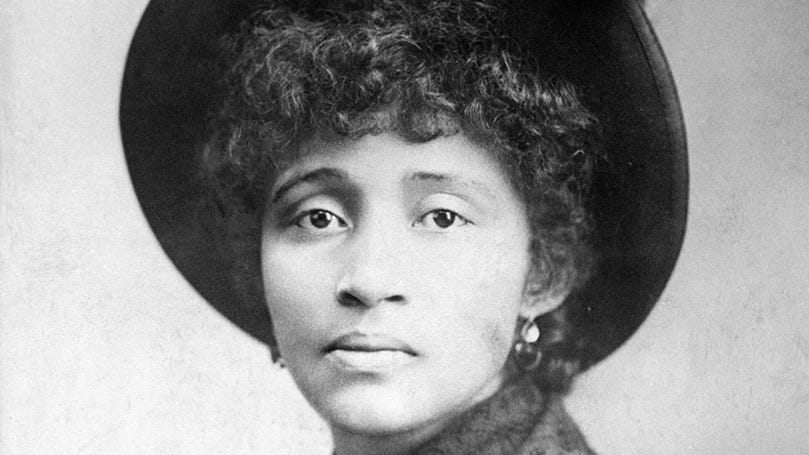
‘Governments never lead; they follow progress. When the prison, stake or scaffold can no longer silence the voice of the protesting minority, progress moves on a step, but not until then.’  

“More dangerous than a thousand rioters,” anarchist Lucy Eldine Gonzalez Parsons was a writer, orator, one of the founders of the Industrial Workers of the World, and tireless campaigner for the rights of people of color, all women, and all workers. Her husband, Albert Parsons, was one of the Haymarket martyrs.

We, the women of this country, have no ballot even if we wished to use it … but we have our labor. We are exploited more ruthlessly than men. Wherever wages are to be reduced, the capitalist class uses women to reduce them, and if there is anything that you men should do in the future, it is to organize the women.

Though Parsons and Emma Goldman were widely regarded as the most prominent female anarchists of the day, they very notably did not get along so well. Parsons believed that oppression based on gender and race was a function of capitalism and would be eliminated when capitalism was eliminated, whereas Goldman believed such oppression was inherent in all things. Parsons was all class struggle all the time, and felt that the “intellectual anarchists” like Goldman spent too much time bothering with appealing to the middle class.

One of her most important contributions to the labor movement was the concept of factory takeovers. 

“My conception of the strike of the future is not to strike and go out and starve, but to strike and remain in, and take possession of the necessary property of production.”

Parsons is best known for being the woman who really started the celebration of May Day as a day for workers’ rights — leading a parade to commemorate the anniversary of the Haymarket Affair. Soon, nearly every other country in the world followed suit and proclaimed this day International Worker’s Day. Alas, here in America, we go with the less radical and more picnic-y Labor Day that we are celebrating today, because Grover Cleveland thought a federal holiday commemorating the Haymarket Affair would encourage people to become anarchists and socialists, and no thank you, he did not want that.

Anna LoPizzo

‘Hearts starve as well as bodies, give us bread but give us roses too’  

Not much is known about Anna LoPizzo, other than that she was a 34-year-old mill worker who was murdered by police officer Oscar Benoit during the 1912 Lawrence Textile Strike — also known as the Bread and Roses Strike. Initially, police tried to charge two IWW organizers who were miles away for her murder, even though literally everyone there had seen Benoit shoot her.

The reason for the strike in the first place was that the textile mills of Lawrence, Massachusetts, cut worker pay after the state cut the number of hours women could legally work from 56 down to 54. The Industrial Workers of the World, led by Elizabeth Gurley Flynn (we’ll get to her in a minute), organized more than 20,000 workers of more than 40 different nationalities to demand they get their fair wages. One of the primary tactics used in the strike was sending the starving families of the mill workers on a tour to New York City so that people there could see for themselves what these low wages were doing to children. Between that and LoPizzo’s death, sympathy was on the side of the workers. Congressional hearings into the conditions of the mills were held, and the mills themselves ended up settling the strike by giving all workers across New England a 20 percent raise.

Lillian Wald

‘Human interest and passion for human progress break down barriers centuries old.’

Susan B. Anthony isn’t the only important feminist buried in the Mount Hope Cemetery in my hometown of Rochester, New York. There is another. Her name was Lillian Wald, and she was a total fucking bad ass. She wasn’t just a suffragist — she was also an early advocate for healthcare for all people regardless of economic class or citizenship, a founding member of the NAACP, lobbied against child labor, advocated for the rights of immigrants, helped to found the Women’s Trade Union League, and was an anti-war activist. Wald also founded the Henry Street Settlement House in New York City, which provides — to this day — social services, education, and health care to the impoverished. And she was active in the ACLU.

WHY THE HELL IS SHE NOT MORE FAMOUS? I am legitimately bothered by this and bring it up often.

Elizabeth Gurley Flynn
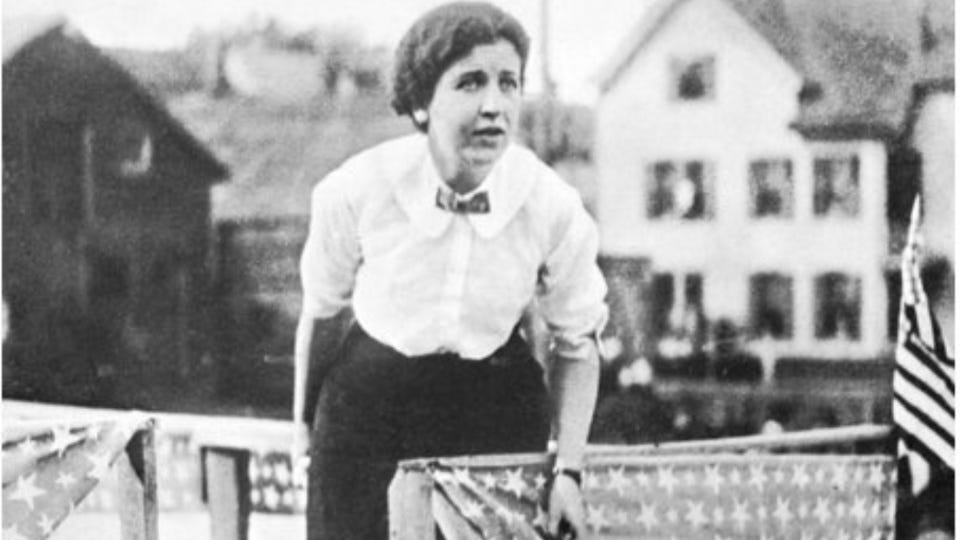
‘The IWW has been accused of pushing women to the front. This is not true. Rather, the women have not been kept in back, and so they have naturally moved to the front.’

Hey! You know who was super freaking awesome? Elizabeth Gurley Flynn. As previously mentioned, she was an organizer with Industrial Workers of the World who helped organize the Lawrence Textile Strike. She also organized a hell of a lot of other strikes across the country, helped found the ACLU, and was known for the creative tactics she used to elicit sympathy and support for the American worker.

Hattie Canty
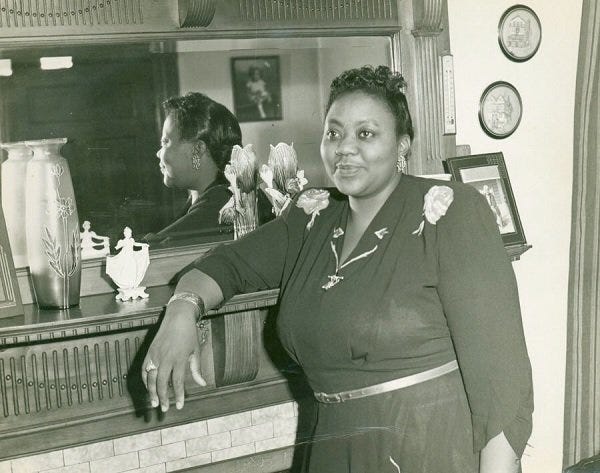
’Coming from Alabama, this seemed like the civil rights struggle … the labor movement and the civil rights movement, you cannot separate the two of them.’ 

 When Hattie Canty’s husband died in 1972, she found herself supporting eight children on her own. She found work as a maid at a Las Vegas hotel where she joined the Las Vegas Hotel and Culinary Workers Union Local 226. By 1990, she was president of that union, leading one of the longest strikes in American history — a six year strike of hospitality workers which, happily, ended in victory.

The Women of The Atlanta Washerwomen’s Strike
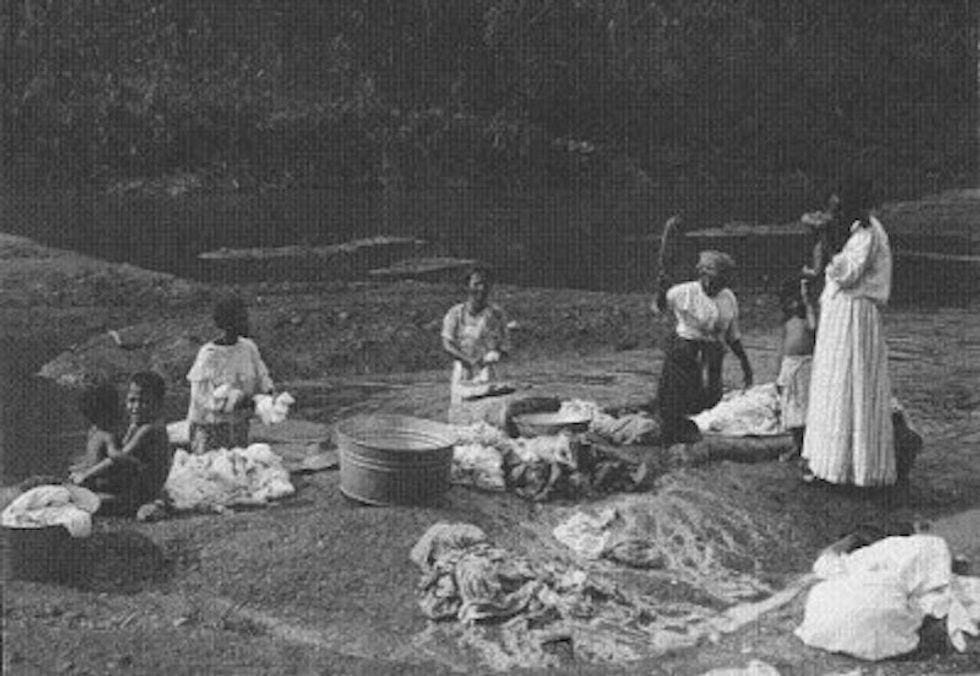
We mean business this week or no washing!  

Back in the 1880s, only two decades after the Civil War ended, the most common occupation for Black women was as laundresses — this was largely because if poor white families were going to hire anyone to do chores for them at all, they were going to hire someone to do their laundry. These women were independent workers, often working from their own homes and making their own soap, and they only made about $4 a month. (Average non-Black-woman laborers earned about $35 a month in 1880.)

One day in 1881, about 20 of them got together and decided that $4 a month was some bullshit for all the work they were doing and decided to go on strike and demand wages of $1 for every 12 pounds of washing. Three weeks later, 3,000 other women joined them. Unsurprisingly, the city freaked out. They fined any participants $25 — which was a lot of money when you only made $4 a month — and they offered tax breaks to any corporation that would come down there to start a commercial steam cleaning business. Still, the women did not back down.

Eventually, people got really sick of doing their own laundry, and the city decided to back down on the fines, and accede to their demands for fear that the unrest would spread to other industries.

Dolores Huerta

‘Every minute a chance to change the world.’

Dolores Huerta, along with Cesar Chavez, helped to organize the National Farmworkers Association, which later became United Farm Workers. She wasn’t a farmworker herself — rather, she was an elementary school teacher who was tired of seeing the children she taught living in poverty because their parents were not making enough money as farmworkers.

I couldn’t tolerate seeing kids come to class hungry and needing shoes. I thought I could do more by organizing farm workers than by trying to teach their hungry children.

Together with Chavez, Huerta organized the successful Delano Grape Strike (or as your mom calls it, “that time we couldn’t eat grapes for five years” or as Rebecca’s mom calls it “serious people don’t care if a boycott ‘ends'”), which led to better wages and working conditions for farmworkers, and she has continued working as an activist and an organizer ever since.

Angela Bambace
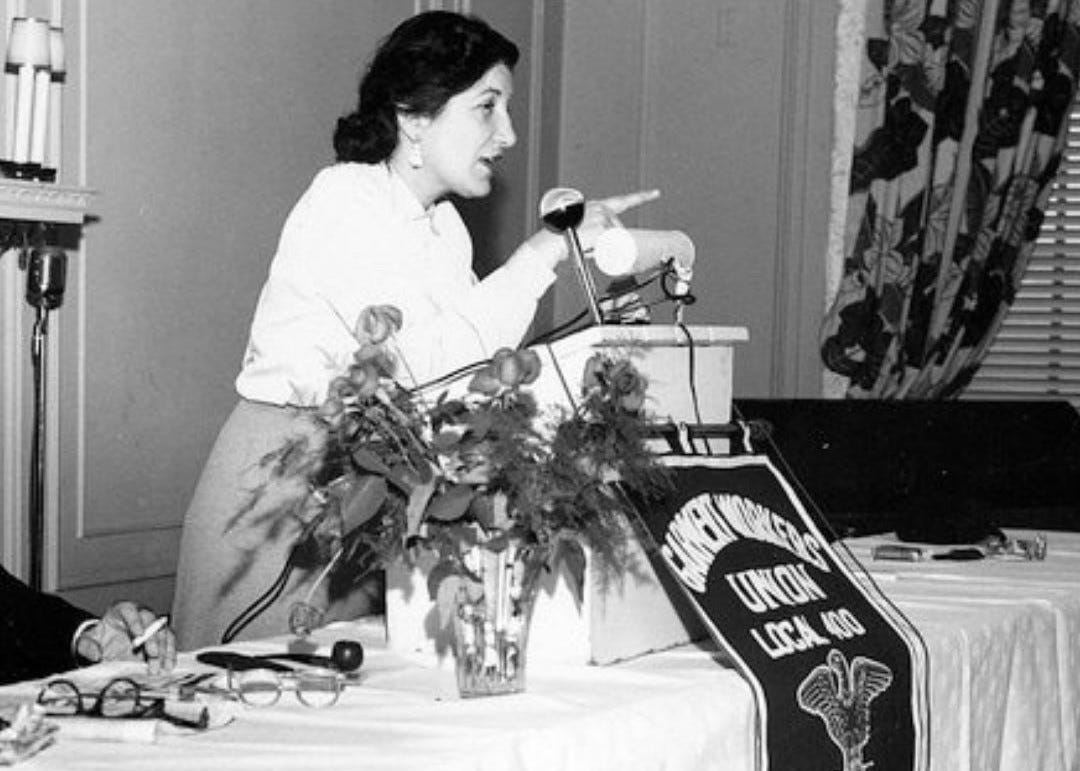
‘We did it with fear.’

Though she’s not as well known as some of the other women on here, Angela Bambace, an organizer for the International Ladies Garment Worker’s Union who started unionizing her fellow shirtwaist factory workers at age 18, is a personal hero of mine, along with her sister Maria. Angela was known to punch strikebreakers in the nose, which was pretty freaking badass.

She also left her husband and a traditional marriage in which she was confined to “making tomato sauce and homemade gnocchi” — and lost her parental rights in doing so, because back then, women didn’t have any — to fight for workers’ rights on the front lines. She was the first woman woman elected Vice-President of the ILGWU, which previously only had male leadership, where she worked from 1936 until 1972.

May Chen

’The Chinatown community then had more and more small garment factories and the Chinese employers thought they could play on ethnic loyalties to get the workers to turn away from the union. They were very, very badly mistaken.’ 

May Chen, also of the International Ladies Garment Worker’s Union, led the New York Chinatown strike of 1982 — 20,000 workers strong and one of the largest strikes in American history. As a result of the strike, employers cut back on wage cuts, gave workers time off for holidays and hired bilingual interpreters in order to accommodate the needs of immigrant workers.

Lucy Randolph Mason
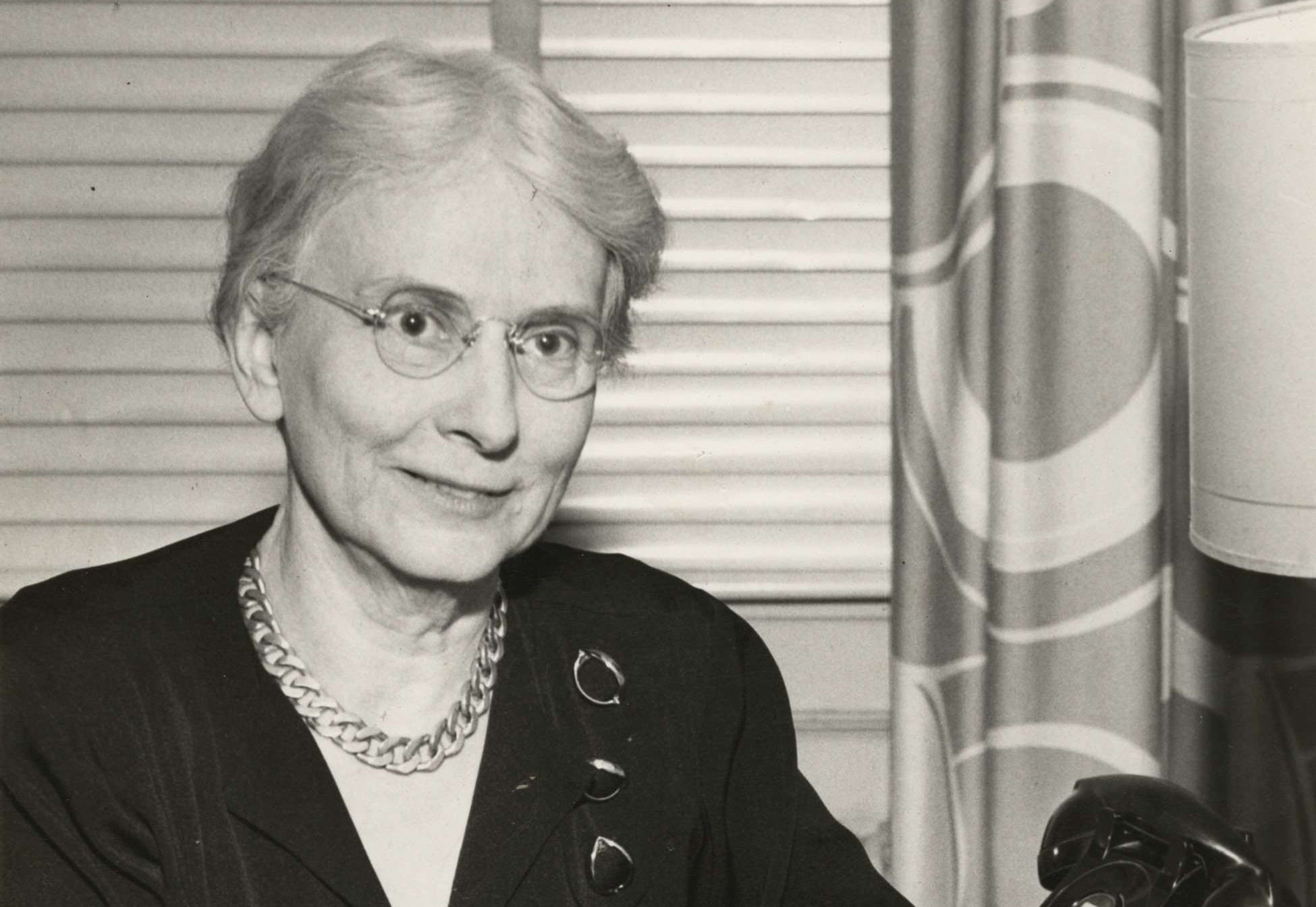
‘When I came South I had no idea of the frequency of attacks on people peacefully pursuing legitimate purposes, I am appalled at the disregard of the most common civil rights and the dangers of bodily harm to which organizers often are exposed”‘

Lucy Randolph Mason was an interesting one. She was a well-off Southern lady from Virginia, related to George Mason (author of the Virginia Declaration of Rights), Supreme Court Justice John Marshall, and, uh, Robert E. Lee. So, you know, you might have an idea in your head about what her deal might be. And you would be so wrong. 

So, despite being from this very fancy family, Lucy goes and gets a job as a secretary for the YWCA at 20. In 1918, she gets into the whole suffragette thing. Women get the vote, but Lucy’s not done. She starts organizing for labor rights and integration and ending white supremacy in the South. She organizes interfaith, integrated unions in the South, which you can imagine was a pretty big deal at that time. She does it through the YWCA. She writes a pamphlet telling consumers to boycott companies that don’t treat their workers well. Eventually, she becomes the CIO’s ambassador to the South and spends the next 16 years of her life going to all these small towns where bad things would happen to anyone who tried to unionize, and explaining workers’ rights and why integration is good and racism is bad to pretty much anyone with any kind of power. Neat!

Emma Goldman
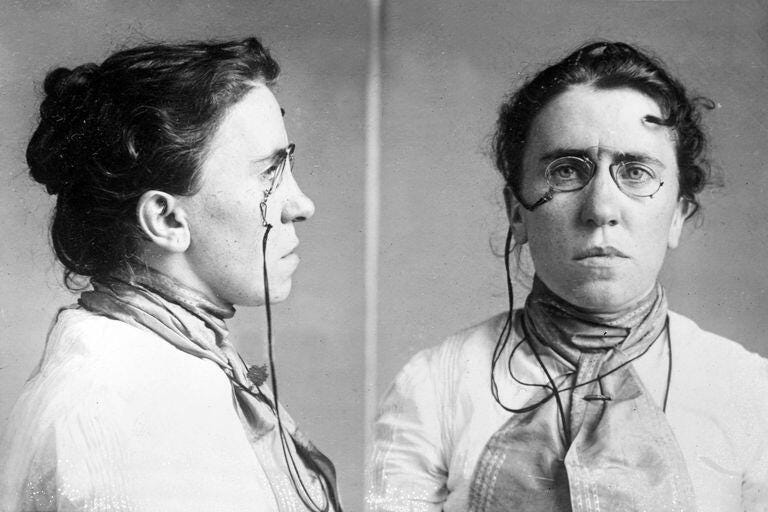
‘Ask for work, if they do not give you work, ask for bread, if they will not give you bread, steal bread.’

 Though not a union organizer by trade, anarcha-feminist Emma Goldman’s advocacy for workers’ rights and human dignity and freedom empowered workers and organizers throughout the country, and motivated them to stand up for their own rights. She was considered the most dangerous woman in America for a reason.

She was a feminist, an anti-racist, an atheist, an advocate of free love, an opposer of the institution of marriage and — very unusually for the time (she pretty much started right after Haymarket, which was 1886, and continued until her death in 1940) — one of the first advocates of gay rights.

“It is a tragedy, I feel, that people of a different sexual type are caught in a world which shows so little understanding for homosexuals and is so crassly indifferent to the various gradations and variations of gender and their great significance in life.”

I could probably go on about Emma Goldman forever, but I have to get to other people and also this is not my sophomore year in college.

Rosina Tucker
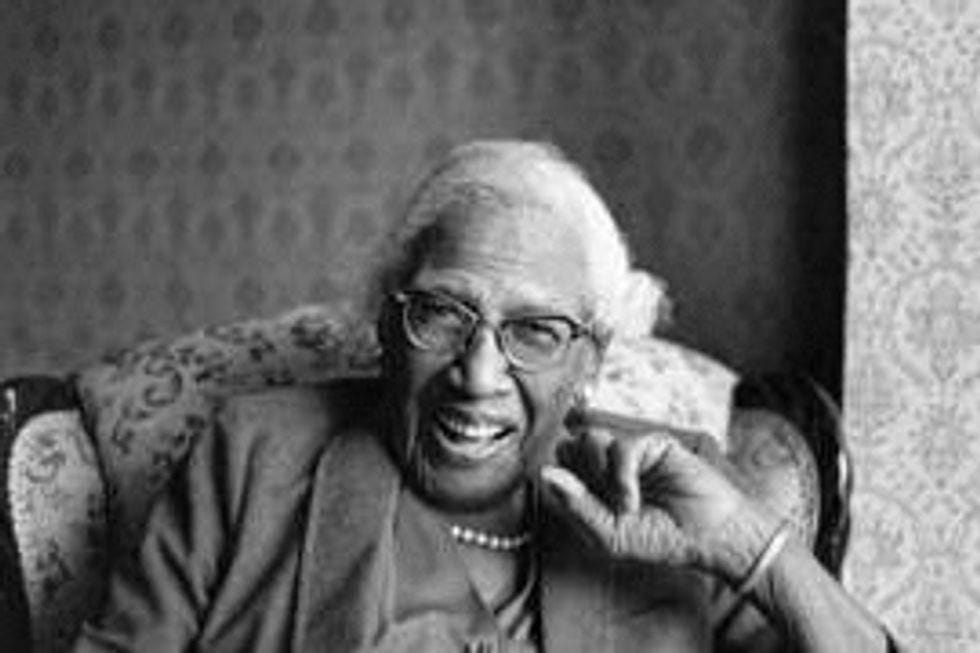
 ‘I looked him right in the eye and banged on his desk and told him I was not employed by the Pullman company and that my husband had nothing to do with any activity I was engaged in … I said, ‘I want you to take care of this situation or I will be back.’ He must have been afraid … because a black woman didn’t speak to a white man in this manner. My husband was put back on his run.’

Rosina Tucker is best-known for helping to organize the first Black labor union, The Brotherhood of Sleeping Car Porters, started by A. Philip Randolph in 1925. A Brotherhood? But she was a woman, you say! Well, the Pullman porters wanted to organize, but they were afraid of losing their jobs — with good reason, because their bosses kept trying to fire them for trying to unionize. So Rosina and other wives of the porters got together and started the Ladies Auxiliary of the Brotherhood of Sleeping Car Porters in order to raise funds to start the union.

In 1963, along with A. Philip Randolph of the BSCP, she helped organize the March on Washington for Jobs and Freedom, and continued to be active in civil rights and labor rights until she passed away in 1987, at the age of 105.

The women on this list, along with the many others who also fought for labor rights in this country and others, didn’t only fight a fight for workers. They fought a feminist fight, they fought for civil rights, they fought for human rights — they understood the interconnectedness of it all, they understood that without economic justice there is no social justice and without social justice there is no economic justice. They understood the way that the labor movement could be used as a catalyst for making social change possible at a time when they didn’t have any political support or power — and that’s a thing we could all do well to remember ourselves.

Happy Labor Day!

3 for Science on Labor Day

so I guess you may read them tomorrow, if you like. 😎

First, a tiny, acrobatic bug:

Biologists have studied an extreme gymnast of the animal kingdom, watching as it moves so quickly it appears to all but vanish.

The globular springtail (Dicyrtomina minuta) is a small but mighty bug that can backflip more than 60 times higher and 100 times longer than its own body length.

This tiny bug grows to only a couple of millimetres and can’t sting, bite, or fly its way out of danger. Instead, its preferred method of avoiding predators is to flip out so forcefully it seems to disappear! (snip-More on the page, with photos)

Next, a possible source of new antibiotics (and this brought Ten Bears to my mind, for some reason):

A study has found promising antibiotic candidates inside bacteria harvested from the deep Arctic Sea.

The research, by Finnish and Norwegian researchers, is published in Frontiers in Microbiology.

Antibiotic discovery has slowed in recent decades, which has exacerbated the risks of antibiotic resistance.

Most licensed antibiotics – about 70% – have been derived from a type of soil-dwelling bacteria called actinobacteria.

“For example, members of the Streptomyces genus produce several secondary metabolites, including clinically useful antibiotics such as tetracyclines, aminoglycocides and macrolides,” says corresponding author Dr Päivi Tammela, a professor at the University of Helsinki, Finland.

But soil isn’t the only place these bacteria can be found.

“Marine actinobacteria found in the sea, on the seafloor, or within the microbiome of marine organisms, have received far less attention as possible sources of antibiotics,” says Tammela. (snip-More on the page)

Then, an analysis for coal phase-out in Asia:

Countries in the Asia-Pacific region account for 76% of the world’s thermal coal power generation, and many of these plants will need to retire early to meet global emissions targets.

But according to a new analysis, it’s possible to phase these coal plants out and transition to renewable energy while investors still make money.

The study, done by Australian, Singaporean and Chinese researchers, is published in Energy Policy.

“There is a drive and interest from a number of different investors like the Asian Development Bank, but also private sector investors, to finance the early retirement coal fired power plants,” lead author Professor Christoph Nedopil Wang, director of Griffith University’s Asia Institute, tells Cosmos.

Nedopil and colleagues looked specifically at 6 Chinese-sponsored coal-fired power plants in Vietnam and Pakistan.

“With investors wanting to invest in, and ideally also providing lower cost financing for, green projects, refinancing of these coal fired power plants becomes possible at a lower cost,” says Nedopil.

The researchers modelled the future performance of these stations under a variety of financing and geoeconomic scenarios.

“That brought us to the conclusion that, depending on the age of the coal-fired power plant, we can retire these plants earlier than currently envisaged, while reducing the financing cost and therefore increasing enterprise value,” says Nedopil. (snip-More on the page)

At the Border, a Shelter By — And For — Muslim Women

I think this fits in as information relating to marginalized people. It is from a magazine that is religious, but it’s not pushy; I think everyone can read this article without feeling proselytized. It struck me as important, and overlooked. -A

By Ken Chitwood

Anyone crossing the U.S.-Mexico border faces a journey fraught with violence and danger.

But for women and children, that journey is even more treacherous. Not only are many fleeing violence at home — including gender-based violence — they also experience higher rates of violence en route. Torture, mutilation, sexual violence, femicide,disappearances, and additional health complications are common occurrences for female migrants making their way north.

That danger is amplified for the thousands of girls living in makeshift camps and tent cities along the U.S.-Mexico border without protection or accompanying support. According to the Washington, D.C.-based Kids In Need of Defense, “[u]naccompanied children are especially vulnerable to sexual violence, human trafficking, and exploitation by cartels and other criminal groups.”

Over the last few years, a group of Muslim women has stepped in to meet their needs in unique ways. Albergue Assabil (“the Shelter of the Path”), the first Muslim shelter along the U.S.-Mexico border, has been in operation since June 2022 under the leadership of Sonia Tinoco García, founder and president of the Latina Muslim Foundation. According to staff, the shelter served nearly 3,000 migrants in its first two years of operation. Many of those migrants have been women, attracted to the shelter because of its separate men’s and women’s facilities and the fact that Albergue Assabil is a female-led shelter.

And it’s not only Muslim women finding sanctuary under the shade of the shelter’s blue dome; there have also been other female immigrants looking to García and her team for assistance as they make the perilous journey north.

“A group of Muslim ladies”

When García first headed to the U.S.-Mexico border to help others in 2014, her goal was simple: to help women, especially mothers and unaccompanied children, in their attempts to claim asylum or start a new life in the United States. Having immigrated to the U.S. herself in the 1990s, García knew what it was like.

She also knew the statistics.

Though the share has fluctuated in recent decades, immigrant women and girls make up at least half of all migrants and asylum seekers, according to figures from the Migration Policy Institute. Women and girls made up a total of 53 percent of the immigrant population in 1980, 51 percent in 1990, 50 percent in 2000, and 51 percent in 2010 and 2022.

Given the scale, García gathered what she called “a group of Muslim ladies” from her mosque community in San Diego. Each had a profound understanding of the situation female immigrants were facing.

Angie Gely, who works in the office at Albergue Assabil, said being an immigrant who was deported back to Mexico and is now living in Tijuana, helps her understand what women in the shelter are going through — and what they face once they arrive in the U.S.

 “Our families crossed the border to the U.S. too,” Gely said. “We can relate.”

Driven by their own past experiences and a deep desire to help female immigrants, García said she and other Muslim women started volunteering in Tijuana shelters, bringing food and clothing for people regardless of their religious, social, and cultural background.

Along the way, García and her “Muslim ladies” started noticing how many Muslims were mixed in with the larger population of immigrants and deportees. “It got my attention when I saw some women standing at the border with hijab,” García said. “I talked to them and discovered they were from Somalia, trying to go to the U.S. or Canada.”

The more time she spent in Tijuana, the more Muslims she saw arriving. At shelter after shelter, meanwhile, she witnessed staff too overwhelmed to cater to Muslim migrants’ unique needs.

“There were Muslims who didn’t feel safe in the shelters, because they were being discriminated against or questioned because of their faith,” Gely said. As a result, some would avoid the shelters altogether, struggling to find their own way on the streets or seeking help from Muslims at Centro Islámico de Baja — Tijuana’s only mosque at the time.

“The shelters didn’t have the time or money,” García said, “to provide halal food, to provide adequate space for prayer, or even understand their situations are different from those of migrants from Central America or elsewhere.”

Sonia Tinoco García, pictured, founded Albergue Assabil in 2022, with help of other Muslim women from San Diego, Calif., and Tijuana, Mexico. Ken Chitwood/Sojourners.

García and the others did what they could to serve the immigrants sent their way — covering the cost of hotel rooms, providing home-cooked halal meals, or connecting them to the legal aid they so desperately needed, in a language they could communicate in. Overwhelmed, they turned to their mosque communities in San Diego and Orange counties to raise funds and procure translators who could speak Arabic or Urdu, Farsi or French, and many dialects in between.

But the need continued to increase. More and more Muslim immigrants were making their way to Tijuana, and the “ladies” could only do so much. Shelters were overwhelmed, and García said she was scrambling to field the many calls.

That’s why, in 2017, they decided to do more. Founding a nonprofit organization — the Latina Muslim Foundation — they raised more than $200,000 (USD) to construct a purpose-built Muslim shelter. Situated in the border city’s Zona Norte neighborhood, the shelter features separate men’s and women’s facilities, a prayer area, halal food, Quran classes, and legal services to assist migrants.

The hope, García said, was to provide a humane and helpful place for Muslim migrants to land in Tijuana. They are there to help transform the border from a topography of inhumanity into a place of dignity and opportunity, García said.

A growing number of Mexican Muslim women

García said that as a child, she always dreamed of helping people. “I wanted to become a surgeon, but do surgery for free, because people need it to save their lives,” García said. “Or an attorney who did pro bono work, to help families who don’t have justice.”

García grew up in a large family in a village of 200 people near La Paz, in the very south of the Baja California peninsula. She did not know whether such dreams would — or could — come true. “We had a simple lifestyle. We were not rich people,” she said. “Because we were 11 siblings, not everyone got education.”

García was one of the lucky ones able to finish high school. She moved to Ensenada — an hour and a half south of Tijuana — and started working with a local orthodontist serving medical tourists from the U.S. When she was 21, she met a man named Abu Hamza, a medical tourist from Lebanon living in Los Angeles. Abu Hamza spoke no Spanish at the time, and she did not speak English, but they communicated with books and through other people. Twenty days after meeting, they were married.

García had grown up Catholic and knew little of Islam. But when she saw Abu Hamza, she said, “I saw Islam in him.” After moving to the Los Angeles area with Abu Hamza, she learned English and Islam at the same time.

García joined the growing ranks of Latina converts to Islam. The first Latina and Latino converts can be identified as far back as the 1920s; others converted in the 1960s and ’70s as part of Black Muslim movements such as the Nation of Islam and the Five Percent Nation. In 2011, 6 percent of Muslim Americans identified as Hispanic, according to the Pew Research Center; by 2017, it was 8 percent. The vast majority of this cohort of Hispanic American Muslims are women, many of them from Mexico or having Mexican heritage.

Muslims remain a small minority in Mexico, said Arely Medina, a professor at the University of Guadalajara. There are multiple small groups and communities made up of both migrants and individuals native to Mexico in the country’s interior, all of which have a relatively recent history, Medina said. “Thus, one cannot speak of a ‘Mexican Islam’ per se,” she said, “even though Muslims have a history here stretching back to the conquest of the Americas and continuing with a series of Arab immigrations in the 19th and 20th centuries.”

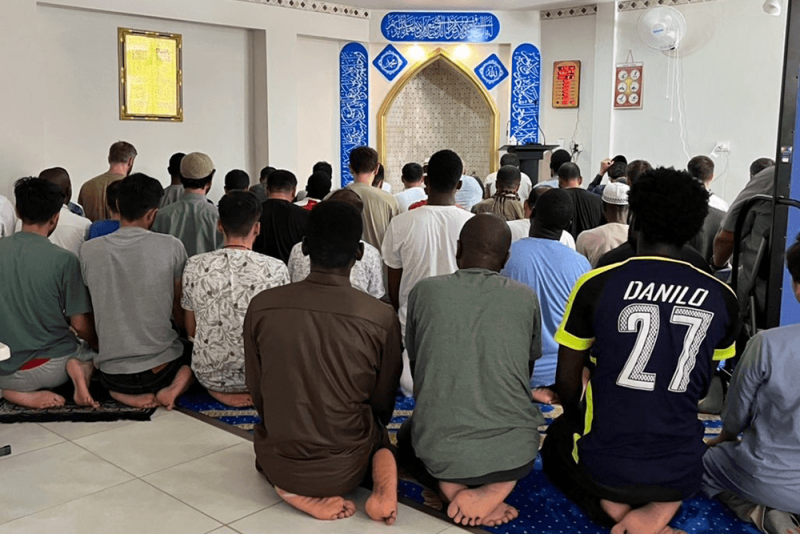
Migrants from numerous nations gather for Friday prayers inside the Albergue Assabil’s musallah, or prayer room. Ken Chitwood/Sojourners

According to Medina and other experts, most Mexican converts to Islam are women. Among them are sizable numbers of female Muslim immigrants from places such as Egypt, Morocco, Syria, Pakistan, Ghana, and Turkey who have made Mexico home. “Some hope to reach the United States and are concentrated along the northern border,” Medina said. “Others concentrate in places like Mexico City, Guadalajara, or Monterrey.”

It is difficult, if not impossible, to generalize these women’s motivations, plans, or situations, Medina said. As is true of those staying at Albergue Assabil, “There is not a single story,” she said. “Each one carries a narrative.”

Because these women face a variety of challenges — such as wearing the veil in a cultural context where Islam is not a prominent reference point or searching for a sense of freedom and security in the face of domestic violence and harassment — Medina said they find in each other a sense of solidarity. “They are in search of a better life,” she said. As Europe, the United Kingdom, and even the U.S. are experienced as less welcoming, Medina said, “Latin America is now seen as a place of possible openness.”

Empowered to help others

Whether local converts or newcomers from elsewhere, Muslim women have carved out their own spaces in Mexico, including the Albergue Assabil shelter and the Nur Ashki Jerrahi Sufi order in Mexico City, which is headed by a woman — Shaykha Amina Teslima.

García often reminds donors, partners, volunteers, journalists, and authorities that Albergue Assabil is a shelter run by women. And not just any women, but Muslim women.

That, she said, makes a difference.

“We found that Islam gives women rights; it gave us empowerment,” she said of her and the other women running the show at Albergue Assabil. “I could do whatever I wanted to do — more than what I could do with my own culture or my own religion before,” she said. “Islam says that women can go study; men cannot tell you no. Men know this. My husband knows he doesn’t own me. He is my support.”

Indeed, her husband, Abu Hamza, is supportive of García’s work. He is often seen around the shelter too, pulling up on a motorcycle with García, bringing in donations, making phone calls, and generally doing whatever needs to be done. When asked about the shelter, he insistently points to his wife. “She knows better than me,” he said.

García said part of the shelter’s work is passing their own empowerment on to women who arrive at their gates. “In the shelter, when women come, we give them tools to be able to continue their education: English, Spanish, computers, cooking,” she said. “We want to give them the basics so that they are not reliant on men. In the time they stay in the shelter, we teach them as much as we can so that they can live for themselves.”

Increasingly, said Gely, that means more and more women are finding their way to Albergue Assabil — Muslim and non-Muslim. “Just yesterday, three ladies from Russia came here looking for shelter,” Gely said. “They’re not Muslim, no. But they hear how nice it is and want to come. Of course we take them in.”

One of them is Amie. Amie has struggled getting an appointment through the U.S. Customs and Border Protection app CBP One. She has spent three months in Mexico so far, arriving at Albergue Assabil six weeks after bouncing from shelter to shelter in Tijuana. Sojourners is withholding Amie’s last name, at her request, to protect her immigration status.

“They’ve been so kind to me,” she said, “out on the street, in other shelters, I feared for my life, worried I would be tortured, abused, or killed. This shelter is the only place I feel I could survive.”

As we talk, two more young Russian women walk through the front doors. They too are looking for shelter. Amie tells them to take a seat. Gely or García will be here soon, she says.

“They’ll take care of you,” Amie said. “They always do.”

https://sojo.net/articles/news/border-shelter-and-muslim-women

Could courthouses provide the blueprint for safe transgender bathrooms?

Originally published by The 19th

Member support made it possible for us to write this seriesDonate to our nonprofit newsroom today to support independent journalism that represents you.

Gunner Scott had a simple solution to making sure he had a trans-friendly bathroom when he served as a juror in Boston: Every day at lunch he left the building. 

The year was 2009 and the Suffolk County Superior Court where Scott served as a juror for five days didn’t have a gender-neutral restroom. So, on his break, Scott walked up the street to his office. 

“I heard one too many stories,” said Scott, who is a longtime transgender advocate. 

The stories were about trans people being assaulted and harassed in bathrooms. Scott was not confident he could pass as male in a men’s room in 2009. More than that, his activism had made him a known public figure in the city. He feared someone would recognize him and target him for being trans and using a men’s restroom. 

But over the years, as states have started to block trans people from using bathrooms and participating in other areas of public life, courtrooms have moved in the opposite direction by trying to make facilities available to people of all genders, experts say. 

That movement is not only key to providing a roadmap for inclusivity for the nation. It also ensures that juries reflect the general population and that everyone gets the opportunity — or burden, in some cases — of serving on them.

Courtrooms may illustrate practical solutions to access as the nation grapples with increasing trans visibility and more traditional ideas about the safety and comfort of a larger public.

The issue of transgender accessibility in courts is a chapter in a longstanding fight for civil rights for LGBTQ+ Americans, prime targets of far-right legislation and discourse these days. The Equality Act, which bars discrimination on the basis of sexual orientation and gender identity, was first introduced to Congress 50 years ago but has never been passed into law. While its first draft only protected gay Americans, subsequent iterations have aimed to shield trans Americans from bias. 

The Equality Act specifically mentions jury selection. The bill bans lawyers from striking queer jurors because they are LGBTQ+. Last year, Sen. Jeanne Shaheen of New Hampshire introduced a standalone bill to the same effect. Reps. Becca Balint of Vermont and Lizzie Fletcher of Texas are sponsoring the measure in the House, where it is unlikely to pass, at least while Republicans are the majority.

Balint told The 19th that courtroom accessibility is key to ensuring that jury pools reflect the makeup of the country.

“We need every American who is eligible to serve on a jury to be in the jury pool,” Balint said. “Conversations change concerning LGBTQ people when LGBTQ people are in the room, and when you exclude people from the judicial process, it makes the system inherently less free and less fair.”

Jury service and the belief that jurors should reflect the nation’s diversity is a closely held American belief today. Historically, though, juries were defined by their exclusivity. For centuries, women were banned or discouraged from jury duty because they were believed to be too fragile to handle criminal trials or deemed “the center of home and family life,” as stated in a 1961 Supreme Court ruling. Fourteen years later, the court ruled in Taylor v. Louisiana that systematically excluding them violated a defendant’s rights to a representative jury. But it wasn’t until 1994 that a decision around the Equal Protection Clause of the 14th Amendment specifically prohibited using gender to strike potential jurors.

Black Americans were barred from service due to slavery and after its abolition, discrimination. Even after the Civil Rights Act of 1875, which prohibited race-based jury selection, many states failed to enforce anti-discrimination protections, leading to lopsided convictions against people of color, a legacy that continues. 

LGBTQ+ advocates have long argued that LGBTQ+ Americans, who face increased rates of hate violence and discrimination, also need federal protections to safeguard their presence in juries. 

In legally recognizing trans people, states have faced increasing pressure to make government facilities accessible to them. In 2015, then-Boston Mayor Marty Walsh made headlines when he signed an executive order requiring gender-neutral bathrooms at City Hall. 

Many courthouses have also installed gender-neutral options or found workarounds that allow trans and nonbinary people to safely use the court, say experts. The difference is that the change has largely gone unnoticed. 

Ezra Young, a constitutional scholar and professor in New York, said he has seen even the most conservative courts put in extra effort to allow trans people bathroom access.

“I think one of the benefits of a judiciary is certain things about the very administration of the buildings aren’t really politicized,” Young said. “It’s under presumption that courts need to be generally accessible to people.”

Quite simply, the judicial system has no choice. 

“Courts have a constitutional responsibility to make sure that courts are generally accessible to the public and specifically to people who need to use the court,” Young added. 

Bathrooms have long been contested public spaces for marginalized groups, and courtrooms have not been immune. That means transgender access is not the first challenge facing court facility managers. 

“Some of them didn’t even have women’s bathrooms until quite recently. Usually when reconstruction for bathrooms is done, they try to make sure things are accessible,” Young said.

Sandra Day O’Connor, the first woman to serve on the Supreme Court, encountered that problem in 1981 when she was sworn in. 

 “[The bathroom] was a long way down the hallway, so it wouldn’t have been convenient,” she told NPR in 2013. “And we had to find something in the way of a restroom that was near the courtroom that I would be able to use when we were back there or in the room where we discussed cases.”

Government buildings have undergone similar upgrades to make bathrooms accessible for people with disabilities since the Americans with Disabilities Act of 1990. Courthouses also reconfigured racially divided bathrooms and courtrooms in the wake of desegregation during the civil rights movement.

Now, all-gender access is the next goal for many municipalities. Nearly half of states (22 plus Washington D.C.) allow residents to opt for “X” gender markers on their state ID cards, and the federal government has been issuing “X” gender markers on passports for two years now. Just three states bar trans people from updating their IDs post-transition.

In Los Angeles County, officials have worked to ensure that every courthouse has a gender-neutral bathroom, according to a spokesperson for the superior court of the county.

“The Court supports inclusivity and seeks to expand access to justice by identifying and addressing barriers — substantive, procedural, physical and in appearance —that may inhibit full participation in the judicial process,” the court said in a statement.

In Cook County, which encompasses Chicago and has one of the world’s largest judicial systems, officials are engaged in research and design plans to add gender-neutral bathrooms to all of its courts. Such facilities already exist at the main courthouses for criminal court, domestic violence, juvenile cases and in the city branch courts. 

Even today, Scott worries about violence and harassment in public restrooms. According to the 2015 U.S. Transgender Survey, 60 percent of trans people avoided using a public bathroom for fear of discrimination. 

While trans people have gained acceptance in many areas of public life, data shows that discrimination remains high or has increased from a decade ago. A more recent survey in 2022 found that 47 percent of trans Americans considered fleeing their states because anti-trans laws, including bathroom bans, had made their communities less safe.

But Young, who is also transgender, hopes that courts today will provide visitors with a different experience than the one Scott had 15 years ago. For the most part, Young has had positive experiences as a trans person in courts. His transgender clients have, too. 

That doesn’t mean that every court is perfect, he adds. Many still won’t have a gender-neutral bathroom, and often visitors will need to ask a judge for access. But Young thinks that most courts will aim to provide safety for trans people.

“They want to make sure that people can be in court,” Young said. That doesn’t necessarily mean that they might agree with the litigant just because of who they are, but they really do care about making sure that litigants and the broader public understand that they’re part of the overarching community.”

Science on Tuesday

Chalk-coated fabrics could make clothes even cooler

August 26, 2024 Ellen Phiddian

US researchers have developed a chalk-based coating that can reduce the temperature under fabric by roughly 5°C.

The researchers say their environmentally benign substance could be used to coat any type of fabric and turn it into a radiative cooling textile.

“We see a true cooling effect,” says Evan Patamia, a graduate student at the University of Massachusetts Amherst.

“What is underneath the sample feels colder than standing in the shade.”

Patamia presented the team’s invention at the American Chemical Society’s 2024 Fall Meeting earlier this week.

Substances that can both reflect sunlight, and allow body heat to escape, are well-known to chemists. But they generally require costly or environmentally dangerous materials to make.

“Can we develop a textile coating that does the same thing using natural or environmentally benign materials?” summarises chemist Trisha Andrew, also at Amherst, of the work done by her and her colleagues.

Inspired by crushed limestone, which is used to cool buildings, the researchers tried solutions of calcium carbonate – the main component in limestone and chalk – as well as barium sulphate.

They used squares of fabric treated with a process called chemical vapour deposition, which added a layer of a carbon-based polymer onto the textiles.

When dipped in the solutions, the fabrics built up a chalky matte layer of crystals which could reflect UV and infrared light.

They tested the treated fabrics outside on a warm afternoon, and air underneath them was about 5°C cooler than the ambient temperature, and roughly 9°C cooler than air under untreated fabrics.

The coating is also resistant to laundry detergents.

“What makes our technique unique is that we can do this on nearly any commercially available fabric and turn it into something that can keep people cool,” says Patamia.

“Without any power input, we’re able to reduce how hot a person feels, which could be a valuable resource where people are struggling to stay cool in extremely hot environments.”

Andrew is now part of a startup aiming to test the process on larger bolts of fabric, to see if it can be scaled to industry.

https://cosmosmagazine.com/science/chemistry/chalk-coating-fabric-cool/

Still haven’t seen that coffee, but this is a most excellent blog post:

News from Janet!

Dr. AI Will See You Now

The integration of artificial intelligence into public health could have revolutionary implications for the global south—if only it can get online.

(Whew! It’s a long one. Maybe read it in part, then come back and read some more. Or read it all at once, it’s not insurmountable. I’m interested what people here think about this.)

By: Dr. Ebele Mogo  August 21, 2024

The transformative potential of digital connectivity became a global game changer more than two decades ago. Mobile phones reshaped telecommunications, enabling connectivity even in homes without landlines. Digital health quickly leveraged these innovations, making remote patient-doctor communication, digital payments, care coordination, and online peer support networks possible.

Artificial intelligence (AI) has undoubtedly sparked another phase of digital innovation. Although the field’s origins date to the mid-twentieth century, recent advancements in large language models (LLMs) have thrust it into the spotlight. Reflecting this growing relevance, the World Health Organization (WHO) dedicated a session at its World Health Assembly (WHA) in early 2024 to AI’s implications for global health, convening regional, national, academic, and international health organizations and actors to examine this matter.

AI Applications in Global Health

The literature generally presents four key use cases for artificial intelligence in health in low- and middle-income countries: disease diagnosis, risk assessment, outbreak preparation and response, and planning and policy-making. As the 2021 WHO report on AI in healthcare indicates, several AI applications are already in use or in development for diagnosis and assessment, such as in India for rapidly creating encephalograms in six minutes; in Rwanda and Pakistan for patient navigation; in Uganda, for malaria diagnosis; and in Nigeria for monitoring vital signs in mothers and children, and detecting infant asphyxia. On a broader scale, the advancement of DeepMind’s AlphaFold system in predicting the three-dimensional shape of proteins holds promise for enhancing our understanding of diseases and accelerating treatments.

Use cases in outbreak surveillance and response are also prominent. Google Flu Trends used search engine queries to predict influenza activity, but its overestimation of flu prevalence demonstrated the need for continuous algorithm updates. Tools like HealthMap have also proven valuable, detecting early signs of vaping-related lung disease and issuing an early bulletin about the novel coronavirus in Wuhan.

AI is also being used in planning and policy making, such as in South Africa where machine-learning (ML) models were used to predict how long recruited health workers’ would commit to their placements in rural communities; and in Brazil where artificial neural networks were used to create a method to geographically optimize resources based on population health needs.

Could AI Represent a Sea-Change in Global Health?

The integration of AI in public health is still evolving and being cautiously assessed in some cases, but it’s poised to transform key health functions. Evidence generation, the foundation of health policies and practices, is undergoing significant change. Traditionally, systematic reviews, a cornerstone of evidence synthesis, may take months or even years to complete. Now tools like Eppi-Reviewer use ML for more efficient screening, while platforms like Open Evidence are able to summarize existing studies rapidly. As AI becomes capable of handling technical aspects such as quality appraisal, meta-analysis, and synthesis with high rigor and fidelity, its role in evidence generation will expand. This advancement will enable more cost-effective and timely production of health guidelines, with leading bodies already creating guidelines for AI use in evidence synthesis.

Data collection and analysis are also experiencing transformative changes. AI-powered tools enable rapid analysis of both structured and unstructured data, marking a significant shift from traditional paper-based methods and conventional fieldwork. This capability has a remarkable impact on public health strategies centered on behavior change. AI can allow for the creation of highly targeted health promotion campaigns with unprecedented speed and precision. Moreover, sentiment analysis tools can assess public perceptions in real-time, enabling agile adjustments to ongoing health campaigns.

The healthcare workforce is also expected to evolve as AI-human partnerships are normalized. For instance, Hippocratic AI’s generative models can perform certain care management functions, while Google’s Med-Gemini provides real-time feedback on medical procedures, including surgeries. As they improve and are adopted by practitioners, these tools will have the potential to enhance the cost-effectiveness and precision of healthcare delivery.

As of May 2024, the FDA had authorized 882 AI- and ML-enabled medical devices. The rising volume of such AI-enabled devices as well as the rise in registered clinical trials related to their use underscores how much the field has embraced such tools.

A Changing Actor Landscape

The integration of AI in healthcare is not only transforming practices but also reshaping the landscape of global health actors. Historically, global health was a multilateral activity, dominated by international non-governmental organizations and national governments alike. The early twenty-first century saw the emergence of influential philanthropic actors like the Gates Foundation. Now, we are entering a phase where private-sector AI companies are poised to become increasingly influential in this arena.

While open-source models and government-developed AI systems exist, the predominance of private-sector AI models, such as OpenAI’s ChatGPT and Google’s Gemini, raises critical questions about data governance in global health. Unlike existing cross-national commercial influences on health such as the fast food or tobacco industries, AI systems present more nuanced concerns. For instance, if private models become integrated into existing multilateral health initiatives, how can we ensure their compliance with global health objectives? How do we address potential conflicts of interest when companies hold influence over health data and decision-making?

Regional and national guidelines are emerging to govern this evolving landscape. The European Health Data Space, discussed at the World Health Assembly, offers one such example. This initiative aims to create a single data space across the twenty-seven EU member states, empowering patients to control their health data while establishing a framework for safe data reuse and AI deployment. It also includes provisions for rigorous evaluation of high-risk AI systems in healthcare.

Similarly, the African Union recently launched its Continental AI Strategy, with a stated aim “to harness artificial intelligence to meet Africa’s development aspirations and the well-being of its people, while promoting ethical use, minimizing potential risks, and leveraging opportunities.” Monitoring measures like this as they develop will be instructive for the future deployment of AI in global health initiatives.

Building Foundational Infrastructure

Another factor to consider is that advances in AI mean little for health systems at an insufficient level of maturity. Progress in AI depends heavily on a strong foundation of digital health architecture, which encompasses secure data management, interoperability between health information systems, and comprehensive digital strategies. While most countries have digital health strategiestheir implementation varies widely, with progress in resource-limited settings often lagging. Several countries have neither sufficient health workers to regularly input data nor dependable electricity and Wi-Fi to support a transition from paper to digital records. The lack of foundational infrastructure presents a significant barrier to AI implementation.

Initiatives like the Precision Public Health Initiative, led by the Rockefeller Foundation in collaboration with the WHO, UNICEF, global health funding agencies, ministries of health, and technology companies aim to strengthen AI use in low- and middle-income countries (LMICs). With initial funding of US$100 million, it aims to extend the use of AI and data science in LMICs, providing the latest technology to under-resourced parts of the world. Initiatives like this will need to concentrate resources on foundational health system strengthening functions such as the training and supportive supervision of staff and resource management.

Ethical Implications

As AI advances, ethical considerations must keep pace. These challenges can be broadly categorized into privacy and surveillance concerns, data misuse, algorithmic biases, and issues of transparency and liability. Recent cases highlight the urgency of addressing these matters proactively.

As the research report Ethics and Governance of Artificial Intelligence for Health: WHO Guidance explains, during the COVID-19 pandemic, China’s Alipay introduced a “Health Code” that used collected data to determine exposure risks. This system, which determined individuals’ mobility based on their assigned color codes, raised concerns about privacy, rights, and the potential for mass surveillance. Another case discussed in the WHO guidance report is Dinerstein vs. Google, in which the University of Chicago shared patient records stripped of identifying information with Google to develop machine-learning tools for predicting medical events. A class action complaint was filed, alleging that records could be re-identified, threatening patient privacy.

Several cases other cases in the WHO guidance report highlight the critical issue of bias in AI systems. In Argentina, an AI system designed to predict adolescent pregnancy faced criticism when it was found to have flawed methodology and to violate the privacy of adolescents. Similarly, a study in the US revealed racial biases in an algorithm that resulted in Black patients receiving less medical attention than equally sick white patients.

Additionally, an AI technology designed to detect potentially cancerous skin lesions was trained primarily on data from lighter-toned individuals in Australia, Europe, and the US, highlighting its inadequacy for darker-skinned populations.

The “black box” nature of many AI algorithms also raises critical questions about informed consent and liability. If an AI system recommends a specific drug dosage, but the underlying algorithm is opaque to the physician, who bears responsibility for adverse outcomes?

A Case Study

To illustrate how the various considerations of AI in global health converge, the WHO’s Smart AI Resource Assistant for Health (S.A.R.A.H.) project provides a recent and relevant case study. Launched in April 2024, S.A.R.A.H. is a video-based generative AI assistant designed to address gaps in health information accessibility. Developed in partnership with Soul Machines Biological AI, this initiative represents, in the words of WHO Director-General Dr. Tedros Adhanom Ghebreyesus, “how artificial intelligence could be used in future to improve access to health information in a more interactive way.

The potential for LLMs in health promotion must be viewed against the backdrop of the burden placed on health systems. For example, Sub-Saharan Africa and South Asia have an estimated 0.2 and 0.8 doctors per 1000 people, respectively, compared to 4.3 in the European Union and 3.4 in North America. A map of travel time to health facilities reveals that it’s not uncommon to spend a day traveling to see a doctor in several regions such as North Africa. Even when they can see a doctor, more than a billion people are driven into poverty each year because of exorbitant health care costs. In such contexts, LLMs can complement the health promotion efforts currently being provided by community health workers. They can also enhance supervision and training.

S.A.R.A.H. stands out for its efforts to tailor recommendations to local contexts. For example, it offers meal recommendations based on regional dietary habits. It also uses visual emotional cues to display empathy. Like its WhatsApp-based chatbot predecessor for sharing COVID-19 information, S.A.R.A.H.’s reach will probably expand through partnerships with telecommunications providers and social networks, supporting its broad dissemination.

However, S.A.R.A.H. faces some challenges that mirror broader issues in AI for global health. Users have noticed errors in the information S.A.R.A.H. has provided; it incorrectly stated, for example, that a drug for Alzheimer’s was still in clinical trials when the drug had been approved in 2023. This highlights the critical need for AI systems to keep pace with rapidly evolving medical knowledge.

While S.A.R.A.H. offers a wider range of languages than many existing tools (including French, Russian, English, Spanish, Hindi, Portuguese, Arabic, and Chinese), this still represents only a fraction of global languages, potentially limiting its reach. Also, the success of video-based tools like S.A.R.A.H. depends on robust digital infrastructure and access to smartphones with video capabilities, which are hardly universally available.

The processing of users’ video data also raises important privacy considerations. While not yet available, the WHO has committed to making the training materials and the evidence base for S.A.R.A.H. publicly accessible, aligning with its principles on LLM use. Transparency in how S.A.R.A.H. processes and uses data will be crucial in maintaining trust and offering insights for this emerging space.

Conclusion

As noted by WHO Director-General Dr. Tedros at the WHA, AI represents a transformative advancement in global health akin to past innovations such as the introduction of vaccines, penicillin, MRI machines, and human genome mapping, all of which revolutionized the field. As reported in the above-linked 2021 WHO report on AI in healthcare, the integration of AI into health systems presents immense potential with projections noting that the top ten AI applications in health could result in an estimated US$150 billion in savings by 2026.

While the potential of AI is undeniable, the critical question remains: can it fulfill the promise of improving health outcomes worldwide? This hinges on several factors, including building foundational infrastructure, addressing ethical considerations, and effectively governing the evolving landscape of actors, which are no small feats.

Radio personality gets emotional while reading open letter to men by his female co-host

“To the good men out there, do something more.”

Jacalyn Wetzel 08.21.24

08.21.24

domestic violence; Australia violence against women; violence against women; radio host reads letter; woman's emotional plea to men

Photo credit: Canva

Radio host tears up reading open letter to men by female co-host

All across the globe, men and women have different experiences from childhood through adulthood. We are socialized differently which causes us to walk through the world differently. Since much of the world is still patriarchal, women’s lived experiences are vastly different than men’s. These different experiences can make it feel nearly impossible to understand what it feels like to move through the world as the opposite gender.

In Australia there has been an increase in violence against women. This prompted a popular radio show host, Carrie, from the “Carrie and Tommy Show” to write an open letter to men in Australia. But instead of reading it herself, she asked her co-host, Tommy to read her words.

“I wondered whether it’s time for you guys to stand up and speak up and speak loudly. And I think sometimes men don’t think about what it’s like to walk in the shoes of a woman. So I’m thinking if you read out the thoughts that I wrote down. I don’t know if it might mean more people will listen or if it might give a different perspective of what it feels like to be a woman in this country at the moment,” Carrie says to her co-host.

Tommy immediately obliges Carrie’s request and begins to read the letter. The co-host doesn’t make it too far into the letter before beginning to look visibly uncomfortable and before long he’s choking back tears.

“Not only do we have to sleep in fear of what possible man outside, or the man inside, or the taxi driver, the Uber driver, a former partner, a current partner, a man we’ve never met, we now have to be the ones to fix the issue too. No not all men are monsters but we live in fear of the ones who are. We change our behaviors for the bad men not the good ones because the risk is too high for us not to,” Tommy reads while attempting to hold back emotions.

The open letter is raw and full of struggles women face on a daily basis. Hearing it read by a man made some commenters feel appreciative of the way the two co-hosts used their platform to spread the message as well as being thankful that Tommy agree to read the letter.

“Thank you for using your platform to raise awareness of the severity of this issue,” someone writes.

“Extremely powerful.. I wish I had been more vocal… I wish I had left sooner, I wish I had him reported.… I wish a lot of things. I was scared, but I am alive.. and I will always protect and teach my daughters moving forward. Thank you for putting such a powerful message out there,” another person shares.

Turns out this moment was an amazing teaching moment for parents of boys, “my 14 year old son was in silence and almost in tears listening to your words. We had a fabulous conversation afterwards. Teaching our boys now, is such an important part.”

One woman is joining the chorus of asking the good men to help women advocate, “Carrie hit the nail on the head. I love the idea of having men we trust speaking for us to help us advocate even further. Us women worry every single day, multiple times during the day for our safety, without even realizing we’re doing it. Lock the car as soon as you get in it. Always making sure you’re not being followed. So so so many things we do for our safety that most men don’t even think about, ever. This video is so important.”

https://www.upworthy.com/violence-against-women-open-letter

Peace & Justice History for 8/20:

August 20, 1619
The first enslaved Africans brought to North America arrived in Jamestown, Virginia, aboard a Dutch ship.
________________________________________________________
August 20, 1964

A nearly $1 billion (about $5 billion in current dollars) anti-poverty measure, the Economic Opportunity Act, which created Head Start, VISTA (Volunteers In Service To America), and other programs that became part of the “War on Poverty,” was signed into law by President Lyndon Johnson.


Sargent Shriver & LBJ
Sargent Shriver, the first director of the Peace Corps, drafted the legislation and became director of the Office of Equal Opportunity which implemented the new law. The “Great Society” 

https://www.peacebuttons.info/E-News/peacehistoryaugust.htm#august20