Jesse Jackson Tribute From “The Nation”

Jesse Jackson Gave Peace a Chance

The iconic civil rights leader, who has died at 84, made anti-war and pro-diplomacy politics central to his presidential bids and his lifelong activism.
John Nichols

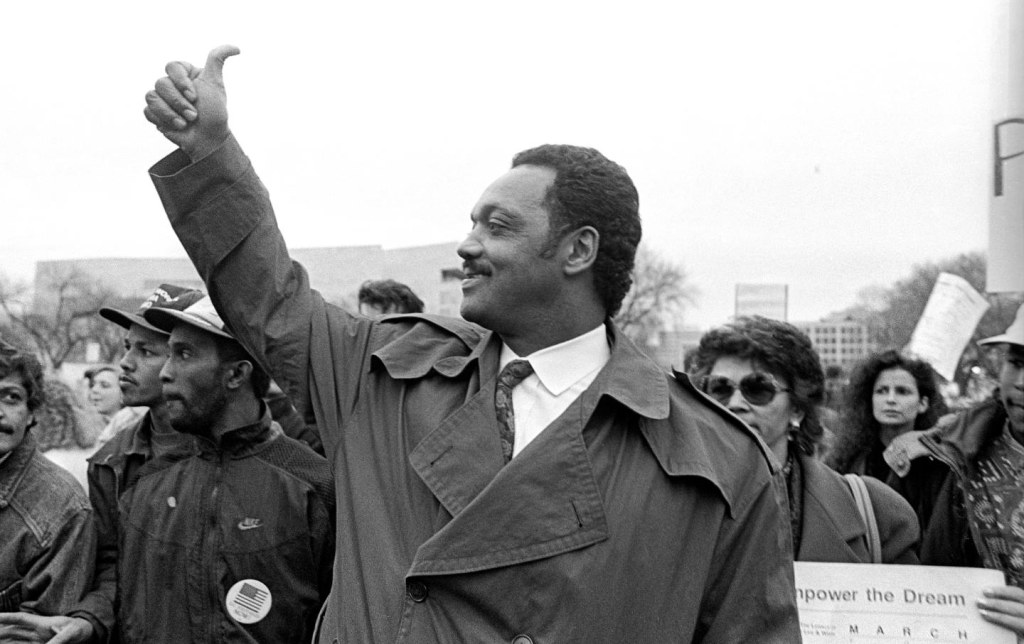
Jesse Jackson at a rally against the Gulf War in Washington, DC, on January 18, 1991.
(Ricky Flores / Getty Images)

he Rev. Jesse Jackson Jr., the iconic champion of racial, economic, and social justice whose work as a young aide to the Rev. Martin Luther King Jr. began a public life that would eventually see him mount a pair of transformative presidential bids, died Tuesday morning at age 84.

Jackson’s legacy is so rich, and extends across so many generations and struggles, that it cannot be contained in one reflection. He was, as the Rev. Al Sharpton said Tuesday, “a movement unto himself.”

Over seven decades in the public arena, Jackson emerged as one of the most multifaceted figures in American history: a legendary civil rights leader, a knowing and caring defender of the disenfranchised, a vital advocate for voting rights and voter mobilization, a savvy media critic who recognized the importance of challenging narratives that promoted discrimination and division, an essential ally of labor unions, a reformer of the Democratic Party, a friend to struggling family farmers and urban workers alike, and a counselor to presidents and prime ministers. He was, as well, a man of deep faith, who expressed that faith in his ardent advocacy for peace.

That dedication to peace was central to both his 1984 and 1988 presidential bids, a fact that is too frequently neglected in cursory reflections on those seismic Rainbow Coalition campaigns.

Political historians recognize Minnesota Senator Eugene McCarthy and New York Senator Robert F. Kennedy as the great anti–Vietnam War candidates of the 1968 presidential campaign. George McGovern, the Democratic presidential nominee in 1972, is often recalled as the most ardent foe of a US military intervention to be nominated by a major American political party since Democrats ran William Jennings Bryan in 1900. Former Vermont governor Howard Dean and former Ohio representative Dennis Kucinich are remembered for seeking the Democratic presidential nod in 2004 as sharp critics of the Iraq War. Barack Obama’s prescient opposition to the Bush-Cheney administration’s war of choice, which he voiced as early as 2002, did much to advance his successful bid for the presidency in 2008. And Vermont Senator Bernie Sanders, whose 2020 presidential bid Jackson supported, reframed foreign policy debates by explicitly rejecting the elite consensus about the US role in the Middle East and so many other parts of the world.

Jackson’s two 1980s campaigns deserve a key place in this proud history—both because they were uniquely dynamic and because they had a profound and lasting impact on progressive thinking about foreign policy. That’s one of the many reasons, when veterans of the Jackson campaigns got together, we often reflected on this too-frequently-neglected aspect of his political legacy. His was a powerful and transformative message that resonates to this day.

groundbreaking advocacy on behalf of economic, social, and racial justice at home, but Jackson also outlined what was then a fresh foreign policy vision, rooted in what has come to be known as progressive internationalism. He advanced a comprehensive—and morally coherent—argument for shifting American foreign policy away from military interventionism, nuclear brinksmanship, and Cold War posturing and toward diplomacy, cooperation, and dramatically reduced Pentagon spending.

Jackson understood precisely what was at stake, and he declared in a voice so resonant that it inspired a new generation of activists, “Peace is worth the risk!

And he was taking a risk. It is important to recall how—as Ronald Reagan was ramping up the Cold War around the world and pouring US resources into heated conflicts in El Salvador and on the border of Nicaragua—Jackson boldly broke not just with the Republican president but also with many Democrats to make opposition to war a focal point of his bid.

After it was revealed that the Central Intelligence Agency had mined three harbors in Central America, as part of an effort to destabilize the country’s left-wing government, Jackson declared in April 1984 that “the undeclared war against the people of Nicaragua…must be stopped.” In addition to criticizing the Reagan administration and the CIA, Jackson took issue with Walter Mondale and Gary Hart, the front-runners for the Democratic nomination that year, for failing to clearly deliver a message that the US must “stop our funding of terror in Nicaragua and El Salvador now and to withdraw all our troops from Central America.”

“It is not enough for Walter Mondale to call mining the harbors a clumsy and ill-conceived act,” argued Jackson. “It is not enough to imply that the main problem was not informing Congress adequately. Our foreign policy in Central America is wrong. We are standing on the wrong side of history. We are engaged in killing people, and starving people who are trying to work out their own destiny.”

Jackson’s 1984 Rainbow Coalition campaign shocked pundits by winning primaries and caucuses in key states, and by collecting roughly 20 percent of the Democratic primary vote. Jackson also made a historic trip to Central America and the Caribbean, where he met with regional leaders—including Cuban President Fidel Castro—and warned, “The signs of war are rising. We see the military buildup throughout the region. We see the United States taking sides instead of helping to reconcile the conflict. We cannot allow another Vietnam.”

The bitter legacy of the Vietnam War, which Jackson had opposed as a young aide to Dr. King, weighed heavily on his mind during the 1984 campaign. At the Democratic National Convention in San Francisco, Jackson delivered a renowned, electrifying speech, in which he recalled,

Twenty years ago, our young people were dying in a war for which they could not even vote. Twenty years later, young America has the power to stop a war in Central America and the responsibility to vote in great numbers. Young America must be politically active in 1984. The choice is war or peace.

Jackson’s focus in 1984 and in 1988 extended beyond concerns about the “dirty wars” in Central America. He campaigned as an outspoken advocate for nuclear disarmament, embracing the “nuclear freeze” movement to halt the testing, production, and deployment of nuclear weapons by the United States and the Soviet Union. He called for a rethinking of US military and economic alliances in order to advance democracy and human rights, argued for an end to US aid to the violent apartheid regime in South Africa, and proposed a new approach to Middle East relations that respected the rights of both Israelis and Palestinians.

As a 42-year-old first-time candidate in the fall of 1983, Jackson met with Arab Americans, urged the US to use diplomacy so that the Middle East would no longer be a ”flashpoint for both hot and cold war,” and said that any path to peace had to include a ”homeland and a state for Palestine.”

”It is a tragedy to see the lack of talk and dialogue in the Middle East, but it is even worse not to see it here,” said Jackson. ”The first step for peace in the Middle East is for black Americans, Arab-Americans and Jewish-Americans to start talking here.”

A young James Zogby, then the director of the Arab-American Antidiscrimination Committee, cheered Jackson’s inclusion of Palestinian rights in his campaign platform. ”He challenged us on 50 issues and not just one,” said Zogby, who would go on to place Jackson’s name in nomination at the 1984 Democratic National Convention. ”He respected us as Arab-Americans and didn’t pander to us. This is the first time ever that a presidential candidate has come before an Arab-American audience, and we don’t feel disenfranchised anymore.”

At the end of 1983, Jackson traveled to the Middle East and visited the Jaramana refugee camp in Syria, where on New Year’s Day in 1984, he told a group of Palestinian children, “Keep your dreams high. Don’t let anyone break your spirit. You’ll be free one day.” It was on that same journey that he secured the release of US Navy airman Lt. Robert Goodman, whose plane had been shot down over Lebanon and who had been captured and held by Syrian forces.

Jackson remained actively engaged with Middle East peace issues through the rest of his life. Among the memorials posted on Tuesday was one from former British Labour Party leader Jeremy Corbyn, who wrote, “It was an honor to march alongside him against the Iraq War in 2003. May his legacy inspire us to strive for a world of dignity and peace for all.” More than two decades later, one of an ailing Jackson’s last great initiatives was an emergency conference—held at the headquarters of the Rainbow-Push Coalition in Chicago in early 2024—to demand a ceasefire in Gaza.

Jackson’s faith in diplomacy and negotiation was part of a broader commitment to creating the circumstances for peace to thrive. Just like his mentor King, the Nobel Peace Prize recipient who linked his nonviolent civil rights activism in the US to the global anti-war movement—and who took his own huge risk for peace by standing against the Vietnam War—Jackson recognized the political courage that was required to advance that commitment.

As a presidential candidate, he showed that courage by talking about cutting as much as 25 percent from the Pentagon budget. In response to critics who claimed his ideas were too radical, Jackson told New Hampshire primary voters in February of 1984, “We are so strong militarily that we can afford to take measures such as these in the pursuit of peace.… We must fight for peace and give peace a chance.”

At the close of his 1988 campaign, in which he was endorsed by The Nation and won more than a dozen statewide primary and caucus contests, securing 6.9 million votes, Jackson pulled all the threads together in an epic address to that year’s Democratic National Convention in Atlanta. He spoke movingly of tackling poverty and inequality within the United States, but he was just as compelling in his discussion of foreign policy, which included a stirring call for disarmament that is as relevant today as it was 35 years ago.

Jackson told the cheering delegates:

The nuclear war build-up is irrational. Strong leadership cannot desire to look tough and let that stand in the way of the pursuit of peace. Leadership must reverse the arms race. At least we should pledge no first use. Why? Because first use begets first retaliation. And that’s mutual annihilation. That’s not a rational way out.

No use at all. Let’s think it out and not fight it out because it’s an unwinnable fight. Why hold a card that you can never drop? Let’s give peace a chance.

=====

Also see: https://www.lgbtqnation.com/2026/02/jesse-jacksons-rainbow-coalition-was-as-political-as-it-was-poetic/

RIP, “Iconic Swamp King” Claude

I enjoyed reading about Claude now and then; maybe I’m not the only one.

‘Iconic swamp king’: San Francisco’s beloved albino alligator dies aged 30

Claude, the de facto mascot for a local museum, was the subject of a children’s book and regularly received fan mail

Claude, at the California Academy of Sciences in San Francisco, on 24 April 2025. Photograph: Jeff Chiu/AP

Claude, the beloved albino alligator who called the California Academy of Sciences home for the better part of two decades, has died at age 30.

The San Francisco museum announced his death on Tuesday and said that the reptile had in recent weeks received treatment for a “suspected infection”. Claude, with his unusual white scales, had become a sort of mascot for the academy and the city. He was the subject of a children’s book and regularly received fan mail and gifts from around the world, the museum said.

“He brought joy to millions of people at the museum and across the world, his quiet charisma captivating the hearts of fans of all ages,” a statement from the museum read. “Claude showed us the power of ambassador animals to connect people to nature and stoke curiosity to learn more about the world around us.”

In September, the museum celebrated his 30th birthday with a month of festivities in honor of the “iconic swamp king”. (snip-MORE)

Rest In Peace & Power

Miss Major Griffin-Gracy, activist since Stonewall, has died

The LGBTQ+ community — and particularly the transgender community — has lost an iconic activist.

Trudy Ring October 13 2025 7:29 PM EST

Miss Major Griffin-Gracy, a legendary transgender activist who had been in the movement since Stonewall, died Monday at age 78.

Her death was announced by the House of GG—Griffin-Gracy Retreat and Educational Center, which she founded. She died “in the comfort of her home and surrounded by loved ones in Little Rock, Arkansas,” says a statement from the center. “Her enduring legacy is a testament to her resilience, activism, and dedication to creating safe spaces for Black trans communities and all trans people — we are eternally grateful for Miss Major’s life, her contributions and how deeply she poured into those she loved.”

Miss Major had suffered from health problems for some time and had recently begun receiving hospice care.She spent more than 50 years fighting for the “trans, gender-nonconforming, and LGB community — especially for Black trans women, trans women of color and those who have survived incarceration and police brutality,” the statement continues. Major’s fierce commitment and intersectional approach to justice brought her to care directly for people with HIV/AIDS in New York in the early 1980s, and later to drive San Francisco’s first mobile needle exchange. As director of the TGI Justice Project, she’d return to prisons as a mentor to her ‘gurls’ inside.”


She founded House of GG in 2019 as “a space for our community to take a break, swim, enjoy good food, laugh, listen to music, watch movies, and recharge for the ongoing fight for our lives,” the statement goes on. “Miss Major fought tirelessly for her people, her love as vast and enduring as the universe she knew herself to be a part of. She was a world builder, a visionary, and unwavering in her devotion to making freedom possible for Black, trans, formerly and currently incarcerated people as well as the larger trans and LGB community. Because of her, countless new possibilities have been made for all of us to thrive — today and for generations to come. She affirmed that our lives hold meaning and that we stand on the shoulders of giants like her, whose courageous love and relentless fight assured our right to live with dignity. We will forever honor her memory, her steadfast presence, and her enduring commitment to our collective liberation.” (snip-MORE good history and story on the page)

Jane Goodall, the celebrated primatologist and conservationist, has died

(I’m very sorry to read this. -A)

Jane Goodall, the conservationist renowned for her groundbreaking chimpanzee field research and globe-spanning environmental advocacy, has died

By HALLIE GOLDEN – Associated Press Updated 37 minutes ago

Jane Goodall, the conservationist renowned for her groundbreaking chimpanzee field research and globe-spanning environmental advocacy, has died. She was 91.

The Jane Goodall Institute announced the primatologist’s death Wednesday in an Instagram post. According to the Washington, D.C.-based institute, Goodall died of natural causes while in California on a U.S. speaking tour.

Her discoveries “revolutionized science, and she was a tireless advocate for the protection and restoration of our natural world,” it said. (snip-MORE on the page)

https://www.springfieldnewssun.com/news/nation-world/jane-goodall-conservationist-renowned-for-chimpanzee-research-and-environmental-advocacy-has-died/2BQI7LDKS5L3NHS3GEH6X5M624/#

I Don’t Mean This In A Rude Way, But I Thought He Was, Already. I Learn New Things Every Day. RIP.

Evangelical Sex Scandal Pioneer Jimmy Swaggart Is Dead by Rebecca Schoenkopf

God murdered him, and he died. Read on Substack

Televangelist Jimmy Swaggart is dead at the age of 90.

He was a man of many contradictions and continuity errors. He was a fiery televangelist who had a whole lot to say about other people’s sex lives and immorality, but who also famously enjoyed the occasional lady of the evening.

Swaggart surely served as a role model and inspiration to many future evangelical preachers, like Ted Haggard, Jerry Falwell Jr., Tony Alamo, Douglas Goodman, and so, so many others others who would go on to follow in his very holy/pervy footsteps.

In 1988 — not long after he had publicly dragged his fellow televangelist Jim Bakker for having used church funds to pay $279,000 in hush money to his former secretary Jessica Hahn after he raped her, committing multiple acts of fraud for which he was later imprisoned, as well as for owning a waterpark — a rival evangelist of Swaggart’s sold photos of him going to a motel with a sex worker, after Swaggart refused to stop accusing him of being an adulterer. That picture you see above is from his very famous apology. (snip-MORE, with a trigger warning regarding disturbing info)

Tribute

Yesterday I was reading about somebody else in the Guardian, and saw Kris Kristofferson’s name with “was” next to it, so I knew then. I preferred his talent in movies, but can easily tolerate the music.

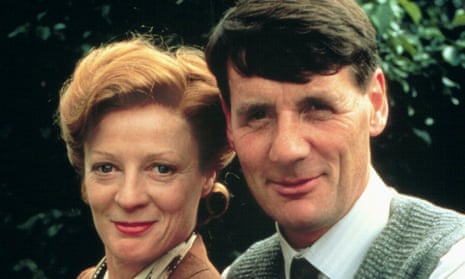
Effortless skill, mixed salads and a certain impatience with life: Michael Palin remembers Maggie Smith

Smith’s costar in two 80s comedies shares his memories of an actor blessed with an instinctive grasp of her craft

(I’ve been an admirer and fan of Maggie Smith since the first time I watched “The Prime of Miss Jean Brodie.” It was on TV when I was 11, and she [well, Jean Brodie,] was who I wanted to be. I still feel the same way, and Michael Palin’s closing sentence fits perfectly.)

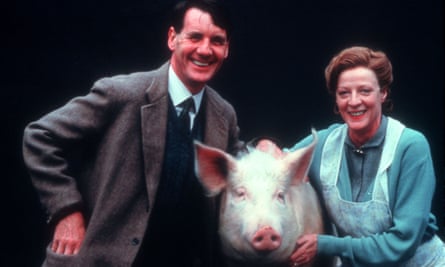
Maggie Smith and Michael Palin

‘Some of the happiest times of my life’… Smith and Palin in A Very Private Function. Photograph: Handmade Films/Allstar

To work with Maggie Smith, as I did in The Missionary and A Private Function, was to be in the presence of pure acting gold. Maggie was so skilful and intuitive. She could portray the maximum of emotion with the minimum of effort. Nothing was ever wasted with Maggie.

The slightest glance could contain so much information, the smallest gesture be loaded with such significance that you had to be absolutely on your toes to stay with her. The two films we made together were comedies, and Maggie’s impeccable comic timing was an absolute joy to watch and a privilege to be part of.

Michael Palin and Maggie Smith in A Private Function
Michael Palin and Maggie Smith in A Private Function. Photograph: Photo 12/Alamy

Her wit was sharp and always icily well-targeted. I remember having a meal with her and Alan Bennett at a rather smart Yorkshire restaurant during the filming of A Private Function, when I discovered a piece of glass in my mixed salad. No great fuss was made. To the manager, Maggie simply described it as “a very mixed salad”.

Maggie made it look so easy and yet I always felt that there was something else there. Something held back. An impatience with life. To be blessed with such an instinctive, effortless understanding of what acting was all about made her dismissive of anything she saw as dull and uninspired. She didn’t suffer fools.

She always maintained that the part of the process she liked most was the rehearsal. The working out of how to make the whole thing the best it could be. Once you’d got that right, then the rest of it was easy and, as she intimated, rather less fun.

I rate our work together as some of the happiest times of my life. I shall mourn her passing most sadly, but remember her most gladly.

I’m very sorry to read this, too.

James Earl Jones, acclaimed actor and voice of Darth Vader, dies at 93

By  MARK KENNEDY Updated 8:03 PM CDT, September 9, 2024

NEW YORK (AP) — James Earl Jones, who overcame racial prejudice and a severe stutter to become a celebrated icon of stage and screen — eventually lending his deep, commanding voice to CNN, “The Lion King” and Darth Vader — has died. He was 93.

His agent, Barry McPherson, confirmed Jones died Monday morning at home in New York’s Hudson Valley region. The cause was not immediately clear.

The pioneering Jones, who in 1965 became one of the first African American actors in a continuing role on a daytime drama (“As the World Turns”) and worked deep into his 80s, won two Emmys, a Golden Globe, two Tony Awards, a Grammy, the National Medal of Arts and the Kennedy Center Honors. He was also given an honorary Oscar and a special Tony for lifetime achievement. In 2022, a Broadway theater was renamed in his honor.

He cut an elegant figure late in life, with a wry sense of humor and a ferocious work habit. In 2015, he arrived at rehearsals for a Broadway run of “The Gin Game” having already memorized the play and with notebooks filled with comments from the creative team. He said he was always in service of the work. (snip-MORE)

I’m sorry to read this

Maybe others here enjoyed Sergio Mendes’s talent, too.

Sérgio Mendes, Brazilian Bossa Nova Musician, Dies of Long Covid at 83

The two time Grammy winner died on Thursday, Sept. 5, in a Los Angeles hospital

By Charna Flam Published on September 6, 2024 06:40 PM EDT

Kendall Jenner’s Most Stylish MomentsClose

Sergio Mendes arrives for red carpet arrivals to the Women's Guild Cedars-Sinai Women's Guild Cedars-Sinai60th Anniversary Diamond Jubilee Gala held at The Beverly Hilton Hotel on May 3, 2018
Sérgio Mendes in Beverly Hills in May 2018. Photo: Chrissy Hampton/Getty

Sérgio Mendes, the Brazilian-born musician who brought bossa nova music to a global audience in the 1960s, died on Thursday, Sept. 5, in a Los Angeles hospital. He was 83.

The renowned musician’s family announced his death in a statement on his social media channels. His family said that his death was caused by effects of long Covid.

“His wife and musical partner for the past 54 years, Gracinha Leporace Mendes, was by his side, as were his loving children,” the statement read. “Mendes last performed in November 2023 to sold out and wildly enthusiastic houses in Paris, London and Barcelona.”

Throughout his six-decade career, Mendes recorded more than 35 albums, but he is best known for popularizing Brazilian music on a global stage beginning in the 1960s, starting with his composition of “Mas Que Nada.” 

“It was completely different from anything, and definitely completely different from rock ’n’ roll,” the Latin music scholar Leila Cobo said in the 2020 HBO documentary Sergio Mendes in the Key of Joy. “But that speaks to how certain Sérgio was of that sound. He didn’t try to imitate what was going on.” (snip-MORE)

https://people.com/sergio-mendes-dead-age-83-long-covid-8708012

Phil Donahue, the pioneering host of long-running daytime talk show ‘Donahue,’ dies at 88

This was published yesterday. I wanted to post it though, because my recollection of watching Donohue any chance I got, for years, was that he always treated his guests, on stage and in the audience, like human beings equal to him. I saw more than one very empathetic show about trans people, about gay people, about women in various situations solely because they were women, about so many who were marginalized during the years Phil Donahue was on TV. His show, along with Oprah’s, never got into the reality show circuses that those who came behind them went with (no disrespect to Jerry Springer, who started out like Donohue, but bowed to pressure.) Anyway, here is this; Godspeed, Mr. Donahue.

https://www.latimes.com/obituaries/story/2024-08-19/phil-donahue-dead-talk-show-host

By Dawn Burkes and Alexandra Del Rosario

Aug. 19, 2024 Updated 11:33 AM PT

Phil Donahue earned praise for his “insatiably curious and accepting” nature and his ability to hold a “mirror up to America” when he received the Medal of Freedom from President Biden in May.

The groundbreaking daytime talk show host reinvented the relationship between TV hosts and their audiences, opening the medium up to genuine conversations about race, religion, reproductive healthcare and scores of other hot topics over more than 6,000 episodes.

“He saw every guest as worthy of interest and worked to build understanding, bringing us to see each other not as enemies but as fellow Americans,” a White House announcer said of Donahue in May.

Donahue died Sunday “peacefully after a long illness,” his family said in a statement to The Times. He was 88. NBC’s “Today,” where he was a contributor, broke the news of the host’s death. (snip-More on the page linked above)