This is the hyper Fundamentalist Christian who is radically against trans people and the entire LGBTQ+. He has made it his mission in political life to push bigotry and hate to anything he thinks the Christian god hates while trying to promote Christianity as a state religion at every turn. So here he is trying to shut down a homeless shelter. Really what Jesus would ask his followers to do, right? No this is not based on religion or faith, this is about profit and who gives him money. He pushes religious stuff because his main benefactor and political protector is a billionaire fundamentalist Christian preacher who thinks the government should force every person to be a Christian with his views. And what about the homeless shelter … Well local business don’t like the look or the congestion so more donations to remove them … Get the point. The point is the wealthy people who support this … Ultra Christian simply don’t like the poor around. They want them to go away and never be seen. Hugs.
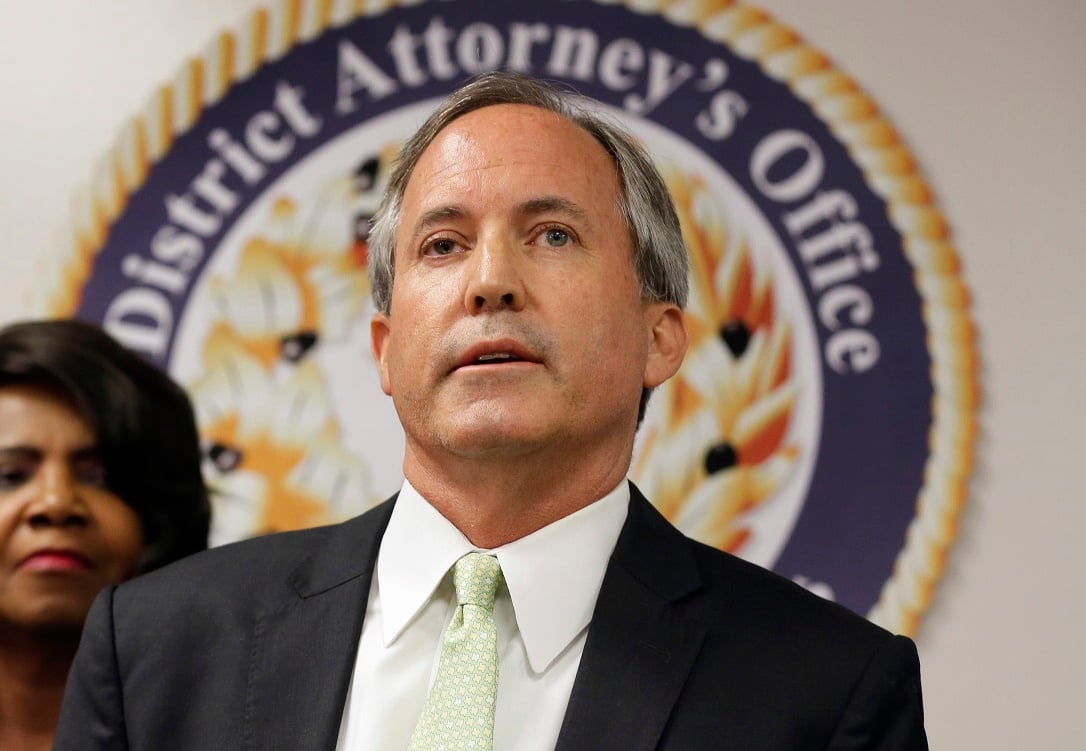
In this June 22, 2017, file photo, Texas Attorney General Ken Paxton speaks at a news conference in Dallas. (AP Photo/Tony Gutierrez, File)
Texas Attorney General Ken Paxton filed a lawsuit Tuesday seeking to shut down an Austin, Texas, homeless center, calling the charity a public nuisance.
The Sunrise Homeless Navigation Center says it’s the largest provider of homeless services in Travis County. According to its website, the center provides a number of services, including physical and mental health care, substance abuse care, harm reduction, housing interventions and benefits enrollment. The center has received over a $1 million from the city of Austin, according to Paxton’s complaint.
“In South Austin, a once peaceful neighborhood has been transformed by homeless drug addicts, convicted criminals, and registered sex offenders,” Paxton says in the complaint, filed in Travis County District Court. “These people do drugs in sight of children, publicly fornicate next to an elementary school, menace residents with machetes, urinate and defecate on public grounds, and generally terrorize the surrounding community.”
In his complaint, Paxton notes the center’s location across the street from an elementary school. The Texas Attorney General’s Office said in a statement on the lawsuit that the school has been forced into lockdown repeatedly due to violent behavior from people receiving services at the center.
Paxton also takes issue with the center allowing a clean syringe distribution program on its property, which he says amounts to facilitating drug use. Part of a “harm reduction” philosophy, clean syringe programs aim to help people who are already using intravenous drugs do so more safely. In Texas, such programs operate in a legal grey area, as they are not authorized by the state and Texas law criminalizes the possession of drug paraphernalia.
“Drug activity and criminal behavior facilitated by this organization have hijacked an entire neighborhood,” Paxton said in a statement. “By operating a taxpayer-funded drug paraphernalia giveaway next to an elementary school, this organization is threatening students’ health and safety and unjustly worsening daily life for every single resident of the neighborhood. We will shut this unlawful nuisance behavior down.”
Paxton seeks an injunction requiring the center to close for a year and prohibiting it from conducting operations within 1,000 feet of a school, playground or youth center. But in a statement, the center’s executive director Mark Hilbelink said the services will continue.
“It is regrettable that Attorney General Paxton took this route, especially during the week of Thanksgiving, but Sunrise intends to keep offering services to people in our community who need them,” Hilbelink said in a statement. “We are committed to being a good neighbor. We will continue to work, every day, to support Joslin Elementary School, our neighborhood, and our entire community.”
He also noted the center is a ministry of Sunrise Community Church and is therefore protected by the First Amendment, the U.S. Religious Land Use and Institutionalized Persons Act and the Texas Religious Freedom Restoration Act.
“These laws have been tested in court on multiple occasions, always with the same result: churches are protected to do work that is an expression of their religious practice,” Hilbelink said.

 Scottie's Playtime