Don’t panic people, Biden’s poll numbers went up after the debate. Beau explains that he has gotten more full throated support from democratic governors. Hugs. Scottie
Some quotes from the article that show these walls are useless, and can be over come with a battery operated reciprocating saw most hardware stores sell rather cheaply. What I want to know is what is driving this need by Texas republicans? Is it political or is it hate and bigotry, racism to save the white majority they will soon lose. Hugs. Scottie
“Walls do not achieve the objectives for which they are said to be erected; they have limited effects in stemming insurgencies and do not block unwanted [migrant] flows, but rather lead to a re-routing of migrants to other paths,” wrote Élisabeth Vallet of the nonpartisan Migration Policy Institute in a 2022 report.
————————————————————————————————————-
🇺🇸🇲🇽 American-Mexican Border Wall: Not as Effective Against Immigrants as Intended 🪜The border wall was meant to be a major deterrent, but recent data suggests it hasn't significantly slowed immigration. Just need a big ladder pic.twitter.com/1MpvtHaQQT
Gov. Greg Abbott looks at crane lifting a section of the border wall in place after giving a press conference at Rio Grande City on Dec. 18, 2021. Credit: Jason Garza for The Texas Tribune
Three years after Gov. Greg Abbott announced Texas would take the extraordinary step of building a state-funded wall along the Mexico border, he has 34 miles of steel bollards to show for it.
That infrastructure — which has so far run up a price tag of some $25 million per mile — isn’t yet a contiguous wall. It has gone up in bits and pieces spread across at least six counties on Texas’ 1,254-mile southern border. Progress has been hampered by the state’s struggles to secure land access, one of myriad challenges signaling a long and enormously expensive slog ahead for Abbott.
Nonetheless, state contractors have already propped up more wall mileage than former President Donald Trump’s administration managed to build in Texas, and Abbott’s wall project is plowing ahead at a quickened pace. State officials hope to erect a total of 100 miles by the end of 2026, at a rate of about half a mile per week. The governor frequently shares video of wall construction on social media and has credited the project with helping combat immigration flows. To date, though, steel barriers cover just 4% of the more than 800 miles identified by state officials as “in need of some kind of a barrier.” And at its current rate — assuming officials somehow persuade all private landowners along the way to turn their property over to the state — construction would take around 30 years and upwards of $20 billion to finish.
Under Abbott’s direction, state lawmakers have approved more than$3 billion for the wall since 2021, making it one of the biggest items under the GOP governor’s $11 billion border crackdown known as Operation Lone Star. The rest of the money is being used for items like flooding the border with state police and National Guard soldiers and transporting migrants to Democrat-controlled cities outside Texas, all of which Abbott and other Republicans say is needed to stem the historic number of migrants trying to enter the country.
Democrats and immigration advocates have cast the wall project as a taxpayer-funded pipe dream that will do nothing to address the root causes driving the immigration crisis. And they say the governor, in reviving what was once a hallmark of Trump’s agenda, is using public money to boost his political stock.
Even some immigration-hawk Republicans are showing unease about the mounting costs of the wall.
“I am, too, concerned that we’re spending a whole lot of money to give the appearance of doing something rather than taking the problem on to actually solve it, and until we do that, I don’t expect to see much happen,” state Sen. Bob Hall, R-Edgewood, said last fall before voting in committee to spend another $1.5 billion in wall funding.
Abbott’s office did not respond to a request for comment for this story.
Acquiring land
The construction pace has largely hinged on the state’s success securing rights to build the wall through privately owned borderland. Early on, the project showed little signs of life as state contractors struggled to obtain the needed easements. But things picked up last year as the state began working out more agreements covering larger tracts. Through mid-June, officials had secured 79 easements covering about 59 miles of the border, according to Mike Novak, executive director of the Texas Facilities Commission, which is overseeing the effort.
At a facilities commission meeting last month, Novak said state officials were in various stages of negotiation with landowners over another 113 miles.
“We knew from the beginning that this was going to be the choke point, you know, one of the most challenging parts of this program,” Novak said of land acquisition. “And it proved true. But we’ve remained steadfast.”
Officials had built 33.5 miles of wall through June 14, a facilities commission spokesperson said.
The state’s ability to secure land rights has also dictated the wall’s location, though officials say they have focused on areas pinpointed by the Department of Public Safety as the “highest priority.” TFC officials have declined to share exactly where the wall is being built, citing security concerns, though Novak recently said construction was underway on wall segments in Cameron, Maverick, Starr, Val Verde, Webb and Zapata counties.
Though the Texas-Mexico border spans more than 1,200 miles, Abbott’s budget director, Sarah Hicks, told a Senate panel in 2022 that DPS had identified 805 miles “as vulnerable, or [that] is in need of some kind of a barrier.” Another 180 miles are covered by natural barriers, mostly in the Big Bend region of West Texas, while existing barriers already cover another 140 miles, according to state officials.
Novak has said the pace of building about half a mile of wall per week is expected to continue for the “foreseeable future.” At that rate, about 100 miles would go up every four years, with the full 805 miles covered sometime after 2050, when Abbott would be in his 90s.
The earliest wall construction has cost roughly $25 million to $30 million per mile, according to TFC officials. That would amount to $20 billion to $24 billion for the entire 805-mile span, or about three times the cost of paying every Texas public university student’s tuition last year. The estimate does not account for the cost of maintaining the wall once it is built, which TFC estimates will cost around $500,000 per mile each year.
Lubbock state Sen. Charles Perry, who last year carried Texas’ new immigration law that allows state police to arrest people for illegally crossing the Mexico border, is another Republican who has expressed concern about the wall’s cost.
“I am for border security. I am not against a wall. But to me, at least from what I can tell, it is a perpetual circle. We’re on the hamster wheel,” Perry said last fall as he prepared to vote for the $1.5 billion wall funding bill. “[At some point] the response has not to be more money for infrastructure. At some point this state must draw the line in the sand.”
Still, no Texas Republican has voted against border wall funding. Lawmakers approved nearly $2.5 billion for the effort in the state’s current two-year budget — more than was allotted in state funds to all but a handful of state agencies, and more than twice what Texas spends on its court and juvenile justice systems.
State Rep. Christina Morales, D-Houston, said she doesn’t think Texas’ GOP leadership “really understands why people are crossing in the first place.”
“Spending billions of dollars on a wall really does not address the root causes of the migration that’s happening,” said Morales, who is vice chair of the House’s Mexican American Legislative Caucus. “What we should be investing in is our education, our health care, real solutions for problems that are happening right now in Texas.”
Since 2021, federal officials have recorded an average of about 2 million illegal border crossings a year, a record that Abbott has attributed to President Joe Biden for rolling back some of Trump’s border policies. The governor has touted the wall construction as a way for Texas to “address the border crisis while President Biden has sat idly by.” Biden and other Democrats have blamed Republicans for shooting down a sweeping bipartisan border deal earlier this year.
The scope of Texas’ wall construction — and Abbott’s broader border security efforts — are unprecedented in nature, as the federal government is generally responsible for immigration enforcement and the costs associated with it.
Even with the state’s improved pace securing easements, Novak has said land access remains the biggest challenge for the project, and “it’ll probably remain that way through most of the program.” The Trump administration encountered the same issue after the former president famously said he would build the wall and make Mexico pay for it. Even using the federal government’s power to seize some borderland, Trump’s administration built just 21 miles of new wall along the Texas-Mexico border.
The painstaking negotiations are required for Texas’ wall because lawmakers barred the use of eminent domain to gain land access.
Last year, state Sen. Brandon Creighton, R-Conroe, filed legislation to change that, arguing TFC officials could only build a complete wall if they were authorized to use eminent domain powers. The proposal failed to make it through the Senate, though Creighton said he plans to file it again for the session that starts next January.
“Of course, we can continue to negotiate with ranchers, but that is a very slow process,” Creighton said. “And it’s an incomplete process, because there will always be holdouts for different reasons.”
Creighton, one of the upper chamber’s more conservative members, said he still supports using state funds to build a border wall, even as some of his GOP colleagues have raised objections.
“I say no to waste, inefficiencies, potential fraud and unreasonable spending as much as any member,” Creighton said. “But … there are times, with all of that fiscal conservatism, that we have to use the money that we save efficiently to protect Texans and Texas.”
“A difficult and complex task”
Most border wall advocates acknowledge barriers alone will not deter people from trying to enter the country illegally. But they say a wall would work if paired with more law enforcement officers and technology, arguing it would slow down attempted crossers to give border agents more time to apprehend them and encourage migrants to seek asylum via ports of entry.
“Walls do not achieve the objectives for which they are said to be erected; they have limited effects in stemming insurgencies and do not block unwanted [migrant] flows, but rather lead to a re-routing of migrants to other paths,” wrote Élisabeth Vallet of the nonpartisan Migration Policy Institute in a 2022 report.
With construction plunging ahead, Novak has projected confidence about the wall’s status, pointing to the recent progress after an initial slow start, which saw officials build less than 2 miles in the 12 months after Abbott announced the effort.
It’s not just land access that complicates wall construction, Novak said at the June TFC meeting, where he ticked off a list of other factors: changing soil conditions that require “complicated engineering solutions”; steering clear of irrigation systems when building on agricultural land; weather; and “sensitivity” to cattle, oil and gas and hunting operations.
“It’s a difficult and complex task, at best,” Novak said. “But with that said, we’re whipping it. The latest stats reflect what I like to call just steadfast progress.”
Lincoln Project isn’t giving up almost 250 years of democracy because of 90 minutes last week and you shouldn’t either. 1 bad night won’t derail us from our mission, it has only energized us:
I want to thank Jill, link below, for this and her grand post. Biden is doing great, do not let republican / Russian propaganda make you doubt. Vote blue. Hugs.
Illustration by The Atlantic. Source: Science Photo Library / Getty.
Millions vote for a candidate, propelling him to victory. Before the voters’ decision is formally certified, people who don’t like the outcome demand that the election results be thrown out and a different candidate selected in a closed process. That was America on January 6, 2021. And now, some in the Democratic Party want to follow a similar script.
The Democratic Party held 57 primaries and caucuses; voters in all 50 states, the District of Columbia, and five U.S. territories had their say, as did Democrats abroad. Joe Biden won 87 percent of the total vote. He lost one contest, in American Samoa, to the little-known Jason Palmer. Suddenly, there are cries in the Democratic Party that, as goes a single territorial caucus, so should the nation.
I worked in five presidential campaigns for Republicans and helped elect Republican senators and governors in more than half of the country. For decades, I made ads attacking the Democratic Party. But in all those years, I never saw anything as ridiculous as the push, in the aftermath of last week’s debate, to replace Joe Biden as the Democratic nominee. For many in the party, the event raised genuine concerns about the incumbent’s fitness for a new term. But a president’s record makes a better basis for judgment than a 90-minute broadcast does. Biden has a capable vice president, should he truly become unable to serve. The standard for passing over Democratic voters’ preferred nominee should be extraordinarily high—and has not been met.
The fundamental danger of Donald Trump is that he’s an autocrat who refuses to accept the will of the voters. So the proper response is to throw out millions of votes, dump the overwhelming choice, and replace him with someone selected by a handful of insiders? What will the message be: “Our usurper is better than your usurper”?
What is it about the Democratic Party that engenders this kind of self-doubt and fear? At a moment when Democrats’ instinct should mirror what Biden declared in a rally the day after the debate—“When you are knocked down, you get back up”—some in the party are seized by the urge to run, not fight. Think about how this would look: Hey, I guess Donald Trump is right; our guy isn’t fit to be president. We’ll give it another shot. Trust us, we’ll get it right eventually.
Madness.
After decades of losing the image wars as Republicans positioned themselves as the “party of strength,” Democrats are on the verge of a historic self-redefinition. When Biden traveled to Ukraine, he became the first president to visit an allied war zone not controlled by U.S. troops. A Democratic speaker of the House, Nancy Pelosi, defied China and visited Taiwan. A Republican Party that was once defined by Ronald Reagan demanding “Mr. Gorbachev, tear down this wall” is now the beating heart of the pro–Vladimir Putin movement, led by a former president elected with the Russian dictator’s help.
For generations, Republicans succeeded in labeling Democrats the “blame America first” party. Today, it’s the Republican nominee who calls America a “third-world nation … an uncivilized country.” Republicans used to describe Democrats as “victim shoppers” who always hold others at fault instead of accepting personal responsibility. Donald Trump sees America as a nation of victims, with powerful forces taking advantage of our weakness. As president, Trump labeled Canada a national-security threat. Really? Picture the horror: an invading army of Canucks driving snowmobiles over the border to the martial soundtrack of Celine Dion.
Given a huge opportunity to project more self-assurance than Trump’s Republicans, these Dump Biden Democrats would ensure that their party once again slips back into the quicksand of doubt and second-guessing. No major American political party has thrown a presidential nominee overboard, so leave it up to some geniuses in the Democratic Party to hatch a scheme to make history.
What makes them believe that replacing Biden increases the chances of defeating Trump? How many times have candidates with impressive state-level records crashed and burned in a presidential race? The last time a party held on to the White House without the benefits of incumbency was 36 years ago. Recent polls show none of the fantasy replacement Democrats beating Trump. There are polls showing Biden defeating Trump. Say what you will about the Biden campaign’s organization, but four years ago it defeated an incumbent president—no easy thing.
Clearly, something was off inside the Biden campaign that allowed this debate debacle to occur, starting with the choice even to debate Trump. The Biden team easily could have insisted, as a precondition for a debate, that Trump first publicly acknowledge that he is running against a legally elected president who won a fair vote. Also, why did Biden look like an undertaker had done his makeup? But those breakdowns do not negate the substantial evidence that the Biden campaign knows how to defeat Trump. Do Democrats really want to throw that aside and reconstruct a campaign from scratch months before an existential election?
Presidential campaigns are billion-dollar businesses open to customers for a limited time. Right now, Democrats have a huge advantage over a GOP apparatus gutted by Trump in a power play that installed his daughter-in-law as co-chair of the Republican National Committee. What are the Dump Biden Democrats thinking? That Trump’s mob-boss takeover of his party gave them an unfair edge, so it’s only sporting for them to emulate him?
Trump is the candidate of chaos, uncertainty, and erratic behavior. Democrats can win a race against him by offering Americans the opposite: steady, calm, and confident leadership. Joe Biden has provided that. His record is arguably the most impressive of any first-term president since World War II. My advice to Democrats: Run on that record; don’t run from one bad debate. Show a little swagger, not timidity. Forget all this Dump Biden nonsense and seize the day. Now is the worst time to flinch. Your country needs strength. You can crush Donald Trump, but only if you fight.
Community (This content is not subject to review by Daily Kos staff prior to publication.)
Tuesday, July 02, 2024 at 2:03:10a EDT
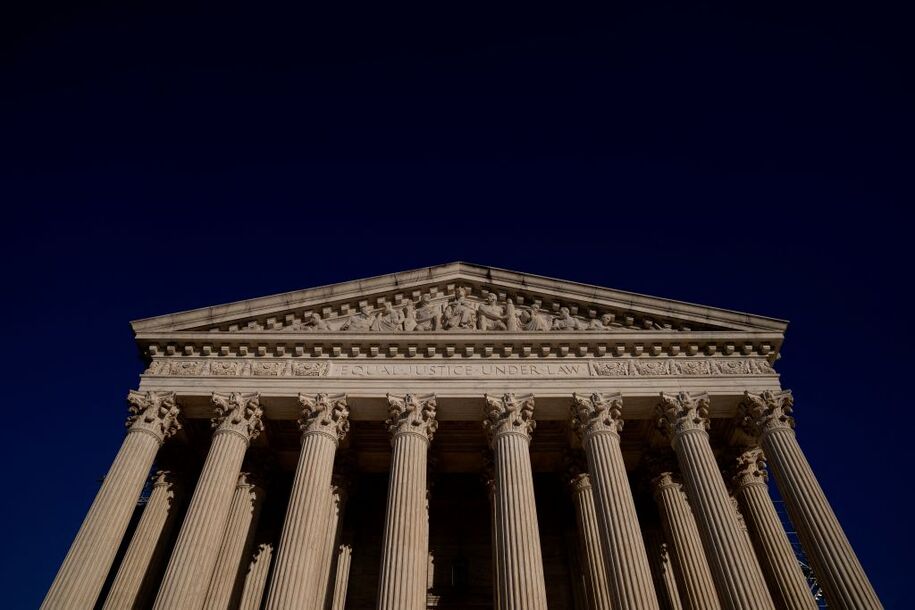
I read a story, not here, today saying that the majority decision written by Chief Justice John Roberts which gave immunity to US Presidents for actions which they take while undertaking Official Acts; was based on NOTHING in the Constitution.
They just made it up.
I agree with that idea, because the Constitution says they can’t do it.
Issue #1:
Granting Immunity to a sitting President for all actions which they take while undertaking Official Acts
a) conflicts directly with Article II, Section 4 and
The President, Vice President and all civil Officers of the United States, shall be removed from Office on Impeachment for, and Conviction of, Treason, Bribery, or other high Crimes and Misdemeanors.
Judgment in Cases of Impeachment shall not extend further than to removal from Office, and disqualification to hold and enjoy any Office of honor, Trust or Profit under the United States: but the Party convicted shall nevertheless be liable and subject to Indictment, Trial, Judgment and Punishment, according to Law.
Presidents, like all other civil Officers of the United States are subject to be removed from Office on Impeachment for… high Crimes and Misdemeanors.
A Senate affirmation of a House Impeachment shall not extend further than removal from Office, and disqualification to hold any Office under the United States again.
BUT — the Party convicted of same, shall nevertheless be liable and subject to indictment, Trial, Judgement and Punishment, according to Law.
So, in plain English, a President is Impeached and removed from Office for a crime WHILE President and removed from the Office, once removed from Office they can still be indicted and prosecuted for the crime.
The John Roberts Court just said that isn’t true. But to my knowledge, no one has altered those portions of the Constitution, which means they remain in effect and the SCOTUS decision today is in conflict with the Constitution. When something new in Law is found to be in conflict with the Constitution, the Constitution wins. Every time.
Issue #2
The decision authored by Chief Justice John Roberts creates immunity out of thin air.
The problem is, there is a very good reason to believe that Presidents have no immunity because the founders never meant them to. The proof?
So I've been thinking for nearly 8 years now, that Donald Trump was the most dangerous man in America.
The Senators and Representatives shall receive a Compensation for their Services, to be ascertained by Law, and paid out of the Treasury of the United States. They shall in all Cases, except Treason, Felony and Breach of the Peace, be privileged from Arrest during their Attendance at the Session of their respective Houses, and in going to and returning from the same; and for any Speech or Debate in either House, they shall not be questioned in any other Place.
You are free to peruse the entirety of Article II at this link:
There is not an iota of a hint of Immunity for the President in Article II. In fact when referring to behavior which might be corrupt, the only mention is of Impeachment and the reasons why a President might be impeached, in Article II, Section 4 (as noted above).
If the Constitutional Convention attendees of 1787 meant to provide Presidents with immunity, seeing as how they noted the immunity for Congress in Article I, wouldn’t they have ENUMERATED the form and style of immunity they meant for Presidents to have?
Since they absolutely did not enumerate any such immunity — it follows that the Founders never meant Presidents to have immunity.
As an aside, the Supreme Court is an appellate court, the Court of the last resort for appeals from the lower Federal Courts.
They are not empowered to create new law or to ALTER the Constitution with one of their decisions.
The only path to cure this damage is to limit the power and authority of the US Supreme Court via Article III, Section 2, Clause 2:
In all Cases affecting Ambassadors, other public Ministers and Consuls, and those in which a State shall be Party, the supreme Court shall have original Jurisdiction. In all the other Cases before mentioned, the supreme Court shall have appellate Jurisdiction, both as to Law and Fact, with such Exceptions, and under such Regulations as the Congress shall make.
That to my knowledge is the only place wherein the SCOTUS bench is liable to regulation, by Congress.
To make that happen?
The Democratic Party and President Biden need to rile up the Liberals and Moderates across America to come out and vote in numbers high enough to scare the living daylights out of the conservatives, in the Congress and the Legislatures. To come into power on Jan 3, 2025 with such a large majority in both Houses of Congress that the first 100 days of the new Congress will see such legislation as is necessary to rein in this corrupt and dangerous Court Bench.
Add seats to the Bench ( four to bring it to 13 seats to match the number of Circuit Courts) and force them to abide by the same Law which currently guides the actions and ethics of all the rest of the Federal Judges by updating The Judiciary Act.
This will bring balance back to the court (which would be 7 (D) appointed and 6 (R) appointed Justices), and prevent future overreach like that committed by the majority in the John Roberts Court in 2024.

/https://static.texastribune.org/media/files/0f8ad20782031c1ee6397ae985844e79/Abbott%20RGC%20Border%20Presser%20JG%20TT%2014.jpg)

 Scottie's Playtime