
This is a succinct summary and discussion of the decision and its import.
Affirmed: E. Jean Carroll Case by Joyce Vance
Read on Substack
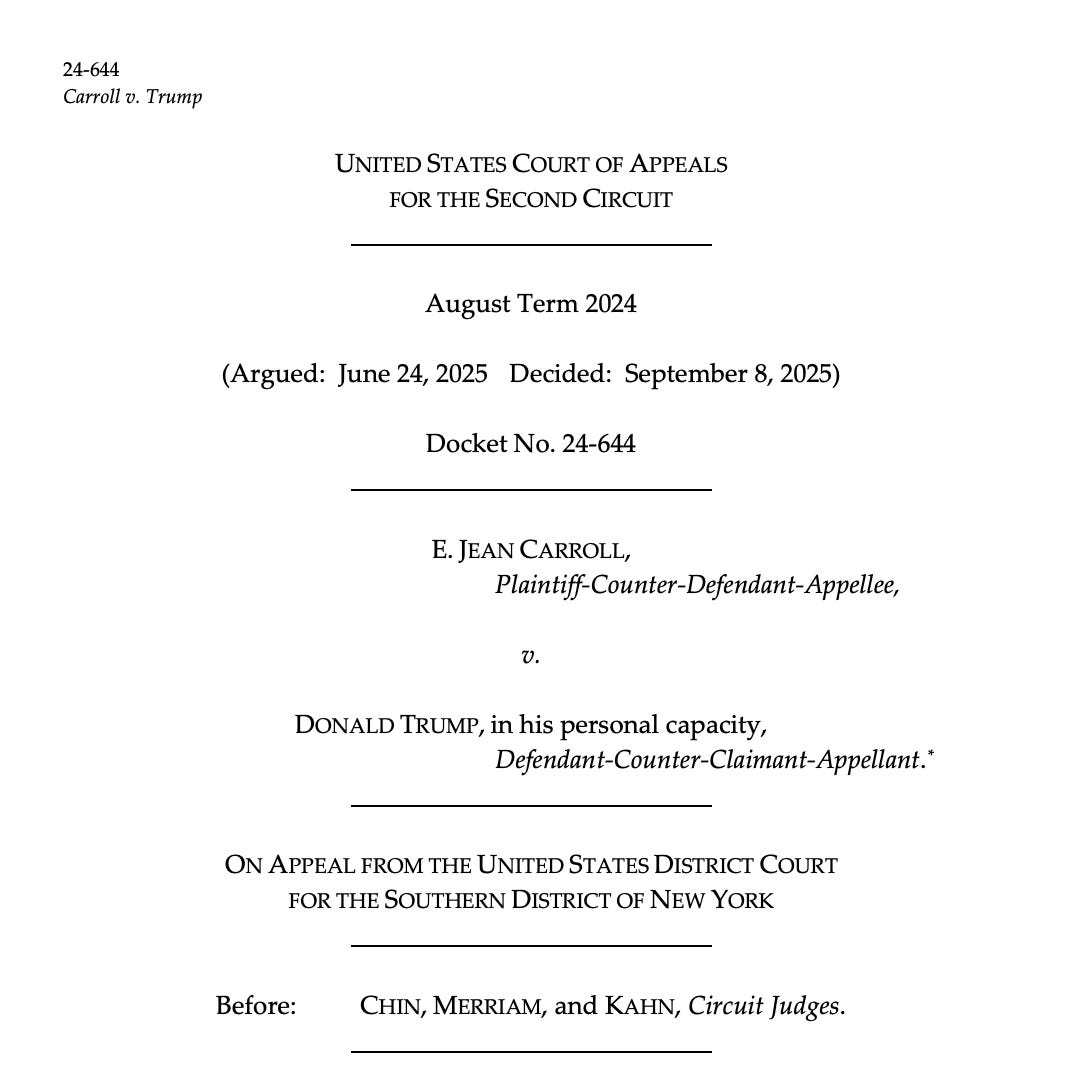
I asked Robbie Kaplan, the lawyer who tried the case, how she felt after learning that the Court of Appeals for the Second Circuit affirmed the $83.3 million verdict a jury awarded E. Jean Carroll in her defamation case against Donald Trump. This is what Kaplan told me: “Both the amazing and brave E. Jean Carroll and I could hardly be happier about today’s decision from the Second Circuit. It has been a long road to get here, and we are not at the end of the road yet, but as the opinion makes clear: ‘The starting point is the now-indisputable fact that a jury found in Carroll II that Trump sexually abused Carroll in 1996, and … that, based on the jury’s findings, Carroll did not lie and that Trump uttered falsehoods in his statements accusing her of lying and acting with improper motivations.’”
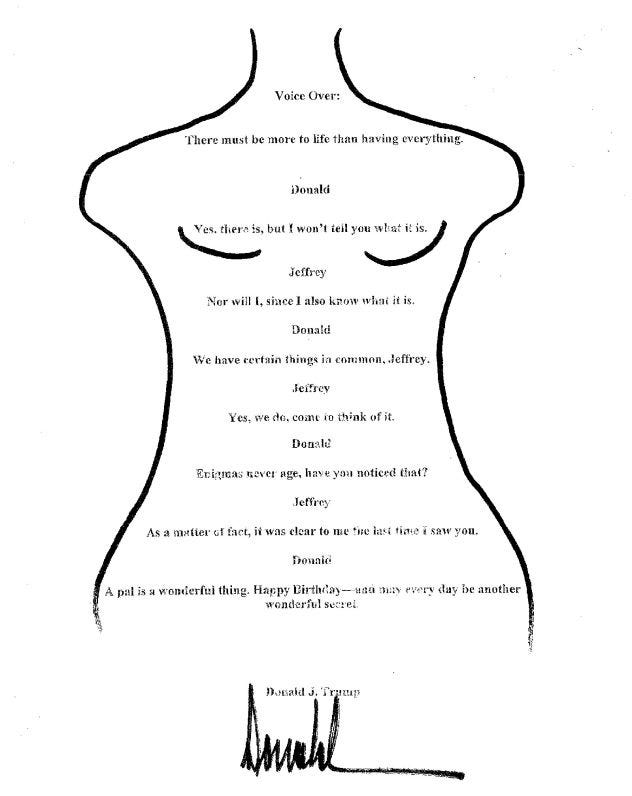
The Second Circuit affirmed the verdict against Trump on the same day that Trump’s birthday missive to Jeffrey Epstein became public. Trump says he didn’t send it, but the signature is extremely similar to verified Trump signatures on notes he wrote to both George Conway and Hillary Clinton. The birthday message is in the distinctive Sharpie marker scrawl Trump is known for. But Trump is insisting it isn’t his, a strange hill to die on since his friendship with Epstein is well documented. A jury believed E. Jean when she said Trump sexually assaulted her. The jury of public opinion may well believe Trump sent this incriminating note to Epstein.
Trump will undoubtedly try to appeal the case to the Supreme Court. It will be up to the Court to decide whether to hear the case or let the Second Circuit’s opinion stand.
The 70-page opinion starts like this: “A jury found that then-President Trump acted with common law malice when he made defamatory statements about Carroll in June 2019 and awarded compensatory and punitive damages. Trump appeals, arguing that he is entitled to presidential immunity or, in the alternative, a new trial. Trump also contends that the jury’s damages award is excessive and must be remitted.” The court then writes one word, “AFFIRMED,” which means that the jury’s verdict stands. You can read the full opinion here.
Last December, the Second Circuit affirmed the verdict in the case referred to as “Carroll II”—the second defamation case Carroll filed against Trump, which confusingly went to trial first (because Trump bogged down “Carroll I” in appeals). The jury in Carroll II returned a $5 million verdict against Trump.
In this case, Carroll I, Carroll’s lawyer, Robbie Kaplan, argued to the jury that if a $5 million verdict was insufficient to stop Trump’s defamation of Carroll, then they needed to return a larger verdict that they believed would stop his misconduct. That’s what they did. The verdict was for $83.3 million.
Trump asked the Court of Appeals to reverse for two reasons:
- He argued that the Supreme Court’s decision about presidential immunity in criminal cases in Trump v. United States means the Second Circuit erred when it refused to afford him immunity in this civil case, even though it involves an assault that occurred decades before he became the president. Beyond that, while he defamed Carroll while he was in office the first time, his comments were about an entirely personal matter that had nothing to do with the office he held. The court declined to reverse on this ground. They held Trump had waived the immunity argument by not making it at the proper time before the lower court.
- Trump also challenged the district court’s grant of partial summary judgment in favor of Carroll and other procedural rulings. The trial court held that a jury had already found that Trump sexually assaulted Carroll in the first trial and that finding was binding in the second case. That decision reflects the well-known principle of collateral estoppel, and the Court ruled there was no reason to disturb it because the identical issue was decided in the prior action and Trump had a full and fair opportunity to litigate the issue during those proceedings.
Trump has frequently been able to twist courts and delays to his advantage. He did that here for a time. But that clock seems to have run out on him. The Supreme Court would have to up end its existing jurisprudence on basic procedural issues to rule for Trump here.
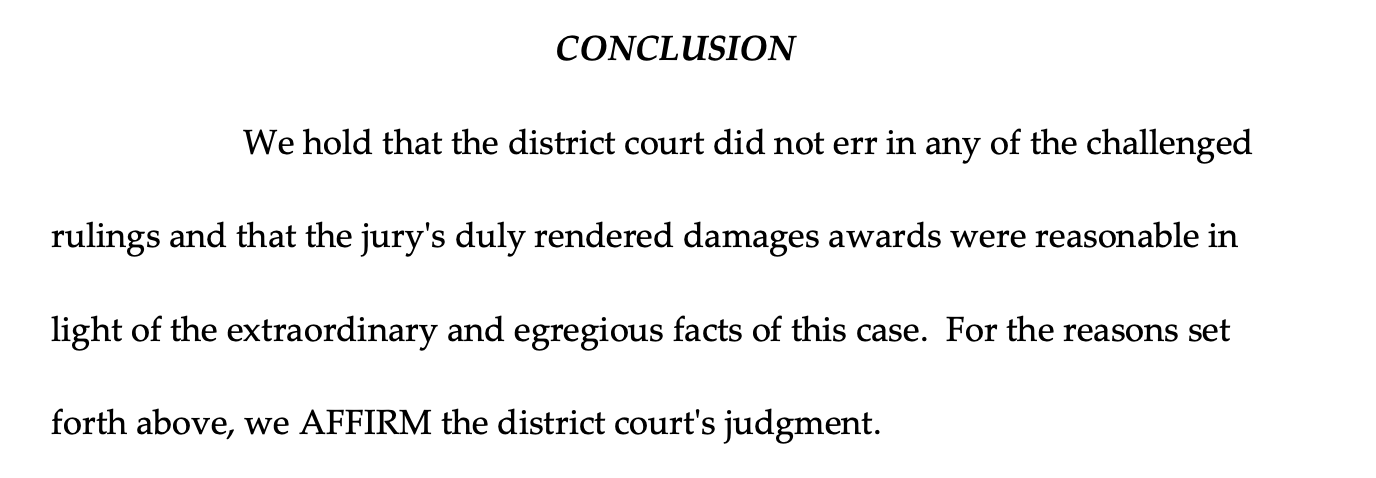
A jury believed E. Jean Carroll. That’s the bottom line. In our system, we leave decisions about disputed facts and what happened to juries. The jury here deliberated and found against Donald Trump. That decision should remain in place. In an era where so much damage is being done to women’s legal standing, it’s essential that we be believed when we have the courage to speak out about sexual assault. Carroll did that. She told friends about the attack at the time in occurred but had been too intimidated by threats she would lose her job and her livelihood if she spoke up to move forward then.
If we can do nothing else for women in an era where abortion rights, more properly understood as the right to receive lifesaving medical care, and other rights have been taken away, we can do this: we can believe them when they summon the courage to come forward and reveal a rape or a sexual assault. Maybe if our nation had done that sooner, we wouldn’t have had a Trump presidency at all.
We’re in this together,
Joyce

 Scottie's Playtime