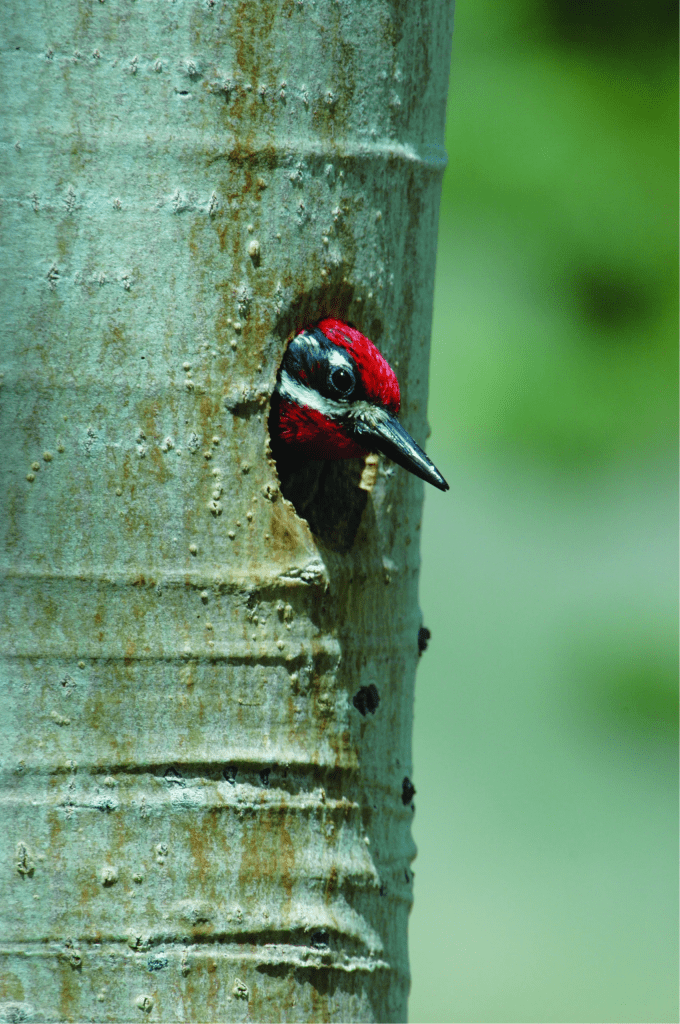
Red-naped Sapsucker
Sphyrapicus nuchalis
Néʼézhiin (Diné / Navajo)
Also Known As
- Chupasavia Nuquirroja (Spanish)
- Carpintero Nuca Roja (Spanish)
About
The Red-naped Sapsucker is one of four species in the genus Sphyrapicus, the sapsuckers, which are a distinctive group of North American woodpeckers with a peculiar and unique foraging strategy. The sapsuckers are accurately named in that they do, in fact, drink sap, but not by sucking. Rather, these industrious birds create rows of small openings in the bark of specific trees to allow the sweet, nutritious sap to flow, much like a syrup maker tapping a maple tree. They then drink the sap directly from these wells, lapping it up with their specialized feathery tongues. Sapsuckers maintain these openings or “wells” throughout the breeding season, regularly expanding existing holes and opening new ones to take advantage of changes in sugar flow through the season. Their sign on trees is conspicuous: Neat grids of shallow holes that create rings around the trunks of thin-barked trees such as aspen, willow, alder, birch, lodgepole pine, and young Douglas-fir.
In creating these wells, Red-naped Sapsuckers also open an irresistible opportunity for other animals with a taste for sweets. Many birds, especially warblers and hummingbirds, are drawn to sapsucker wells. Researchers have also reported a range of mammals visiting wells, including chipmunks, squirrels, mice, deer, and even bears. Insects feed at these wells too, especially butterflies, moths, flies, wasps, and ants. In turn, the insect activity can attract additional birds that prey on insects, such as flycatchers. (snip-MORE)