Enjoy!
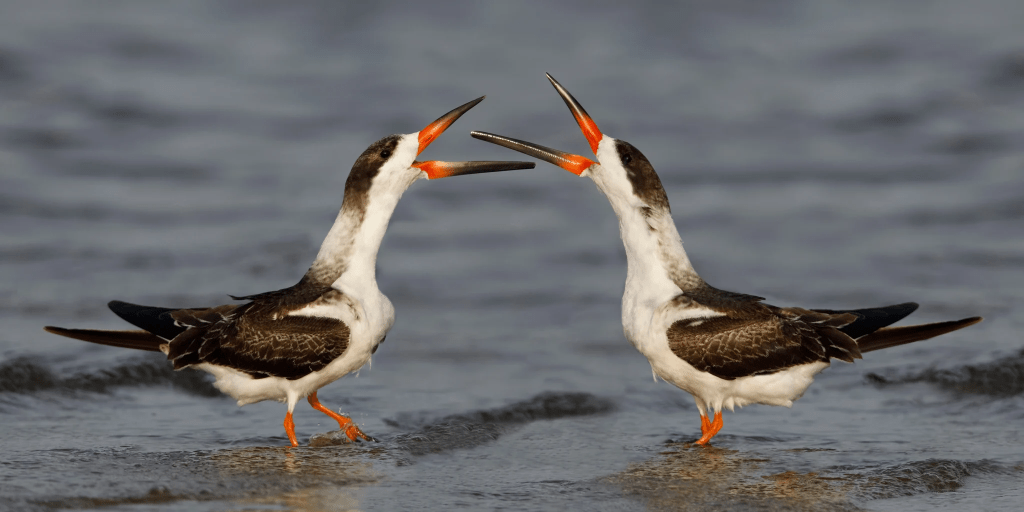
These birds dance:
Enjoy!
These birds dance:
Setophaga palmarum
Also Known As
The Palm Warbler is unusual among the Western Hemisphere’s wood-warbler family. While the majority of warblers are sexually dimorphic, with males noticeably brighter in the breeding season, the male and female Palm Warbler are nearly identical, and can be impossible to tell apart. Warblers, in general, spend a majority of their time in trees and shrubs, but the Palm Warbler is quite comfortable on the ground. Rather than hopping like their arboreal relatives, these birds take to walking or running. Like other warblers, the Palm Warbler often joins mixed-species flocks outside of the breeding season. However, though most warblers tend to flock up with other arboreal species, the Palm Warbler is just as likely to be found foraging with sparrows along hedgerows and in open weedy fields.
Palm Warblers share another habit more typical of ground-dwelling birds in that they continuously bob their tails. This behavior is also seen in other birds typical of open habitats, including the Spotted Sandpiper and Black Phoebe, where the rate of bobbing is thought to vary with the bird’s level of excitement, and thus plays a role in communication. In many ways, the Palm Warbler behaves more like a sparrow or pipit than a typical wood-warbler — even its monotonous trilled song is remarkably similar to that of a Dark-eyed Junco or Chipping Sparrow. Though perhaps an oddball among its own family, this unique bird has found a niche all its own, somewhere between a sparrow and a warbler. (snip-MORE)

(Not at the dancing; it’s great! So is the comedian.)
From The Smart Ones:
by Amanda · Apr 27, 2026 at 2:00 am
Welcome back to Cover Snark!

Elyse: The artist was sick the day they learned to draw the lower body.
Sneezy: Never skip leg day.
Amanda: Her dress reminds me of those Barbie dress cakes.
Sarah: That is just So Much Dress.
Also, are his trousers open in the front?! My word!

From Syntha: I don’t even know where to start with this one.
Sarah: He looks like someone. Who does he look like. It’s going to bug me until I figure it out.
Elyse: It’s orange Detective Stabler.
Sarah: YES I THINK YOU ARE RIGHT.
Elyse: Doink Doink!

Sarah: Syntha also sent this and I have to say, I respect the attempt:
Syntha: The giraffe neck just looks so silly rising out of the jacket.
Amanda: Honestly, this one is perfect.
No notes.
Elyse: His center of gravity is just so fucked up.
Can you imagine the orthopedic issues that guy has?
Sarah: I really can’t fault any of it.

Sarah: This was a suggestion while I was looking at the Neckromancer (I see what was done there) and in icon size it looks like he is drooling.
Amanda: You can just tell this man has an overinflated ego.
Sarah: He is his own Chosen Champion, huh? Yeah, I see it.
(snip-Far MORE snark in the comments, on the page)
From Cornell Lab Bird Cams:
From American Bird Conservancy:
Procnias tricarunculatus
Also Known As
The Three-wattled Bellbird, like other Central and South American bellbirds in the Cotinga family, is a natural history paradox. Breeding males perch on exposed branches and sing one of the loudest songs of any bird, impossible to ignore and audible from more than half a mile away. However, despite this extremely conspicuous breeding season behavior, females and nonbreeding males are notoriously difficult to observe, foraging in the higher levels of the canopy and remaining remarkably silent. As a result, this species has been subject to fascinating and in-depth studies of its song and courtship behavior, but some of the most basic aspects of its natural history are unknown. For instance, only two nests have been recorded, one in 1975 and one in 2012, and no eggs or young have been documented.
But biologists have learned a great deal from studying the Three-wattled Bellbird’s song. The bellbirds belong to a group of perching birds known as the suboscines, which also includes tyrant flycatchers like the Western Kingbird and antbirds, such as the Marsh Antwren. While the “true” songbirds (or oscines) are famous for their song-learning abilities, suboscine songs are classically considered to be completely innate, with no learning taking place. However, the Three-wattled Bellbird shares an important feature with birds that learn their songs: dialects. Birds from Nicaragua sound noticeably different from Costa Rican birds in the Cordillera de Talamanca and the Cordillera de Tilarán, which each host populations with distinct songs. (snip-MORE)

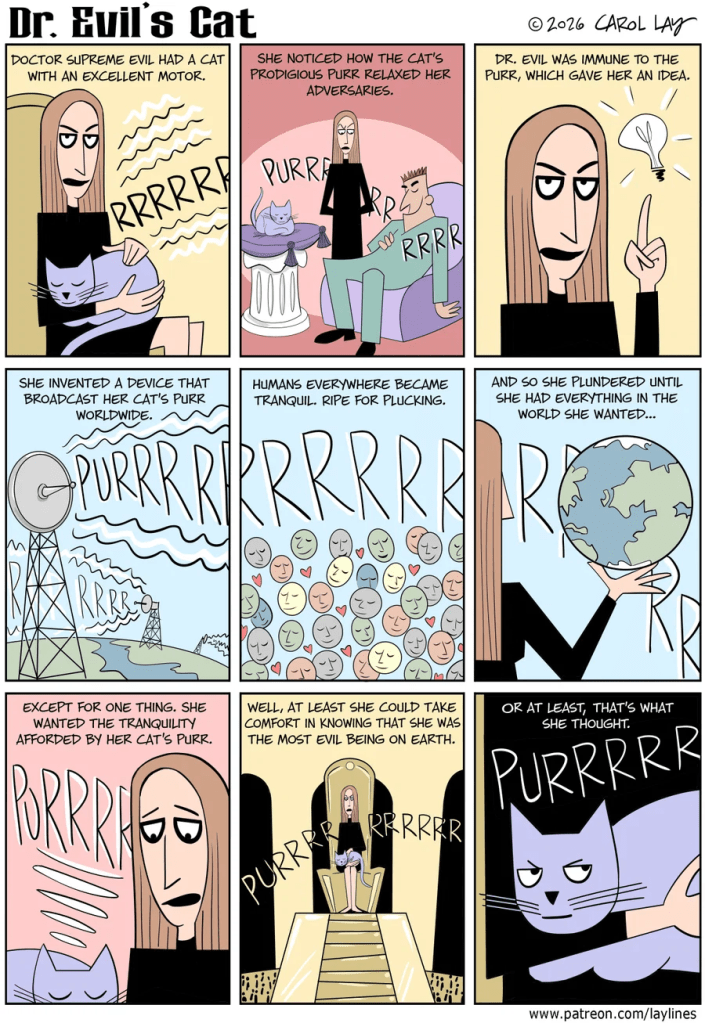
I wouldn’t be me if I didn’t post some comedy & fun shorts, and I haven’t put in much comedy beyond Trae, and Josh. Enjoy!
All device protection from beverage spray protocol should be observed.
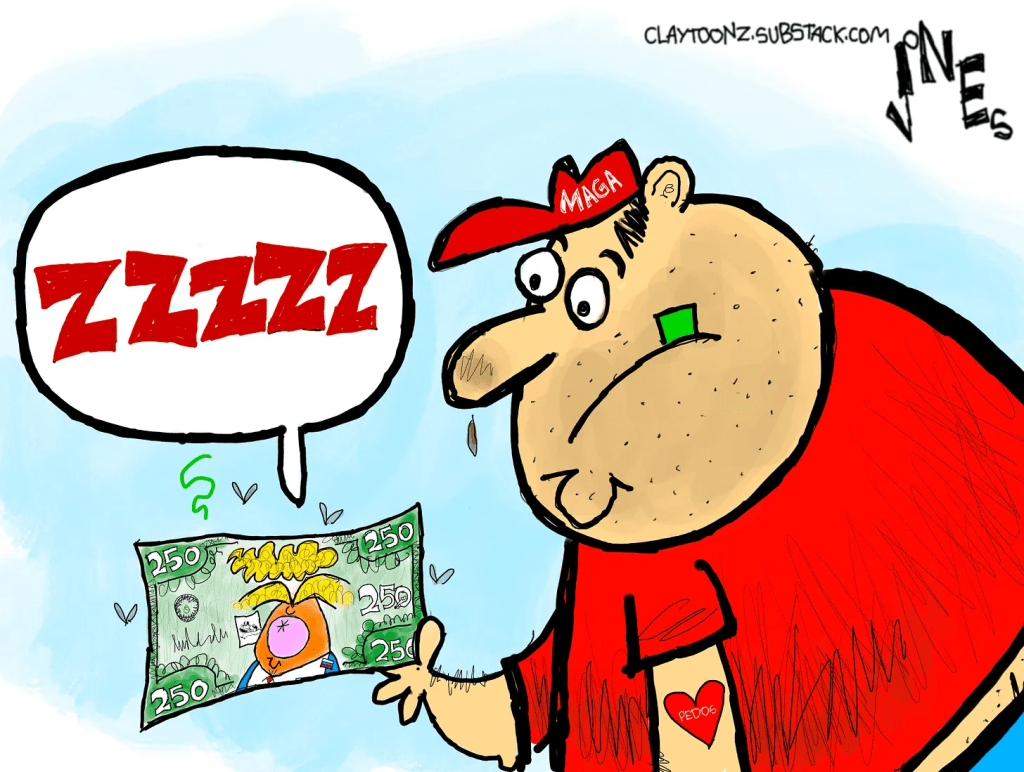
Not necessarily about current events; if so, it’s snark, short, and sweet. Have some fun!
Dance a little!
Heh. Some justice.