
I’ve been trying to get this posted the past couple of days. It’s still pertinent.
Erin Brockovich Asks Americans for Help as She Launches Data Center Map
updated May 29, 2026 at 12:27 PM EDT
Environmental activist Erin Brockovich is appealing to the public for help after launching a website to report data center concerns as the rapid expansion of AI-driven facilities across the United States increasingly clashes with local communities.
The appeal threatens to thrust an iconic anti-corporate activist into the heart of the battle to expand AI infrastructure at a time of growing public skepticism about the technology’s impact on jobs, safety and the environment.
The website, brockovichdatacenter.com, lists several “key concerns” surrounding such data centers, including high energy consumption that drives environmental impacts and costs, substantial water use for cooling that can strain local supplies, increased e‑waste from frequent hardware upgrades, exposure to location risks such as natural disasters or geopolitical instability, growing scalability pressures that can outpace local infrastructure, and constant noise from cooling systems and generators that can disrupt nearby communities.
“These challenges highlight the need for sustainable, secure, and efficient AI data center practices,” the website says. “Self-reporting is the best way we can get this information out to the public!”
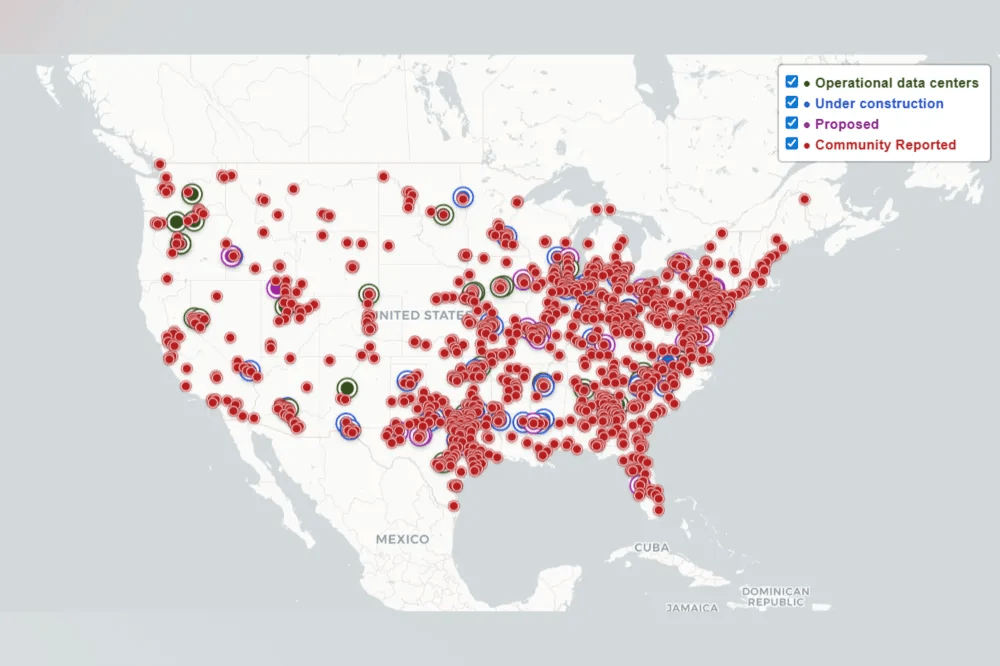
A map on brockovichdatacenter.com shows major AI data centers in the U.S. that are either operational or under construction, overlaid with locations w…Read More
| brockovichdatacenter.com
There are now more than 4,200 data centers—built to train, deploy and deliver AI—across the U.S., according to Data Center Map.
According to the website’s statistics, more than 2,716 reports have been submitted, with the most in Texas (612), as of Monday. The state is home to more than 460 data centers, according to Data Center Map.
The greatest concern among communities was water, followed by electricity, health and wildlife.
“The race to build AI infrastructures is unfolding town by town across America. In some places, data centers are welcomed. In others, they are delayed, contested or abandoned altogether. This map captures the real-world footprint of that race—revealing patterns of growth, conflict and uncertainty,” Brockovich said.
Who Is Erin Brockovich?
(snip-we know who she is. Or, please click through to read on the Newsweek page)
The States Becoming America’s AI Engine Room
As data centers become more visible across America’s landscape, some states are seeing more than others.
- Virginia
Long a hub for government contractors and cloud infrastructure, Virginia—particularly Northern Virginia’s “Data Center Alley”—offers proximity to federal agencies and one of the world’s densest fiber networks. Established infrastructure reduces build times and attracts hyperscalers looking to scale quickly. - Texas
Texas combines vast, inexpensive land with a deregulated energy market that gives companies flexibility in securing large power loads. Cities like Dallas and Austin also bring a growing tech workforce and business-friendly policies that appeal to major AI investors. - Ohio
Ohio has positioned itself as a Midwestern data hub, with strong incentives and central geographic access to U.S. population centers. Its legacy industrial sites are often repurposed for data centers, offering space and existing infrastructure at competitive costs. - Arizona
Arizona’s dry climate is favorable for certain cooling technologies, while its abundant land and aggressive economic development incentives have drawn major tech firms. Phoenix, in particular, has become a key destination for new AI and cloud infrastructure builds. - Georgia
Georgia, anchored by Atlanta, offers strong connectivity as a Southeast internet exchange hub. State and local tax breaks, combined with access to both talent and transport infrastructure, have made it increasingly attractive for large-scale data operations. - Utah
Utah benefits from lower real estate costs, a stable regulatory environment, and access to renewable energy sources. Its growing tech sector, known as “Silicon Slopes,” provides an emerging talent pool to support AI-focused expansion.
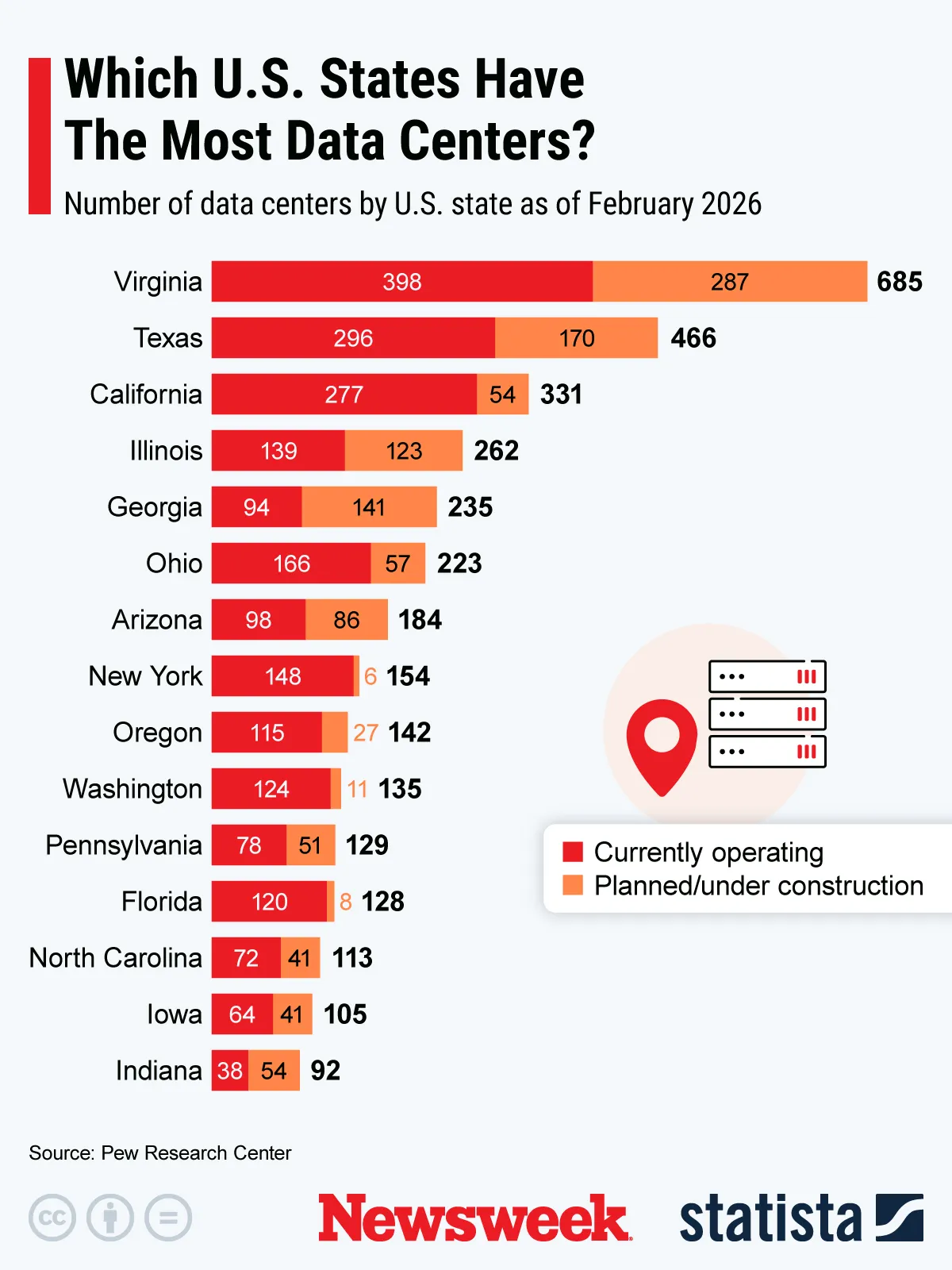
Why companies are choosing these states:
- Cheap land: Large-scale AI data centers require vast footprints; these states offer space at significantly lower costs than coastal markets.
- Power access: Reliable, high-capacity energy grids, often with options for renewable sourcing, are critical for AI workloads.
- Tax breaks: State and local governments are competing aggressively with incentives to attract long-term infrastructure investment.
- Fewer regulations: Streamlined permitting and business-friendly policies enable shorter development timelines and reduced compliance burdens.

 Scottie's Playtime
One thought on “Erin Brockovich & Data Centers”