How far will these racist bigots take their crusade to take the US society back to the 1950s? Books banned not for sexual content but for the fact that the last name of the author being gay and another for the fact that an unarmed black teenager is shot. Only white cis straight morally Christian sanitized stuff is fit for people to read. Banning adult magazines for adult people is coming next. Below is a quote from the article. Hugs
“This proves, as always, that censorship is never about limiting access to this book or that one. It is about sending the message to children that certain ideas—or even certain people—are not worthy of discussion or acknowledgement or consideration,” Brassard said. “This is a hateful message in a place like a public library, where all children are meant to feel safe, and where their curiosity about the world is meant to be nurtured.”
“Read Me A Story, Stella” was added to a book list of potentially sexually explicit books at the Huntsville-Madison County Public Library because the author’s last name is Gay.
“Read Me a Story, Stella” is a children’s picture book about a pair of siblings reading books together and building a doghouse. However, because the author’s name is Marie-Louise Gay, the book was added to a list of potentially “sexually explicit” books to be moved from the children’s section of the Huntsville-Madison County Public Library (HCPL) system.
Gay’s book has never been “mistakenly censored,” according to Kirsten Brassard, Gay’s publicist at Groundwood Books.
“Although it is obviously laughable that our picture book shows up on their list of censored books simply because the author’s last name is Gay, the ridiculousness of that fact should not detract from the seriousness of the situation,” Brassard said in a statement.
Brassard mentioned other books on the list, including Angie Thomas’ “The Hate U Give,” which has no LGBTQ themes or sexual content but does depict the shooting of an unarmed Black teenager at the hands of police.
“This proves, as always, that censorship is never about limiting access to this book or that one. It is about sending the message to children that certain ideas—or even certain people—are not worthy of discussion or acknowledgement or consideration,” Brassard said. “This is a hateful message in a place like a public library, where all children are meant to feel safe, and where their curiosity about the world is meant to be nurtured.”
HCPL executive director Cindy Hewitt admitted “Read Me a Story, Stella” should not have been put on the list and was added because of the keyword “gay.”
“Obviously, we’re not going to touch that book for any reason,” Hewitt said. She’s also read “The Hate U Give” and said it’s an excellent book that no librarian should remove from the young adult section. Hewitt insists there was never any intention to target the LGBTQ community. Instead, she was hoping to be “proactive instead of reactive.”
“Read Me a Story, Stella” was one of 233 titles slated to be reviewed and potentially moved. However, after internal and public criticism that the list targeted the LGBTQ community, the process was halted. Librarians moved some of the books to the adult section, and some have not been re-catalogued.
“We wanted to be proactive and allow our library staff to look at our collection and make decisions about moving material to an older age group and not have someone from outside dictating that for us,” Hewitt said. She added that HCPL considers public opinion, but “our librarians are trained in collection development, and it should be their responsibility to examine the collection and make those changes.”
Hewitt said the review was based on a list of 102 books compiled by Clean Up Alabama. Clean Up Alabama has been targeting “sexually explicit” books in libraries around the state this year. “Read Me A Story, Stella” is not on this list. She said the library was gearing up for “unprecedented” book challenges by using this list as a starting point.
AL.com received a copy of the book review list for the Madison branch and found that 91% of 233 titles had the words lesbian, gay, transgender, gender identity, or gender non-conforming in the subject header, which lists numerous themes for each book. Hewitt said the keywords she asked the 10 branch managers at HCPL to use were “sexuality, gender, sex, and dating.”
Hewitt insisted this was a miscommunication problem and there was confusion about the process. “We understand and appreciate our community, and the needs of our collection to reflect our community,” Hewitt said. “We were never eliminating any book. We were just looking at it as a whole.”
Alyx Kim-Yohn is a circulation manager at the Madison branch of the library and said it’s “cosmically ironic” that the situation escalated during Banned Books Week. Kim-Yohn was frustrated because the directive wasn’t simply a review of the books. They said this was a mandate to review and move the books based on a list from the Alabama Public Library Service, which Hewitt confirmed doesn’t exist yet.
“The decision had been made,” Kim-Yohn said. “There was no debate. There’s no conversation. This is what was happening.”
Kim-Yohn refused to participate because they said it violated their professional ethics. They said even if they weren’t queer, they wouldn’t participate.
“Why are we just unilaterally moving all of this before anyone’s even complained about these books yet?” Kim-Yohn wondered.
Hewitt said she didn’t know how many books librarians moved and returned because she took a “hands-off approach” to the process. Community members with the group Read Freely Alabama, which is against the book challenges, visited several branches and compiled a list of 40 books moved into the adult section from various branches in Madison County.
AL.com obtained this list and determined that at the time of publication, several books are designated as “adult” in the online catalog at the North Huntsville branch but “young adult” in other branches, including “A Quick and Easy Guide to They/Them Pronouns,” “What’s The T: The Guide to All Things Trans and/or Nonbinary,” and “We Deserve Monuments” a mystery novel about an LGBTQ biracial teen.
Kim-Yohn hopes Hewitt apologizes and hopes this never happens again. They also want to encourage the public to visit libraries and utilize staff despite this incident.
“If you’re mad, what we need you to do is to come check these books out, come to story times, put in purchase requests for books that you want to see,” Kim-Yohn said. “We need you to keep supporting the library.”
The books in question were checked out or renewed more than 8,000 times. The full list of books slated for review and potential relocation is below.
The “lung float” test claims to help determine if a baby was born alive or dead, but many medical examiners say it’s too unreliable. Yet the test is still being used to bring murder charges — and get convictions.
Credit:Illustration by Chantal Jahchan for ProPublica. Source images: Getty Images; “Knight’s Forensic Pathology”; “Forensic Pathology: Principles and Practice”; “The Pathology of Homicide”
ProPublica is a nonprofit newsroom that investigates abuses of power. Sign up to receive our biggest stories as soon as they’re published.
Inside the medical examiner’s office, two pathologists removed a baby’s lungs from his chest, clamped them together and placed them in a container of water. Then they watched.
They were examining the suspicious death of the baby whose body was found in a Maryland home; his mother said he was stillborn.
If the lungs floated, the theory behind the test holds, the baby likely was born alive. If they sank, the baby likely was stillborn.
“A very simple premise,” the assistant medical examiner later testified.
The lungs floated — and the mother was charged with murder.
In investigations across the country, the lung float test has emerged as a barometer of sorts to help determine if a mother suffered the devastating loss of a stillbirth or if she murdered her baby who was born alive. The test has been used in at least 11 cases where women were charged criminally since 2013 and has helped put nine of them behind bars, a ProPublica review of court records and news reports found. Some of those women remain in prison. Some had their charges dropped and were released.
But the test is so deeply flawed that many medical examiners say it cannot be trusted. They put it in the same company as the discredited analysis of bite marks and bloodstain patterns, 911 calls and hair comparisons, all of which lack solid scientific foundations and have contributed to wrongful convictions.
It is pseudoscience masquerading as sound forensics, they say. Some even liken the test to witch trials, where courts decided if a woman was a witch based on whether she floated or sank.
“Basing something so enormous on a test that should not be used, that has been completely discredited, is absolutely wrong,” said Dr. Ranit Mishori, the senior medical adviser for the nonprofit Physicians for Human Rights, which has been studying the test, and a professor of family medicine at Georgetown University School of Medicine. “You can send a person who is innocent to prison for many years.”
Medical examiners who rely on the lung float test typically do so in cases where someone gives birth outside of a hospital, often at home and far from the watchful eyes of medical professionals. Absent those witnesses, doubt can overshadow the insistence that the baby was stillborn.
Since the Supreme Court struck down the constitutional right to abortion, legal experts and reproductive justice advocates have voiced fears that an increased reliance on the lung float test will lead to more prosecutions in a landscape where any pregnancy that doesn’t end with a living, breathing baby can be viewed with suspicion. In several cases, the fact that a woman had considered abortion was used against her. Black, brown and poor women, research shows, already disproportionately face pregnancy-related prosecutions. Black women also are more than two times as likely to have a stillbirth as white women.
Even medical examiners who perform the test as part of an autopsy acknowledge its shortcomings. They concede that there are several ways to perform it, undermining the standardization that many forensic disciplines demand. Yet judges have allowed prosecutors to use it as evidence in court.
Basing something so enormous on a test that should not be used, that has been completely discredited, is absolutely wrong.”
—Dr. Ranit Mishori, senior medical adviser for Physicians for Human Rights
ProPublica contacted the nation’s largest medical examiners’ offices to ask if they use the lung float test and discovered a patchwork of practices. Many offices said they just don’t trust it. The County of Los Angeles Department of Medical Examiner called its results “inaccurate.” The Harris County Institute of Forensic Sciences in Houston said it found the test to be “very unreliable” and “not supported by empirical evidence.”
In Cook County, home to Chicago, pathologists use it, but give more weight to “more reliable methods” including X-rays, microscopic examinations and autopsy findings to determine whether a birth was live or still. Others, like the Virginia Office of the Chief Medical Examiner, said the test may be useful only if a baby was not born into a toilet, CPR was not performed and decomposition was not present. None of the 12 largest offices by jurisdiction expressed full-throated support for the test.
And while the national organization that represents medical examiners said that it doesn’t have an official stance on the lung float test, it said it “strongly advocates using scientifically validated and evidence-based practices in forensic pathology.” The National Association of Medical Examiners called the lung float test “a single, dated test” that has not been subjected to the organization’s rigorous evaluation process.
Dr. Gregory Davis, a forensic pathologist at the University of Kentucky College of Medicine and a consultant to the office of the medical examiner in Kentucky, called the test “an outrageous breach of science.” He said he has personally observed the lungs of stillborn babies float and those of live-born babies sink.
The fundamental problem with the test, he said, is that there are many ways that air can enter the lungs of a stillborn child.
“There’s no way,” Davis said, “you can determine live birth versus stillbirth with this test.”
Moira Akers, the Maryland woman whose baby died, didn’t intend to get pregnant. She and her husband, Ian, already had two young children and the couple worried they wouldn’t be able to handle another child.
They struggled financially — she was a stay-at-home mom and he worked only a few days a week as a first mate on a dinner cruise. Her previous pregnancies — both ending in cesarean sections — were difficult, and challenges with her youngest child demanded much of her attention.
Due to Akers’ age, 37, and weight, her pregnancy was considered high risk. The couple decided to terminate, but they didn’t tell her family, who are Catholic and who she worried may not have approved. When Akers was a little girl, her mother said, she dreamed of being a mother, and as an adult she doted on her children.
After her appointment with a gynecologist around 15 weeks into her pregnancy, court records show that Akers thought that it was too late for her to have an abortion in Maryland. She decided she would carry the baby to term without letting anyone know she was still pregnant and give it up at a firehouse.
“I wanted the baby to have a good life,” Akers later told police. “I just knew we weren’t going to be able to provide that.”
Moira AkersCredit:Courtesy of Debra Saltz
She didn’t gain much weight and she told her husband early on that the pregnancy had been terminated. She also didn’t divulge the fact that she was pregnant to other family members, who were going through their own hardships, court records and interviews show. Her sister was being treated for cancer and feared she’d never be able to have children of her own. Her brother was recovering from an accident that had left him temporarily using a wheelchair. And the family had recently buried her grandmother and aunt.
Akers declined comment through her attorney. But the description of the case is based on police and court records, including a trial transcript, as well as interviews with her family and her lawyer.
On Nov. 1, 2018, in the family’s three-bedroom duplex in suburban Baltimore, Akers had been having contractions when she felt a strong urge to use the bathroom. She delivered her son into the toilet. She said he was not breathing. She grabbed her older son’s Star Wars towel to wrap the baby in, then carried him into the bedroom to get scissors and cut the umbilical cord.
“I didn’t hear anything,” Akers later told a detective. The baby, she said, didn’t move.
She didn’t know what to do next. Akers scanned the room and spotted a large Ziploc bag meant to store her daughter’s clothes. She placed her baby in the blue bag, and she put the bag in the closet.
Akers was bleeding heavily from the delivery. Blood soaked the carpet and smeared the bathroom floor. It stained the bathtub, closet door and hallway.
Her husband came upstairs. Alarmed by all the blood, he called the paramedics. When they arrived, they asked Akers questions as she sat on the couch with her husband and two children. She denied being pregnant.
It wasn’t until later, after Akers arrived at the hospital, that she told a nurse that she had “delivered a stillborn child” at home, police records show.
The doctors, who came in next, saw a protruding umbilical cord still attached and asked if the baby was alive. Akers said she had delivered a stillborn baby and told them about the bag and the closet.
Police launched an investigation. Akers described being in denial about the pregnancy and sad about the baby’s death.
The two Maryland doctors conducted an autopsy. The baby, they wrote in their report, appeared to be “well-developed” and “well-nourished” and had been delivered after about 41-42 weeks of pregnancy. He had blue eyes and straight brown hair.
Neither the external exam of the baby nor his bloodwork nor an X-ray revealed signs of foul play. But the narrative from police described a woman who hid her pregnancy from her family and paramedics, considered an abortion and placed the baby’s body in a closet. A microscopic view of the lungs, which were soft and pink in some areas, also appeared to show that some parts had air in them and others did not.
They also had the results of the lung float test.
“A flotation test and microscopic examination of the lungs was consistent with a live birth,” the autopsy read. The baby, the medical examiners concluded, died of asphyxia and exposure from being left in the closet.
Prosecutors charged Akers with child abuse and murder.
The lung float test’s simplicity — essentially unchanged over centuries — is both a feature and a flaw.
Some medical examiners take out one lung at a time. Some cut the lungs up and test pieces, and may even go so far as to squeeze them. Others clamp them together or put the heart and lungs in a jar. Some drop in the liver as a control. Others submerge the lungs in liquid formaldehyde instead of water.
As the assistant medical examiner in Akers’ case testified, “there’s a million ways” to conduct the test.
In theory, the test is meant to determine whether air has reached the microscopic air sacs inside the lungs. If it has, the sacs open and spread out. If it hasn’t, the sacs remain collapsed.
It is not always possible to reach a definitive conclusion, but that may be preferable to [a case] that is based on a problematic test.”
—Capt. Kyle Kennedy, Oregon State Police
But the problem with using aeration as a proxy for proof of life, many medical experts argue, is that babies don’t have to take a breath for air to enter their lungs. Air can be introduced when the baby’s chest is compressed as it squeezes through the birth canal. If there is an attempt to resuscitate a stillborn baby, that pressure can inflate the lungs. And if a body has started to decompose, gases from that process can cause the lungs to float in water. Even the ordinary handling of a stillborn baby can allow air to enter the lungs.
Doctors have long struggled with the best way to determine whether a baby was born alive in unattended births. Many experts agree that it’s nearly impossible without incontrovertible evidence such as milk in the baby’s stomach or signs of the umbilical cord stump beginning to heal where it was cut.
The uncertainty can be difficult for juries to accept, especially when prosecutors present what appears to be a scientific test that proves a baby was born alive and, as a result, was murdered.
“It is not always possible to reach a definitive conclusion, but that may be preferable to one that is based on a problematic test,” said Capt. Kyle Kennedy of the Oregon State Police department, of which the Oregon State Medical Examiner is a part.
The Oregon State Medical Examiner, he said, does not use the lung float test.
The test can produce correct results, said Dr. Christopher Milroy, a forensic pathologist with the Eastern Ontario Regional Forensic Pathology Unit and a professor at the University of Ottawa in Canada. But given that it also produces inaccurate results, he said it should not be used in criminal cases.
“It’s not like some of the things we do,” he said, “where we are going, ‘Well, did they die of diabetes or did they die of something else natural?’”
Milroy has studied the test and its history and has found references to its use in the 17th century, when witch trials were still occurring. But by the late 1700s, its reliability was questioned by doctors and lawyers. More than 200 years later, in 2016, the authors of a forensic medicine textbook wrote that there were too many recorded instances of stillborn lungs floating and live-born lungs sinking for the test to be used in a criminal trial.
No agency currently tracks how often the lung float test is used in criminal cases. But the 11 cases ProPublica identified are likely an undercount because some cases weren’t covered in news reports, and plea deals and acquittals often create less of a public record.
Still, the test has been cited in medical textbooks and is often included in forensic pathology training. Its defenders say that there aren’t any better alternatives, and they may be criticized for not doing their job if they don’t use it. Some also say they don’t rely solely on the test; they acknowledge its weaknesses but say it complements other exams. In addition, some people do, in fact, kill their babies.
Prosecutors have often turned to a 2013 academic study from Germany to support admitting the lung float test as evidence. “The study proves that for contemporary medicine, the lung floating test is still a reliable indicator of a newborn’s breathing,” the authors wrote.
But some experts have questioned that study, saying its results have not been reproduced, its 98% accuracy rate is misleading and it didn’t actually answer whether a baby was born alive because the births in the study had been attended by medical professionals, so there was never any real question about what happened.
The hospital affiliated with the study’s authors declined to comment.
The dearth of research around the test raises critical questions about whether it should be allowed as evidence, said Marvin Schechter, a New York criminal defense lawyer who served on the committee that wrote a groundbreaking National Academy of Sciences report in 2009 on strengthening forensic science in the United States. Schechter said the lung float test wasn’t included because the commission reviewed only the most frequently cited forensic tests.
His concerns with the test mirror many of the ones flagged in the report. For example, he said, the lack of standardization is evident in the fact that some medical examiners squeeze the lungs as part of the test.
“What is that? Your squeeze is different than my squeeze,” he said. “That’s not science.”
Schechter called for a national conference to evaluate the test and its admissibility in court.
“If you apply the rules and regulations that follow science to the lung float test, how does it pass muster?” Schechter said. “The research doesn’t exist, and if the research doesn’t exist, then you shouldn’t be doing it.”
Every so often, after the lung float test has been used to help put a woman behind bars, the questions around it set her free.
In 2006, Bridget Lee had hid her pregnancy after having an affair. She didn’t want anyone in the small Alabama community where she played piano at her church to know.
Bridget Lee at her home in Carrollton, Alabama, in 2009Credit:Jay Reeves/AP
When she went into labor at home, she said her son was stillborn. She placed his body in a plastic container and put it in her SUV, where it sat for days.
The medical examiner used the lung float test and concluded that Lee’s son had been born alive. Lee was charged with murder, which in Alabama carried the possibility of the death penalty.
Lee’s lawyer called on Davis to review the autopsy report, which was the first time he saw the lung float test being used to support criminal charges against a mother. He concluded that the autopsy was filled with errors. It missed an infection in the umbilical cord and erroneously described decomposition as signs of injury.
Davis’ review led to the Alabama Department of Forensic Sciences to examine the case, and the agency ruled that not only had the medical examiner botched the autopsy, but the baby was stillborn. Neither the medical examiner nor the prosecutors responded to requests for comment.
Lee spent nine months in jail before prosecutors dropped the charges against her.
She later told reporters that she knows it’s hard for people to understand how she could put her baby’s body in a container and leave it in her car. But, she said, the best way to describe it was like having “an out-of-body experience.”
While individual reactions are hard to comprehend, mental health specialists say the shock and pain of delivering a stillborn baby at home can be so traumatic that people may detach or disassociate from reality, said Dr. Miriam Schultz, an associate clinical professor of psychiatry who specializes in reproductive psychiatry at Stanford Medicine Children’s Health.
“Sometimes a survival instinct will kick in to try to normalize what’s an absolutely incomprehensibly shocking and devastating reality,” Schultz said. “One could imagine possibly trying to make evidence of what just happened less visible and wanting to completely compartmentalize this traumatic event that just has occurred.”
Late one April night in 2017, Latice Fisher said she felt the urge to defecate. About three hours later, she delivered her son into the toilet at her home.
The medical examiner in Fisher’s case performed the lung float test, which revealed that parts of the lungs floated and parts didn’t. He ruled that the baby was born alive and died from asphyxiation. Police also found that Fisher had searched for abortion pills on her phone.
Yveka Pierre, senior litigation counsel with the reproductive justice nonprofit If/When/How, said the people who are prosecuted for their pregnancy outcomes are typically from marginalized communities. They’re Black, like Fisher; or they’re brown, like Purvi Patel, an Indiana woman who was sent to prison for feticide after self-inducing an abortion, a charge that was later vacated; or they face financial hurdles, like Akers.
“Some losses are tragedies, depending on your identity, and some losses are crimes, depending on your identity.” Pierre said. “That is not how we say the law should work.”
Pierre, who also worked on Akers’ case, said Fisher and her husband did what prosecutors say to do by calling 911, but Fisher was still arrested. Once the medical examiner’s investigation starts, she said, the office typically works in tandem with the police.
A grand jury indicted Fisher on second-degree murder charges in January 2018. But a few months later, a local group raised money to get her released on bond. The group also contacted a national nonprofit, now known as Pregnancy Justice, which helped connect Fisher with longtime criminal defense attorney Dan Arshack. He began researching the lung float test and came to an unmistakable conclusion.
“It should be permitted to the same extent that dunking a woman in water is permitted to determine if she’s a witch,” he said in an interview.
Some losses are tragedies, depending on your identity, and some losses are crimes, depending on your identity. That is not how we say the law should work.”
—Yveka Pierre, senior litigation counsel with If/When/How
Arshack asked Davis to review the autopsy, which he found troubling. Arshack also asked Aziza Ahmed, then a professor at Northeastern University School of Law, to focus specifically on the forensics of the lung float test.
By not requiring rigorous testing or proof of its accuracy, Ahmed wrote, the “courts themselves have played a key role in sustaining the inaccurate belief” that the test could reliably determine whether a child was born alive.
Arshack wrote letters to District Attorney Scott Colom explaining Davis and Ahmed’s findings, saying there was no “reasonable legal or scientific basis” to conclude that a crime occurred. He also explained that it wasn’t “good public policy to prosecute women for bad pregnancy outcomes, especially Black women in Mississippi,” who suffer higher rates of maternal mortality and stillbirth.
In May 2019, Colom announced that he had learned of concerns surrounding the reliability of the lung float test. Once the question of whether the child was born alive was scientifically in dispute, he said, he dismissed the charges against Fisher and sent the case to another grand jury armed with the details about the test.
“When you’re talking about a murder charge for a mother,” Colom said in an interview, “I felt that was crucial information because I certainly didn’t want to be prosecuting somebody for a stillborn death that could not be her fault.”
This time, the grand jury chose not to indict Fisher.
As Akers’ case made its way through court, Davis was asked to review the autopsy. He noted that Akers had classic risk factors for stillbirth: hypertension during pregnancy, obesity, advanced maternal age and previous pregnancies. She also was past her due date and reported not feeling the baby kick in the days leading up to the birth.
Dr. Gregory Davis at University of Kentucky College of MedicineCredit:Natosha Via for ProPublica
Davis agreed with the medical examiner, Dr. Nikki Mourtzinos, and the associate pathologist who conducted parts of the autopsy, that there were infections in the pancreas, placenta — the vital organ that provides the fetus with nutrients and oxygen — and the umbilical cord, which serves as the baby’s lifeline in the womb.
But what he found “perplexing,” he wrote, is that they did “not seem to take these critical findings into account regarding such findings being associated with stillbirth.” When it was his time to take the witness stand at trial, he said the infections in the placenta, umbilical cord and membranes were “a smoking gun association” with stillbirth.
An OB-GYN also testified that he believed Akers suffered from a placental abruption — a complication where the placenta separates from the wall of the uterus — which also can lead to a stillbirth and cause heavy bleeding.
Prosecutors said the case hinged on whether the baby was born alive. Among the evidence they pointed to were the results of the lung float test, the pinkish appearance of the lungs and lack of decomposition, malformation of the baby’s head or slippage of the skin.
“These lungs floated,” the prosecutor said during closing. “They floated because this child had breathed and was alive after he was delivered at home that day.”
The prosecution homed in on the fact that Akers had wanted an abortion, which was underscored by her cellphone search history. They said she never intended to have her baby live and breathe. When she didn’t get an abortion, they said, she chose to give birth at home and kill her son. They pointed out that she hadn’t received prenatal care and that she didn’t attempt to resuscitate the baby.
Akers told police she thought it was too late.
During closing arguments, prosecutors displayed an oversized photo of the baby on the screen and repeated that Akers put his body in a bag, using the word “bag” 26 times.
In April 2022, the jury found Akers guilty of second-degree murder and first-degree child abuse.
In response to questions from ProPublica, the state’s attorney declined to comment. Mourtzinos, the assistant medical examiner who testified in Akers’ case, did not respond to requests for comment. She’s no longer with the Maryland medical examiner’s office. The agency’s interim chief medical examiner said the office is accredited by the National Association of Medical Examiners and follows the organization’s autopsy performance standards. Any and all ancillary tests, she said, “are done on a case by case basis, at the discretion of the attending medical examiner” and interpreted in the context of the entire case.
When the verdict was read, Akers collapsed in her chair, dropped her head to the table and sobbed. Her family, who was seated behind her, filled the courtroom with their own cries.
Last summer, as much of the country awaited the aftermath of the Supreme Court’s Dobbs v. Jackson Women’s Health Organization decision, which eliminated a constitutional right to abortion, the New York-based nonprofit Pregnancy Justice released a guide for medical, legal and child welfare professionals on confronting pregnancy criminalization.
The organization advised defense attorneys and medical examiners to challenge the lung float test. In many cases, the authors wrote, criminal charges are based on “the erroneous assumption that a woman engaged in acts or omissions that harmed the fetus.”
The backdrop to the lung float test is the deeper issue of criminalizing pregnancy loss. That was already on the rise before the Dobbs decision, with data from Pregnancy Justice showing that nearly 1,400 pregnant women were arrested, prosecuted or sentenced between 2006 and the 2022 Dobbs decision, more than three times the total for the previous 33 years. Many of the charges were connected to drug use while pregnant.
Society often wants to hold someone responsible, said Dana Sussman, deputy executive director of Pregnancy Justice. Mothers are usually the easiest to blame.
One of the first things Pregnancy Justice lawyers now ask in a pregnancy loss case is whether the prosecutor is attempting to use the lung float test.
“It’s almost like an intake question,” Sussman said. “We will fight every attempt that we learn of to use that test because that is a life sentence based on unreliable information and unreliable science.”
The lack of understanding, research and education around stillbirth also contributes to the urge to assign blame. Every year in the U.S., more than 20,000 pregnancies end in stillbirth, defined as the death of an expected child at 20 weeks or more. But the public is often shocked to hear that number or learn that only a fraction of stillbirths are attributed to congenital abnormalities. Some babies died just minutes before they were born and were placed in their parents’ arms while they were warm to the touch and their cheeks were still rosy.
Davis, an affable man with a snow-white beard, has started to spread the word about the lung float test. At a post-Dobbs legal seminar in Tennessee over the summer, he told a room of lawyers about the test, one that many of them had not heard of but may soon encounter.
A lawyer sitting in the back told the crowd that the lung float test seemed to have the same validity as bite mark analysis, which for decades was accepted as evidence and now is considered junk science.
“What do you do when they say this test has been accepted in the past?” she asked.
Davis pointed her to a letter where he gathered signatures from more than two dozen forensic pathologists and medical examiners from around the world who declared that the lung float test is not a scientifically reliable test or indicator of live birth and “is not generally accepted within the forensic pathology community.”
He had submitted the letter in Akers’ case.
In July of last year, three months after the Akers verdict, prosecutors asked the judge to sentence her to 40 years. They said it was the “the most heinous of crimes that can be committed” and it was carried out by a woman who hid her pregnancy and took her baby’s life in a “detached and calculated manner.”
Akers’ family came to her defense. Her husband said that in their nearly 20 years together, Akers’ “devotion to her family defies description.” One of his greatest joys in life, he said, was seeing the way their kids light up anytime she enters a room.
Her lawyer, Debra Saltz, said Akers made “lapses in judgment” by not telling anyone she was pregnant, having the baby alone and then putting his body in the closet. But, she said, “There is in this life no way anybody will get me to believe that Moira Akers killed her baby. I believe Moira, and I believe the science, that this baby was stillborn.”
Before the judge imposed his sentence, Akers addressed him.
“My children are my entire world,” she said, “and I fell in love with my son as soon as I saw him.”
The judge, who acknowledged what an “extraordinarily difficult case” it was, said the charges against Akers were “particularly egregious because they were perpetrated against an innocent, helpless, newborn child.”
He sentenced her to 30 years in prison.
Akers’ appeal, now pending, focuses on the shortcomings of the lung float test.
As she waits for a ruling, she stays connected to her family from prison. Her mom, Mary Linehan, said most of their conversations revolve around the ordinary details of her children’s lives, their first day of school and their favorite new toys.
Akers’ mom, who retired from her job as an accountant at a Catholic church and school, helps watch her grandchildren. When they ask about their mom, she said, their dad tells them that she “got blamed for something she didn’t do, and we’re fighting to get her out.”
A quote below is the reason. We can not have anything not supporting racism and Christian nationalist 1950s strict gender roles in society / public view. We really must stop this religious racist take over of the country. Again a person born in the early part of the last century making decisions against modern society. Governor Ivey was born October 15, 1944. She is 79 years old. She can not accept the changes in society, in medical science, in the understandings we have learned since she was in her prime. She is extremely against the LGBTQIA and doesn’t support them having any rights. She believes that the nation was a founded as a religious nation and that attempts to stop the push of Christianity on kids in public schools via government is “destroying our nation’s religious heritage.” So, another Christian nationalist. Hugs
Emails show that during the legislative session in April, the Governor’s office received a document, created by Rep. Jamie Kiel, R-Russellvillle, that highlighted passages from the book referencing systemic racism, white privilege and LGTBQ families.
“I have been told by multiple education groups that ‘divisive concepts’ are not in our schools, yet the material I read was offensive to me and the majority of the people I represent,” Kiel said at the time.
————————————————————————————————————————————
|
AL.com received this photo of disposed teacher training manuals, which was taken at a Montgomery waste recycling plant on May 2, 2023. Gov. Kay Ivey disavowed a teaching manual from the National Association for the Education of Young Children in April 2023.
After Alabama’s governor ousted a top state official over a “woke” pre-K training manual, officials dumped dozens of the books, totaling thousands of dollars, in the trash.
A photograph shows more than 100 manuals, newly bought from the National Association for the Education of Young Children, scattered across the floor of a Montgomery waste recycling plant about 5 miles from the offices of the Alabama Department of Early Childhood Education.
The photo was taken May 2, a day after ADECE Secretary Barbara Cooper left office amid legislative pressure.
The person who took the photograph requested to remain anonymous. AL.com has confirmed the date and location of the photo. The books and registrations cost $165 apiece, according to officials. AL.com estimates the materials in the photo initially cost the department at least $16,500.
Just a year ago, officials spent $37,950 to buy 230 book registrations of the fourth edition of NAEYC’s Developmentally Appropriate Practices manual.
The books, a common teacher development tool, are not meant to be read as curriculum, but are supposed to help early childhood educators hone their skills in the classroom. Some passages of the manual’s fourth edition encouraged educators to consider their own biases and the social and cultural backgrounds of their students.
NAEYC is a leading national preschool group that accredits hundreds of high-quality early childcare facilities. Cooper, who was also a member of the group’s governing board, praised the new manual in a review, stating that it “fully supports our practice in the field of early learning and care.”
But months later, a complaint from a lawmaker forced a complete cleanout of the books – and Cooper’s sudden departure.
Emails show that during the legislative session in April, the Governor’s office received a document, created by Rep. Jamie Kiel, R-Russellvillle, that highlighted passages from the book referencing systemic racism, white privilege and LGTBQ families.
Kiel said he created the document after receiving a complaint from an educator.
“I have been told by multiple education groups that ‘divisive concepts’ are not in our schools, yet the material I read was offensive to me and the majority of the people I represent,” Kiel said at the time.
On April 13, Liz Filmore, the governor’s chief of staff, shared a copy of the document with Cooper, asking her to review the materials. Filmore called the complaint “obviously concerning!”
In a memo released a day later, Cooper disavowed the books, calling them “unacceptable” and asking staffers to promptly return the materials to their supervisors.
Then on April 21, a week later, Ivey abruptly announced Cooper’s resignation.
“The education of Alabama’s children is my top priority as governor, and there is absolutely no room to distract or take away from this mission,” the governor wrote. “Let me be crystal clear: Woke concepts that have zero to do with a proper education and that are divisive at the core have no place in Alabama classrooms at any age level, let alone with our youngest learners. We want our children to be focused on the fundamentals, such as reading and math.”
Ivey later told reporters that the two had “mutually agreed” to part ways after a conversation about the “direction” the department was going in.
But the extent of the fallout from Cooper’s ousting – including what actually happened to all of the tens of thousands of dollars worth of manuals and other NAEYC products – is unclear.
Neither Gina Maiola, a spokeswoman for the governor’s office, nor Samuel Adams, a spokesman for ADECE, initially responded to questions about where the books were stored, or whether officials had taken any steps to resell or donate them.
After AL.com presented officials with the photo of the books at the scrap yard, Maiola issued the following response:
“The governor immediately directed the department to disavow and discontinue the book,” she said. “That was done.”
In the US, UK and across Europe rules around age verification to access porn sites are tightening. But the Australian government has just bucked the trend by saying it won’t force porn sites to implement age verification – yet.
Australia’s Communications Minister Michelle Rowland suggested that concerns about privacy, plus any age verification processes needing to be robust and hard to circumnavigate, meant that it was not currently appropriate to force sites to adopt age verification in the country.
In the US, Pornhub, one of the world’s biggest porn sites, has blocked access in states such as Virginia and Mississippi, in reaction to tougher age verification rules being introduced there. France and Germany are steaming ahead with age verification measures, and the UK’s Online Safety Bill, expected to be passed soon, is designed to make it tougher for minors to access online porn, among a raft of other unrelated measures.
The Australian government said that rather than passing porn age verification laws, it would introduce a new industry code based on educating parents about how to prevent their children accessing porn, including the use of filtering software. Australia’s eSafety Commissioner, the government agency for online safety, has been charged with working with the porn industry to create the code.
Enlarge/ Students from Launch Charter School gather for a rally for National Gun Violence Awareness Day at Restoration Plaza on June 2, 2023, in the Crown Heights neighborhood of Brooklyn borough in New York City.
As the COVID-19 pandemic took hold in 2020, so did another grim reality: For the first time, guns became the leading cause of death for American children and teenagers, surpassing car accidents, the long-standing leader.
In 2021, youth firearm death rates did not fall to pre-pandemic levels as hoped, but instead continued a sharp rise to hit a new record high. That’s according to a recent study led by researchers in New York and published in the journal Pediatrics. The study was based on national mortality data from the Centers for Disease Control and Prevention.
Nationwide, there were 4,752 firearm deaths of American children and teens (ages 0 to 19) in 2021, translating to a rate of 5.8 gun deaths per 100,000 people. The deaths represent a nearly 9 percent increase from 2020 (4,368 or 5.4 deaths per 100,000).
The study looked for disparities and trends in the data. As before, firearm deaths were largely in older teens, with 83 percent of deaths in teens ages 15 to 19. Most were among males, who accounted for 85 percent of the deaths. Black children remained disproportionately affected, with the gap widening—50 percent of the deaths were among Black children. The death rate among Black children and teens increased from 16.6 per 100,000 in 2020 to 18.9 per 100,000, the largest increase among the racial categories.
As for intent, 64 percent of the 2021 firearm deaths were from homicides and 30 percent were from suicides, with the remainder from unintentional shootings. Homicide rates increased across all age groups, which was part of a multi-year trend. Between 2018 and 2021, homicides increased 66 percent in the 0–4 and 5–9 age groups. For kids ages 10–14, homicides increased 100 percent and 62 percent in teens 15–19.
The racial disparity in homicides was stark, with the rate of deaths among Black children being 11 times higher than that of white children. For suicides, white children accounted for 78 percent of the deaths.
Regarding where children and teens had the highest rates of firearm deaths, the study found that places where baseline death rates were already high got worse—namely in the South.
Enlarge/ Pediatric firearm mortality rate by state and year from 2018 to 2021. States with absolute mortalities <20 are grayed out because of unreliable crude death rates (these include Arkansas, Delaware, Hawaii, Maine, Massachusetts, New Hampshire, North Dakota, Rhode Island, South Dakota, Vermont, West Virginia, Wyoming, and District of Columbia).
“In 2021, firearm mortalities were largely concentrated in Southern states,” the authors wrote. “Louisiana had the highest death rate per 100,000 persons (17.0), followed by Mississippi (14.8), Alabama (11.4), Montana (11.1), and South Carolina (10.2).”
The authors speculated that this could be due to “variability in social determinants of health, inequity, firearm access, legislation, and access to preventative strategies (violence intervention, suicide prevention, firearm safety).” State poverty levels were also tightly linked with pediatric firearm death rates, the study found.
In all, the authors called for more data to understand the deadly trend and develop prevention strategies.
“These findings highlight the necessity and urgency of real-time epidemiologic surveillance of this epidemic and implementation of evidence-informed strategies to prevent pediatric firearm fatalities among children and adolescents at highest risk,” the authors wrote.
When you read the article, you see the first person to object was a doctor and why did he object? Because the bible told him to! Yes he kept telling the mother of a trans child that god had a plan and made her child the gender they were and that was that. When the mother told him a lot of trans kids are suicidal without gender affirming care, he replied, “Some children are born into this world to suffer and die.” Would you want this man treating anyone in your family? Horrible junk studies, lies, and myths some people spread to stop and prevent a well documented best medical practice on the issue of gender care. The best medical practice agreed to by the majority of medical associations. It is long but if you want the truth read it. If you want to see the lies, distortions, and lack of qualification of the anti-trans experts, then read it. It took me a day and a half to color it and digest it. Read it, especially if you are a bigot, you will see your heroes are frauds. Hugs
For years, these experts have struggled to establish their credibility in court. Judges have found their testimony to be “biased,” “illogical,” “conspiratorial” or based on fabrication, or tossed their testimony in its entirety for having no basis in research. More than a dozen major U.S. medical associations have endorsed gender-affirming care as medically necessary, including for adolescents.
Their purpose is to convince judges that gender-affirming care is scientifically controversial, unnecessary and dangerous — and they’re increasingly having an impact.
Kim Hutton was leading a charge to bring gender-affirming care to the Washington University School of Medicine in St. Louis when she agreed to get lunch with a skeptic. She met Dr. Paul Hruz, a pediatric endocrinologist at the university, in October 2013 at a cafe near campus, hoping that if she shared her struggles to find suitable health care for her young trans son, he would change his mind.
But Hruz was not there to listen.
No sooner did she sit down than he launched into a breathless lecture on “God’s plan” for her son. “I can’t begin to count the number of times he said, ‘If only you will read the writings of Pope John Paul II on gender, you will understand,’” she recalled.
Hruz made it clear he would try everything in his power to stop the medical school’s new gender clinic. When Hutton pleaded that trans kids were more likely to have suicidal thoughts without affirming care, he replied, “Some children are born into this world to suffer and die.”
Washington University started the gender clinic despite Hruz’s efforts. But as the assault on trans rights intensifies nationwide, he has come to play a pivotal role, and a lucrative one.
ZOE VAN DIJK FOR HUFFPOST
Hruz is part of a small but prolific roster of expert witnesses who crisscross the country to testify in defense of anti-trans laws and policies facing a legal challenge. Pulling ideas from the fringes of medicine, their purpose is to convince judges that gender-affirming care is scientifically controversial, unnecessary and dangerous.
Most, like Hruz, practice medicine in a field related to gender-affirming care — such as psychiatry or endocrinology — but have treated only a handful of adolescent patients for gender dysphoria, if that, and haven’t published relevant research. Several belong to openly anti-trans groups and have urged state legislatures to pass the very laws they get paid to defend.
Some of the most prominent witnesses were recruited by the Alliance Defending Freedom, a conservative legal powerhouse whose mission is to realize a country governed by far-right Christian values. And many share ADF’s extreme antipathy toward LGBTQ+ people.
“They’re hired guns,” said Omar Gonzalez-Pagan, a lawyer for the LGBTQ+ rights group Lambda Legal who has faced Hruz and his cohorts in several cases. “These are not real experts. They’re manufactured as experts by the opponents of transgender rights.”
Still, for a rate of hundreds of dollars an hour, they can lend a sheen of scientific rigor to school bathroom restrictions and bans on gender-affirming care.
And they are increasingly having an impact. On Aug. 25, a Missouri judge temporarily upheld the state’s four-year ban on most gender-affirming treatments for minors, writing, “The science and medical evidence is conflicting and unclear.”
“These are not real experts. They’re manufactured as experts by the opponents of transgender rights.”
– Omar Gonzalez-Pagan, a lawyer for the LGBTQ+ rights group Lambda Legal
HuffPost scoured thousands of pages of court filings and dozens of state vendor databases and filed more than 40 public records requests to get a full picture of their growing cottage industry. The search revealed that these expert witnesses routinely pull down five figures in return for just a few weeks of work. Since 2016, state and local governments have spent more than $1.1 million on expert testimony, much of it going to just six go-to witnesses.
Some states also hired high-priced outside legal teams, at a cost of another $6.6 million. The University of North Carolina hired the conservative legal giant Jones Day for up to $1,075 an hour after becoming embroiled in the state’s 2016 bathroom ban.
All these figures likely undercount the true cost by at least half: Out of more than three dozen state and local agencies that defended anti-trans laws in court, fewer than 20 disclosed their spending.
For years, these experts have struggled to establish their credibility in court. Judges have found their testimony to be “biased,” “illogical,” “conspiratorial” or based on fabrication, or tossed their testimony in its entirety for having no basis in research. More than a dozen major U.S. medical associations have endorsed gender-affirming care as medically necessary, including for adolescents.
Florida Gov. Ron DeSantis’ administration enlisted nearly every expert witness of note to craft and defend a 2022 state ban on Medicaid coverage for transition care. Yet all the witnesses combined, in the words of U.S. District Judge Robert Hinkle, could muster “no evidence that these treatments have caused substantial adverse clinical results in properly screened and treated patients.” Hinkle struck the ban down in June.
But for the first time, other courts have begun to buy their arguments. Fortified by a belief that attacking trans people is “a political winner,” in 2023, state lawmakers, mostly Republicans, have introduced more than 550 new bills assailing trans health care and legal recognition. Not only are the experts having their busiest year as a result, but they have notched several critical successes.
In July, a 6th U.S. Circuit Court of Appeals panel allowed Tennessee’s ban on gender-affirming care to remain in place while a legal challenge proceeds. In August, an 11th U.S. Circuit Court of Appeals panel reinstated Alabama’s ban on puberty blockers and hormone therapy for trans youth.
The courts, applying the same reasoning the Supreme Court used to overturn Roe v. Wade, ruled transgender care is not constitutionally protected and that states only need some rationale to regulate it. The expert witnesses were key to cultivating the impression that the medical community is divided. “The medical and regulatory authorities are not of one mind about using hormone therapy to treat gender dysphoria,” wrote the 6th Circuit panel.
The rulings increase the odds of a split among the circuit courts and the likelihood that the Supreme Court will eventually take up the issue of gender-affirming care.
And in the meantime, these experts have helped block medically necessary care for thousands of trans people around the country.
“They’re wasting their time and their energy and money trying to convince me and people like me we aren’t who we say we are, and we aren’t who we feel we are,” said Dylan Brandt, a high school senior and the lead plaintiff challenging Arkansas’ first-in-the-nation ban on gender-affirming care for trans minors.
“I’ve known for a long time exactly who I am, and I am so much happier now that I can express and show who I am. For people to be trying so hard and using so much time and effort to stop me — that’s hard.”
Dylan Brandt at Bell Park in Greenwood, Arkansas. Brandt, his mother and several other families challenged the state’s ban on gender-affirming care for minors. “They’re wasting their time and their energy and money trying to convince me and people like me we aren’t who we say we are, and we aren’t who we feel we are,” he said.
SHANE BROWN FOR HUFFPOST
A Group Of Outliers
Besides Hruz, the core group of experts includes James Cantor, a Canadian psychologist; Stephen Levine, a clinical psychiatrist whom prisons often enlist when they are facing pressure to provide gender-affirming care; Patrick Lappert, a former plastic surgeon, who has said he considers gender-affirming surgery “diabolical in every sense of the word”; Michael Laidlaw, an endocrinologist who has urged lawmakers to criminalize gender-affirming care; and Quentin Van Meter, a pediatric endocrinologist and the former head of the anti-LGBTQ+ American College of Pediatricians.
This ragtag group of outliers did not find their way into the courtroom at random. Dismayed at the “poverty of people who are willing to testify” in defense of anti-trans laws, according to Lappert, the Alliance Defending Freedom, one of the most formidable forces on the religious right, held a conference in Arizona in 2017 to identify potential recruits. Lappert, who later described the conference in a deposition, Hruz, Van Meter and a California family physician named Andre Van Mol all attended and became go-to witnesses soon afterward. A few years later, the ADF enlisted Cantor to his first case — a lawsuit brought by another expert witness who claimed his university fired him for his courtroom work.
ADF’s recruitment effort paid off right away. Around the same time as the conference, Ashton Whitaker, a 16-year-old transgender boy, became one of the first students to sue over his school’s bathroom ban. An administrator at his high school, part of Wisconsin’s Kenosha Unified School District, had gone so far as to suggest he wear a bright green wristband so teachers could monitor his restroom use, the lawsuit said.
“They’re wasting their time and their energy and money trying to convince me and people like me we aren’t who we say we are, and we aren’t who we feel we are.”
– Dylan Brandt, the lead plaintiff challenging Arkansas’ ban on gender-affirming care for adolescents
The legal team Kenosha hired spent months poring over past cases and medical journals for potential expert witnesses, according to records obtained by HuffPost — a search that produced little more than several thousands in legal bills and a list of people who seemed “likely favorable” toward the ban. Then a lawyer reached out to the Alliance Defending Freedom, and Kenosha finally retained an expert: Hruz.
ADF plays a central role in the mounting backlash to LGBTQ+ rights — the witness roster is just one piece. The group, envisioned by its founder as a “Christian legal army,” has a $104 million annual budget and drives impact litigation around the country. On gender issues, it has helped organize a diffuse group of reactionary and religious-right lawmakers, lawyers and activists into a sprawling working group that trades model legislation, coordinates PR campaigns and fine-tunes bills to withstand legal challenges, a recent Mother Jones investigation found.
Several of the expert witnesses are active members of the working group, such as Laidlaw. Emails leaked to Mother Jones show he told lawmakers that gender-affirming surgical procedures are “crimes waiting to be recognized and codified into law.”
ZOE VAN DIJK FOR HUFFPOST
Kenosha lost its trial and a subsequent appeal. After that, ADF began closely coordinating with Kenosha’s legal team to try to appeal the case before the U.S. Supreme Court. They spent weeks strategizing on the legal approach and amicus briefs before the district ultimately chose to settle.
Opponents of trans rights lost most of their early legal battles in the late 2010s and early 2020s — Kenosha was just one. But the new cadre of experts has no shortage of work. Although their No. 1 assignment today is to defend bans on gender-affirming care for minors — these target puberty blockers and hormone therapy — the core group of experts has defended every variety of anti-trans policy under the sun, from school sports and bathroom bans to orders to investigate parents for child abuse if they support their child’s transition, to bans on gender-affirming care for adults.
The most prolific is Cantor, the Canadian psychologist, who has been a witness in 24 cases total, 11 this year alone. Close behind are Levine, who has been a witness in at least a dozen challenges to anti-trans laws and is the only defense witness with substantial experience treating transgender people, and Hruz.
Most of them bill between $200 and $650 an hour — which is standard for an expert trial witness — for writing reports, giving depositions and trial testimony, and traveling. When Cantor testifies in person versus over video, he said in an interview, he usually earns an extra $10,000 for traveling and waiting his turn in the courtroom.
In Brandt v. Rutledge, the case in which Dylan Brandt is the plaintiff, Arkansas paid Hruz, Lappert and Levine more than $40,000 apiece, records show. (“Yes, I find it pays well, but not nearly as well as your information suggests,” Levine said in an email.)
Mark Regnerus, a sociologist who testified, pocketed $57,062. Regnerus is a veteran of the expert witness circuit, having previously testified that children of same-sex couples grow up at a disadvantage in defense of bans on same-sex marriage. Hruz, a few months after he submitted his expert report to Arkansas, sold a “nearly identical” version to North Carolina, court records show.
“It’s not a difficult job for $200, $300, $400 an hour,” said Carl Charles, a senior attorney at Lambda Legal. But few are willing to do it, he speculated, because “These bills do real harm to young people and to their families, and I think doctors take that pretty seriously.”
ZOE VAN DIJK FOR HUFFPOST
Cantor, the Canadian psychologist, does not share the religious mission of groups like ADF. He credits “his inner Vulcan” for his ability to testify in cases that involve banning a 10-year-old trans girl from playing on the girls’ softball team or stopping adults from correcting their gender on their government documents, to name two recent examples.
“When I first started getting contacted by these groups, it was a long, hard conversation I had to have with myself,” he said. “It’s not up to me, I ultimately decided, what society does. That’s up to society.”
Although he has defended more policies involving trans kids than any other expert, Cantor has never counseled a transgender child or teenager. He has never carried out original research involving trans people, either. His expertise is in paraphilia: abnormal sexual desires, such as pedophilia. And he has acknowledged in court that gender dysphoria — the distress a person feels when they don’t identify as their sex assigned at birth — is not a form of paraphilia.
In a 2022 deposition over West Virginia’s ban on trans girls playing in school sports, Cantor failed to recall the names of any puberty-blocking drugs: “Oh, I couldn’t tell them to you by name so much as by function,” he said. “I’ve always been bad with names,” Cantor told me. “These drugs have had different names in different countries at different times.”
Cantor believes his lack of direct experience allows him to evaluate the field dispassionately.
“The best analogy I have is that, if you want to know if fortunetelling is valid, you’re not going to find that out by just asking the fortunetellers,” he said.
A deposition he gave last summer defending Indiana’s ban on trans girls playing girls’ sports suggests he does not believe trans adolescents are really trans, but are primarily either gay, young and “mistak[ing] the emotions that they’re having” for gender dysphoria, or have autogynephilia, an outlier theory holding that some trans women are merely aroused by the thought of themselves as a woman.
“It’s just a different phenomenon that only looks similar superficially” in children, he said in our interview.
He also argues that studies “consistently, even unanimously” find that the majority of youth who identify as trans stop doing so after a few years. But many of the sources he has cited aren’t studies of trans kids: In multiple examples, the researchers didn’t differentiate between kids who consistently and persistently identified as trans and kids who just behaved in ways associated with the opposite gender. Several studies are decades old and have research topics like “the sissy boy syndrome.”
More recent research finds very low rates of detransitioning among children who socially transitioned, and for reasons that include social pressure and a lack of parental support.
Cantor earned $23,400, he said, defending Texas Gov. Greg Abbott’s notorious directive to investigate the parents of children who receive gender-affirming care for child abuse. In the case over Alabama’s ban on gender-affirming care for minors, he earned $52,400. Because of his lack of experience treating trans youth, the judge in that case, Liles C. Burke, a Trump appointee, ruled that Cantor’s testimony held “very little weight” and blocked the ban from taking effect. A dozen states have nevertheless asked him to be an expert witness since that May 2022 ruling. The 11th Circuit Court of Appeals reversed Burke’s ruling a few days after we spoke.
“The question in the back of people’s heads is, is he only saying this for the money?” Cantor said in our interview. “If my assessment of the literature was the other way around, I’d be working from the other side. It wouldn’t make a difference. So it’s good that I’m getting paid, right?”
ZOE VAN DIJK FOR HUFFPOST
Levine declined to be interviewed because he is an expert witness in at least one ongoing case. (HuffPost contacted all the experts named in this story and was unable to reach Lappert despite multiple attempts.) In response to specific questions, Levine wrote, “Your questions illuminate how information can be dysinformation [sic] or simply wrong. Like delusions that often contain a kernel of truth, it is the distortions of reality that enable the label delusion.”
In 1997, he chaired a committee of the organization known today as WPATH, which develops the best practices for treating gender dysphoria. He cut his ties, however, after WPATH became too responsive, in his view, to trans advocacy.
Before he started defending anti-trans laws as an expert witness, Levine provided expert testimony for prisons seeking to block trans inmates from socially transitioning or receiving gender-affirming care, which prisons often oppose for cost reasons.
“The question in the back of people’s heads is, is he only saying this for the money?”
– James Cantor, the top expert witness for states defending anti-trans policies
In that role, Levine has also questioned whether trans people are genuinely trans or if their gender dysphoria is actually an expression of deviant desires or something unresolved from childhood, like “excessively symbiotic” mothering. Of one trans inmate, he wrote that her “transgenderism is tied very much up to her narcissistic character, her demanding character.”
ZOE VAN DIJK FOR HUFFPOST
Van Meter, the former president of the American College of Pediatricians, or ACPeds, has appeared in at least six cases. Like ACPeds’ original founders, he became disillusioned with the American Academy of Pediatrics and sought an alternative because the AAP would not endorse the superiority of the “intact, married family” over same-sex parents and single mothers, he said in an interview.
Van Meter has seen a very small number of adolescent patients with gender dysphoria but says he believes the root cause in “100%” of cases is their family environment. “Divorce is probably the most common thread in all of these cases,” he said. He refers these patients to counseling for depression and anxiety, believing it will resolve their gender dysphoria — an approach with roots in gay conversion therapy that research has linked to an increased risk of suicide attempts.
“You basically ruin their lives” by allowing adolescents to transition, Van Meter said, and so at every opportunity, he pressures them to abandon the idea. To one of his current patients, “I have said it a bazillion times … You will always be a biological female.”
“You have a group of people who say they exist, and what they are saying is, ‘No you don’t. You’re not real, you’re sick,’” said Michelle Forcier, a professor of pediatrics at Brown University and a clinician specializing in gender-affirming care. “Let’s be clear: These are adults who are bullying children.”
Dylan with his mother, Joanna Brandt, who sat through expert testimony that minimized the harms of eradicating medically necessary care. “Actual lives are being saved by affirming care, and nobody on the state side cared,” she said.
SHANE BROWN FOR HUFFPOST
Dylan Brandt decided not to be in the courtroom on the days that Arkansas presented its case, but his mother, Joanna Brandt, was. The hardest moment for her was when Regnerus, the sociologist opposed to same-sex parenting, minimized the risk of suicide among trans youth, saying researchers had “document[ed] fairly small numbers of actually completed suicides.”
“If we distinguish suicidality from actual suicides — completed suicides — we see a much more narrow story validated,” he said.
Joanna thought about Dylan and felt the sting of tears.
“I was afraid I would start loud, ugly crying, so I got up and left,” she recalled. “How could you come here and talk about these people that you’ve never spoken to, that you don’t know anything about, in such a way? Actual lives are being saved by affirming care, and nobody on the state side cared about that.”
“God Is With Us!”
Hutton never forgot her lunch with Hruz. And in the years that followed, as Hruz developed his side hustle as an expert, she began to testify at some of the same trials that he did.
In a 2017 case where Hruz was defending the St. Johns County School District’s bathroom ban, she recalled before a court in central Florida how Hruz had said her child might be “born to suffer and die.” This summer, she flew down to Tallahassee to face off against Hruz again, this time over the state’s Medicaid ban. (She was only reimbursed for travel.)
Her goal is for the courts to understand his true motives. “I know he’s wrapping his whole presentation up in court now as based on science, but that is not what is driving Paul Hruz,” Hutton said. “It is religion.”
Hruz is not the only expert who appears to have religious motivations.
ZOE VAN DIJK FOR HUFFPOST
Lappert, the former plastic surgeon, is a chaplain in Alabama for a Catholic organization called Courage, which, according to its website, counsels “men and women with same-sex attractions in living chaste lives.” In a 2018 presentation titled “Transgender Surgery & Christian Anthropology,” he said “the challenge” at hand was “evangelizing people who are being relentlessly [misled] concerning human sexuality.” They needed “catechesis” and “the sacraments.”
Van Meter, on learning that Gov. Brad Little of Idaho had signed two bills the group supported, boasted, “God is with us!”
“It’s not that I’m driven by a religious ideology,” Van Meter said in an interview. “I do use that as a battery pack, during the weary times, to say, don’t give up, there is a reason you are here.”
Courts place few restrictions on who can serve as an expert witness, as long as their testimony is relevant and soundly reasoned. The bar is low enough that groups suing to overturn anti-trans laws rarely challenge these experts’ ability to testify. But when they do, courts have discounted their testimony in about half of cases.
“Hruz fended and parried questions and generally testified as a deeply biased advocate, not as an expert sharing relevant evidence-based information and opinions,” Judge Hinkle wrote when he blocked Florida’s Medicaid ban. Another judge called his testimony “conspiratorial.”
Levine has had parts of his testimony struck several times, including for relying on a fabricated anecdote.
There are moments in the courtroom when the lack of qualification on the defense side is obvious. During a deposition defending Florida’s Medicaid ban, G. Kevin Donovan, who recently retired as the director of Georgetown University’s center for clinical bioethics, claimed that most transgender girls eventually “revert in their self-perception.” But when pressed for his sources, he flailed.
Q: “What is your evidence of that statement?” A: “Oh, that — that’s been widely published and repeatedly published.” Q: “Can you name the study that that information comes from?” A: “I’m sure I could. It’s more than one source, but, yeah.” Q: “Can you name those studies?” A: “Not right now, no.”
Records show the Florida Agency for Health Care Administration paid Donovan $34,650. He did not respond to questions about his testimony.
The other side has its experts, too. Typically, they are clinicians who have provided gender-affirming care to hundreds of trans people or published substantial research on gender-affirming care, or both.
The expert witnesses for the defense, lacking the same breadth of experience, typically try to poke holes in the research supporting gender-affirming care, largely by nitpicking and misrepresenting the evidence or ignoring newer studies in favor of dated ones. “Their way of operating is to look at each study, say it has limitations, and because it has limitations, to disregard it entirely,” said Gonzalez-Pagan, the Lambda Legal attorney. “And the pile of evidence never grows because they keep finding reasons to disregard studies.”
Many have seized on the fact that there were no long-term, randomized controlled trials to test the efficacy of puberty blockers and hormone therapy for treating gender dysphoria.
Framing randomized trials as the only valid form of evidence lets them ignore the large body of observational and clinical data that does support gender-affirming care. Nearly 20 studies with components of randomized trials — that follow trans adolescents receiving gender-affirming care over a long period of time, or compare outcomes for trans people who accessed gender-affirming care with those who didn’t — have associated gender-affirming care with better mental health outcomes, such as reductions in depression, anxiety or thoughts of suicide.
Those positive associations make it unethical to run a randomized trial over the long term, especially one involving adolescents. “You wouldn’t randomly assign people to smoke a pack a day,” said Briana Last, a research psychologist at Stony Brook University, adding that scores of common medical practices were established without randomized trials.
And, in the past few weeks, researchers have published a randomized trial of 64 transmasculine adults showing that suicidality declined by more than half for the participants who received treatment right away.
The research that expert witnesses for the defense don’t ignore, they often distort. Many, especially Levine, have argued that transition care is potentially harmful by pointing to a 2011 Swedish study that found that trans people who had gender-affirming surgery still had a 19.1% higher suicide rate than the general population.
But the lead author, Cecilia Dhejne, says that is a blatantmisrepresentation of the study, which actually showed that providing medical care is not enough without also fighting societal discrimination.
When he deposed Levine in 2022, Charles, the Lambda Legal attorney, read Dhejne’s critique of how Levine misused her research out loud. Undeterred, Levine cited Dhejne again this year in support of Florida’s Medicaid ban.
Several of these experts have argued that other countries, such as the U.K., Finland, Norway and Sweden, have severely restricted puberty blockers and hormone therapy for adolescents. “They’ve decided that in all, it’s experimental and does more harm than good, and they’re stopping,” Kristopher Kaliebe, who has testified in three cases, said in an interview.
Gender-affirming care providers acknowledge their field faces unanswered questions and that people’s understanding of their gender identity can deepen over time.
Before puberty, Forcier noted, gender-affirming care consists mostly of supporting children if they want to dress or cut their hair differently or go by a new name. “The vast, vast majority will say, this is what I need and where I want to be,” she said, but “it’s OK to change your mind if you’re more gender fluid, it’s OK to change your plan.”
Opponents of gender-affirming care, she argued, aren’t bent on studying and improving care but on eradicating it. Recently, a former employee, Jamie Reed, accused Washington University’s gender clinic of rushing adolescents on to puberty blockers and hormones. While her core claims appear to be proving false or alarmist — one parent said Reed “twisted” her child’s medical history; out of nearly 1,200 patients who sought care at the clinic, Reed claims 16 detransitioned — the main challenge the clinic appears to face is overwhelming demand. Missouri’s response has not been to increase funding for adolescent trans care, but to pass a ban.
“I’m not seeing these people say, ‘This is such an important problem, let’s shift money from white male cardiovascular research to gender care,’” Forcier said. “They are making these arguments in favor of a ban.”
Out of all the government offices asked to justify their hiring of these experts, only the Florida Agency for Health Care Administration, which wrote the state’s Medicaid ban, responded.
“Our process has been transparent and based on factual evidence that we put out for the world to see,” said Bailey Smith, the agency’s spokesperson, hyperlinking to a webpage containing the expert reports from Hruz, Laidlaw, Levine, Van Meter, Lappert and others. “Maybe you just fear the evidence will challenge your biased view of the world.”
Netball Amateurs
The spike in anti-trans legislation means states need even more experts to defend it. And in order to deepen the bench, states have started enlisting academics who aren’t in health care or don’t even primarily research humans.
One is a Manchester University professor named Emma Hilton, who mainly studies a particular species of frog and how it offers an understanding of inherited human genetic disorders.
Hilton is a founder of a British group, Sex Matters, that advocates for legally segregating spaces by sex. She earned $300 an hour last year defending bans on trans girls playing on girls’ sports teams in Utah and Indiana. By way of explaining why she was qualified to weigh in on school sports, she told one court, “I participate keenly in sports at an amateur level, playing netball recreationally.”
“Our understanding of human biology is in part a result of the study of animal models,” Hilton said in an email. She declined to address the relevance of netball, which is like basketball without dribbling.
Another is Michael Biggs, an Oxford sociology professor who admitted in court to writing transphobic tweets under the pseudonymous handle @MrHenryWimbush and described himself as a “teenage shitlord [turned] Oxford professor.” “Transphobia is a word created by fascists, and used by cowards, to manipulate morons,” reads one representative post.
Florida paid Biggs $400 an hour to defend its Medicaid ban. But he plays another, more important role in the expert pantheon: churning out publications that question the efficacy of gender-affirming care. One of his oft-cited critiques of puberty-blocking hormones relied on a questionable reading of hormone trials in sheep, in which the sheep appeared to have anxiety. The other experts have cited Biggs scores of times.
“I’ve known for a long time exactly who I am, and I am so much happier now that I can express and show who I am,” Dylan said.
SHANE BROWN FOR HUFFPOST
Dylan, the teenager challenging Arkansas’ ban on gender-affirming care, avoids thinking about a future in which these people’s arguments carry the day. Instead, he thinks about going to college in a state that isn’t hostile and studying education. “I’ve dealt with a lot of bullying, but I’ve had some pretty amazing teachers [who’ve] given me a safe place,” he said. “I want to be that for somebody else.”
His lawsuit has already made a temporary shelter for other trans teenagers. In June, a judge struck down Arkansas’ ban. The state had assembled a who’s-who of experts — Lappert, Hruz, Levine and Regnerus — but “failed to prove that gender-affirming care for minors with gender dysphoria is ineffective or riskier than other medical care provided to minors,” in the words of U.S. District Judge James M. Moody.
“He knows better than any of these people, better than I do, who he is, and none of them have any right to tell him any differently,” Joanna said of her son.
“When I started testosterone, I felt like I could breathe normally for the first time,” said Dylan. “In the past three years, I have been able to look at myself in the mirror and smile. It’s changed my life — it’s saved my life — in so many ways.”
Remember the people behind these bills deny they ban the word gay. Well here is the proof of how these laws are being used. The object is to wipe the entire LGBTQIA from society, remove us from the public view. Here is how these people view just saying a person is gay.
Caracciolo likened saying “gay” in front of third graders to talking to kindergartners about one of the greatest atrocities in world history. “It would be almost like if someone was doing a speech to kindergartners and they talked about the Holocaust and the horrors of the Holocaust,” the district’s chief spokeswoman, Jennifer Caracciolo, said, according to The New York Times.
Here is what the presenter told the school person above.
That’s a huge point missed in much of the debate surrounding LGBTQ visibility in education. There is a big difference between discussing sexual acts—whether heterosexual or otherwise—and someone’s orientation, especially when there’s a good chance that there are children of LGBTQ parents in the audience.
Further, in a world where same-sex marriage and heterosexual marriage are treated equally, why is mentioning one orientation any different than the other?
“If a child asks me if I am married, can I say I have a wife? This is discrimination. It is also extremely insulting and dangerous to our children,” Nobleman told the Atlanta Journal-Constitution. “We have so much LGBTQ teen suicide because they are not welcome to speak up about their own lives in their own community.”’
“I asked her not to compare a kind of love to mass murder,” Noblemanwrote in Newsweek.
We have to fight back on these attempts to drive the LGBTQIA back into hiding ashamed of who they are, how they were born. The LGBTQIA kids are not broken, they are not diseased, they don’t need fixing or cured. They need acceptance and allowed to be themselves openly like their peers. Hugs
After being censored by the school’s principle, he quit.
Over the past few years, “Don’t Say Gay” bills have been introduced across the U.S., sparking widespread controversy about how LGBTQ issues should be addressed in schools. Supporters argue they protect children from inappropriate content by restricting discussions of sexual orientation and gender identity in educational settings.
Opponents believe these bills marginalize LGBTQ individuals by fostering stigma and potentially infringing on teachers’ ability to openly address students’ questions or experiences.
Author and comic book expert Marc Tyler Nobleman recently found himself at the center of the controversy, and his simple rationale for using the word “gay” in his school presentations presents an age-appropriate and inclusive way to approach at the issue.
Nobleman has spoken in schools in “about 30 states and almost 20 countries” to inspire children to write and do research. He’s the author of the book “Bill the Boy Wonder: The Secret Co-creator of Batman” about the fabled superhero’s unsung co-creator.
THE RIGHT WAY TO WRITE: Visiting Author #MarcTylerNobleman, writer of numerous fiction and nonfiction books for young readers, met with students in Grades 3-8 last month. He inspired curiosity, shared his research process, and provided guidance. #TaipeiAmericanSchoolpic.twitter.com/GoLCxYilFt
Artist Bob Kane is known as the creator of Batman; however, Bill Finger is believed to have refined the costume and given the character his secret identity as Bruce Wayne, amongst other contributions.
Nobleman notes in his speeches that one of the significant reasons why Finger lives in obscurity is that he died in 1974, and his son, Fred Finger, was gay and died of AIDS complications at 43 in 1992. Without an heir, the movement to get Finger the proper credit lost any hope.
However, the twist in Nobleman’s presentation is when he reveals that through his research, he discovered that Fred Finger had a daughter, Athena. This led to DC Comics officially recognizing her grandfather as Batman’s co-creator in 2015.
“It’s the biggest twist of the story, and it’s usually when I get the most gasps,” Nobleman told the Associated Press. “It’s just a totally record-scratch moment.”
After a presentation at Sharon Elementary in Forsyth County, Georgia, on Monday, August 21, where he mentioned Fred FInger’s orientation, the principal handed Nobleman a note saying, “Please only share the appropriate parts of the story for our elementary students.” So, he removed any reference to Fred Finger’s sexuality over his next two days of presentations.
The school’s principal, Brian Nelson, sent a letter to parents after the initial presentation that read: “This is not subject matter that we were aware that he was including nor content that we have approved for our students,” Nelson wrote. “I apologize that this took place. Action was taken to ensure that this was not included in Mr. Nobleman’s subsequent speeches and further measures will be taken to prevent situations like this in the future.”
But after some soul-searching, in a presentation two days later, Nobleman said the word “gay” once again. After discussing the situation with the school, the remaining assemblies were canceled.
Nobleman shared his reasoning for using “gay” on X, formally known as Twitter, and his rationale makes a lot of sense. “And as I’ve told Jennifer [Caracciolo, the school’s chief communications officer] and her colleagues, mentioning a sexual orientation is NOT the same as discussing sexuality.”
Answering student questions is ALSO not a problem.
Teaching without parental approval of every line is not a problem.
And as I've told Jennifer and her colleagues, mentioning a sexual orientation is NOT the same as discussing sexuality.#pride#saygay
That’s a huge point missed in much of the debate surrounding LGBTQ visibility in education. There is a big difference between discussing sexual acts—whether heterosexual or otherwise—and someone’s orientation, especially when there’s a good chance that there are children of LGBTQ parents in the audience.
Further, in a world where same-sex marriage and heterosexual marriage are treated equally, why is mentioning one orientation any different than the other?
“If a child asks me if I am married, can I say I have a wife? This is discrimination. It is also extremely insulting and dangerous to our children,” Nobleman told the Atlanta Journal-Constitution. “We have so much LGBTQ teen suicide because they are not welcome to speak up about their own lives in their own community.”’
Caracciolo likened saying “gay” in front of third graders to talking to kindergartners about one of the greatest atrocities in world history. “It would be almost like if someone was doing a speech to kindergartners and they talked about the Holocaust and the horrors of the Holocaust,” the district’s chief spokeswoman, Jennifer Caracciolo, said, according to The New York Times.
“I asked her not to compare a kind of love to mass murder,” Nobleman wrote in Newsweek.
After his remaining presentations were canceled, Nobleman emailed administrators involved in the controversy and asked them to take three specific actions:
-Apologize to their community for the principal’s apology.
-Apologize to their community for censoring an established author who did what he was hired to do: Pump up their kids about reading, writing, and research.
-Challenge the standards that stigmatize any mention of LGBTQ people.
So they are protecting children by … blowing them up with a bomb? See why the claim they are only saving children fails. This is not about children, but instead about their own bigotry and hates. They hate drag because they think it is the same as being transgender. They refused to accept that people can dress in any way they like to as long as the sexual organs are covered. But those people can’t allow people to live as they wish, instead they insist they must be allowed to dictate how everyone lives. They don’t like you wearing that, so you can not wear it. Think it will stop with just drag queens or trans people? Did they stop with abortion after their SCOTUS win? These people hated the idea of short skirts, short dresses, bikinis, or women outside the assigned gender roles these people have mandated. But in the case of the drag queen story hour, parents rights to raise children how you wish is limited only to maga / right wing parents. Tolerant and accepting parents don’t get a choice to raise their children this way because … well again the fundamentalist Christian moral police Taliban demand the right to control you and your children. Hugs
A planned “Drag Story Hour” at a Brooklyn library was forced to move on Saturday morning after bomb threat were called into 911. Police officers, the bomb squad, a K-9 unit and emergency medical services responded to the threat phoned in by a male caller against the Cortelyou branch of the Brooklyn Public Library.
The library was evacuated, and a thorough search conducted, but no bomb was found, police said. The story hour, featuring a group of drag performers reading books to children, was moved to Connecticut Muffin, a nearby dessert and coffee shop.
NYPD later confirmed that an email threat was sent to the branch from an unknown source in Buffalo alleging an explosive device was supposed to go off inside the site at 11:30 a.m. A male caller also phoned 911 about the threat, authorities added.
“It’s a shame, and it’s something that’s extremely dangerous,” fumed a parent of a 2-year-old girl who sat in on the reading. “These are children, and children just want to hear stories … It’s a shame how somebody just ruined it and threatened violence.”
N.Y.C. Library Moves Drag Queen Story Hour Location Following Bomb Threat https://t.co/kp4W3koyqn
Ask what is the goal of the people trying to remove diversity, it is to return to a horrible time in the past where some people had all the rights and authority while others are powerless having no rights. Do we really as a country want to regress to the point these people want? They basically want all social and scientific / medical / social progress to stop and regress to a time before other people but them had standing in society and the most you could do for medical issues was to pray, same with economic issues just pray them away. But one thing they don’t want to return to is the taxes on the wealthy and corporations, just the regression of equality and equal rights for non-white non-cis non-straight people. We have congress people trying to deny diversity ion the military and fighting to keep bases named after confederate leaders who fought to keep blacks as slaves. Remember a large portion of the military is minority including black. We have republicans led states trying to teach kids that slavery was beneficial to black people. An example of how horrible racism is. Might as well say that childhood sexual abuse is OK as long as the kid is not killed and allowed to go to school. Anyway this is our country now, pushed hard to a right wing authoritarian racist bigoted intolerant society by a few very wealthy hateful people funding a lot of media and republican politicians. Hugs
More than 300 Turpin High School students participated in a walkout on Wednesday to protest the cancelation of Diversity Day earlier this month.
Students gathered at Heritage Universalist Unitarian Church, located right next to the high school, holding signs calling for promotion of diversity within the Forest Hills School District and to empower students.
Cory Sharber
/
WVXU
The walkout occurred at Heritage Universalist Unitarian Church on May 18, 2022 adjacent to Turpin High School. Students held signs and chanted, “Do better Forest Hills.”
The walkouts occurred on the scheduled date for Diversity Day, May 18.
For several years, Diversity Day has been held in the district — which is 90% white — to highlight cultural and racial issues for junior and senior students. But earlier this month, the FHSD school board voted 4-0 to put the event on hold, stating that the event would no longer happen during school hours, use school resources or be paid for by taxpayers. Then, the school district announced its cancelation.
“At this time, FHSD staff have determined they will not be able to organize an event that meets the newly instituted board expectations before the end of the school year, so it will not be rescheduled for this year,” Forest Hill School District Communications Coordinator Josh Bazan said in a statement.
Board member Leslie Rasmussen abstained from voting on the issue, saying board members “interfered” with the event citing “critical race theory and social justice” as their reasons for its postponement.
Four of the board’s newly elected members ran together on a platform opposing critical race theory.
Students react
On the day Diversity Day was supposed to be held, multiple students passed a megaphone to each other to give speeches and to lead chants. Claire Mengel is a senior at Turpin High School. They thanked the community for the support it’s provided students, but expressed disappointment the walkout had to take place because the “(school) board has failed us.”
Cory Sharber
/
WVXU
Turpin High School senior Claire Mengel led the walkout on May 18, 2022. They will be will be addressing the U.S. Congressional Subcommittee on Civil Rights and Civil Liberties on Thursday to discuss “ongoing efforts to prohibit discussion in K-12 classrooms about American history, race, and LGBTQ+ issues.”
“We should not be here because the board should be doing their jobs and the fact that we’re here is incredible, but it is also disappointing because we should be in school doing what we’re supposed to do as kids,” Mengel said.
Johnny Wettengel is also a student at Turpin High School. He thanked the students for making their voices heard and to show the school board that they’re “doing a bad job” at representing students.
Cory Sharber
/
WVXU
Turpin High School student Johnny Wettengel said the Forest Hills school board is “doing a bad job” at representing the students during a walkout on May 18, 2022.
“We are here, all of us, to show them that we support diversity in our school district,” Wettengel said. “We are here to show them that we won’t just sit down and let them cancel events that matter to us. We are here to show them that diversity isn’t political, it’s human.”
Mengel said the event’s cancelation adds another level of stress to a district dealing with a “mental health crisis,” but the community’s support has helped during a tough time for students.
“Even though the board has power in this situation, the community is standing together and there is so much more support than I’ve seen anything negative about this,” Mengel said.
On Thursday, Mengel will be addressing the U.S. Congressional Subcommittee on Civil Rights and Civil Liberties. The hearing will focus on “the ongoing efforts to prohibit discussion in K-12 classrooms about American history, race, and LGBTQ+ issues, and to punish teachers who violate vague and discriminatory state laws by discussing these topics.”


 A Flourish table



 Jamie F



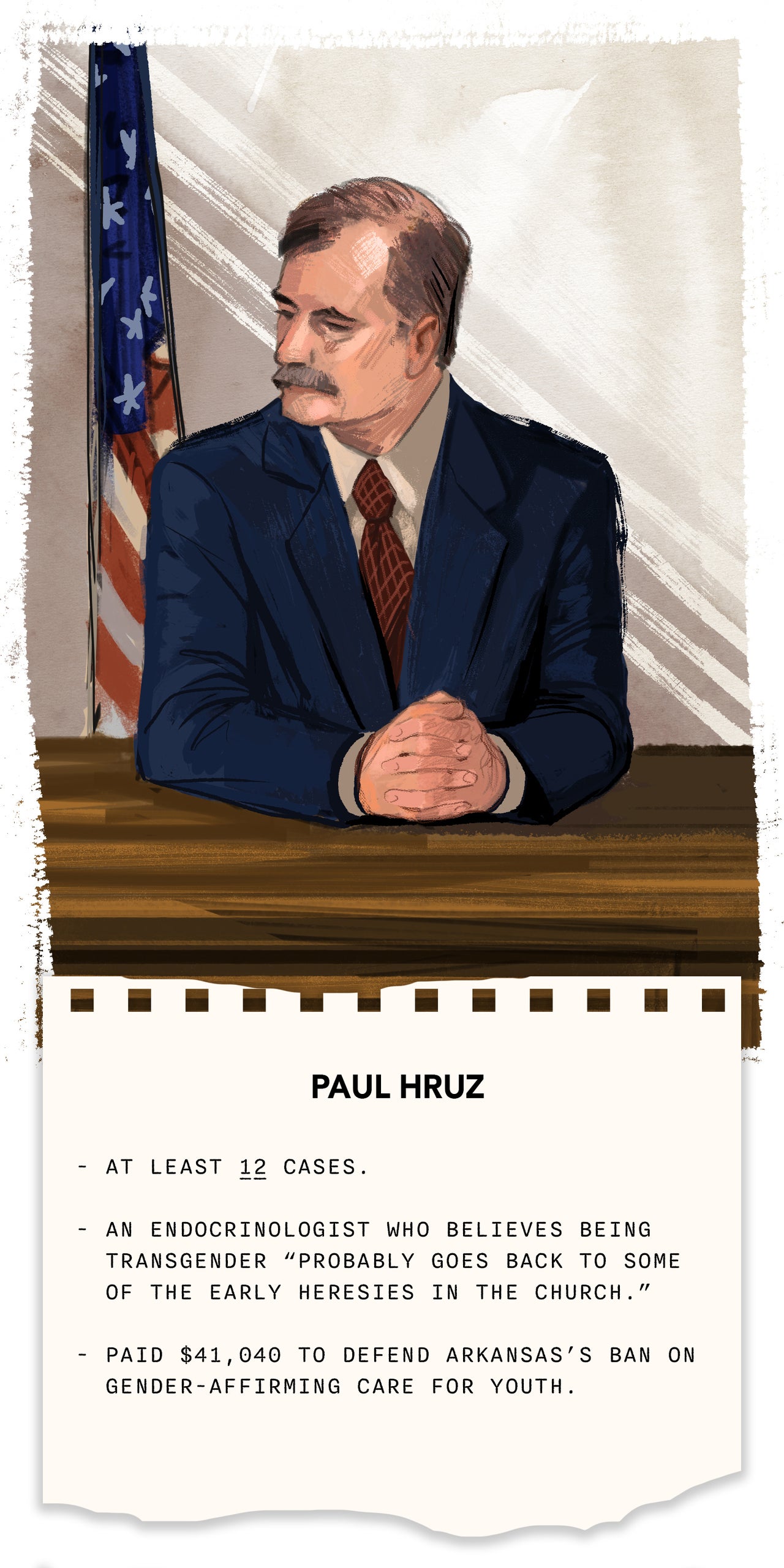
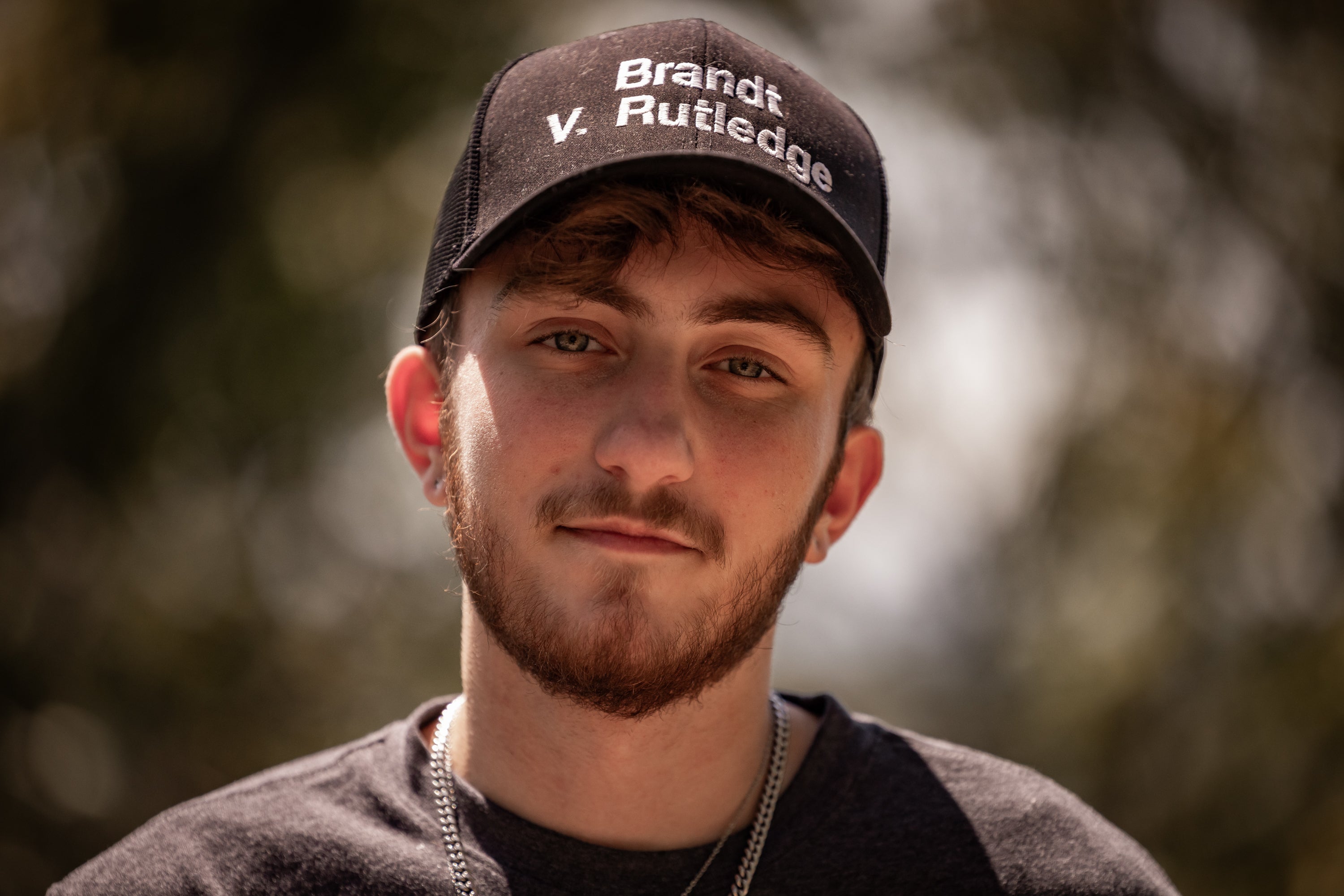
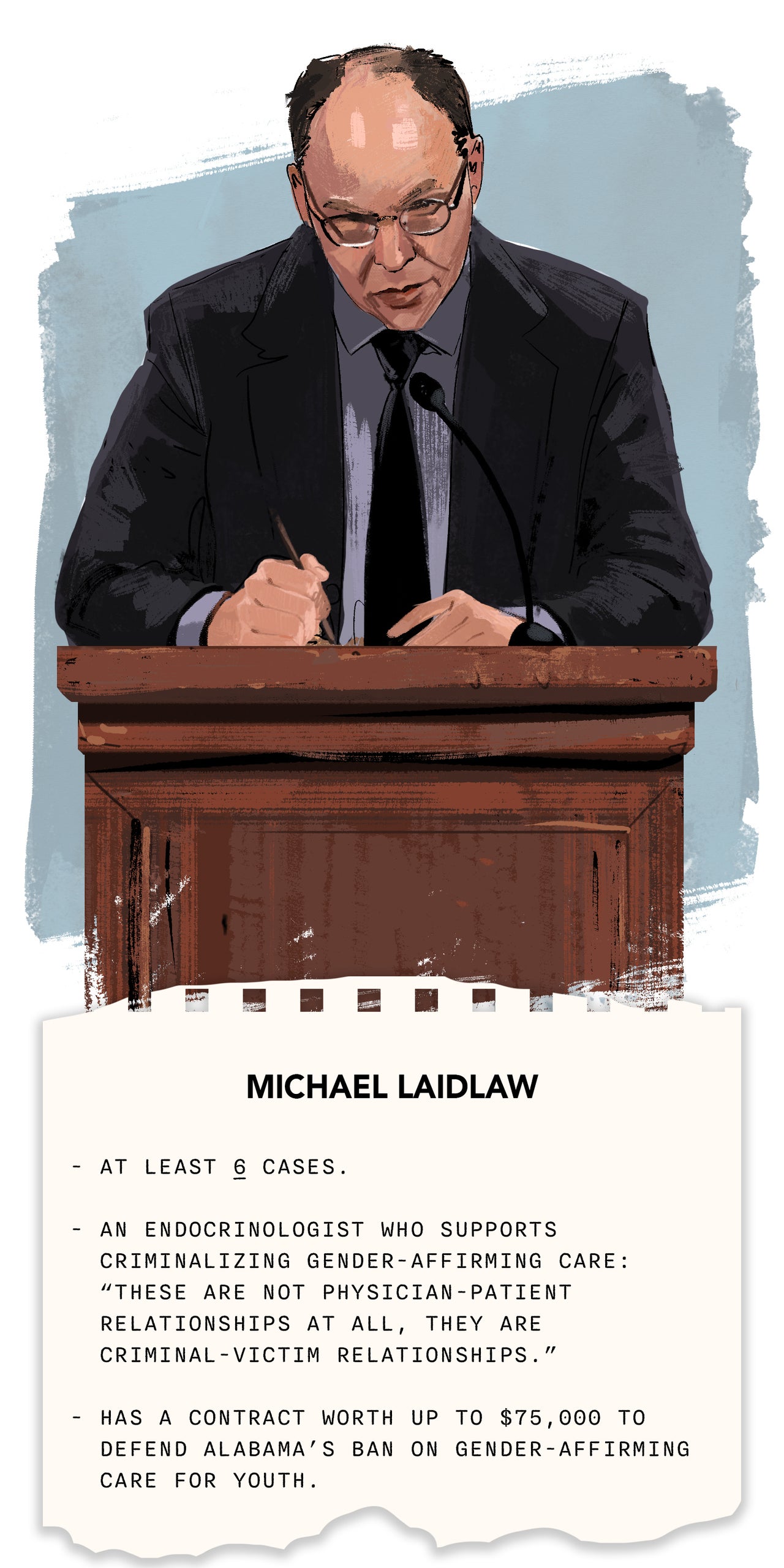
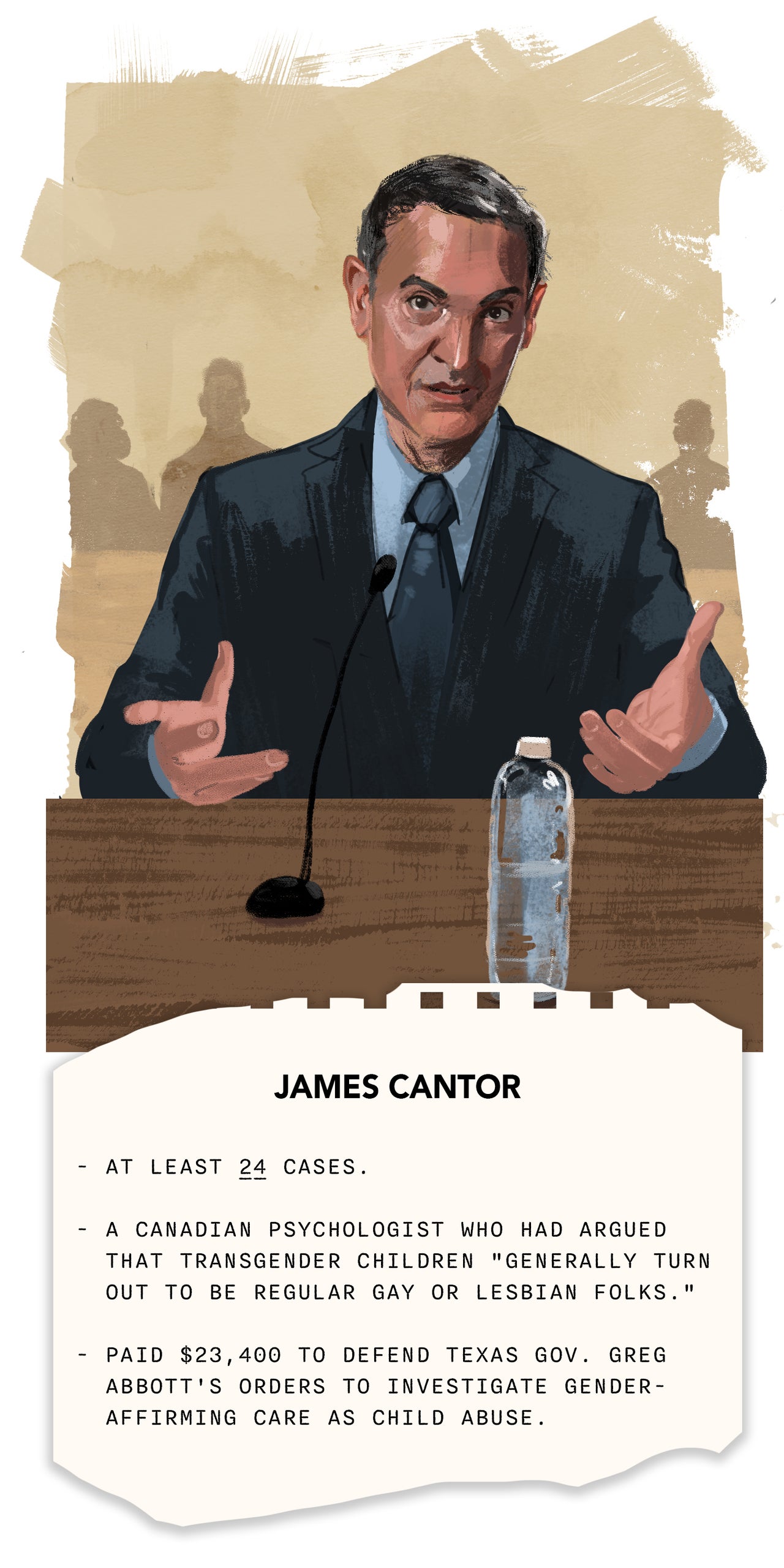


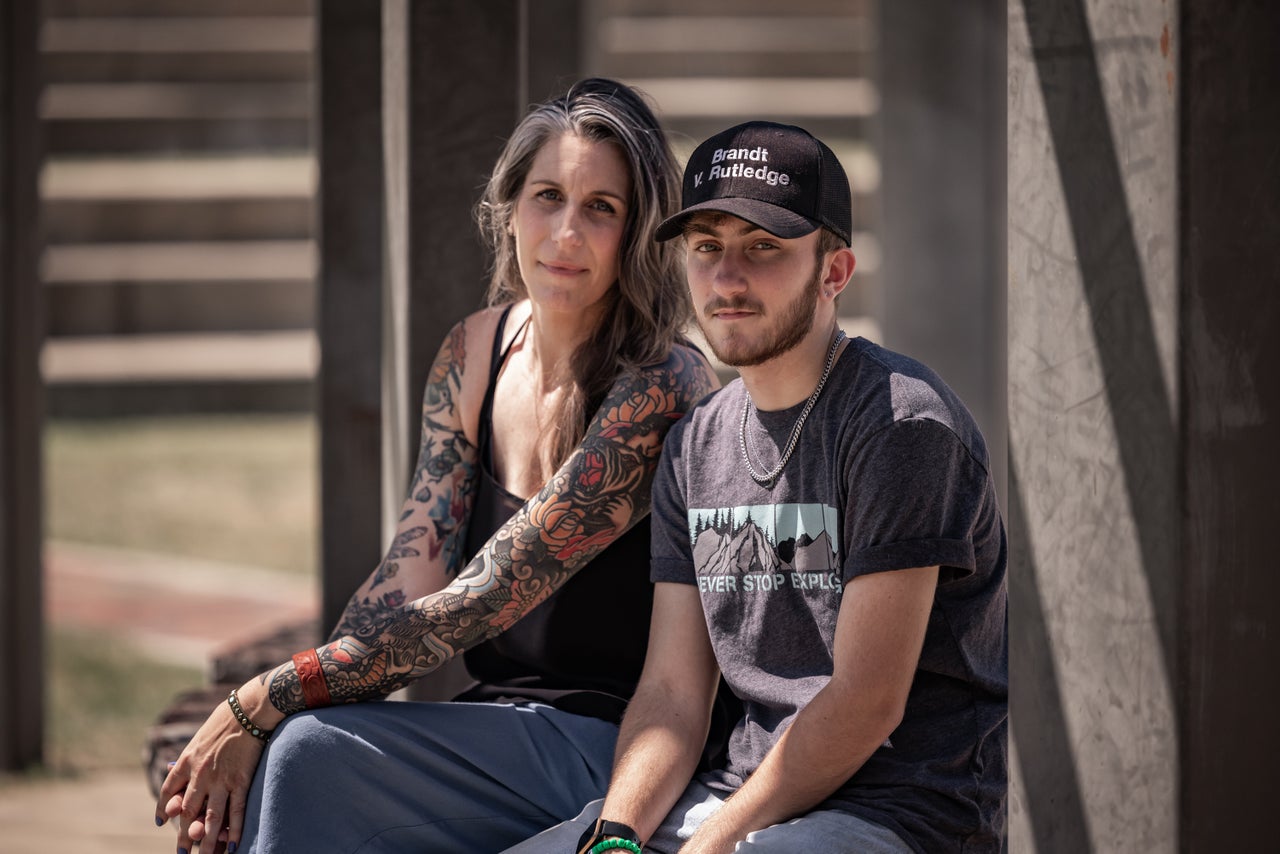
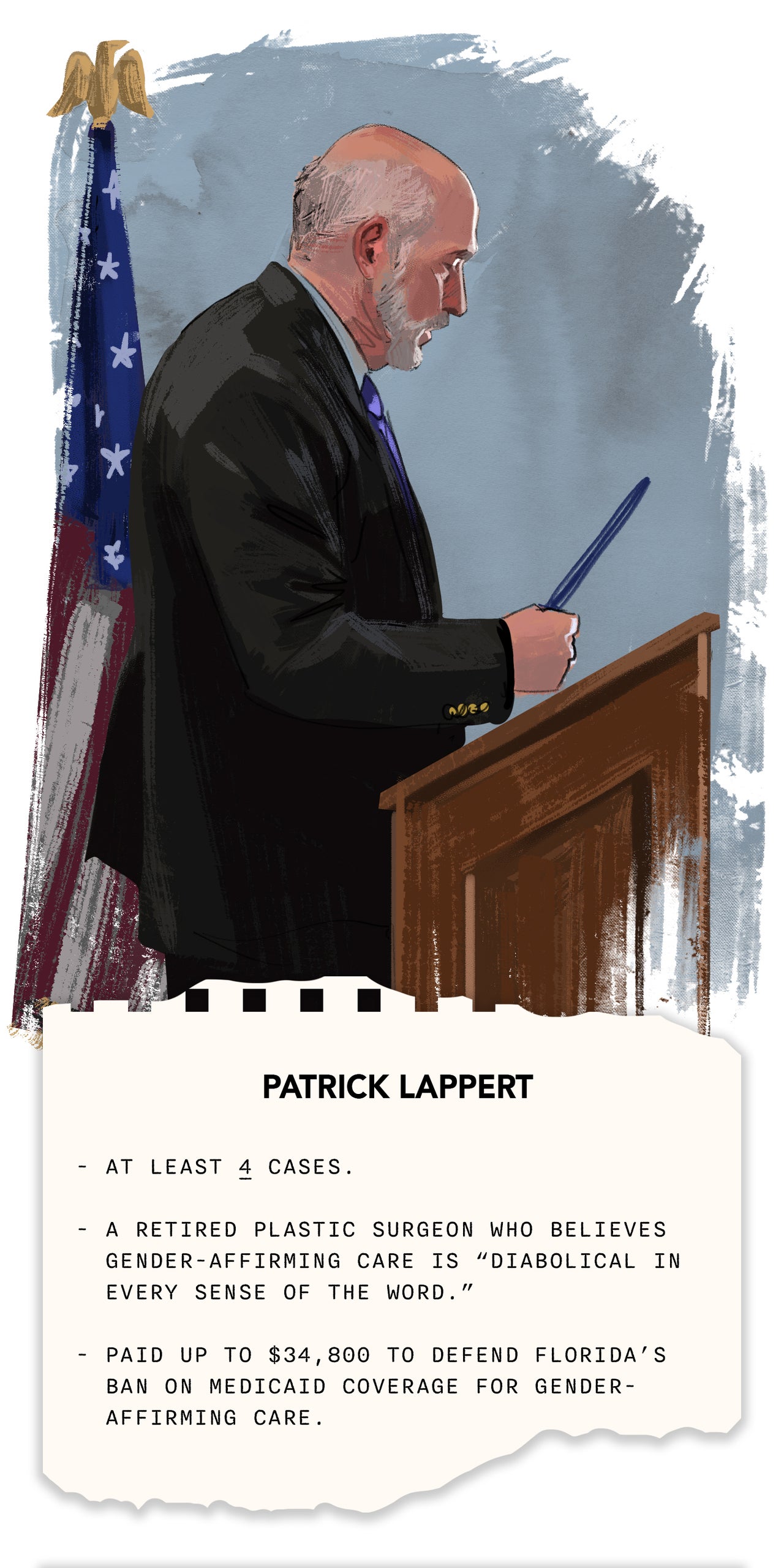
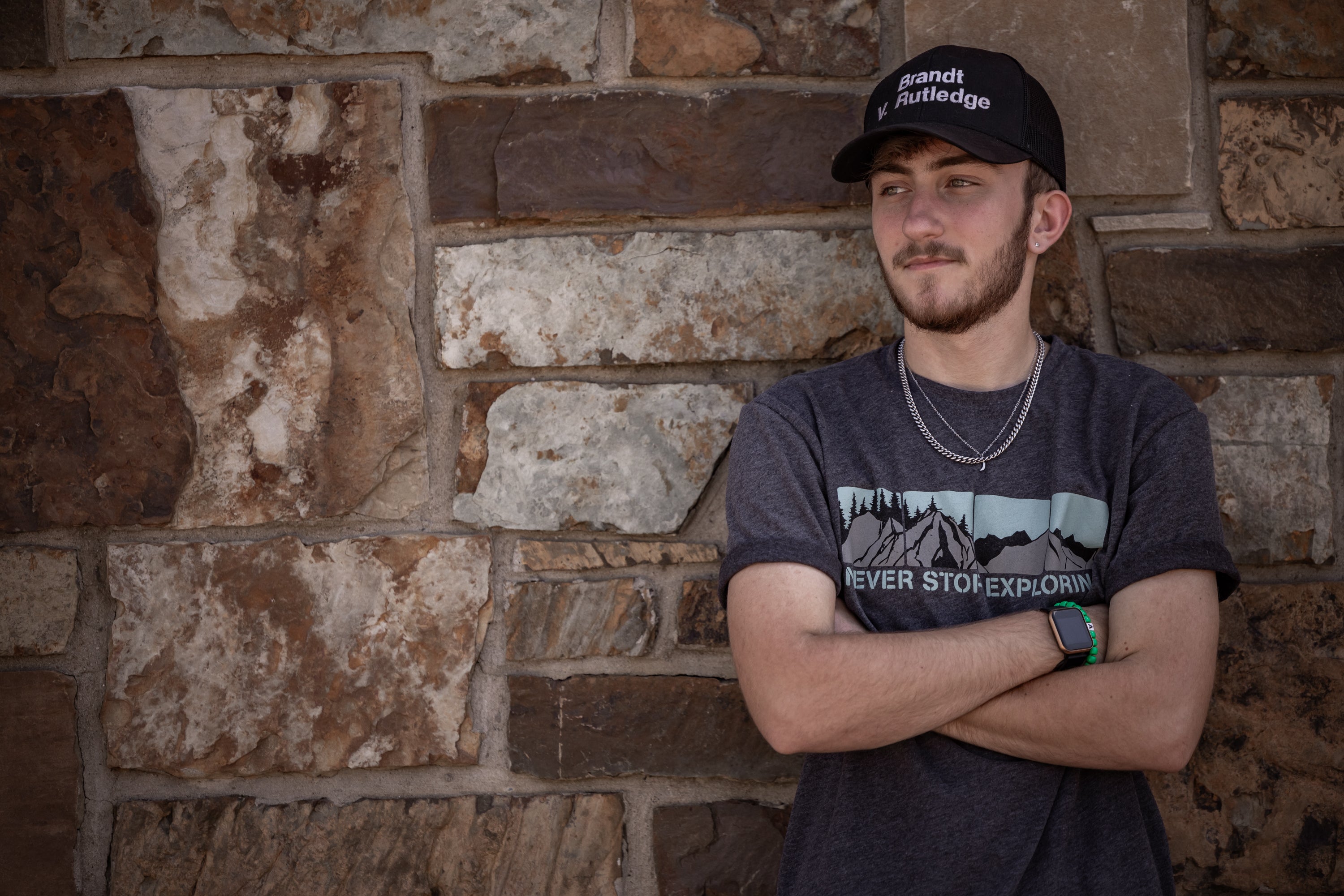



 Scottie's Playtime