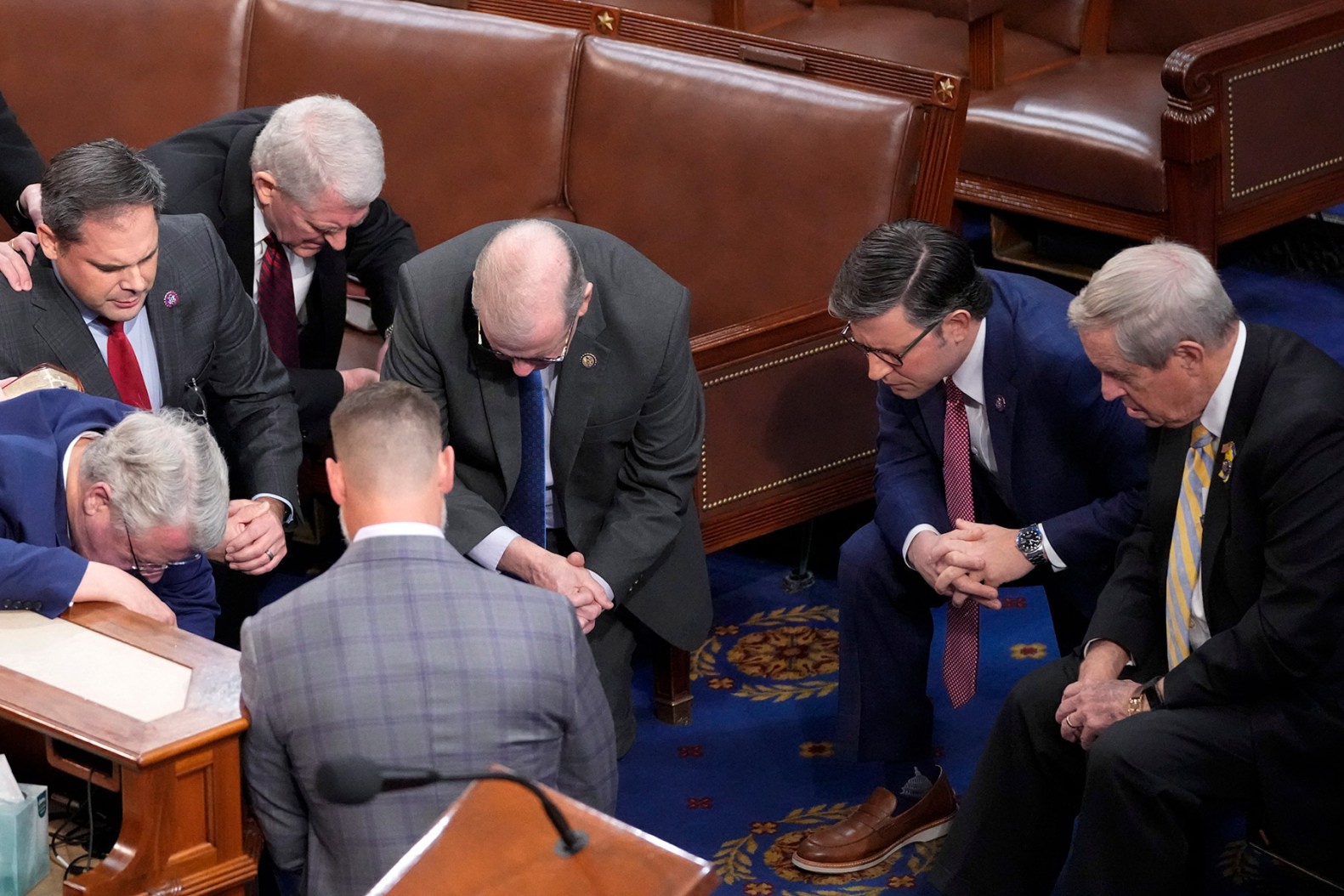
Students are shown at Carl Wunsche Sr. High School, 900 Wunsche Loop, Tuesday, Feb. 4, 2025, in Spring.
Melissa Phillip/Staff Photographer
A lawmaker pushing to ban non-human behavior in schools says he based his bill on a conversation with a school administrator, who has since denied so-called furries are a problem in her district.
During an at-times tense hearing Tuesday night, Republican state Rep. Stan Gerdes said he filed the bill after hearing “reports of the presence of a furry” in a Smithville school. He said he called the district superintendent in November, who told him “this is happening in districts across the state” and schools don’t have the ability to stop it.
“We just want to help them have the tools to get some of the distractions out of the classroom so we can get back to teaching time,” Gerdes told the House Public Education Committee.
But the Smithville school district issued a public statement last month disputing Gerdes’ claims. It said Superintendent Cheryl Burns told Gerdes there were no litter boxes on campus for use by students dressed as cats, but as a courtesy to the lawmaker, she “made the extra effort to walk the campus to confirm.”
“At this time, the District has no concerns related to students behaving as anything but typical children,” the statement said.
Still, Gerdes argued the legislation was needed to curb the “extremely concerning” trend while providing scant evidence furries are a problem, or even present, in Texas schools.
Both Gov. Greg Abbott and House Speaker Dustin Burrows have backed the “Forbidding Unlawful Representation of Roleplaying in Education (F.U.R.R.I.E.S) Act,” which would prohibit any “non-human behavior” by a student, including wearing animal ears or barking, meowing or hissing.
The bill includes exceptions for sports mascots or kids in school plays and would only apply to grades 6-12. Still, it includes a clause that would amend the family code to deem schools “allowing or encouraging” a child to “develop a dependence on or a belief that non-human behaviors are societally acceptable” as child abuse.
The furries trend has existed for years, at least among adults. Many like taking on animal personas, dressing up in costumes and attending gatherings. The annual Anthrocon convention in Pittsburgh draws thousands.
Rumors about classrooms adapting to child furries appeared to start online in 2022. School districts in Iowa, Michigan and Nebraska later debunked claims they were providing litter boxes in bathrooms, and the fact-checking team at PolitiFact could not find any credible news reports that supported the claim.
Under questioning from a Democrat on the panel, who cast the bill as part of a “smear campaign” against public schools, Gerdes could not point to a single example of a school providing litter boxes to students.
Gerdes, a two-term legislator and past aide to former Gov. Rick Perry, said his office has received “some reports of them.”
“Did I go to these school districts and visit and see it with my own eyes? No,” Gerdes said.
When Gerdes introduced the legislation last month, he said he fully expected members of the subculture he was targeting to show up at the Capitol “in full furry vengeance” when the bill was heard.
“Just to be clear — they won’t be getting any litter boxes in the Texas Capitol,” the Smithville Republican said in a press release announcing the bill.
But there were no so-called furries or litter boxes at the late-night hearing Tuesday. Instead, the four people who showed up to testify against the measure included a public school teacher and a Texan who worried the measure could affect students with disabilities.
State Rep. James Talarico, a Round Rock Democrat who grilled Gerdes on the legislation, called the bill a “joke,” but said it would have serious consequences for educators. Teachers and schools could face fines of $10,000 to $25,000 for allowing behavior prohibited by the bill.
Talarico questioned whether a student licking their fingers after eating Cheetos would be prohibited by language in the bill, which defines “non-human behavior” as “licking oneself or others for the purpose of grooming or maintenance.” He asked whether students reading “Animal Farm” would be flouting the law if they made sounds like the characters in the book.
Gerdes said neither would meet the intent of the bill, and said he would be open to working with Talarico on the language to make him more comfortable with the legislation.
“I’m not comfortable with any bill that’s going after a non-existent issue,” Talarico responded. He cast the bill as part of an effort by Republicans to undermine public schools.
“Governor Abbott has used this litter box rumor to paint our schools in the worst possible light,” Talarico said. “That’s because if you want to defund neighborhood schools across the state, you have to get Texans to turn against their public schools. So you call librarians groomers, you accuse teachers of indoctrination, and now you say that schools are providing litter boxes to students. That’s how all of this is tied together.”
Gerdes denied the accusation. Later in the hearing, state Rep. Jeff Leach, a Plano Republican, defended Gerdes as a supporter of public schools and cast Talarico’s opposition to the legislation as part of an “obsession” with the governor.
“His hatred for Gov. Abbott and for private school vouchers or educational savings accounts has just gone too far,” Leach said. “You’re highly respected,” he told Gerdes, “and this bill doesn’t change that.”
The committee left the measure, House Bill 54, pending.
“They were shouting at me, threatening to rape me, chanting ‘death to Arabs’. I thought the police would protect me from the mob, but they did nothing to intervene,” she said.
At one point, she and the police officer were nearly cornered against a building, the video shows. “I felt sheer terror,” the woman recalled. “I realized at that point that I couldn’t lead this mob of men to my home. I had nowhere to go. I didn’t know what to do. I was just terrified.”
After several blocks, the officer hustled the woman into a police vehicle, prompting one man to yell, “Get her!” The crowd erupted in cheers as she was driven away.
Committee calls figure a ‘conservative estimate’ and warns Musk may seek to use his influence to avoid legal liability
“While the $2.37 billion figure represents a credible, conservative estimate, it drastically understates the true benefit Mr Musk may gain from legal risk avoidance alone as a result of his position in government,” the report states.
UPDATED: Super Hornet Assigned to USS Harry S. Truman Lost at Sea
The single-seat Super Hornet assigned to the “Knighthawks” of Strike Fighter Squadron (VFA) 136, “was actively under tow in the hangar bay when the move crew lost control of the aircraft. The aircraft and tow tractor were lost overboard,” reads the statement.
“Sailors towing the aircraft took immediate action to move clear of the aircraft before it fell overboard. An investigation is underway.”
DOGE employees gain accounts on classified networks holding nuclear secrets
Two members of Elon Musk’s Department of Government Efficiency were given accounts on classified networks that hold highly guarded details about America’s nuclear weapons, two sources tell NPR.
Luke Farritor, a 23-year-old former SpaceX intern, and Adam Ramada, a Miami-based venture capitalist, have had accounts on the computer systems for at least two weeks, according to the sources who also have access to the networks. Prior to their work at DOGE, neither Farritor nor Ramada appear to have had experience with either nuclear weapons or handling classified information.
Karoline Leavitt Boasts Trump Wouldn’t Hesitate to Arrest SCOTUS Justices
White House Press Secretary Karoline Leavitt suggested the Trump administration would consider arresting high-ranking judges—including Supreme Court justices—at a press briefing Monday.
“As you guys look at other judges, would you ever arrest somebody higher up on the judicial food chain, like a federal judge or even a Supreme Court justice?” Fox News reporter Peter Doocy asked.
Leavitt said no judge is safe from the administration’s crackdown on the judiciary.
“The first time, I had two things to do — run the country and survive; I had all these crooked guys,” Trump said in the interview published Monday. “And the second time, I run the country and the world.”
Johnson says it’s ‘game time’ as House committees draft first piece of Trump agenda
The $150 billion in defense programs includes $25 billion for Trump’s “Golden Dome” for missile defense, $34 billion in ship building and more than $20 billion in munitions purchases. The House Armed Services Committee plans to begin voting on Tuesday on this aspect of the bill.
On border security, the House Homeland Security Committee proposes $46.5 billion for new border barriers, $5 billion for new Customs and Border Protection facilities and $4 billion for new Customs officials and border personnel.
The committee proposes several billion dollars more in new technology to tighten security measures at the border and also includes $1 billion for security and planning for the 2028 Olympics, as well as $625 million for the 2026 FIFA World Cup.
Rev. William Barber arrested in Capitol Rotunda after praying against Republican-led budget
Reached for comment, a Capitol police spokesperson said Barber and two others were charged with “crowding, obstructing and incommoding,” explaining demonstrations in congressional buildings are “not allowed in any form, to include but not limited to sitting, kneeling, group praying, singing, chanting, etc.”
Some quickly argued that Barber’s arrest appeared incongruous with President Donald Trump’s efforts to eliminate “anti-Christian bias” in federal agencies.
“Arresting Rev. Barber and others at the Capitol after announcing a task force to eradicate anti-Christian bias in government is an absolute travesty,” Anthea Butler, a professor of religion at the University of Pennsylvania, said in a text message. “Seems like this administration only wants Christians who are supporters of Trump to have access to pray in the Capitol and express their faith.”
These people are not undocumented. They had immigration papers. Plus the Tren de Aragua gang do not have common tattoos nor hand signals. So everything the government claims is again suspect and wrong. I offer the quotes below. They had papers saying this person is not subject to removal but ICE took them anyway. Hugs
“Let me be as crystal clear as possible,” Cano wrote in his resignation, obtained by KOAT. “The very first time I ever heard that the boys could possibly have any association with Tren de Aragua was when I was informed of that by [the] agents on the day of the raid.”
He added that each of the men had immigration paperwork that suggested that they were not subject to removal. “Their papers stated in the upper right-hand corner, ‘This Person is Not Subject to Removal.’ They each had a specific court date regarding their asylum hearing,” Cano stated.
Story by Kelly Rissman
• 23h
Immigration authorities raided a former New Mexico judge’s home, where they accused him of harboring an alleged Tren de Aragua gang member, and took him into custody.
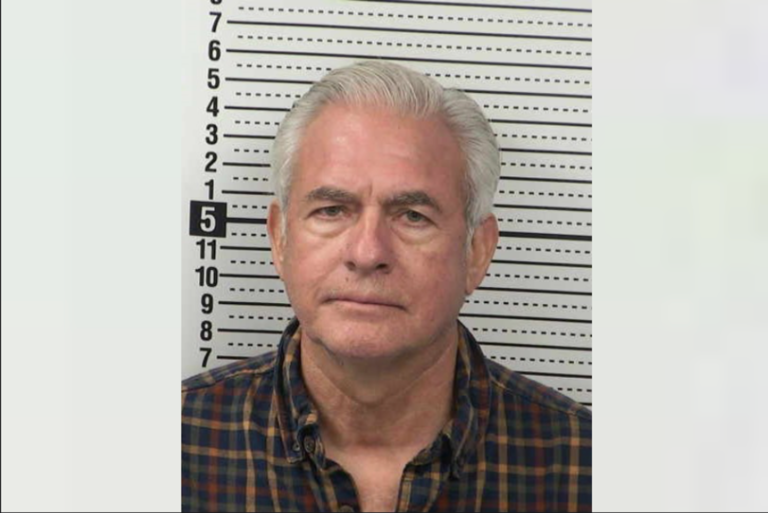
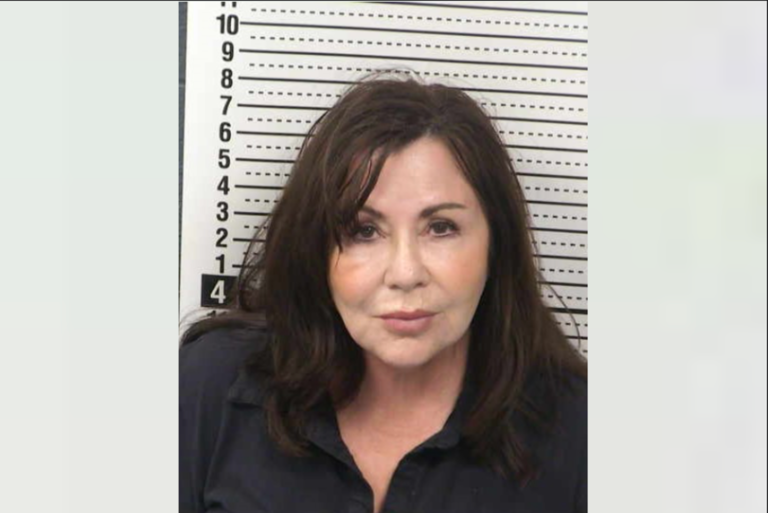
Former Dona Ana County Magistrate Judge Joel Cano, 67, and his wife, Nancy Cano, 68, were arrested by Immigration and Customs Enforcementx Thursday after a tipster claimed that undocumented migrants associated with the Venezuelan gang were staying at their home. The couple has been charged with tampering with evidence, jail records show.
The investigation began in January 2025 after ICE received an anonymous tip that “an illegal alien from Venezuela and a suspected member of a criminal gang, was residing with other illegal aliens in the United States” at the judge’s home in Las Cruces and was in possession of firearms, according to court filings.
Two search warrants were executed at the Canos’ home on February 28, during which authorities seized four guns and took three immigrants into custody, documents say.
The judge resigned in March after federal authorities accused the couple of housing an undocumented Venezuelan immigrant, Cristhian Ortega-Lopez, at their home.
A former New Mexico judge, Joel Cano, and his wife, Nancy Cano, were arrested after ICE accused them of harboring members of a Venezuelan gang (Dona Ana County Jail)
“Let me be as crystal clear as possible,” Cano wrote in his resignation, obtained by KOAT. “The very first time I ever heard that the boys could possibly have any association with Tren de Aragua was when I was informed of that by [the] agents on the day of the raid.”
He added that each of the men had immigration paperwork that suggested that they were not subject to removal. “Their papers stated in the upper right-hand corner, ‘This Person is Not Subject to Removal.’ They each had a specific court date regarding their asylum hearing,” Cano stated.
He continued: “I have three grandkids that I love dearly. Their ages are 15, 8 and 6. There is no way in the world that I would have allowed my grandkids to have any contact with the boys if I had sensed danger.”
Ortego-Lopez installed a glass door for Nancy Cano in late 2023, according to court documents. He continued doing a few jobs for her in 2024 and after he was evicted from his apartment in April 2024, she offered him a stay in their “casita,” a small house on their property. There, Ortego-Lopez was given access to guns, the filing says.
Ortega-Lopez allegedly posted photos of himself on social media holding guns. Agents also looked at the social media accounts of the other undocumented immigrants staying at the judge’s house that suggests “clear indicators” of association with the Venezuelan gang.
“These indicators included tattoos, clothing apparel and displaying hand gestures,” the government wrote.
Nancy Cano has been accused of witness tampering after she allegedly let Venezuelan gang members live in a ‘casita’ on her property (Dona Ana County Jail)
The president’s order states that “all Venezuelan citizens 14 years of age or older who are members of [Tren de Aragua], are within the United States, and are not actually naturalized or lawful permanent residents of the United States are liable to be apprehended, restrained, secured, and removed as Alien Enemies.” The ACLU sued administration officials over their use of the Alien Enemies Act and a judge issued a temporary restraining order barring the migrants from being deported. Still, the planes flew to El Salvador; the judge this month said he found “probable cause” to hold the Trump administration in criminal contempt.
The Supreme Court ruled earlier this month that the Trump administration has the authority to deport migrants under the centuries-old act but also ordered that the government provide detainees an opportunity to contest their removals in court districts nearest to the detention centers where they are being held.
The Independent is the world’s most free-thinking news brand, providing global news, commentary and analysis for the independently-minded. We have grown a huge, global readership of independently minded individuals, who value our trusted voice and commitment to positive change. Our mission, making change happen, has never been as important as it is today.
I read a theory on Facebook yesterday, which means there was heavy research behind it (sarcasm), that Trump only hired morons because they would provide distractions from all the Trump Fuckery he’s implementing. I think that might be a bonus, but I don’t agree with it.
I think Trump only hires morons, not because they’re morons, but because they’re all sycophants and none will challenge his Trump Fuckery. For the love of God, Kristi Noem even got the Melania hairstyle. I’m kinda shocked JD Vance didn’t get it too.
We’ve gone over the idiot picked from Fox & Friends in the Defense Department, Pete Hegseth, inadvertently leaking classified intel, so let’s discuss the puppy-murdering idiot at Homeland Security.
Kristi Noem had her purse snatched while at Capital Burger in Washington, DC. Surveillance footage showed the suspect purposefully moving close to Noem as he zeroed in on her Gucci bag near her feet.
A source said the thief, dressed in dark clothing, sat down at an empty table next to Noem with his back facing her and used his left foot to slide the bag away. He surveyed the restaurant before eventually picking up the bag, covering it with his jacket, and leaving.
He was a smooth criminal, but ya ain’t gotta be that smooth to steal from a Trump dummy.
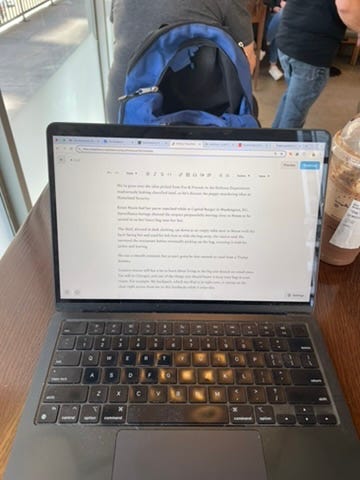
Country mouse still has a lot to learn about living in the big city (knock on wood since I’m still in Chicago), and one of the things you should know is to keep your bag in your vision. For example: My backpack, which my iPad, passport, keys, and other items is in right now, is sitting on the chair right across from me in this Starbucks while I write this.
See? No one’s gonna steal my Mocha Frappe either.
So Kristi doesn’t know how to traverse the big city, but what’s her detail’s excuse? While Noem was dining with her family, who still hasn’t alienated her despite the puppy killing, the Secret Service inside the restaurant keeping an eye on things. Well, most things.
The thief managed to swipe Noem’s purse right in from of her, the Secret Service, and every member of those yee-haw fuckers she calls her family. This must be a criminal mastermind. If the government catches him, I suggest they hire him. He can teach the Secret Service how thieves steal from MAGA morons.
But what’s interesting is what was inside Noem’s Gucci bag, as it included a Louis Vuitton Clemence wallet, her driver’s license, medication, apartment keys, passport, DHS access badge, makeup bag, blank checks, and about $3,000 in cash.
Ya know, if a Russian, North Korean, or Chinese spy wanted to access our government, they don’t have to do none of that Tom Cruise Mission Impossible crap. They would just need to snatch Kristi Noem’s purse…or just wait for Pete Hegseth to share classified intel on a chat app, or for Trump to Tweet it or hand it to Russians in the Oval Office.
But what was Kristi doing with $3,000 in cash? Did the thief also steal her pager? Paging Director Dumbass! A DHS spokesgoon said, “Her entire family was in town, including her children and grandchildren – she was using the withdrawal to treat her family to dinner, activities, and Easter gifts.”
Hey, country mouse. Have you ever heard of a bank card? Even the food trucks in DC take them. Try the Venezuelan food truck by the L’Enfant Metro station. It’s amazeballs.
Sure, we should all keep some cash on us, because you never know, but $3,000 is a bit much. And why is she carrying blank checks? Hardly anyone takes checks anymore, and everyone should be advised not to take checks from Trumpers. Elon’s probably still waiting for Trump’s check to clear for the Tesla he purchased on the White House lawn.
Jonathan Wackrow, a CNN law enforcement analyst and former Secret Service agent, said, “If necessary, the Secret Service will need to make operational changes on how they deal with these types of private events moving forward.” If anything, it’ll be necessary for the Secret Service to adjust and realize they’re guarding very stupid people now, people who aren’t smart enough to keep their stuff in their sight.
Wackrow also said Noem remains “at higher risk for targeted threats, both by foreign and domestic actors, and just her public profile alone makes her a symbolic target.”
Well, she’s a higher target now that everyone knows how stupid she is.
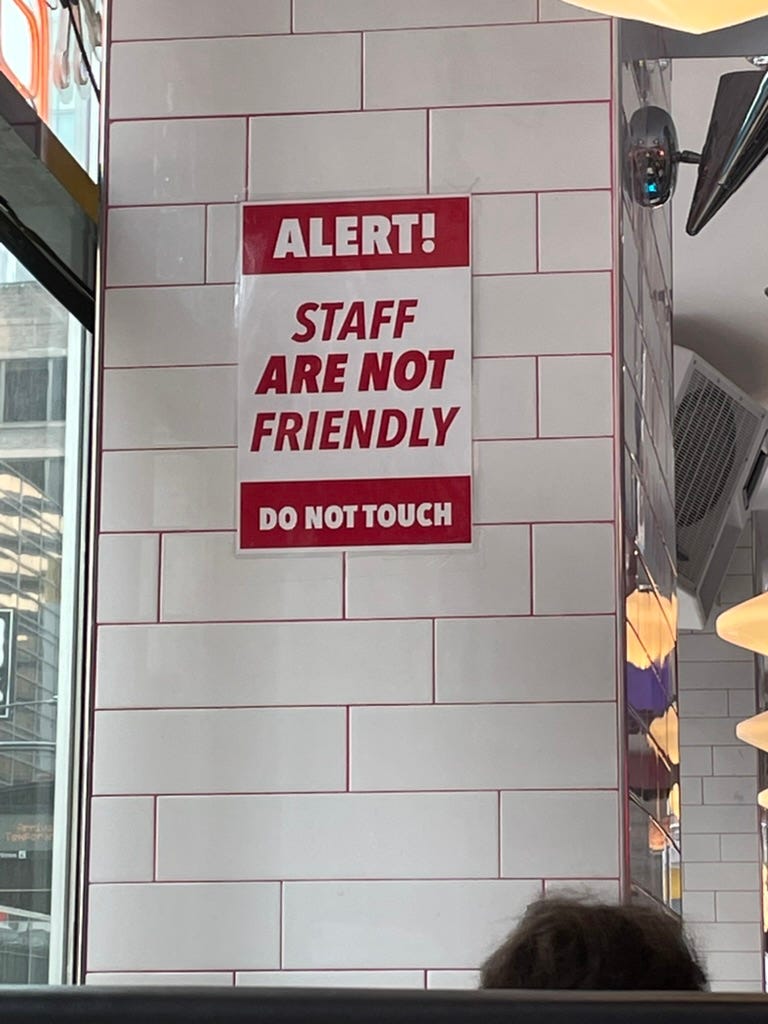
Chicago note: After my deadlines were met yesterday, I was free to go exploring. I got a meatloaf sandwich at a place where the waiters insult you.
I love how Rev. Ed Trevors looks at other faiths and religions. They are not a threat to him, his religion, nor his god. I personally think if a person’s faith doesn’t harm others and helps them it is grand even if I don’t believe the same way. If you get benefit from your faith, your god, your religion and cause no harm to others … and maybe even helps other then it is a grand thing. Remember even though I am an atheist I was rescued at 17 yrs old by a very devout Christian. He did not turn his back on an abused kid like so many others did. So I don’t, do not, believe that religion poisons everything. It is like everything else in life it is how you use it that makes it good or bad. If you use your faith, your god as a crutch for your own hate, if you claim your deity hates others based on who you hate … then you are not following the Christian Jesus but maybe the one that tempted him. As Belle and Beau say … It is just a thought. Hugs.
This video touches just briefly on child abuse in that the republicans / clergy / highly religious do in the defense of the LGBTQ+ especially trans people accused of it. The Rev. Trevors is a real supporter of the LGBTQ+ and he doesn’t like it when Christians use his god / bible to harm others. Hugs
Does this keep us safe? What harm does washing her hands cause? What is more traumatic, a passing trans person in the bathroom washing their hands or the police barging in and arresting someone in the bathroom. I can see the mistake she made. She thinks they know in their hearts that it is wrong to make bans on trans people. No they are sure their god, one with the same name as her own god, but their god is the hateful vengeful fundamentalist Old Testament god while her is a loving Jesus. Hugs.
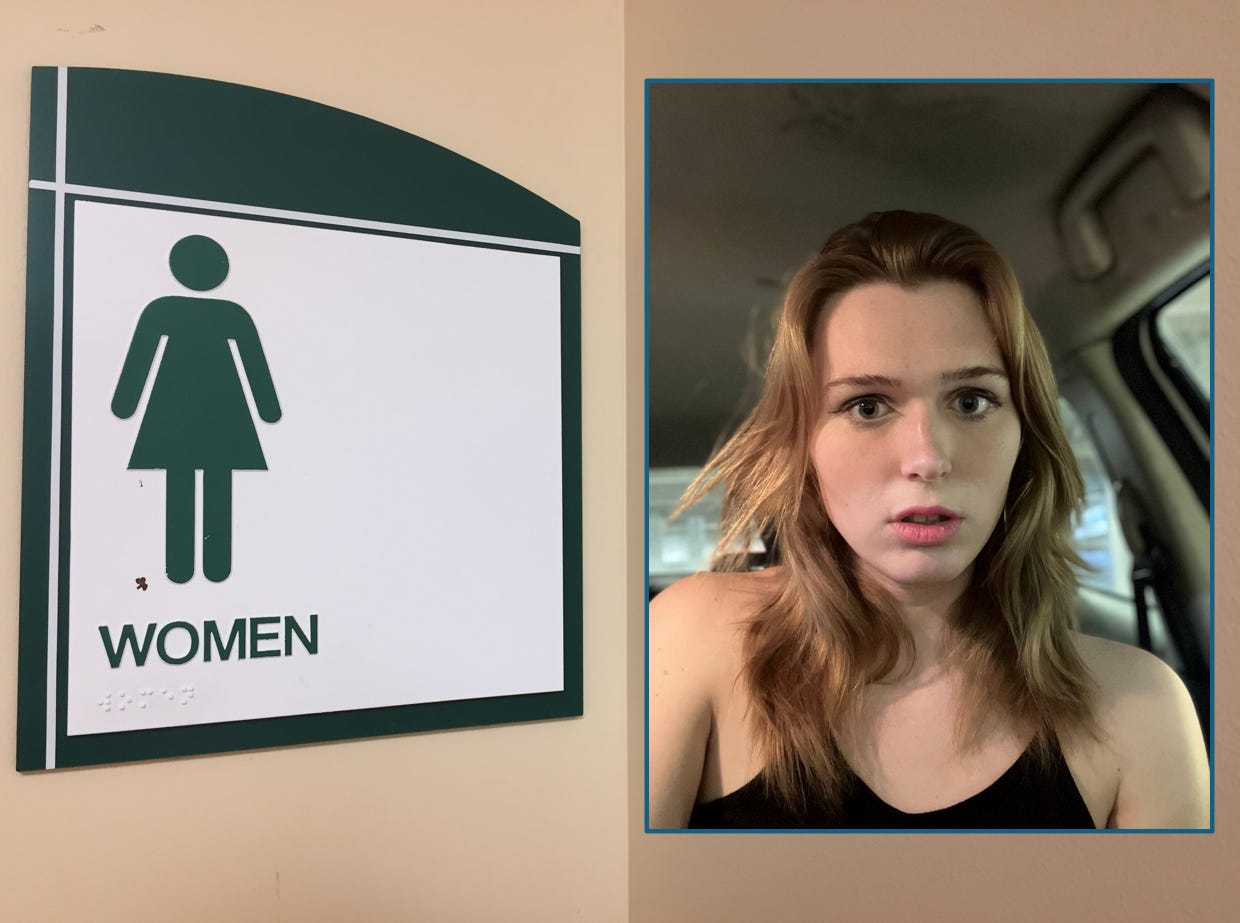
Left – Wikimedia Commons, Khrystinasnell // Right: Marcy Rheintgen, selfie
Erin In The Morning is a reader-supported publication. To receive new posts and support my work, consider becoming a subscriber.
Subscribe
When 20-year-old college student Marcy Rheintgen made her yearly spring break trip to her grandparents’ property in Florida, she said she felt at peace — until March 19, when police escorted her out of the bathroom of the State Capitol Building and placed her in handcuffs. Evidently, Rheintgen had violated a 2023 state law criminalizing trans people who use government-owned public restrooms that align with their gender.
Tampa Bay Times reporter Romy Ellenbogen accompanied Rheintgen to the Capitol. When they arrived, several officers were stationed outside the women’s restroom doors. They warned her not to enter the women’s restroom. Draped in a white, frilly dress and a pink bow, Rheintgen went in anyway and washed her hands.
That’s when police entered the restroom and told Rheintgen she was being detained. A devout Catholic, she had wanted to take a moment to pray the rosary, but she never got the chance.
After spending less than 60 seconds in the women’s restroom, Rheintgen said, she was charged with trespassing with a warning.
Meanwhile, her rosary was confiscated as an officer from the Florida Department of Law Enforcement handcuffed and detained Rheintgen, searched her person and her vehicle, and then shuttled her to the Leon County Detention Facility, where she stayed overnight in the men’s ward. If convicted, she could spend up to 60 days incarcerated.
The FDLE did not respond to a request for comment.
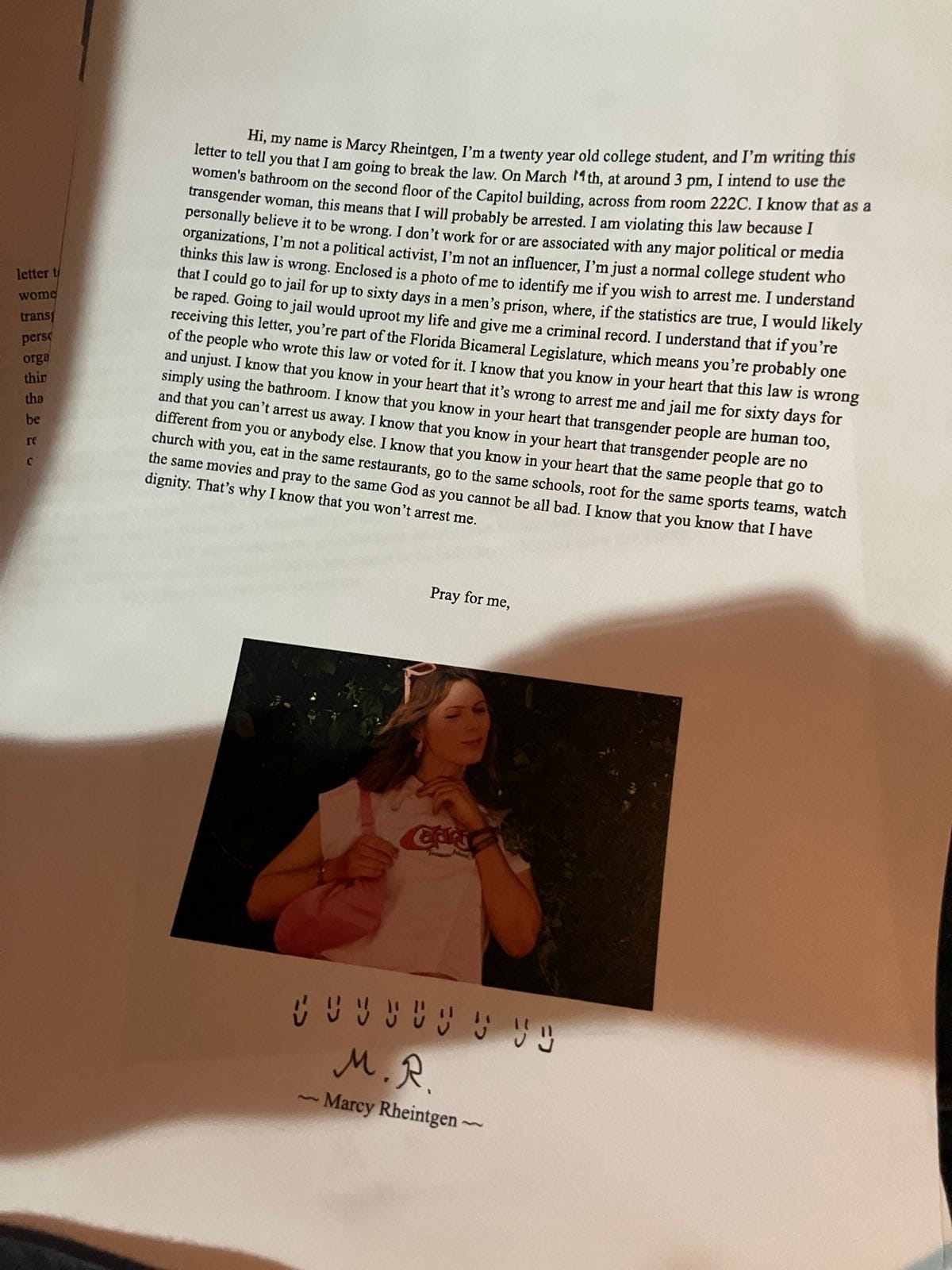
About a week before her trek, she sent about a hundred and sixty print letters to Florida lawmakers announcing she would engage in the time-honored practice of civil disobedience: She would use the women’s restroom at the Florida State Capitol. She named her date and time.
The letter sent to Florida legislators. Image courtesy of Marcy Rheintgen.
“I know that as a transgender woman, this means I will probably be arrested. I am violating laws because I personally believe it to be wrong.
“I’m not a political activist,” she told Erin in the Morning. “I’m just a normal college student who thinks this law is wrong.”
The letters included a photo of herself so that officials could identify her. “I understand I could go to jail for up to sixty days in a men’s prison, where if the statistics are true, I would likely be raped.”
She writes that going to jail would “uproot her life,” but this was a risk she was willing to take:
“I understand that if you’re receiving this letter, you’re part of the Florida Bicameral Legislature, which means you’re probably one of the people who wrote this law or voted for it. I know that you know in your heart that this law is wrong and unjust. I know that you know in your heart that it’s wrong to arrest me and jail me for sixty days for simply using the bathroom. I know that you know in your heart that transgender people are human too, and that you can’t arrest us away. I know that you know in your heart that transgender people are no different from you or anybody else. I know that you know in your heart that the same people that go to church with you, eat in the same restaurants, go to the same schools, root for the same sports teams, watch the same movies and pray to the same God as you cannot be all bad. I know that you know that I have dignity. That’s why I know that you won’t arrest me.”
Signing off, she added: “Pray for me.”
“I’m a really religious person,” she told Erin in the Morning. She’s a devout Catholic who describes herself as a political centrist, with an appreciation for “family values” but a soft spot for Dorothy Day, the prolific Catholic leftwing activist.
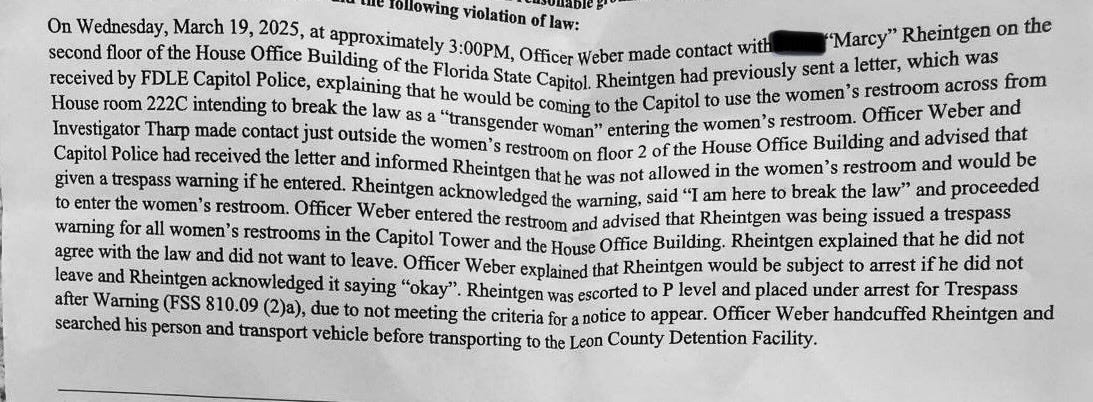
A police affidavit she shared with Erin in the Morning — with her deadname (blurred out below), and the wrong pronouns listed — otherwise corroborates most all of her story.
Photo Rheintgen’s affidavit, but her deadname has been blurred out for privacy. Image courtesy of Marcy Rheintgen.
Rheintgen’s telling is also corroborated by reports from the Tampa Bay Times journalist who accompanied Rheintgen to the bathroom.
A selfie. Image courtesy of Marcy Rheintgen.
“I actually wanted to move to Florida when I was older, growing up, but I don’t know if I can do that now, ” she said. She fondly remembers her favorite beaches and bologna sandwiches with her grandparents. But now, it seems, her “home away from home” isn’t safe for her.
“I don’t want attention. I just want people to see this law and how crazy it is to put people like us in jail. I was so terrified,” she said. She admits she hadn’t consulted legal or advocacy organizations before the endeavor; she didn’t know what to expect. “They were treating me like I murdered someone — but I just used the wrong bathroom.”
Rheintgen said she was motivated to act after seeing the anti-trans legislation surge throughout the United States, and when she read about Hunter Schafer, the Euphoria actress, who was issued a “male” passport despite being a woman. “She’s a personal hero of mine,” Rheintgen said. The fear and the vitriol she saw play out over the news cycle brought her to a breaking point.
While bills like bathroom bans and drag bans have been sweeping the country in recent years, the criminalization of gender diverse people is by no means new. Black and brown trans women, especially, have been routinely criminalized for decades under the guise of “solicitation” or “loitering” ordinances, even in a so-called liberal stronghold like New York. The phenomenon is so pervasive that it has been dubbed the “Walking While Trans Ban.”
Jon Harris Maurer, Public Policy Director of Equality Florida, emphasized that the bathroom bans are just the latest attempt by the state’s GOP to eradicate trans people from public life. “These are hard working, tax paying individuals who are our family, neighbors, and colleagues,” he told Erin in the Morning. “Weaponizing bathroom access in a place like the State Capitol is an antidemocratic effort to block them from directly participating in government while simultaneously stripping their rights behind closed doors.”
Erin In The Morning is a reader-supported publication. To receive new posts and support my work, consider becoming a subscriber.
OK again it is another old one. I should have saved the Disney board standing up to the hateful anti-LGBTQ+ anti-DEIA and the board voting to keep the policies and associations even as they did agree to end the idea of a trans character in a show and do more conservative story lines / characters. But think how tRump at every rally and in front of every courthouse claimed Biden was weaponizing the DOJ and government against him. Remember how bad it said it was that Biden was using the government against his enemies which meant every republican criminal. But now tRump is doing it and his maga cult that used to be called republicans are fine with it. Just like the debt and debt ceiling doesn’t matter now under tRump and did not matter under the first tRump term, but during Biden’s term those two things were constantly shouted by maga on every right wing media show. It is like the party who used to champion family values and law and order was never a believer in those things. Hugs
The US Federal Communications Commission is prepared to block mergers and acquisition proposals from companies that promote “invidious” DEI policies, according to chairman Brendan Carr.
The move could threaten billions of dollars worth of deals in the communications sector, with Carr specifically mentioning Paramount Global’s merger with Skydance Media, Verizon’s acquisition of Frontier Communications, and T-Mobile, which is seeking to purchase US Cellular Corp.’s wireless operations.
“Any businesses that are looking for FCC approval, I would encourage them to get busy ending any sort of their invidious forms of DEI discrimination,” Carr said in an interview Friday.
Federal Communications Commission Chairman Brendan Carr is vowing to use every tool at his disposal to eliminate Diversity, Equity and Inclusion programs from the companies his agency regulates, and has enlisted the help of a high-profile conservative activist in the effort.
Carr met with activist Robby Starbuck on Wednesday to discuss ways the agency can use its enforcement powers to stamp out DEI in the telecommunications sector. The two discussed ways the agency can enforce existing civil rights laws along with President Donald Trump’s recent executive orders targeting DEI in the public and private sectors.
“It’s my hope that this meeting is a wake-up call for businesses within the FCC’s purview that the days of violating the law with DEI are over,” Starbuck told Fox News Digital.
Robby Starbuck has successfully bullied multiple major firms into dropping LGBTQ support with threats of national boycotts.
Since becoming FCC chair, Carr has launched investigations into NPR, PBS, and the east coast flagship broadcast affiliates of ABC, CBS, and NBC.
Carr first appeared here in 2022 when he supported Trump’s demand to ban TikTok. Trump famously reversed on banning TikTok once he found out that GOP megadonor Jeffrey Yass holds a $15 billion stake in the platform.
In 2023 Carr accused then-Rep. Adam Schiff of running a “secret and partisan surveillance machine.” He has also accused the World Health Organization of “beclowning itself” with COVID mitigation advice.
In 2020, Carr told Fox News host Lou Dobbs that “far-left” social media platforms had “hopped from hoax to hoax to hoax” in attacks on Trump.
Carr is a vehement opponent of Net Neutrality and opposed efforts to block Elon Musk from purchasing Twitter.
Last year Carr wrote a full chapter in the Heritage Foundation’s book in support of Project 2025.
I know this is ten days old, but I had it open in a saved tab to share. Most of those I am deleting but this one is just too over the top stupid in a way to keep their maga cult base hyped up or enraged. This has to be one of the greatest hoaxes ever pulled on the right. But remember Texas is run by a group of very wealthy fundamentalist religious leaders who demand society return to the 1950s society they remember and loved. They want a state / country that is white Christian male dominated and give unearned respect. They want Christianity, their version of the god worshiped by their church to be forced on everyone so they can get more donations, more forced white babies that are dragged to church by their parents, more butts in pews, more donations in the plate, more tithes. These are the kind of people that if they don’t feel that way, if they are not into something, then no one should be. They are straight cis people who think anyone not straight or cis is doing it as a choice because they are mentally ill and need to be fixed / cured. These are the people with no empathy who want conversion therapy torture done on children and young adults who are LGBTQ+. Hugs
A freshly filed bill brings the topic of furries in Texas schools to the House. The bill, Forbidding Unlawful Representation of Roleplaying in Education Act, pet-named the F.U.R.R.I.E.S Act, would ban students from observing “non-human behaviors,” which include, but are not limited to, meowing, barking and hissing; wearing a tail, collar, or ears; and licking oneself in a grooming manner.
The F.U.R.R.I.E.S Act, filed by Rep. Stan Gerdes [photo], a Republican lawmaker from Central Texas, does not apply to any specific age group, and instead blankets all students at Texas schools, at the public and private level. The only exceptions are mascots, designated dress-up days and children participating in performances.
The bill follows a debunked right-wing conspiracy theory that teachers were providing students who identify as cats with litter boxes. Indeed, a section of the bill explicitly prohibits “using a litter box for the passing of stool, urine, or other human byproducts.”
Gov. Greg Abbott on Thursday resurrected debunked rumors that public schools were putting litter boxes in classrooms for students dressed as cats, amplifying right-wing criticism of some educators as he pushes for a statewide private school voucher program. The Texas Republican told a gathering of pastors at a Baptist church in Austin that the so-called furries trend is “alive and well” in communities across the state, and that lawmakers needed to ban it.
“In some small rural sections of school districts in the state of Texas, they have in their schools, what are called furries. Y’all know what this is?” Abbott asked the crowd, which responded with a smattering of “yeahs.” “Kids go to school dressed up as cats with litter boxes in their classrooms,” Abbott said. Abbott referenced two rural school districts but did not name them in his address to the Texas Pastors Policy Conference.
No, there aren’t schools in Texas putting out litter boxes for kids to use. That’s internet garbage that naive people take as gospel. In fact, we can think of few more effective ways to spread “furry” culture than to tell the kids it’s against the law. Gov. Greg Abbott, repeating the internet hoax about litter boxes in place of school bathrooms, has either fallen for furry worry or knows there are enough gullible people among his electorate that he can play like a fiddle by plucking their fears.
Abbott has gone full batshit QAnon.
Gov. Greg Abbott’s furry fear in Texas schools is hiss-terical | Opinion https://t.co/39iratfJpV
Gov. Greg Abbott resurrected debunked rumors that public schools were putting litter boxes in classrooms for students dressed as cats, amplifying right-wing criticism of some educators as he pushes for a statewide private school voucher program. https://t.co/PnNhVBZH2Hpic.twitter.com/kqmheHHxDo
— San Antonio Express-News (@ExpressNews) March 16, 2025
The F.U.R.R.I.E.S. Act to ban “Furry” behavior in our schools now has the support of Governor @GregAbbott_TX and Speaker @Burrows4TX, who recognize the importance of keeping distractions out of our classrooms.
They are not arresting people. They are vanishing them.
Rumeysa Ozturk wasn’t read her rights. She wasn’t told why she was being detained. She was walking to break her fast in Somerville, Massachusetts when masked men in an unmarked SUV pulled up, took her phone, slapped on handcuffs, and dragged her into a vehicle like she was some kind of national security threat.
She’s a doctoral student. A Fulbright scholar. A trauma researcher. But in Donald Trump’s America, she fit the profile: Muslim, foreign-born, sympathetic to Palestinians.
Now she’s locked in a for-profit detention center in Louisiana, hundreds of miles from her lawyer, after a federal judge specifically said she wasn’t to be moved.
They moved her anyway. Because rules no longer apply to those with badges — real or fake.
A MOVEMENT BUILT ON CHAINS AND COWARDS
Alireza Doroudi is gone too.
He’s a doctoral student at the University of Alabama, born in Iran, studying mechanical engineering. No criminal record. No warning. Just scooped off the grid.
ICE refuses to say where he’s being held. No public charge has been announced. His only crime appears to be existing in the wrong body, from the wrong country, in the wrong era.
Mahmoud Khalil was next — a Columbia student, arrested for leading pro-Palestinian protests. Trump labeled him a “radical foreign Hamas sympathizer” on Truth Social. Days later, he was gone.
Jeanette Vizguerra was taken from her Target shift in Colorado, chained at the waist.
Alfredo “Lelo” Juarez, a farmworker organizer, was dragged from his car at dawn in Washington. His window was smashed by federal agents. His voice silenced.
These aren’t isolated incidents. These are deliberate acts of political intimidation.
They are testing the system — testing us — to see how many people they can disappear before we stop calling it democracy.
WHEN ICE IS A BADGE — AND A COSTUME
While the real ICE disappears scholars, organizers, and mothers, the fakes are circling like vultures.
In South Carolina, Sean-Michael Johnson posed as an ICE officer. He pulled over a van of Latino men, screamed slurs, jiggled their keys, and knocked a phone out of someone’s hand. “You’re going back to Mexico!” he shouted. He wasn’t an agent — but he played one with conviction.
In North Carolina, Carl Thomas Bennett used a fake badge to sexually assault a woman at a motel. He told her if she didn’t comply, he’d have her deported. He held up a counterfeit ID and pretended to be the state.
And in Philadelphia, a Temple University student in an “ICE” shirt tried to storm a dorm building with two accomplices. They were dressed for the part, intoxicated by the illusion of authority, emboldened by the climate.
This is what happens when the state makes cruelty a brand. When a badge becomes a fetish object. When the line between enforcement and cosplay disappears altogether.
THE WHOLE SYSTEM IS THE CRIME
Let’s stop pretending this is a coincidence.
This is a unified strategy. The Trump administration is using ICE like a personal strike force — targeting international students, protest leaders, organizers, and mothers with surgical precision.
They invoke secret designations. They bypass due process. They manufacture pretexts out of thin air and rely on the fog of bureaucracy to hide the blood on the floor.
The point isn’t law enforcement. The point is deterrence. Spectacle. Control.
This is what political cleansing looks like when it’s dressed up in the language of national security.
They’re showing the world that resistance has a cost — and the cost is your freedom, your voice, your visibility, your future.
SILENCE IS CONSENT. AND WE ARE LOUD.
There is no middle ground here. No fence to sit on. No neutral position when people are being kidnapped in the name of the state.
ICE doesn’t need your applause. It needs your silence. Every time a student vanishes and the media shrugs, every time a woman is cuffed and the public looks away, the machine gets stronger.
They are daring us to ignore it. They are counting on our numbness. They are betting that we’ll keep scrolling.
We cannot let them win.
This is not border policy. This is not visa enforcement. This is not safety.This is authoritarianism with a PowerPoint presentation.This is fascism disguised as formality.
This is the state stripping people from the land and pretending it’s order.
Let the record show:
They took people.
And we did not look away.
We saw it.
We named it.
We raised hell.
And we did not stop.
(I didn’t write this. Credit goes to Fear and Loathing: Closer to the Edge)