A Good One From Sojo

Queerness Is a Calling Every Person Should Aspire To
By Brandan Robertson

“Queer” is not about who you’re having sex with (that can be a dimension of it), but “queer” as being about the self that is at odds with everything around it and has to invent and create and find a place to speak and to thrive and to live.”
—bell hooks

I’ve always been queer, but it took me a while to realize it. Even after coming out as gay, I still struggled with the language of “queer” because I grew up hearing it used as a slur. In many places, it still is. I remember the shocked look on the faces of a lecture audience in rural England when I said “queer” — as if I had uttered a curse word.

This is how the word sits with many people — even within the LGBTQIA+ community. But over the years, as I’ve wrestled with my identity, learned the history of LGBTQIA+ liberation, and developed my beliefs, I’ve come to resonate deeply with being queer, just as much as with being Christian.

In fact, for me, to be an authentic Christian — one who seeks to follow the life and teachings of Jesus — is to be queer. Let me explain.

To be queer generally means one of two things. First, it’s a catch-all phrase for the LGBTQIA+ community — those who embrace a non-heterosexual orientation and/or non-cisgender identity. Second, queer also means to disrupt arbitrary norms, making space for diverse, often marginalized, expressions to flourish.

To be queer means resisting the repression of our true selves and the forces that demand we conform to others’ ideas of who we should be. It’s a declaration of our commitment to live authentically — who God created us to be — not who society or religion says we must become.

In this sense, queerness is holy. It affirms that God doesn’t make mistakes — that our unique expression reflects God’s creativity — and refuses to blaspheme the Creator by suppressing that divine image. When seen this way, queerness is a calling every person should aspire to.

To follow Jesus is to refuse conformity, as Paul wrote: “[to] be transformed by the renewing of your mind” (Romans 12:2). This means shifting how we see ourselves and others — removing the masks we were taught to wear, the roles we were conditioned to play. In this way, queerness is deeply aligned with the way of Jesus.

bell hooks defines queerness as “being at odds with everything around it.” That feels exactly right. We live in a world shaped by systems built to benefit particular people. What’s considered “normal” is often an invention — crafted to maintain control and marginalize difference. Nothing has always been the way it is, and it shouldn’t remain the same.

Today, there’s a rising awareness of the value of diversity and pluralism by many in society (while diversity is also demonized by many). More people are becoming suspicious of those who demonize difference and cling to the status quo. The past century has shown us that the status quo is often built on lies that lead to oppression.

Our society was set up by people who established norms to benefit themselves. But as the world grows more connected and aware of diverse ways of being, movements of resistance have chipped away at this conformity and demanded a new, inclusive path. These movements are “queering” society — questioning and resisting what’s been called normal — and they’ve made the world more just and diverse.

One of the most resistant institutions to queering has been Christianity. This isn’t surprising. Religion resists change, and Christian institutions have fought nearly every cultural shift from desegregation to women’s voting rights to rock music. Those willing to reform are often labeled heretics and excluded from church power. But every so often, resistance sparks reform in the church. The Protestant Reformation, the abolitionist movement, and the fight for women’s rights have all queered Christianity by disrupting norms and pushing forward new expressions of faith.

The inclusion of queer people in Christianity is another such movement. Today, nearly every mainline Protestant denomination in the U.S. officially affirms queer people. We can serve as clergy, marry, and be fully embraced. While there are many local congregations in each denomination that resist these changes, the movement for inclusion is well underway. This is a remarkable shift.

Just last year, Pope Francis announced that Catholic priests may bless same-sex couples. A few months before, he said transgender people could be baptized and serve as godparents. Though these don’t change Catholic doctrine, they marked major steps forward that made many lay queer Catholics feel more included in their churches.

Still, there is much work to do. The truth remains that most Christians worldwide still uphold anti-queer theology. Many still preach that homosexuality is an abomination. Many still teach that women must submit to men and cannot lead.

Progressive Christians sometimes believe the church is rapidly changing, but that’s often just the view from our bubble. Most Christians still cling to rigid, patriarchal theology. And I’ve come to believe that the only way to challenge that resistance is through queering.

Not every LGBTQIA+ Christian agrees with this strategy. There are many queer Christians who would prefer to simply shift the church’s understanding of the six clobber passages and be accepted into the traditional Christian institution with its traditional sexual ethics, understanding of relationships, and devotion to conservative theology otherwise. I understand that desire; I once had it too. But I’ve come to believe it’s actually counterproductive to our flourishing as queer people.

The more I’ve studied Scripture and listened to queer stories, the more convinced I’ve become: The issue isn’t a few misinterpreted Bible verses — it’s that Christianity was institutionalized. A few hundred years after Jesus, his radical movement was merged with the Roman Empire and transformed into rules, dogma, and rigid orthodoxy.

Other perspectives were labeled heresy, punished, and driven underground. What remained became dominant: a version of Christianity that, frankly, looks nothing like Jesus.

When I became a Christian, it was because I wanted to follow Jesus — not an institution. But I was quickly taught that faithfulness to Jesus meant faithfulness to the church. I learned the doctrines and ethics of my church and saw that the more I conformed, the more I was accepted — and even celebrated.

From adopting the politics of my pastors to unquestioningly espousing conservative theology, to even dressing in ways that mirrored the evangelical subculture, I learned that through conforming and contorting myself to look, believe, vote, and act like what was seen as normative for evangelical Christians, my inclusion would be solidified.

I gained status and privilege. I was affirmed by my church and I believed that this meant I was close to God. But I felt uneasy, even early on. As I read Scripture, I struggled to see our theology or ethics reflected in Jesus’ life. Jesus lived on the margins of religious and political power. He constantly challenged the status quo and resisted exclusionary doctrine.

I came to see that neither I nor my church looked like Jesus. That realization was unsettling. Eventually, it led me to believe that queering Christianity wasn’t just permissible — it was necessary. Not only for LGBTQIA+ inclusion, but for everything and everyone.

Rather than blindly accepting church authority, I began to pursue truth wherever it led and invited others to do the same. My ministry became about queering Christianity, not just including queer people in the traditional frameworks of the church.

That meant challenging every theology and ethic that doesn’t reflect Jesus’ ethic of love. It meant reimagining how we follow Jesus — beyond traditional Christianity.

This is, I believe, the most faithful path. But it’s also the hardest. It requires us to stop seeking the affirmation of and inclusion in the old structures and instead focus on building subversive, queerly spiritual communities that reflect the Spirit of Christ.

It means being open to truth from everywhere and everyone — because all truth is God’s truth — and letting it shape our spiritual journeys.

It means getting used to being called heretics. Excluded even from some so-called affirming churches that find our vision too radical. But our goal isn’t to be welcomed because we conform — it’s to create a community that welcomes all expressions and beliefs, grounded in the love and example of Jesus in whatever form that takes.

Our goal isn’t even to be “Christians,” really. Jesus never used that word. Never spoke a Christian doctrine. Never stepped inside a Christian church. So inclusion in the traditional institutions of Christianity isn’t the point.

The point is a truly queer revolution of faith that liberates us all to show up authentically, that remains open to the voice of our still-speaking God in the most unlikely people and places, and that understands that the Kingdom of God that Jesus preached and embodied can never be contained in the rigid boundaries of any institution, but is found among the diversity, complexity, and beauty of all of our human experiences.

Editor’s note: This essay is an adaptation from Queer & Christian: Reclaiming the Bible, Our Faith, and Our Place at the Table. It has been adapted with the permission of St. Martin’s Essentials.


In Honor and Memory

Edmund White remembered: ‘He was the patron saint of queer literature’

Colm Tóibín, Alan Hollinghurst, Adam Mars-Jones and more recall the high style and libidinous freedom of a writer who ‘was not a gateway to gay literature but a main destination’

‘He showed me gay fiction could also be high art’

Alan Hollinghurst

Alan Hollinghurst

British novelist

Edmund White’s luminous career was in part a matter of often dark history: he lived through it all.  He was a gay teenager in an age of repression, self-hatred and anxious longing for a “cure”; he was a young man in the heyday of gay liberation, and the libidinous free-for-all of 1970s New York; he was a witness to the terrifying destruction of the gay world in the Aids epidemic in the 1980s and 90s.  All these things he wrote about, in a long-term commitment to autofiction – a narrative adventure he embarked on with no knowledge of where or when the story would end. He is often called a chronicler of these extraordinary epochs, but he was something much more than that, an artist with an utterly distinctive sensibility, humorous, elegant, avidly international.  You read him not just for the unsparing account of sexual life but for the thrill of his richly cultured mind and his astonishingly observant eye.  

A young Edmund White

What amazed me about A Boy’s Own Story, when it came out in 1982, was that a stark new candour about sexual experience should be conveyed with such gorgeous luxuriance of style, such richness of metaphor and allusion. This new genre, gay fiction, could also be high art, and almost at once a worldwide bestseller!  It was an amazing moment, which would be liberating for generations of queer writers who followed.  These younger writers Edmund himself followed and fostered with unusual generosity – I feel my whole career as a novelist has been sustained by his example and encouragement. In novels and peerless memoirs right up to the last year of his life he kept telling the truth about what he had done and thought and felt – he was a matchless explorer of the painful comedy of ageing and failing physically while the libido stayed insatiably strong.  It’s hard to take in that this magnificent experiment has now come to a close.  (snip-MORE)

=======

Jonathan Joss: Three roles the late US actor was known for

Ian Casey BBC News

US actor Jonathan Joss, known for his roles in King of the Hill and Parks and Recreation, has died aged 59.

Joss was shot dead, in what his husband called a homophobic hate crime, although police in Texas say there is no evidence of this.

Joss’s broad career spanned different genres and platforms, appearing in films, sitcoms, animations, stage productions and more.

He has been credited with increasing representation of Native Americans on screen. Here are three of the notable performances he will be remembered for.

John Redcorn in King of the Hill

In the animated sitcom King of the Hill, Joss voiced the character of John Redcorn, a Native American “licensed New Age healer” from season two onwards.

The sitcom centres around the Hill family and is set in the fictional town of Arlen, in suburban Texas.

For the first four seasons, Redcorn is having an affair with Hank Hill’s neighbour, Nancy Gribble. Nancy’s husband Dale is oblivious.

While a flawed character, Redcorn is known for his kindness and calm persona, and for championing his Native American heritage.

In season four, during perhaps his most notable storyline, Redcorn reveals an ongoing battle between his tribe and the Bureau of Indian Affairs, saying he hoped to regain Native American land from the government.

Considering Redcorn a “true friend”, Dale decides to help him with the lawsuit filed against the government, by introducing him to the Freedom of Information Act.

Redcorn then permanently ends his14-year affair with Nancy, out of respect for Dale. The affair is not revealed to Dale and he happily heads home with Nancy.

Author Dustin Tahmahkera once described Redcorn as “arguably the most developed and complex indigenous character in US sitcom history, thanks in critical part… to the on-and-offscreen work of Joss”. (snip-MORE)

Sometimes Things Just Happen Out Of The Clear Blue Sky, or Maybe It’s Magic!

I’m not advocating violence, of course, but I got a great giggle from this when I saw it. I thought others might, too. There is no direct violence, it’s more a karmic-type of happening.

More PRIDE

(https://www.peacebuttons.info/)

It’s been stormy/flooding/messy all day long, Ollie is not happy with the weather so I’ve been busy keeping him busy, we’ve still got about an hour to go with the weather, and now I can’t recall where, this morning over breakfast, I read this about Compass Group promoting PRIDE. But, the tab is still up there, so here it is at not quite suppertime!

https://www.compass-usa.com/happy-pride-month-2025

Happy Pride Month 2025!

June 02, 2025

2025 Happy Pride Month from Compass Group USA

June is here, and with it comes Pride Month – a powerful celebration of love and authenticity. It’s a time to recognize the rich history of the LGBTQ+ community while embracing the voices that make our workplace stronger, more inclusive, and deeply connected.

Meet three inspiring associates from across Compass Group’s family of businesses – Elise, Greg, and Chef Michelle – whose journeys of inclusion and belonging enrich our organization in meaningful ways. Through their work, passion, and personal experiences, they continue to cultivate spaces where everyone can thrive.

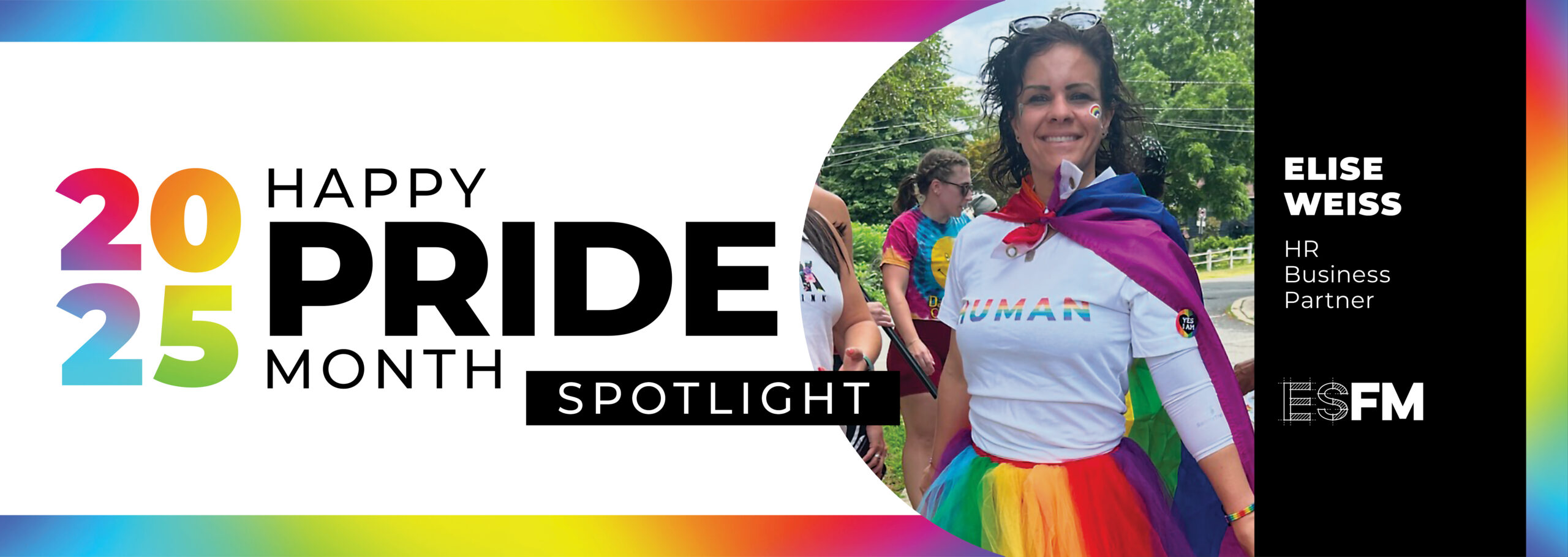
An Image of Elise Weiss, HR Business Partner from ESFM for Pride Month 2025

Elise Weiss has been with ESFM for seven years. The best part of her job as an HR business partner is building relationships, fostering strong team dynamics, and simplifying tough situations. Education and empowerment drive her. Leading ESFM’s Global University of Lifelong Learning (GULL) program as well as serving as co-chair of its Diversity & Inclusion Action Council (DIAC) make her work deeply fulfilling.

“Pride Month means LOVE is LOVE! Accepting everyone as they are so that no one fears loving who they truly love,” Elise says.

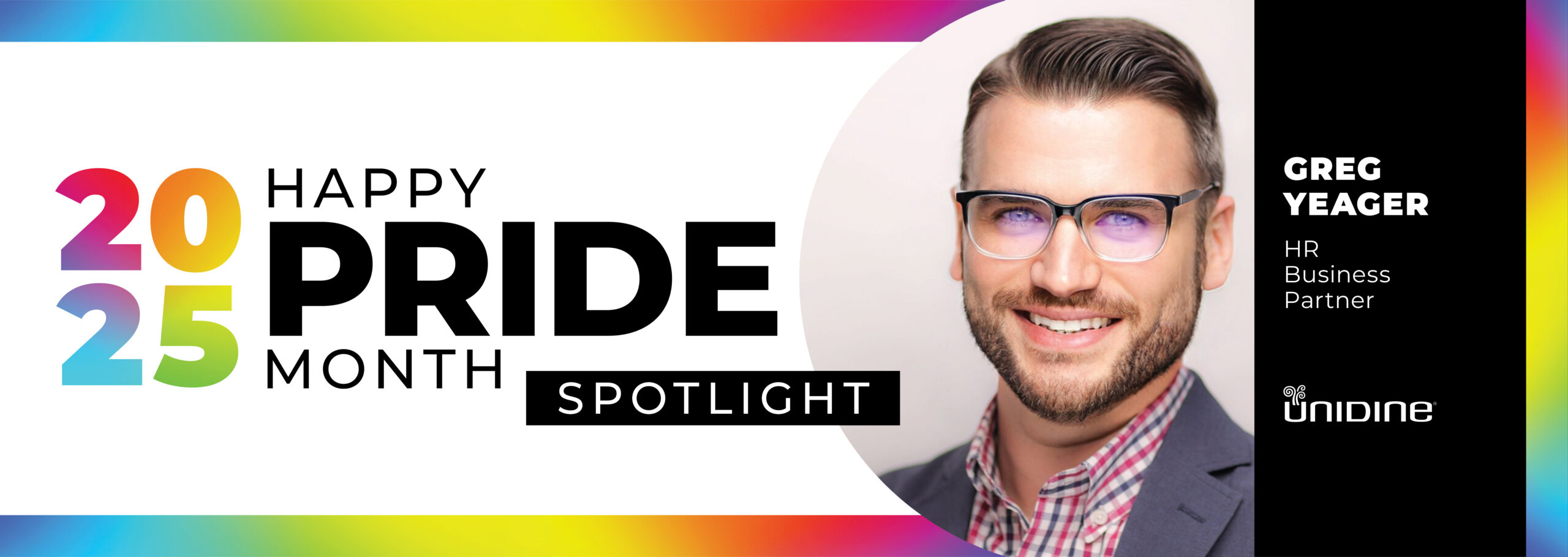
An Image of Greg Yeager, HR Business Partner from Unidine for Pride Month 2025
Greg Yeager has been with Unidine for eight years and currently serves in strategic dining services and national accounts as the HR business partner. Making a difference in people’s lives – with the support of his incredible team – is what he loves most about his position

“Pride is a reminder of both the progress made and the work still needed to ensure equal rights and respect for everyone,” Greg adds. “It’s also a deeply personal time when I acknowledge and celebrate my own growth, embracing who I am unapologetically.”

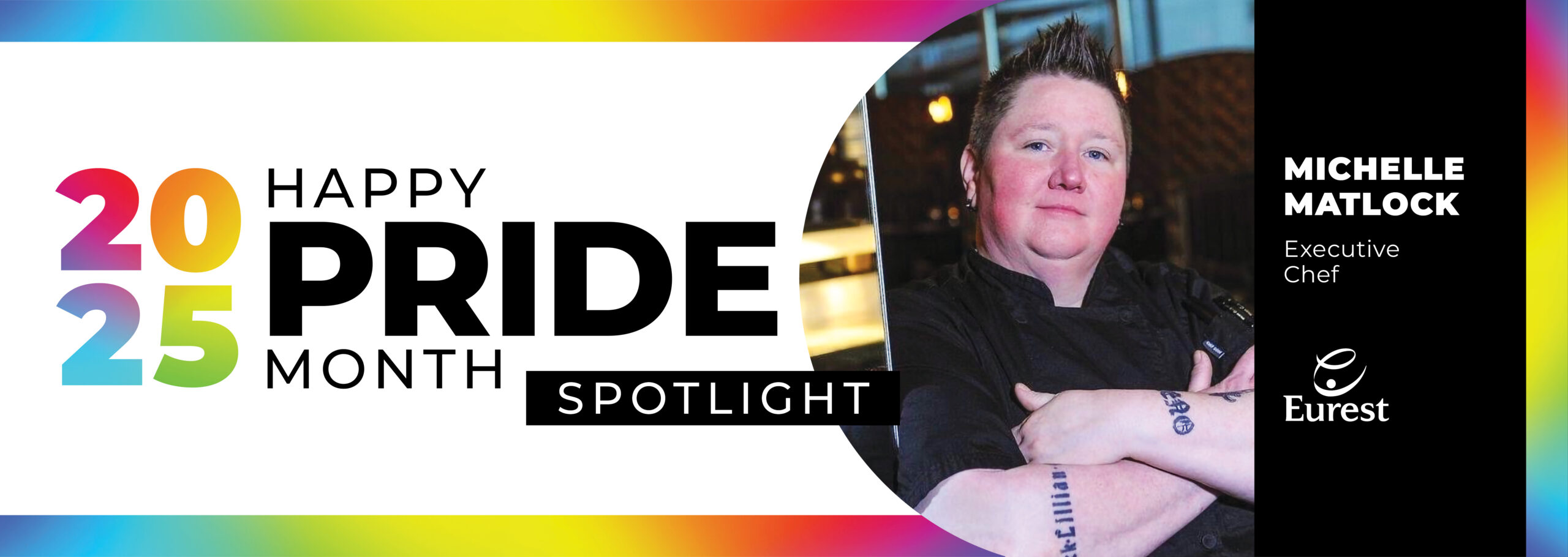
An Image of Chef Michelle Matlock, Executive Chef from Eurest for Pride Month 2025
Chef Michelle M. Matlock CEC has been with Compass for three years, and for the past year has been an Executive Chef in Atlanta with Eurest.

“What I love most about my job is spending my life’s energy within a group that supports diversity, equality and inclusion,” Chef Michelle declares. “I love being able to mentor our young chefs and leaders. I adore my leadership and believe in their life’s work so much, find our corporate goals so similar, it keeps me going.”

Greg, Chef Michelle, and Elise’s respective journeys have been shaped by many people, and their experiences within the LGBTQ+ community have influenced their careers.

“I often wonder if I’ve done enough, because just living openly doesn’t always feel like enough,” Greg notes. “Getting into HR grounded me, showing me that I could be the person I had always needed – a representative living openly.” Greg hopes to be that person for future generations entering the hospitality industry.

A pivotal figure in Chef Michelle’s life was Charlene Schneider, who opened the first LGBTQ+ tavern in New Orleans in the 1950s. She was a “Den Mother” to many LGBTQ+ youth, offering acceptance, guidance, and life skills. She once told Michelle, “People walk through this world every day, just hoping someone will smile their way. BE THAT PERSON.” She taught Michelle honor, ethics, never to hide, and to BE SEEN.

Elise’s path has also been influenced by people who embody authenticity, strength, acceptance, empathy and love – qualities she strives for. Her most life-changing discovery, however, is yoga. “The inward journey transformed me, replacing fear with acceptance and love,” she says.

Each has precious advice to share with colleagues striving to be more inclusive.

Chef Michelle considers herself an “Elder” in the LGBTQ+ community and shares this impassioned message: “TO OUR BEAUTIFUL LGBTQ+ YOUTH – TO ‘B’ – Sometimes the world swings ugly and sometimes it swings back to beauty. In all these times, you are loved, you are important, you are beautiful EXACTLY as you are, and you MATTER. Know your history, get involved, define our community for US so that others can’t define it for YOU.”

Elise advises her teams to lead with vulnerability and humility. “Show up, listen, and be present. People feel that, and it matters,” she says. “In the photo, my shirt says ‘HUMAN,’ because kindness is what matters, not labels. Live in the energy of love, and never forget our shared humanity – we are all equal.”

And Greg encourages open and honest conversations. “Understanding comes from curiosity and the willingness to learn; I always tell friends and family to ask me anything,” he adds. “If it helps bridge the gap in understanding that our lives aren’t so different, then that’s one more educated mind shaping a better future.”

As Pride Month unfolds, let’s celebrate the progress made while recommitting to the work still ahead. Elise, Greg, and Chef Michelle remind us that inclusion is about people, actions, and creating spaces where everyone feels seen, valued, and empowered to be their authentic selves. Their stories illuminate the power of representation, resilience, and genuine connection. As we honor Pride, let’s continue building a workplace – and a world – where acceptance isn’t just a celebration for one month, but a commitment we carry every day.

Happy Pride from your Compass colleagues!

Reblog of Janet’s Reblog-

don’t miss it, it’s multi-faceted!

Everybody Get Together

Nationalism is wrong-headed. -A.

Genetic Study shows “Phoenicians,” like all “Nations” were a Multi-Ethnic Franchise

Juan Cole 06/01/2025

Ann Arbor (Informed Comment) – Harald Ringbauer et al. writing in Nature report on a genetic study of the ancient Phoenicians that is really going to anger Lebanese Christian nationalists. In fact, it contains a profound lesson for nationalists and nationalism in general, which is that the whole thing is a scam thought up in the last 250 years.

The 19th century racist thinker Ernest Renan saw a racial distinction between “Aryans” and “Semites.” From that point of view, the Punic wars between Rome and Carthage had a racial element, since Phoenicians were classed as “Semites.” But it turns out it was all a tiff among people we would now class as Italians.

The Phoenicians had been thought to be a unified civilization that began in what is today Lebanon. Well, they did start off in what is today Lebanon. But the “unified civilization” bit turns out to be a misconception.

The Phoenicians developed an alphabet. Like most alphabets, the letters had originally been pictograms. The Hebrew, Aramaic and Arabic, as well as the Greek and Roman alphabets (we still use the latter) derived from the Phoenician. For instance a picture of waves stood for water (ma’), and that became our M, which still looks like waves. Or a circle stood for eye (`ayn), which became our ‘o.’

Since the Phoenicians founded city-states all around the Mediterranean and left inscriptions in that alphabet, scholars had assumed that they were a related people. Phoenician settlements in the western Mediterranean were called “Punic,” but the language and customs were the same.

Regarding the Lebanese origins of this civlizational complex, Ringbauer et al. write, “We find that individuals from the Levantine Phoenician site of Akhziv in present-day Israel cluster together with previously published Bronze and Iron Age Levantine individuals, including from Megiddo in present-day Israel and the Phoenician cities of Sidon and Beirut in present-day Lebanon.” That is, they looked at ancient individuals from around the Levant and found that they all had shared haplotypes, i.e. they were Canaanites. Phoenicians, Hebrews, Nabataeans, etc. were all Canaanites culturally and genetically.

Now imagine the scientists’ astonishment when they looked at DNA from individuals who had lived in Phoenician cities such as Ibiza off Spain or Carthage in Tunisia to find that it did not display the ancient haplotypes or genetic sequences associated with Levantine peoples.

They write, “However, a mitochondrial genome from Carthage and whole-genome data from 12 individuals from the nearby rural Punic site of Kerkouane show substantial south European ancestry as well as indigenous North African ancestry. Partial North African ancestry was also found in genome-wide data from eight individuals from two Punic sites in Sardinia, combined with a broad eastern Mediterranean ancestry. Together with analysis of the whole-genome sequence of an individual from Ibiza, which was also interpreted to harbour eastern Mediterranean ancestry, this suggested that Punic people had complex ancestry.”

They observe of these “Phoenicians of the middle and western Mediterranean, “They are broadly distributed with a primary mode overlapping Bronze and Iron Age individuals from Sicily and the Aegean, regardless of sampled location.” There were only three exceptions: two persons from Sicily and one from Sardinia showed Canaanite genetic heritage.

In all the other 119 samples from “Punic” sites, the genetic heritage was mixed, showing patterns similar to those in ancient Greece and Sicily. After around 550 BC, when Carthage was founded by the “Phoenicians” in what is now Tunisia, some North African [Amazigh] genetic heritage starts to circulate among some of them. But this was a minority population. The authors observe, “Even in North Africa, 10 out of the 27 individuals from Kerkouane and 5 out of the 17 individuals from Carthage can be modelled with no indigenous North African ancestry, and 84% of individuals from these sites have more than 50% Sicilian–Aegean ancestry, making it the dominant ancestry component also in North African Punic sites.”

Also, the Iberians were mostly not Iberians. “Only two Iberian individuals, from Ibiza and Cádiz, had confidently high proportions of Bronze Age Iberian ancestry… Instead, Punic sites in the western Mediterranean share similar ancestry distributions of predominantly Sicilian–Aegean or North African origin.”

So how did all this happen? The authors hypothesize that Lebanese Phoenicians colonized Sicily, which had earlier had Greek colonies, and the Sicilians adopted Phoenician language, religion and culture. They they were the ones who struck out west, establishing Phoenician colonies in the central and western Mediterranean.

Ringbauer and his colleagues explain, “A critical question raised by our results is how and when Canaanite–Phoenician culture and language were adopted by people without any detectable Levantine ancestry. One hypothesis is that, after Levantine Phoenicians founded settlements in the central and western Mediterranean in the early first millennium bce, these communities continuously incorporated people with Sicilian–Aegean ancestry.”

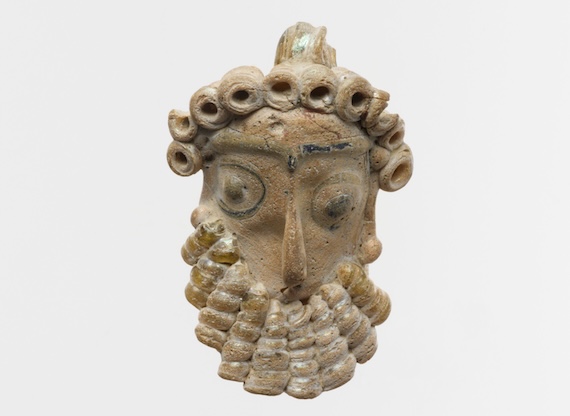
http://www.metmuseum.org/art/collection/search/247544

Glass head pendant, Phoenician or Carthaginian, ca. 450–300 BCE. Metropolitan Museum. Public Domain.

Reporting on the study for a Nature briefing, Ewen Callaway quotes Ringbauer as asking how it was that many Mediterranean peoples abandoned their own local cultures for that of the Phoenicians. “Does this mean Phoenician culture was like a franchise that others could adopt? That’s one for the archaeologists.”

Of course they were a franchise. So were the ancient Greeks, whose culture was adopted by so many Egyptians in places like Alexandria. As late as the 200s and 300s, there are no Arabic or Aramaic inscriptions in and around Damascus, only Greek ones. Ashkenazi Jews in Europe were also a franchise, which was joined by many gentiles — especially but not only women.

Nineteenth century European theorists of nationalism confused language groups with kinship groups, assuming that people who spoke a language were a “race,” perhaps even a “pure” one.

Today many Lebanese Christians claim to be “Phoenicians,” as though it was a pure “race” unconnected to the “Arabs.” And they take pride in Carthage, a Phoenician city, and in the Phoenician outposts of Spain, imagining they were all “Lebanese.” Ringbauer has knocked that down.

There are no nations or races of that sort. There are no “Aryans” and “Semites.” This was a linguistic distinction that was stupidly racialized. Racial “nation” was all a fevered racist fantasy. Even modern genetics only traces two lines of ancestry, the Y chromosome and the mitochondrial DNA of the X chromosome, whereas we have millions of ancestors. We’re all mongrels, all mixed up, and people in the Mediterranean basin all have a common ancestor from not so long ago. All humans have one likely only 200,000 years ago.

Peace & Justice History for 6/3

June 3, 1900

The International Ladies’ Garment Workers Union (ILGWU), a consolidation of seven smaller east coast needle trades unions, was founded.
Read more
 
Herman Grossman, ILGWU president
June 3, 1946
In Irene Morgan v. Virginia, the U.S. Supreme Court ruled that racial segregation in interstate travel was unconstitutional as “an undue burden on commerce.”

The southern states refused to enforce it, however, and Jim Crow (the term for laws, local and state, that enforced segregation) continued as the way of life in the South.
Eleven years before Rosa Parks refused to give up her seat on a city bus in Montgomery, Alabama, a young woman named Irene Morgan rejected that same demand on an interstate bus headed to Maryland from Gloucester, Virginia.

Read more about Irene Morgan 
Recovering from surgery and already sitting far in the back, she defied the driver’s order to surrender her seat to a white couple. Like Parks, Morgan was arrested and jailed. But her action caught the attention of lawyers from the NAACP, led by (future Supreme Court justice) Thurgood Marshall, and two years later her case reached the Court.

Headlines when Irene Morgan won out over Jim Crow (JC) segregation law
June 3, 1957
Thousands of scientists, led by Barry Commoner and Nobel laureate Linus Pauling, issued a call for banning nuclear weapons testing: “As scientists we have knowledge of the dangers involved and therefore a special responsibility to make those dangers known.”
“…Then on May 15, 1957, with the help of some of the scientists in Washington University, St. Louis, I wrote the Scientists’ Bomb Test Appeal, which within two weeks was signed by over two thousand American scientists and within a few months by 11,021 scientists, of forty-nine countries….” 
–Linus Pauling

 
Linus Pauling at a disarmament demonstration photo: Robert Carl Cohen

Read “An Appeal by American Scientists to the Governments and People of the World.”

Pauling is the only person to win two unshared Nobel Prizes, for Chemistry in 1954; for Peace in 1962. Read his acceptance speech, “Science and Peace”
June 3, 1964
Conscientious objection, the refusal to bear arms in time of war on the grounds of moral or religious principles, became legally recognized in Belgium.
A history of European conscientious objection 

https://www.peacebuttons.info/E-News/peacehistoryjune.htm#june3

Moving & Beautiful Art+Quotes For PRIDE Month

10 Inspiring Quotes To Help You Celebrate Pride Month David Hayward

“This is your month to celebrate the strength and courage it takes to be your authentic self. But this month is not just about celebrating, it’s also about commemorating and remembering AND creating safer spaces for people to feel Pride about being their authentic selves!

“These quotes from activists, artists, politicians, entertainers, and more emphasize what it means to be an LGBTQ+ person. I hope they inspire and encourage you along your journey of being LGBTQ+ or celebrating those who are.

1. “Love is too beautiful to be hidden in the closet.” – Anonymous

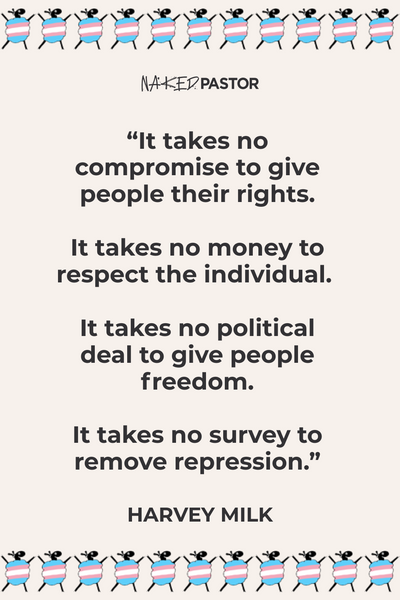
2. “It takes no compromise to give people their rights … it takes no money to respect the individual. It takes no political deal to give people freedom. It takes no survey to remove repression.” – Harvey Milk

3. “So let me be clear: I’m proud to be gay, and I consider being gay among the greatest gifts God has given me.” – Tim Cook

(Snip: Do Go See It All-It’s So Good! -A.)

Cool Video On AP Today

Thanks to Jill at Filosofa’s Word for this fabulous rainbow graphic!!

Video

Before the word ‘transgender’ existed, icon Bambi already danced for the stars

The moment which changed queer history occurred on a sweltering summer day in early 1950s Algeria. An effeminate teenage boy named Jean-Pierre Pruvot stood mesmerized as traffic halted and crowds swarmed around a scandalous spectacle unfolding in the conservative Algiers streets. (AP Video: Oleg Cetinic)Published 11:32 PM CDT, May 22, 2025.)

https://apnews.com/video/before-the-word-transgender-existed-icon-bambi-already-danced-for-the-stars-228824a6487e4dc9bc5fb1d9f825e452

U.S. v. Skrmetti, And More-

(And let me interject that I know that sometimes I’m a language/punctuation police officer, but I despise the term “reverse discrimination.” Either discrimination has happened, or it hasn’t, to be proven to whoever decides. There is no “reverse discrimination”. grr. Also, this is not a spoiler nor my opinion on the case, it’s simply that I guess it’s good for some people that I do not sit upon the SCOTUS, because I’d want to dismiss and tell them to use appropriate words so that the court could accurately decide based upon the evidence of discrimination, without being distracted by superfluous words. Please be at liberty to laugh at me about this. Then read all the following. -A)

The Week Ahead by Joyce Vance

June 1, 2025 Read on Substack

It’s June 1, and that means we’re starting the last month, more or less, of this Supreme Court term. The cases the Court has had briefing on and heard oral argument in will all be decided by the end of this month, although some years it spills over into the first week of July.

We never know which cases are coming next. The Court doesn’t decide them in the order they hear them argued. But usually the biggest, most impactful cases aren’t decided until the end.

This week for “The Week Ahead,” I’ve got a scorecard with some of the most important still-undecided cases for this term on it. The goal is to give you some background to refer to, so when you hear the Court has announced a decision in a certain case you’ll be prepared to understand its significance.

Here they are, in order of when they were argued, although that’s likely to have little to nothing to do with when we will see opinions.

U.S. v. Skrmetti

The issue in this case is whether states can ban gender-affirming care for trans youth in the context of a 2023 Tennessee law that bans gender-affirming care, like puberty blockers and hormone therapy, for transgender patients who are minors. The Biden administration intervened in the case and was a party along with three transgender teens and their parents. That changed with the change in administrations. The Trump Justice Department, as you would expect, is on the other side of the case.

A key issue in the case is whether denying treatment to trans youth that is available to their gender conforming peers violates the Constitution by denying them equal protection under the law. A federal district court judge held that it did. But the Court of Appeals reversed. About 25 other Republican dominated states have similar laws. The result in this case will apply beyond Tennessee.

At oral argument, the conservative Justices seemed disinclined to accept the argument that this law is a form of sex discrimination, even though cisgender kids will be able to access treatment that transgender people won’t be able to receive if these laws stand. But the votes seemed to be in place to permit Tennessee and other states to keep their restrictive laws in place.

Free Speech Coalition v. Paxton

The case involves a 2023 Texas law that is supposed to keep minors from accessing pornography online. It requires websites to verify a person’s age before they are admitted to the site. But an industry group that calls itself the Free Speech Coalition sued, claiming the law violates the rights of adults who want to access the content, an impermissible burden on free speech. The ACLU is on their side in the case.

There was at least some indication at oral argument that the Justices are aware we no longer live in a world of dial up internet connections and want to revisit the standards that are used to “protect kids.” The technical legal issue is whether the court of appeals used the wrong legal standard to decide the case. Instead of using the highest standard of review and requiring the Texas law to pass “strict scrutiny” before it could burden the adults’ right to have access to protected speech, they only required that there be a “rational basis” connecting the law to its intent to protect minors.

Ames v. Ohio Department of Youth Services

The Court’s decision in this case could potentially signal a sea change in reverse discrimination employment litigation. The case involves a straight woman who claims she faced “reverse discrimination” on the job because she wasn’t gay, leading her to be passed over for promotion opportunities. The issue is whether a plaintiff who is a member of a majority group has to show that her employer is the “unusual” one who discriminated against the majority, before bringing a case under Title VII of the Civil Rights Act of 1964. If she wins, this sort of reverse discrimination case could become easier to bring.

The plaintiff lost out on a promotion to a lesbian woman. She was subsequently demoted and the position she was removed from was given to a gay man. All of this started 13 years into her employment, after a new boss, who was a gay woman, became her supervisor.

There was speculation following oral argument that the plaintiff might win unanimously. Justice Sotomayor seemed to say she thought the plaintiff might have a valid claim, noting that based on the record before the Court, there was “something suspicious” about what happened. The consensus among the Justices seemed to be that everyone had to be treated equally.

Smith & Wesson Brands v. Estados Unidos Mexicanos

There are two technical legal issues in this case, but together, they add up to an answer to the question of whether Mexico can sue U.S. gunmakers for what it has long maintained is their responsibility for the epidemic of gun violence within its borders. Mexico argues that a number of U.S. gunmakers made it possible for traffickers to illegally purchase firearms in the U.S., only for them to be provided to Mexican drug cartels.

The Court will decide: (1) Whether the production and sale of firearms in the United States is the proximate cause of alleged injuries to the Mexican government stemming from violence committed by drug cartels in Mexico; and (2) whether the production and sale of firearms in the United States amounts to “aiding and abetting” illegal firearms trafficking because firearms companies allegedly know that some of their products are unlawfully trafficked.

If the Court decides in Mexico’s favor, its lawsuit against U.S. gun manufacturers will move forward.

Louisiana v. Callais

This is the Louisiana redistricting case. The issues revolve around whether a Louisiana congressional district created to comply with the Voting Rights Act resulted in an unconstitutional gerrymander that discriminates based on race. The Callais plaintiffs are a group of “non-African Americans” who say the redistricted map violates the Constitution because it takes race into account in violation of the 14th Amendment.

Although the Court may be inclined to do away with the Voting Rights Act at some point, this case is reminiscent of a 2023 gerrymandering case out of Alabama, where a 5-4 majority that included Chief Justice Roberts and Justice Kavanaugh upheld the Voting Rights Act and forced Alabama to comply with it, rejecting maps drawn by the state legislature that made it all but impossible for Black citizens to elect candidates of their choice to Congress.

This case might have a similar outcome. It has similarly complicated facts and an up-and-down history on appeal. It comes down to whether Louisiana, whose population is about 1/3 Black, will have a second Black opportunity district. The technical issues involve whether a three-judge district court in this case was mistaken when it ruled that race predominated in the Louisiana legislature’s decision on maps, whether it erred in finding those decisions couldn’t pass the strict scrutiny test and a set of preconditions known as the Gingles factors, and whether the case is the sort of “non-justiciable” matter that should be resolved through the political process, not decided in the courts.

Mahmoud v. Taylor

The issue here is whether religious parents’ rights are violated when a school board doesn’t give them the ability to opt out from having LGBTQ-themed books available to their children in elementary school. The issue is presented as: Whether public schools burden parents’ religious exercise when they compel elementary school children to participate in instruction on gender and sexuality against their parents’ religious convictions and without notice or opportunity to opt out.

At oral argument, the Court’s conservative majority seemed sympathetic toward the parents.

Trump v. CASA, Inc. (consolidated with Trump v. Washington and Trump v. New Jersey)

This is the birthright citizenship case that was argued only earlier this month. We discussed it here. The issue isn’t whether Trump can end birthright citizenship. Rather, it’s whether the Supreme Court should stay the district courts’ preliminary injunctions except as to the individual plaintiffs and identified members of the organizational plaintiffs or states while the litigation works its way through the courts.


It’s hard to believe that it was just over a year ago that I sat outside, across the street from the U.S. Supreme Court building in the Senate Swamp, listening to the oral argument and preparing to comment on it in real time. (snip)

At the time, I wrote, “The case is all about Donald Trump and whether he can be prosecuted for the most serious of his crimes against the American people, trying to hold onto power after losing the 2020 election. It’s also about the legacy of the Roberts Court and whether history will view the already unpopular Justices as the Court that gave away democracy.”

Overall, there are more than 30 cases remaining on the Court’s dockets. There are also a number of procedural and other issues pending in cases that haven’t been fully briefed for a decision on the merits this term. This is the so-called shadow docket, where litigants ask the courts to make decisions in cases characterized as emergencies. Cases involving deportations and DOGE are among them. And also, the wild card, a number of cases still percolating through the lower courts where the issues aren’t yet ripe enough to be before the Supreme Court, but could become so in the next few months, at least enough to merit a trip to the shadow docket and interfere with the Supreme Courts’ summer break. The biggest question that remains for me is whether this Court will continue down the path it set itself upon last term, or will tell Trump no in a meaningful way?

Welcome to the new week. Thanks for being with me at Civil Discourse as we approach our third anniversary.

We’re in this together,

Joyce