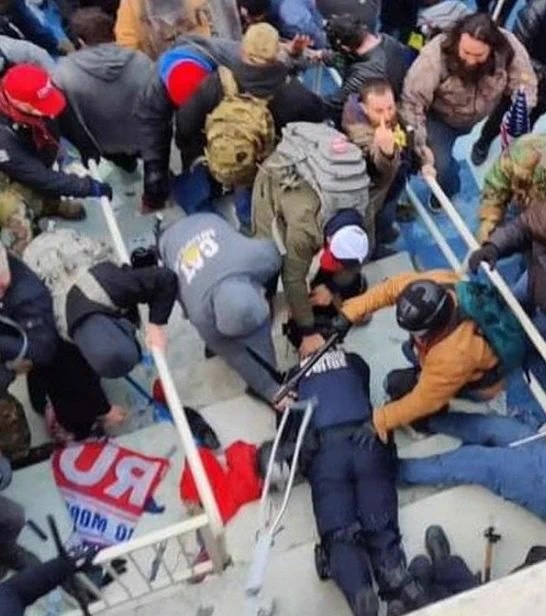
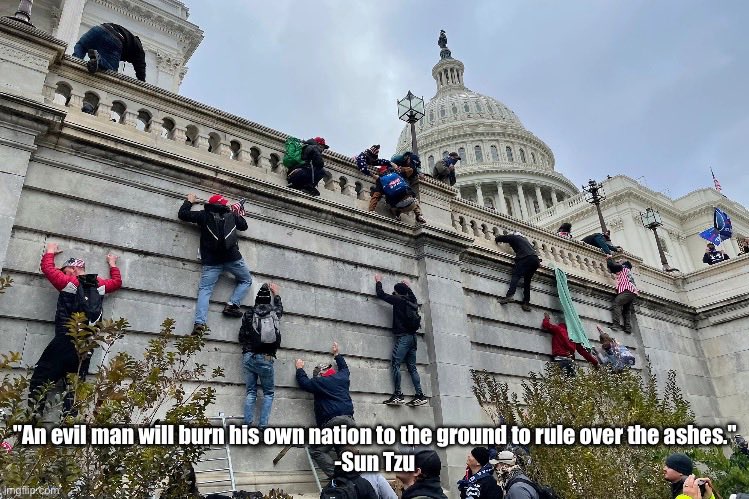
The amount of grift, graft, and corruption during his time as president is stunning. His entire con is to deny reality and repeat the lies so much that people will believe it. He accuses others like President Biden of dealing with China when he was renting an entire floor of one of his properties to the Chinese when he was president. He makes his money scamming people and working with corrupt governments. He made more money easier as president than ever in his life, and he wan’ts that money mill back again. We must not let him. Hugs. Scottie
Category: Economics / Economy / Income / Financial
China-linked ‘Spamouflage’ network mimics Americans online to sway US political debate
This seems important.
By DAVID KLEPPER Updated 11:56 AM CDT, September 3, 2024
WASHINGTON (AP) — When he first emerged on social media, the user known as Harlan claimed to be a New Yorker and an Army veteran who supported Donald Trump for president. Harlan said he was 29, and his profile picture showed a smiling, handsome young man.
A few months later, Harlan underwent a transformation. Now, he claimed to be 31 and from Florida.
New research into Chinese disinformation networks targeting American voters shows Harlan’s claims were as fictitious as his profile picture, which analysts think was created using artificial intelligence.
As voters prepare to cast their ballots this fall, China has been making its own plans, cultivating networks of fake social media users designed to mimic Americans. Whoever or wherever he really is, Harlan is a small part of a larger effort by U.S. adversaries to use social media to influence and upend America’s political debate.
The account was traced back to Spamouflage, a Chinese disinformation group, by analysts at Graphika, a New York-based firm that tracks online networks. Known to online researchers for several years, Spamouflage earned its moniker through its habit of spreading large amounts of seemingly unrelated content alongside disinformation.
“One of the world’s largest covert online influence operations — an operation run by Chinese state actors — has become more aggressive in its efforts to infiltrate and to sway U.S. political conversations ahead of the election,” Jack Stubbs, Graphika’s chief intelligence officer, told The Associated Press.
Intelligence and national security officials have said that Russia, China and Iran have all mounted online influence operations targeting U.S. voters ahead of the November election. Russia remains the top threat, intelligence officials say, even as Iran has become more aggressive in recent months, covertly supporting U.S. protests against the war in Gaza and attempting to hack into the email systems of the two presidential candidates. (snip-More)
My day shoe shopping plus some news
I forgot to shut off the A/C in the room. Let me know if it causes too much background noise. Also we had a thunderstorm during this recording, so you might hear some of it. Hugs. Scottie
My morning, my day trying to find sneakers, a few news articles such as Kennedy and chem trails, red states block methane regulations, Israeli settlers attack Palestinians and kill them, steal their homes / land, and think genocide is not a problem.
Letters from an American-September 3, 2024
So much information today!
September 3, 2024 by Heather Cox Richardson Read on Substack
Last night the Boston Globe published a leaked email from a top volunteer with the Trump campaign, former Massachusetts Republican Party vice chair Tom Mountain, telling volunteers that the Trump campaign “no longer thinks New Hampshire is winnable” and is “pulling back” from that important swing state. He urged volunteers to turn their attention instead to Pennsylvania. After the story dropped, the Trump campaign cut ties with Mountain.
Stephen Collinson of CNN and Isaac Arnsdorf, Josh Dawsey, and Marianne LeVine of the Washington Post reported today that Trump’s team has given up on trying to get Trump to talk about the economy and other issues voters care about. The former president has decided to spend the rest of the campaign attacking Vice President Harris to destroy her popularity and drive voters away from her, rather than trying to attract them to himself. The Washington Post reporters noted that likely voters view Trump unfavorably and his team has concluded that while he can’t improve his own standing, he can damage hers.
Collinson dubbed Trump’s plans a “feral political offensive.”
It is not clear that this will work. As Collinson notes, Harris has refused to get dragged into the gutter with Trump, and Sarah Longwell of The Bulwark, who studies focus groups, notes that voters appear to want to put the nastiness of the past several years behind them. Still, the media-tracking company AdImpact reported that between August 23 and August 29, 57% of the total television spending for political ads was on Republican attacks on Harris.
Trump also continues to demand that Republicans support his attempt to suppress voting. Having failed to pass any of the necessary appropriations bills before going on August recess, Congress will be in a rush when it comes back into session next week. It needs to fund the government before the end of the fiscal year on September 30 in order to prevent a partial shutdown. Last Thursday, Trump told right-wing podcast host Monica Crowley that he would “shut down the government in a heartbeat” unless the government funding package includes the Safeguard American Voter Eligibility (SAVE) Act—which would give credence to the idea that noncitizens are voting in national elections despite the fact it is already illegal—and a bill restricting legal immigration.
Zeeshan Aleem of MSNBC today took public notice of Trump’s “deteriorating ability to clearly communicate.” His speeches “seem to be growing more discursive and difficult to comprehend by the day,” Aleem wrote. “Those speeches are making it hard, if not impossible, for people listening to them to understand what he wants to do with his power in office, and they’re reportedly turning off voters.” A reporter for The Guardian pointed out that attendees at Trump’s rallies are leaving as he rambles for nearly two hours, and complaining that he is “babbling.”
For his part, Trump says his wandering speech is deliberate. He calls it “the weave.” I’ll talk about, like, nine different things, and they all come back brilliantly together, and it’s like, and friends of mine that are, like, English professors, they say, ‘It’s the most brilliant thing I’ve ever seen.’”
Aleem notes that this less-focused, less-capable Trump would be exceptionally dangerous in office a second time. And yet, he was dangerous enough the first time. Today Adam Klasfeld and Ryan Goodman of Just Security released a study showing at least twelve times that Trump used the power of the presidency to retaliate against his political enemies. They note that there is no evidence that President Joe Biden or anyone else at the Biden White House ever took similar actions.
John McCain’s son Jimmy today announced that he has switched his voter registration from Republican to Democrat and will work to elect Vice President Harris and Minnesota governor Tim Walz in 2024. The younger McCain enlisted in the Marine Corps at 17 and is now an intelligence officer in the 158th Infantry Regiment of the Arizona Army National Guard. He said he is speaking out because Trump’s conduct at Arlington National Cemetery was a “violation.”
Last Friday, just before the long weekend, Trump announced that he would vote against a Florida ballot measure that would essentially enshrine in the Florida state constitution the abortion rights formerly protected by the 1973 Roe v. Wade decision. When Trump had bowed to popular support for abortion rights and expressed uneasiness at the state’s current six-week ban—a cutoff reached before most women know they’re pregnant—antiabortion activists launched fierce attacks on him. So, on Friday, Trump switched his position and announced he would vote against restoring access to abortion in Florida.
That announcement has given wings to the Democrats’ messaging about Republicans’ determination to end abortion rights. It did not help the Republicans that more videos have been unearthed in which Republican vice presidential nominee J.D. Vance said that “a childless elite” is ruling the country. He went on to excoriate this elite for what he claimed was their pride that they didn’t have children and that they had abortions, and said “they look down on people who invest their time and their future in their children. And that is a dangerous place to live as a country.” Even a right-wing Newsmax interviewer suggested that he was “painting this group with perhaps a broad brush?”
On October 1, in Louisiana, a law will go into effect that reclassified the drug misoprostol as a controlled dangerous substance. Misoprostol can be used for abortion. It is also used for routine reproductive care and during medical emergencies to treat postpartum hemorrhage. It is on the World Health Organization’s list of essential medications, a list containing those medications that are the most effective and safe to meet a health care system’s most important needs. After antiabortion activists targeted the drug, Louisiana governor Jeff Landry signed a law reclassifying it as a controlled dangerous substance. The reclassification means that the drug will no longer be easily available on obstetric hemorrhage carts.
“Take it off the carts?” one doctor said to Lorena O’Neil of the Louisiana Illuminator. “That’s death. That’s a matter of life or death.”
The Harris campaign said: “Let’s be clear: Donald Trump is the reason Louisiana women who are suffering from miscarriages or bleeding out after birth can no longer receive the critical care they would have received before Trump overturned Roe. Because of Trump, doctors are scrambling to find solutions to save their patients and are left at the whims of politicians who think they know better. Trump is proud of what he’s done. He brags about it. And if he wins, he will threaten to bring the crisis he created for Louisiana women to all 50 states.”
Vice President Harris’s campaign started its “Fighting for Reproductive Freedom” bus tour today in Palm Beach, Florida, where it drove past the Trump Organization’s Mar-a-Lago club. The bus will make at least 50 stops across the country.
Pollster Tom Bonier today continued his examination of new registrants to vote. This time his focus was North Carolina. The pattern he has found across the country continues: “surges in registration are being driven by women.” In North Carolina, he writes, the number of registrants was almost 50% higher during the week of July 21 than in the same week in 2020, and the gender gap was +12 women, compared to +6 women in 2020. The new registrants were +6 Democratic, and 43% were younger than 30.
The Harris-Walz campaign today joined the Democratic National Committee in announcing a transfer of nearly $25 million to support Democratic candidates in down-ballot state and federal races. The Democratic Congressional Campaign Committee and the Democratic Senatorial Campaign Committee will get $10 million each in hopes of supporting a Democratic majority in each chamber of Congress in the new administration.
The Democratic Legislative Campaign Committee, the organization devoted to winning state legislatures, will receive $2.5 million. The Democratic Governors Association and the Democratic Attorneys General Association will get $1 million each.
Finally, today, a federal judge issued a preliminary injunction to stop the Trump campaign from playing the song he likes to dance to at his rallies: “Hold On, I’m Coming.” The estate of Isaac Hayes Jr., the artist who co-wrote the song, filed a copyright infringement lawsuit against Trump, his campaign, and a number of his allies, noting that they have never obtained a public performance license for the song although they have used it at least 133 times.
—
Notes:
https://www.cnn.com/2024/09/03/politics/trump-quest-destroy-harris-momentum/index.html
https://www.washingtonpost.com/politics/2024/09/02/trump-strategy-campaign-harris/
https://www.huffpost.com/entry/donald-trump-government-shutdown_n_66d21e56e4b013957161cd53
https://www.msnbc.com/opinion/msnbc-opinion/trump-age-harris-ramble-rcna168979
https://www.cnn.com/2024/09/03/politics/jimmy-mccain-decries-trump-arlington-appearance/index.html
https://www.washingtonpost.com/elections/2024/09/03/harris-25-million-transfer/
https://www.cbsnews.com/news/trump-isaac-hayes-hold-on-im-coming-lawsuit/
https://www.theguardian.com/us-news/article/2024/sep/03/mccain-trump-arlington-democrat
X:
AudreyWSBTV/status/1830996525499011242
tbonier/status/1831139736477430080
cwebbonline/status/1830967329297178761
lorenaoneil/status/1831123870507552901
X gets banned in Brazil
For once, Elon Musk has a case worth fighting — but he has to do it in the courts
Casey Newton
Starlink, the satellite broadband company led by Elon Musk, said on Tuesday that it would comply with a court order and block access to X in Brazil. It marked yet another surprising twist in a wild saga that has been simmering all year but boiled over this weekend when a Brazilian judge single-handedly moved to ban X in the country.
Today let’s talk about how a personality clash between two powerful men led to tens of millions of Brazilians being prevented from accessing X — and how the move could be used to justify further restrictions on internet freedom around the world.
In April, I wrote here about how Musk had decided to risk a ban of X in Brazil over a court’s order that the platform ban a number of accounts belonging to right-wing users. Musk decided to restore the accounts in defiance of a powerful Supreme Court justice named Alexandre de Moraes, who subsequently opened an inquiry into the billionaire.
Musk, who has said he bought Twitter to turn the platform into a bulwark of free speech, positioned the move as a defense of liberty against an extremist government. Moraes, for his part, called Musk an “outlaw” whose X would “allow the massive spread of disinformation, hate speech and attacks on the democratic rule of law, violating the free choice of the electorate, by keeping voters away from real and accurate information.”
After Musk’s April outburst, X quickly reversed course, and said it would comply with the judge’s order. But the accounts that Moraes sought to terminate remained active, and last month X said he threatened to arrest a local employee for the platform’s failure to comply with his order. (The court wouldn’t comment, but threatening platform employees with jail time is an increasingly common and typically quite effective means of allowing government agents to moderate content as they see fit.)
Typically, threatening an employee with jail is all it takes to get a company to reverse course. Musk, on the other hand, said X would close its offices in Brazil.
On Friday, Moraes met that dramatic escalation with one of his own. Here are Jack Nicas and Kate Conger in the New York Times:
In a highly unusual move, Justice Moraes also said that any person in Brazil who tried to still use X via common privacy software called a virtual private network, or VPN, could be fined nearly $9,000 a day.
Justice Moraes also froze the finances of a second Musk business in Brazil, SpaceX’s Starlink satellite-internet service, to try to collect $3 million in fines he has levied against X. Starlink — which has recently exploded in popularity in Brazil, with more than 250,000 customers — said that it planned to fight the order and would make its service free in Brazil if necessary.
Moreover, while he quickly reversed course, Moraes initially ordered Apple and Google to block X at the level of the app store in Brazil, as well as blocking VPN apps that let users circumvent geographic barriers to app usage.
While moves like these are common in authoritarian countries such as Russia or China, they are extraordinary to see in democracies, which typically place a higher value on free expression.
In any case, the fallout from Moraes’ ban was swift. Countless fan and meme pages went silent. Bluesky added 2 million users, and Threads saw some lift as well. (They are currently the No. 1 and 2 apps respectively in the Brazilian App Store, per Similarweb.)
And depending on how long the ban lasts, it will likely degrade even further the value of X, which a new analysis over the weekend found had lost an estimated $24 billion in value since Musk acquired Twitter in 2022.
What makes the story of Brazil and X such an unusual tech policy story is the way it has been driven almost entirely by two people.
On one side is Musk, who has often claimed the mantle of free speech warrior in public while capitulating to government requests in private. One analysis last year found that under Musk, X had given into 83 percent of requests from authoritarian governments to remove content. And he appears more willing to accede to the requests of right-wing governments, such as India’s.
In 2021, it seemed possible that India would be the first democracy to ban Twitter, after the company fought court orders to remove political dissent — including from left-wing opponents to the government of Narendra Modi. But relations have warmed between Musk and the Modi government since he stopped fighting those battles.
“The rules in India for what can appear on social media are quite strict, and we can’t go beyond the laws of a country,” Musk told the BBC last year. “If we have a choice of either our people go to prison or we comply with the laws, we will comply with the laws.” At another point in the interview, Musk said: “If people of a given country are against a certain type of speech, they should talk to their elected representatives and pass a law to prevent it.”
Brazil once again gave Musk the choice of sending an employee to prison or complying with its laws. This time, he chose not to comply.
Musk’s defiance likely would have sparked a backlash in most countries where X operates. But he has found a particularly pugnacious opponent in Moraes, a hugely powerful and controversial figure within Brazilian politics who came to prominence during the tenure of former president Jair Bolsonaro. Bolsonaro, a Trump-like figure who threatened to undermine Brazil’s democracy, lost the 2022 election and left office after a violent riot at the capitol by his supporters last year.
Both during and since Bolsonaro’s presidency, Moraes has used the unusual powers of his office to order people arrested over their social media posts, account bans on the platforms where they posted, and even temporarily removing a governor from office. At X, he has sought the removal of at least 140 accounts, the Times reported, and often delivers his orders in sealed documents that do not specify any rationale for his decision.
Moraes is not the first government agent to make overbroad legal requests of a tech platform. Google, Meta, and other companies receive thousands of requests like these every year, and disclose them in aggregate in annual transparency reports. The reason they publish those reports is to serve as a check on governments that seek to abuse their power by seeking information from platforms for surveillance and other potentially problematic uses.
Crucially, Google and Meta also fight against overbroad requests in court. Sometimes, they win. The result is a kind of dance between platforms and governments that leaves everyone at least somewhat disappointed but is also the reason that so many people around the world can speak freely online.
I don’t post on X any more myself, and I will not lament its passing when it disappears. But whatever role the 140 X accounts in question in Brazil may have played in threatening Brazil’s democracy, they cannot have threatened it more than silencing the 20 million or so Brazilians who have been using it regularly. Particularly when Brazil’s move will be seen by autocracies as justification to enact ever more onerous speech restrictions of their own.
Like Pavel Durov before him, Musk appears to have thought he could escape the reach of regulators indefinitely. This weekend, he began to learn the same lesson Durov has: you can’t outrun the legal system forever. Had Musk fought for his users in court earlier, he might have avoided a ban. Instead, as he has before in so many other things, Musk chose to do it the hard way.
https://www.platformer.news/x-ban-brazil-musk-moraes/?ref=platformer-newsletter
Pop up the popcorn!
Monday at the Movies on Tuesday
Some things of interest I caught up over the weekend-
This guy used to write a Substack that I’d read as I had time, but usually always got to his Links writeup. You can see this week’s here; all the bits are choice, but I’m snipping one into this post. It’s a varied lot, but there’s at least something for everyone. When you need something to read, take a look!
Here are snippets of the piece I mentioned just above.
I’m on my hols right now.
Breakfast from the supermarket and bakery, for three people, costs a shade over 7 euros. Two fancy-pants coffees to-go costs a shade over 8 euros.
That seems like the right kind of gearing? Essentials are easily within reach; luxury items you have to think about.
Essentials are like: basic groceries, broadband/phone, roads, education, healthcare, energy, water, rent up to a certain amount etc. “Normal” coffee, house wine, that kind of thing.
It’s very hard to justify, in my head, why these should be the province of profit-seeking companies. Given we all have to have them, why should some people get to leach on that? Yes the profits are taxed but that’s an inefficient way to collect extra money from citizens.
We all form a government which is a kind of enlarged co-operative really. Why don’t we make a basket of essentials, democratically argued about and iterated over time, then nationalise not-for-profits to run supply chains and shops for them?
Just… take essentials out of the for-profit bit of the economy.
Our priorities have lost their way somewhere along the line.
And good for for-profit companies too, right? People without broadband can’t buy from Shein; can’t receive deliveries from Amazon. People without their health, without education can’t staff them. Remove the friction by making essentials work. (snip)
Come to Europe and get low-key radicalised haha
The EU may (or may not) be making technology policy missteps, but they are gently and patiently promoting a certain way of life which feels globally very, very special, and fundamentally counter to the hypercapitalism found elsewhere. (emph. mine-Ali)
Honestly I’d like to see serious economic papers that compare the two approaches. Why not do it this way? Why not go further and, as I suggested, choose radical nationalised businesses for essentials? Genuinely what is the problem with that? Why isn’t it simply obvious that we should live our lives in comfort, with room to participate and be kind to each other, and knock off early to go to the beach early on sunny days? And that’s not compatible with profit-extracting water suppliers etc, and shops run by people not just on minimum wage but without any kind of employment protection?
Why can’t politicians propose these kind of ideas, even as a generational directional plan rather than an election promise, without getting yelled at? (snip)
Some Awesome Ladies Of The Labor Movement
Happy Labor Day! Let’s Talk About Some Awesome Ladies Of The Labor Movement by Rebecca Schoenkopf Read on Substack
Because it was not actually just a bunch of flannel-wearing white dudes.
A version of this article was initially published on May 1, 2019. Happy Labor Day, we’re taking the day off!
When we talk about the history of feminism, we tend to think about the causes and struggles of middle class white women. When we talk about labor history, we tend to think about the causes and struggles of white working class men.
And that is some absolute bullshit.
Working class women, very often women of color and immigrant women, were, are and always have been the backbone of the labor movement. They were working and organizing well before Second Wave Feminism “made it possible” for women to enter the workforce. They’re the ones who first fought for equal pay, and they’re the ones who were doing the bulk of feminist work and activism during the years in between getting the right to vote and The Feminine Mystique. They are still fighting today.
So, since it’s Labor Day, let’s celebrate the hell out of them, starting with the woman who started it all.
Lucy Parsons

“More dangerous than a thousand rioters,” anarchist Lucy Eldine Gonzalez Parsons was a writer, orator, one of the founders of the Industrial Workers of the World, and tireless campaigner for the rights of people of color, all women, and all workers. Her husband, Albert Parsons, was one of the Haymarket martyrs.
We, the women of this country, have no ballot even if we wished to use it … but we have our labor. We are exploited more ruthlessly than men. Wherever wages are to be reduced, the capitalist class uses women to reduce them, and if there is anything that you men should do in the future, it is to organize the women.
Though Parsons and Emma Goldman were widely regarded as the most prominent female anarchists of the day, they very notably did not get along so well. Parsons believed that oppression based on gender and race was a function of capitalism and would be eliminated when capitalism was eliminated, whereas Goldman believed such oppression was inherent in all things. Parsons was all class struggle all the time, and felt that the “intellectual anarchists” like Goldman spent too much time bothering with appealing to the middle class.
One of her most important contributions to the labor movement was the concept of factory takeovers.
“My conception of the strike of the future is not to strike and go out and starve, but to strike and remain in, and take possession of the necessary property of production.”
Parsons is best known for being the woman who really started the celebration of May Day as a day for workers’ rights — leading a parade to commemorate the anniversary of the Haymarket Affair. Soon, nearly every other country in the world followed suit and proclaimed this day International Worker’s Day. Alas, here in America, we go with the less radical and more picnic-y Labor Day that we are celebrating today, because Grover Cleveland thought a federal holiday commemorating the Haymarket Affair would encourage people to become anarchists and socialists, and no thank you, he did not want that.
Anna LoPizzo

Not much is known about Anna LoPizzo, other than that she was a 34-year-old mill worker who was murdered by police officer Oscar Benoit during the 1912 Lawrence Textile Strike — also known as the Bread and Roses Strike. Initially, police tried to charge two IWW organizers who were miles away for her murder, even though literally everyone there had seen Benoit shoot her.
The reason for the strike in the first place was that the textile mills of Lawrence, Massachusetts, cut worker pay after the state cut the number of hours women could legally work from 56 down to 54. The Industrial Workers of the World, led by Elizabeth Gurley Flynn (we’ll get to her in a minute), organized more than 20,000 workers of more than 40 different nationalities to demand they get their fair wages. One of the primary tactics used in the strike was sending the starving families of the mill workers on a tour to New York City so that people there could see for themselves what these low wages were doing to children. Between that and LoPizzo’s death, sympathy was on the side of the workers. Congressional hearings into the conditions of the mills were held, and the mills themselves ended up settling the strike by giving all workers across New England a 20 percent raise.
Lillian Wald

Susan B. Anthony isn’t the only important feminist buried in the Mount Hope Cemetery in my hometown of Rochester, New York. There is another. Her name was Lillian Wald, and she was a total fucking bad ass. She wasn’t just a suffragist — she was also an early advocate for healthcare for all people regardless of economic class or citizenship, a founding member of the NAACP, lobbied against child labor, advocated for the rights of immigrants, helped to found the Women’s Trade Union League, and was an anti-war activist. Wald also founded the Henry Street Settlement House in New York City, which provides — to this day — social services, education, and health care to the impoverished. And she was active in the ACLU.
WHY THE HELL IS SHE NOT MORE FAMOUS? I am legitimately bothered by this and bring it up often.
Elizabeth Gurley Flynn

Hey! You know who was super freaking awesome? Elizabeth Gurley Flynn. As previously mentioned, she was an organizer with Industrial Workers of the World who helped organize the Lawrence Textile Strike. She also organized a hell of a lot of other strikes across the country, helped found the ACLU, and was known for the creative tactics she used to elicit sympathy and support for the American worker.
Hattie Canty

When Hattie Canty’s husband died in 1972, she found herself supporting eight children on her own. She found work as a maid at a Las Vegas hotel where she joined the Las Vegas Hotel and Culinary Workers Union Local 226. By 1990, she was president of that union, leading one of the longest strikes in American history — a six year strike of hospitality workers which, happily, ended in victory.
The Women of The Atlanta Washerwomen’s Strike

Back in the 1880s, only two decades after the Civil War ended, the most common occupation for Black women was as laundresses — this was largely because if poor white families were going to hire anyone to do chores for them at all, they were going to hire someone to do their laundry. These women were independent workers, often working from their own homes and making their own soap, and they only made about $4 a month. (Average non-Black-woman laborers earned about $35 a month in 1880.)
One day in 1881, about 20 of them got together and decided that $4 a month was some bullshit for all the work they were doing and decided to go on strike and demand wages of $1 for every 12 pounds of washing. Three weeks later, 3,000 other women joined them. Unsurprisingly, the city freaked out. They fined any participants $25 — which was a lot of money when you only made $4 a month — and they offered tax breaks to any corporation that would come down there to start a commercial steam cleaning business. Still, the women did not back down.
Eventually, people got really sick of doing their own laundry, and the city decided to back down on the fines, and accede to their demands for fear that the unrest would spread to other industries.
Dolores Huerta

Dolores Huerta, along with Cesar Chavez, helped to organize the National Farmworkers Association, which later became United Farm Workers. She wasn’t a farmworker herself — rather, she was an elementary school teacher who was tired of seeing the children she taught living in poverty because their parents were not making enough money as farmworkers.
I couldn’t tolerate seeing kids come to class hungry and needing shoes. I thought I could do more by organizing farm workers than by trying to teach their hungry children.
Together with Chavez, Huerta organized the successful Delano Grape Strike (or as your mom calls it, “that time we couldn’t eat grapes for five years” or as Rebecca’s mom calls it “serious people don’t care if a boycott ‘ends'”), which led to better wages and working conditions for farmworkers, and she has continued working as an activist and an organizer ever since.
Angela Bambace

Though she’s not as well known as some of the other women on here, Angela Bambace, an organizer for the International Ladies Garment Worker’s Union who started unionizing her fellow shirtwaist factory workers at age 18, is a personal hero of mine, along with her sister Maria. Angela was known to punch strikebreakers in the nose, which was pretty freaking badass.
She also left her husband and a traditional marriage in which she was confined to “making tomato sauce and homemade gnocchi” — and lost her parental rights in doing so, because back then, women didn’t have any — to fight for workers’ rights on the front lines. She was the first woman woman elected Vice-President of the ILGWU, which previously only had male leadership, where she worked from 1936 until 1972.
May Chen

May Chen, also of the International Ladies Garment Worker’s Union, led the New York Chinatown strike of 1982 — 20,000 workers strong and one of the largest strikes in American history. As a result of the strike, employers cut back on wage cuts, gave workers time off for holidays and hired bilingual interpreters in order to accommodate the needs of immigrant workers.
Lucy Randolph Mason

Lucy Randolph Mason was an interesting one. She was a well-off Southern lady from Virginia, related to George Mason (author of the Virginia Declaration of Rights), Supreme Court Justice John Marshall, and, uh, Robert E. Lee. So, you know, you might have an idea in your head about what her deal might be. And you would be so wrong.
So, despite being from this very fancy family, Lucy goes and gets a job as a secretary for the YWCA at 20. In 1918, she gets into the whole suffragette thing. Women get the vote, but Lucy’s not done. She starts organizing for labor rights and integration and ending white supremacy in the South. She organizes interfaith, integrated unions in the South, which you can imagine was a pretty big deal at that time. She does it through the YWCA. She writes a pamphlet telling consumers to boycott companies that don’t treat their workers well. Eventually, she becomes the CIO’s ambassador to the South and spends the next 16 years of her life going to all these small towns where bad things would happen to anyone who tried to unionize, and explaining workers’ rights and why integration is good and racism is bad to pretty much anyone with any kind of power. Neat!
Emma Goldman

Though not a union organizer by trade, anarcha-feminist Emma Goldman’s advocacy for workers’ rights and human dignity and freedom empowered workers and organizers throughout the country, and motivated them to stand up for their own rights. She was considered the most dangerous woman in America for a reason.
She was a feminist, an anti-racist, an atheist, an advocate of free love, an opposer of the institution of marriage and — very unusually for the time (she pretty much started right after Haymarket, which was 1886, and continued until her death in 1940) — one of the first advocates of gay rights.
“It is a tragedy, I feel, that people of a different sexual type are caught in a world which shows so little understanding for homosexuals and is so crassly indifferent to the various gradations and variations of gender and their great significance in life.”
I could probably go on about Emma Goldman forever, but I have to get to other people and also this is not my sophomore year in college.
Rosina Tucker

Rosina Tucker is best-known for helping to organize the first Black labor union, The Brotherhood of Sleeping Car Porters, started by A. Philip Randolph in 1925. A Brotherhood? But she was a woman, you say! Well, the Pullman porters wanted to organize, but they were afraid of losing their jobs — with good reason, because their bosses kept trying to fire them for trying to unionize. So Rosina and other wives of the porters got together and started the Ladies Auxiliary of the Brotherhood of Sleeping Car Porters in order to raise funds to start the union.
In 1963, along with A. Philip Randolph of the BSCP, she helped organize the March on Washington for Jobs and Freedom, and continued to be active in civil rights and labor rights until she passed away in 1987, at the age of 105.
The women on this list, along with the many others who also fought for labor rights in this country and others, didn’t only fight a fight for workers. They fought a feminist fight, they fought for civil rights, they fought for human rights — they understood the interconnectedness of it all, they understood that without economic justice there is no social justice and without social justice there is no economic justice. They understood the way that the labor movement could be used as a catalyst for making social change possible at a time when they didn’t have any political support or power — and that’s a thing we could all do well to remember ourselves.
Happy Labor Day!
Israelis erupt in protest to demand a cease-fire after 6 more hostages die in Gaza
Snippets:
TEL AVIV, Israel (AP) — Tens of thousands of grieving and angry Israelis surged into the streets Sunday night after six more hostages were found dead in Gaza, chanting “Now! Now!” as they demanded that Prime Minister Benjamin Netanyahu reach a cease-fire with Hamas to bring the remaining captives home.
The mass outpouring appeared to be the largest such demonstration in 11 months of war and protesters said it felt like a possible turning point, although the country is deeply divided.
Israel’s largest trade union, the Histadrut, further pressured the government by calling a general strike for Monday, the first since the Oct. 7 Hamas attack that started the war. It aims to shut down or disrupt major sectors of the economy, including banking, health care and the country’s main airport. (snip-MORE)
(Meanwhile, democracy in Israel doesn’t seem to be the system anymore, US Republicans’s statements regardless-) (This narrative runs current to the top. There’s a good feature at the bottom here.)
Arnon Bar-David, the chair of Histadrut Labour Federation, Israel’s main trade union which launched the strike, said he respects the decision by the labour court to end the strike at 14:30 (local time) 12.30 BST, according to the Times of Israel.
It reports him saying in a statement:
It is important to emphasise that the solidarity strike was a significant measure and I stand behind it. Despite the attempts to paint solidarity as political, hundreds of thousands of citizens voted with their feet.
I thank every one of you – you proved that the fate of the hostages is not right-wing or left-wing, there is only life or death, and we won’t allow life to be abandoned.
Meanwhile, the newspaper reports that the Hostages and Missing Families Forum encourages the public to continue the demonstrations despite the ruling. “This is not about a strike, this is about rescuing the 101 hostages that were abandoned by [prime minister Benjamin] Netanyahu with the cabinet decision last Thursday,” the forum says, referring to the vote by ministers backing the IDF’s continued presence on the Philadelphi Corridor.Share
Updated at 08.11 EDT
The labour court’s ruling that today’s strike must end was welcomed by Israel’s finance minister Bezalel Smotrich.
In a post on X, Smotrich praised the decision to end what he called a “political and illegal strike.”
The Times of Israel reports he said in his statement that Israelis went to work today “in droves,” proving they are no longer slaves to “political needs.”
He added: “We won’t allow harm to the Israeli economy and thereby serve the interests of [Yahya] Sinwar and Hamas.”
‘Strike was not as powerful as people expected’ – dispatch from Tel Aviv
Julian Borger
Julian Borger is the Guardian’s world affairs editor
Tel Aviv this morning did not feel like a society about to bring its government down.
The debris had been removed from last night’s demonstration on the Ayalon Highway, the motorway which passes through the city centre, and traffic was moving normally.
Protesters stopped traffic at a couple of junctions around the city but for the most part, the traffic flowed. The national rail line was working, though some buses and light railway lines stopped.
Private companies gave their staff the day off, but it was more in the spirit of some sombre holiday rather than the start of an existential struggle with the government.
Ben Gurion airport only closed for a few hours, and it was announced that the whole general strike would end at 6pm. It is not government-ending stuff.

The mood can best be described as bitterly realistic on Hostages Square, the name given to the plaza between the national library and the Tel Aviv Museum of Art, where hostage families and their supporters gather every day.
“I’m not sure the strike was as powerful as people expected,” said Debbie Mason, a social worker for the Eshkol regional council, the area of southern Israel abutting Gaza.
She made a distinction between what she hoped would happen and what she believed would happen, the latter being that nothing would change for the hostages.
“Unfortunately, there are too many things that are going to obstruct a deal, whether it’s on our side, whether it’s on Hamas’ side, it just doesn’t seem to be in anyone’s interest, that something should happen,” Mason said.

Rayah Karmin, who comes from Mabu’im, a village near Netivot, near the Gaza border, agreed that a one-day strike would change little.
“Only a longer strike will make the people in government understand that the economy of Israel is going to go down,” Karmin, a vitamin supplement salesperson, said.
She pointed out that all the demonstrations and strikes were up against an immovable political fact. If a ceasefire is agreed, the far-right members of the coalition, notably Itamar Ben-Gvir and Bezalel Smotrich, will walk out and the government will fall.
“Smotrich and Ben-Gvir will leave Netanyahu, and then he will be without a coalition, and he will have to go home,” Karmin said. “And he knows that next time he won’t be elected, so he wants to stay as long as he can.”
“Bibi is a magician, a really big fucking magician,” Aaron, a 28-year-old legal adviser in a pharmaceutical corporation, said. He had been out on the streets for Sunday’s mass protests, but he had no illusions about who they were up against.
“If there’s a hostage deal, the government will fall, so they are not interested in a deal,” Aaron said. “What Ben-Gvir wants and what Smotrich wants, they get, because Bibi doesn’t want to go to jail. He doesn’t want to lose power, because Bibi will be voted out in the first election if the government falls.”