Some Awesome Ladies Of The Labor Movement

Happy Labor Day! Let’s Talk About Some Awesome Ladies Of The Labor Movement by Rebecca Schoenkopf Read on Substack

Because it was not actually just a bunch of flannel-wearing white dudes.

A version of this article was initially published on May 1, 2019. Happy Labor Day, we’re taking the day off! 

When we talk about the history of feminism, we tend to think about the causes and struggles of middle class white women. When we talk about labor history, we tend to think about the causes and struggles of white working class men.

And that is some absolute bullshit.

Working class women, very often women of color and immigrant women, were, are and always have been the backbone of the labor movement. They were working and organizing well before Second Wave Feminism “made it possible” for women to enter the workforce. They’re the ones who first fought for equal pay, and they’re the ones who were doing the bulk of feminist work and activism during the years in between getting the right to vote and The Feminine Mystique. They are still fighting today.

So, since it’s Labor Day, let’s celebrate the hell out of them, starting with the woman who started it all.

Lucy Parsons
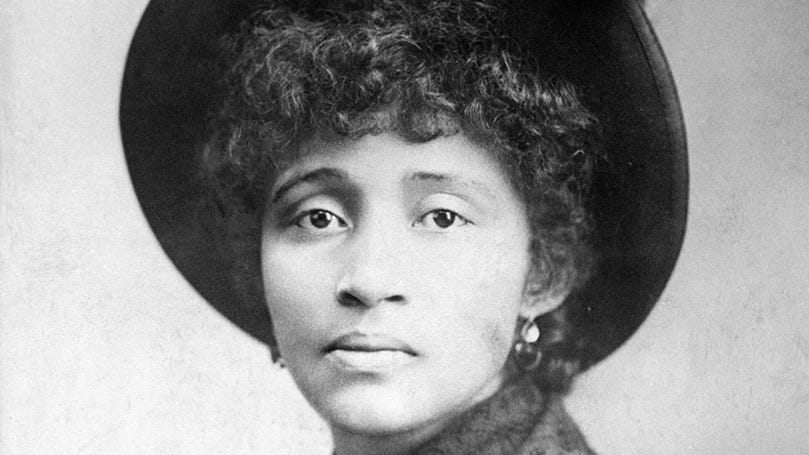
‘Governments never lead; they follow progress. When the prison, stake or scaffold can no longer silence the voice of the protesting minority, progress moves on a step, but not until then.’  

“More dangerous than a thousand rioters,” anarchist Lucy Eldine Gonzalez Parsons was a writer, orator, one of the founders of the Industrial Workers of the World, and tireless campaigner for the rights of people of color, all women, and all workers. Her husband, Albert Parsons, was one of the Haymarket martyrs.

We, the women of this country, have no ballot even if we wished to use it … but we have our labor. We are exploited more ruthlessly than men. Wherever wages are to be reduced, the capitalist class uses women to reduce them, and if there is anything that you men should do in the future, it is to organize the women.

Though Parsons and Emma Goldman were widely regarded as the most prominent female anarchists of the day, they very notably did not get along so well. Parsons believed that oppression based on gender and race was a function of capitalism and would be eliminated when capitalism was eliminated, whereas Goldman believed such oppression was inherent in all things. Parsons was all class struggle all the time, and felt that the “intellectual anarchists” like Goldman spent too much time bothering with appealing to the middle class.

One of her most important contributions to the labor movement was the concept of factory takeovers. 

“My conception of the strike of the future is not to strike and go out and starve, but to strike and remain in, and take possession of the necessary property of production.”

Parsons is best known for being the woman who really started the celebration of May Day as a day for workers’ rights — leading a parade to commemorate the anniversary of the Haymarket Affair. Soon, nearly every other country in the world followed suit and proclaimed this day International Worker’s Day. Alas, here in America, we go with the less radical and more picnic-y Labor Day that we are celebrating today, because Grover Cleveland thought a federal holiday commemorating the Haymarket Affair would encourage people to become anarchists and socialists, and no thank you, he did not want that.

Anna LoPizzo

‘Hearts starve as well as bodies, give us bread but give us roses too’  

Not much is known about Anna LoPizzo, other than that she was a 34-year-old mill worker who was murdered by police officer Oscar Benoit during the 1912 Lawrence Textile Strike — also known as the Bread and Roses Strike. Initially, police tried to charge two IWW organizers who were miles away for her murder, even though literally everyone there had seen Benoit shoot her.

The reason for the strike in the first place was that the textile mills of Lawrence, Massachusetts, cut worker pay after the state cut the number of hours women could legally work from 56 down to 54. The Industrial Workers of the World, led by Elizabeth Gurley Flynn (we’ll get to her in a minute), organized more than 20,000 workers of more than 40 different nationalities to demand they get their fair wages. One of the primary tactics used in the strike was sending the starving families of the mill workers on a tour to New York City so that people there could see for themselves what these low wages were doing to children. Between that and LoPizzo’s death, sympathy was on the side of the workers. Congressional hearings into the conditions of the mills were held, and the mills themselves ended up settling the strike by giving all workers across New England a 20 percent raise.

Lillian Wald

‘Human interest and passion for human progress break down barriers centuries old.’

Susan B. Anthony isn’t the only important feminist buried in the Mount Hope Cemetery in my hometown of Rochester, New York. There is another. Her name was Lillian Wald, and she was a total fucking bad ass. She wasn’t just a suffragist — she was also an early advocate for healthcare for all people regardless of economic class or citizenship, a founding member of the NAACP, lobbied against child labor, advocated for the rights of immigrants, helped to found the Women’s Trade Union League, and was an anti-war activist. Wald also founded the Henry Street Settlement House in New York City, which provides — to this day — social services, education, and health care to the impoverished. And she was active in the ACLU.

WHY THE HELL IS SHE NOT MORE FAMOUS? I am legitimately bothered by this and bring it up often.

Elizabeth Gurley Flynn
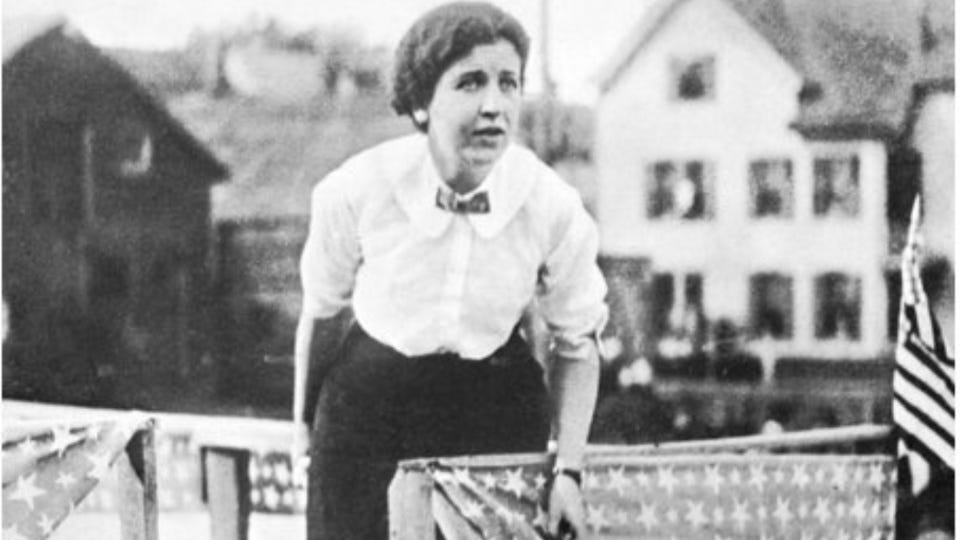
‘The IWW has been accused of pushing women to the front. This is not true. Rather, the women have not been kept in back, and so they have naturally moved to the front.’

Hey! You know who was super freaking awesome? Elizabeth Gurley Flynn. As previously mentioned, she was an organizer with Industrial Workers of the World who helped organize the Lawrence Textile Strike. She also organized a hell of a lot of other strikes across the country, helped found the ACLU, and was known for the creative tactics she used to elicit sympathy and support for the American worker.

Hattie Canty
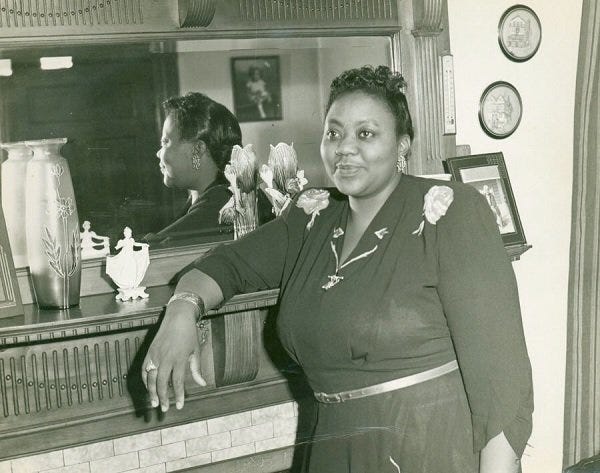
’Coming from Alabama, this seemed like the civil rights struggle … the labor movement and the civil rights movement, you cannot separate the two of them.’ 

 When Hattie Canty’s husband died in 1972, she found herself supporting eight children on her own. She found work as a maid at a Las Vegas hotel where she joined the Las Vegas Hotel and Culinary Workers Union Local 226. By 1990, she was president of that union, leading one of the longest strikes in American history — a six year strike of hospitality workers which, happily, ended in victory.

The Women of The Atlanta Washerwomen’s Strike
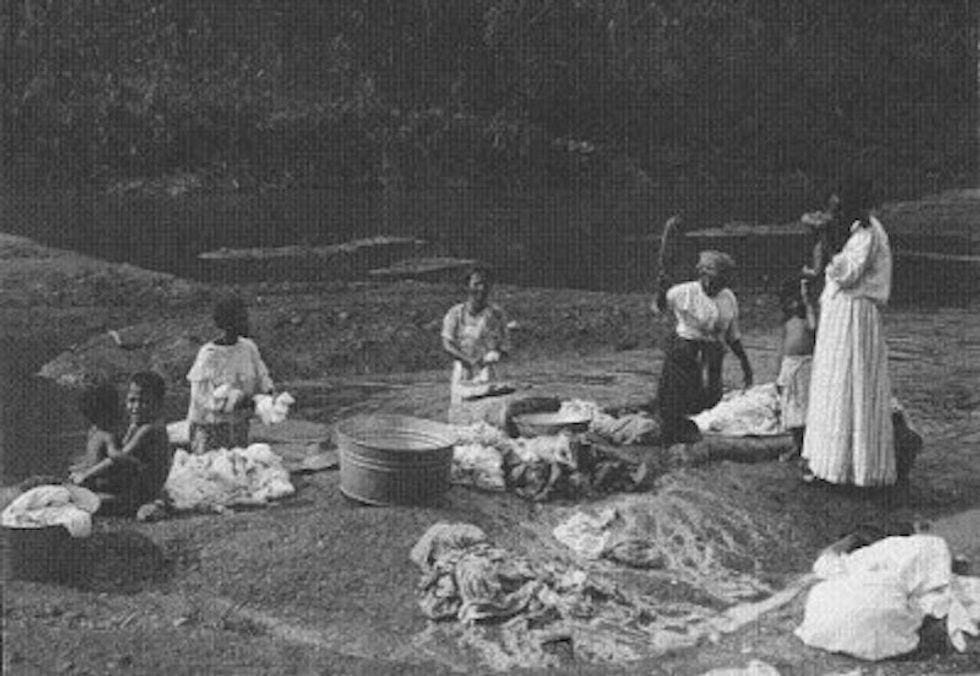
We mean business this week or no washing!  

Back in the 1880s, only two decades after the Civil War ended, the most common occupation for Black women was as laundresses — this was largely because if poor white families were going to hire anyone to do chores for them at all, they were going to hire someone to do their laundry. These women were independent workers, often working from their own homes and making their own soap, and they only made about $4 a month. (Average non-Black-woman laborers earned about $35 a month in 1880.)

One day in 1881, about 20 of them got together and decided that $4 a month was some bullshit for all the work they were doing and decided to go on strike and demand wages of $1 for every 12 pounds of washing. Three weeks later, 3,000 other women joined them. Unsurprisingly, the city freaked out. They fined any participants $25 — which was a lot of money when you only made $4 a month — and they offered tax breaks to any corporation that would come down there to start a commercial steam cleaning business. Still, the women did not back down.

Eventually, people got really sick of doing their own laundry, and the city decided to back down on the fines, and accede to their demands for fear that the unrest would spread to other industries.

Dolores Huerta

‘Every minute a chance to change the world.’

Dolores Huerta, along with Cesar Chavez, helped to organize the National Farmworkers Association, which later became United Farm Workers. She wasn’t a farmworker herself — rather, she was an elementary school teacher who was tired of seeing the children she taught living in poverty because their parents were not making enough money as farmworkers.

I couldn’t tolerate seeing kids come to class hungry and needing shoes. I thought I could do more by organizing farm workers than by trying to teach their hungry children.

Together with Chavez, Huerta organized the successful Delano Grape Strike (or as your mom calls it, “that time we couldn’t eat grapes for five years” or as Rebecca’s mom calls it “serious people don’t care if a boycott ‘ends'”), which led to better wages and working conditions for farmworkers, and she has continued working as an activist and an organizer ever since.

Angela Bambace
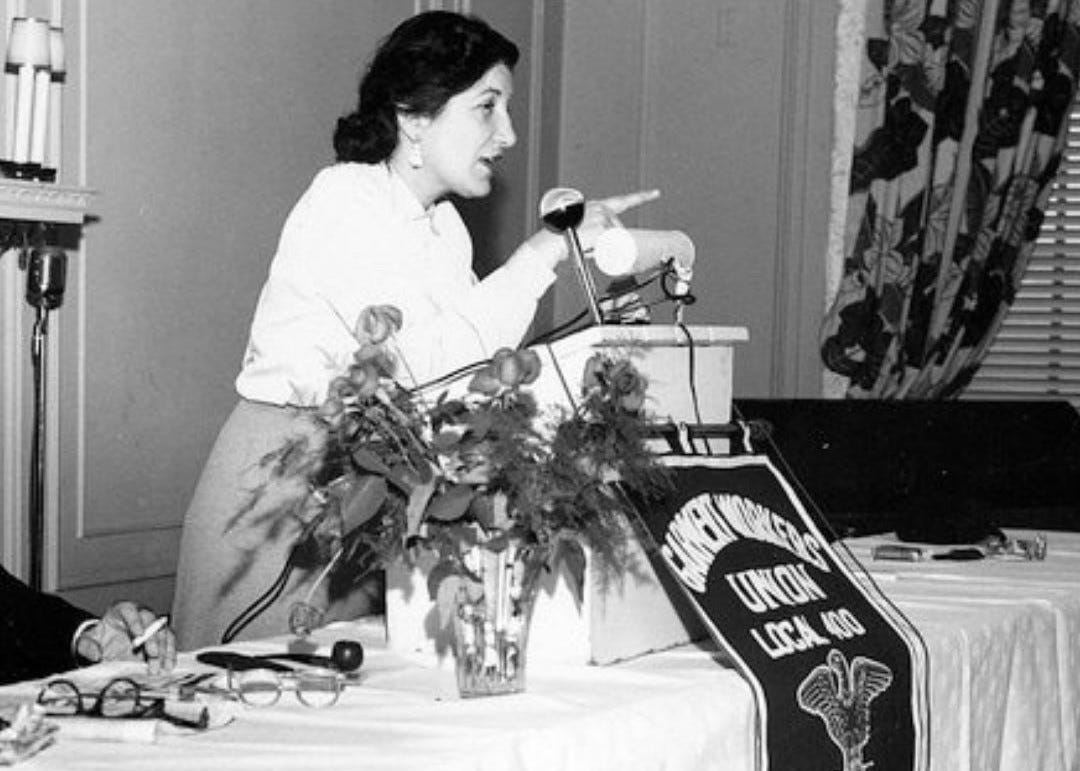
‘We did it with fear.’

Though she’s not as well known as some of the other women on here, Angela Bambace, an organizer for the International Ladies Garment Worker’s Union who started unionizing her fellow shirtwaist factory workers at age 18, is a personal hero of mine, along with her sister Maria. Angela was known to punch strikebreakers in the nose, which was pretty freaking badass.

She also left her husband and a traditional marriage in which she was confined to “making tomato sauce and homemade gnocchi” — and lost her parental rights in doing so, because back then, women didn’t have any — to fight for workers’ rights on the front lines. She was the first woman woman elected Vice-President of the ILGWU, which previously only had male leadership, where she worked from 1936 until 1972.

May Chen

’The Chinatown community then had more and more small garment factories and the Chinese employers thought they could play on ethnic loyalties to get the workers to turn away from the union. They were very, very badly mistaken.’ 

May Chen, also of the International Ladies Garment Worker’s Union, led the New York Chinatown strike of 1982 — 20,000 workers strong and one of the largest strikes in American history. As a result of the strike, employers cut back on wage cuts, gave workers time off for holidays and hired bilingual interpreters in order to accommodate the needs of immigrant workers.

Lucy Randolph Mason
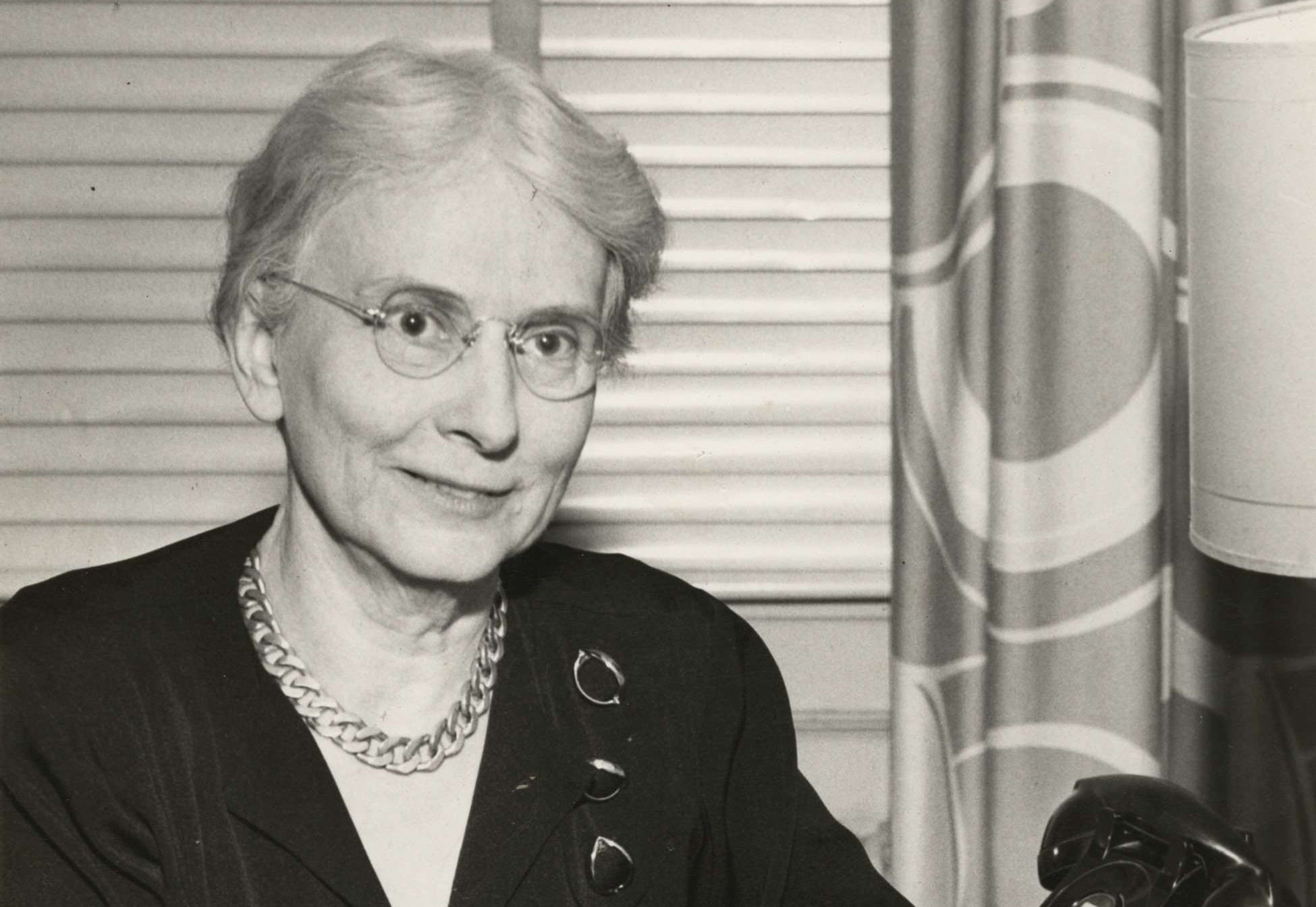
‘When I came South I had no idea of the frequency of attacks on people peacefully pursuing legitimate purposes, I am appalled at the disregard of the most common civil rights and the dangers of bodily harm to which organizers often are exposed”‘

Lucy Randolph Mason was an interesting one. She was a well-off Southern lady from Virginia, related to George Mason (author of the Virginia Declaration of Rights), Supreme Court Justice John Marshall, and, uh, Robert E. Lee. So, you know, you might have an idea in your head about what her deal might be. And you would be so wrong. 

So, despite being from this very fancy family, Lucy goes and gets a job as a secretary for the YWCA at 20. In 1918, she gets into the whole suffragette thing. Women get the vote, but Lucy’s not done. She starts organizing for labor rights and integration and ending white supremacy in the South. She organizes interfaith, integrated unions in the South, which you can imagine was a pretty big deal at that time. She does it through the YWCA. She writes a pamphlet telling consumers to boycott companies that don’t treat their workers well. Eventually, she becomes the CIO’s ambassador to the South and spends the next 16 years of her life going to all these small towns where bad things would happen to anyone who tried to unionize, and explaining workers’ rights and why integration is good and racism is bad to pretty much anyone with any kind of power. Neat!

Emma Goldman
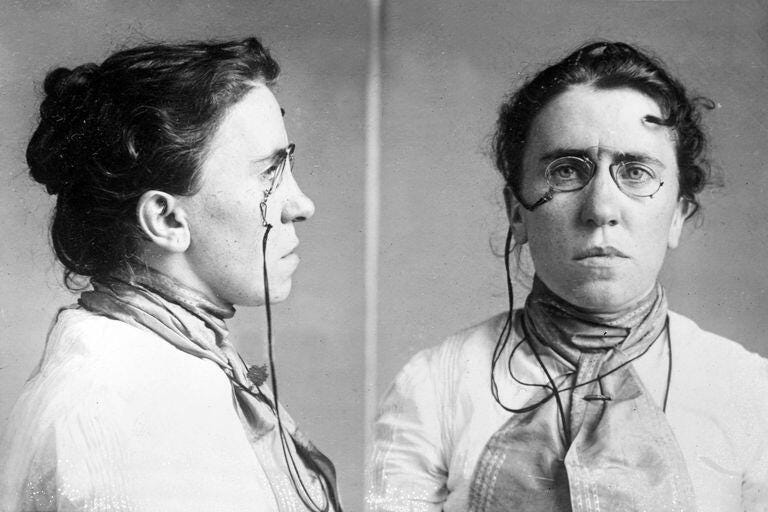
‘Ask for work, if they do not give you work, ask for bread, if they will not give you bread, steal bread.’

 Though not a union organizer by trade, anarcha-feminist Emma Goldman’s advocacy for workers’ rights and human dignity and freedom empowered workers and organizers throughout the country, and motivated them to stand up for their own rights. She was considered the most dangerous woman in America for a reason.

She was a feminist, an anti-racist, an atheist, an advocate of free love, an opposer of the institution of marriage and — very unusually for the time (she pretty much started right after Haymarket, which was 1886, and continued until her death in 1940) — one of the first advocates of gay rights.

“It is a tragedy, I feel, that people of a different sexual type are caught in a world which shows so little understanding for homosexuals and is so crassly indifferent to the various gradations and variations of gender and their great significance in life.”

I could probably go on about Emma Goldman forever, but I have to get to other people and also this is not my sophomore year in college.

Rosina Tucker
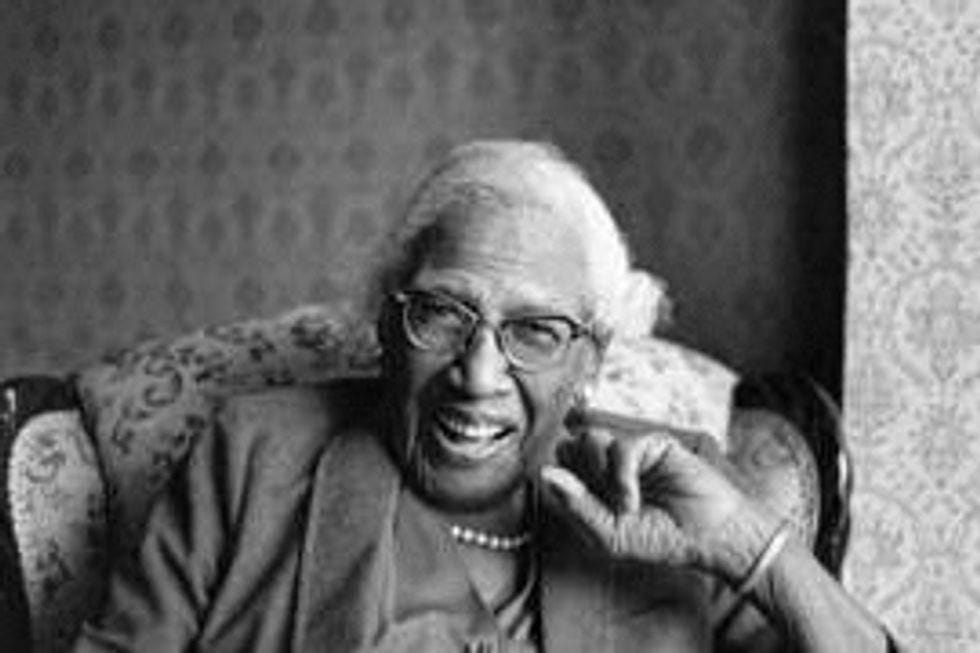
 ‘I looked him right in the eye and banged on his desk and told him I was not employed by the Pullman company and that my husband had nothing to do with any activity I was engaged in … I said, ‘I want you to take care of this situation or I will be back.’ He must have been afraid … because a black woman didn’t speak to a white man in this manner. My husband was put back on his run.’

Rosina Tucker is best-known for helping to organize the first Black labor union, The Brotherhood of Sleeping Car Porters, started by A. Philip Randolph in 1925. A Brotherhood? But she was a woman, you say! Well, the Pullman porters wanted to organize, but they were afraid of losing their jobs — with good reason, because their bosses kept trying to fire them for trying to unionize. So Rosina and other wives of the porters got together and started the Ladies Auxiliary of the Brotherhood of Sleeping Car Porters in order to raise funds to start the union.

In 1963, along with A. Philip Randolph of the BSCP, she helped organize the March on Washington for Jobs and Freedom, and continued to be active in civil rights and labor rights until she passed away in 1987, at the age of 105.

The women on this list, along with the many others who also fought for labor rights in this country and others, didn’t only fight a fight for workers. They fought a feminist fight, they fought for civil rights, they fought for human rights — they understood the interconnectedness of it all, they understood that without economic justice there is no social justice and without social justice there is no economic justice. They understood the way that the labor movement could be used as a catalyst for making social change possible at a time when they didn’t have any political support or power — and that’s a thing we could all do well to remember ourselves.

Happy Labor Day!

New study provides the “definitive answer on masks.” They work.

I’ve masked consistently since the beginning of the ongoing COVID-19 pandemic, first with a cloth mask, before I knew better, and then for the last few years with KN95s or N95s. And I have, to my knowledge, continued to avoid catching the virus. In fact, I haven’t been sick for at least 4.5 years, and I attribute that in large part to masking. I also opt for patios if I go out to eat, if at all possible, so that’s also part of why I haven’t been sick. But it’s also definitely the masking. Needless to say, I’m already a huge believer in the science of masking. In simple terms: masks work. 

Masks and respirators for prevention of respiratory infections: a state of the science review [journals.asm.org]

However, it’s hard to convince folks who have swallowed the fake news that masking is harmful or that masks don’t work. I won’t link to those (flawed) “studies” because I definitely don’t want to share more misinformation, but suffice it to say, folks who believe masks don’t work are either not reading actual science, or aren’t actually masking, or aren’t using high quality masks, or if they are wearing masks, aren’t wearing them properly (yeah, you’re right, masks around your chin don’t actually work!). 

In case you still have the patience to try to convince a mask skeptic—or even a rabid anti-masker—that masks *do* actually work, here’s a great, brand-new, peer-reviewed study to share with them. The paper, which is based on a narrative review and meta-analysis research project, was written by an international team of 13 researchers from universities including University of Oxford (UK), University of New South Wales (Sydney, Australia), University of Toronto (Canada), University of Otago (Wellington, New Zealand), and University of Calgary (Alberta, Canada). 

The paper synthesizes evidence from over 400 studies in total, including 100 published reviews, as well as primary studies from disciplines such as epidemiology, public health, engineering, and social studies—all of which focused on the exploring the efficacy of masking. The authors explain that they even re-analyzed “contested meta-analyses of key clinical trials”—including the infamously controversial Cochrane review. In fact, the authors state specifically that their review “was commissioned partly because of controversy around a Cochrane review which was interpreted by some people as providing definitive evidence that masks don’t work.” However, that’s never what the Cochrane review actually stated, as explained by the authors of this current review:

The need for a new review on masks was highlighted by a widely publicized polarization in scientific opinion. The masks section of a 2023 Cochrane review of non-pharmaceutical interventions (9) was—controversially—limited to randomized controlled trials (RCTs). It was interpreted by the press and by some but not all of its own authors to mean that “masks don’t work” and “mask mandates did nothing” (10). Cochrane’s editor-in-chief felt the need to state publicly that in Cochrane’s view, the review’s findings did not support such a conclusion (11). Some scholars were quick to question the review’s methodology, especially key flaws in the meta-analysis and omission of a vast body of non-RCT evidence (1216).

I, for one, am thrilled that this study explicitly addresses—and debunks—the Cochrane review, because that single study probably did more damage than almost anything else to widespread attempts to get people to mask to keep themselves and others safe from COVID-19. 

The authors of this new review found evidence that led them to seven main findings:

First, there is strong and consistent evidence for airborne transmission of severe acute respiratory syndrome coronavirus 2 (SARS-CoV-2) and other respiratory pathogens. 

Second, masks are, if correctly and consistently worn, effective in reducing transmission of respiratory diseases and show a dose-response effect. 

Third, respirators are significantly more effective than medical or cloth masks. 

Fourth, mask mandates are, overall, effective in reducing community transmission of respiratory pathogens. 

Fifth, masks are important sociocultural symbols; non-adherence to masking is sometimes linked to political and ideological beliefs and to widely circulated mis- or disinformation. 

Sixth, while there is much evidence that masks are not generally harmful to the general population, masking may be relatively contraindicated in individuals with certain medical conditions, who may require exemption. Furthermore, certain groups (notably D/deaf people) are disadvantaged when others are masked. 

Finally, there are risks to the environment from single-use masks and respirators. 

The authors also provide some recommendations for future research:

We propose an agenda for future research, including improved characterization of the situations in which masking should be recommended or mandated; attention to comfort and acceptability; generalized and disability-focused communication support in settings where masks are worn; and development and testing of novel materials and designs for improved filtration, breathability, and environmental impact.

University of Calgary News recently published an overview of the study which included some discussion of the study by lead author Professor Trisha Greenhalgh from the Nuffield Department of Primary Care Health Sciences, University of Oxford, who stated, “Our review confirms that masks work, with a clear dose-response effect. . . The more consistently and correctly you wear a mask, the better protected you are. Respirators, when worn continuously, provide even greater protection than ordinary masks.”

Co-author Dr. Joe Vipond, MD and Associate Professor at University of Calgary’s Cumming School of Medicine also commented on the study, stating that it is the “definitive answer on masks”:

“In a world of misinformation, questioning the effectiveness of everything from masking to vaccines, it’s important to have solid science to support any assertion . . . This is the definitive answer on masks, looking beyond the narrow view of randomized controlled trials to the entirety of the evidence. And behold, the current science upholds the standards and protocols that for decades have protected health care workers, and more recently the public, from biohazards.” 

I know it would be naive to think that this robust study on the efficacy of masking will change die-hard anti-maskers’ minds. But perhaps it will persuade some people who are still open to learning from actual data. Here’s hoping, anyway! Mask up, folks! And if you’re looking for me, I’m the one in the hot pink mask!

Click here to read the full study and here to read the rest of the summary and interviews with several of the authors from University of Calgary News

A Priest’s Rationale For Rejecting Trump And True Christian Priorities

3 for Science on Labor Day

so I guess you may read them tomorrow, if you like. 😎

First, a tiny, acrobatic bug:

Biologists have studied an extreme gymnast of the animal kingdom, watching as it moves so quickly it appears to all but vanish.

The globular springtail (Dicyrtomina minuta) is a small but mighty bug that can backflip more than 60 times higher and 100 times longer than its own body length.

This tiny bug grows to only a couple of millimetres and can’t sting, bite, or fly its way out of danger. Instead, its preferred method of avoiding predators is to flip out so forcefully it seems to disappear! (snip-More on the page, with photos)

Next, a possible source of new antibiotics (and this brought Ten Bears to my mind, for some reason):

A study has found promising antibiotic candidates inside bacteria harvested from the deep Arctic Sea.

The research, by Finnish and Norwegian researchers, is published in Frontiers in Microbiology.

Antibiotic discovery has slowed in recent decades, which has exacerbated the risks of antibiotic resistance.

Most licensed antibiotics – about 70% – have been derived from a type of soil-dwelling bacteria called actinobacteria.

“For example, members of the Streptomyces genus produce several secondary metabolites, including clinically useful antibiotics such as tetracyclines, aminoglycocides and macrolides,” says corresponding author Dr Päivi Tammela, a professor at the University of Helsinki, Finland.

But soil isn’t the only place these bacteria can be found.

“Marine actinobacteria found in the sea, on the seafloor, or within the microbiome of marine organisms, have received far less attention as possible sources of antibiotics,” says Tammela. (snip-More on the page)

Then, an analysis for coal phase-out in Asia:

Countries in the Asia-Pacific region account for 76% of the world’s thermal coal power generation, and many of these plants will need to retire early to meet global emissions targets.

But according to a new analysis, it’s possible to phase these coal plants out and transition to renewable energy while investors still make money.

The study, done by Australian, Singaporean and Chinese researchers, is published in Energy Policy.

“There is a drive and interest from a number of different investors like the Asian Development Bank, but also private sector investors, to finance the early retirement coal fired power plants,” lead author Professor Christoph Nedopil Wang, director of Griffith University’s Asia Institute, tells Cosmos.

Nedopil and colleagues looked specifically at 6 Chinese-sponsored coal-fired power plants in Vietnam and Pakistan.

“With investors wanting to invest in, and ideally also providing lower cost financing for, green projects, refinancing of these coal fired power plants becomes possible at a lower cost,” says Nedopil.

The researchers modelled the future performance of these stations under a variety of financing and geoeconomic scenarios.

“That brought us to the conclusion that, depending on the age of the coal-fired power plant, we can retire these plants earlier than currently envisaged, while reducing the financing cost and therefore increasing enterprise value,” says Nedopil. (snip-More on the page)

Western Media BURIES Sickening Israeli Abuse of Palestinian

Messed up doesn’t even begin to sum this up.

The News Out of TX from Janet

Two videos for the curious and not for the prudish squeamish.

I have almost 200 YouTube channels I follow. One is the one I will share with you today.  They have the weirdest and oddest subjects.  And yes they are seemingly from the UK.  I learn a lot from this channel as they host everything from hitmen, to politicians, to celebrity snack wars, to escort grandmothers.   Below are two videos.  One an elderly woman enjoying the time of her life as a senior escort who also provides sex and a porn director discussing the honest secrets of his job.  I personally learned a lot more from the grannie and I loved her attitude, and I won’t spoil it, but you should hear who her youngest and oldest clients were.   Hugs.  Scottie

In this episode of Honesty Box we talked to a 70 year old escort Caroline, who told us about secrets of her profession, what was her weirdest sex request and if sex gets better with age.

In this revealing episode of Honesty Box, porn director Dick Bush answers your burning questions about what it’s really like to work on the set of a porn film. Dick explains how he makes the performers feel comfortable, discloses tricks and trades of the porn set and tells us what happens if he misses the all-important ‘money shot’. He also tackles the big questions around porn such as, can you be a feminist and work in the porn industry? Does penis size matter? And, how do you tell your family about your job?

Got a Republican State Legislature? Watch out carefully for this…

This is an opinion piece that contains news, and cites. Also, all Republicans are not Magas, but they’re still Republicans. This is important.

Snippet (it’s not a long piece, and it’s full of info.)

Let’s be clear about what Kansas Republican legislative leaders are doing with their planned overhaul of budgeting: They are launching a personal and political power grab against Gov. Laura Kelly.

They have never accepted or respected her mandate. Despite Kelly winning a second term and having two years left to go, they have continually attempted to usurp the executive branch’s authority. They have tried a constitutional amendment and prohibiting her ability to negotiate Medicaid contracts. Now they’re going after her yearly state budget proposal.

Usually, the Legislature begins its yearly budget process with a proposal from the governor. Her office submits it when lawmakers arrive for the annual session, in January. Now an interim committee wants to start the process earlier, as soon as October of the previous year.

In this new process, the governor’s budget would be a suggestion, not a starting point.

And never mind that it’s a direct attack on Kelly. House Speaker Dan Hawkins, R-Wichita, assured the audience that these changes had nothing to do with the governor.

“This process has nothing to do with the governor,” he said at the meeting earlier this month, according to Kansas Reflector reporter Tim Carpenter. “If you’re going to focus on the governor, probably not the wisest thing to do, because this process has happened over time with many, many different governors.”

He was contradicted by Senate President Ty Masterson, R-Andover, who let the proverbial cat out of the figurative bag.

“You’ll have a Republican governor, for example, or somebody you trust, and you trust the administration to build the budgets, and then you kind of rubber stamp stuff,” Masterson said. “And, then, you switch, and you have (the) opposition party and then there’s all that same power.”

Oh. So it’s like that, then.

(snip-More; also a vid of the sausage becoming sausage)

THE NEWS AIN’T NEWS ANYMORE! | Christopher Titus | Armageddon Update

Why I have not done much on the blog in two days. 8 30 2024

Just me rambling about my busy two days and stuff that comes to my mind. Sort of a get to know me blog.