If you are unsure of the difference between sex and gender, or if you are question many of the hate myths about trans people, or possibly thinking trans people are new and never been accepted then please watch this video.
The host is easy to listen too, shows his sources, and uses facts, yes those pesky facts that refute all the anti-trans misinformation spread desperately through the right wing media. The video covers how anti-trans groups formed fake medical groups to claim science said that trans was a sickness or such, but the video show that real professionals in medical science disagree and show that being trans and gender nonconforming is a normal difference some people have.
Finally the hosts shows how the anti-trans movement push was started around 2008 when conservatives and fundamentalist religious groups were losing the war against gay people and gay marriage. They were seeing gay people normalized on TV and moved to prevent that from happening for trans people. Plus the video shows how this is about state control over everyone’s body. He shows how the idea of strict gender roles formed when men felt marginalized and wanted to create a society that was male oriented and was based on male superiority. For men to be superior, that meant they needed females to be inferior. So strict gender roles were created and enforced. This only has been the way for the last few centuries, not forever. Hugs. Scottie
Does Gender Even Matter?
There’s a full blown panic sweeping America, and it’s all about gender, and especially people who don’t conform to traditional categories. But what is it about people’s gender choices that makes others so worried? Was this an inevitable facet of modern life, or is something more complicated going on? Let’s find out in this Wisecrack video on Gender Theory: Why Now?
This is what is and has happened in Florida. We moved to the state in 1994, a poor gay couple. But the state was a blue state with an extremely progressive government. I loved the idea of being so near amusement parks I never had seen before. But over the years we have seen our state torn apart as hard right leaning people moved from other northern states to Florida, like we had done. But those people changed the state. They voted Republican, those republicans changed laws about voting, making it harder for people to vote. I once had to give up voting because I showed up at the early voting place only to see a several hour long line. There was no way I could stand that long, at the time I had only one hip joint. But when Ron complained we were told that was the rules, stay in line and vote. Republicans won the election. That is what republicans are doing everywhere they control. It is horrible. We must do what ever we can to resist.
Please read this article. It is and has been our experience. We have seen prices grow so high we struggle today to make ends meet and even buy groceries. Our medical costs are out of sight and imagination. And the republican hard right wants to make our existence as a gay couple a crime. I have talked about how over the last tRump administration, how over the last three years maga thugs have moved in to our area, our mobile home park. They put up pro-tRump posters, signs, and banners all which are against the rules but they are not made to take them down. Our former open and welcoming community divided into with maga or be … shut down and made unwelcome. These maga people have only one setting, they do not believe everyone has the right to their opinion or their political views, you either see it their way or you’re the enemy. Ron and I have withdrawn from most of the community when after the hurricane we were walking around the park and just down the street from us a new move in from NY was offering coffee to people … he had a tRump sign and a slur for president Biden on his home before the hurricane. They were not welcoming to Ron and I to say the least. We had never had that happen in our neighborohood before. Luckily, we had our own big generator that provided for all our needs and also was powering our ill neighbor’s oxygen machine and his refrigerator. We did not need their coffee, we were able to power our own coffee maker and hot plates and a microwave along with our A/c units and Ron’s C-pap. After hurricane Maria Ron insisted we buy a huge powerful generator. After Ian tore up our home and we were without power for three weeks that generator saved us. The name on the generator is The Beast. It really is. Hugs. Scottie
Florida has seen a population boom in recent years, but many longtime residents and recent transplants say rising costs and divisive politics have them fleeing the Sunshine State.
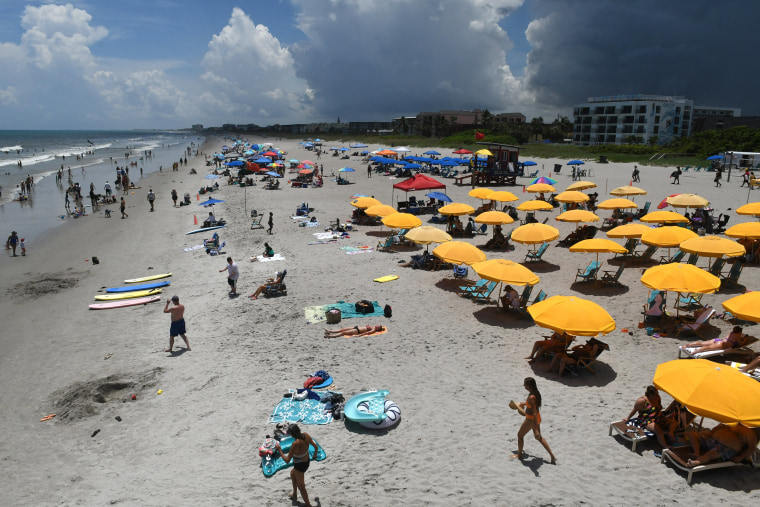
Beachgoers in Cocoa Beach on July 29, 2023, when ocean temperatures reached 101 degrees around the Florida Keys.Paul Hennesy / Anadolu Agency via Getty Images file
One of the first signs Barb Carter’s move to Florida wasn’t the postcard life she’d envisioned was the armadillo infestation in her home that caused $9,000 in damages. Then came a hurricane, ever present feuding over politics, and an inability to find a doctor to remove a tumor from her liver.
After a year in the Sunshine State, Carter packed her car with whatever belongings she could fit and headed back to her home state of Kansas — selling her Florida home at a $40,000 loss and leaving behind the children and grandchildren she’d moved to be closer to.
“So many people ask, ‘Why would you move back to Kansas?’ I tell them all the same thing — you’ve got to take your vacation goggles off,” Carter said. “For me, it was very falsely promoted. Once living there, I thought, you know, this isn’t all you guys have cracked this up to be, at all.”
Florida has had a population boom over the past several years, with more than 700,000 people moving there in 2022, and it was the second-fastest-growing state as of July 2023, according to Census Bureau data. While there are some indications that migration to the state has slowed from its pandemic highs, only Texas saw more one-way U-Haul moves into the statethan Florida last year. Mortgage application data indicated there were nearly two homebuyers moving to Florida in 2023 for every one leaving, according to data analytics firm CoreLogic.
But while hundreds of thousands of new residents have flocked to the state on the promise of beautiful weather, no income tax and lower costs, nearly 500,000 left in 2022, according to the most recent census data. Contributing to their move was a perfect storm of soaring insurance costs, a hostile political environment, worsening traffic and extreme weather, according to interviews with more than a dozen recent transplants and longtime residents who left the state in the past two years.
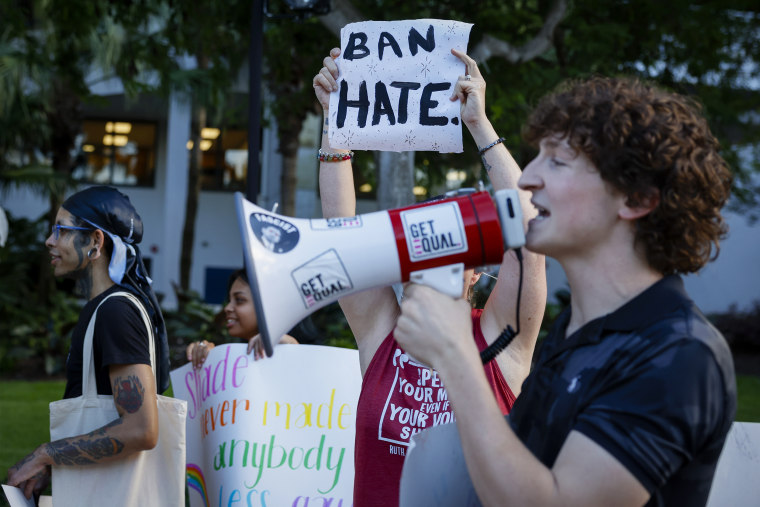
Young people in Miami demonstrate in 2023 in response to Florida’s crackdown on lessons surrounding race and Black history, and against a string of anti-LGBTQ laws that are affecting students.Eva Marie Uzcategui / Bloomberg via Getty Images
“It wasn’t the utopia on any level that I thought it would be,” said Jodi Cummings, who moved to Florida from Connecticut in 2021. “I thought Florida would be an easier lifestyle, I thought the pace would be a little bit quieter, I thought it would be warmer. I didn’t expect it to be literally 100 degrees at night. It was incredibly difficult to make friends, and it was expensive, very expensive.”
Cummings expected she’d have extra money in her paycheck working as a private chef in the Palm Beach area since the state doesn’t have an income tax. But the high costs of car insurance, rent and food cut into that additional take-home pay. After six months of dealing with South Florida’s heat and traffic, she began planning a move back to the Northeast.
“I had been so disenchanted with Florida so quickly,” Cummings said. “There was this feeling of confusion and guilt about wanting to leave, of moving there then realizing this is not anything like I thought it would be.”
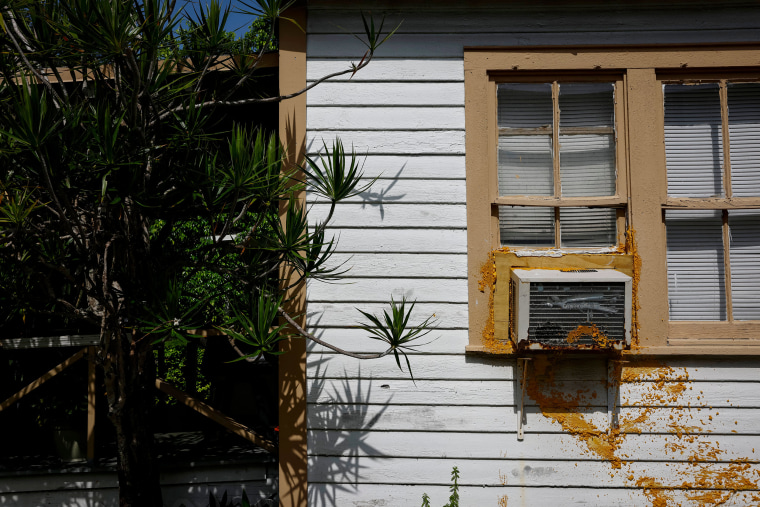
A window air conditioning unit during a heat wave in Miami in 2023.Eva Marie Uzcategui / Bloomberg via Getty Images
While costs have been rising across the country, some areas of Florida have been hit particularly hard. In the South Florida region, which includes Miami, Fort Lauderdale and Palm Beach, consumer prices in February were up nearly 5% over the prior year, compared to 3.2% nationally, according to the most recent data from the Bureau of Labor Statistics.
Homeowners insurance rates in Florida rose 42% last year to an average of $6,000 annually, driven by hurricanes and climate change, and car insurance in Florida is more than 50% higher than the national average, according to the Insurance Information Institute. While once seen as an affordable housing market, Florida is now among the more expensive states to buy a home in, with prices up 60% since 2020 to an average of $388,500, according to Zillow.
For Carter, who made the move in 2022 from Kansas to a suburb of Orlando for the weather, beaches and to be closer to her grandchildren, the costs began to quickly pile up. She purchased a manufactured home and initially expected the lot rent in her community to be $580 a month. But when she arrived she learned her monthly bill was actually $750, and by the time she left it had jumped to $875 a month. Along with the $9,000 in repairs from the armadillos, her car insurance doubled and Hurricane Ian destroyed her home’s roof on her 62nd birthday.
A flooded street in Orlando, Fla., following Hurricane Ian in 2022.Bryan R. Smith / AFP via Getty Images
There were also the ever-present conversations and disagreements over politics that started to wear on her. Carter, who describes herself as a “middle of the road” Republican, said she learned to keep her opinions to herself.
“You cannot engage in a conversation there without politics coming up, it is just crazy. We’re retired, we’re supposed to be in our fun time of life,” she said. “I learned quickly, just keep your mouth shut, because I saw people in my own community break up their friendships over it. I don’t like losing friends, and especially over politics.”
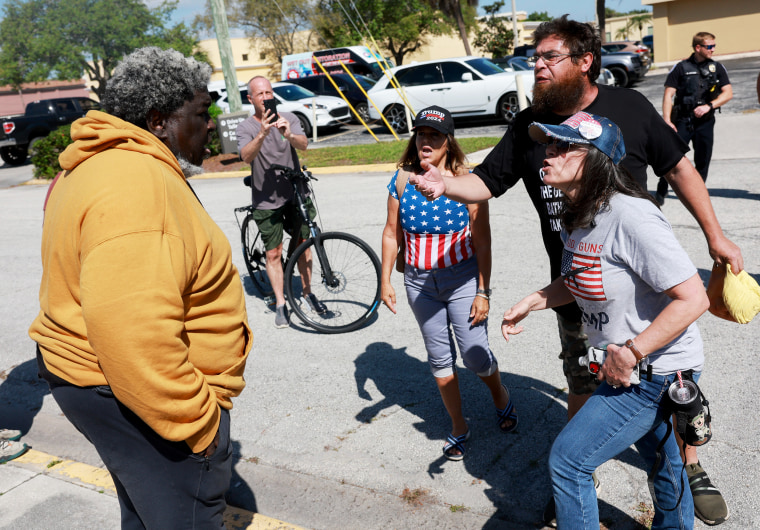
A supporter of President Joe Biden faces supporters of Donald Trump outside of the courthouse in Fort Pierce, Fla., where Trump attended a hearing in his classified records case on March 14.Joe Raedle / Getty Images
But she said the final straw was when she couldn’t find a surgeon to remove a 6-inch tumor from her liver that doctors warned could burst at any moment and lead to life-threatening sepsis. After being passed among doctors, she finally found one willing to remove the tumor. But when she called to schedule the surgery, her calls went unanswered and her messages weren’t returned. After months of trying and fearing for her life, she returned to Kansas to have the procedure done.“It just seemed like one challenge after another, but I kept with it until there was literally a lifesaving event that I needed to get handled and I wasn’t able to do it there,” she said. “I think it was the most difficult year of my life.”
No state has had more residents relocate to Florida in recent years than New York, with 90,000 New Yorkers moving there in 2022, according to census data. Among all out-of-state mortgage applicants, nearly 9% were from New York in 2023, slightly lower than the previous two years but similar to 2019, according to CoreLogic. One of those New York transplants was Louis Rotkowitz. He lasted less than two years in Florida.
“Like every good New Yorker, this is where you want to go,” he said by phone while driving the last of his belongings out of the state to his new home in Charlotte, North Carolina. “It’s a complete fallacy.”
After years working in emergency medicine, and nearly dying from a Covid-19 infection he contracted at work, Rotkowitz said he and his wife were looking for a more pleasant, affordable lifestyle and warmer weather when they decided to buy a house in the West Palm Beach area in 2022. He got a job there as a primary care physician and his wife took a teaching position.
But he said he quickly found the Florida he’d moved to wasn’t the one he’d experienced on regular visits there over the years. His commute to work often took more than an hour each way, he struggled to get basic services like a dishwasher repair, and the cost of his homeowners association fees doubled.
“I had a good salary, but we were barely making ends meet. We had zero quality of life,” said Rotkowitz.
Along with the rising costs, Rotkowitz said he generally felt unsafe in the state between the erratic traffic — which resulted in a number of his patients being injured by vehicles — and a state law passed in 2023 that allowed people to carry a concealed weapon without a license.
A handgun is inventoried at store that sells guns in Delray Beach, Fla., in 2023.Joe Raedle / Getty Images file
“Everyone is walking around with guns there,” he said. “I consider myself a conservative guy, but if you want to carry a gun you should be licensed, there should be some sort of process.”
Veronica Blaski, who moved to Florida from Connecticut, said rising costs drove her out of the state after less than three years. When at the start of the pandemic her husband was offered a job in Florida making more money as a manager for a landscaping company, Blaski envisioned warm weather and a more comfortable lifestyle.
The couple, both in their 40s, sold their home in Connecticut and were starting to settle into their new community when Blaski said they were hit with a “bulldozer” of costs at the start of 2023.
Her homeowners insurance company threatened to drop her coverage if she didn’t replace her home’s 9-year-old roof, a $16,000 to $30,000 project, and even with a new roof, she was expecting her home insurance rates to double — one neighbor saw their insurance go from $600 a month to $1,200 a month.
She was also facing rising property taxes as the value of her home increased, her homeowners association fees went from $326 a month to $480, and her insurance agent warned that her car insurance would likely double when it was time to renew her policy. Her husband had to get a second job on weekends to cover the higher costs.
While Florida has an unemployment rate below the national average, Blaski and others said wages weren’t enough to keep up with their expenses. The median salary in Florida is among the lowest in the country, according to payroll processor ADP. To afford a home in one of Florida’s more affordable metro areas, like Jacksonville, a homebuyer would need to earn $109,000 a year, around twice as much income as a buyer would have needed just four years ago, according to an analysis by Zillow.
“My little part-time job making $600, $700 a month went to paying either car insurance or homeowners insurance, and forget about groceries,” said Blaski, who was working in retail. “There are all these hidden things that people don’t know about. Make sure you have extra money saved somewhere because you will need it.”
A person shops in a grocery store on July 13, 2022, in Miami as the consumer price index soared to 9.1%, marking the fastest pace for inflation since November 1981.Joe Raedle / Getty Images file
When her husband’s former boss in Connecticut reached out to see if he’d be willing to return, the couple leaped at the chance.
The reverse migration out of Florida isn’t just among newcomers, but also among longtime residents who said they can no longer afford to live there and are uncomfortable with the state’s increasingly conservative policies, which in recent years have included a crackdown on undocumented immigrants, a ban on transgender care for minors, state interventions in how race, slavery and sexuality are taught in schools, and a six-week ban on abortions.
After more than three decades in the Tampa Bay area, Donna Smith left the state for Pennsylvania in December, with politics and rising insurance costs playing a major role in her decision to leave.
“It breaks my heart, it really does, because Florida was really a pretty great place when I first moved there,” Smith said.
Having grown up in Oklahoma, Smith considered herself a Republican, but as Florida’s politics shifted to the right, she said she began to consider herself a Democrat. It wasn’t until the past several years, though, that politics started to encroach on her daily life — from feuds between neighbors and friends to neo-Nazis showing up at a Black Lives Matter rally in her small town.
“When I first moved to Florida, it was a live-and-let-live sort of beach feel. You met people from all over, everybody was relaxed. That’s just gone now, and it’s shocking. It’s just gone,” said Smith, 61, who works as a graphic designer and illustrator. “Instead, it’s just a constant stressful atmosphere. I feel as though it could ignite at any point, and I’m not a fearmonger. It’s just the atmosphere, the feeling there.”
She was already considering a move out of the state when she was told by her homeowners insurance company that she would need to replace her home’s roof because it was older than four years or her insurance premium would be going up to $12,000 a year from $3,600, which was already double what she had been paying. Even with a new roof, she was told her premium would be $6,900 a year. Before she could make a decision about what to do, her insurance policy was canceled.
Shortly after, Smith ended up moving to the Lancaster, Pennsylvania, area, where she is closer to her adult children. While the majority of voters in her new county chose Donald Trump in the last election, she said politics is no longer such a heavy presence in her everyday life.
“I don’t feel it is as oppressive. People don’t wear it on their sleeve like they did in Florida,” she said. “When you walk in a room, you don’t overhear a conversation all the time where people are saying ‘Trump is the best’ or ‘I went to that last rally,’ and they’re telling total strangers while you’re just waiting for your car or something. It was just everywhere.”
A supporter of Donald Trump at a Super Tuesday election-night watch party at Mar-a-Lago in Palm Beach, Fla., on March 5.Chandan Khanna / AFP – Getty Images
Costs and politics were also enough to cause Noelle Schmitz to leave the state after more than 30 years, despite her son having a year left in high school, and relocate to Winchester, Virginia. She said the politics became ever-present in her daily life — one former neighbor had a massive Trump banner in front of their house for years, and another had Trump written in big letters across their yard. When she put out a Hillary Clinton sign in 2016, it was stolen and her house was egged.“I saw my neighbors and co-workers become more radicalized, more aggressive and more angry about politics. I’m thinking, where is this coming from? These are not the people I remember,” Schmitz said. “I was finally like, we need to get the hell out of here, things are not going well.”
For some Florida newcomers though, politics is the main draw to the state, said John Desautels, who has sold real estate in Florida for decades. While politics never used to be a topic for homebuyers, Desautels said it is now a regular subject his clients bring up. Rather than asking about schools or amenities in a community, prospective buyers are asking him about the political affiliations of a certain neighborhood.
“One of the first things they say is, ‘I don’t want to be in one of them X or Y political party neighborhoods,’” Desautels said. “I spend hours listening to people vent to me about fleeing the communist government of XYZ and they want to come to freedom or whatever. So the politics have been the biggest issue when we get the call.”
Even home showings have become a politically sensitive issue. He recalled showing an elderly woman one property where there were Confederate flags at the gate and swastikas on the fish tank.
But while politics are a lure to people arriving in the state, he said they’re also among the reasons sellers tell him they’re leaving, and the state’s politics have deterred some of his gay or nonwhite clients from moving there.
“The problem is, when we alienate protected classes, it sounds like a good sound bite, but you’ve got to remember those are people who spend money in our community,” he said. “For this pro-business, free state, I’m feeling it in the wallet, bad.”
In Kansas, Carter says it’s good to be home. She moved into a 55-plus community in a small town about 10 miles from Wichita. While in Florida she was paying nearly $900 in lot rent for her manufactured home, she now pays just $520 in rent for a cottage-style apartment — a place she estimates would have cost her $1,800 a month in Florida.
With the money she’s saving in Kansas, she can afford to visit Florida.
“People call me the modern-day Dorothy,” she said. “There’s no place like home.”
A flooded street in New Port Richey, Fla., after Hurricane Idalia made landfall in 2023.Miguel J. Rodriguez Carrillo / AFP via Getty Images
Today I realized an Apple News link I had linked to had expired. I have to find a better way to do these news posts from my phone and pad. But using the title of the article I was quickly able to find a bunch of links to the story. I added them to the post and I am reposting it so anyone landing on it will be able to see the story. Hugs. Scottie
Are Abigail Shrier, Sean McDowell, Frank Turek, and gender critical people right to say Rapid Onset Gender Dysphoria is real and that gender dysphoria is a social contagion? Why are there more transgender people today? I examine these ideas using current scientific research, and an informed perspective on the Lisa Littman study on rapid onset gender dysphoria.
In this video, we’re gonna talk about homosexuality in the Islamic World. While today, the Islamic World and homosexuality don’t seem to go together, in the past, there was a rich tradition of homosexuality being expressed through stories and poetry. While it was never completely allowed, it did become an open secret. So, without further ado, let’s get to it.
Hi everyone. Thanks to Ali I checked my email, something I don’t do often. Now before I tell you what came in this morning, I must ask that we all refrain from threats of violence or harassment. That is their way, not ours. We use humor, mockery, the ability to reason, along with their own stupidity against them. That is not to say if you are personally threatened in real life you shouldn’t defend your self. I agree with Ten Bears on that. Then you fight back hard, fight dirty, saving yourself is the goal. That said this is what I got this morning in an email. As I don’t check it, I don’t know how many have been coming in. It is not a great way to connect with me. Personally I laughed at the pure ignorance of the writer. Hugs, Scottie
Thank you Tengrain for another wonderful post that puts the cards on the table and shows who holds the chips. But this one paragraph is to me everything the republican maga fundamentalist Christian right wants to do. Hugs. Scottie
If you happen to be a kid in Floriduh, there’s so many ways this jamoke is taking away your ability to learn about the world around you, from banning books, to expressly banning LGBTQ information, to now banning social media. It’s almost like Bootsie is afraid of what you might learn on your own.
I recently had the WPATH files thrown at me as a gotcha by a couple anti-trans people. Even though I pointed out that The Guardian say “Despite its grand title, WPATH is neither solely a professional body – a significant proportion of its membership are activists – nor does it represent the “world” view on how to care for this group of people.” If you want the truth of this “disturbing leak of trans kids being abused and medically mistreated” read this article. Please consider following Erin’s substack for more trans information and the laws attacking the LGBTQ+. Hugs. Scottie.
On Monday, anti-trans groups released a set of highly editorialized and decontextualized leaks dubbed the “WPATH Files.” A fact check reveals 216 errors, misrepresentations, and faulty citations.
Erin In The Morning is a reader-supported publication. To receive new posts and support my work, consider becoming a subscriber.
Subscribe
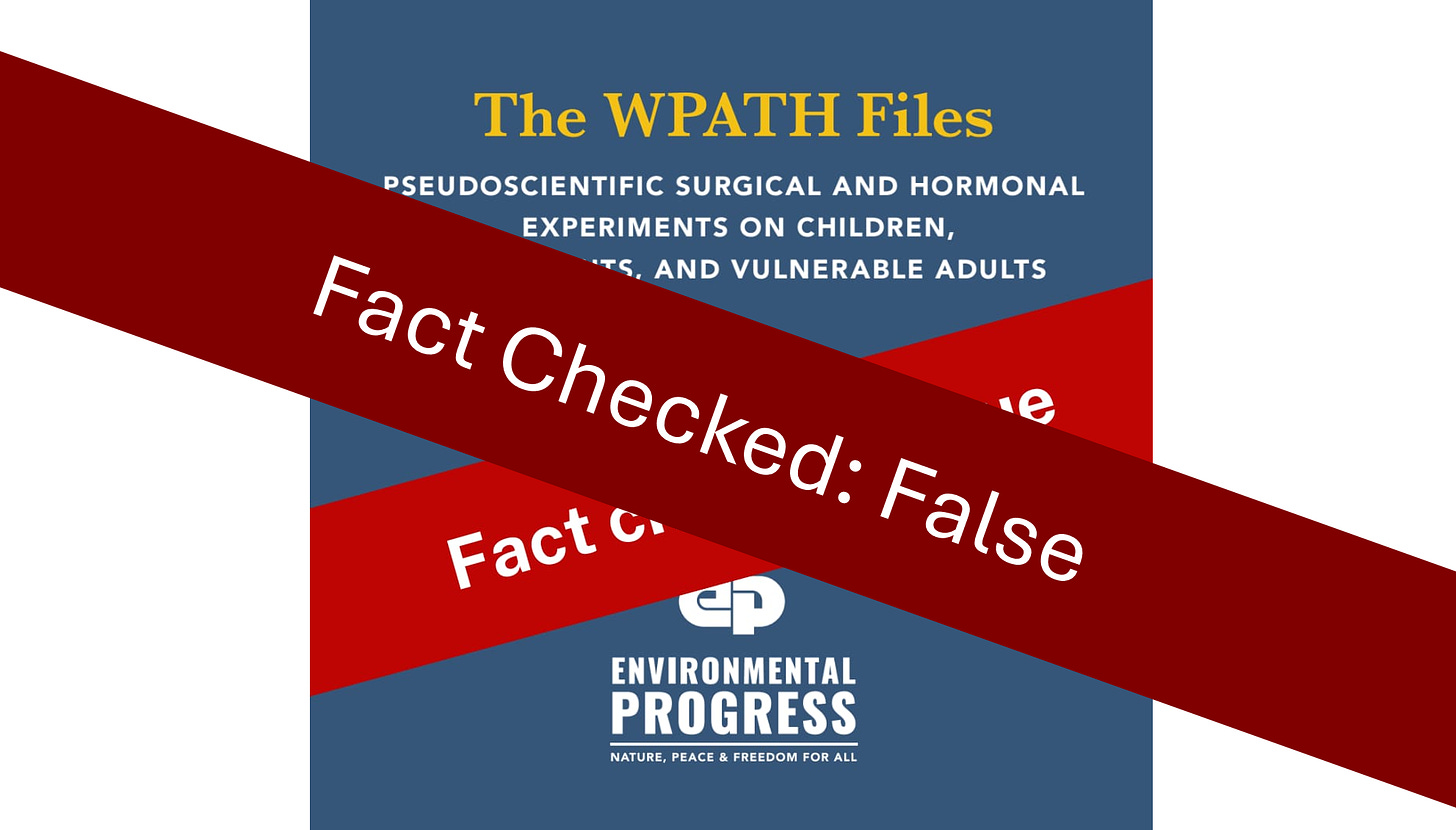
On Monday evening, prominent right-wing activist Michael Shellenberger, known for pushing anti-scientific views, released what he dubbed “the WPATH files.” In this highly editorialized document, select decontextualized images of forum posts from the World Professional Association for Transgender Health were made public. The document, replete with 37,569 words of editorial commentary before even presenting the so-called leaks, leans heavily into opinion and pseudoscience, urging readers to view it as a “groundbreaking scandal.” However, a closer inspection of the actual messages, achievable only after wading through the equivalent of a novella’s worth of editorial content, reveals rather mundane and often almost dull exchanges between doctors, psychologists, and therapists. These professionals are seen asking about edge cases and seeking advice from colleagues on patient circumstances. Despite attempts to cast the messages in a negative light, the report significantly misses the mark. In a thorough fact-check of the document, I have uncovered 216 instances of factual inaccuracies, erroneous citations, misinterpretations of what is “leaked,” and purposeful omissions contradicting the authors central editorialized claims.
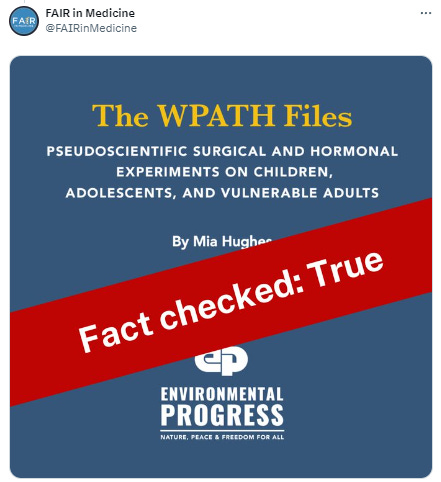
The files were quickly shared by nearly every major anti-trans organization and journalists aligned with them. Genspect described it as “one of the worst medical scandals in history.” Riley Gaines claimed it unveiled “one of the most profitable yet destructive social experiments in history.” The Alliance Defending Freedom termed it a “deep-rooted medical scandal.” Given the rapid pace at which news stories emerged from these and other organizations, it likely was the result of a coordinated and organized embargo campaign, leaving those in support of care with scant time to review the voluminous documents and respond. In anticipation of such a response, the right-wing, Edelman-funded anti-trans organization FAIR in Medicine even published a fake screenshot of their own analysis of the report, labeling it “true” in a “fact check” with a big red bar—a direct nod to the fact checks presented in my own reports.
The factual inaccuracies, incorrect citations, and misrepresentations of both the literature and the “leaks” in the report are pervasive, affecting every section. In many instances, the authors reference their “leaks,” which are not searchable without optical character recognition (OCR) processing, presumably banking on the assumption that readers will not verify the context, thus missing the misrepresentations. The editorial section serves as a prime example of a “Gish gallop”—a tactic where numerous errors are thrown at once to overwhelm those attempting to critically respond, a strategy first attributed to creationist debater Duane Gish. Given the sheer volume of errors, it is impractical for a single fact-check to address each one comprehensively. Instead, this fact-check will highlight clear examples of each type of error to illustrate the wide chasm between the documented evidence and the report’s exaggerated claims.
Erin In The Morning is a reader-supported publication. To receive new posts and support my work, consider becoming a subscriber.
Subscribe
Misrepresented Citations
The editorialized report relies heavily on citations that are misrepresented, either in terms of what the citations actually claim, their quality, or whether the arguments in the citations support the point being made by the author. For example, one section claims that the WPATH Standards of Care 8th revision “sent shockwaves through the medical profession,” and “provided the catalyst for the Beyond WPATH declaration, now signed by over 2,000 concerned individuals, many of whom are clinicians working with gender diverse young people.” A closer examination of the “Beyond WPATH” letter itself reveals signatories such as “John Howard – DJ” and “Collin Wynter, yoga instructor.” A majority of the signatories appear to be from non-relevant categories, and a significant chunk are not medical providers at all, such as “concerned grandparent” or “parent.” While the report presents the “declaration” as a document of primarily medical professionals, it omits that it is essentially a freely available online petition form.
When addressing supposedly “scientific” citations, the report’s performance is equally lacking. For example, in the editorialized section, the report asserts that transgender individuals who undergo gender reassignment surgery “do not show positive outcomes,” citing four references to support its claim. These citations include a 2004 article from The Guardian, an article from a conservative site called “The New Atlantis,”which self-describes not as an academic journal but as a “public journal of ideas,” the frequently misquoted “Swedish Study” whose author has expressly corrected misinterpretations by anti-trans organizations, and a quality of life study that is 15 years old, evaluating surgeries performed 30 years ago, when social discrimination likely significantly influenced the outcomes. This contrasts sharply with muchnewerresearch from peer-reviewed articles that demonstrate a substantial improvement in the quality of life for transgender individuals.
Another claim was that a study supported a “2% fatality rate” for gender affirming surgery for those who have a sigmoid vaginoplasty, of which the report states “This one death represents an almost 2% fatality rate. In any other field of medicine, such a high fatality rate would result in the experiment instantly being halted and carefully studied to investigate what went wrong.”A review of the citation reveals a single case report of a death which occurred from a wound infection, a potential complication for any surgery. What the report leaves out, however, are that there are many recent studies designed to look at surgical complication rates, including a much newer study with a sample size of 366 patients and only 2 who experienced “major complications,” with no deaths.
All of these and many more misrepresented citations are then used to frame various portions of the “leaks” as scandalous or negative. For instance, they follow the incorrect claim that citations “do not show positiveoutcomes” with a discussion between WPATH members centering best practices on the ability transgender people to orgasm after puberty blockers, presumably to highlight the aforementioned “no positive outcomes.” To ensure factual accuracy, studies have shown that those who took puberty blockers are capable of orgasm and are satisfied with their sex lives, with 84% reporting orgasm capability and 12% not trying, similar to cisgender rates of anorgasmia. (Update: some critical responses have only read the sentence stating “female sexual function scores are low.” The FSF questionnaire measures include things like “lubrication” and the study is critical of the use of FSF in measuring transgender women’s sexual health. The study argues that instead of relying on FSF, other measures should be used. The study notes high satisfaction and indicates the vast majority of trans women can orgasm after surgery even with puberty suppression).
Errors About Trans Care
In numerous cases, the report not only misrepresents citations but also commits outright factual errors about trans care. For instance, it incorrectly conflates gender identity and sexuality, claiming that gender-affirming care is “a new form of conversion therapy” that “sterilizes lesbians and gays.” Gender identity and sexuality are fundamentally distinct. Regarding the claim of transition being a form of “conversion therapy,” evidence indicates that the vast majority of transgender individuals do not identify as straight after transitioning. Therefore, if transition were meant to serve as “conversion therapy,” it is notably ineffective in such an endeavor.
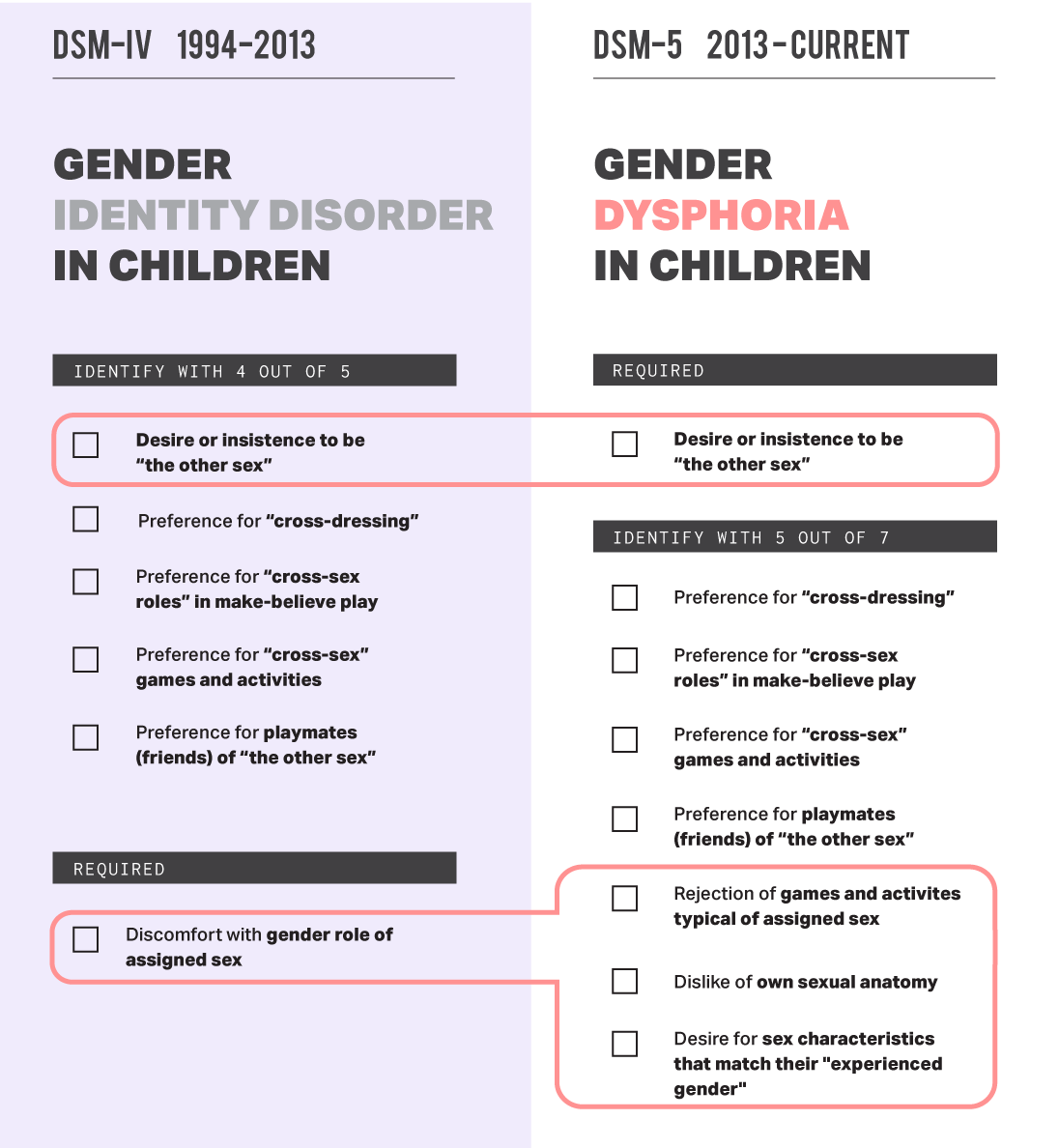
Similarly, the report claims that “the majority of gender dysphoric children would naturally desist and reconcile with their birth sex after puberty” if “not affirmed.” The studies cited all point to the same two sources continually used to make this claim – Kenneth Zucker’s research from the 1990s, which uses outdated diagnostic criteria for “gender identity disorder” that misclassified feminine gay men as “disordered,” and Steensma’s studies from 2011/2013, known for similar methodological shortcomings. They utilize old criteria which did not require a “desire or insistence to be the other sex,” and purposefully included in the disorder feminine boys who parents wished were more masculine. Modern studies show desistance rates of only 2.5%, with 97.5% of patients continuing to identify as transgender after social transition. The report claims that social transition prevents this “natural” desistance, a hypothesis that has not been validated, and instead seemingly advocates that trans youth should be disallowed social transition, which consists haircuts, clothing, pronouns, and names.
The report also states that “hormone therapy places an enormous medical burden on the body and impairs sexual function.” This is a claim made in multiple instances in the article, implying that sexual functionality is low and poor. In some sections, the authors lament that sexual function will be so poor, “the ability to form long-term sexual relationships is drastically compromised.”Research shows, however, that 65% of post op transgender women see an improvementin sexual satisfaction, with the majority rating their experiences with their body parts as “satisfying” or “very satisfying.” One review concluded, “We find that the most well-established changes associated with [hormone therapy] are initial changes to libido and increased sexual satisfaction.” Low sexual satisfaction is not supported by research.
These factual errors would be enough by themselves to discredit a report like this. In this report, however, it is compounded by using it to make innocuous and important discussions between clinicians seem nefarious. For example, the report uses the claims of low sexual satisfaction to then paint a discussion between clinicians about teenagers understanding trans care as harmful and evidence of wrongdoing, even though the claim is both incorrect and completely decontextualized from the actual discussion.
Erin In The Morning is a reader-supported publication. To receive new posts and support my work, consider becoming a subscriber.
Subscribe
Misrepresentations of “Leaked Material”
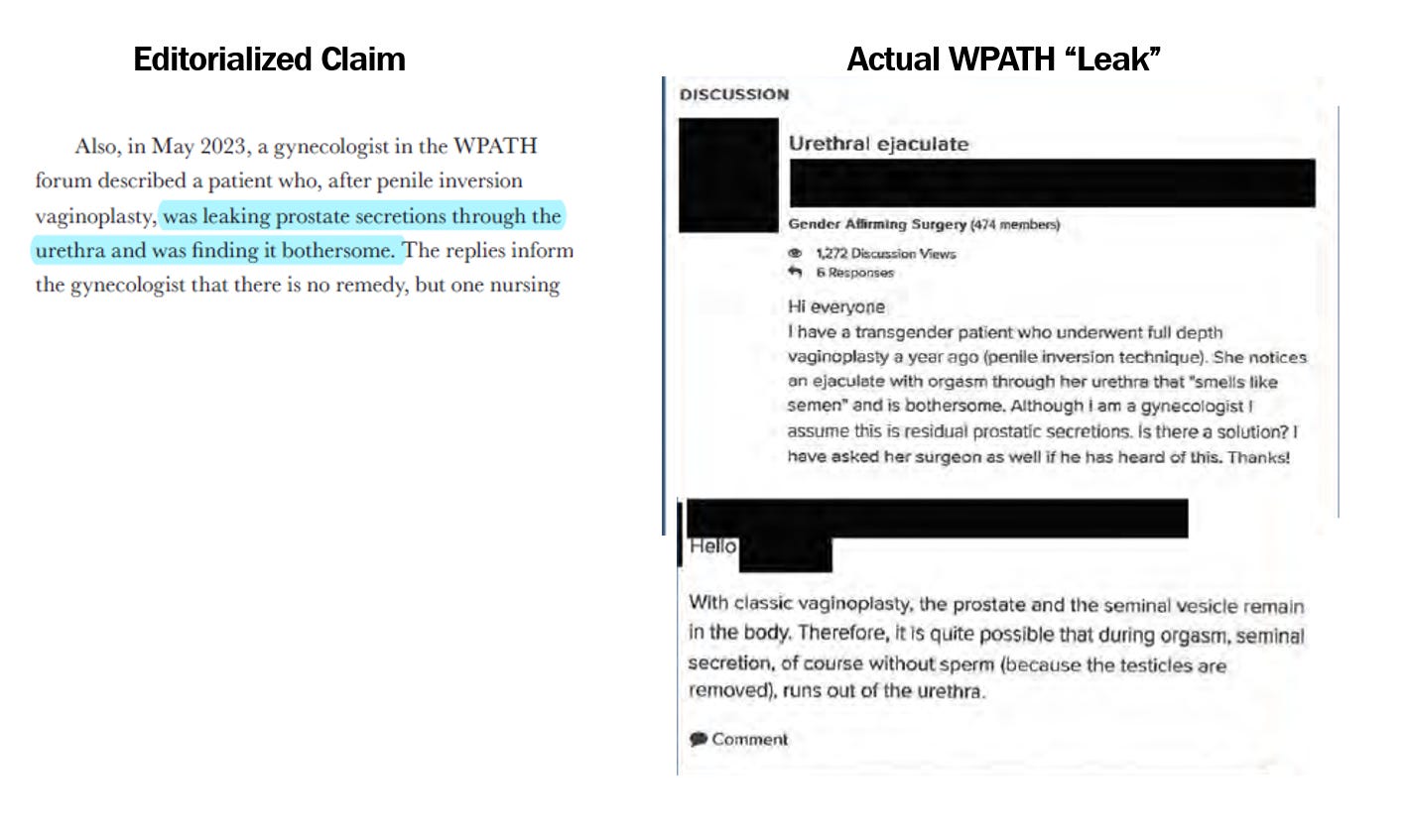
One of the most prevalent tactics used by the document is the misrepresentation of “leaked material,” frequently obscuring the actual statements (which are relegated to the end of the document) with an editorialized interpretation. For instance, an editorialized description of an exchange in the WPATH forums suggests that “a patient was leaking prostate secretions through the urethra after vaginoplasty and found it bothersome.” However, upon examining the actual exchange, it is revealed that the patient was actually “noticing an ejaculate with orgasm through her urethra,” which significantly alters the context – directly contradicting the editorialized assertions made earlier that transgender individuals are often incapable of orgasm.
Editorialized claim states that “prostate fluids leak after vaginoplasty.” Actual “leak” shows this is due to orgasm.
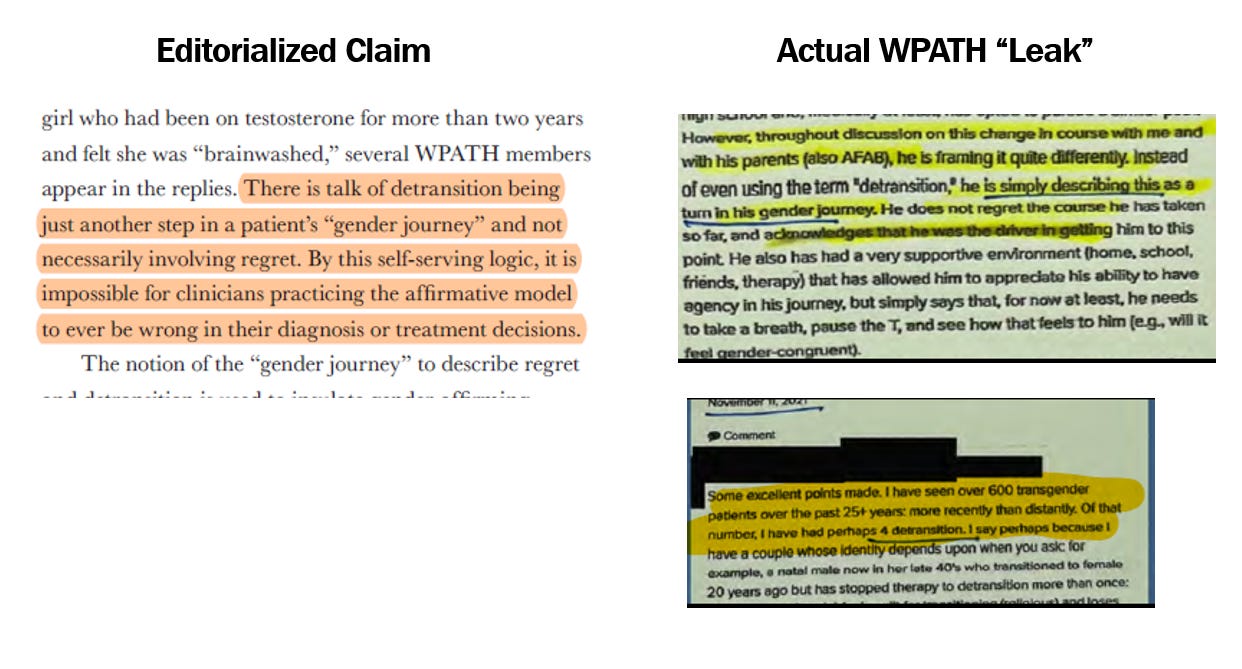
Another misrepresentation of the leaked material states, “There is talk about detransition being just another step in a patient’s “gender journey.” The document mentions detransition 54 times, suggesting it is a frequent occurrence among transgender individuals. However, a closer examination of the actual WPATH leak reveals that it was not a clinician but the detransitioner themselves who described their experience as part of a “gender journey,” specifically noting they were detransitioning without regret – something that harms the editorialized report’s portrayal of regret among trans people.Additionally, it is disclosed that one doctor has encountered only four detransition cases in their practice across 25 years and 600 patients. This information is not directly presented in the editorialized report but is instead interpreted in a way that precludes readers from forming their own conclusions, which would contradict the report’s assertions.
Editorialized claim stating that providers treat detransition as a “gender journey.” The actual leak reveals this was language used by the patient to indicate no regret.
Another portion of the editorialized assertions includes a patient discovering “two liver masses” identified as hepatic adenomas, with doctors suggesting “the likely offending agents are the hormones.” However, this claim omits the fact that the patient was also taking “oral contraceptives,” and it fails to mention that hepatic adenomas are benign. These tumors are more commonly observed in individuals who use birth control pills and are described as “rare but benign epithelial tumors of the liver frequently associated with oral contraceptive pill use.” This omission likely explains why the phrase “and/or oral contraceptives” was excluded from the editorialized claim. Furthermore, this information, alongside a solitary post about a transgender individual developing cancer, has been inaccurately used to assert that WPATH privately considers hormone therapy a cause of cancer.
The editorialized claim mentions hepatic adenomas without mentioning they are benign and associated with birth control. The actual leak reveals “and/or oral contraceptives,” a phrase left out of the editorialized claim.
Conclusion
It is evident that numerous anti-trans organizations contributed to the creation of the report, laden with misinformation. According to one post, Stella O’Malley from Genspect, an organization which has previously teased a young trans girl testifying in front of a school board, played a role in its development. Similarly, Carrie Mendoza of FAIR In Medicine, which has received significant funding from anti-trans billionaire Joseph Edelman to combat trans healthcare, appears to have been involved as well. The report, editorialized to transform relatively innocuous discussions among clinicians about best practices and specific cases into a purported major medical scandal, relies on factually incorrect assertions and misrepresentations to build its case. This approach, however, is unconvincing upon closer scrutiny.Instead of uncovering wrongdoing, the report inadvertently highlights the actions of an organization engaging in what is a standard procedure for medical entities: remaining engaged with ethical care discussions and seeking collaborative advice for emerging questions.
Erin In The Morning is a reader-supported publication. To receive new posts and support my work, consider becoming a subscriber.
Subscribe
Updates: I previously included a quality of life study whose limitations make the results non-generalizable in similar ways to the criticized QOL studies of the author, and so I have removed it. I have replaced it with another one, as there are many to draw from.









 Scottie's Playtime