Radical Right Republican Georgia Senate Candidate Herschel Walker made more bizarre statements at a rally the other day in a attempt to repeat the GOP propaganda that schools are teaching specific students to feel guilty or deserving of special treatment for their race. Meidas Contributor Coach D reacts to this nonsense.
At the Texas Tribune event in Austin, Texas on Saturday afternoon, California Governor Gavin Newsom took aim at far-right Florida Governor Ron DeSantis for his anti-freedom stances, which span from his treatment of asylum seekers, the banning of books, the rollback of reproductive rights and beyond. Francis Maxwell reports.
Radical MAGA Senator Mike Lee accused the Department of Justice of “overreach” after forced-birther Mark Houck was indicted. What he failed to mention was that the man had been terrorizing patients at a Planned Parenthood and physically assaulted a 72-year-old man who was escorting patients into the Planned Parenthood—twice. The Republican Party has become a lawless party of crime and never ending gaslighting. Texas Paul breaks it down.
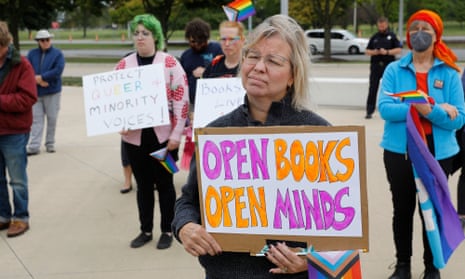
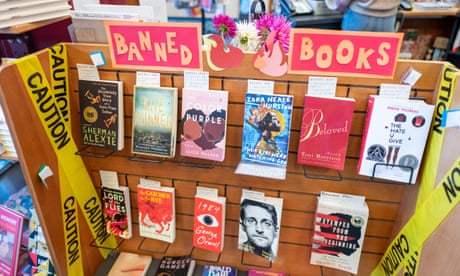
Pen America says Central York school district banned the books but officials strongly deny it in statement
Demonstrators gather to protest against banning books in Dearborn, Michigan; Pen America reports that school districts across 32 states have banned books. Photograph: Jeff Kowalsky/AFP/Getty Images
A school district in Pennsylvania has banned the Girls Who Code book series for young readers, according to an index of banned books compiled by the free expression non-profit Pen America.
The books are four of more than 1,500 unique book titles that have been banned by schools across the country after conservative pushes to censor books. According to a report released by Pen America in April, 138 school districts across 32 states have banned books from their classrooms and school libraries.
A recent update to Pen America’s banned book index said the Central York school district last year banned the books The Friendship Code, Team BFF: Race to the Finish!, Lights, Music, Code! and Spotlight on Coding Club!. The school district has over 400 banned titles on the index.
A statement from officials in that district on Monday strongly denied that they had banned the book series.
“The information published in this article is categorically false,” the district’s statement said while linking to a Business Insider interview with the founder of Girls Who Code which reported the ban. “This book series not been banned, and they remain available in our libraries.”
Pen America couldn’t immediately be reached for comment about the Central York school district’s statement.
The district last year received national attention after it banned resource materials listed in 2020 by its diversity committee, including children’s books and documentaries. A coalition of students and parents successfully pushed the district to rescind its ban after public pressure.
In a statement explaining the ban of the diverse resources, the school district’s board president at the time, Jane Johnson, said: “What we are attempting to do is balance legitimate academic freedom with what could be literature/materials that are too activist in nature, and may lean more toward indoctrination rather than age-appropriate academic content.”
The Central York school district did not immediately respond to request for comment on its ban of the Girls Who Code series.
The series features a group of girls who become friends in their school’s coding club. The series is in partnership with Girls Who Code, a non-profit that runs computer coding clubs and programming in schools for girls.
How to beat a book ban: students, parents and librarians fight back
Read more
The CEO and founder of Girls Who Code, Reshma Saujani, expressed her anger over the series being banned.
“We use these stories to teach kids to code,” Saujani told Business Insider. “It felt very much like a direct attack on the movement we’ve been building to get girls coding.
“This is an opportunity to realize how big this movement is against our kids and how much we need to fight.”
Saujani said that the group Moms for Liberty, a conservative non-profit formed in 2021 that has been pushing book bans through local chapters across the country, was responsible for the Central York district’s ban on the series. The organization has advocated for banning books on race – including ones on the civil rights movement – and on LGBTQ+ themes, saying the volumes are “sexually explicit”, according to media watchdog Media Matters.
Aggressive campaigns to ban books in schools and libraries across the country have flared up over the culture wars of the last two years. While campaigns to ban books have always existed in the US, the movement gained momentum in 2021 when conservatives took aim at the academic “critical race” theory and turned it into a buzzword to stoke fears of liberal ideals being taught in classrooms.
According to Pen America’s banned books report, many of the titles being banned deal with LGBTQ+ themes or have non-white characters. The organization estimates that more than 300 groups, including local chapters of national organizations like Moms for Liberty, have been pushing for book bans. The groups have gained large traction through social media, where lists of titles have circulated.
The campaigns try to deflect accusations of racism and bigotry by claiming they are targeting material that is offensive or inappropriate for children.
Pen America estimates that 41% of banned books deal with LGBTQ+ themes while 40% have protagonists or secondary characters who are people of color.
An author of one of the Girls Who Code books, Jo Whittemore, said on Twitter: “Some people choose not to focus on how awesome and empowering and inspiring these books are but instead choose fear.”
This series was our labor of love, our commitment to our community to make sure that girls — all girls — see themselves as coders. You cannot be what you cannot see, and this was our effort to get more girls, girls of color interested in coding.@jowhittemore@GirlsWhoCodepic.twitter.com/C23VTgKyxZ
Hey @GOP book-banning asshats: I get it that you ban Handmaids Tale as it *gives a roadmap to your strategy*, but banning Girls Who Code is just embarrassing for you.
The first programmer, and the person who coined the term Software Engineering were WOMEN, a fact you can’t ban. pic.twitter.com/qLrF8NjBpv
“We are out here to push back on things that society knows is wrong”. Wrong society has said that drag dressing up is fine and has for decades. It is only recently that the rabid republican elected office holders made it a sexual thing claiming it was orgies that kids were taken to. The religious leaders have decried it as sin and against the word of god and they jumped on the republican hate language. Dressing in drag has been done forever, from early theater to the advent of TV, to Flip Wilson in the 1970s to even Rudy Giuliani. It is done on Halloween and has been done in drag shows for as long as I can remember. It was done at schools. It is only the last year that these assholes that want everyone to live, act, and be just like they demand that everyone be some kind of fictionalized 1950s. But even in the 1950s you had drag. This is a made up outrage to try to force the minority view that the LGBTQ+ must be removed from society, that anyone who doesn’t follow a traditional male / female role must be removed from society, and any religion not approved by this minority must be removed from society. These groups at the US Taliban. The Proud Boys and Patriot Front are the Nazi loving brownshirt enforcers of the curreent rabid republican party. Hugs
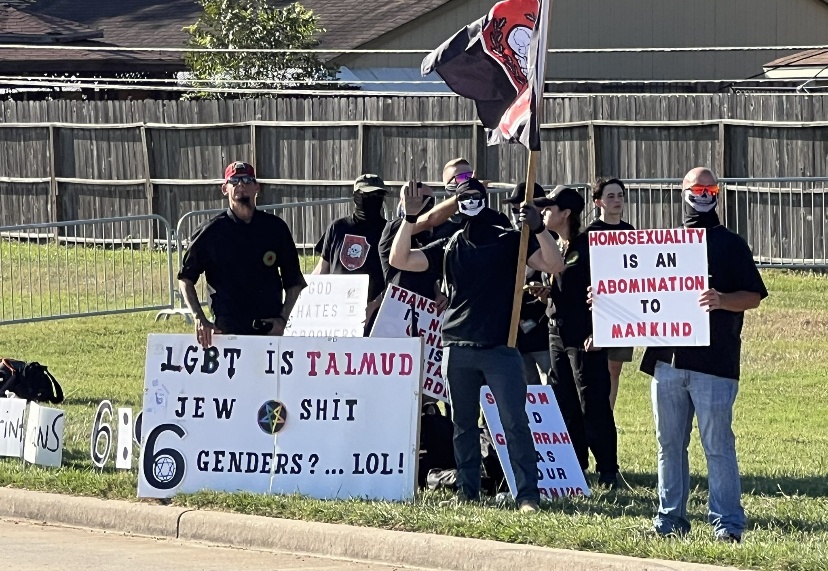
A Drag Bingo night at a Katy Church stirred up controversy on Saturday evening. The event, meant to raise money for the church’s clothing boutique for trans-youth, sparked heated demonstrations.
KPRC 2′s cameras were rolling as demonstrators clashed outside the First Christian Church on Morton Ranch Road. A number of groups were there supporting the LGBTQ+ community and other groups against the event said they wanted to make sure their voices were heard.
“We are out here to push back on things that society knows is wrong. They are having an event, welcoming children to drag queen bingo hour. This is unacceptable,” Founder of Urban Conservatives of America Jonathan McCullough said.
“That is nonsense, because drag in itself is just a costume,” said one person supporting the event. “It’s no different than someone dressed up like a superhero at a comic convention or someone who puts on a Halloween costume.”
Heavily armed officers formed a line in the median in an effort to keep the two sides separate. As the crowds grew bigger and bigger, more officers arrived. Despite the chaos, a pastor told KHOU 11 the event was a sold-out success.
“We know that not everyone will agree with us, so we create a place for people to feel welcomed and understand there will always be people who don’t agree with us,” the pastor said.
Under the blazing sun outside, the scene at First Christian Church in Katy felt chaotic– and angry. More than 100 people traded insults for hours with counter-protesters. Some on both sides hid their faces. Some on both sides displayed big guns. https://t.co/7Ho3djT9id
Proud Boys and Kelly Neidert’s Protect Texas Kids are in Katy, Texas, protesting a drag bingo fundraiser at First Christian Church. PB and Houston antifascists just clashed. Heavy police presence dividing the two groups now pic.twitter.com/5p4EgD88mT
The group of Nazis appear to be leaving the protest, sporting for the first time today a flag with a swastika. Proud Boys and Patriot Front have also left pic.twitter.com/hJFBhgPAC6
I’m glad no one was hurt, and I’m glad they didn’t cancel the event, or back down.
Grown-ass men getting their undies bunched because they don’t like someone else’s wardrobe, and they think that entitles them to threaten violence. If there’s a better definition of toxic masculinity, I can’t think of it.
How can they even breathe in those masks? I mean, haven’t they seen the studies that show that masks reduce oxygen in the body. I am really concerned for their health.
Must be some kind of really boring life when all one does is search the internet for drag queen events that can be harrassed. I guess since all the abortion clinics were closed, there’s nothing else to entertain the nazis
I hope someone had a sign “Americans defeated Nazis once, we can do it again.” With some American flags on it. Why can’t liberals use the American flag too? We want America to be a great place to live for everyone. (Well, except Nazis)
Didn’t some right wing nut write a book about how the Nazi were really all gay? Should make a sign promoting that book. (I was going to say to hand out copies of the book, but that would be supporting the author.)
They are just trying to make their numbers much higher than those numbers are and pretend they are not just uneducated rural militia folks. I always ask crazy “conservatives” in central Ohio where their parents and/or grandparents were born.
“Sparked heated demonstrations … other groups against the event said they wanted to make sure their voices were heard“
One of the reasons we’re hurtling toward theocratic fascism in this country is because the media keep describing what’s happening with sanitizing, normalizing language like this.
Have they tried praying? They claim that prayer can solve any problem, but when they actually care about something they show up. Dead kids in school,? Nothing but prayer. Kids at a show? Threats and intimidation. They need to actually act like they believe their own religious bullshit on occasion.
If you are going to events, probably a good idea to bring something like pepper spray to defend yourself if these knuckledraggers show up. They have been given permission to act like this by the GQP.
“That is nonsense, because drag in itself is just a costume,” said one person supporting the event. “It’s no different than someone dressed up like a superhero at a comic convention or someone who puts on a Halloween costume.”
One might also suggest proud boy and oath keepers drag as costumes.
Several years ago religious bigots got into the highest levels of the school education system in the state of Texas. I remember posting of Aron Ra and others going to testify against the rewriting of the textbooks to bring history, biology, and other subjects in line with the bible as much as possible. Including the stressing that the US was established as a Christian nation under Christian policies and that the constitution was given to the founding fathers by Moses. Then recently it was to get rid of any negative connotations of slavery and the horrors of that institution to calling slaves unwilling immigrants and unpaid workers. The drive was fueled by that CRT which is a advanced degree course taught in law schools was being taught to little kids and that white kids were being made to feel bad about being white. Then it became the drive to remove anything LGBTQ+ from schools. Don’t say gay bills. And now we are up to a total rewrite of history to prove how great and exceptionally honorable Texas is, just as god intended it to be. Hugs
The Texas Tribune reviewed the 15-page document, which will be handed out to new drivers, and asked historians to comment on how accurately and thoroughly it chronicles the state’s history.
The 1836 Project, an advisory committee created by the Texas Legislature last year to promote “patriotic education” about the state’s history, approved a 15-page pamphlet last month that will be shared with Texans when they get a new driver’s license. Credit: Miguel Gutierrez Jr./The Texas Tribune
A committee charged with producing a “patriotic” telling of Texas history approved a 15-page pamphlet last month that will now be distributed to new Texas drivers.
The advisory committee — named the 1836 Project after the year Texas gained its independence from Mexico — was created last year with the passing of House Bill 2497. The legislation required the committee to tell a story of “a legacy of economic prosperity” and the “abundant opportunities for businesses and families, among other requirements.”
“We must never forget why Texas became so exceptional in the first place,” Gov. Greg Abbott said when he signed the bill. Abbott, along with Lt. Gov. Dan Patrick and House Speaker Dade Phelan, later selected a nine-member, largely conservative group to head the 1836 Project.
The creation of the committee was largely a conservative backlash to The New York Times’ publication of “The 1619 Project,” which was named after the year enslaved people first arrived on American soil and aimed to center slavery in conversations about U.S. history. The pamphlet, which will be distributed at driver’s license offices, comes at a time when the state is increasingly trying to regulate how race, sexuality and history are taught in public schools.
The Texas Tribune reviewed the 1836 Project committee’s final pamphlet and asked historians to comment on how accurately and thoroughly the document chronicles the state’s history.
The historians acknowledged that the committee had a difficult assignment; Donald Frazier, the chair of the subcommittee in charge of drafting the pamphlet, called squeezing the entirety of the state’s history into little more than a dozen pages a “herculean task.”
But the historians also noted that condensing the state’s history and painting it in a mostly celebratory light came at a cost. The pamphlet, they said, fails to fully hold institutions accountable for slavery and other forms of oppression and shortchanged Indigenous Texans, Tejanos, Black Texans and women.
The pamphlet engages with contemporary research — like literature about the lasting impact of the Confederacy — but also tries to fulfill state lawmakers’ wish to promote “patriotic education” and avoid disturbing Texas’ myths, said Raúl A. Ramos, a history professor at the University of Houston.
“The traditional mythic version of Texas history, it’s about the heroes of the Alamo having pure intentions of liberty and freedom in the abstract rather than the liberty to conquer Indigenous and Mexican lands and freedom to own enslaved people,” Ramos said. “It’s that abstract idea that is attractive and powerful and [that’s what] people gravitate towards, and I think that’s what people associate with patriotism.”
Below is a look at how the Project 1836 advisory committee’s pamphlet discusses four areas of Texas’ history — early settlements, the oil and cotton industries, the Alamo and slavery — and the historians’ notes on what the document’s authors chose to play up, play down or omit.
Early settlements
Trinidad Gonzalez, a history professor at South Texas College, said the pamphlet aggrandizes Manifest Destiny, the belief that American settlers had the God-given right to expand across North America. It’s an idea about early settlements that was driven by 19th century nationalism and exceptionalism.
In the opening paragraph, the pamphlet says the land of Texas seemed like “an inhospitable zone to many,” but Americans “with fortitude and nerve” saw the opportunities and made the region productive.
“It wasn’t just the Americans who thought it was boundless opportunities. [The pamphlet’s authors] are trying to create the simplified Manifest Destiny story that fits this older myth of white Americans coming in and basically building Texas,” Gonzalez said. “And when you do that, then you silence everybody else that participated in the history of Texas.”
Historians told the Tribune that the pamphlet glosses over the Indigenous, Spanish and Mexican populations that resided before, saying Texas was “nearly depopulated” before American settlers migrated to the land.
However, the Indigenous population significantly outnumbered American settlers in 1836, Gonzalez said. The stretch of land from the Rio Grande Valley to Laredo was also once one of the most economically successful Spanish settlements, he added.
Emilio Zamora, a history professor at the University of Texas at Austin, called the pamphlet’s interpretation of early settlements in Texas “very unsettling.”
The document “speaks very negatively about the Mexicans and the colonial settlers that preceded them,” Zamora said.
Oil, not cotton
When it comes to the state’s economy, the pamphlet zeros in on the oil industry. The discovery of oil “ushered in a period of remarkable transformation,” the pamphlet says. It characterizes the wildcatter and oil derrick as “Texas icons.”
Nowadays, West Texas’ Permian Basin is the nation’s most productive oil region. The Permian produces more than 5 million barrels of the nation’s daily output of 11.6 million barrels of oil per day.
But before oil, there was cotton. Texas still leads the nation in cotton production. Cotton continues to be the state’s largest agricultural export and is responsible for thousands of jobs across sectors, such as ginning companies, warehouses and oil mill processing plants.
The 1836 Project pamphlet mentions oil five times. It never mentions cotton.
The pamphlet highlights Houston’s title as “energy capital of the world,” but cotton used to be so essential to the city that it would celebrate the crop with festivals, naming a symbolic leader for the carnival King Nottoc (“cotton” spelled backwards).
The pamphlet “ignores the reality that cotton production and poverty long characterized much of the Texas economy after the Civil War and through 1940. Instead it glamorizes the oil industry,” said Walter Buenger, a history professor at UT-Austin.
Buenger said that the state’s dependence on cotton made Texas one of the poorest states in the country.
The cotton market had globalized and become increasingly competitive, but the state delayed mechanizing cotton production to continue offering low-skilled jobs that had low returns. It resulted in an unequal distribution of income: While a handful of cotton traders got “fabulously wealthy,” most Texans struggled to survive, Buenger said.
“Through 1940, Texas was, for the most part, very poor. And they were poor because they were wrapped up in this cotton production business,” Buenger explained.
The Alamo
The Alamo, the Spanish mission founded in the 18th century in what is now San Antonio, has long been enshrined as “the cradle of Texas liberty.” The men who died as Mexican troops laid siege on the Alamo are often remembered as heroic martyrs who valued liberty over their lives.
“Only Texas could turn defeat into a legend — and a song, and a tourist attraction, and a major motion picture,” author Rosemary Kent famously said of the Alamo.
But the 1836 Project pamphlet does not dwell on the Alamo. Of the document’s 4,517 words, just 87 are spent on the siege.
Gene Preuss, an associate professor of history at the University of Houston-Downtown, called that a notable move away from traditionalist history in a state where the Alamo has often been at the center of Texas politics and history.
“There really isn’t much discussion of the Alamo in the pamphlet,” he said. “And I find that interesting because a lot of traditional histories would focus on the Alamo.”
In fitting the Battle of the Alamo into one abridged paragraph, the pamphlet’s authors appear to acknowledge the recent efforts to reexamine the historic event.
“For a long time, Texas history has been taught from one perspective,” Preuss said. “I think [the pamphlet] does enough to open some cracks, which I as a professor can open further for my students so that when they come into class, they don’t say things like ‘I didn’t know [Black Texans] participated in the Texas revolution’ [or] ‘I didn’t know Tejanos were on the side of Texians and died at the Alamo.’”
But the pamphlet also avoids going into that reexamination. It doesn’t mention, for instance, the issues brought up in the book “Forget the Alamo,” which was published last year and prompted the lieutenant governor to push for the cancellation of an event featuring the title at the Bullock Texas State History Museum. The book highlights how the defense of slavery played a key role in the conflict with Mexico and questions the garrison defenders’ military strategy.
Slavery
When the 1836 Project committee was established, Nikole Hannah-Jones, creator of “The 1619 Project,” feared that the 1836 Project was another attempt to veil the nation’s history of slavery.
“When it comes to slavery, some people have never wanted open debate and honesty. They seek to bury and prohibit instead,” Hannah-Jones said on Twitter.
The pamphlet does mention slavery, acknowledging that it became an economic engine for the state. Republican lawmakers also required that the document mention how on June 19, 1865, the date that became the basis for Juneteenth, Union soldiers in Galveston announced the liberation of all enslaved people.
“We wanted to reemphasize and make dang true that everybody understands that slavery was a bad thing and Texas participated,” Frazier, the chair of the subcommittee in charge of drafting the pamphlet, said at the August committee meeting.
But many of the historians the Tribune spoke with said the pamphlet doesn’t go far enough, noting that it omits how central defending slavery was in the Texas war of secession from Mexico and the Civil War. They say it airbrushes gruesome accounts of how enslaved people were treated.
“Slavery is mentioned only as a complication that delayed annexation by the United States. The pamphlet never names any enslaved individuals, nor does it describe their fight for freedom,” historians Leah LaGrone and Michael Phillips wrote in a Texas Monthly column.
Ramos, the history professor at the University of Houston, said the pamphlet’s treatment of slavery is an example of how the document takes a passive, ambiguous approach to inequity and oppression that doesn’t hold Americans who participated in institutions accountable.
The pamphlet, he said, is a document birthed out of a political process and should be read as such.
“Sometimes people interpret history as being political, as being a way people might signal their politics,” Ramos said. “But it’s also political in that way that is part of how we view ourselves as people, as a community, and how we continue to either build community or divide community.”
Disclosure: Bullock Texas State History Museum, Texas Monthly, The New York Times, the University of Texas at Austin, the University of Houston and the University of Houston-Downtown have been financial supporters of The Texas Tribune, a nonprofit, nonpartisan news organization that is funded in part by donations from members, foundations and corporate sponsors. Financial supporters play no role in the Tribune’s journalism. Find a complete list of them here.
In recent speech Radical Right Republican Matt Gaetz stated that if the Republicans regain the majority in the House of Representatives he and other republicans will push to remove the seniority leadership system and instead promote the most radical republicans to positions of leadership. Meidas Contributor Texas Paul reacts to this craziness.
Well the party supporting Putin and loving fascist strongman dictators who rule their country’s people rather than listening to them is using Russian footage for the advertisements in the US saying they should be put in charge here so they can rule over all of us. This is them telling you who they are. Hugs
Kevin McCarthy, insurrectionist leader of the party of Marjorie Taylor Greene, announced his new Contract For Cruelty, which he refers to as the Commitment for America, a plan that seeks to ban abortion nationwide, eliminate social security and medicare, raise prescription drug prices, and put extremists into power. During the announcement video shown by the McCarthy, a Huffington Post reporter quickly realized that much of the stock footage was not from America — but rather from Russia.
I read this article earlier in the day, then did some other things, and then read it again. I was not sure how to introduce it on my Playtime Site. Why I decided I had to post it is because I have long thought that circumcision is wrong and is male genital mutilation. This is the first article I have read that used that term and compared it to female genital mutilation. Yes! I agree whole heartly. I have posted on my blogs about how wrong FGM is and how it ruins the pleasure of sex for women. I think that is the reason religions call for it to be done is that it reduces the sexual pleasure for those that it is done to. I think the old males in charge of these religions understood how much pleasure they were deprived of in their youth they would rebel then, but now in their older age they use it to discourage sexual exploration because it is not as fun. So how do I know that it is harmful and reduces sensation greatly if you were circumcised as a kid. Well I have dated and had sex with circumcised men, and I can tell you that circumcision lowers the sexual sensations, it reduces the pleasure of sexual acts with the penis, and it can increase the time to orgasm to the point where sometimes it is very hard for circumcised men to orgasm. I have had sex with men in their prime who could only orgasm with a lot of stimulation and some sexual fun acts simply would be enough to get them to orgasm. As the doctor in the article says your are taking a highly sensitive part of the body and removing all protection from it so it is constantly rubbed on clothing and other things. I don’t know if it causes the brain to shut down the sensation or wears the nerves out or what but it is like having gloves on and trying to feel things with your fingers. As someone who was highly sexualized in childhood and has been highly sexual all my life, I can understand how someone in their early twenties would think life not worth living if that part of their life were taken away from them. It would have destroyed me also. In case it is not clear I am NOT circumcised. (yes for those worried about how much information about myself online I am poor and while my penis is very important to me it is not listed on my credit reports that I can find so it won’t help anyone to important me to gain money) The read is long but very informative and I would ask you all to read the article and consider joining the ranks of the people trying to stop the routine sexual mutilation of baby boys. For those worried that children are being given sexual surgery and it is harming them, well people here are the real child sexual surgeries that are happening that are harming little kids. Hugs
By Caroline Lowbridge BBC News
Published
IMAGE SOURCE,LESLEY ROBERTS
Image caption,
Alex Hardy sent his mum Lesley Roberts an email explaining his decision
“It quickly became apparent that what had just happened was a catastrophe… I died in 2015, not now.”
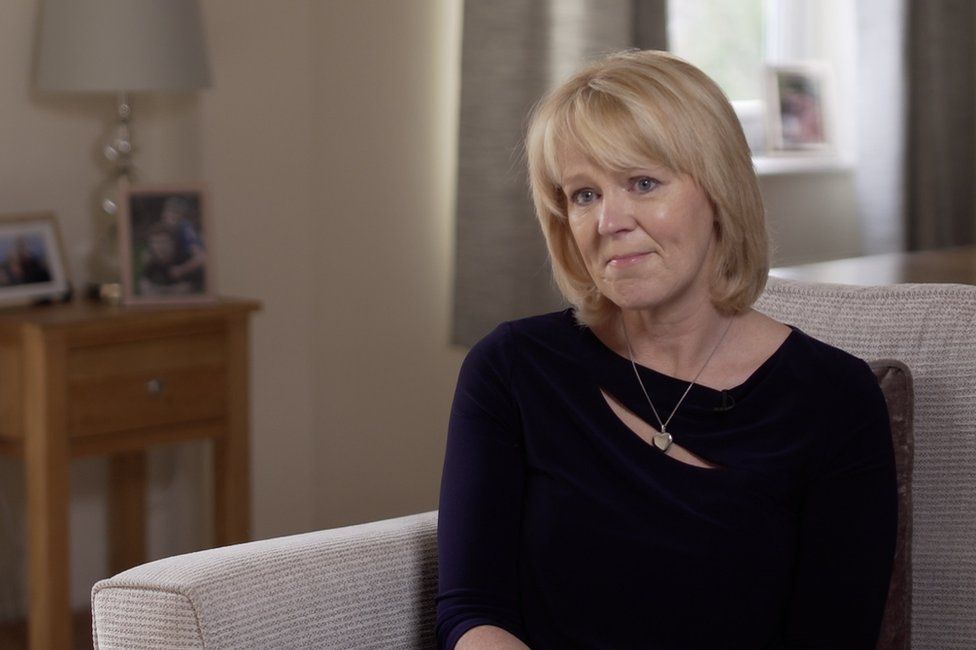
Lesley Roberts was stunned as she read the devastating final email from her beloved son Alex Hardy.
The email had been timed to arrive on 25 November 2017, 12 hours after he killed himself. Less than an hour before the email arrived, Lesley had opened her front door to find a police officer standing there, explaining her son was dead.
Alex was an intelligent and popular 23-year-old with no history of mental illness. Lesley could not understand why he would have wanted to take his own life.
His email explained how the foreskin of his penis had been surgically removed two years before. This is commonly known as circumcision, but Alex had come to believe it should be regarded as “male genital mutilation”.
He never mentioned this to his family or friends when he was alive. Lesley did not even know her son had been circumcised.
In the following months, she tried to find out more about circumcision. Why had it affected Alex so badly, and why did he feel killing himself was his only option?
IMAGE SOURCE,LESLEY ROBERTS
Image caption,
Lesley says her “dreams came true” when she became a mother in July 1994
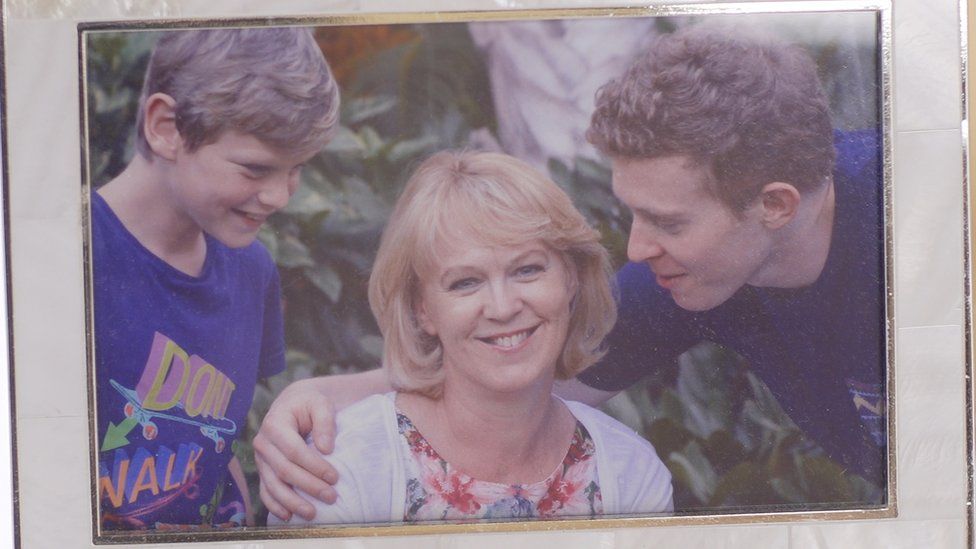
Alex was the eldest of Lesley’s three sons and had been very much longed for, having been conceived after fertility treatment.
Lesley says her “dreams came true” when she became a mother in July 1994.
“He was everything I could have wished for,” she says. “Gorgeous, easygoing, and adoring of his younger brother Thomas who arrived following more treatment almost three years later.”
He also adored his baby brother James, who was born when Alex was 13. The walls and windowsills of Lesley’s home in Cheshire are covered in photos of all of them.
Alex sailed through his education and was particularly gifted at English, so much so that his old school established the Alex Hardy Creative Writing Award in his memory.
“Alex was passionate about history but as his English teacher I saw in him a true talent for writing,” says Jason Lowe, who is now head teacher at Tarporley High School.
IMAGE SOURCE,LESLEY ROBERTS
Image caption,
Alex was intelligent and sailed through school
It was while on a school skiing trip to Canada, aged 14, that Alex fell in love with the country. He had enjoyed skiing as a child and the trip reignited his passion. So, when Alex reached 18, he decided to defer university and live in Canada for a year.
“He fell in love completely with Canada and made so many friends and got a promotion at work,” says Lesley.
“After one year he rang me and said ‘Mum, I’m deferring my place for university’. The same thing happened after year two.”
Two years turned into three, then four, and by the time of his death Alex had been living in Canada for five years and had obtained residency.
“He was known as the ‘super-smart Brit’ with impeccable manners,” says his mother. “The super-intelligent guy from the UK who helped people with their Canadian residency applications.”
IMAGE SOURCE,LESLEY ROBERTS
Image caption,
Alex was a keen skier and snowboarder, but he found physical activity painful after being circumcised
Lesley visited her son several times, both alone and with his brothers and stepfather. They were a close family, but Alex did not tell any of them he was secretly suffering with a problem with his penis.
“I had issues with a tight foreskin,” he eventually wrote in his final email, “but from my late teens it created issues in the bedroom as it meant my foreskin would not retract over the glans as intended which caused some awkward moments.”
In 2015, still silently suffering, Alex consulted a doctor in Canada. He was given steroid cream to stretch his foreskin, but went back to the doctor after just a few weeks because he did not think the treatment was working.
The medical name for Alex’s problem is phimosis. It simply means his foreskin was too tight to pull back from the head of his penis, or the “glans” as Alex referred to it in his email. This is perfectly normal for boys in the early years of their life. As boys get older, their foreskin usually starts to separate from the head of the penis.
Image caption,
Lesley says Alex was “intuitive, empathetic, gentle, kind, witty, quirky, unassuming and caring”
Phimosis does not always cause problems, but if it does, problems can include difficulty urinating and pain during sex. In England, the NHS advises topical steroids and stretching techniques – and circumcision as a last resort.
Over in Canada, where circumcision is more common, Alex was referred to a urologist.
“He immediately suggested circumcision,” Alex wrote. “I asked about stretching and he completely lied to my face and said it would not work for me.
“I was mostly trusting as I felt he was the expert who knew best in this regard so with a pinch of salt I accepted it.”
Lesley has since read online reviews of this urologist which have made her question his competence. One patient said she had been unable to work since having surgery for kidney problems, and he had “destroyed” her quality of life.
“I’m a mother of three young children who are scared every day I will die as they see me suffering in so much pain,” she wrote.
“I can see how he misdiagnosed others, botched surgeries, and ruined lives,” said another review. “He’s dangerously incompetent.”
Another review of Alex’s urologist read: “They left a surgical instrument in my bladder but I only got notified three months later. Run away before you get hurt!”
IMAGE SOURCE,LESLEY ROBERTS
Image caption,
Lesley says she misses Alex’s “big sparkly eyes, his grin, his sense of humour, and his bear hugs”
Lesley, who was “horrified” by these reviews, has asked for the urologist to be investigated. She has been told an inquiry is ongoing.
The College of Physicians and Surgeons of British Columbia told the BBC it “cannot disclose the existence of a complaint against a physician, and only may do so if the complaint leads to formal discipline”.
“I will wish with my last breath and with all of heart that my darling son had run away,” says Lesley.
Much to his regret, Alex was not able to research the urologist – or circumcision – properly at the time because his laptop was broken.
He had tried researching the topic in a public computer space but felt uncomfortable, and also felt it was “too much of a taboo” to discuss with friends.
So Alex booked what he believed was a minor procedure and had the surgery in 2015, at the age of 21.
IMAGE SOURCE,LESLEY ROBERTS
Image caption,
Alex “adored” his little brother
In the email to his mother, Alex explained, in great detail, the physical problems he had suffered afterwards.
He described experiencing constant stimulation from the head of his penis, which was no longer protected by his foreskin.
“These ever-present stimulated sensations from clothing friction are torture within themselves; they have not subsided/normalised from years of exposure,” he wrote.
“Imagine what would happen to an eyeball if the eyelid was amputated?”
“He was in so much pain that it hurt to do normal physical activity,” says Lesley. “He was a keen skier and snowboarder so you can imagine the pain he was in.”
IMAGE SOURCE,GETTY IMAGES
Image caption,
The foreskin protects the head of the penis, known as the glans
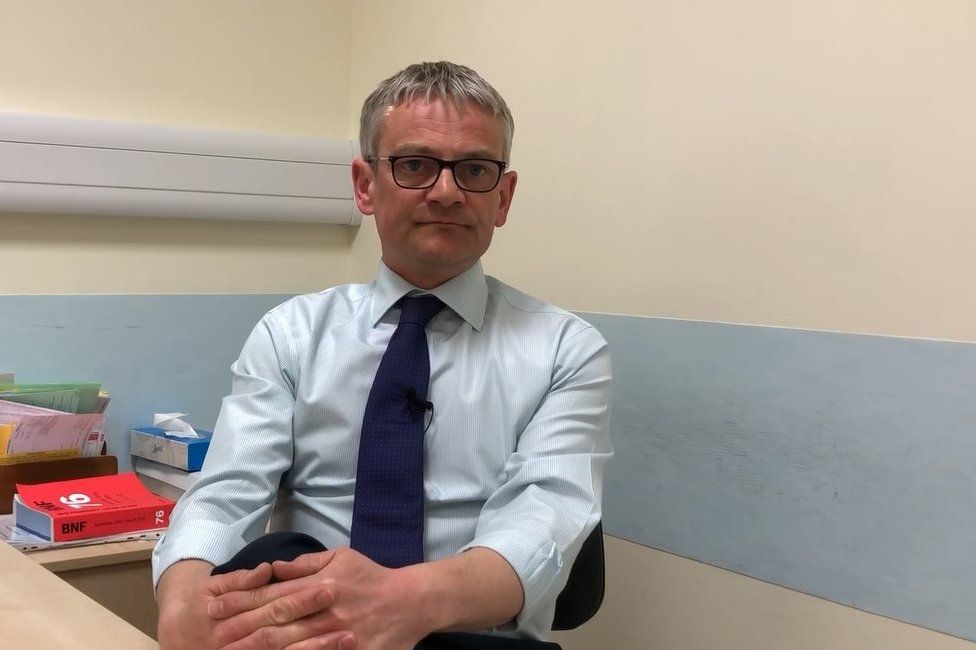
Consultant urological surgeon Trevor Dorkin, who is a member of the British Association of Urological Surgeons, advises his patients that the head of their penis will be more sensitive after circumcision.
However, this sensitivity usually reduces.
“I always say to guys ‘it’s going to feel more sensitive to start with’ because all of a sudden you haven’t got this protection over the head of the penis and it will feel different,” says Mr Dorkin, who has carried out more than 1,000 circumcisions.
“But in the vast majority of the cases the man adjusts to that, the brain adjusts to that, it adjusts to the signals that are coming back through the nerves from the head of the penis.”
Alex also wrote about experiencing erectile dysfunction, and burning and itching sensations, particularly from a scar which sat where his frenulum was removed. The frenulum is a band of tissue where the foreskin attaches to the under surface of the penis. Some men refer to it as their “banjo string”.
“It’s one of the more erogenous zones so it’s thought to be important in sexual function,” says Mr Dorkin.
“The foreskin, the head of the penis and the frenulum is a very, very sensitive area.
“But again when you do circumcision sometimes the frenulum is not preserved and it doesn’t necessarily have an effect on overall sexual function and enjoyment.”
IMAGE SOURCE,GETTY IMAGES
Image caption,
A growing movement regards male circumcision as male genital mutilation
But Alex felt his frenulum had been important.
“Through its absence I can certainly verify it is the most erogenously sensitive area of the penis and male body overall,” he wrote.
“If someone were to amputate your clitoris you may begin to be able to understand how this feels.”
He wrote about experiencing cramps and contractions in his muscles and “uncomfortable” sensations which extended deep into his abdomen.
Lesley does not know whether or not Alex had sex after his circumcision.
“Where I once had a sexual organ I have now been left with a numb, botched stick,” he wrote. “My sexuality has been left in tatters.”
He asked: “Nature knows best – how can chopping off a section of healthy tissue improve nature’s evolved design?”
Foreskin ‘protects head of penis’
Like many people, Lesley admits she knew very little about the foreskin or circumcision before her son died.
“I didn’t know anything apart from I believed it was a very routine surgery,” she says.
The foreskin is sometimes dismissed as a “useless flap of skin”, but Mr Dorkin says it does have a purpose.
“It covers the head of the penis,” he says. “In terms of what’s it for, it provides a bit of protection to the head of the penis. It’s thought to have some sort of immunological function perhaps.”
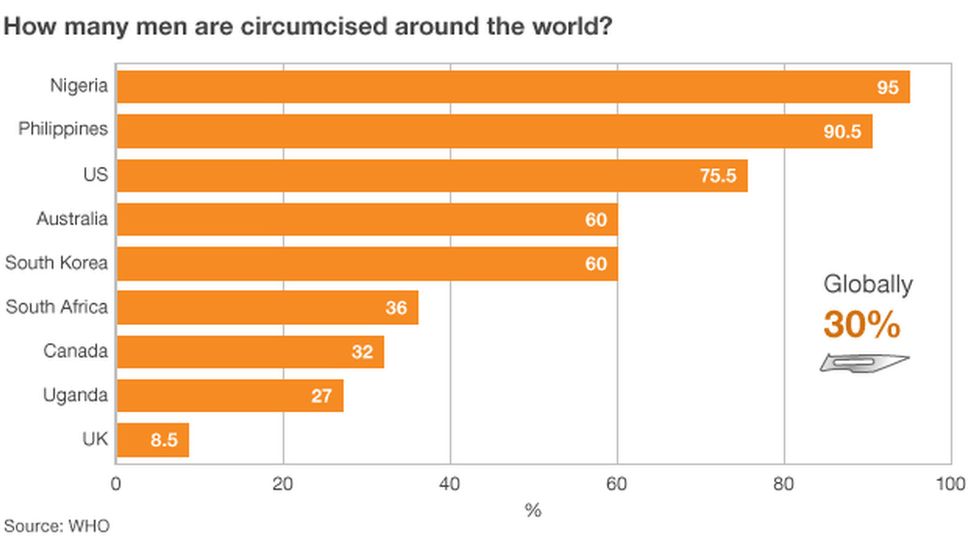
Circumcision rates vary a lot depending on where you are in the world and which culture you grew up in.
According to the World Health Organization, 95% of men are circumcised in Nigeria but only 8.5% of men in the UK are.
Most of the men circumcised in the UK are either Muslim or Jewish, as circumcision is regarded as an important part of their religions.
According to the 2011 census, Muslims accounted for 4.8% of the population in England and Wales, while 0.5% were Jewish.
People who question circumcision are sometimes accused of being anti-Semitic or Islamophobic, but Lesley stresses her son was neither.
“For me, this has nothing to do with religion at all. I respect all people of faith or indeed no faith, as Alex did,” she says.
In Canada, where Alex had moved to, an estimated 32% of men are circumcised.
Alex felt male circumcision has been normalised to the extent that most people do not question it, while female circumcision has become known as female genital mutilation (FGM) and is now illegal in many countries.
Image caption,
Alex was the eldest of Lesley’s three sons
He felt male circumcision should be known as “male genital mutilation” – a view shared by a growing anti-circumcision movement.
“If I were a female (in Western nations) this would have been illegal, the surgeon would be a criminal and this would never have been considered as an option by doctors,” Alex wrote.
“I do not believe in championing one gender over another but I feel strongly that gender equality should be achieved for all.”
Campaigners for “genital autonomy” believe it is wrong to circumcise a baby or child – whether they are male or female – because the patient cannot give consent, and these campaigners regard circumcision as a human rights issue.
IMAGE SOURCE,GETTY IMAGES
Image caption,
Campaigners for “genital autonomy” argue that circumcising a baby is wrong because an infant cannot consent
Having lived with an intact penis for 21 years, Alex believed men circumcised as babies or young children would “tragically never be able to fully comprehend what has been taken away”. He estimated he had been stripped of 75% of the sensitivity of his penis.
However, experiences of men circumcised as adults differ dramatically.
Some men actually prefer sex afterwards because they no longer have the pain of a tight or inflamed foreskin.
Some report a significant loss in sensitivity and greatly reduced sexual pleasure.
Some report being less sensitive but say there is no change in their overall enjoyment of sex.
Some are very happy with their decision to get circumcised.
Some, like Alex, deeply regret having it done.
IMAGE SOURCE,LESLEY ROBERTS
Image caption,
Alex went whale watching with his mother for his 21st birthday
Alex sought further medical help following the circumcision as well as psychological help, but never shared his problems with his family or friends.
“I was with him during those two years and I think I would be lying if I said I didn’t think something wasn’t right,” says Lesley.
“I did say ‘Is something bothering you? Are you OK?’ and he would absolutely reassure me that he was.”
Lesley, who used to be a teacher, now hopes to go into schools and speak to young men about sharing their problems, even if they are very personal.
“I think we all know that men don’t particularly tend to talk about their problems in the same way that girls do but I think circumcision is very much a taboo subject,” she says.
“Alex was reserved. He certainly wouldn’t have said ‘I’ve got a tight foreskin and it really hurts’. And he didn’t. And I didn’t know.”
Only a week after Alex died, a friend opened up to Lesley about his own circumcision.
“He told me he wouldn’t normally have mentioned it but he had a circumcision as an older man, 10 years ago, and he was in constant daily pain,” says Lesley. “It just seems it’s more common than you think.”
Image caption,
Consultant urological surgeon Trevor Dorkin, who is a member of the British Association of Urological Surgeons, warns his patients of risks before circumcising them
Mr Dorkin says serious problems following a circumcision are rare, but not unheard of.
“You do hear of horror stories where a circumcision has been done poorly and there’s damage done to the head of the penis itself,” he says.
Sometimes too much skin is taken and this can result in what’s known as “burying” or shortening of the penis, where it gets pulled back into the body.
“Surgeons at the end of the day are human and there is potential for human error and technical error during any operation,” he says.
“One of my mentors told me every case is a tricky case, that’s got to be your approach to surgery. You never take anything for granted in surgery.”
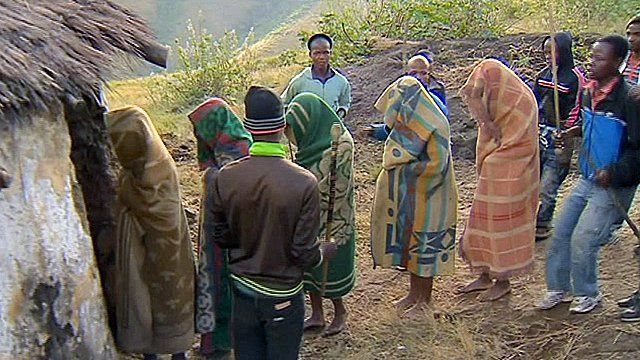
** Scottie note, there is a video at the link above for here on circumcision in South Africa if you are interested. **
Media caption,
Circumcision in South Africa
There have been cases of children and men dying after being circumcised.
In Canada, where Alex was living, newborn baby Ryan Heydari bled to death after being circumcised by a doctor in Ontario.
Recently there have been reports of two babies dying within weeks of each other after home circumcisions in Italy, and a two-year-old boy died after being circumcised at a migrant centre in Italy.
IMAGE SOURCE,LESLEY ROBERTS
Image caption,
As a child Alex was “gorgeous, easygoing, and adoring of his younger brother Thomas”
“I’m not qualified to say that circumcision is always bad, because it isn’t,” says Lesley.
“It certainly was in my son’s case and I think we need more research. We need to look into the risks, what can really go wrong, and we need to be more aware of them.”
If a circumcision is necessary, Mr Dorkin says it is important to tell patients about potential complications.
“Particularly when you are doing the operation in a guy who is in his late teenage years or early adulthood, it’s a very sensitive area and sexual function is important, so you have to explain the risks to them,” he says.
IMAGE SOURCE,LESLEY ROBERTS
Image caption,
Alex asked his mother to share his story after he died
“Alex said he was not made aware of all the risks,” says Lesley. “If he had, I feel sure he would not have had the surgery.
“Alex wasn’t alone. I now know he wasn’t the only one that this has happened to. And that can’t be right.”
The UK charity 15 Square, which tries to educate people about circumcision, says Alex is not the only man to have killed himself after being circumcised.
“It happens more frequently than people realise,” says chairman David Smith.
There are no statistics on men who have killed themselves after being circumcised. Alex died over a year ago but his story has not been told until now. An inquest into his death was held in the UK but it was not reported by the media.
Lesley, who is normally private and reserved like her son, only agreed to share Alex’s story because it was his dying wish.
“If the following information can benefit anybody then it has served its purpose,” he wrote.
“I did not feel comfortable raising the issue when I had a choice, so if my story can raise awareness to break this taboo within society regarding men’s health then I am happy for release of my words.
“Alex said in his letter ‘We stand on the shoulders of those who came before us’,” says Lesley.
“This is the last thing I’m doing for my precious son.”
For details of organisations which offer advice and support, go to BBC Action Line.
** Scotties note, at the link above is the links to these other circumcision articles. The links were not correctly embedded in the post. **


/https://static.texastribune.org/media/files/f9f4e99273059936b29637a7d6155d4a/Texas%20File%20MG%20TT%2008.jpg)
IMAGE SOURCE,LESLEY ROBERTS
IMAGE SOURCE,LESLEY ROBERTS
IMAGE SOURCE,LESLEY ROBERTS
IMAGE SOURCE,LESLEY ROBERTS
IMAGE SOURCE,LESLEY ROBERTS
IMAGE SOURCE,LESLEY ROBERTS
IMAGE SOURCE,GETTY IMAGES
IMAGE SOURCE,GETTY IMAGES
IMAGE SOURCE,GETTY IMAGES
IMAGE SOURCE,LESLEY ROBERTS
IMAGE SOURCE,LESLEY ROBERTS
IMAGE SOURCE,LESLEY ROBERTS