US Athletes Discover Joys Of Universal Healthcare In Olympic Village by Rebecca Schoenkopf

This is one of those feel-good stories that is actually very depressing when you think about it! Read on Substack

Snippets:
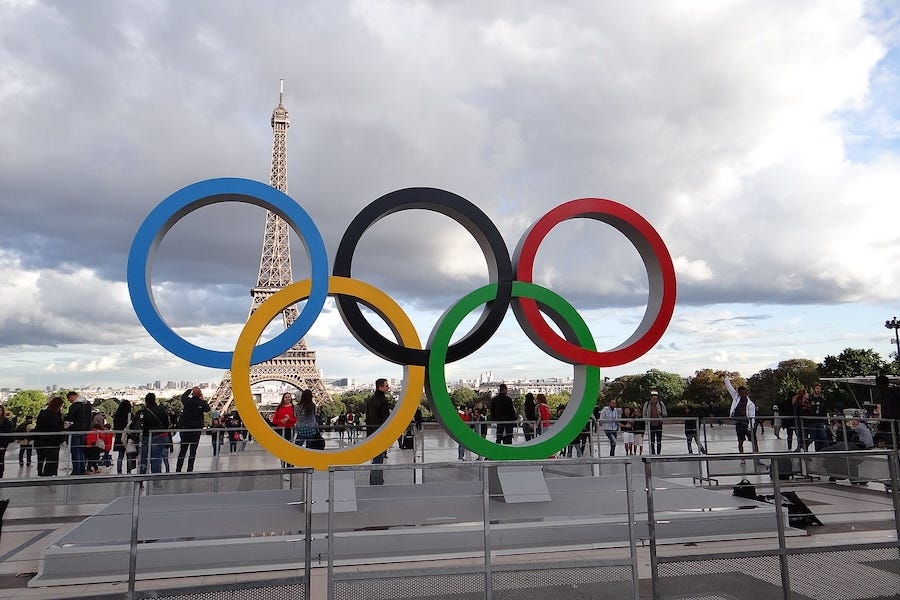
Wikimedia Commons

There’s a lot of money to be made on the Olympics — though not necessarily by the people participating in them (or most people who live in the host cities). Those athletes who participate don’t get paid (unless they get sponsorship deals) and, as a result, many of them go into poverty while trying to go for the gold. Training costs are huge and so, often, are the medical bills.

But not when they’re at the Olympic Village!

Ariana Ramsey, who won a bronze medal as part of the US female rugby team has been going viral on TikTok, talking about how amazing it’s been getting free healthcare at the Olympic Village — and in the days following her victory, she was able to celebrate by going to the gynecologist, dentist and an ophthalmologist, where she was able to get free glasses as well.

Via Sports Illustrated:

Ramsey came to Paris as a rugby player. She is leaving as a healthcare influencer. More than 135,000 people have watched her initial TikTok, and another of the half-dozen follow-up videos she has made has pulled in more than 570 views. That is fine with her. The more she thinks about it, the more frustrated she is that she’s so astonished by the concept. 

“That’s just America and their privatized healthcare system,” she laments in an interview, adding, “I’ll fight for universal healthcare.”

The idea has gone viral in France: American discovers healthcare. “A lot of people are kind of making a joke about it,” she says. “Like, welcome to France.” (snip)

Every other country has figured out that it makes far, far more sense (and is far, far more economically sane) for health care to be seen as a public good, but we’re still out here making insurance company CEOs obscenely rich for who knows what reason.

Many American athletes do have access to the United States Olympic and Paralympic Committee’s health insurance policy. But their eligibility for the program is up to their sport’s governing body, and an independent commission appointed by Congress found that “some of the most talented competitors under our flag go to sleep at night under the roof of a car or without sufficient food or adequate health insurance.” More than a quarter of U.S. athletes report earning less than $15,000 per year, and more than 40% said they paid out of pocket for healthcare, with an average cost of $9,200 per person. Only 16% said they’d been reimbursed.

Meanwhile, in 2022, the US Olympic and Paralympic Committee had a net revenue of 61 million dollars and paid their CEO a salary of $1.1 million.

Also meanwhile, NBCUniversal sold $1.2 billion in advertising ahead of the last Olympic Summer Games in Tokyo and say that they have surpassed that number this year (though an exact figure has not been given). (snip)

On the bright-ish side, because of Ramsey’s videos, hundreds of other Olympic athletes have taken advantage of the free healthcare at Olympic Village that they might not otherwise get at home. So that’s nice for them!

Reblog from Janet Logan

Thank you, Janet! I was playing with a post about this, and you made my job easy!

Mocking The Last Supper

Right wing Christians are always looking for things and ways to be aggrieved and insulted.  They glorify in being the victims of crimes that exist only in their imagination.  Not only are they sure only they only have a right to the Christian god, but they think only they control the Christian god and how he should be worshiped.  Hugs.  Scottie

“The #GenderEqualOlympics Are Historic — But The Games Aren’t Close To Fair”

SYDNEY LONEY LAST UPDATED JULY 24, 2024, 9:30 AM

Medals aren’t the only thing that matters at Paris 2024. With Personal Best, we’re going beyond the scoreboards to champion the game changers and spark conversations about what it takes to make competitive sport truly fair play.

Trigger warning: This article references disordered eating.

After a three-hour ride to a lake outside the Olympic Village, teams of rowers from around the world stepped off their buses, in need of a bathroom break before they took to the water to train. The Korean women’s team was first in line for the porta-potties — until athletes from another country’s men’s team cut in front of them. 

“It was as though the women weren’t even there,” recalls former rower and Olympian Angela Schneider, who went on to win silver for Canada at those games, and is now director of the International Centre for Olympic Studies at Western University in London, Ont., Canada. “I was so angry. A group of us female athletes tried to knock over the porta-potty with the first guy in it. We weren’t successful, but we gave it a good shake.”

This was back at the 1984 Summer Olympics in Los Angeles. Forty years later, women aren’t so easily ignored in the sporting world. Attitudes have changed since the ’80s, when only 23% of athletes competing in LA were women, and rowing was considered a men’s sport (“People used to call us ‘sir,’” Schneider recalls). In fact, the Paris 2024 Games will make history as the very first “gender-equal” Olympics: Out of the 10,500 athletes competing, there will be an even split between men and women.

The IOC seemed pretty pleased with itself back in March when it announced (just ahead of International Women’s Day, of course) this “monumental achievement,” dubbing Paris the #GenderEqualOlympics. “We are about to celebrate one of the most important moments in the history of women at the Olympic Games, and in sport overall,” IOC president Thomas Bach proclaimed. (An Olympics logo designed for the milestone — featuring a stereotypically feminine face, lipstick included — has riled the internet, with widespread memes that it would better suit a dating app.)

“The IOC is pretty good at tooting its own horn, and at every games we see a version of this celebration of gender equality. It’s not new. DUNJA ANTUNOVIC, ASSISTANT PROFESSOR OF SPORT SOCIOLOGY”

But even though this year’s even split of men and women athletes marks progress, there’s still a lot of “porta-potty shaking” left to do. Tokyo 2020 was also celebrated for its 48% (almost) gender parity. Now, four years later, all we have to show for progress is another 2%. It’s kind of hard to get excited about a hashtag when we’ve heard it all before.(snip)

Inclusive language is one thing; inclusion itself is another. Another strategy the IOC has used to address gender inequality at the games has been to boost women’s participation by increasing the number of mixed-gender sports, like triathlon, and adding sports that historically excluded women, particularly combat sports. For instance, women’s boxing (finally) debuted in 2012 — and, as a result, 20-year-old Alyssa Mendoza from Caldwell, ID, will be taking her shot at an Olympic medal in Paris for Team USA. 

“I think that sometimes the hard work that women boxers do gets discredited, and so I’m really glad we have this platform where we can show our skills,” says Mendoza. Even so, she still gets the occasional “Oh, you’re a female boxer? You’re going to mess up your pretty face!” comment, but she uses those moments to clear up misconceptions. “Boxing isn’t like a Rocky movie,” she says. “It’s not bloody and gory and dangerous. It’s a beautiful sport.”

Beyond stereotypes around certain disciplines, the inherently gendered nature of most elite sports — that is, women and men competing separately — means that athletes who don’t fit neatly into the binary face barriers to participation. The IOC allows individual sports governing bodies to set their own policies for trans athletes, for example, and at least 10 Olympic sports, including cycling, rugby, and rowing, restrict trans athletes from competing. In 2021, the IOC announced a framework laying out its principles for athlete inclusion and non-discrimination, including its stance that athletes should be allowed to compete in the category that aligns with their self-determined gender identity. But the framework is non-binding, so how much real progress we’ll see remains an open question.

The world of sport is rife with gender bias, regardless of which gender you happen to identify with. Paris 2024 will be the first year that men’s teams are eligible to compete in artistic swimming (formerly called synchronized swimming), for instance. Athlete Megumi Field has chatted with her team about how cool it is to be competing in a so-called gender-equal Olympics, but is quick to flag the derision that the men she trains with have faced. “This is not just a ‘girl’s’ sport,” she says. “For us, gender equity conversations are also around the importance of including men.”

Although 28 out of 32 sports will be fully gender-equal in Paris, many disciplines are still characterized as “men’s sports,” and there are lingering discrepancies based on the age-old belief that women are the weaker sex. (snip)

Yes, gender parity in Paris is a sign of progress. But we’re still far from the finish line in the race to full equality, both at the games and in the larger world of sport. Only then can we truly embrace #GenderEqualOlympics — let’s just hope it doesn’t take us another 40 years to get there.

If you are struggling with an eating disorder and are in need of support, please call the National Eating Disorders Association Helpline at 1-800-931-2237. For a 24-hour crisis line, text “NEDA” to 741741. 

https://www.refinery29.com/en-us/2024/07/11750016/paris-olympics-2024-gender-equal