“Jewel Bird”

Replendent Quetzal

About

Considered sacred by several Mesoamerican civilizations, the Resplendent Quetzal remains culturally significant to this day. The Resplendent Quetzal likely inspired Quetzalcoatl, the “plumed serpent” god of Mesoamerica. Legend has it that Quetzalcoatl helped create Earth. Rulers and nobility wore headdresses made from this quetzal’s shining green feathers, which symbolically connected them to the god.

In some Mesoamerican cultures, it was considered a crime to kill a quetzal, so the plumes were procured by capturing the bird, plucking its long tail feathers, and setting it free. In several Mesoamerican languages, the term for quetzal can also mean “precious” or “sacred.”

These iridescent green tail feathers also symbolized spring plant growth to the Aztecs and Maya, who viewed the quetzal as the “god of the air” and as a symbol of goodness and light. The Maya also viewed the quetzal as a symbol of freedom (due to the difficulty of keeping them in captivity) and wealth and status, as its feathers were used as money. Even today, the currency of Guatemala is called the quetzal.

The Resplendent Quetzal is also the national bird of Guatemala, pictured on the country’s flag and coat of arms. It was thought to be the spirit guide of a Maya ruler and hero, Tecún Umán, who fought against the Spanish conquest. According to legend, Tecún Umán was killed as he fought the conquistador Pedro de Alvarado. As Tecún Umán lay dying, a quetzal flew down and landed on his chest, dipping its feathers in the hero’s blood. This is supposedly how the bird acquired its red breast and belly feathers.

This spectacular species belongs to the trogon family, a group of colorful, fruit-eating birds found in the Americas, Asia, and Africa. Other family members found in the Americas include the Golden-headed Quetzal, the Elegant Trogon, and Haiti’s national bird, the Hispaniolan Trogon.

Threats

Birds around the world are declining, and many of them, like the Resplendent Quetzal, are facing ever-increasing threats. Partners in Flight includes the Resplendent Quetzal on its Red Watch List as a species of high conservation concern, and also classifies it as a “Tipping Point” species — one that has lost more than 50 percent of its population within the past 50 years. (snip-so much more!)

https://abcbirds.org/birds/resplendent-quetzal/

“Enigma Of The Pacific”

Marbled Murrelet

Brachyramphus marmoratus

About

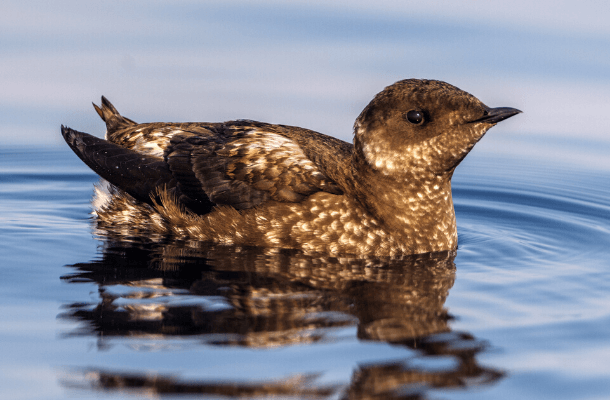
The petite, quail-sized Marbled Murrelet has been called the “enigma of the Pacific.” So much about this stub-tailed seabird is unusual and remains poorly known. The bird’s range extends from Alaska to California; in northern treeless areas, it nests on the ground, but in the rainforests of the Pacific Northwest, it flies inland as far as 55 miles to nest high in trees. Its nesting habits remained one of North America’s great bird mysteries until 1974, when a tree surgeon working 147 feet up in a 200-foot-tall Douglas fir found an active nest. The only other bird in the alcid family that shares this nesting behavior is the murrelet’s close cousin, the Long-billed Murrelet, found in Asia.

Marbled Murrelet populations are in steady decline, due in part to the clearing of old-growth temperate rainforests, habitat shared with the imperiled Northern Spotted Owl. But nest predation by clever corvids like Steller’s Jays and Common Ravens can also adversely impact murrelets. These birds gather where people enjoying the Pacific Northwest’s forest leave garbage behind — the picnic areas and campsites more than 100 feet below nesting murrelets — making it all the more important to clean up and pack out what you bring in.

Threats

Seabirds are declining faster than any other bird group. The Marbled Murrelet faces many of the threats that endanger all seabirds, but the loss of its old-growth forest nesting habitat is unique among seabirds. Listed as Threatened under the Endangered Species Act in 1992, the Marbled Murrelet is also listed as a Yellow Alert Tipping Point species by Partners in Flight, a result of the loss of more than 50 percent of its population in the past 50 years. (snip-MORE on the page)

https://abcbirds.org/birds/marbled-murrelet/

“Virginia Partridge”

or “Virginia Quail.”

Snippet:

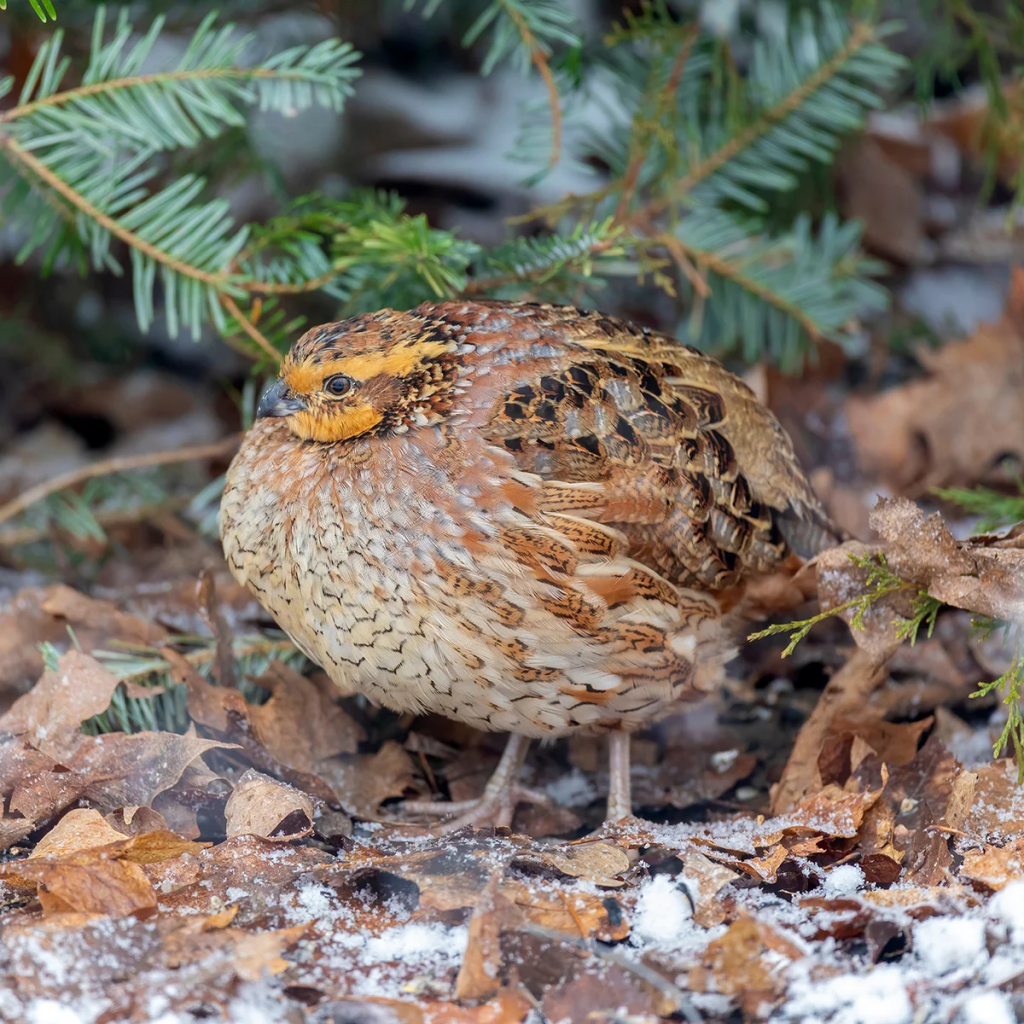
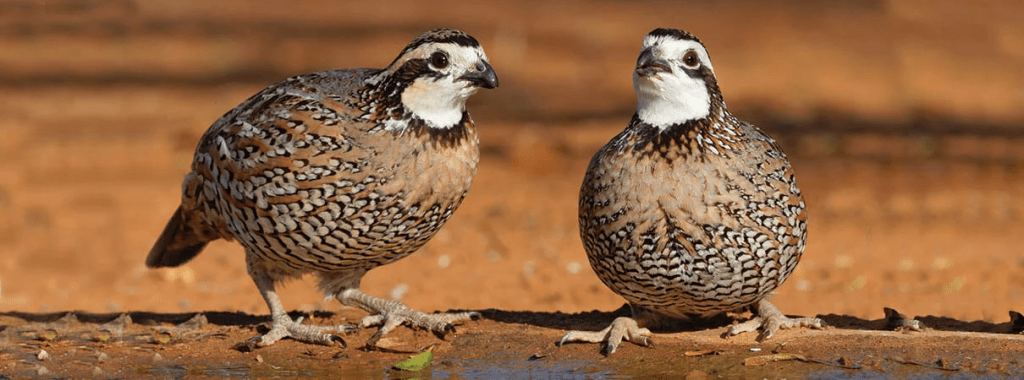
The Northern Bobwhite, also known as Virginia Quail or Virginia Partridge, is in the same family as the Montezuma and Scaled Quails, but the bobwhite is the only native quail species in the eastern United States. This delightfully round little quail is capable of strong, short bursts of flight — particularly when fleeing predators — though they prefer to walk or run, scuttling about under the dense, low cover of vegetation in grasslands, agricultural fields, and open forests.

The Northern Bobwhite is more often heard than seen, its namesake whistled bob-white! call sounding from the brushy undergrowth, where their dappled brown-and-white plumage provides excellent camouflage. But sometimes, especially when calling in spring, males will occupy highly visible locations, perching atop fenceposts and tree limbs.

A popular game bird, the Northern Bobwhite has a whopping 22 subspecies across its range, one of which — the Masked Bobwhite — is federally listed as Endangered. Its status as a game bird has made it one of the most well-studied birds in the world, and scientists have observed sharp declines, likely owing to multiple causes that include habitat loss and the increased use of pesticides.

Threats

Populations of Northern Bobwhite plunged between 1966 and 2019, resulting in an overall decline of 81 percent, according to the North American Breeding Bird Survey. Partners in Flight considers the Northern Bobwhite as a “Common Bird in Steep Decline.” For years, an explanation for such drastic declines has been elusive. However, most biologists agree that multiple causes are to blame. (snip-MORE on the page)

https://abcbirds.org/birds/northern-bobwhite/

“Whiskyjack”

“Blood-drinking Bird”

“Tick-eater”

“Watcher by the Water”