November 4, 1811 A group of men in Bulwell, near Nottingham, England, armed with hammers, axes and pistols in the dark of night, broke into the workshop of a master weaver named Hollingsworth and smashed six weaving machines the men thought threatened their jobs. They and their supporters opposed the industrialization that had turned home-based sustainable textile work into factory work with significant loss of jobs through mechanization (and those at much lower wages), as well as the attendant air and water pollution. Luddites smashing loom. They called themselves followers of the probably fictional General Ludd and continued their attacks for months, with over a thousand knitting machines destroyed. In response, thousands of troops were sent to stop the rebellion, and Parliament passed a law making destruction of weaving machines a hanging offense. Luddites has since become a term used for those who oppose technology.
November 4, 1956 Two hundred thousand Russian troops with 1000 tanks stopped an anti-Stalinist uprising in Hungary and installed a new pro-Soviet government. Although civilians had set up barricades along all the major roads leading to Budapest, the Soviet air force bombed the capital and troops poured into the city in a massive dawn offensive. Hungarian Army and National Guard troops participated in the resistance; only Communist Party functionaries and security police fought alongside the Warsaw Pact troops. The help promised from the U.S. to protect and aid the anti-Stalinists never came. 20,000 Hungarians ultimately died as a result (as well as 4000 troops), and ten times that many left the country permanently. Hungarian ‘freedom fighters’ temporarily forced back Soviet tanks and troops. Soviet tanks in Budapest. Pictorial history of the Hungarian Uprising
November 4, 1984 The first free elections in Nicaraguan history were held. Nicaragua’s ruling Sandinista Front claimed a decisive victory (70%), defeating six other parties, in the country’s first elections since the revolution the Sandanistas had led five years previous. The high-turnout election (83%) was monitored by 400 independent election observers who said the election had been fair. Read more
November 4, 1995 Israeli Prime Minister Yitzhak Rabin was fatally shot minutes after speaking at a peace rally held in Tel Aviv’s Kings Square in Israel. The rally in Kings of Israel Square Yitzhak Rabin Read more
November 4, 2008 The first African American ever nominated by a major political party as candidate for president went before the electorate. Senator Barack Obama of Illinois and his Democratic vice-presidential running mate, Senator Joseph Biden of Delaware, faced Republican Senator John McCain of Arizona and Alaska Governor Sarah Palin; independent candidates Ralph Nader and Matt Gonzalez; Green Party candidates former Representative Cynthia McKinney and Rosa Clemente; and former Repepresentatives Bob Barr and Wayne Allyn Root.
It has struck me that we need a reduce-stress-be-in-the-moment-self-care sort of thing. Some of us have chronic conditions, some are recovering from surgery, some of us are physically fine other than great stress that may be getting the better of us, and some of us may have a combination of some or all, or even something else. I’m pretty sure we’re all aware of tools, but sometimes things are so worrying that we forget about that, as we urgently try to fix things, or even submit to our brains’s workings with cortisol and fear and what all. So. I don’t know what, if any of this, might help someone, but I gotta try. So here’s what’s likely gonna be a long post, with a mixed bag of stuff. Actually, I think it may turn into 2 separate posts, because I see I’ve only got one item covered, and it’s already post-length. So there may be Part 2. And maybe yet another one.
I think I should first refer people to the hotlines where professionals want to and can help. Maybe someone thinks they don’t need or want to call, or maybe someone thinks they’re not there yet. It’s just good to have the resource at hand, is all. Some gain strength from knowing they can call. So, of course, there’s 911, or whatever the 3 digit emergency number is where you live. Then, more specifically, there are numbers for mental health assistance, like 988 where you can text Q to 988 if you want an LGBTQI+ affirming counselor. National Domestic Violence Hotline , (800) 799-7233. Crisis Text Line ,Text HOME to 741741. National Sexual Assault Hotline , (800) 656-4673. SAgE’s Farmer Support Hotline , 833-381-SAGE. Veterans Crisis Line , 988, then PRESS 1 Text 838255, Chat online. Much more at https://www.apa.org/topics/crisis-hotlines . Also, https://glaad.org/resourcelist/ . No doubt I’ve missed something, so please put it in comments.
I will share a bit about myself here. I’ve been diagnosed with generalized anxiety. Could be brain chemistry, could be that my life has not been a calm flow, both, something else. Whatever it is, I have it. Having treated and therapized, I know which tools work for me, and I use them, sometimes unconsciously. Anyway, I don’t like seeing people having trouble, or being troubled, or being hungry, sick, cold, hot, traumatized by war, etc., etc. My mindset has always been to do all I can to fix. Mostly to fix things immediately for the people I’m trying to help, but also the bigger working to fix. We’ve all seen my posts where I’ve shared some of the issues and items on which I work.
The thing about that is, it helps me to feel like I’m doing something that can help somebody else. It overrides anxiety and introversion when I have a reason to be “bothering” people for the greater good.
In regard to current events stress, which is weighing on all people everywhere, there are many of us around the world who are able to do just that one thing that seems so tiny-an hour on the phone, say-to make a difference, and reduce our concerns and stress. So, here is the volunteer page for the Harris-Walz campaign: https://go.kamalaharris.com/ . They still need people to make calls. Making calls to voters in other states is one of my favorite parts of helping a campaign! With a cell phone it’s almost cost and pain-in-the-neck free. Again, I’m aware of various medical issues around the commentary; that’s why I say even one hour will help the campaign, and will also help us. In addition or instead of this, one could contact campaigns of legislative candidates, like Sen. Brown, Sen. Baldwin, Rep. Sharice Davids, Colin Allred, and so many more. An hour of calls will help. And, again, you will feel better having spoken with people to further the greater good.
Now calling is a thing I’m putting forward. To me, it’s personal for each of us, what and how much we’re doing about the stress of the things in the world. I neither need nor want to know if/what anybody’s doing. I’m only putting this out as a thing from which to take our power, to put our power to work.
Since this is this long, I’ll put the first post I read this morning, it inspired me. It’s good-one of those things I needed to read, though I didn’t know it until I got started. It reminded me that while I didn’t necessarily learn or have these experiences in the same way or as early in life, I know these things, and I can do them when needed. I bet we all do, and can. I’m going to share a goodly snippet, but we should read it all if we can. Then, I’ll stop for lunch, then bring back another post part. Well, unless any- or everyone comments that they’re good, and please no more! 🌞 😄 And now from Vixen Strangely:
I tell this about myself because its true and a little weird, but when I was small, my dad taught me how to hook my fingers up and around an eyeball in its socket–just in case I ever had to. I knew what a xyphoid process was at six years old. I knew where to drive the heel of my hand into a human nose. I was taught that I didn’t have the physical strength advantage in life, so I had to have the will. I was taught that you have to walk in awareness. I was taught you watch your drink. I was taught to carry improvised weapons. I was taught to see the world in terms of potential improvised weapons.
I was taught this because some boys never get told what they should never try. Or get told but don’t really learn it. (You don’t use your knee–it’s inexact. You grab them by it. You can squeeze and disrupt a generation of losers. And I never had to do any of that. Not once. Because it’s really only a small percentage of men who are actual monsters–most are reasonable and not actual sociopaths. I like men, really. They are interesting enough and some have valuable skills. They care for the people around them and often are smarter than they think they are. It’s a confidence issue. When you are told to value muscle over brain, you know.)
I was raised to think, more or less, there wasn’t anything I couldn’t do. Math, science, art, politics. Sports. And it simply never occurred to me women were just out there, somewhere, either not voting because their husbands said they couldn’t or voting for exactly what their husbands told them to, until I heard about that in my early adulthood–because why? That’s crazy: we’re fully-fledged adult people, right? Even if I knew I was born just before Roe and just before women generally could even get credit in our own names.
I’ve been married twice. The idea of a man not knowing what he’s even getting politically going into a relationship is weird to me–this is me. We are talking politics. You don’t know me and not know my politics.
I was told to put in the work. Show it. Show up. I learned how to put a little bass in my voice. I learned respect is earned, not one time, but every time.
Donald Trump never had to earn the respect that he has from the bottom up, in any environment where respect wasn’t just his for showing up. Women can see through it. Do you not see his relationship with Jeffery Epstein? The couple dozen claims of sexual harassment or assault? How he speaks about women all the time? The religious right (that he has allied with) desire to end no-fault divorce and the grinning sadist desire to monitor our menses and try to punish us for our fertility and even stop us from travelling to other states to save our lives? (snip-More)
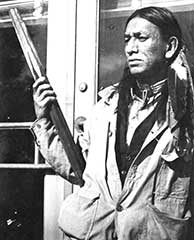
November 3, 1883 The U.S. Supreme Court, in its decision Ex Parte Crow Dog, declared Native Americans were ultimately subject to U.S. law, “not in the sense of citizens, but . . . as wards subject to a guardian . . . as a dependent community who were in a state of pupilage.” However, the Court acknowledged the sovereignty of tribal authority in the particular case at hand. The Congress, however, essentially overturned the Court’s decision two years later. Chief Crow Dog, 1898 More on Ex Parte Crow Dog
November 3, 1917 Bolsheviks, the followers of Vladimir Lenin, took control of the capital, Moscow, and the Kremlin, the fortress-like grouping of government buildings and churches at the center of the capital city, as the Russian revolution succeeded.
November 3, 1969 President Nixon announced the “Vietnamization” program to shift fighting by U.S. troops to U.S.-trained Vietnamese troops. “We have adopted a plan which we have worked out in cooperation with the South Vietnamese for the complete withdrawal of all U.S. combat ground forces, and their replacement by South Vietnamese forces on an orderly scheduled timetable.” The last U.S. troops didn’t return home until 1975.
November 3, 1972 Five hundred protesters from the “Trail of Broken Treaties,” a Native American march, occupied the Bureau of Indian Affairs offices (part of the Department of Interior) in Washington, D.C., for six days. Their goal was to gain support from the general public for a policy of self-determination for American Indians. Read more about the occupation: Read the Indian Manifesto:
November 3, 1979 Five members of the Workers Viewpoint Organization (later the Communist Workers Party) which had organized a “Death to the Klan” rally, were murdered and ten others injured when the rally was attacked by 40 Ku Klux Klan members and Nazis in Greensboro, North Carolina. The political organization had been joined in the march by a group of local African-American mill workers. At the time of the shootings, not one police officer was present. Two all-white juries acquitted the murderers despite the fact that the whole incident was on videotape. But in 1985 a federal jury found two policemen, a police informant/Klan leader, and five Klansmen and Nazis liable for the wrongful death of one of the demonstrators.
November 3, 1985 The Rainbow Warrior bombed Two French agents of the DGSE (Secret Service) dramatically changed their pleas on charges related to the bombing and sinking of the Greenpeace’s ship, Rainbow Warrior, and pled guilty. The ship was attacked in Auckland (New Zealand) harbor in anticipation of sailing to Moruroa Atoll to interfere with French nuclear weapons testing. It was the first act of terror ever committed in New Zealand. Read more
The stakes in United States v. Skrmetti are even higher than most Americans realize and could have wide-reaching consequences if the court rules to keep the ban on gender-affirming care in place.
This piece was published in partnership with The 19th, a nonprofit newsroom covering gender, politics, and policy. Sign up for their newsletter here.
A Supreme Court case that will decide whether Tennessee can continue to ban gender-affirming care for transgender youth could imperil the ability of all Americans to make decisions about their health care, experts say. The outcome depends on how far the court is willing to stretch its ruling that overturned federal abortion rights.
In United States v. Skrmetti, the court has agreed to take up the question of whether gender-affirming care bans for trans youth are unconstitutional, in response to the Biden administration petitioning on behalf of trans youth and their families in Tennessee — one of 26 states that has bannedsuch care for minors. The outcome of the case will grant much-needed clarity in a political landscape that has thrown the lives of trans people across the country into turmoil, as hospitals turn patients away, pharmacies deny prescriptions and families travel hundreds of miles to find care.
But with the case set for oral arguments on December 4, the stakes are even higher than most Americans realize, legal and policy experts say. Tennessee has banned gender-affirming care, such as puberty blockers and hormone replacement therapy, for a specific demographic — trans youth — while allowing those same treatments for cisgender youth. If the Supreme Court allows the state to keep its ban in place, that could imperil everyone’s access to health care.
“What the state of Tennessee is arguing is really dangerous for any person who has any sort of medical condition,” says Ezra Young, a civil rights lawyer and constitutional scholar. Tennessee is dictating what medical treatments people should or should not be allowed to have, Young said; that goes well beyond states’ authority to regulate medicine, specifically because giving health care to trans people is not a public health concern.
“The state can make sure that the doctor you see has a medical degree and has an active medical license, for instance,” he says. “What the state can’t do is micromanage the medical decision-making of patients or doctors, and that’s for good reason. Bureaucrats or lawmakers aren’t medical experts.”
Yet in half of U.S. states, Republican lawmakers have banned or restricted medical care that many trans people need to live, over the protests of the American Medical Association, American Psychiatric Association, and other leading medical groups. Federal judges have attempted to block these bans from taking hold, finding them to be likely unconstitutional. Appeals court judges have disagreed and overturned those decisions. Now, the Supreme Court will have the final say.
“If we don’t win here, it’s going to be open season on any health care related to transgender people,” says Shannon Minter, legal director of the National Center for Lesbian Rights. If the Supreme Court holds that banning gender-affirming care is not discriminatory, then trans people would no longer be protected under the Affordable Care Act, he argues. States and private insurers would be able to exclude gender-affirming care from coverage plans.
“It would be devastating. I mean, absolutely catastrophic,” Minter says.
Ultimately, the outcome of this case will have a wider impact beyond gender-affirming care. A Supreme Court ruling endorsing Tennessee’s argument that the state can ban safe medical care — just because it disagrees with who that treatment is being given to — would enable the government to control people’s health decisions and enact other blatantly discriminatory policies, legal experts say.
“I think this case has bigger and broader implications than a lot of people realize, even frankly within the legal community,” says Michael Ulrich, an associate professor of health law, ethics and human rights at Boston University’s School of Public Health and School of Law. If the Supreme Court agrees with Tennessee’s ban, there’s nothing stopping states from banning or restricting other kinds of health care, he said — like what gets covered under Medicaid.
Solicitor General Elizabeth Prelogar’s office, representing the Biden administration, will split argument time before the Supreme Court with Chase Strangio, co-director of the American Civil Liberties Union’s LGBTQ & HIV Project.
The United States v. Skrmetti case is focused on whether Tennessee’s gender-affirming care ban violates the 14th Amendment’s equal protection clause, which prohibits discrimination on the basis of sex. The state insists that its ban has nothing to do with sex and that it does not target trans people. Instead, the law “sets age and use-based limits,” Tennessee’s attorney general argues. Minors can still access hormones and puberty blockers for medical purposes, as long as those treatments are not being used as part of a gender transition or to alleviate gender dysphoria. The state claims such a distinction is not based on sex because “neither boys nor girls can use these drugs for gender transition.”
In Dobbs v. Jackson Women’s Health Organization, the Supreme Court found that there is no constitutional right to an abortion in the United States. This ruling overturned Roe v. Wade, the landmark case that had guaranteed the right to an abortion since 1973. When writing the majority opinion in Dobbs, Supreme Court Justice Samuel Alito briefly addressed a theory that suggests abortion could be covered under the 14th Amendment’s equal protection clause. This idea is not part of Roe, or at issue in Dobbs, but was invoked in a separate “friend of the court” brief. Alito dismissed it, saying that state regulations on abortion do not discriminate based on sex.
“So that’s what the state of Tennessee is now latching on to, this passing reference, this brief statement in Dobbs, and they’re pinning their whole argument on it,” says Minter. “Everything hinges on it.”
In Dobbs, Alito wrote that abortion cannot be protected under the 14th Amendment’s equal protection clause, citing the arcane Geduldig v. Aiello — a case about pregnancy-related disability benefits — and Bray v. Alexandria Women’s Health Clinic, a case dealing with the rights of anti-abortion protesters. These rarely cited cases found that state regulations on abortion and pregnancy, or opposing abortion, are not sex discrimination. Tennessee is now using this framework to argue that “any disparate impact on transgender-identifying persons” caused by its law does not single trans people out for discrimination in ways covered by the 14th Amendment.
If the state’s gender-affirming care ban is found by the Supreme Court to be discriminatory under the 14th Amendment, it is subject to heightened scrutiny — a more rigorous review to determine whether a law is constitutional or not. In that scenario, Tennessee is more likely to lose.
Using abortion case law to support bans on gender-affirming care is especially dangerous, experts say. Tennessee is taking the Supreme Court’s own decision in Dobbs out of context, according to lawyers who have worked in LGBTQ+ rights cases for decades. And, if the justices read Tennessee’s law, it is obvious that banning gender-affirming care for trans people is discriminating based on sex, they say.
The United States v. Skrmetti case is focused on whether Tennessee’s gender-affirming care ban violates the 14th Amendment’s equal protection clause, which prohibits discrimination on the basis of sex. The state insists that its ban has nothing to do with sex and that it does not target trans people. Instead, the law “sets age and use-based limits,” Tennessee’s attorney general argues. Minors can still access hormones and puberty blockers for medical purposes, as long as those treatments are not being used as part of a gender transition or to alleviate gender dysphoria. The state claims such a distinction is not based on sex because “neither boys nor girls can use these drugs for gender transition.”
But, although the question before the court has become more specific, this ruling still has the potential to broadly set back LGBTQ+ rights.
Tennessee argues that the Supreme Court’s 2020 ruling in Bostock v. Clayton County, which found that employment discrimination against LGBTQ+ workers is sex-based discrimination prohibited under the Civil Rights Act, has nothing to do with this case. But going down this road leads to more questions, Ulrich says: Is discriminating due to sexual orientation also not considered sex-based discrimination?
“Then you can see just a proliferation of discriminatory laws that are coming out thereafter,” he says. “That’s a really dangerous proposition for the entire LGBTQ+ community and it’s setting us back significantly.”
Sruti Swaminathan, an ACLU staff attorney who has been counsel in this case from the beginning, said United States v. Skrmetti will test how far the Supreme Court is willing to stretch its Dobbs decision. They are well aware that the outcome of this case could curtail bodily autonomy for everyone. And taking this challenge before a conservative-majority Supreme Court has stoked fears among trans people of worst-case scenarios.
“We’re already at the place where half the country has banned this care. We need to not let the 6th Circuit decision stand idly and be utilized in the way it has,” Swaminathan says.
But Tennessee’s tactics, and the consequences that they could have during a time when laws targeting reproductive and transgender health care are proliferating, still worry them.
“I’m terrified. What we learned from Dobbs is that these attacks won’t stop with abortion,” Swaminathan says. “Banning abortion seems to be one pillar of an effort to write outdated gender norms into the law.”
U.S. v. Skrmetti began as a lawsuit against Tennessee’s ban on gender-affirming care for minors.
Tennessee’s argument in this case illustrates a larger coordinated effort to attack abortion access alongside gender-affirming care, says Logan Casey, director of policy research at the Movement Advancement Project, a nonprofit that tracks LGBTQ+ legislation.
States across the country have attempted to define sex based on reproductive capacity at birth. These efforts open transgender people up to discrimination and ignore the realities of intersex people, as well as cisgender women with conditions like primary ovarian insufficiency. Proponents of gender-affirming care bans inaccurately portray the effects of hormone replacement therapy on trans people’s reproductive ability by conflating the treatment with sterilization.
This Supreme Court case exemplifies a much larger argument that’s been a through line across attacks on transgender care and trans issues across the country, Casey says: What is sex, and who is protected when we think about that?
“Many of these state actors and politicians and extremists are clearly very invested in the concept of sex and defining sex in a very restricted and extraordinarily old-fashioned way that focuses only on people’s reproductive capacity, and then they use that argument in whatever context they can to advance the policies that would match that worldview,” he says.
(I don’t know if this is gonna work; I’m not on Instagram, but I went there, and could see, hear, read, and got the embed link. MomsRising is asking for shares, so if anyone cares to share, thank you!)
November 2, 1920 Socialist Party candidate Eugene V. Debs received nearly one million votes for President though he was serving a prison sentence at the time for his criticism of World War I and his encouraging resistance to the draft. More on Debs
November 2, 1982 Voters in nine general elections passed statewide referenda supporting a freeze on testing of nuclear weapons. Only Arizona turned it down. Dr. Randall Forsberg, a key person behind the Freeze movement Dr. Randall Forsberg
November 2, 1983 A bill designating a federal holiday honoring Dr. Martin Luther King, Jr. (to be observed on the third Monday of January) was signed by President Ronald Reagan. King was born in Atlanta in 1929, the son of a Baptist minister. He received a doctorate degree in theology and in 1955 organized the first major protest of the civil rights movement: the successful Montgomery Bus Boycott. Influenced by Mohandas Gandhi, he advocated nonviolent civil disobedience of the laws that enforced racial segregation. The history of Martin Luther King Day (pdf)
Disillusioned members of the US military have turned to Vietnam war-era policy to terminate their service because of religious or moral convictions
For Joy Metzler, a second lieutenant in the US air force, joining the military had felt like answering a calling. An adoptee from China who was raised in a conservative Christian family, she believed she owed a debt to the United States.
But the Hamas attacks in Israel last year, and Israel’s war that followed, rocked Metzler’s convictions. Within months, she filed for conscientious objector status, one of a small number of US military personnel seeking to end their service because of their moral opposition to US support for Israel.
“I didn’t know Palestine was a place before October 7,” Metzler told the Guardian.
“All of a sudden it felt like a light clicking on for me.”
As the war in Gaza enters a second year, some disillusioned members of the US military have turned to the Vietnam war-era conscientious objector policy to terminate their military service because of religious or moral convictions.
There are few avenues to express dissent in the army. Earlier this year, Harrison Mann, an army officer assigned to the Defense Intelligence Agency resigned in protest of US support for Israel. In a far more extreme gesture, 25-year-old US airman Aaron Bushnell died after setting himself on fire outside the Israeli embassy in Washington in February.
The conscientious objector route is a seldom-invoked alternative that few service members are aware of – though some advocates say there has been an uptick in interest in the last year.
The defense department referred questions about the number of conscientious objectors to each branch of the military. A spokesperson for the air force said that it has received 42 applications since 2021 and granted 36. Applications since 7 October “are on trend with pre-conflict averages”, the spokesperson added. (The army, navy, and Marine Corps did not respond to requests for comment.)
But while the numbers remain relatively low, the war in Gaza is top of mind for those service members who have considered conscientious objector status this year, said Bill Galvin, a Vietnam-era objector and director of counseling at the Center on Conscience and War, one of a handful of groups that helps military members navigate the complex bureaucratic process.
Galvin said his group helps roughly 50 to 70 applicants a year, across military branches, and that there’s been more interest than usual this year.
The US has subsidized Israel’s war in Gaza to the tune of nearly $18bn over the last year, and is growing more deeply entangled as the conflict spills into the broader region. The Biden administration recently announced the deployment of 100 troops to Israel to man a missile defense system in anticipation of an escalation against Iran.
“Almost everyone that I’ve talked to has at least cited what’s happening in Gaza as a factor in causing them to rethink what they’re doing,” Galvin said. “Some have actually said: ‘I know that the airplane that I’m doing maintenance on is delivering weaponry to Israel and so I feel complicit.’” (snip-MORE)
and reblogging this one from Keith. I hate giving the Don any time at all, but the bottom line of this is that the young people are seeing this, some for the first time, as they were in middle and high school in 2016.

 Luddites smashing loom.
 Hungarian ‘freedom fighters’ temporarily forced back Soviet tanks and troops.


 Yitzhak Rabin
 Chief Crow Dog, 1898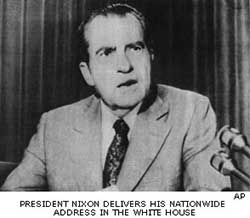

 The Rainbow Warrior bombed


 Scottie's Playtime