Women Doing Good Things

Nice Time: MacKenzie Scott Pissing Off Elon Musk With The Billions For The DEIs And Abortions by Rebecca Schoenkopf

Making right-wing chuds real mad is icing on the cake! Read on Substack

Billionaires are mostly despicable Montgomery-Burns type people. But then there’s MacKenzie Scott, one of the few ultra-rich who doesn’t deserve to get tarred and feathered in the coming revolution! She’s the third-wealthiest woman in the United States, 38th in the world, and has now given away $19.25 billion (with a B!) in 2,524 charitable gifts, with a focus on racial equality, LGBTQ+ equality, democracy, and climate change.

She and her small team seek out nonprofits operating in communities facing high food insecurity, high measures of racial inequity, high local poverty rates, and low access to philanthropic capital. And then she gives away the money with no strings attached. Which is unusual in philanthropy! Also unusual, she’s pretty quiet about it. She has a web site that shows what she has donated to, but there’s no MacKenzie Scott ribbon cuttings, or buildings with her name on them when she drops a check. She donates, then she dips. And she plans to “keep at it until the safe is empty.”

Scott’s given to community centers, the ACLU, historically Black colleges and universities, food banks, Planned Parenthood, YMCAs, dance theaters, Native American groups, legal aid centers, to paying off medical debt, legal funds for transgender people. It is truly an inspiring list!

You may be wondering how she got there! Then-MacKenzie Tuttle went to Princeton and studied under Toni Morrison, then got a job working at the hedge fund D. E. Shaw. Where, in 1993, she met Jeff Bezos, a 30-year-old with thinning hair. But she liked his laugh, and he liked that she was resourceful. “The number-one criterion was that I wanted a woman who could get me out of a Third World prison,” he once said.

And even though she was just 23, MacKenzie was that kind of can-do woman! They married, and there would be no Amazon without her. They moved to Seattle, where she helped Jeff get the company off the ground from their garage. She wrote Amazon’s business plan, did the company’s accounting and toted its early orders to the UPS Store in their minivan, while also raising their four kids, and writing novels. She won an American Book Award for her first one, The Testing of Luther Albright, which she wrote in the bathroom for 10 years in between everything else she was doing.

All seemed happy in the Bezos marriage for 25 years, until 2019, when the National Enquirer tracked Jeff and his (also married) ladyfriend Lauren Sánchez “across five states and 40,000 miles, tailed them in private jets, swanky limos, helicopter rides, romantic hikes, five-star hotel hideaways, intimate dinner dates and ‘quality time’ in hidden love nests.” They even somehow got his personal texts and shirtless bathroom photos, which seems potentially not legal. And then, according to Jeff, AMI content officer Dylan Howard tried to blackmail and extort him. (You may remember that creep from the Trump trial, as the broker of catching and killing tales of Trump’s affairs, or from catch/killing stories about Harvey Weinstein.)

And Jeff refused to play ball with the Enquirer. The story came out, and MacKenzie and Jeff announced their separation, as did Sánchez and her husband, Patrick Whitesell. And MacKenzie got 400 million Amazon shares in the divorce, which she has been selling and donating to charities ever since. But don’t worry, she’s still got about $32 billion left to make do with!

Anyway, now Bezos and Sánchez are reportedly getting married this weekend in Aspen. Mazel tov! Bezos been living flashy, with a $500 million yacht, buoyant fiancee, and apparently imposing his Trump-sympathies onto his newspaper.

And MacKenzie’s been living more quietly! She changed her last name to Scott, and married one of her children’s teachers (though they have since divorced). Otherwise, she’s been laying low, though she’s been known to sometimes gal-pal around with Melinda French Gates, Bill’s ex, who has pledged $1 billion over the next two years to US nonprofits working in women’s health. I’ll bet those two have a lot of fun!

All of this lady-giving mightily pisses off Elon Musk, who has a charitable foundation with zero employees, that for three years has failed to distribute even the 5 percent minimum required to be eligible for a tax deduction, putting him potentially in hot water with the IRS, OOPS.

Musk bitched in March that “super rich ex-wives who hate their former spouse” could contribute to the decline of Western civilization, and more recently Xitted that Scott’s contributions were “concerning.” Which rather just draws more attention to those ladies’ good works, in contrast to what a shit person Elon is, unable to donate a wooden nickel unless it might benefit himself, somehow, and fucking over his exes in whatever way possible.

We call this “divorced dad energy” and he is rich in it for sure.

After his snotty comment, MacKenzie Scott gave away another $600 million, the end.

[Yield GivingWiredVogueMediumNew York Times archive link]

Safe Words

(Yeah, not for that. 🙊)

You Need A Safe Word, CSIRO Data Experts Say, To Avoid Scammers And Deepfakes

December 22, 2024 Cosmos

In an age where misinformation and deepfakes blur the lines between fact and fiction, identifying scams has never been more challenging. Falling for a scam can have devastating social, financial, and personal consequences. Over the past year, victims of cybercrime reported losing an average of $30,700 per incident.

As Christmas and Boxing Day approach, shoppers face heightened risks, particularly millennials and Gen Z consumers. In the U.S., one in five people have unknowingly purchased a product promoted by deepfake celebrity endorsements. This figure climbs to one in three among those aged 18-34.

Sharif Abuadbba, deepfake expert in CSIRO’s Data61 team, the data and digital specialist arm of the national science agency, highlighted how technology like AI has made deception easier than ever.

“Scammers can quickly and easily create imitations of popular social media influencers. Deepfakes can manipulate a person’s voice, gaze, mouth, expressions, pauses – basically putting words in their mouth that they’ve never said,” Abuadbba says.

“On social media, attackers rely on the viewers believing fake content and sharing it widely.”

You might think you have nothing valuable for a hacker to steal. However, cybercriminals often exploit individuals as gateways to larger targets, including family members, friends or organisations. Identity fraud can also severely damage your professional relationships and reputation with financial services.

As technology becomes more integral to our daily lives, how can we protect ourselves and those we care about from these cyber threats? Here are five expert tips:

1) Have a family safe word

Scammers are increasingly using texts, calls and even video to impersonate loved ones and request money. With AI voice cloning on the rise, these schemes are becoming more and more believable.

Jamie Rossato, CSIRO Chief Information Security Officer, advises setting up a pre-agreed safe word to verify who you’re speaking to. This word should remain private and not be easily discovered through social media or other online sources.

“Use this proactively, rather than waiting until you are suspicious,” Jamie said.

“If my children asked me for money, unless they said our special safe word, I would never transfer funds to them.”

2) Don’t be afraid to hang up

With advances in voice-spoofing technology, fraudsters can convincingly mimic organisations like banks to steal money. Lauren Ferro, Human-centric Security Research Scientist with the Data61 team, recommends verifying caller identities before sharing any information.

“If something seems a bit off, hang up and call the organisation directly using their official number, or go and visit them in person,” Ferro advised.

“They would prefer you to be cautious. It’s far easier to address concerns up front that to recover stolen money or repair reputational damage later.”

3) Enable multi-factor authentication

Identity fraud is the most common self-reported cybercrime this year, making it crucial to protect your personal data online. For example, private or sensitive information stored with Medicare and government accounts.

One effective method to protect your account is enabling multi-factor authentication (MFA) to log in. MFA requires a password and a one-time verification code. Often this is sent as a text message, but Ferrato suggests using authentication apps like Microsoft Authenticator for added security.

“One of the benefits of app-based authenticators is they often use biometric controls, such as face ID or thumbprints to get into the app, before you get to the actual code itself,” Rossato says.

“This creates an extra layer of protection beyond SMS codes.”

4) Turn on banking push notifications

With most people using card and online payments, staying informed about your transactions can help you detect scams. While banks monitor suspicious activity, scammers can bypass these measures by mimicking your usual spending patterns.

Enabling real-time notifications through your banking app allows you to track transactions immediately, adding another layer of security.

5) Be aware of what you are sharing online

Most of us have an online and social media presence, but the photos, videos and information we share can be exploited. These assets can train deepfakes, which, once created and shared, are difficult to detect and remove.

Liming Zhu, Research Director in Data61 stresses the importance of being mindful of what we share online and who can access it. This is especially critical for children.

6) Education is your best form of protection

Ultimately, awareness and proactive protection are key to staying safe online. Educating yourself about cybersecurity is your first line of defence against scams.

Learn more about Australia’s cyber security research 

This article was written by Kerisha Parkes and was originally published by CSIRO, Australia’s national science agency. Read the original article.

More and more people falling victim to deepfakes

A Few Weeks Ago, We Discussed The Situation of Inequity in Education,

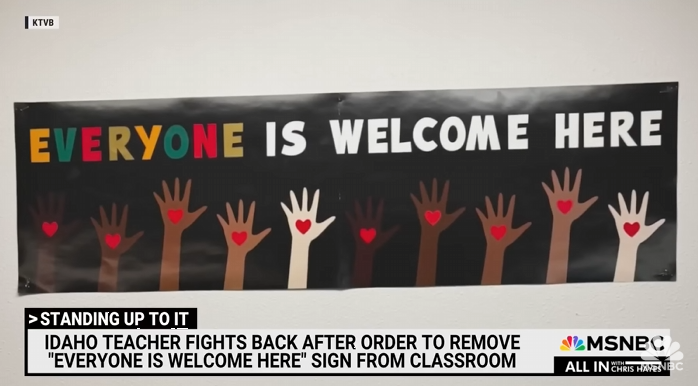
and there was quite a comments thread either here or on Jill Dennison’s place, (I think it was a little in both places, and the link to Jill’s is not that thread) about resistance and community teaching. Here’s an example, right there in Florida. All the links within are pertinent and worth clicking to read.

Peace & Justice History for 12/26

December 26, 1862
38 members of the Santee Sioux tribe were hanged in a public mass execution in Minnesota. 300 members of the band had been convicted of participating the the Minnesota Uprising and ordered to hang. However, all sentences except the 38 had been commuted by President Abraham Lincoln.
For decades white settlers had been encroaching on Santee Sioux territory, and they had been victimized by corrupt federal Indian agents on the reservations.In July agents and contractors had withheld food when their demands for kickbacks had been refused. The Indians eventually struck back, killing Anglo settlers and taking some hostages. In two battles with the U.S. Army, they killed or wounded dozens of soldiers, but ultimately lost and were put on trial.


America’s only legal mass execution
===========================================
December 26, 1966

The first Kwanzaa was celebrated in Los Angeles, California. It was conceived and organized in the wake of the Watts riots by Dr. Maulana (Ron) Karenga, a professor and chairman of Black Studies at California State University at Long Beach. Kwanzaa is a non-religious African-American holiday focusing on family, community, and culture.The name Kwanzaa is derived from the phrase “matunda ya kwanza,” which means “first fruits” in Swahili. The celebrations are expressed through song, dance, drumming, storytelling, poetry and the lighting of candles in a Kinara, all followed by a large traditional meal. The holiday is observed for seven days, each representing a different principle:

a Kwanzaa Kinara
• Umoja (oo-MO-jah) Unity
• Kujichagulia (koo-gee-cha-goo-LEE-yah) Self-Determination
• Ujima (oo-GEE-mah) Collective Work and Responsibility
• Ujamaa (oo-JAH-mah) Cooperative economics
• Nia (NEE-yah) Purpose
• Kuumba (koo-OOM-bah) Creativity
• Imani (ee-MAH-nee) Faith

Ron Karenga lighting the Kinara
History, Principles, and Symbols of Kwanzaa 
============================================
December 26, 1971


Two dozen members of Vietnam Veterans Against the War “liberated” the Statue of Liberty with a sit-in to protest resumed U.S. aerial bombings in Vietnam. They flew an inverted U.S. flag from the crown as a signal of distress.
more on this action 
=============================================
December 26, 1992

photo: Simran Sachdev Belgrade, 7.2009
Women In Black began campaign against rape during war, Belgrade, Serbia.
WIB website 
Women in Black is a world-wide network of women committed to peace with justice and actively opposed to injustice, war, militarism and
other forms of violence.

================================================
December 26, 1999

Alfonso Portillo Cabrera scored a resounding victory (nearly 70% of the vote in the second round) in Guatemala’s first peacetime presidential elections following a 36-year civil war.

Alfonso Portillo Cabrera after his election
Some perspective 

https://www.peacebuttons.info/E-News/peacehistorydecember.htm#december26

From The Bee

“Bilderberg Group changes itself for the modern world – and return of Trump”

Charlie Skelton

(I wasn’t going to post any news today, but in my interest of world peace, and everyone’s interest in things that are happening, this story is important, and it’s not likely to be in the commercial breaks of the game or whatever. If it comes up again, and/or where regular people see it in regular fashion, something will have already happened. Right now, it strikes me as something of which to be aware. Save reading it till tomorrow, if you like. I just want it here for the record. -A)

The former head of Nato, Jens Stoltenberg, has been named the new co-chair of the influential Bilderberg Group, which convenes a yearly transatlantic policy conference and has long been the subject of conspiracy theories around the extent of its power to shape global events.and/or

After a turbulent decade at the helm of the alliance’s military, Stoltenberg now takes over at its pre-eminent discussion forum: a fiercely private four-day event frequented by prime minsters, EU commissioners, bank bosses, corporate CEOs and intelligence chiefs.

Stoltenberg’s first Bilderberg was back in 2002, a few years before his second tenure as Norway’s prime minister. His decade as secretary general of Nato saw further visits, and he even gave the keynote speech at the group’s Saturday night banquet in Turin in 2018. His appointment as Bilderberg’s co-chair cements the group’s role at the heart of transatlantic strategy.

In February, Stoltenberg will also take over as chair of the Munich Security Conference, another important defence and diplomacy symposium. With a fellow Bilderberg veteran, the former Dutch prime minister Mark Rutte, replacing Stoltenberg at Nato, it marks a concentration of control at the top of the Atlantic alliance at a critical time.

Stoltenberg’s tenure at Nato was dominated by the Russia-Ukraine conflict, which had begun in earnest not long before he took office in 2014. Stoltenberg oversaw what he recently described as “the largest reinforcement of our collective defence in a generation”, noting proudly that “defence spending is on an upward trajectory across the alliance”.

A number of his new colleagues at Bilderberg have been benefiting from this uptick.

Several of the group’s 31-member steering committee have senior roles in the defence industry. The billionaire former Google boss, Eric Schmidt, chaired the recent National Security Commission on AI, and is now busy launching a kamikaze drone company aimed at the lucrative Ukraine market. Meanwhile, the hugely wealthy Swedish industrialist Marcus Wallenberg is chair of defense manufacturer Saab, which enjoyed a 71% boost in orders in the first nine months of 2024, largely due to the war with Russia.

The tech luminary and Donald Trump insider Peter Thiel founded the fast-growing robotics company Anduril and the booming surveillance and AI giant Palantir. His loyal lieutenant Alex Karp, the CEO of Palantir, was voted on to the board of Bilderberg a few years ago. Karp, who claims his company is “responsible for most of the targeting in Ukraine”, recently told the New York Times that the US will “very likely” soon be fighting a three-front war with China, Russia and Iran.

In some respects, the geopolitical mood today is not so different from how it was in the 1950s, when Bilderberg was born. (snip-MORE)

https://www.theguardian.com/world/2024/dec/25/jens-stoltenberg-bilderberg-group-trump-presidency

Peace & Justice History for 12/25

December 25, 1914

German officer in the trenches with British soldier
Just after midnight on Christmas morning, German troops at the front in World War I ceased firing their guns and artillery, and began to sing Christmas carols. At the first light of dawn, many of the German soldiers emerged from their trenches and approached the Allied lines across no man’s land, calling out “Merry Christmas” in their enemies’ native tongues.At first the Allied soldiers suspected it to be a trick, but they soon climbed out of their trenches and shook hands with the German soldiers. The men exchanged presents of cigarettes and plum puddings; the fighting didn’t resume in earnest for several days, and then only at the insistence of the generals.

German and British soldiers fraternize
What happened that night 
A Film | Joyeux Noel: The Christmas Truce Of 1914 
watch & listen 
=========================================
December 25, 1921

President Harding announced the release of Socialist Party leader Eugene V. Debs from prison, unconditionally commuting his 10-year sentence to time served. Debs’s full rights as a citizen, however, were not restored. He had been imprisoned for his vocal opposition to U.S. participation in World War I.
Following a meeting with the president and attorney general, Debs commented,
“. . . a convict for his principles is always a citizen in good standing. He is a citizen by his own inherent, God-given integrity. The only man who loses his citizenship is the man who renounces his principles and abdicates his manhood.”
===============================================
December 25, 1946

The first Christmas demonstration at the White House was held by those seeking amnesty for conscientious objectors convicted of refusing to fight in World War II.
===============================================
December 25, 1992
The special prosecutor responsible for investigating crimes committed in the Iran-Contra Affair, Lawrence E. Walsh, denounced the pardons granted the day before by President George H.W. Bush. Mr. Walsh charged that “the Iran-contra cover-up, which has continued for more than six years, has now been completed.”
Walsh said, “evidence of a conspiracy among the highest ranking Reagan Administration officials to lie to Congress and the American public” was central to his case against Weinberger. President Bush had been vice president at the time of the arms sales to Iran for hostages, and illegal aid to the insurgent Contras in Nicaragua.
Those Bush pardoned: Caspar Weinberger, former Secretary of Defense, soon to go on trial for lying to Congress; Clair E. George, the former head of the Central Intelligence Agency’s clandestine services, who had been convicted twice of perjury; two other CIA officials, Duane Clarridge and Alan D. Fiers Jr.; Robert C. McFarlane, the former national security adviser, and Elliott Abrams, the former assistant Secretary of State for Central America, both of whom had pled guilty to withholding information from Congress.

https://www.peacebuttons.info/E-News/peacehistorydecember.htm#december25

Here’s To A Comfortable and Peaceful Tuesday and Wednesday to You, However You May Observe Them!

I’ve been looking, between chores and getting other stuff done, for some sort of “card” to post to Scottie’s Playtime. I just got this Substack from Nancy Beiman, who is far more concise than I am, and says all I want to say. I appreciate everyone who reads and posts here!

Out with the Old by Nancy Beiman

and in with the new year Read on Substack

Hello everyone,

I wish you all a merry Christmas and Happy New Year 2025. I don’t usually send ‘year end letters’ but this year’s Canada Post strike meant that I could only send digital cards, and I mailed no original cards for the first time in 43 years.

Thees letters customarily describe what happened to the sender during the past year. 2024 was a year of sorrow for me and many of my friends.

Rather than put a damper on your own celebrations, I will instead list what I wish for all of us in 2025.

This wish list doesn’t need a magical being or genie to make them happen. People will have to change their behaviour. That is a wish that can only be granted by humans.

It’s a very tall order but wishes sometimes are granted.

Here goes:

I wish for:

1. Tolerance of people with different views and ways of living.

2. The restoration of civil discourse in private and public life. An end to toxicity.

3. The ending of all current wars and a joining of nations together in common cause to save our planet. Monies currently wasted on war will be used to build housing, repair infrastructure, feed the hungry, restore damaged areas of the natural world and preserve it.

4. Recognition that non human beings share the planet with us and that we are totally dependent on them. They provide air, food, and clean water.

5. The end of money worship. Money may talk, but it doesn’t think. No person or nation may be ‘first’ in everything.

It seems as if we are revisiting many of the negative events from the last century. So my last wish will be that humanity actually learns something from past mistakes.

I can dream, can’t I?

Happy 2025,

Nancy Beiman

Thanks for reading FurBabies (formerly Animation Anarchy)! Subscribe for free to receive new posts and support my work.

Peace & Justice History for 12/24

December 24, 1865
Months after the fall of the Confederacy and the end of slavery, several veterans of the Confederate Army formed a private social club in Pulaski, Tennessee, called the Ku Klux Klan (KKK). Its first priority, declared in its creed, was “to protect the weak, the innocent, and the defenseless from the indignities, wrongs, and outrages of the lawless, the violent, and the brutal.”
In fact, the Klan terrorized and killed former slaves, sympathetic whites and immigrants.


Three Ku Klux Klan members, September 1871.
The building where it happened still stands with a bronze plaque reading, “Ku Klux Klan organized in this, the law office of Judge Thomas M. Jones, Dec. 24, 1865.” When the building was purchased in 1990, the new owner, Don Massey, instead of removing the plaque, simply reversed it, showing the smooth back side.
More on the Klan 
December 24, 1924

Costa Rica indicated its intention to withdraw from The League of Nations to protest lack of progress on regional issues, particularly U.S. dominance of the hemisphere.
The Monroe Doctrine, declared by President James Monroe in 1823, established the U.S. sphere of influence encompassed the entirety of North and South America, as well as the Caribbean island nations.

Read more 
December 24, 1947
President Truman pardoned 1,523 of the 15,805 World War II draft resisters who had been convicted and served time in prison for their offense. Five years later on the same day, shortly before leaving office, he granted full pardon and restoration of civil and political rights to former convicts who had served in the peacetime army or who had not been covered by his earlier pardon, as well as all convicted peacetime deserters.
Read more 
December 24, 1991
Parents of reservists from Grocka protested at Army headquarters in Belgrade, Yugoslavia, worried their sons would be caught up in the war threatened by Serbian nationalist expansionism.
December 24, 1992
President George Herbert Walker Bush pardoned six Reagan administration appointees in the Iran-Contra case, among them former Secretary of Defense Casper Weinberger, and Robert McFarlane, the President’s former national security advisor.He did so with less than one month to go in his presidency, and one week before Weinberger’s trial on four felony charges was to begin.
These people and others were responsible for selling arms to the revolutionary government of Iran in hope of the release of hostages held in Lebanon, despite then-President Ronald Reagan’s repeated pledge not to negotiate with hostage-takers.


The Iran-Contra Boys

Otto Reich /Elliott Abrams /John Poindexter/Edwin Meese George H.W. Bush/Casper Weinberger/Oliver North/Robert McFarlane

The money raised through the arms sales was used to fund the Contra insurgents in Nicaragua, who were violently trying to overthrow the government. This support was in violation of an explicit legal ban on such activities under the Boland Amendment [see December 21, 1982].

Text of Bush’s Grant of Executive Clemency
U.S. presidential pardon history: 
More about presidential pardons: 

https://www.peacebuttons.info/E-News/peacehistorydecember.htm#december24

It’s Always Something.

How much fossil carbon is stored in our stuff?

Ellen Phiddian December 21, 2024

Human-made materials – the “technosphere” – are a deep store of fossil carbon – and possibly a ticking time bomb.

That’s according to a fascinating new study published in Cell Reports Sustainability.

“We have no idea of how much carbon has been accumulated in the technosphere, how long it stays and what might happen to it once it is released,” says co-author Professor Klaus Hubaeck, a researcher at the University of Groningen, the Netherlands.

The researchers found that the technosphere accumulated 8.4 billion tonnes of fossil carbon from 1995-2019.

Were all this carbon to be burned and sent into the atmosphere, it would be equivalent to 30 billion tonnes of CO2. The world’s annual greenhouse gas emissions into the atmosphere over that period were roughly 770 billion tonnes.

“Carbon is used as a feedstock everywhere in our daily items, even the laptop I type on, and we were wondering if there is a potential time bomb of all that carbon contributing further to climate heating as it gets released to the atmosphere,” Hubaeck tells Cosmos over email.

Human-made materials are often made from fossil carbon sources like oil and gas. Plastics, for instance, are 74% fossil carbon on average. When these items reach end of life, the carbon makes its way back into the environment via dumping – or into the atmosphere via combustion.

The researchers calculated the amount of fossil carbon stored in the technosphere in the year 2011, using economic data to judge how much was flowing in and out of various industries.

They found that most of this carbon was going into rubber and plastic (30%), while 24% was put in bitumen, and 16% in machinery and equipment.

They found that 9% of extracted fossil carbon was stored in the technosphere in 2011, or about 0.4 billion tonnes of fossil carbon.

The team extrapolated these findings to a 25-year time period (1995-2019), which told them that 8.4 billion tonnes of fossil carbon had been accumulated.

Hubaeck says that the technosphere is nearing the stage where it stores more carbon than the natural world.

“We are not far from that turning point. Indeed, the accumulated fossil carbon is in the same order of magnitude, and indeed already higher than that stored in animals.”

What happens to all of this carbon? The researchers estimate that 3.7 billion tonnes of fossil carbon was disposed of over this time period: 1.2 billion tonnes sent to landfill, 1.2 billion tonnes incinerated and sent into the atmosphere, 1.1 billion tonnes recycled, and the rest littered.

“On the one hand, you can consider it as a form of carbon sequestration if this fossil carbon ends up sequestered in landfill, but on the other hand, it poses an environmental hazard, and if you burn it, you increase carbon emissions,” says co-author Dr Franco Ruzzenenti, also from the University of Groningen.

This means it is very important to make sure the waste is being processed properly, according to the researchers. They say that product lifetimes and recycling rates need to increase, and landfill and waste discharges need to be minimised.

“It’s best to avoid or reduce the throughput in the first place,” says Hubaeck.

“Certainly in rich countries, we have too much stuff (whereas the Global South still needs to catch up), we should question the amount of durable products and (inefficient) infrastructure we produce.

“Shifting to bio-based carbon also has environmental impacts, land requirements, biodiversity, and impacts on food prices.”

The researchers say that circular economy strategies are important for reducing the amount of waste as well, alongside managing waste better after disposal.