Duolingo saw a sharp rise in Spanish learners following Bad Bunny’s Super Bowl Halftime Show, according to a post shared by the language-learning app on social media.
“Duolingo saw a 35 percent increase in Spanish learners last night. Better late than never,” the company wrote on Threads on February 9, under its official account, @duolingo. The post, which included a graph showing a clear spike in Spanish lessons, has been liked more than 7,500 times to date.
The surge followed Bad Bunny’s history‑making performance at the Super Bowl Halftime Show, where he became the first artist to sing primarily in Spanish during the most-watched sporting event in the U.S. Duolingo’s official Threads account shared the data shortly after the night ended, highlighting the immediate impact the performance appeared to have on language learning behavior.
Bad Bunny’s Super Bowl appearance came months after he used a Spanish-language monologue on Saturday Night Live (SNL) to tell audiences they had “four months to learn” Spanish ahead of the game. Despite online backlash from some commentators at the time, the data shared by Duolingo suggests many viewers embraced the message, with interest in learning Spanish rising sharply during the Halftime Show.
(Both important stories. Of course, language alert, but definitely good reading here. -A)
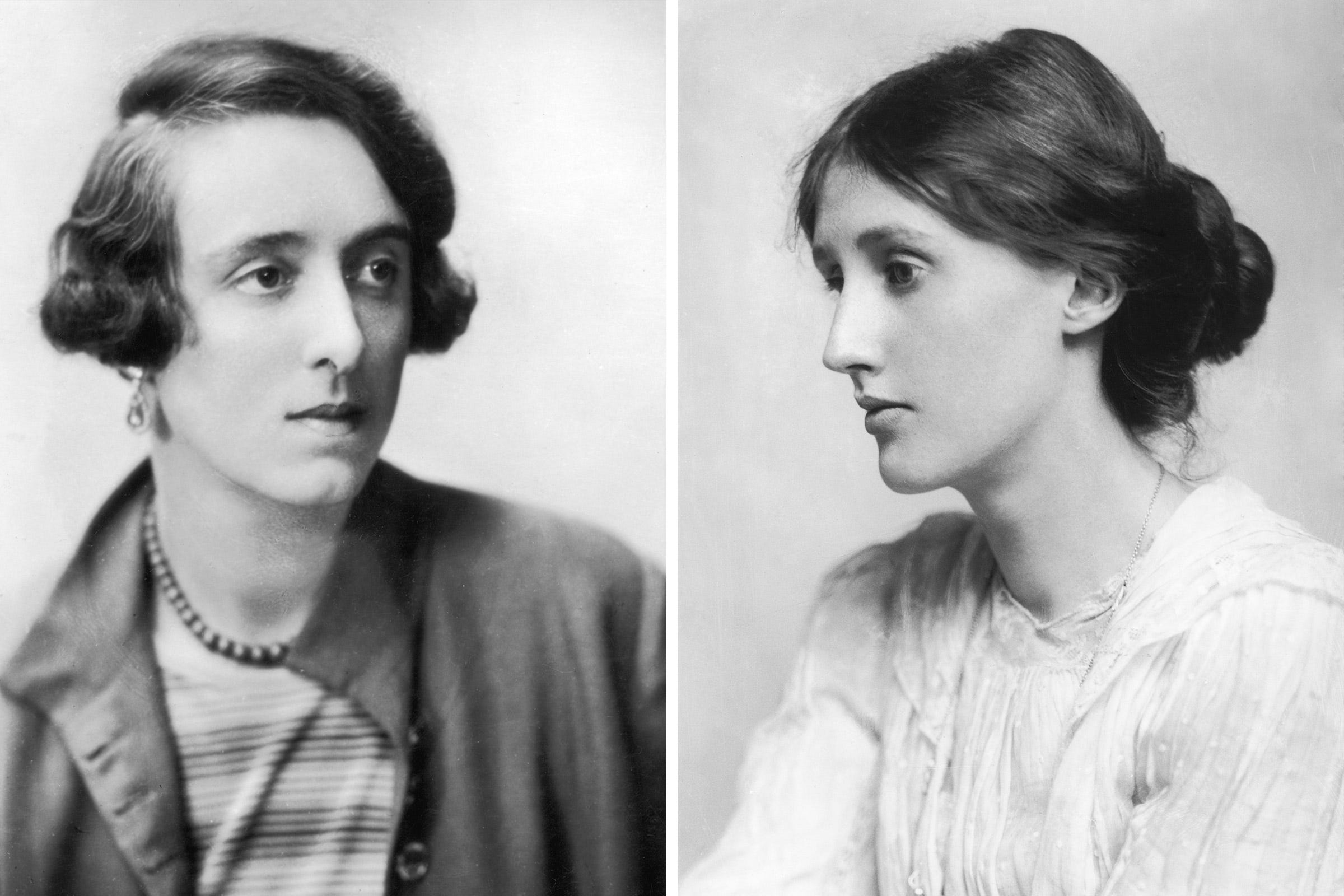
Queer History 124: Virginia Woolf & Vita Sackville-West by Wendy🏳️⚧️🏳️🌈🌈
How an aristocratic garden-loving poet inspired the 20th century’s most experimental “love letter” ….. Read on Substack
When Virginia Woolf first met Vita Sackville-West at a dinner party in 1922, neither woman could have possibly predicted that their relationship would produce one of the most revolutionary novels of the 20th century. On the surface, they seemed like complete opposites: Virginia—brilliant, fragile, middle-class, and sexually timid; Vita—aristocratic, confident, adventurous, and sexually voracious. Yet their decade-long affair transcended a simple romance to become one of the most creatively fertile partnerships in literary history, producing a groundbreaking gender-bending masterpiece that still feels radical nearly a century later.
Let’s cut through the academic bullshit that often sanitizes their relationship and explore what really happened between these remarkable women. Their letters reveal a passionate connection that was intellectual, emotional, and unmistakably physical. “I am reduced to a thing that wants Virginia,” Vita wrote in one letter. Not exactly the chaste “friendship” that some literary historians tried to paint it as for decades. Their affair challenged the conventions of their time, their social circles, and ultimately, the very form of the novel itself.
The Women Behind the Legend: Who They Really Were
(snip-More; it’s really good!)
Queer History 125: The Raw, Unfiltered History of Sapphic and Platonic Queer Cultures by Wendy🏳️⚧️🏳️🌈🌈 Read on Substack
The Goddamn Poetry of Desire: An Introduction
The ancient world was no fucking stranger to same-sex love. While modern society often frames homosexuality as a contemporary phenomenon—something that emerged from the shadows of the closet into the damn light of day during the liberation movements of the 20th century—the historical record tells a far more complex and fascinating story. Long before we had Pride parades and marriage equality, we had Sappho of Lesbos and Plato of Athens, two figures whose works and philosophies have profoundly shaped how we understand same-sex desire.
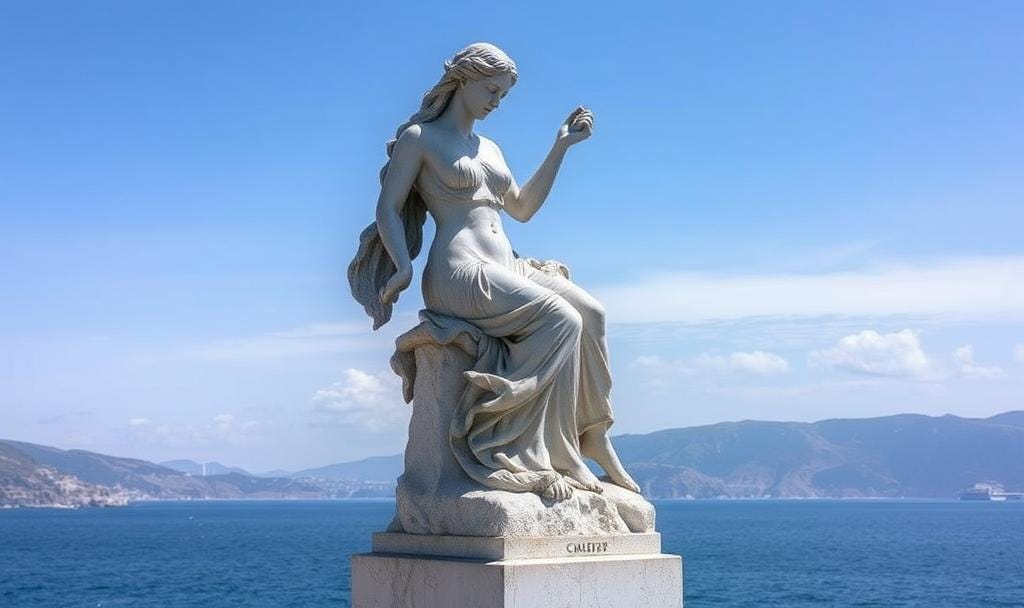
Sappho Lesbos
The rocky shores of Lesbos and the philosophical gardens of Athens—separated by the azure waters of the Aegean—gave birth to two distinct yet equally significant homosexual cultural traditions that continue to echo through the halls of queer history. These traditions, one centered on the passionate lyrical expressions of a woman poet, and the other on the philosophical musings of a male thinker, offer us a window into the complex ways same-sex desire was articulated, celebrated, and sometimes condemned in ancient Greek society.
Standing on the windswept cliffs of Lesbos, one can almost hear the lyrical whispers of Sappho’s poetry carried on the salt-laden breeze—fragments of desire that have survived over two and a half millennia. Meanwhile, in the once-bustling agora of Athens, the philosophical dialogues of Plato still reverberate, offering a theoretical framework for understanding male same-sex love that has influenced Western thought for centuries.
This analysis isn’t just about ancient history—it’s about the living, breathing legacy of these traditions and how they’ve been twisted, reimagined, and reclaimed through the bloody centuries. It’s about the raw power of words to shape how we understand our deepest desires and most intimate connections. It’s about the tension between poetic expression and philosophical reasoning in articulating the ineffable experiences of love and longing.
So let’s cut through the academic bullshit and get to the heart of the matter. Let’s explore the goddamn fascinating parallels and divergences between these two seminal traditions—one rooted in the fragmented verses of a woman whose very name has become synonymous with female homosexuality, and the other in the philosophical dialogues of a man whose ideas about love between men have shaped Western thought for millennia.
The Lyrical Fucking Fire: Sappho and Her Sacred Circle
On the sun-drenched isle of Lesbos, around 630-570 BCE, Sappho created a world of women that would reverberate through time like a pebble dropped in still water, its ripples still touching distant shores millennia later. The island’s rugged landscapes and azure waters formed the sensuous backdrop to her life and work—a physical paradise that mirrored the emotional and erotic paradise she created in her verses. (snip-More important history)
Dictionary lookups from Wall Street, Main Street, and politics
‘Courage’
Lookups for courage were in the top ten on Monday morning, possibly because the word featured heavily in reporting on the “Hands Off” protests held across the country over the weekend.
Several thousand people turned out on an unusually warm April Saturday for a series of rallies across Hampton Roads to protest the Trump administration and Elon Musk’s Department of Government Efficiency moves to cut federal spending and roll back protections for minority groups. … “(My fellow service members) didn’t wait for someone else to solve the problem, we ran towards the fire … and now my friends, brothers and sisters in arms, and families who stood with us through it all, it is once again time to act,” Montiero said. “Not with weapons but with courage, not in the field of combat but in the public square.” —Gavin Stone, The Virginian-Pilot (Norfolk, Virginia), 6 Apr. 2025
The size of the protests was bolstered by strong turnout in more conservative rural areas. Cheryl Campbell, who helped organize a gathering of about 300 in La Grande, said it’s easier to stay silent when the majority of those around you disagree with you. “It takes more courage to speak up here,” Campbell told the crowd on Saturday, “where many of our neighbors voted for Trump.” —The East Oregonian (Pendleton, Oregon), 6 Apr. 2025
Courage refers to mental or moral strength to venture, persevere, and withstand danger, fear, or difficulty. The word entered Middle English from the Anglo-French curage, which in turn comes from quer or coer, meaning “heart.”
(snip: see all the words! Those include: Kafkaesque, facilitate, bear market, and …)
Word Worth Knowing: ‘Thalweg’
Thalweg refers to the middle of the chief navigable channel of a waterway (such as a river) which constitutes the boundary line between states. (snip-more about thalweg on the page. Happy Saturday!)
I’m sure I’m not the only one. Still, I found a couple of items that help with that. And I’m on the lookout for more! We still have the power, even thought it doesn’t feel like it. We the people still have the power, if we stay constructively informed.
==================================
I don’t even recall now what I was reading this morning that linked Transvitae, but here are its resources pages. I am not trans, so I only hope there isn’t anything there are the site that is, let’s say inappropriate. I read around and it seems like a decent place, but I am no expert. Resources are resources, though. We need to know about resources.
==================================
Plus, I’m going to try to draw Number Nine Eight One, and anyone else who has such an urge should do so, also! 🌞 🧑🎨
Laura Smith resigned from the Towamencin Township Board of Supervisors after a video appeared to show her mimicking Elon Musk’s alleged Nazi salute
By David Chang• Published January 26, 2025 • Updated on January 26, 2025 at 5:32 pm
(There’s a video there, if it’s something you want to see. The still shows a person doing what she appears to be doing, if I am clear.)
A supervisor of a town in Montgomery County, Pennsylvania, resigned after a video in which she appeared to mimic Elon Musk’s alleged Nazi salute went viral.
Musk, the CEO of Tesla and SpaceX, owner of the social media platform X, and Administrator of the Department of Government Efficiency, sparked outrage when he made a gesture that resembled a Nazi salute while addressing a crowd at an inauguration event for President Donald Trump.
The Anti-Defamation League (ADL) later posted a statement on X saying it seemed like Musk “made an awkward gesture in a moment of enthusiasm, not a Nazi salute.”
This is a delicate moment. It’s a new day and yet so many are on edge. Our politics are inflamed, and social media only adds to the anxiety.
It seems that @elonmusk made an awkward gesture in a moment of enthusiasm, not a Nazi salute, but again, we appreciate that people are on…— ADL (@ADL) January 20, 2025
Despite the ADL’s statement, many have still accused Musk of performing the salute. In response, Musk posted a series of Nazi-related puns on X which led to more backlash.
Amid the controversy surrounding Musk, Laura Smith, a Republican and the Vice Chair of the Towamencin Township Board of Supervisors, posted a video of herself on the social media platform TikTok in which she appeared to mimic Musk’s gesture. (snip)



 Scottie's Playtime