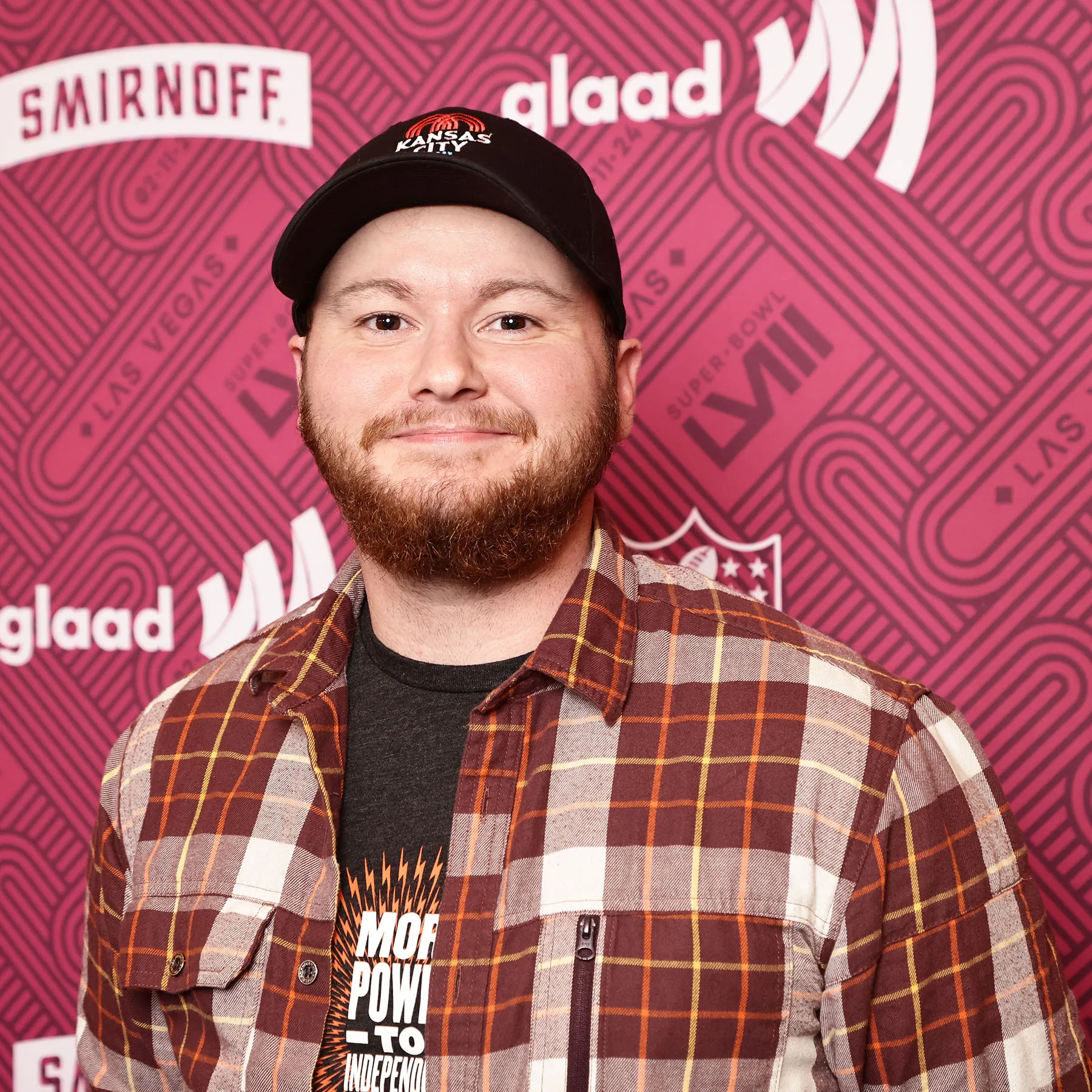
Wednesday star Hunter Doohan is opening up about the pressure he once felt to hide his sexuality in Hollywood.
During a recent appearance on the Zach Sang Show, the 31-year-old actor — who’s best-known for playing barista Tyler on the hit Netflix series — recounted the process of auditioning for the Showtime series Your Honor in 2019. Although Doohan was openly gay and already in a relationship with his now-husband, Fielder Jewett, he noted that the audition marked “the first time I’d done a network test and they were really scrutinizing.”
“I really was trying to hide it,” he said. “I went and hid pictures of us on Instagram, archived them.”
After Doohan booked the role, he found himself coming out once again to his co-star Bryan Cranston at 26.
“I was at lunch one time with Bryan and I said, ‘Grace called again,’ and I was like, ‘Oh, she’s my friend Grace,’” the actor recalled. “And he’s like, ‘Oh, just a friend?’ And I thought, ‘Oh God… I’ve been out for eight years and I have to come out of the closet again.’ It was so unsettling and awful. I was like, ‘I’m never going to do that for a role again.’”
Sang asked Doohan why he felt the need to hide his sexuality, he replied, “[My partner] was like, ‘Oh yeah, are you worried about this?’ But yeah, I don’t know.”
“I’ve never played a gay role and I’ve auditioned for them,” Doohan added. “But all the characters I’ve played have been straight.”
The Wednesday star pointed to openly gay star Jonathan Bailey as an example. “I read this Jonathan Bailey interview the other day that was so inspiring, like, the way he talks about [his sexuality] and just how he’s totally released all perceived limitations around it,” Doohan said. “We’re lucky to be living in a different time where we can [play non-gay roles] and people can watch it and suspend their disbelief like that.”
These days, the actor has other concerns — namely, the fact that he missed out on meeting Wednesday guest star Lady Gaga on set.
“I’m the one gay guy on the show, and I didn’t get to meet Gaga,” Doohan joked during a recent appearance on the Just for Variety podcast with Marc Malkin. “It might be a hate crime.”
Before the establishment of the Hollywood Production Code in the 1930s, filmmakers deployed gender and sexuality stereotypes for glamour, humor, and drama alike.
With Pride month in full swing, it’s an ideal moment to look at historical queer representation, particularly in the early days of Hollywood cinema. The first few decades of the twentieth century were not only an active time for a growing medium, but also one in which crises of confidence, economy, masculinity, and culture changed how filmmakers presented queer characters and how (or if) audiences received them. Film professor David Lugowski summed up queer representation in early film neatly, writing that “[a]s cinema learned to talk, so did it also ‘speak’ about the gender roles so crucial to Hollywood film.”
Cinema moved from silent film into “talkies” in the late 1920s, with Al Jolson’s The Jazz Singer typically credited as the first feature to integrate sound and dialogue (it may, however, be a more complicated exercise to locate a true “first”). The late twenties also saw the onset in America of the Great Depression, and, at least as far as entertainment is concerned, many scholars link displays of sexuality and queerness in films in the late 1920s and early 1930s to a larger crisis in masculinity. Economic collapse, the story goes, leads to a broader crisis of identity and gender role. “In short,” Lugowski writes, “men found their gender status, linked to notions of ‘work’ and ‘value’ promulgated by capitalist structures and ideologies, in jeopardy.”
As film became more pervasive and culturally integrated under these circumstances, stereotypes started to be read as evidence that gender performance was equivalent to sexual orientation. Basic types in Hollywood films were clear. For men, queer types were usually either the “dithering, asexual ‘sissy,’” writes Lugowski, or “the more outrageous ‘pansy,’ an extremely effeminate boulevardier type sporting lipstick, rouge, a trim mustache and hairstyle, and an equally trim suit, incomplete without a boutonniere.” Lesbian representation favored masculine drag—tailored suits, hair cut short or slicked back, and sometimes male-coded accessories like a monocle or a cigar. “Objections arose,” Lugowski explains, “because she seemed to usurp male privilege; perhaps the pansy seemed to give it up.”
Prior to the 1930s, these stereotypes appear to have been commonly understood and deployed, for glamour, humor, and drama alike. Audiences may have responded variably—with titillation, acceptance, or shock, depending on the individual—but no one could say the film industry wasn’t inclusive of different relationship story arcs.
In a Code world, no film should risk lowering an audience’s moral standards nor should evil or immorality be presented except as a cautionary tale.
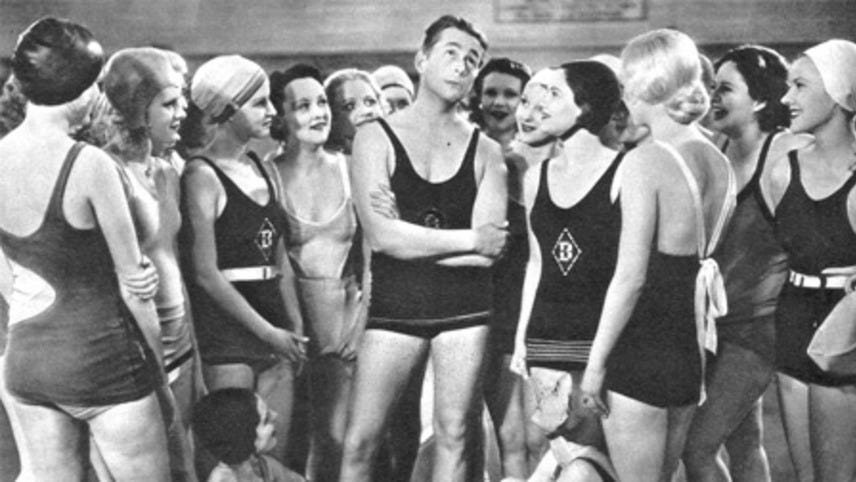
In Pandora’s Box (1929) Louise Brooks wooed a father and son as well as a countess in a tuxedo. Greta Garbo portrayed the title character Queen Christina in a 1933 film about the seventeenth-century Swedish monarch, widely assumed to have been queer. Garbo, along with Marlene Dietrich and other leading ladies such as Joan Crawford, Myrna Loy, and Barbara Stanwyck, were members of a private professional group of Hollywood women—all of them quietly bisexual or lesbian—known as the “Sewing Circle.” Palmy Days (1931) features not only a proud flower-wearing “pansy” character, but drag, donuts, and a sexy Busby Berkeley dance number.
These portrayals took on new weight and context with the passage of the Hollywood Production Code. The Code, a set of self-regulatory guidelines applied to film production, was begrudgingly accepted by film execs, writes Steven Vaughn. That industry figures would accept content restrictions seems strange, until you consider that it was a hold-your-nose solution preferable to either intrusive government regulation or control by investment banks or funders, who preferred their investments be as stable as possible. The Production Code of 1930 therefore came into being, heavily influenced by religious collaborators and proclaiming two linked truths: “Motion pictures are very important as Art,” and “The motion picture has special Moral obligations.” In a Code world, no film should risk lowering an audience’s moral standards nor should evil or immorality be presented except as a cautionary tale.
The Production Code embraced a list of “don’ts” and “be carefuls.” On the “don’ts” list, films were to eliminate blasphemy and profanity, depictions of drug use, miscegenation, and “any inference of sex perversion,” which implied homosexuality. “Be carefuls” enumerated in the 1956 version of the Code urged “the careful limits of good taste” around bedroom scenes, hangings, liquor, childbirth, and “third degree methods.”
The well-known English critic Anthony Slide explains that the Code particularly targeted queer representation in film.
At first, to be honest, not much changed. Hollywood cinema remained as queer as ever, and during the harshest years of the Depression, the industry engaged in some of its most boundary-pushing and queer storytelling efforts.
“Not only does the number of incidents increase,” writes Lugowski,
but we also see more explicit references, longer scenes, and sometimes surprisingly substantial characters. Perhaps most important, the pansy and lesbian characters of the period remain, respectively, effeminate and mannish but become increasingly sexualized in 1933–34.
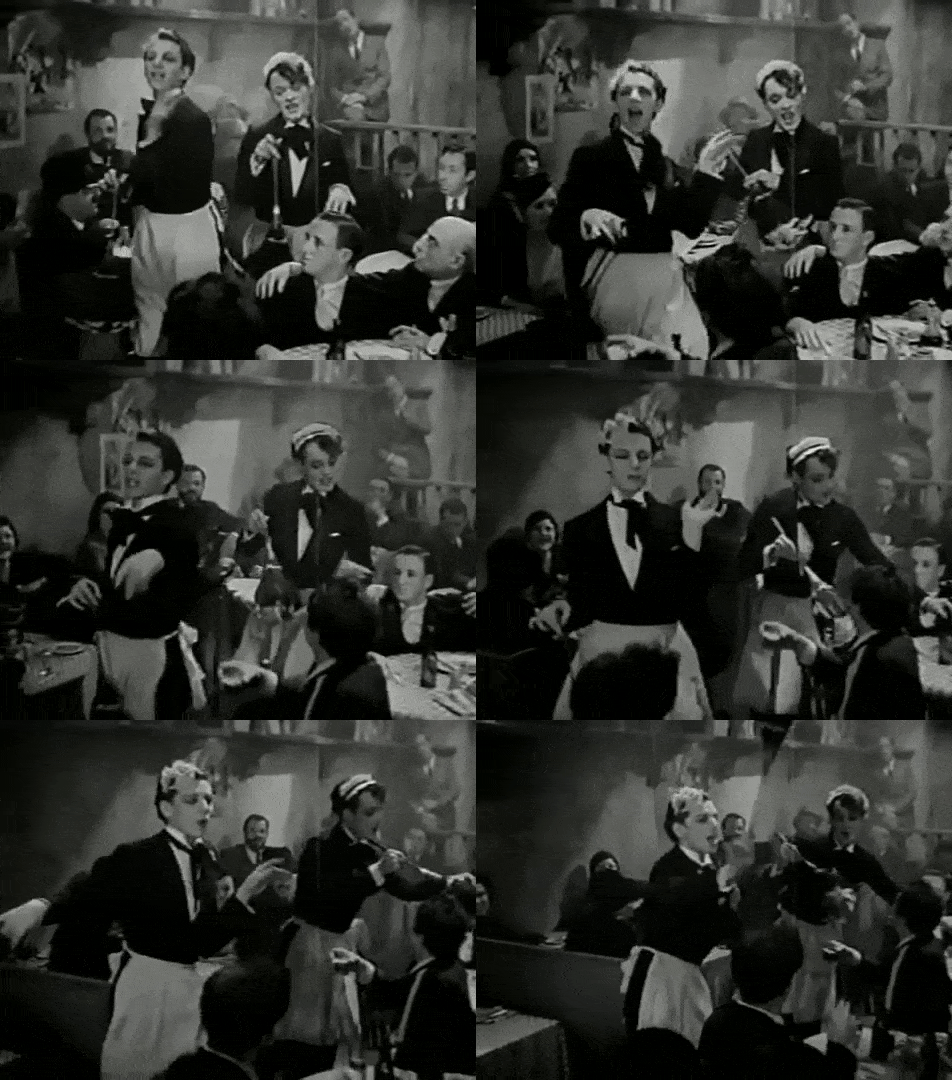
To wit: in 1934, Jack Warner (of Warner Brothers Studio) felt perfectly comfortable ignoring enforcer Joseph Breen’s firm letter and repeated phone calls about that year’s Wonder Bar. Starring Al Jolson and based on a Broadway musical of the same name, the film included a scene in which a tuxedo-clad man glides onto a busy dance floor and taps the shoulder of another man dancing with a blonde in finger waves and a white gown. He asks, “May I cut in?” The woman answers, “Why, certainly!” and reaches out her arms expectantly, at which point the two men embrace each other and whirl off down the dance floor. Jolson, from the bandstand, observes the exchange and quips, “Boys will be boys. Woo!”
By the end of 1934, though, the Code was more than just a feel-good document for moralists. It was enabled with specific enforcement machinery in response to religious lobbying and the threat of significant industry opposition from the Catholic church.
“[R]ather than risk possible state and federal censorship,” notes Chon Noriega, “as well as anticipated boycotts by the ten-million-member Catholic Legion of Decency, Hollywood studios proferred [sic] strict self-regulation, empowering the Hays Office—now under Joseph Breen—to enforce its four-year-old Production Code.”
Once the Production Code had teeth, filmmakers were restricted in what they could include in their work. If they violated Code standards, the Production Code Administration (PCA) could withhold its seal of approval, making distribution difficult. The possibility of appeal was slim to none, with a board of PCA directors making the call, not fellow filmmakers. In 1947, with the Code not even fifteen years in effect, writer and censor Geoffrey Shurlock noted with some pleasure that
Queer characters and storylines were less common, or circumscribed, until the Code weakened and ultimately fell in the 1960s (the success of boundary-pushing films like Some Like It Hot only helped in this regard). It remained true in film that villains, especially, were more likely to be accepted with queer coding. But a large number of films—more than perhaps one might expect—remain a testament to Hollywood’s longtime engagement with queer characters and themes. (snip)
Colm Tóibín, Alan Hollinghurst, Adam Mars-Jones and more recall the high style and libidinous freedom of a writer who ‘was not a gateway to gay literature but a main destination’
Edmund White’s luminous career was in part a matter of often dark history: he lived through it all. He was a gay teenager in an age of repression, self-hatred and anxious longing for a “cure”; he was a young man in the heyday of gay liberation, and the libidinous free-for-all of 1970s New York; he was a witness to the terrifying destruction of the gay world in the Aids epidemic in the 1980s and 90s. All these things he wrote about, in a long-term commitment to autofiction – a narrative adventure he embarked on with no knowledge of where or when the story would end. He is often called a chronicler of these extraordinary epochs, but he was something much more than that, an artist with an utterly distinctive sensibility, humorous, elegant, avidly international. You read him not just for the unsparing account of sexual life but for the thrill of his richly cultured mind and his astonishingly observant eye.
What amazed me about A Boy’s Own Story, when it came out in 1982, was that a stark new candour about sexual experience should be conveyed with such gorgeous luxuriance of style, such richness of metaphor and allusion. This new genre, gay fiction, could also be high art, and almost at once a worldwide bestseller! It was an amazing moment, which would be liberating for generations of queer writers who followed. These younger writers Edmund himself followed and fostered with unusual generosity – I feel my whole career as a novelist has been sustained by his example and encouragement. In novels and peerless memoirs right up to the last year of his life he kept telling the truth about what he had done and thought and felt – he was a matchless explorer of the painful comedy of ageing and failing physically while the libido stayed insatiably strong. It’s hard to take in that this magnificent experiment has now come to a close. (snip-MORE)
US actor Jonathan Joss, known for his roles in King of the Hill and Parks and Recreation, has died aged 59.
Joss was shot dead, in what his husband called a homophobic hate crime, although police in Texas say there is no evidence of this.
Joss’s broad career spanned different genres and platforms, appearing in films, sitcoms, animations, stage productions and more.
He has been credited with increasing representation of Native Americans on screen. Here are three of the notable performances he will be remembered for.
John Redcorn in King of the Hill
In the animated sitcom King of the Hill, Joss voiced the character of John Redcorn, a Native American “licensed New Age healer” from season two onwards.
The sitcom centres around the Hill family and is set in the fictional town of Arlen, in suburban Texas.
For the first four seasons, Redcorn is having an affair with Hank Hill’s neighbour, Nancy Gribble. Nancy’s husband Dale is oblivious.
While a flawed character, Redcorn is known for his kindness and calm persona, and for championing his Native American heritage.
In season four, during perhaps his most notable storyline, Redcorn reveals an ongoing battle between his tribe and the Bureau of Indian Affairs, saying he hoped to regain Native American land from the government.
Considering Redcorn a “true friend”, Dale decides to help him with the lawsuit filed against the government, by introducing him to the Freedom of Information Act.
Redcorn then permanently ends his14-year affair with Nancy, out of respect for Dale. The affair is not revealed to Dale and he happily heads home with Nancy.
Author Dustin Tahmahkera once described Redcorn as “arguably the most developed and complex indigenous character in US sitcom history, thanks in critical part… to the on-and-offscreen work of Joss”. (snip-MORE)
We studied the Hays code and its effects on cinema in high school drama class during the film module, but Wendy has more info than we got! Turner Classics ran a day or two of films last year which had ended up withdrawn after the Hays Code; they ran them during Pride. I don’t get that channel anymore, but maybe someone else does and can catch one or more of these gems during Pride. -A Language alert, of course.
Queer History 114: Before The Fucking Hay’s Code, The Golden Era by Wendy🏳️⚧️🏳️🌈🌈
The Queer Golden Age: LGBTQ+ Representation Before Hollywood’s Great Erasure: The forgotten era when queer characters thrived on screen before censorship killed the party Read on Substack
You think the 1930s was all straight-laced puritanism and sexual repression? Think a-fucking-gain. Before Will Hays and his moral crusaders stormed the gates with their production code in 1934, early Hollywood was a goddamn queer paradise compared to what came after. For a brief, glorious moment in cinematic history—roughly 1927 to 1934, known as the “Pre-Code era”—American films featured openly gay characters, gender-bending performances, same-sex kisses, drag performances, and discussions of homosexuality that wouldn’t be seen again until decades later. This wasn’t some underground cinema movement either—this was mainstream Hollywood, baby, playing in theaters across America to audiences who apparently weren’t clutching their pearls nearly as hard as history would have us believe.
Let me be crystal clear about something: the systematic LGBTQ+ erasure caused by the Hays Code didn’t correct some temporary deviation from the norm. It violently interrupted what was becoming a remarkably progressive trajectory in early cinema. The Code didn’t “restore morality”—it fucking killed the natural evolution of queer representation just as it was beginning to flourish. And that makes the story of Pre-Code Hollywood’s queer characters and themes not just interesting cinema history, but a painful reminder of what might have been if censorship hadn’t set LGBTQ+ representation back by half a century.
The Wild Fucking West of Early Cinema
The early days of Hollywood—particularly the silent era and the first years of sound—operated like an artistic Wild West. With few formal regulations and before conservative religious groups had mobilized their substantial political power against the film industry, filmmakers explored themes, characters, and stories that would soon be ruthlessly purged from American screens.
“Early Hollywood was far more sexually progressive than most people realize,” explains film historian Clara Rodriguez. “There was no central censoring authority with real teeth until the Hays Code enforcement in 1934, which meant filmmakers were relatively free to explore topics that would later become forbidden.”
This freedom allowed for a surprising amount of LGBTQ+ representation, often done with remarkable frankness for the era. Silent films like “Algie the Miner” (1912) featured sissy characters played for laughs but not necessarily contempt. “Manslaughter” (1922) included a lesbian party scene with women in tuxedos dancing together. “Wings” (1927)—which won the first Academy Award for Best Picture—contained a scene where two male fight-
er pilots share a kiss that’s played not for laughs but for genuine emotion.
When sound arrived in 1927, rather than becoming more conservative, Hollywood initially pushed boundaries even further. The pre-Code talkies of 1929-1934 featured not just coded queer characters but explicitly gay, lesbian, and gender-nonconforming figures who weren’t always punished for their identities.
The Gender-Bending Superstars Who Didn’t Hide
Marlene Dietrich wasn’t just flirting with gender boundaries—she was taking a fucking sledgehammer to them. In “Morocco” (1930), Dietrich performs in a man’s tuxedo, kisses a woman full on the lips, and portrays a character with explicitly fluid sexuality. This wasn’t hidden or coded—it was right there on the mainstream screen, and audiences ate it up. Dietrich’s gender-bending performances made her more popular, not less.
“Dietrich in a tuxedo kissing a woman wasn’t scandalized—it was eroticized and celebrated,” notes film scholar B.D. Grant. “She won an Academy Award nomination for ‘Morocco.’ This wasn’t career suicide; it was career-defining.”
Dietrich wasn’t alone. Greta Garbo played a cross-dressing queen in “Queen Christina” (1933), in which her character openly discusses her disinterest in marriage and her preference for dressing in men’s clothing. The film strongly implies Christina’s romantic feelings for her lady-in-waiting. Again, this wasn’t some art-house curiosity—it was a major MGM production starring one of the biggest names in Hollywood.
Mae West built her entire early film career on sexual innuendo and characters who openly acknowledged and enjoyed sex outside marriage. In “She Done Him Wrong” (1933), West’s character flirts with a woman, suggesting she might “be able to do something” with her, a line delivered with unmistakable sexual undertones.
These weren’t bit parts or villains—these were the fucking stars, the box office draws, the roles that made careers rather than ending them.
Explicitly Queer Spaces and Characters On Screen
One of the most jaw-dropping aspects of pre-Code cinema is how openly it depicted queer spaces and communities. “Call Her Savage” (1932) features what may be the first gay bar depicted in American cinema, complete with effeminate male performers singing to tables of men clearly coded as gay. This scene isn’t brief or hidden—it’s an extended sequence in a major Fox Film production starring Clara Bow, the “It Girl” herself.
“Our Betters” (1933) features an openly gay character referred to as the “fairy designer” who speaks with a lisp and displays stereotypically effeminate mannerisms—problematic by today’s standards, certainly, but remarkable for presenting a gay character whose sexuality is acknowledged rather than punished.
“Sailor’s Luck” (1933) includes a landlady who is clearly coded as lesbian and whose sexuality is treated as unremarkable by the other characters. “Wonder Bar” (1934) features a brief scene where two men are dancing together, and when a woman tries to cut in, one man says, “No, I think you’re barking up the wrong tree”—an explicit acknowledgment of homosexuality
“Hell’s Highway” (1932) includes a fairly sympathetic portrayal of an effeminate prisoner called “Sneeze,” while “This Is the Night” (1932) features a fashion designer character who is flamboyantly gay and, remarkably for the time, not portrayed as villainous.
“These weren’t just quick scenes that censors missed,” explains film historian Parker Tyler. “These were deliberate inclusions that suggest filmmakers and studios understood there was an audience for these representations.”
The Trans Pioneering You Never Knew About
Perhaps most surprising to modern viewers is pre-Code Hollywood’s exploration of transgender themes. While the language and understanding of transgender identity was different in the 1930s, several films explored gender transition and identity in ways that were remarkably forward-thinking.
“Viktor und Viktoria” (1933), a German film that played in American art houses, centered on a woman living as a man who performs as a female impersonator—a complex exploration of gender performance that wouldn’t be attempted again in mainstream cinema for decades.
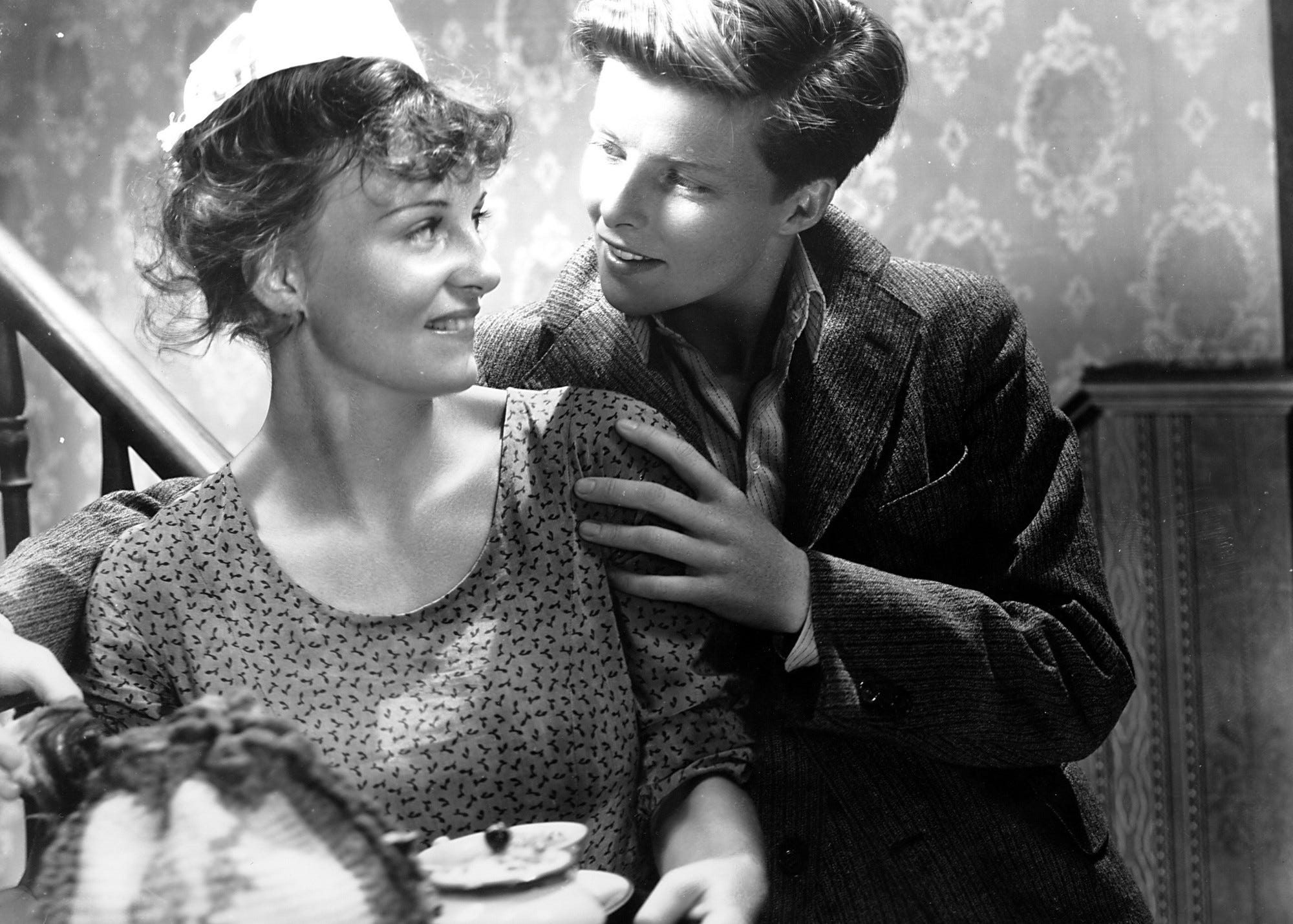
The American film “Sylvia Scarlett” (1935), released just as the Code was tightening its grip, stars Katharine Hepburn as a woman who lives as a man through much of the film. While ostensibly she does this for practical rather than identity reasons, the film explores her comfort in male identity and the romantic complications that arise when she develops feelings for a man while presenting as male.
“These weren’t just cross-dressing comedies,” argues transgender film historian Susan Stryker. “They were genuine explorations of gender identity that asked questions about how clothing and presentation relate to our inner sense of self. For the 1930s, that’s fucking revolutionary.”
Sex, Violence, and the Moral Panic That Killed Queer Cinema
It wasn’t just LGBTQ+ content that thrived in pre-Code Hollywood. Films openly depicted adultery, prostitution, drug use, and violence in ways that would be forbidden for decades after. Women’s sexuality was portrayed with remarkable frankness, with female characters who openly desired and pursued sex outside of marriage without necessarily being punished for it.
“Baby Face” (1933) stars Barbara Stanwyck as a woman who explicitly sleeps her way to the top of a corporation, floor by floor. “Red-Headed Woman” (1932) features Jean Harlow as an unrepentant home-wrecker who faces no significant consequences for her actions. “Safe in Hell” (1931) centers on a prostitute on the run after killing her abusive client.
This sexual frankness extended to the depiction of gay and lesbian characters, who were often presented as part of this sexually liberated landscape rather than as cautionary tales or villains.
“The overall sexual openness of pre-Code films created space for queer characters to exist without automatic condemnation,” explains film scholar Molly Haskell. “When straight sexuality isn’t being repressed on screen, queer sexuality doesn’t stand out as dramatically different.”
This openness eventually triggered a massive backlash from religious groups, particularly the Catholic Legion of Decency, which threatened boycotts of “immoral” films. Studio heads, terrified of losing audience dollars during the Great Depression, capitulated to these demands by agreeing to strict enforcement of the Production Code starting in July 1934.
“The moral panic wasn’t organic—it was orchestrated,” argues media historian Kathryn Fuller-Seeley. “Conservative religious groups deliberately framed Hollywood as a corrupting influence, and studios chose profit over artistic freedom.”
The Great Erasure Begins
Once the Hays Code enforcement kicked in during 1934, the change was dramatic and immediate. Films in production had scenes cut, storylines altered, and dialogue changed. Characters who might have been openly gay were either eliminated entirely or transformed into heterosexual figures.
The original script for “The Thin Man” (1934) contained clearly gay characters who were either cut or de-gayified before filming. “Dracula’s Daughter” (1936) had its lesbian overtones significantly watered down from the original script. Projects with prominent LGBTQ+ themes were canceled entirely or morphed beyond recognition.
“It was a systematic purge,” says film preservationist Robert Gitt. “Studios went through their own back catalogs and many pre-Code films were literally locked away in vaults, deemed too risqué for re-release under the new standards.”
This erasure didn’t just affect new productions—it altered our cultural memory of what early cinema had been. As pre-Code films were withdrawn from circulation, later generations grew up believing that early Hollywood had always been sexually conservative, when the exact opposite was true.
What We Lost: The Alternative Timeline of American Film
Perhaps the most tragic aspect of the Code’s implementation is contemplating what might have happened if this early progressive trajectory had been allowed to continue. If Hollywood hadn’t been forced into 30+ years of censorship right as it was beginning to explore LGBTQ+ themes with relative openness, how might American attitudes have evolved differently?
“The timing couldn’t have been worse,” laments film historian Thomas Doherty. “Sound technology had matured, allowing for more complex storytelling. The Depression had created an appetite for films that addressed social realities frankly. Studio systems were at their creative peak. And then—boom—the Code slammed the door shut, particularly on queer representation.”
If LGBTQ+ characters had remained visible in mainstream cinema throughout the 1930s, 40s, and 50s, how might that have changed public perception? Would the lavender scare of the McCarthy era have gained the same traction? Would the gay rights movement have had to start from scratch in the late 1960s?
“We’re still living with the consequences of that erasure,” argues activist and film historian Jenni Olson. “The Code didn’t just remove queer people from films—it removed them from the public’s understanding of American life. It created a false narrative that LGBTQ+ people suddenly ‘appeared’ in the 1960s rather than having always been part of the social fabric.”
Subversive Survival: How Queer Cinema Went Underground
When the Code slammed the door on explicit representation, filmmakers didn’t entirely give up—they just got sneakier. The era of “queer coding” began, with characters who couldn’t be explicitly identified as LGBTQ+ but who conveyed their queerness through mannerisms, costuming, interests, and subtle dialogue.
“Suddenly, filmmakers had to learn the art of the double entendre,” explains film critic Drew Casper. “They developed a sophisticated visual and verbal language that straight audiences might miss but that queer viewers would recognize.”
Alfred Hitchcock became a master of slipping queer-coded characters past the censors. The villains in “Rope” (1948) are clearly coded as a gay couple. “Strangers on a Train” (1951) features an antagonist whose queerness is conveyed through his style, mannerisms, and obsession with the protagonist.
“Ben-Hur” (1959) screenwriter Gore Vidal has revealed that he and Stephen Boyd (who played Messala) agreed that their character’s relationship had a romantic history, but never told Charlton Heston, creating a homoerotic subtext that the censors missed completely.
These coded representations were a double-edged sword. They provided some visibility, however limited, but they also established the harmful pattern of associating queerness with villainy, mental instability, or tragedy—tropes that outlived the Code itself.
The Forgotten Drag Kings and Queens of Early Film
Another fascinating aspect of pre-Code cinema was its relative comfort with drag and gender play. While often played for comedy, these performances weren’t always mean-spirited or contemptuous.
Julian Eltinge was one of the most famous female impersonators of the early 20th century and appeared in several silent and early sound films, including “The Isle of Love” (1922) and “Maid to Order” (1931). Rather than being portrayed as deviant, Eltinge was celebrated for his artistry and precision in female impersonation.
On the flip side, stars like Marlene Dietrich frequently performed in male dress without it being treated as scandalous or perverse. When Dietrich wore a tuxedo in “Morocco,” it was presented as the height of sophisticated sexiness, not as a joke or a perversion.
“Early film had a more fluid relationship with gender performance,” explains historian Judith Weisenfeld. “Drag wasn’t necessarily seen through the lens of sexual deviance until conservative forces deliberately constructed that association.”
This comfort with gender play extended beyond star performances. Films like “Their First Mistake” (1932) with Laurel and Hardy include casual cross-dressing played for laughs but not disgust. “The Warrior’s Husband” (1933) features Katharine Hepburn as a spear-carrying, athletic Amazon who kisses another woman on the lips.
After the Code, drag would be permitted only under very specific circumstances: if it was a temporary disguise used for practical purposes (like “Some Like It Hot”), if it was played entirely for laughs, or if it was eventually punished or “corrected” within the narrative.
The Queer Actors Who Couldn’t Be Themselves On Screen
The tightening grip of the Hays Code didn’t just affect fictional characters—it had profound implications for queer actors in Hollywood. Before the Code’s strict enforcement, there existed a certain “don’t ask, don’t tell” approach to actors’ personal lives. While few stars were openly gay, many lived in what were known as “lavender marriages” (marriages of convenience between gay men and lesbian women) or maintained relatively open secret lives within Hollywood circles.
William Haines, one of MGM’s top stars of the late 1920s and early 1930s, refused to hide his relationship with his partner Jimmy Shields. When Louis B. Mayer demanded Haines get married to a woman for appearances, Haines chose to end his film career rather than deny his relationship. Before the Code’s enforcement, his career had flourished despite industry insiders knowing about his sexuality. After 1934, that became impossible.
“The Code created a culture of terror for queer actors,” says historian William Mann. “Not only could they not play gay characters on screen, but their personal lives became subject to extreme scrutiny and control. The studios developed complex systems to hide actors’ sexualities, including arranged dates, fake engagements, and forced marriages.”
Actors like Cary Grant, Randolph Scott, Katharine Hepburn, Marlene Dietrich, and dozens of others had their queer relationships erased from public view. Studio publicity departments crafted heterosexual narratives for stars regardless of their actual lives.
“It was a double erasure,” explains Mann. “Queer characters disappeared from screens at the same time that queer actors were forced deeper into closets.”
The Birth of Camp: Rebellion Through Exaggeration
One of the most fascinating responses to the Hays Code was the development of camp as an aesthetic strategy. Unable to show explicit homosexuality, some filmmakers turned to exaggerated femininity, over-the-top performances, and stylistic excess as a form of coded representation.
“All About Eve” (1950) is filled with dialogue and performances that play as camp, particularly the character of Addison DeWitt. Films starring stars like Bette Davis, Joan Crawford, and later performers like Judy Garland and Liza Minnelli became touchstones for gay audiences precisely because they deployed camp as a strategy to communicate queerness without naming it.
“Camp became a survival strategy,” explains cultural theorist David Bergman. “If you couldn’t be explicit, you could be excessive. And that excess created spaces within mainstream culture where queer sensibilities could find expression despite censorship.”
This strategy created a peculiar cultural phenomenon: films that seemingly conformed to heteronormative standards while simultaneously winking at queer audiences who could read between the lines. “Johnny Guitar” (1954), with its intense rivalry/attraction between Joan Crawford and Mercedes McCambridge, became a lesbian cult classic despite containing no explicit lesbian content.
The International Contrast: European Cinema Kept Queer Characters Alive
While American cinema was forced into a heterosexual straitjacket, European filmmaking continued to explore LGBTQ+ themes with greater freedom. Films like “Mädchen in Uniform” (1931, Germany) depicted lesbian attraction between a student and teacher with remarkable sensitivity. “Michael” (1924, German) portrayed a gay relationship between an artist and his model.
Even after the rise of fascism curtailed some of this exploration in Germany and Italy, other European countries continued producing films with queer content. French cinema, in particular, maintained a more open approach to sexuality, with films like “Club des femmes” (1936) and later “Les enfants terribles” (1950) exploring same-sex desire.
“The contrast between American and European cinema during this period is stark,” notes film historian Patricia White. “While Hollywood was systematically erasing queer people, European filmmakers were continuing the exploration that American pre-Code cinema had begun.”
This international contrast created a bizarre situation where sophisticated American audiences might see European films featuring LGBTQ+ characters at art house theaters while mainstream Hollywood productions remained rigidly heteronormative.
The Painful Path Back: How We Slowly Recovered What Was Lost
When the Hays Code finally collapsed in 1968, replaced by the MPAA rating system, LGBTQ+ representation didn’t immediately bounce back to pre-Code levels. The damage had been done. Generations of filmmakers had been trained under the Code’s restrictions, and audiences had been conditioned to expect certain narratives.
The first post-Code films to feature gay characters, like “The Boys in the Band” (1970), often reinforced negative stereotypes of gay men as self-loathing and miserable. Lesbian characters remained primarily predatory or tragically doomed. Trans characters were portrayed as psychotic (as in “Psycho”) or as jokes.
“The legacy of the Code outlived its formal existence by decades,” argues film critic K. Austin Collins. “When you spend more than 30 years teaching filmmakers and audiences that queer people can only exist as villains, victims, or jokes, that doesn’t disappear overnight.”
It would take until the 1990s and early 2000s for mainstream American cinema to begin approaching the relative openness toward LGBTQ+ themes that had existed in pre-Code films of the early 1930s. Even today, certain types of queer representation remain controversial or limited in mainstream cinema.
“It’s mind-blowing to think that in some ways, films from 90 years ago were more progressive about LGBTQ+ representation than many films made in the last 20 years,” notes film preservationist Kassandra Harris. “We’re still catching up to where we could have been if the Code hadn’t interrupted the natural evolution of film.”
The Queer Archaeology Project: Rediscovering What Was Buried
One of the most exciting developments in recent film history has been the rediscovery and restoration of pre-Code films, many of which had been effectively buried for decades. Organizations like the UCLA Film & Television Archive, the Library of Congress, and the Queer Film Heritage Project have been working to restore these films and bring them back into public view.
“It’s like conducting archaeology,” explains film preservationist Dave Kehr. “We’re digging up evidence of a queer cinematic past that most people don’t realize existed.”
These restoration efforts have revealed just how extensive and explicit queer representation was in early cinema. Films that had been dismissed as minor or forgotten have been rediscovered as containing important LGBTQ+ content. Silent films once thought lost have been found in archives around the world, some containing surprising depictions of same-sex desire or gender nonconformity.
Turner Classic Movies, streaming services, and specialized distributors like Kino Lorber have begun making these restored pre-Code films available to contemporary audiences, allowing modern viewers to see for themselves how the Hays Code didn’t “maintain standards” but rather reversed an emerging progressive trend.
“When people actually see these films, they’re shocked,” says film historian David Pierce. “They’ve been told that old movies were naive and sexless, especially regarding LGBTQ+ themes. Seeing the reality challenges everything they thought they knew about film history and American cultural attitudes.”
Why This Forgotten History Still Fucking Matters
Understanding pre-Code cinema’s relative openness to LGBTQ+ themes isn’t just about correcting the historical record—it’s directly relevant to contemporary battles over representation. When conservatives claim that LGBTQ+ visibility in media is a recent “trend” or “agenda,” they’re erasing the fact that queer people have always been part of American culture and its artistic expressions.
The history of pre-Code cinema demonstrates that the systematic removal of LGBTQ+ people from American screens wasn’t an accident or a reflection of audience preferences—it was a deliberate act of cultural censorship driven by religious pressure groups and institutionalized through industry self-regulation.
“When people try to remove LGBTQ+ books from libraries or pressure streaming services to reduce queer content in children’s programming, they’re reading directly from the Hays Code playbook,” argues media scholar Melinda Hsu. “It’s the same moral panic, the same rhetoric, and the same goal: making queer people invisible.”
The pre-Code era stands as proof that American audiences were perfectly capable of accepting LGBTQ+ characters and themes until they were told not to. Films featuring gay characters, lesbian kisses, or gender-bending performances were commercially successful and critically acclaimed before censorship artificially constrained what could be shown.
“The most powerful weapon against those who want to erase LGBTQ+ people from media today is showing that we were there from the beginning,” concludes film historian B. Ruby Rich. “We weren’t added to American cinema—we were forcibly removed from it. And every push for representation since has been an attempt to reclaim what was taken from us.”
References
Russo, V. (1987). The Celluloid Closet: Homosexuality in the Movies.
Barrios, R. (2003). Screened Out: Playing Gay in Hollywood from Edison to Stonewall.
Mann, W. J. (2001). Behind the Screen: How Gays and Lesbians Shaped Hollywood, 1910-1969.
Doherty, T. (1999). Pre-Code Hollywood: Sex, Immorality, and Insurrection in American Cinema, 1930-1934.
Vieira, M. A. (1999). Sin in Soft Focus: Pre-Code Hollywood.
Lugowski, D. M. (2007). “Queering the (New) Deal: Lesbian and Gay Representation and the Depression-Era Cultural Politics of Hollywood’s Production Code.” Cinema Journal.
White, P. (1999). Uninvited: Classical Hollywood Cinema and Lesbian Representability.
Horak, L. (2016). Girls Will Be Boys: Cross-Dressed Women, Lesbians, and American Cinema, 1908-1934.
Stryker, S. (2008). Transgender History: The Roots of Today’s Revolution.
Transgender Day of Visibility, held every March 31, was founded 16 years ago to give trans people a day to celebrate trans life and community. At a time when transgender people are facing unprecedented vitriol and attacks, it’s more important than ever to seek out accurate and affirming portrayals of trans life.
The 19th asked 10 trans icons, from Elliot Page to Peppermint, to reflect on the movies that move them and that and affirm the dignity of trans people.
Responses have been edited for length and clarity.
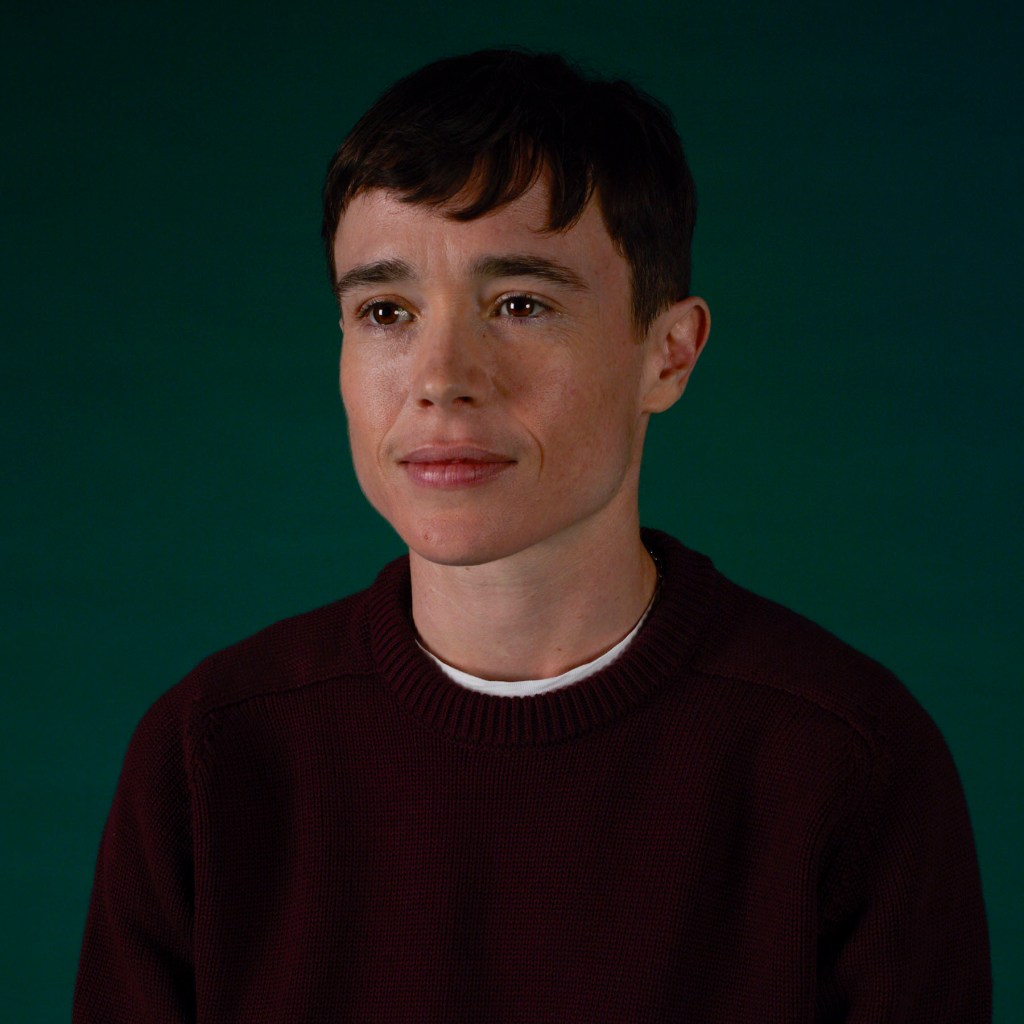
Elliot Page
Actor (he/him)
(Courtesy of Elliot Page)
Recommended film: “Framing Agnes”
“‘Framing Agnes’ highlights two fundamental truths about the transgender community: One, that we have always existed, and two, we have always found clever ways to get what we need to live more authentically and ultimately survive. It’s crucial now more than ever, for trans and cis people alike, to learn about the history of the trans community, to defend trans rights and advocate for our humanity to be acknowledged and respected — because as seen in the film, our world has always had trans people in it, and it always will.”
Peppermint
Actress and singer (she/her)
(Davide Laffe)
Recommended film: “Monica”
“I’d recommend people watch ‘Monica’ because it shows a trans woman in a normal context where she was able to connect with her family and display a more motherly and nurturing nature towards the end of the film, which is something we don’t often get to see trans women, portrayed in ways that are actually true to how many of us are.”
Brian Michael Smith
Actor (he/him)
(Rich Polk/Getty Images for IMDb)
Recommended film: “Disclosure: Trans Lives on Screen”
“My pick is definitely ‘Disclosure: Trans Lives on Screen.’ It powerfully unpacks how decades of misrepresentation in media have fueled harmful narratives, directly contributing to the unprecedented wave of anti-trans legislation we’re seeing nationwide — laws targeting our health care, sports participation and basic rights. It’s groundbreaking because it centers trans voices authentically sharing our own experiences, created entirely by trans filmmakers — unlike many films, articles and legal discussions that talk about us without ever including us. It’s essential viewing right now to counter misinformation, uplift our community and reclaim our stories during this critical fight for our humanity.”
Geena Rocero
Author, writer and director (she/her)
(Geena Rocero)
Recommended films: “Joyland,” “Lingua Franca,” “Asog” and “Tangerine”
“These are films that center trans characters in their complex humanity. As a writer and director, these kinds of character studies fascinate me. In our current political culture that dehumanizes trans folks, these films present trans lives full of agency.”
Tuck Dowrey
Director of development for PAGEBOY Productions (he/him)
(Erik Tanner)
Recommended film: “Changing the Game”
“This documentary is incredibly timely given the current attacks on trans youth and their right to just be kids, which includes their right to participate in sports. ‘Changing the Game’ highlights the benefits of sport for young people, particularly the social and developmental benefits, and sheds a light on the shameful and needless bullying of transgender children by adults and lawmakers. Arguments to exclude trans kids also inevitably adversely impact all girls and women, because if we begin to allow certain bodies to be questioned and investigated, it sets a dangerous precedent for anyone who exists outside of rigid gender stereotypes — in athletics and beyond. As a trans man and athlete, I passionately believe all kids should have access to the life-saving outlet of sports. ‘Changing the Game’ cuts through the misinformation and shows that trans kids in sport are no different than anyone else, and they deserve to play. It’s a must-watch for everyone.”
“At a time when certain political forces are aiming to pit historically excluded communities against each other, a film like ‘Kokomo City’ — bold and uncompromising in its focus on the relationships between Black trans women and the broader Black community — stands firmly at the intersection. Director D. Smith’s propulsive interrogation is at once entertaining and informative, raw and inspiring, and I’m sure you’ve likely never seen a film like this, especially not from this vantage. You’ll be craving more authentic Black trans narratives after watching.”
Sav Rodgers
Filmmaker and founder of the Transgender Film Center (he/him)
(Greg Doherty/Getty Images)
Recommended film: “Heightened Scrutiny”
“While ‘Heightened Scrutiny’doesn’t have traditional distribution yet, it’s a documentary well worth your time to seek out as it travels through the film festival circuit. Sam Feder’s follow-up to ‘Disclosure’follows [American Civil Liberties Union] attorney Chase Strangio as he prepares to argue a landmark trans rights case, United States v. Skrmetti, before the Supreme Court. The case, which is still pending, will determine whether bans on trans healthcare for minors violate the Equal Protection Clause of the 14th Amendment.
“The most powerful aspect of this timely documentary draws a direct link between irresponsible, prejudiced reporting at major media institutions like the New York Times and how quickly these half-baked op-eds become cited as ‘evidence’ in anti-trans legislation around the country. Despite how bleak the world is, this film presents a case for hope: hope that we will endure, that people are fighting for us and that we can continue to fight for each other.”
Hope Giselle
DEI consultant and activist (she/her/Beyoncé)
(Courtesy of Hope Giselle)
Recommended film: “The Mudge Boy”
“This is a queer love story that I know isn’t beautiful, but is honest and a depiction of the way that a lot of AMAB folks experience what we think is love for the first time. A film that’s hard to watch at times, but so beautiful to see happens so that you don’t feel alone.”
Tuck Woodstock
Host of the Gender Reveal Podcast and editor of “2 Trans 2 Furious” (he/him)
(Courtesy of Tuck Woodstock)
Recommended films: “The Aggressives” and “Beyond the Aggressives: 25 Years Later” double feature
“In a society where transness is continually misrepresented as some kind of hot new trend for predominantly White youth, it’s an incredible gift to watch this quartet of (broadly) transmasculine queers of color grow and evolve over a quarter century. While the documentaries don’t shy away from the obstacles faced by their subjects — including everything from relationship conflict and (lack of) health care access to incarceration and [Immigration and Customs Enforcement] detention — they nevertheless capture the freedom and relief of living in the world as exactly yourself.”
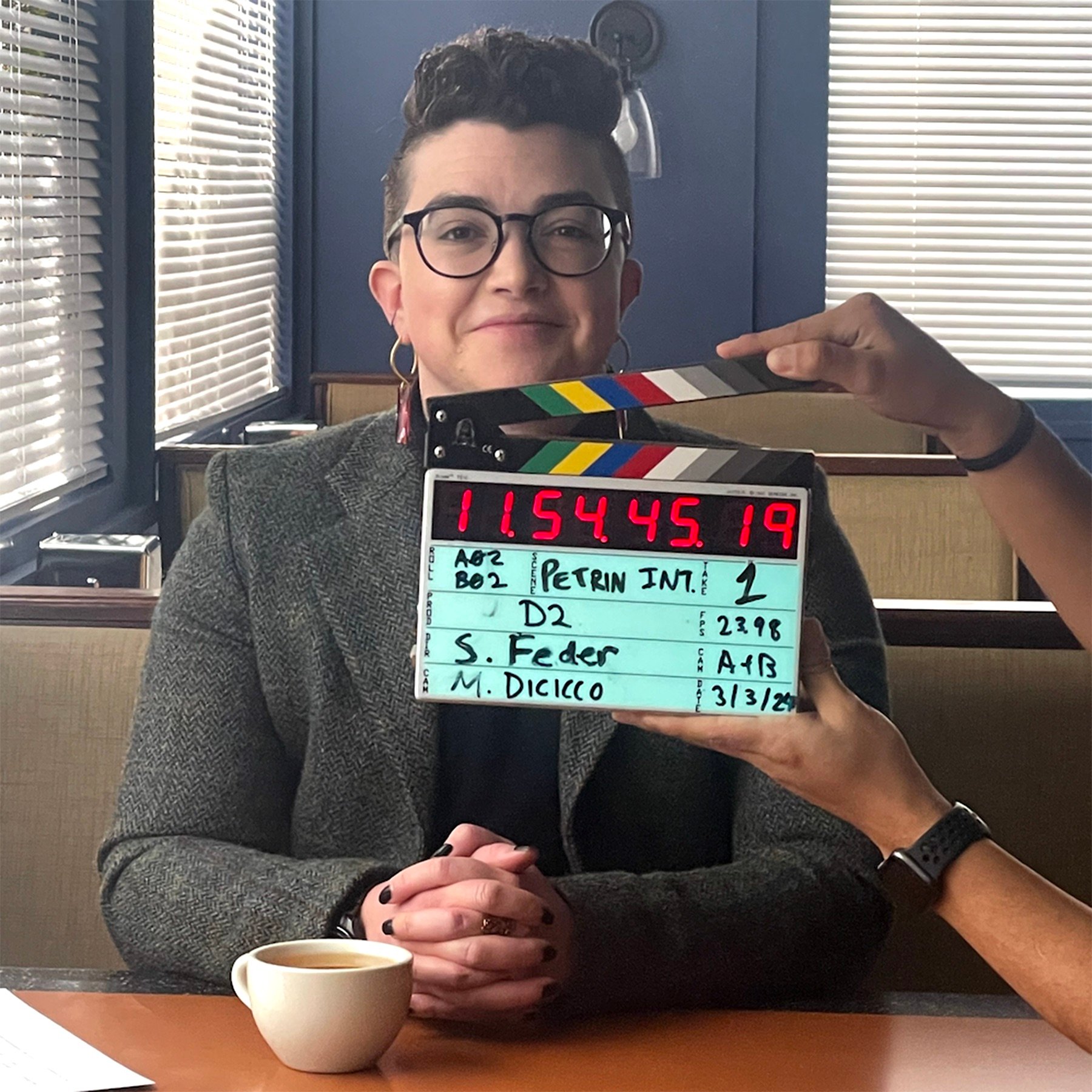
Kae Petrin
Co-executive director of the Trans Journalists Association and Data & graphics reporter for Civic News Company (they/ze/hir)
(Courtesy of Kae Petrin)
Recommended film: “Neptune Frost”
“After a divine gender transformation, a lost runaway joins forces with an escaped miner who’s mourning the death of his brother. Together they become beacons of hope and resistance, forming an anticolonialist hacking collective in the mountains of Burundi. The collective takes on The Authority, a totalitarian regime that ravages the workers and the environment with a violent military and aggressive drone attacks. Despite the dark subject, an unshakeable optimism and hope thread through the Afrofuturist parable. Also, it’s technically a musical. It has everything: worker solidarity, gender magic, meddling gods, romance and song breaks. And it feels particularly resonant now, even though its U.S. release came several years ago.”
Alex Schmider
Senior director of entertainment at GLAAD (he/him)
(Courtesy of Alex Schmider)
Recommended film: “Will & Harper”
“‘Will & Harper’ is a story about friendship. Harper Steele and Will Ferrell have been friends for over 30 years after meeting while working on ‘Saturday Night Live.’ After Harper’s transition, they hit the open road to reintroduce her to the American small towns, dive bars and stock car races that she has always loved — now, as herself — while processing what this new stage of life means for them individually and as friends. When trans people are so often portrayed as existing in isolation from other people, this documentary is a joy to watch as Harper and Will traverse the country making each other laugh and drinking bad beer. Comedy is a powerful tool that can create connection with an audience when they are laughing with us, not at us. ‘Will & Harper’ is a funny, sincere and enjoyable ride with two comedians who are at their best when together.”
Disclosure: Alex Schmider is a board member of The 19th. Find a full list of our board members here.
It’s Friday, which means that tonight, many of us will sit down to watch a movie with our family, our friends, our significant other, or — for some cinephiles, best of all — by ourselves. If you haven’t yet lined up any home-cinematic experience in particular, consider taking a look at this playlist of 31 feature films just made available to stream by Warner Bros. You’ll know the name of that august Hollywood studio, of course, but did you know that it put out True Stories, the musical plunge into tabloid America directed by Talking Heads’ David Byrne? Or Waiting for Guffman, the first improvised movie by Christopher Guest and his troupe of crack comedic players like Eugene Levy, Fred Willard, Catherine O’Hara, and Parker Posey? (Snip-MORE info/programs on the page!)
Also, in the early 2000’s as my Dem. county party chair, I had the great honor of representing Kansas St. Senator David Haley-a very gracious man!-at a local candidate’s forum as he was running for Secretary of State (he came close but did not prevail. I tried to take the blame, but he would not let me.) KS is a red state, but he ran against the Republicans anyway. At that time, Republicans loved the computerized voting machines with no chits, but Sen. Haley wanted verification. He is author Alex Haley’s nephew.
January 24, 1970 John Lennon & Yoko Ono cropped their hair short for the first time in years, declaring 1970 “Year One for Peace” and helped organize a Toronto Peace Festival. John and Yoko An interview with John later that year
January 24, 1977 The TV mini-series ”Roots,” based on the Alex Haley novel, began airing on ABC. LeVar Burton portrayed Kunta Kinte, a young man captured in Africa and shipped to America to be a slave, in “Roots.” The story followed an African sold into slavery, and his family’s history through emancipation. It won numerous awards and drew an enormous and broad-based audience (third-highest Nielsen ratings ever for its final episode). 85 percent of all Americans watched at least some part of the series. Listen to thoughts on Roots 30 years later
Nick Dumont, the actor who played Jackie Oppenheimer in Oppenheimer, has come out as transmasculine and nonbinary.
As first reported by TMZ on Thursday, the actor recently changed their pronouns and name on their Instagram bio. Though their handle is still @emmadumont, their name is now listed as Nick Dumont on their profile, and their pronouns are listed as “they/them.” Their bio includes a collection of heart emojis that appear to correspond to the lesbian and nonbinary flags, as well as the phrases “Carmy coded,” as in the main character from The Bear, and “McCutcheon apologist,” as in the polarizing anti-hero Shane from the original L Word. Now that’s a transmasculine nonbinary Instagram bio if ever we’ve seen one.
Though Dumont has changed their pronouns and name on their Instagram profile, they have not yet directly posted about their coming out to social media. A representative for the actor told TMZ that they identify “as a transmasculine nonbinary person.” “Their work name is still going to be Emma Dumont, but they will go by Nick with friends and family,” the rep said. (snip-MORE)
(She makes a lot of good points about differences in how one must navigate the world.-A)
Karla Sofía Gascón is the first openly trans actor to win best actress at Cannes for her role in Jacques Audiard’s audacious musical. She talks about awful corsets, riding motorbikes and suing her critics
Fri 18 Oct 2024 00.00 EDT
When Madonna posted an image of the Spanish actor Karla Sofía Gascón on Instagram recently, the word she scrawled above it in vivid pink letters captured what most viewers will think after seeing her in the award-winning noir-musical Emilia Pérez: “WOW”. The 52-year-old Gascón, who was born and raised near Madrid and has spent the bulk of her career acting in Mexican telenovelas, plays the drugs kingpin Manitas, who fakes his death, transitions from male to female and reinvents herself as Pérez, a socially conscious activist. Emilia Pérez the movie, like Emilia Pérez the character, is a one-off. After all, there can’t be many films that feature brutal Mexican drug cartels and a singalong about vaginoplasties.
As befits a project that began life as a libretto, the movie is operatic in its emotions. “Madonna was crying so much after the screening in New York,” says Gascón, perched demurely on the edge of a chaise longue in a London hotel room. Her thick chestnut hair brushes the shoulders of her black dress, which has white collars and white-trimmed short sleeves. “She told me: ‘You’re amazing!’ She was crying and crying. I said: ‘Madonna, please. It’s only a film. Be happy!’”
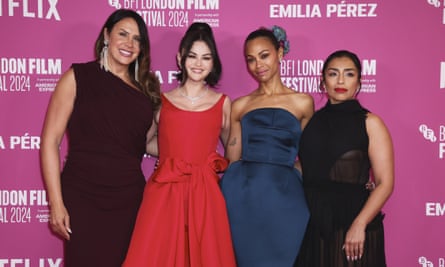
Gascón has shed her fair share of tears, not least when the movie’s quartet of female stars were jointly named best actress at Cannes, where the picture also took home the jury prize. Her fellow recipients were Zoe Saldana, who plays Emilia’s attorney and fixer; Selena Gomez, who stars as Manitas’s widow, who is persuaded that Emilia is her late husband’s cousin; and Adriana Paz, who plays the new love of Emilia’s life. It was Gascón, though, who delivered the moving six-minute acceptance speech at Cannes. Trans people, she told the audience, had “been insulted, denigrated, subjected to a lot of violence”.
Karla Sofía Gascón, Selena Gomez, Zoe Saldana and Adriana Paz at the Emilia Perez UK premiere at the 68th BFI London film festival, 11 October. Photograph: StillMoving.Net/REX/Shutterstock
Not that approbation precludes abuse. The morning after Gascón’s triumph, the French far-right MEP Marion Maréchal tweeted: “So a man has won best actress.” Six LGBTQ+ organisations filed complaints against Maréchal. Gascón has personally sued her.
Today, the actor cuts a more composed figure than she did at Cannes. She is casually affectionate – a kiss on each cheek when you arrive, a grateful hug on departure – and playful in her interactions with the interpreter. She talks at such length that the poor scribe is soon writing on the back of her pad. “You have more paper?” asks Gascón. “Or will you use your …?” She mimes scribbling frantically on her own arm.
Madonna and Greta Gerwig, the president of this year’s Cannes jury, are not the only ones convinced of Gascón’s greatness. The industry bible Variety has predicted that she will be one of the five best actress Oscar contenders next year, alongside the likes of Angelina Jolie (for Maria) and Tilda Swinton (The Room Next Door). That would make her the first openly transgender performer to be recognised in one of the Academy’s acting categories.
Hers is a performance of immense stillness and gravitas, which must also contain and occasionally exhibit the volatility that enabled Emilia to dominate the drug trade, and to assert herself now in a radically different life. Living openly as a woman, Emilia is still hiding, most obviously from her wife and children. Toggling between these contradictory layers, Gascón does her subtlest work.
Having cast her as Emilia, the director Jacques Audiard (A Prophet, Rust and Bone) was sceptical about her playing the character pre-transition. She convinced him by sending videos of herself with TikTok filters, and by changing her voice. It’s something she does for pleasure anyway. “I turn down the volume on the TV, and I do the voices for all the people on screen,” she says. “Just for fun when I’m bored at home. So this was easy for me. I know my …” She consults with the interpreter, then announces the word triumphantly: “Virtues!”
Why was she so determined to play Manitas? “I love roles that are far from who I am,” she says. “And I didn’t want to miss out on this character in all her dimensions. If there had been flashback scenes, I would have pushed to play those, too.”
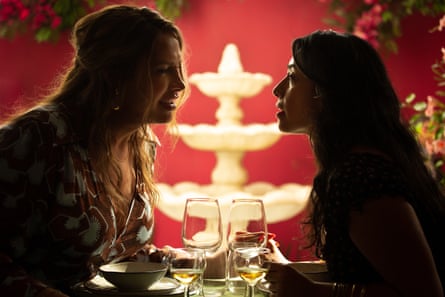
Karla Sofía Gascón as Emilia and Adriana Paz as Epifanía in Emilia Pérez. Photograph: Shanna Besson/PAGE 114/WHY NOT PRODUCTIONS/PATHÉ FILMS/FRANCE 2 CINÉMA/PAGE 114 – WHY NOT PRODUCTIONS – PATHÉ FILMS – FRANCE 2 CINÉMA
Emilia sounds like more of a challenge. “It is difficult to do someone close to me,” she says. The role highlighted distinctions she already feels between the demands placed on women and men. “I’m convinced that the masculine is freer physically and more confined mentally. When you are a woman, you are freer mentally but less so with your body. As a woman, you need to have your hair great, your makeup great. When you are a man, you just wake up and go to work. With a woman, there is the perfection mentality.”
She sits bolt upright, clasping her torso. “Right now, I’m wearing a corset,” she says. “And I can barely breathe!” I notice she has also kicked off her shoes; the shiny black heels lie next to her stockinged feet. “Society sees you as more beautiful like this. As Emilia, I had to be more feminine than I usually am.”
Gascón transitioned at the age of 46. Back then, she told herself: “I do it now, or I never do it.” She continues to have the support of her wife, whom she has known since they were teenagers, and their daughter, who is now 13. But there were other hurdles, even after transitioning. “I have been criticised for how I look. I ride a motorbike. I don’t usually wear makeup. People say: ‘Why become a woman if you’re not going to wear makeup?’ But there’s a big confusion in society about what a woman is.” All this has been conveyed in Spanish via the interpreter, who now reads sheepishly from her own shorthand notes: “And I’d just like the translator to confirm what I have said about being a woman in society.” She nods, we laugh, and Gascón gestures at her as if to say: “See?”
The criticisms of her lipstick-free, motorbike-riding lifestyle come from all corners. “Including the minority I represent,” she points out. There is something she tells herself in that situation: “You can be LGBTQ+. You can be a man, a woman, an astronaut, an electrician. But if you are stupid, you are stupid.” More laughter.
Part of the message of Emilia Pérez, she thinks, is that power lies not in using violence but in renouncing it. “With violence, you can control a lot of people and impose your will. It is a form of imposition that has led us to women being made to do the household chores, or people of colour working in the cotton fields, or gay people not being allowed to marry. There has always been an explicit violence toward others in parts of male heterosexuality, and that has also been taken up by a part of women’s feminism to crush a certain section of the population.”
Where does the solution lie? “Education,” she says. “For instance, I’ve taught my daughter to respect herself and others, and to not let anyone treat her as if she is inferior. Women can feel now that they don’t need any man to solve their problems.” That’s the vibe coming from the rest of the cast. Saldana has said that she, Gomez and Paz were focused on “making sure that [Gascón] had what she needed”. Which prompts the question: what did she need? “I don’t know,” she says now, startled by that quote. “I was hoping you were going to tell me.” Then she arrives at an answer. “All I needed from my colleagues was for them to do the best job of their fucking lives.”
With any luck, their collective effort will help seal her Oscar nomination. Has she written her acceptance speech? “I wrote it on the first day of shooting,” she says, then roars with laughter. “No, no! It is just in the clouds, not reality. If it happens, I will be the happiest actress in the world. If not, it doesn’t matter. All I could do – all I did – was to put my entire soul into the film. And I believe it is the best work of my life. Whenever I see myself on screen, I always have criticisms. I think, ‘Why did I do this or that?’”
Not so with Emilia Pérez. “I searched but I couldn’t find one thing I wasn’t happy with,” she says. “And that is my Oscar.”
Emilia Pérez is in cinemas from 25 October and streaming on Netflix from 13 November.






 Scottie's Playtime