Peace & Justice History for 6/23

June 23, 1683

“Tamanend,” sculpture by Raymon Sandoval, 1995, Front & Market Street in Philadelphia.
Chief Tamanend (The Affable), leader of the Pennsylvania’s thirteen Lenni-Lenape tribes, and other chiefs went to Philadelphia to meet with William Penn. Penn wished to buy four parcels of land (most of current Montgomery County), and the chiefs agreed to the sale, each making their mark on the deeds which had been translated for them.
Soon thereafter, Penn met with Tamanend at Shakamaxon under a large tree later known as the Treaty Elm. Penn said, “We have come here with a hearty desire to live with you in peace . . . We believe you will deal kindly and justly by us, and we will deal kindly and justly by you . . . .” Tamanend offered, “We will live in love with William Penn and his children, as long as the creeks and rivers run, and while the sun, moon, and stars endure.”
June 23, 1963
Reverend Martin Luther King, Jr. led a massive march down Detroit’s Woodward Avenue followed by a speech to a rally in Cobo Hall. The speech was essentially the same as that he delivered from the steps of the Lincoln Memorial in Washington, D.C. two months later, known as “I Have a Dream.”
Photo of King speaking in Detroit from the Wayne State University’s Reuther Archive. 
June 23, 1966
High school students in Grenada, Mississippi, tried to purchase tickets in the downstairs “white” section of the local movie theatre. Black moviegoers had always been required to sit in the balcony under Jim Crow segregationist laws. When they were refused tickets, they sat down on the sidewalk in front of the theatre. Fifteen were arrested, including Jim Bulloch, a Southern Christian Leadership Council (SCLC) organizer, who was charged with “inciting to riot.”

Jim Bulloch, one of the SCLC organizers in Grenada, Mississippi
Grenada Mississippi, 1966, Chronology of a Movement 
June 23, 1972
Life magazine published a photo by Vietnamese photographer Nick Ut of children running from an attack with Napalm, an incendiary chemical weapon used widely by U.S. forces to burn out the jungle, thus eliminating cover (foliage) for North Vietnamese and Viet Cong troops. Napalm, a sticky mixture of gasoline, polystyrene and benzene that burns at very high temperature, had been used in WWII and Korea.

Read about the photograph 
June 23, 1972
The Education Amendments of 1972, commonly known as Title IX, became U.S. law, prohibiting sex discrimination at educational institutions.
More info  Text of the law 
June 23, 1973
The International Court of Justice granted an injunction, requested by the Australia and New Zealand governments, against French nuclear weapons testing in the South Pacific.

https://www.peacebuttons.info/E-News/peacehistoryjune.htm#june23

International Women’s Day for Disarmament Today, and More, in Peace & Justice History for 5/24

May 24, 1774
The Virginia House of Burgesses declared this a day of “fasting, humiliation and prayer” in reaction to the British closure of the Port of Boston.
May 24, 1906

Dora Montefiore
British suffragist Dora Montefiore protested the lack of women’s right to the vote by refusing to pay taxes, and barricading her house against bailiffs sent to collect.
Dora Montefiore biography 
May 24, 1917 
An Anti-Conscription Parade was held in Victoria Square, Montreal, Quebec, in resistance to a Canadian draft to send soldiers to the European war. Riots nearly a year later resulted in the death of four demonstrators in Quebec City.

Anti-Conscription Parade, Victoria Square
May 24, 1964
  
Senator Barry Goldwater (R-Arizona), running for the Republican Party nomination for president, gave an interview in which he said he would consider the use of low-yield atomic bombs in North Vietnam.
May 24, 1968
Four protesters, including Phil Berrigan and Tom Lewis, were sentenced in Baltimore, Maryland, to six years each in prison for pouring blood on draft records.
May 24, 1971
At Fort Bragg, North Carolina, an anti-war newspaper advertisement, signed by 29 U.S. soldiers supporting the Concerned Officers Movement, resulted in controversy.
The group had been formed in 1970 in Washington, D.C. by a small group of junior naval officers opposed to the war.
The newspaper advertisement at Fort Bragg was in support of the group’s members, who had joined with anti-war activist David Harris and others in San Diego to mobilize opposition to the departure of the carrier USS Constellation for Vietnam. No official action was taken against the military dissidents, though many were forced to resign their commissions.

GI resistance to the Vietnam War 
May 24, 1981 (since 1981)
International Women’s Day for Disarmament was declared, calling for the peaceful resolution of conflict, and an end to the horror and devastation of armed conflict.
IFOR’s Women Peacemakers Program 
May 24, 1982
More than 200,000 people participated in a massive anti-nuclear demonstration in Tokyo, Japan.
May 24, 2000
Israeli troops completed their withdrawal from southern Lebanon, ending 18 years of occupation. Prime Minister Ehud Barak: “From now on, the government of Lebanon is accountable for what takes place within its territory, and the Lebanese and Syrian governments are responsible for preventing acts of terror or aggression against Israel, which is from today deployed within its borders.”

https://www.peacebuttons.info/E-News/peacehistorymay.htm#may24

Peace & Justice History for 5/7

May 7, 1954
The battle at Vietnam’s Dien Bien Phu ended after 55 days with Viet Minh insurgents overrunning French colonial forces, and forcing their surrender. An agreement for complete French withdrawal was negotiated within two months in Geneva, Switzerland.
The battle began in March, when a force of 40,000 Vietnamese troops armed with heavy artillery surrounded 15,000 French soldiers holding the French position under siege. The Viet Minh guerrillas had been fighting a long and bloody war against French colonial control of Vietnam since 1946.

French prisoners being marched by Viet Minh out of Dien Bien Phu, May 7, 1954
May 7, 1955
The Reverend George Lee, one of the first black people registered to vote in Humphreys County, Mississippi, and who used his pulpit and his printing press to urge others to vote, was murdered in his hometown of Belzoni.

Rev George Lee
The county sheriff had initially refused to accept Reverend Lee’s poll tax (a tax collected before someone was allowed to vote, which became unconstitutional in 1964), but he was later allowed to vote after contacting federal authorities. That, and the subsequent registration of 92 other negro citizens he helped register, angered some white residents of the county.
His assailants were never caught, and Reverend Lee is considered the first martyr of the civil rights movement. 
More on Reverend Lee 
May 7, 1984

American veterans of the Vietnam War reached a $180-million out-of-court settlement with seven chemical companies in a class-action suit relating to use of the herbicide Agent Orange in Vietnam. The veterans charged they had suffered injury and illness from exposure to the defoliant used widely in the war to eliminate jungle cover for Vietnamese forces opposing the U.S. military presence.
Book review about the ongoing effects of Agent Orange 
May 7, 1996
15,000 protesters demonstrated against the import of French nuclear waste to Gorleben, Germany. Water cannons were used to disperse the crowd.

https://www.peacebuttons.info/E-News/peacehistorymay.htm#may7

The ERA and More in Peace & Justice History for 5/6

May 6, 1916

Emma Goldman and Alexander Berkman
Alexander Berkman and Emma Goldman started the No Conscription League in the U.S. to discourage young men from registering for the draft which had passed Congress the previous month.
This was prior to American troops’ being sent to Europe in what is known as World War I.

Read the No-Conscription League Manifesto 
May 6, 1944
Mohandas Gandhi, due to declining health, was released from
his last imprisonment in India, having spent 2,338 days in jail
during his lifetime.
May 6, 1954
Two American pilots and most of their crew died flying ammunition supply missions to French colonial troops under siege by Vietnamese insurgent troops under General Vo Nguyen Giap. James “Earthquake McGoon” McGovern and Wallace Buford became the first U.S. aviators to die in Vietnam. Pres. Dwight Eisenhower had not wanted to commit the U.S. military to Vietnam so shortly after the end of the war in Korea, so McGovern and Buford were working for an organization contracted by the CIA.
May 6, 1970
U.S. Senate hearings began on ratification of the Equal Rights Amendment (ERA) to the U.S. Constitution: “Equality of rights under the law shall not be denied or abridged by the United States or by any State on account of sex.”
Similar amendments had been introduced in every Congress since 1923.

Writer and editor Gloria Steinem testified: “During twelve years of working for a living, I’ve experienced much of the legal and social discrimination reserved for women in this country. I have been refused service in public restaurants, ordered out of public gathering places, and turned away from apartment rentals, all for the clearly stated, sole reason that I am a woman.”

Gloria Steinem in 1970
Steinem’s full testimony  
more 
ERA history 
May 6, 1973
14 cities across France saw demonstrations against their country’s nuclear weapons tests in the Pacific Ocean.
May 6, 1979
125,000 rallied in Washington, D.C. to oppose nuclear power.

https://www.peacebuttons.info/E-News/peacehistorymay.htm#may6

Peace & Justice History for 4/7

April 7, 1979
Thousands protested against the nuclear industry in Sydney, Australia. The country is by far the world’s largest exporter of uranium (and thorium ores and concentrates), the radioactive heavy metal necessary for the power generation and weapons industries.
The marchers were from groups concerned about many related issues: the link between the uranium industry and weapons proliferation; the environmental destructiveness of nuclear power; the impact of uranium mining on Aborigines and workers in the industry; weapons testing in the Pacific, and the secret history of the British nuclear weapons tests in the region; and the Cold War nuclear arms spiral and Australia’s contribution to it through the hosting of U.S. military bases, allowing nuclear warships to use Australian ports through the ANZUS alliance (among Australia, New Zealand and the U.S.); weapons testing in the Pacific, and the secret history of the British nuclear weapons tests in the region.


Sydney anti-uranium protest, Photo: Paul Keig
Today’s Australian Nuclear Free Alliance 
April 7, 1994
Genocide in Rwanda began. Over the following 90 days at least a half million people were killed by their countrymen, principally Hutus killing Tutsis.
This day is commemorated annually with prayer vigils in Rwanda.
Canadian General Romeo Dallaire, head of the U.N. Peacekeeping Force in Rwanda, a tiny African nation formerly a Belgian colony, had warned of impending slaughter, but was ordered not to attempt to intervene.


PBS interview with General Dallaire, what he knew and what he watched happen
  

https://www.peacebuttons.info/E-News/peacehistoryapril.htm#april7

Jeannette Rankin, and FDR In Peace & Justice History for 3/4

March 4, 1917
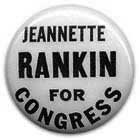
Montana elected Republican Jeannette Rankin as the first woman to sit in the U.S. House of Representatives three years before American women nationwide could legally vote.

Rep. Jeannette Rankin with her colleagues in the 61st Congress.
A persistent advocate for women’s rights, particularly suffrage, Rankin voted in Congress against American entry into both world wars, and late in life led marches against the
Vietnam war.


More about Jeanette Rankin
Visit the Jeanette Rankin Peace Center 
March 4, 1933
Franklin Delano Roosevelt was sworn in as president in the midst of the Great Depression. From his inaugural address:
“This is preeminently the time to speak the truth, the whole truth, frankly and boldly. Nor need we shrink from honestly facing conditions in our country today. This great Nation will endure, as it has endured, will revive and will prosper.
So, first of all, let me assert my firm belief that the only thing we have to fear is fear itself — nameless, unreasoning, unjustified terror which paralyzes needed efforts to convert retreat into advance. In every dark hour of our national life, a leadership of frankness and of vigor has met with that understanding and support of the people themselves which is essential to victory.”


President Franklin Delano Roosevelt delivering his first inaugural address
Audio and video of the speech 
March 4, 1965
Moved to action by President Lyndon Johnson’s sustained bombing of North Vietnam beginning two months before, Vietnam Day was declared by the Universities Committee, led by Wayne State University Professor Otto Feinstein. At about 100 college campuses nationwide, faculty, students and others gathered for lectures and meetings about the war. This occurred just three weeks before the first “teach-in” at the University of Michigan.
March 4, 1969


The Union of Concerned Scientists (UCS) was founded.
From its founding document“Misuse of scientific and technical knowledge presents a major threat to the existence of mankind. Through its actions in Vietnam our government has shaken our confidence in its ability to make wise and humane decisions. There is also disquieting evidence of an intention to enlarge further our immense destructive capability…”. . . continued here

The UCS today
March 4, 1978
40,000 demonstrated against the enlargement of the uranium enrichment plants in Almelo, Holland. Enrichment is the processing of uranium with gas cetrifuges to the level required for use as fuel in nuclear reactors.
March 4, 2011
A new Egyptian prime minister called on thousands of cheering protesters in Cairo’s Tahrir Square to rebuild their country. Essam Sharaf, appointed by the military, told the crowd:

Egypt’s new prime minister, Essam Sharaf, is greeted by supporters at Tahrir Square in Cairo. Photo: Amr Nabil/AP
“I salute the martyrs. Glory and respect to the families of the victims and a special salute to everyone who took part and gave for this white revolution. I am here to draw my legitimacy from you. You are the ones to whom legitimacy belongs.”

He ws appointed to replace deposed President Hosni Mubarak who had forced out of office by the widespread unrest that had spread from Tunisia, Egypt’s neighbor to the west. Sharaf was cheered and carried to and from the podium on the shoulders of protesters, escorted by military police.
March 4, 2011
In cities across Iraq demonstrators gathered for the second consecutive Friday to demand jobs, effective government services and an end to corruption. Inspired by movements elsewhere in the Arab world, 500 convereged in Liberation Square in the capital Baghdad, 1000 in Basra. Those in Baghdad were surrounded by at least as many security forces and overcame official resistance to the gathering including a citywide ban on vehicles. One protester had walked from Sadr City and had to pass through eight checkpoints.

https://www.peacebuttons.info/E-News/peacehistorymarch.htm#march4

Peace & Justice History for 2/12

Feb. 12th always reminds me of the time we were sitting in a Wendy’s eating on the way to/from a karate tournament. Someone in the restaurant sneezed (it wasn’t crowded,) and I automatically said “God bless you!” then the kid said, “Science could have prevented that.” It was pretty awesome. Happy Darwin Day!


February 12, 1809
Charles Robert Darwin, who first described the process of evolution of species in the plant and animal kingdoms through natural selection, was born.
It is now celebrated as Darwin Day, when the common language of science, bridging language and culture, is recognized and appreciated
.
Darwin Day ideas 
================================================
February 12, 1909
The National Association for the Advancement of Colored People (NAACP) was founded by sixty Americans, both black and white, in a call to safeguard civil, legal, economic, human, and political rights of black Americans.

The call was partly in reaction to a race riot in 1908 in Springfield, Illinois, home of Abraham Lincoln. The call was issued on the centennial of his birth, and principally written by Oswald Garrison Villard, president of the N.Y. Evening Post Company: “If Mr. Lincoln could revisit this country in the flesh, he would be disheartened and discouraged.”

Oswald Garrison Villard
NAACP’s beginnings
==================================================
February 12, 1947

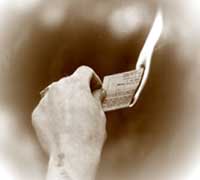
An estimated 400-500 veterans and conscientious objectors from World Wars I and II burned their draft cards during two demonstrations, in front of the White House and at New York City’s Labor Temple, in protest of a proposed universal conscription law.
This was the first peacetime draft-card burning.

==================================================
February 12, 1993
About 5,000 demonstrators marched on Atlanta’s State Capitol to protest the Georgia state flag (on left) because its principal element was the Confederate battle flag. That flag was adopted in 1956 by the state legislature in reaction to the Supreme Court decision of Brown v. Board of Education ordering the racial integration of public schools. Several newspaper editorials opposed the flag as well as 18 local patriotic organizations, including the United Daughters of the Confederacy, stating the flag “would cause strife.”


In 2001 the Georgia state flag was redesigned, shown above.
====================================================
February 12, 1997


In “Prince of Peace Plowshares,” six activists poured blood and symbolically disarmed U.S.S. The Sullivans, a nuclear-capable Arleigh Burke-class destroyer, at the Bath Iron Works in Bath, Maine. All were eventually convicted of destruction of government property and conspiracy.
Read more about this action 

https://www.peacebuttons.info/E-News/peacehistoryfebruary.htm#february12

Peace & Justice History for 1/23

The 1970 entry reminded me of how, during the W admin in 2001 before and after the plane crashes and USA PATRIOT, Bartcop used to mention and link Paul Krassner’s site (now gone, of course. A great deal about him is gone online, but I found a link to something still up. Anyway.) Anyway, he was hilarious for his time, and wrote a great resistance blog during a few years back then. It was cheering. So here’s the 23rd’s history:

January 23, 1890
The United Mine Workers of America was formed through the amalgamation of the National Progressive Union (organized 1888) and the mine locals under the Knights of Labor, including all workers in the coal industry. The workers faced unstable employment, the prevalence of company towns (where the mine owners controlled all housing and commerce), and extremely hazardous working conditions.
UMWA history 
January 23, 1962

Fifteen members of the Committee of 100, the non-violent direct action wing of the Campaign for Nuclear Disarmament (CND), sat in at the British House of Commons demanding a halt to nuclear weapons testing.

CND history 
January 23, 1970
Called as witnesses, folksingers Judy Collins, Arlo Guthrie, Country Joe McDonald, Phil Ochs, and Pete Seeger were denied permission to sing as part of their testimony for the defense at the trial of “The Chicago Seven.”
Seven leaders of demonstrations at the 1968 Democratic National Convention in Chicago were being tried for conspiring to incite a riot as they protested the Vietnam war.


Judy Collins, Arlo Guthrie, Country Joe McDonald, Phil Ochs, and Pete Seeger
More on the Chicago 7 
Paul Krassner’s quite irreverent recollection of testifying at the trial 
January 23, 1973
President Richard Nixon announced a Vietnam peace deal. The president appeared on national television and said that National Security Adviser Henry A. Kissinger and North Vietnam’s chief negotiator, Le Duc Tho, had initialed an agreement in Paris “to end the war and bring peace with honor in Vietnam and Southeast Asia.”
The agreement had actually been initialed six days beforehand.

Henry A. Kissinger and Le Duc Tho initial the agreement.
Read more 
Listen to Nixon’s announcement 
January 23, 1976
The Continental Walk for Disarmament & Social Justice began in Ukiah, California, heading for Washington, D.C. Its purposes were “to raise the issue of disarmament through unilateral action . . . to educate about nonviolent resistance as a means superior to armament . . . and to demonstrate how global and domestic and economic problems are interconnected with militarism and the causes of war . . . .”

Initiated by the War Resisters League, and co-sponsored by the Fellowship of Reconciliation, American Friends Service Committee, the Southern Christian Leadership Conference, Catholic Peace Fellowship, Clergy and Laity Concerned, SANE, and Women’s International League for Peace and Freedom, the walk took 10 months and covered 8,000 miles through 34 states.
Comprehensive archive of the walk: 

https://www.peacebuttons.info/E-News/peacehistoryjanuary.htm#january23

Peace & Justice History for 1/16

January 16, 1966

Joan Baez
Folksinger Joan Baez was sentenced to 10 days in jail for participating in a protest which blocked the entrance to the Armed Forces Induction Center in Oakland, California. She was part of an action to impede the drafting of young men for the U.S. war in Vietnam.
Joan Baez Press Conference On Vietnam War (1966) 
Read more about Joan Baez 
January 16, 1979
Faced with strikes, violent demonstrations, an army mutiny and clerical opposition to his repressive rule, the Shah of Iran, its hereditary monarch since 1941, was forced to flee the country. He had been installed in a CIA- and British-engineered 1953 coup which overthrew elected Prime Minister Mohammad Mossadeq. Mossadeq’s government had voted to nationalize Iran’s oil industry, displacing the Anglo-Iranian Oil Company.The U.S. gave substantial and continuous military and intelligence support to the Shah throughout his regime. Despite having imposed martial law the previous October, Mohammad Reza Shah Pahlavi fled the Peacock Throne for Egypt and, later, the U.S. for medical care. Following the subsequent revolutionary overthrow, an Islamist state under Ayatollah Ruhollah Khomeini was established.

The Shah and family
Chronology of Iran in the 20th century:  
More on the Shah 
January 16, 1987
Eight members of the Nanoose Conversion Campaign were acquitted of trespassing on Canadian Department of National Defence property.
The group had picnicked on Winchelsea Island, part of the Canadian Forces Maritime Experimental and Test Ranges, where both Canadian and U.S. weapons are tested, in the Georgia Strait along the British Columbia coast.
January 16, 1992
The government of El Salvador and rebel leaders signed a pact in Mexico City ending 12 years of civil war that had killed at least 75,000 people.
January 16, 2001
Eight Greenpeace activists were arrested by Gibraltar police as they boarded a damaged British nuclear submarine. The HMS Tireless was considered a radioactivity hazard because of a cracked pipe in its reactor’s cooling system. Those living near Gibraltar Harbour and in Spain were concerned for their safety as the ship had been docked for more than six months awaiting repair.
The problem was serious enough that Great Britain removed twelve comparable subs from service until they could be checked for similar problems. Greenpeace unfurled a banner just before the arrests reading Mares Libres del Peligro Nuclear, or “For a Nuclear-Free Sea.”

https://www.peacebuttons.info/E-News/peacehistoryjanuary.htm#january16

Peace & Justice History for 1/9

January 9, 1964
Anti-U.S. rioting broke out in the Panama Canal Zone, resulting in the deaths of 21 Panamanians and three U.S. soldiers. The immediate issue was whether both the U.S. and Panamanian flags would fly at Canal Zone facilities, as ordered by President John F. Kennedy. 
James Jenkins, a 17-year-old senior at Balboa High School in the Canal Zone:
“I guess you could say I’m the guy that started this whole thing. I’m sort of the ringleader. I circulated the petition to keep our flag flying. Then me and the others raised the flag. The school authorities left it up because they knew we’d walk out.”
On the third day, demonstrating Panamanian students entered the school grounds and sang their national anthem, but the Balboa students blocked them from raising their flag. there was a scuffle — and the Panamanians retreated in outrage, claiming that their flag had been ripped by the Zonians.
January 9, 1967
Julian Bond, elected more than a year before, was finally sworn in as a member of the Georgia House of Representatives.The legislature had refused to allow him to take his seat because of his opposition to the Vietnam War and specifically his endorsement of a Student Nonviolent Coordinating Committee (SNCC) statement accusing the United States of violating international law in Vietnam. Bond had been the director of SNCC.
Following his election in 1965, the Georgia House refused to seat him. He was re-elected to his “vacant seat” and the House refused again. He was then elected to the same office for a third time. But not until the U.S. Supreme Court ruled unanimously in his favor was the legislature forced to relent.


Julian Bond in 1966 waiting to be seated in the General Assembly
January 9, 1987
The White House released the presidential finding – signed by President Ronald Reagan on January 17, 1986 – which authorized the sale of arms to Iran (to encourage the release of hostages) and ordered the CIA not to tell Congress. This was done retroactively after several shipments, including 18 HAWK (Homing-All-the-Way-Killer) surface-to-air missiles, had already been transferred to the Iranians, then at war with Saddam Hussein’s Iraq.
Read the actual document authorizing the arms sales 
More 
Outline, key players and selected Iran-Contra documents from the National Security Archive 
January 9, 1991

 Sam Day
The day after the start of the U.S. bombing of Iraq, ten peace activists were arrested at Fort McCoy, Wisconsin, for handing out written warnings to military reservists about participation in war crimes. Long-time peace activist Sam Day was sentenced to four months for his participation.
Remembering Sam Day

https://www.peacebuttons.info/E-News/peacehistoryjanuary.htm#january9