Peace & Justice History 11/13:

November 13, 1933
The first recorded “sit-down” strike in the U.S. was staged by workers at the Hormel Packing Company in Austin, Minnesota. When the Independent Union of All Workers (IUAW) went on strike, the company tried to bring in scab (strike-breaking) workers.

“ Four hundred men, many of them armed with clubs, sticks and rocks, crashed through the plant entrance, shattering the glass doors and sweeping the guards before them. The strikers quickly ran throughout the plant to chase out non-union workers. One . . . group crashed through the doors of a conference room where Jay Hormel and five company executives were meeting and declared “We’re taking possession. So move out!” (Larry Engelmann, “We Were the Poor — The Hormel Strike of 1933,” Labor History, Fall, 1974.)

The tactic worked: within four days Hormel agreed to submit wage demands to binding arbitration. The success of this strike reinvigorated the labor movement, which had been in decline throughout the 1920s.
November 13, 1956
The U.S. Supreme Court ruled segregation unconstitutional in public transportation. The case, Browder v. Gayle, was brought by four women, Aurelia Browder, Susie McDonald, Claudette Colvin and Mary Louise Smith, who had refused to surrender their bus seats to whites in Montgomery (months before Rosa Parks had done so), and had been arrested for violating Alabama law which required segregation on public buses.They challenged the law and the Court agreed, finding the law under which they were arrested in violation of the due process and equal protection clauses of the Fourteenth Amendment to the U.S. Constitution.
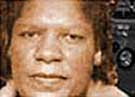
Aurelia Browder

A roadside monument was dedicated in 2004 to the four plantiffs in the Browder v. Gayle case.
Colvin, a 15-year-old student at Booker T. Washington High School, boarded a bus in 1955 and refused to give up her seat to a white man. She was handcuffed, arrested and forcibly removed from the bus, as she screamed that her constitutional rights were being violated. 
More on Browder v. Gayle 
November 13, 1960

Over 1000 Quakers (members of the Society of Friends) surrounded the Pentagon for a silent vigil to commemorate the 300th anniversary of the first Quaker Peace Testimony issued to King Charles II in 1660.
From the original Peace Testimony: “We utterly deny all outward wars and strife and fightings with outward weapons, for any end or under any pretence whatsoever.
And this is our testimony to the whole world….”

The complete text of the 1660 Declaration
November 13, 1974

Karen Silkwood, a technician and union activist (Oil, Chemical, and Atomic Workers’ Union) at the Kerr-McGee Cimarron plutonium fuels production plant near Crescent, Oklahoma, was killed in a one-car crash.
Read more about her story  
November 13, 1982
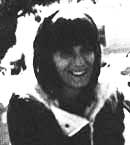
Maya Ying Lin
The Vietnam Veterans Memorial was dedicated in Washington, D.C. Carved into black granite are the 58,260 names of those Americans who died in Vietnam. The designer, Maya Ying Lin of Athens, Ohio, a 21-year-old architecture student at Yale University, was the winner of the competition that drew 1,421 design entries: “. . . this memorial is for those who have died, and for us to remember them.” Eventually, the Memorial included three elements, the Wall of names, the Three Servicemen Statue and Flagpole, and the Vietnam Women’s Memorial.

The Wall of Names, the Three Servicemen Statue and Flagpole, and the Vietnam Women’s Memorial

Read more about the memorial

Stunning photo gallery of the Memorial including interactive panoramic images

Interview with Maya Lin and filmmaker Freida Lee Mock, who made the Academy-Award-winning documentary, “Maya Lin: A Strong Clear Vision” (My apologies about Charlie Rose; it’s PeaceButton’s link, and it’s good info, Rose notwithstanding. -A)

https://www.peacebuttons.info/E-News/peacehistorynovember.htm#november13

Peace & Justice History for 10/31:

October 31, 1929
George Henry Evans, an English-born printer and journalist, published the first issue of the Working Man’s Advocate, “edited by a Mechanic” for the “useful and industrious classes” of New York City. Evan covered the Workingmen’s Party (which he helped found) and the early trade union movement.
In his Prospectus, Evans focused on the inequities between the “portion of society living in luxury and idleness” and those “groaning under the oppressions and miseries imposed on them.” He advocated “a system of education which shall be equally open to all, as in a real republic it should be” and opposed “every thing which savors of a union of church and state.”
Evans became a U.S. citizen one week later.
October 31, 1950

Earl Lloyd became the first of three African Americans who began to play in the National Basketball Association (NBA) when he started with the Washington Capitols. He and Jim Tucker went on to become the first African Americans to play on a championship team in 1955 as members of the Syracuse Nationals, which is now the Philadelphia 76ers.

After retiring as a player, Lloyd was a Detroit Pistons assistant coach for two seasons, and a scout for five.
October 31, 1952
The U.S. successfully detonated “Mike,” the world’s first hydrogen (or fusion) bomb, in the atmosphere at the Eniwetok Proving Grounds on the Elugelab Atoll, part of the Marshall Islands in the southern Pacific.
The 10.4-megaton device was the first thermonuclear device built upon the Teller-Ulam principles of staged radiation implosion.

Mike’s Mushroom cloud

The incredible explosive force of Mike was apparent from the sheer magnitude of its mushroom cloud – within 90 seconds the mushroom cloud climbed to 57,000 feet and entered the stratosphere at a rate of 400 mph. One minute later it reached 108,000 feet, eventually stabilizing at a ceiling of 120,000 feet. Half an hour after the test, the mushroom stretched sixty miles across, with the base of the head joining the stem at 45,000 feet.The explosion wiped Elugelab off the face of the planet, leaving a crater more than 50 meters (175 feet) deep, and destroyed life on the surrounding islands.
The details and the results 
Early U.S.nuclear tests 
October 31, 1958
The U.S., the U.S.S.R. (Union of Soviet Socialist Republics aka Soviet Union) and Great Britain began negotiations in Geneva on whether to let the nuclear testing moratorium become a permanent test ban. General Secretary Nikita Kruschev had unilaterally declared a moratorium on Soviet testing earlier in the year, President Dwight Eisenhower and Prime Minister Harold MacMillan following suit in August.
There had been growing concern over the health effects of radioactive fallout in the atmosphere from the nuclear explosions. Nonetheless, all three nations did further last-minute tests before the moratorium took effect.
October 31, 1972
20-POINT POSITION PAPER

PREAMBLE
AN INDIAN MANIFESTO FOR RESTITUTION, REPARATIONS, RESTORATION OF LANDS FOR A RECONSTRUCTION OF AN INDIAN FUTURE IN AMERICA
THE TRAIL OF BROKEN TREATIES:


“We need not give another recitation of past complaints nor engage in redundant dialogue of discontent.  Our conditions and their cause for being should perhaps be best known by those who have written the record of America’s action against Indian people.  In 1832, Black Hawk correctly observed: You know the cause of our making war. It is known to all white men. They ought to be ashamed of it.
The government of the United States knows the reasons for our going to its capital city.  Unfortunately, they don’t know how to greet us. We go because America has been only too ready to express shame, and suffer none from the expression – while remaining wholly unwilling to change to allow life for Indian people.
We seek a new American majority – a majority that is not content merely to confirm itself by superiority in numbers, but which by conscience is committed toward prevailing upon the public will in ceasing wrongs and in doing right.  For our part, in words and deeds of coming days, we propose to produce a rational, reasoned manifesto for construction of an Indian future in America.  If America has maintained faith with its original spirit, or may recognize it now, we should not be denied.”
October 31, 1978
30,000 Iranian oil workers went on strike against the repressive rule of the U.S.-installed Shah and for democracy, civil and human rights.
Striking Iranian oil workers. Photo: December 1978 issue of Resistance. A publication of the Iranian Students Association in the U.S. (ISAUS)
Read more 
October 31, 1984
Indian Prime Minister Indira Gandhi was shot to death by two Sikh members of her own security guard while walking in the garden of her New Delhi home. Gandhi’s son, Rajiv, a member of parliament and a leader in the Congress-I Party, was sworn in as Prime Minister following the assassination.

https://www.peacebuttons.info/E-News/peacehistoryoctober.htm#october31