“Blowin’ In The Wind”, And An Important SCOTUS Decision in Regard to Labor in Peace & Justice History for 5/27

May 27, 1940
The U.S. Supreme Court ruled a sit-down strike was not a violation of the Sherman Anti-Trust Act even if it interfered with interstate commerce. The company had sued for treble damages (triple their financial loss) under the Act. The Court said that if the strike were found to be a restraint of trade, then “practically every strike in modern industry would be brought within the jurisdiction of the federal courts under the Sherman Act.”
The American Federation of Full Fashioned Hosiery Workers under its president, William Leader, had declared a strike at Apex Hosiery Co. in Philadelphia, and had organized support among other workers in the city. When Apex refused to recognize the union, he declared a sit-down strike and led an occupation of the factory which lasted for
seven weeks.
Unlike the UAW sit-down at the GM plant in Flint, however, violence was committed against the management personnel and significant damage was done to manufacturing equipment.

Summary and full text of the Supreme Court decision 
May 27, 1963

The record album, The Freewheelin’ Bob Dylan, which featured the song “Blowin’ in the Wind,” was released. The song warns of the perils of nuclear war.“ …how many times must the cannon balls fly Before they’re forever banned?”
The song and the lyrics 

https://www.peacebuttons.info/E-News/peacehistorymay.htm#may27

The First US Witch Execution in 1647, and More in Peace & Justice History for 5/26

May 26, 1647

The first person in America was executed for the crime of witchcraft. Alse Young was arrested, tried in Windsor, Connecticut, and hanged at Meeting House Square in Hartford, the site of what is now the Old State House.
There is no further record of Young’s trial or the specifics of the charge — only that she was a woman, as 80% of those executed for witchcraft were. The Salem witch trials would not begin for another 45 years.

Some 300 years later the U.S. experienced another “witch hunt” as Senator Joe McCarthy and the House Un-American Activities Committee pursued communists. Arthur Miller makes this comparison in his famous play “The Crucible.”
Read more about the play “The Crucible”   The Guardian
May 26, 1937
United Auto Workers organizers and Ford Service Department men clashed in a violent confrontation on the Miller Road Overpass outside Gate 4 of the Ford River Rouge Plant in Dearborn, Michigan. It became known as “The Battle of the Overpass.” Henry Ford announced: “We’ll never recognize the United Automobile Workers Union or any other union.” Though General Motors and Chrysler signed collective bargaining agreements with the UAW in 1937, Ford held out until 1942.
More background and photos 
Read more
 T
The Ford Servicemen (goons) approach Walter Reuther and Richard Frankensteen, third and second from right, and the other unionists.

UAW official Richard Frankensteen being beaten by Ford goons
May 26, 1946
A patent was filed in the U.S. for the H-Bomb, the hydrogen, or fusion-based, nuclear explosive device.
May 26, 1969

John Lennon and Yoko Ono (along with her 5-year-old daughter Kyoko) held their second Bed-in for Peace at the Queen Elizabeth Hotel in Montreal, Quebec. A late-night rendition of “Give Peace a Chance,” recorded in the hotel room with their visitors singing and accompanying, reached No.14 on the Billboard pop music charts.
John and Yoko meet cartoonist Al Capp in their hotel room 
May 26, 1972
The Anti-Ballistic Missile (ABM) Treaty was signed by U.S. and U.S.S.R. (Union of Soviet Socialist Republics which included Russia and 15 other republics). The two countries agreed not to build defensive missile systems and thus to limit escalation of the nuclear arms race. It was reasoned that if either side deployed defensive missiles, the other would be forced to respond by increasing the number, explosive yield or effectiveness of their offensive nuclear weapons and delivery systems to maintain the balance of nuclear deterrence.
Research and development of defensive systems was allowed under the ABM treaty, the U.S. having spent about $100 billion in the 20 years before the treaty was abrogated by President George W. Bush in the first months of his presidency.
May 26, 1991
20,000 Israeli Jews and Palestinians participated in a peace rally in Israel’s capital, Tel Aviv.

https://www.peacebuttons.info/E-News/peacehistorymay.htm#may26

John T. Scopes Indicted This Date, + More in Peace & Justice History for 5/25

May 25, 1774
A group of African slaves in Massachusetts Bay colony petitioned the British royal governor for freedom as their natural right: “. . . we have in common with all other men a natural right to our freedoms without Being depriv’d of them by our fellow men as we are a freeborn Pepel [people] and have never forfeited this Blessing by aney compact or agreement whatever.”
May 25, 1925
John T. Scopes was indicted for teaching Darwin’s theory of evolution. Scopes, a football coach and substitute high school biology teacher in Dayton, Tennessee, agreed to be arrested and put on trial for teaching evolution. He was challenging the legitimacy of a four-day-old state law barring Darwin’s theory from the public school curriculum.

The Scopes “Monkey Trial”  ACLU
May 25, 1948

Garry Davis, formerly a member of the U.S. military, renounced his American citizenship to become a Citizen of the World. Davis continued to promote “world citizenship” for over 50 years; 400,000 have, at one time or another, joined the movement.    
  watch trailer “THE WORLD IS MY COUNTRY”
Read more about Garry Davis   NY Times
May 25, 1963
Leaders of 32 African nations met in Addis Ababa, Ethiopia, to set up the Organization of African Unity (OAU), giving them a united voice for the first time in the continent’s history. The primary aim of the OAU was to end European colonial control in the countries where it still existed at the time: Southern Rhodesia (now Zimbabwe), South Africa, Mozambique and Angola.

OAU flag
Read more 
May 25, 1986

An estimated 7 million Americans participated in Hands Across America, forming a line across the country from Los Angeles to New York to raise public awareness of the issues of hunger and homelessness in the U.S. Participants paid ten dollars [almost $20 in 2009] to reserve their place in line; the proceeds were donated to local charities to feed the hungry and help the homeless.
May 25, 2003
Four activists, members of the Catholic Worker movement and known as “Riverside Ploughshares,” were arrested for pouring blood and hammering on the USS Philippine Sea’s Tomahawk cruise missile hatches. The ship was visiting New York City for the annual “Fleet Week.”
“With hammers we have initiated the process of disarming this battle ship, of transforming this carrier of mass destruction into a vessel for peace…
pouring blood and hammering..
Details of the Riverside Ploughshares action 

https://www.peacebuttons.info/E-News/peacehistorymay.htm#may25

Long-Weekend (US) Reads in LGBTQ+ History

I keep meaning to get them posted, then I don’t get it done. Here they are; readers can pick and choose, or read each one in your own time. Enjoy!

This one has 2: 120, and 120a! -A

Queer History 120: Sappho by Wendy🏳️‍⚧️🏳️‍🌈🌈

How a woman from ancient Lesbos changed literature and sexuality forever Read on Substack

Queer History 119: Dr Alan Hart, Trans Guy Super Power by Wendy🏳️‍⚧️🏳️‍🌈🌈

“What does it feel like to save countless lives while being forced to hide who you really are? To revolutionize medicine while living in constant fear of being “discovered”? To fight a deadly disease that ravaged millions while battling a society that treated your very existence as a fucking scandal?”
Read on Substack

Queer History 118: The Tragedy of Carmen Carrasco (1932) by Wendy🏳️‍⚧️🏳️‍🌈🌈

“In a Spain teetering between progress and persecution, one woman’s death exposed the brutal reality faced by those who dared to love differently.

The day they found Carmen Carrasco’s body, Madrid whispered.”  Read on Substack

Queer History 117: The Boys of Boise Scandal by Wendy🏳️‍⚧️🏳️‍🌈🌈

“In 1955, the sleepy city of Boise, Idaho became ground zero for one of the most fucked-up anti-gay witch hunts in American history. What began as arrests of three men exploded into a moral panic that would rip families apart like wet paper, crush reputations under its boot, and drive some to blow their brains out—all under the bullshit guise of ‘protecting the children.'”
Read on Substack

Queer History 116: Natalie Clifford Barney by Wendy🏳️‍⚧️🏳️‍🌈🌈

How an American heiress built a lesbian literary empire in the heart of French culture while telling society to go fuck itself Read on Substack

Queer History 115: The Radical Queer Brotherhood in Walt Whitman’s Revolutionary Circle by Wendy🏳️‍⚧️🏳️‍🌈🌈

How America’s “Good Gray Poet” built a secret society of gay intellectuals that changed literature forever Read on Substack

Woot! 🌞

I Wonder If I’ll Ever Be Able To Make This A Daily Practice- 🤷 🌞

International Women’s Day for Disarmament Today, and More, in Peace & Justice History for 5/24

May 24, 1774
The Virginia House of Burgesses declared this a day of “fasting, humiliation and prayer” in reaction to the British closure of the Port of Boston.
May 24, 1906

Dora Montefiore
British suffragist Dora Montefiore protested the lack of women’s right to the vote by refusing to pay taxes, and barricading her house against bailiffs sent to collect.
Dora Montefiore biography 
May 24, 1917 
An Anti-Conscription Parade was held in Victoria Square, Montreal, Quebec, in resistance to a Canadian draft to send soldiers to the European war. Riots nearly a year later resulted in the death of four demonstrators in Quebec City.

Anti-Conscription Parade, Victoria Square
May 24, 1964
  
Senator Barry Goldwater (R-Arizona), running for the Republican Party nomination for president, gave an interview in which he said he would consider the use of low-yield atomic bombs in North Vietnam.
May 24, 1968
Four protesters, including Phil Berrigan and Tom Lewis, were sentenced in Baltimore, Maryland, to six years each in prison for pouring blood on draft records.
May 24, 1971
At Fort Bragg, North Carolina, an anti-war newspaper advertisement, signed by 29 U.S. soldiers supporting the Concerned Officers Movement, resulted in controversy.
The group had been formed in 1970 in Washington, D.C. by a small group of junior naval officers opposed to the war.
The newspaper advertisement at Fort Bragg was in support of the group’s members, who had joined with anti-war activist David Harris and others in San Diego to mobilize opposition to the departure of the carrier USS Constellation for Vietnam. No official action was taken against the military dissidents, though many were forced to resign their commissions.

GI resistance to the Vietnam War 
May 24, 1981 (since 1981)
International Women’s Day for Disarmament was declared, calling for the peaceful resolution of conflict, and an end to the horror and devastation of armed conflict.
IFOR’s Women Peacemakers Program 
May 24, 1982
More than 200,000 people participated in a massive anti-nuclear demonstration in Tokyo, Japan.
May 24, 2000
Israeli troops completed their withdrawal from southern Lebanon, ending 18 years of occupation. Prime Minister Ehud Barak: “From now on, the government of Lebanon is accountable for what takes place within its territory, and the Lebanese and Syrian governments are responsible for preventing acts of terror or aggression against Israel, which is from today deployed within its borders.”

https://www.peacebuttons.info/E-News/peacehistorymay.htm#may24

I Haven’t Posted One of These In A While-Enjoy! 💖 ☮ 🌞

“Straight up through the sky above this road right now, The galaxies of the Cygnus A cluster Are colliding with each other in a massive swarm Of interpenetrating and exploding catastrophes.” by Worriedman

Pattiann Rogers – ” Achieving Perspective” Read on Substack

The whole brilliant poem, read by David Byrne! Make sure you follow the [this] link. This is one of the best things I’ve ever shared-

Pattiann Rogers is one of the great modern poets. She writes about nature in a completely relatable way that you can learn from and admire.

Cardinal! State bird of seven different states – the most of any bird. Meadowlarks come in second with six different states. (This feels like the kind of information old people share….)

Lilac! The good old fashioned kind.

The fragrance is amazing. In a day or two they’ll be fully open. A week after that they’ll be gone.

I went out to the barn to visit some friends

Never gets old!

(snip-little vid of Barncat greeting Worriedman. Just click through above to see it; I couldn’t embed it.)

She’s so pretty!

She’s been working on this for years-

Juice! You can’t hide, Juice…

I am frequently found taking pictures of flowers in the rain.

Ninebark – Two different varieties

A goose among the ragwort –

That’s all I’ve got room for – Thanks for dropping by!

Peace & Justice History for 5/23

May 23, 1838
U.S. General Winfield Scott began the forced removal of the Cherokee Indians from North Carolina, Georgia, Alabama, and Tennessee, and their detention in forts built for that purpose. He was implementing the Treaty of New Echota, signed by a few members of the tribe relinquishing their lands for a payment of $5 million, under orders from President Martin VanBuren.

16,000 Cherokee were then driven on foot to “Indian Territory” (what is now Oklahoma). Of those who set out on the forced march known as the “The Trail of Tears,” nearly one-quarter died along the way or as a result of the relocation.
Detailed history of the Trail of Tears  
Cherokee letter protesting the Treaty of New Echota from Chief John Ross 
May 23, 1982
10,000 marched in London protesting British Prime Minister Margaret Thatcher’s Falklands War. The Falklands are islands off the coast of Argentina (known there as the Malvinas), and Great Britain was fighting to maintain colonial control over them, which they originally claimed in 1833.

an anti-war demonstration in Argentina
May 23, 1982
400,000 demonstrated for peace and disarmament in Tokyo, Japan.
May 23, 1992
Belarus, Kazakhstan and Ukraine, which had inherited strategic nuclear weapons from the Soviet Union, ratified the START I treaty and joined the Nuclear Non-Proliferation Treaty as non-nuclear states. Through the Lisbon Protocol, Belarus, Kazakhstan, Russia and Ukraine became parties to START I as legal successors to the Union of Soviet Socialist Republics. The breakup of the Soviet Union delayed START’s entry into force nearly three-and-a-half years.
The Strategic Arms Reduction Treaty (START I) 
May 23, 1997

Khatami in 2009
Iranians elected a new president, Mohammad Khatami, with 70% of the vote, over hard-liners in the ruling Muslim clergy. Khatami won largely due to young people and women, who voted for him because he promised to improve the status of women and respond to the demands of the younger generation in Iran.
Political situation in Iran before and after Khatami’s election 
Khatami today 
May 23, 2003
Congress passed a third major tax cut proposed by President George W. Bush in his first two years in office: $330 billion. The budget deficit in the following year was the largest ever and a record percentage of the Gross Domestic Product.

https://www.peacebuttons.info/E-News/peacehistorymay.htm#may23

News From The Carter Center

‘Hope Is Action’

I found it refreshingly interesting- A.

  • Mary, Nicole, and Paige on stage.Mary Robinson (center), former president of Ireland, shares her views on human rights at a Carter Center event in March. From the Center, CEO Paige Alexander (right) participated in the discussion, and Nicole Kruse, VP, Development, moderated.

Human rights pioneer Mary Robinson shares life lessons at Carter Center event

When Mary Robinson began her term in 1990 as the first female president of Ireland, she didn’t let her gender take a back seat to the office. She wanted to convince people that “I would actually do a better job because I was a woman,” she told an audience at The Carter Center in March.

Robinson went on to blaze trails not only in politics but human rights, women’s rights, and climate advocacy. She offered insight on her remarkable life during a public conversation and Q&A with the Carter Center’s Paige Alexander, CEO, and Nicole Kruse, vice president of development, following a screening at the Center of “Mrs. Robinson,” a new biographical documentary.

Robinson has several ties with the Center, including a long friendship with co-founders President Jimmy Carter and Rosalynn Carter. She also helped lead the Carter Center’s election observation mission to Myanmar in 2015.

But perhaps her strongest connection to the Center is a shared commitment to bolstering human rights around the world. “The universal values of human rights are indispensable,” Robinson said. “They are as valid today as they ever were, and they are more relevant today than they ever were.”

During her tenure as U.N. High Commissioner for Human Rights from 1997 to 2002, she traveled to many dangerous places — Chechnya, Kosovo, and Goma in the Democratic Republic of the Congo. “I always came back energized because I was meeting people on the ground,” Robinson said.

The world celebrated the 75th anniversary of the Universal Declaration of Human Rights last year and its 50th anniversary while Robinson was high commissioner. The document is as “relevant today as it was in 1948,” she said. “We have learned so much about how, hopefully, to do better in creating more understanding but also embedding it in the cultures of people.”

Despite her belief that “countries go up and countries slide” in their commitment to human rights, she remains optimistic about the future and the young people who will be inheriting the world older generations created.

As a member of the Elders, a group of former world leaders to which President Carter also belonged, Robinson said she has been involved in conversations about climate and energy that span several age groups. “Younger people are insisting at being at the table,” she said. “I’ve had incredible conversations with 13-, 14-, and 15-year-old climate activists.”

The motivation of younger generations will lead to sea change soon, Robinson believes, because they want the world to move faster. “We’re on the cusp of this much healthier clean energy, renewable energy, no-waste circular economy,” she said. Robinson marveled at the difference such innovations will make for people in Africa who have never had electricity.

Although Robinson has spent her career addressing societal ills across the globe, she believes joy and hope can be found anywhere and are essential components for a well-lived life. She once heard her mentor, Archbishop Desmond Tutu, describe himself as a “prisoner of hope.” It made an impression on Robinson. She thought, “what he’s saying is the glass may not be half full. There may be only a tiny bit in the glass. But hope is action. You work with that.”

Forum Participants Provide Perspectives on Human Rights

As a former U.N. High Commissioner for Human Rights and member of the Elders, Mary Robinson has fought for human rights around the world. Similarly, the Carter Center’s Human Rights Program works to advance the rights of protected groups. Last year, the Center hosted the Human Rights Defenders Forum, where activists and scholars came together to learn from and support one another. Below are perspectives from four participants, working on different aspects of a broad human rights agenda.

Collette Battle headshot

Colette Pichon Battle
Vision and Initiatives Partner, Taproot Earth
“One way for us to understand the climate crisis is to understand everybody’s going to be impacted.… The worst part of climate change is not the big hurricanes. It’s not the big storms that you can predict. It’s global temperatures that are going to take out more people than any storm ever could.”
Vincent Warrant headshot

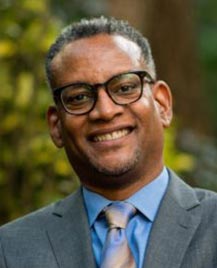
Vincent Warren
Executive Director, Center for Constitutional Rights
“States talk a lot about their rights, but states don’t have rights. What states have are power. And who has the rights? People have the rights.… What we have to do as human rights defenders is shift power to the people from the state.”
Hossam Bahgat headshot

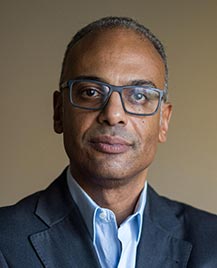
Hossam Bahgat
Founder, Egyptian Initiative for Personal Rights
“Our work can only succeed if we think of ourselves and execute our activities as a movement, not as a group of individual organizations working in individual countries, and not as a group of visionary individuals exercising leadership. To really make change, you need to build.”
Hina Jilani headshot

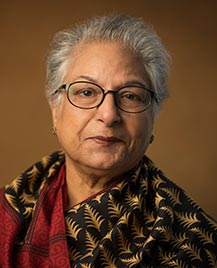
Hina Jilani
Pakistani Lawyer and Women’s Activist,
Member of the Elders
“I cannot afford the luxury of either pessimism or cynicism or frustration, so I always have hope. I respect my struggle more than I expect achievement. I believe in my struggle. And because I have that belief, I have hope.”