“Virginia Partridge”

or “Virginia Quail.”
Snippet:

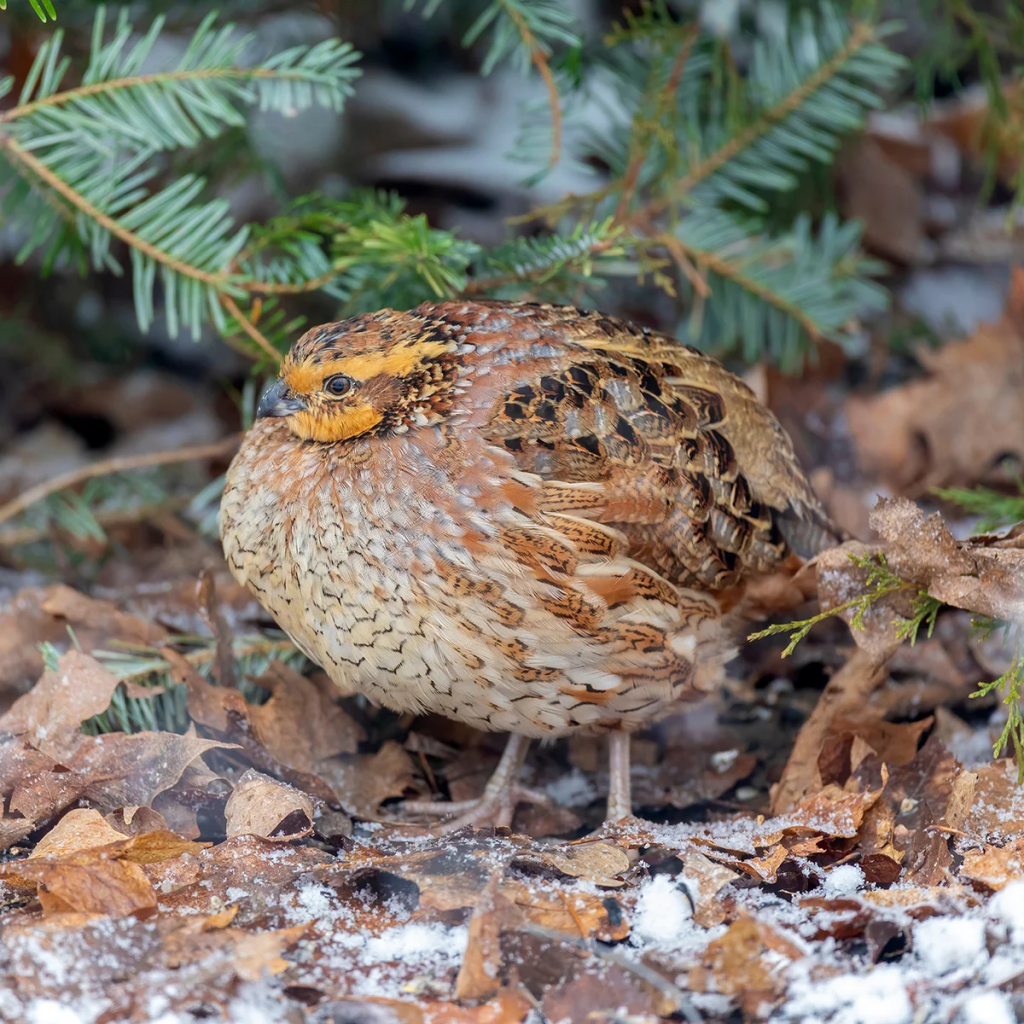
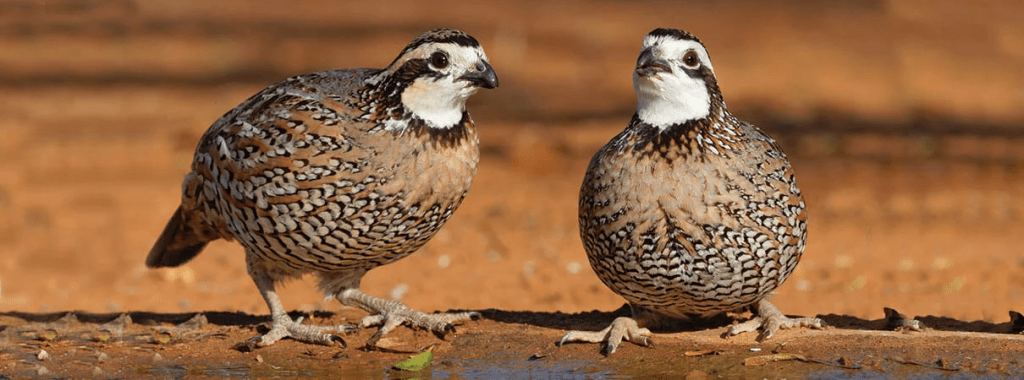
The Northern Bobwhite, also known as Virginia Quail or Virginia Partridge, is in the same family as the Montezuma and Scaled Quails, but the bobwhite is the only native quail species in the eastern United States. This delightfully round little quail is capable of strong, short bursts of flight — particularly when fleeing predators — though they prefer to walk or run, scuttling about under the dense, low cover of vegetation in grasslands, agricultural fields, and open forests.

The Northern Bobwhite is more often heard than seen, its namesake whistled bob-white! call sounding from the brushy undergrowth, where their dappled brown-and-white plumage provides excellent camouflage. But sometimes, especially when calling in spring, males will occupy highly visible locations, perching atop fenceposts and tree limbs.

A popular game bird, the Northern Bobwhite has a whopping 22 subspecies across its range, one of which — the Masked Bobwhite — is federally listed as Endangered. Its status as a game bird has made it one of the most well-studied birds in the world, and scientists have observed sharp declines, likely owing to multiple causes that include habitat loss and the increased use of pesticides.

Threats

Populations of Northern Bobwhite plunged between 1966 and 2019, resulting in an overall decline of 81 percent, according to the North American Breeding Bird Survey. Partners in Flight considers the Northern Bobwhite as a “Common Bird in Steep Decline.” For years, an explanation for such drastic declines has been elusive. However, most biologists agree that multiple causes are to blame. (snip-MORE on the page)
https://abcbirds.org/birds/northern-bobwhite/

“Lotus Eater”

Mississippi Kite

We get Mississippi Kites in late Spring; they’re about gone now. They give amazing air shows! Watching them makes a day better.-Ali

About

With pearlescent gray feathers and a sleek silhouette, the Mississippi Kite glides gracefully through the skies on wingbeats that manage to look effortless. While this medium-sized raptor with long, pointed wings and a squared-off tail may resemble a Peregrine Falcon in flight, the Mississippi Kite’s bouyant and easy flight can quickly distinguish it from the rapid, businesslike flight of the falcon. Its aerial acrobatics have earned the kite nicknames like “Hovering Kite.”

A long-distance migratory species, the Mississippi Kite breeds throughout the southern and central United States, making use of wooded areas in a range of settings — in large, low-lying forest tracts, windbreaks (stands of wind-resistant trees and shrubs) in prairies, and even in urban settings. Their habitat use and even their social behaviors vary throughout their range, with kites in the west being more likely to nest in colonies than their counterparts in the east.

Threats

The global Mississippi Kite population is increasing, and its range has expanded into parts of the Southwest since the mid-20th century. Even so, the cumulative impacts from threats like habitat degradation and loss, pesticide use, and collisions may make the Mississippi Kite more vulnerable across parts of its range. 

Habitat Loss (snip-more on the page)

https://abcbirds.org/birds/mississippi-kite/

“Whiskyjack”

“Blood-drinking Bird”

“Tick-eater”

“Rarest of Its Kind”