It’s been a day, really, but that can be a day-in-the-life post some other time. Meanwhile, I have a tab up that I intend to use in my voting post, and it’s still there because I haven’t gotten it done. Here I am at 1 til 5 PM, but I am doing it now. 🌞🤯🌞
So my mission for today was to vote this morning. I got around and fixed my hair, and went to vote. There’s a jury trial, so parking was short. There was a spot, and I fit, but it was tough getting out of the car, as the person to my left had parked just barely on their righthand, my lefthand, line. But it got done. I figured they’d leave and make me look like the a-hole, even though I did have 3 in. of space between my car and my righthand line. Then, I figured they probably pulled in the best they could, and maybe/probably the person they pulled in next to had parked too far over, making this person look like the a-hole. So, all’s well, I got in, got signed in, and voted. There was not a line, but each machine was kept in use; there was a steady flow of voters. Awesome!
It was smooth as silk, and I actually got to vote for Dems all the way down the ticket except one office, where I wrote in a good friend of mine who I admire, and who would be a superlative state rep. Else, I voted Dem all the way. It was good. I usually post a pic of my pen and my sticker, but county costs are up, and there are no stickers today, and no free stylus pens, either. So, big whoop, but it got done! I expect to hear (read) that everyone who reads here votes this season; look at my WP handle!
Anyway, here’s a great post about another voter who votes Blue:
This is the first president whose inauguration I can remember. Now, if you know my age, you might think that is improbable, but 1976 was a big year in Philadelphia with the Bicentennial and all. And I guess I imbibed political sensibility a bit from my mom. In 1977 I had a turntable, a Kiss album alongside my Sesame Street records and was a fan of Happy Days and watched some documentary about the 25th anniversary of rock and roll on PBS about a dozen times, it felt like.
I remember the 1970s. I was already me by the time I was a toddler cleaning up shot glasses after parties (the taste of blackberry brandy and the sound of Steppenwolf) and listening to the Midnight Special. when I definitely wasn’t supposed to still be awake and turning on the sole tv in the house and was lifting cold pizza out of the fridge. Mom finding me zonked on the floor with the farm report or Chief Halftown on in the morning.
He reminded me of Mr. Rogers then, and that was all right by me. He still does, and I don’t have a greater compliment. He cares, and he acts on his sense of caring. It’s the best thing you can say anyone ever does.
Kamala Harris is a lot closer to my age than Jimmy Carter and is a woman, like me. I am still mad about the women in their 100’s and their 90’s in 2016, who finally got to vote for a woman for president and she never broke through the ceiling she most certainly dented.
But maybe me and the first president I can remember as a girl, who talked so appreciatively of his own daughter, Amy, when I was a little girl myself and wanted grownups to believe in girls, can see Kamala Harris win together.
Maybe this is just a sentimental, schmaltzy departure from me busting on Trump’s mental decline or whatever–but I would like to see this. She is so ready, and I am so ready. and we are so ready.
So here is Harris calling Trump a weak bitch who loves dictators because of his weak bitchness. Because I am sentimental, but this is business and Trump needs a boot in the ass.
VP Harris on Trump: “It’s a sign of weakness that you want to please dictators…It’s a sign of weakness that you would demean America’s military…It’s a sign of weakness that you don’t have the courage to stand up for the Constitution…This man is weak, and he is unfit.” pic.twitter.com/yxZOav01aT
— Republican Voters Against Trump (@AccountableGOP) October 15, 2024
I’m not saying “we’ve come a long way, baby” or “she can bring home the bacon” or whatever passed for 1970s feminism. I am saying this candidate is herself outstanding and can do the damn job. Not because she’s a woman, but because she is a boss.
And the miserable misogynist she is running against is an echo of the past that a 100 year old man knows should be left to history. Because he has fought against that bigotry in his own life and in his own faith.
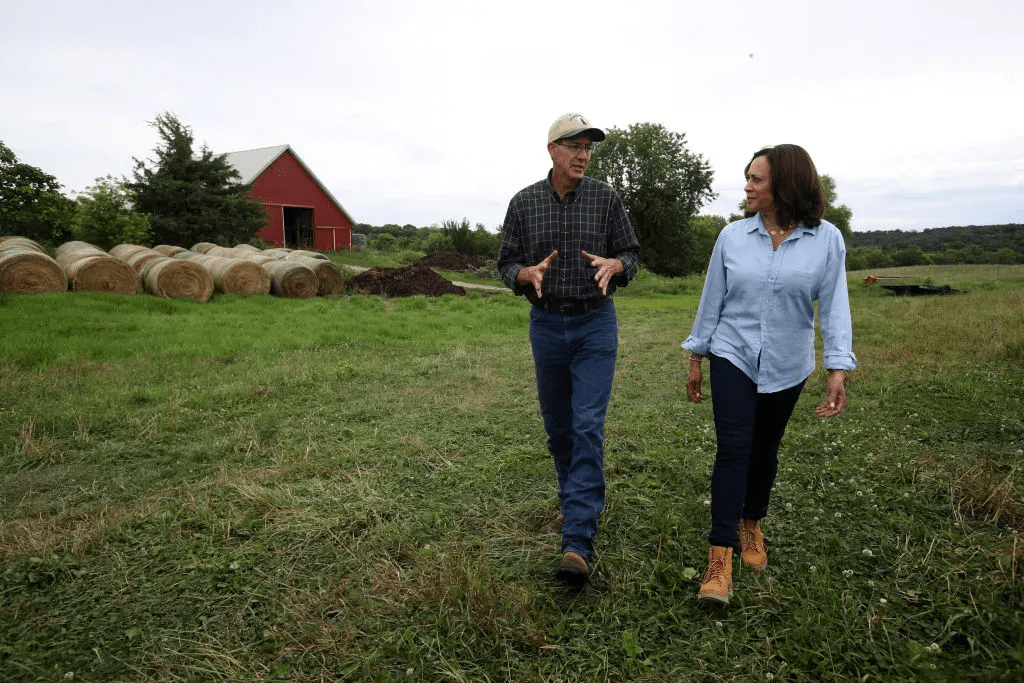
This morning, the Harris-Walz campaign announced an extensive economic plan for rural communities. It’s a deeply impressive vision for working class families in these parts of the country.
Given that much—perhaps, most—of political media will not adequately report on this and inform voters of what Vice President Harris plans to do for Rural America, I’m gonna take the rare step of publishing her plan, in full, as a blog post.
I’m doing this because Lord knows we’re all more likely to see an intellectually dishonest column in The New York Times about Vice President Harris ignoring rural voters than we are to see significant reporting and analysis on her proposed policies for rural voters.
So, here it is. Just to confirm, all of the below text was written by the campaign. Please share with your friends and family in rural areas of the country:
FOR IMMEDIATE RELEASE October 15, 2024
Vice President Harris and Governor Walz’s Plan for Rural Communities
New Initiative Will Strengthen Rural Health Care by Adding 10,000 Health Care Professionals, Expanding Telemedicine, Cutting the Number of Ambulance Deserts in Half, and Keeping Rural Hospitals and Pharmacies Open
Supporting the Next Generation of Small- and Mid-sized Farmers and Ranchers
Strengthening the Backbone of the Rural Economy with Investments in Housing, Child Care, and Senior Care
Vice President Harris and Governor Walz believe in rural communities and understand that supporting locally led solutions is key to rural prosperity. Their administration will make it a priority to equip the nearly 50 million rural Americans with the tools and resources they need not just to get by, but get ahead.
Today, Vice President Harris and Governor Walz are announcing a plan for rural America. The key elements will:
Increase access to affordable and high-quality health care in rural communities—by adding 10,000 health care professionals, expanding telemedicine, cutting the number of ambulance deserts in half.
Support the sandwich generation to care for elders at home, lowering the cost of childcare and increasing the number of providers, and expanding the Child Tax Credit to provide tax cuts up to $6,000 for families with newborns.
Lower the costs of buying a home, starting and expanding a business, and raising a family—by sparking the construction of 3 million new housing units, providing up to $25,000 in down payment assistance for first-time homebuyers, increasing the small business tax deduction for startup expenses 10-fold to $50,000.
Invest in the future of American agriculture by boosting access to credit, land, and markets, building new markets and streams of income for small- and mid-sized farmers and producers, and supporting the rise of the next generation of American farmers and ranchers.
Donald Trump will turn back the hard-earned progress that rural communities are making. As President, he tried to repeal the Affordable Care Act and vows to terminate it if reelected, stripping protections from people with pre-existing conditions and devastating rural hospitals and care services. He will ban abortion nationwide, threaten access to contraception and IVF, and force states to monitor women’s pregnancies and report women’s miscarriages and abortions to the federal government.
He already took overtime pay away from millions of Americans while giving tax breaks to billionaires and big corporations – at the same time that he tried to cut funding that supports rural housing and creates rural jobs. If Trump returns to office, he promises to give more tax cuts to the super-rich and big corporations while hiking taxes on rural families by $4,000 a year – as estimated by the conservative leaning American Action Forum, and putting Social Security and Medicare on the chopping block.
Independent analysis from Goldman Sachs, Moody’s Analytics, and other top economists – including those surveyed by the Financial Times and Wall Street Journal – and more also agree that Vice President Harris’ plans are better for the U.S. economy than Donald Trump’s. For example, an analysis by Moody’s Analytics shows that, under a Harris presidency, more than a million new jobs would be added to the economy than under a second Trump Administration. Meanwhile, Moody’s finds that Trump’s plan would cause a recession by mid-2025, cost 3.2 million jobs, and add over 1 percent to inflation. And, a survey of nearly 40 top economists by the Financial Times and University of Chicago found that 70 percent agree that Vice President Harris would be better on the deficit than Trump, while only 11 percent believe that Trump would be better on the deficit than Harris.
Trump’s Project 2025 agenda will slash the federal crop insurance program, gut protections for clean water and air, and repeal the Bipartisan Infrastructure Law and Inflation Reduction Act, which will roll back historic investments in small businesses and rural infrastructure including broadband, and clean energy. Under a Harris-Walz administration, rural America is not going back.
EXPANDING RURAL HEALTH CARE
Vice President Harris and Governor Walz believe quality health care is a right, not a privilege. That’s why they are announcing new initiatives to improve and expand affordable health care in rural areas. Their plan will recruit 10,000 additional rural health care professionals and protect and expand access to care from telemedicine to local independent pharmacies.
Recruiting 10,000 Rural Health Care Professionals, including doctors, nurses, community health workers, and EMS professionals to provide health services to Americans in rural and tribal areas—while working to protect our health workforce from burnout. This initiative will include:
Expanding Scholarships, Loan Forgiveness, and Other Pipeline Programs for Doctors and Nurses Who Will Provide Health Care in Rural and Tribal Areas: They will expand funding to recruit and retain doctors, nurses, pharmacists, public health professionals, and other health care providers through scholarships, loan repayment programs including the National Health Service Corps Loan Repayment Program, the Indian Health Service Loan Repayment Program, and the Public Service Loan Forgiveness Programs. Their plan to build 3 million new homes nationwide, including in rural and tribal areas, and to provide $25,000 in downpayment assistance will further lower costs of buying a home in rural America, creating incentives for health professionals to buy homes and stay in rural America. They will invest in programs that introduce rural youth to careers in medicine, and provide the necessary support for them to pursue that career path. This plan builds on Vice President Harris’s leadership in investing in programs to train more nurses and doctors who will live and work in rural and underserved communities, including funding an additional 1,000 residency slots in hospitals. When a provider trains in a rural area, they’re more likely to remain, living and working there.
Providing a Major Grant Program To Train and Fund Rural Community Health Workers: They will launch a new permanent grant program to train and fund Rural Community Health Workers; make it easier for Medicaid to cover Community Health Workers; and expand grants to Community Health Centers and Rural Health Centers.
Expanding Rural Telehealth Services: Americans living in rural areas are around 17 times more likely to use telehealth than those in cities, but half of all people living in rural areas lack access to the broadband speeds needed to support telehealth.
Double federal funding for telehealth equipment and technologies. They will double the U.S. Department of Agriculture’s (USDA) Distance Learning and Telemedicine Grant Program for Rural Communities to $120 million. This will give rural and tribal communities more resources for telehealth equipment—including at rural health clinics, hospitals, and schools–and support innovative new technologies like tele-medically equipped ambulances.
Slashing the Number of Ambulance Deserts in Half: At least 2.3 million rural Americans live in ambulance deserts—meaning they live at least 25 minutes away from an ambulance—and in 14 states more than 10% of the population lives in such an area. Volunteer squads—which provide the majority of rural EMS staff—struggle to survive due to a lack of sustainable funding sources and difficulty recruiting new volunteers. Vice President Harris and Governor Walz will take action to cut the number of rural Americans in ambulance deserts in half by the end of the decade:
Expanding EMTs and Paramedics in Rural Areas: They will dramatically increase financial and technical support to rural and tribal communities to train, equip, and employ first responders, and provide resources for ambulances, lifesaving equipment, and the construction and maintenance of first responder stations.
Increasing Funding and Support for Volunteer EMS Programs: They will provide grants to small volunteer ambulance and EMS programs to help them survive and thrive. These extra resources will support innovative uses of technology like telehealth and explore solutions to low reimbursement levels for both public and private insurers.
Keep Independent Pharmacies Open and Increase the Number by 3,000. Independent pharmacies make up more than three-quarters of pharmacies in rural areas, and their pharmacists are a critical and trusted health care resource. But nationally the number of independent pharmacies has decreased—by nearly 50% since 1980, leveling off at about 20,000 locations, with 1 in 10 independent retail pharmacies in rural America closing over the last decade.
A Harris-Walz Administration will set a goal of enabling 23,000 independent pharmacies to either launch or stay open by working to enact legislation that would prevent pharmaceutical middlemen known as pharmacy benefit managers from shortchanging rural independent pharmacies and steering orders of the most profitable drugs away from independent rural pharmacies and to chains. This would be a 15% increase in the number of independent pharmacies – restoring the rural independent pharmacies that have closed over the last decade and increasing their number by 5%.
Keeping Rural Hospital Doors Open To Ensure Access to Emergency Services. Since 2010, nearly 150 rural hospitals have either shuttered or ceased providing inpatient hospital services. A Harris-Walz Administration will work to strengthen Medicare’s Rural Emergency Hospital Designation – which helps facilities offer medical services in areas that may not be able to sustain a full-service hospital, while protecting the Affordable Care Act and supporting Medicaid expansion, which has helped to reduce uncompensated care in expansion states and improves the financial health of rural hospitals. This will also help support improvement in maternal health, which Vice President Harris has long advocated for, by increasing access to options for obstetric care.
Lowering Health Care Costs. Vice President Harris and Governor Walz will also lower health care and prescription drug costs for Americans. They will work to cap the cost of insulin at $35 and out-of-pocket expenses for prescription drugs at $2,000 for everyone. They will also fight to keep helping millions of Americans save $800 a year on their health insurance and accelerate Medicare negotiations over prescription drugs to help bring drug prices down more quickly and cover more drugs.
Restoring and Protecting Reproductive Freedoms. They will also keep fighting for womens’ rights to make decisions about their own bodies. The Vice President will, if elected, never allow a national abortion ban to become law. And when Congress passes a bill to restore reproductive freedom nationwide, she will sign it.
Supporting Veterinary Care in Rural Areas and address the increasing shortage of veterinarians by encouraging providers to work in areas with too few veterinarians by strengthening USDA’s Veterinary Medicine Loan Repayment Program, which reduces debt for physicians working in high-need areas for the food supply, and increasing grants for starting and expanding veterinary practices in critical areas.
Trump meanwhile tried to end the Affordable Care Act and has promised to terminate it if reelected — over 500 rural hospitals at risk of closure could close. He sought to make significant cuts to both Medicare and Medicaid in every single one of his budgets. His Project 2025 agenda will reverse the caps on insulin and other prescription drugs, raising the prices on life-saving Medications.
A HISTORIC PLAN TO EXPAND ACCESS TO CARE AND SUPPORT THE SANDWICH GENERATION
Vice President Harris cared for her aging mother and knows that when families cannot find affordable care for their elderly parents or children, it is not just a big financial strain, but also a source of severe emotional stress that takes a big toll on families. Nearly a quarter of American adults are part of the sandwich generation providing intergenerational care to both their children and a parent or a loved one with disabilities.
Protect and Strengthen Medicare, Help Rural Seniors Live Independently, and Support Family Caregivers. Vice President Harris and Governor Walz will protect Medicare and strengthen it with a historic Medicare at Home plan, which will cover robust home care for seniors under Medicare for the first time ever. This will help both seniors and their caregivers, who often shoulder the financial and emotional burden of caring for aging loved ones. Vice President Harris and Governor Walz will also expand Medicare to cover hearing and vision benefits to support the millions of seniors who rely on glasses and hearing aids.
These plans are common sense. They can help family caregivers work and save both families and the federal government money by allowing seniors to stay in their homes instead of being sent to nursing homes, which are often more expensive. Medicare at Home will also reduce hospitalizations. These new benefits will be fully paid for and extend the life of the Medicare Trust Fund by expanding Medicare drug price negotiations and more.
Make Quality, Affordable Child Care Accessible and Expand the Child Tax Credit. Vice President Harris and Governor Walz know that millions of Americans are balancing both care for their children and care for aging loved ones. Too many rural families struggle to access affordable child care near them. One survey found that only 38 percent of rural parents could easily find childcare within their budget, compared to over half of urban parents. Vice President Harris and Governor Walz will bring down child care costs for American families to help save thousands of dollars on child care and expand access to good child care options by building a robust child care supply. Vice President Harris is also proposing to expand and make permanent the Child Tax Credit, including giving families with newborns a tax cut of $6,000 per child. This will help families cover expenses early on in life. After Vice President Harris cast the tie-breaking vote on the legislation that temporarily expanded the Child Tax Credit in 2021, it helped the families of over 9 million children in rural areas.
As president, Trump tried to cut Medicare and Medicaid in every single one of his budgets, has called for raising the retirement age to 70, and said privatizing Medicare will create a “stronger system.” He denied millions of families the full child tax credit and tried to cut federal child care funding by nearly $100 million. His Project 2025 agenda will actually raise costs on families by $4,000 a year.
STRENGTHENING THE BACKBONE OF THE RURAL ECONOMY
Vice President Harris and Governor Walz are committed to helping rural communities grow and thrive economically. They are fighting to lower prices for Americans including through tax cuts for 100 million working and middle-class families and policies to lower the price of housing, groceries, and health care. They are also supporting small businesses by cutting red tape and proposing a ten-fold increase in the tax deduction for new businesses starting up.
Vice President Harris has fought for landmark investments in rural communities: high-speed internet access to every corner of rural and tribal America, as well as projects to build and fix roads and bridges in rural and tribal communities across America, and to support transit vehicles and infrastructure for thousands of rural and tribal transit systems. Rural communities stand to benefit from up to 45% of the total funding—or more than $450 billion—provided by the Bipartisan Infrastructure Law, the Inflation Reduction Act, and the CHIPS and Science Act is, and almost 30% of the IRA funding announced so far will flow to rural communities. Governor Walz has long championed rural communities. He spent 12 years representing a rural district in Congress, and as Governor, he spearheaded the largest single investment in broadband infrastructure in state history to help thousands of Minnesotans—including those in rural areas—connect to jobs, education, health care, and their communities.
But they know it is not enough—too many rural communities still do not have the tools they need to get ahead.
Supporting Small Businesses by Increasing Capital and Access to Resources. Vice President Harris has set an ambitious goal of 25 million new business applications by the end of her first term. She plans to encourage businesses to start and grow by increasing the small business deduction 10-fold to $50,000, providing low- to zero-interest loans to small businesses that grow and create jobs, allocating one-third of federal contract dollars to small businesses, and providing other financing for rural and tribal entrepreneurs through the Treasury Department’s State Small Business Credit Initiative—which lifts up entrepreneurs and founders in rural America, middle America, and underserved communities.
Create New Jobs and Opportunities Through:
New America Forward Tax Credits to promote investment in the industries of the future, including greater credits for companies investing in agricultural, manufacturing, and energy communities. This includes modernizing steel and iron production, developing biotechnology, building new data centers for AI and supporting AI innovation, further developing clean energy manufacturing, revitalizing America’s semiconductor industry, and investing in aerospace, autos, and other forms of transportation. These tax credits will provide significant additional benefits to investments made in longstanding manufacturing, energy, and agricultural communities and reward companies that work with unions and communities to support workers and protect jobs.
New Opportunities for Those Without Four-Year College Degrees including promoting meaningful pathways for those without college degrees to federal jobs and working with businesses to do the same in the private sector. Vice President Harris and Governor Walz have also set a goal of doubling the number of registered apprenticeships during their first term. This will include partnerships with community colleges on high-quality, evidence-based training programs.
Cutting Red Tape so that America Can Build More Housing, Manufacturing, and Energy Projects Faster while also ensuring community engagement and adequate protections for the environment and public health. This will build Vice President Harris’s work through the Inflation Reduction Act to speed permitting review, and her work to finalize a rule to modernize environmental reviews.
Keeping Rural Schools Open and Thriving. Vice President Harris knows that a great teacher can have a life-long impact on children. But teacher shortages disproportionately impact rural communities throughout the country. That’s why she will double down on programs that prepare and train teachers in rural and tribal areas in an effort to support new teachers and increase retention rates in rural communities—all of which will improve student outcomes like academic achievement and high school graduation rates, resulting in higher long-term earnings, job creation, and a boost to the economy. She will also build on federal transportation programs that help get children to school where bus routes or vehicle maintenance costs put additional strain on already limited budgets.
Protect and Strengthen Social Security while Making the Super Wealthy Pay their Fair Share. Vice President Harris and Governor Walz will protect and strengthen Social Security and Medicare by making the super-wealthy pay their fair share. Trump, by contrast, once called for raising the retirement age to 70, and he tried to cut Social Security and Medicare every year of his presidency. Now, on the campaign trail, Trump is continuing to talk up cuts to Social Security and Medicare, saying “there is a lot you can do…in terms of cutting.”
Lowering Costs:
Lower Costs of Buying and Renting a Home Across Rural America by sparking the construction of 3 million new affordable rental and owner-occupied homes, providing up to $25,000 in down payment assistance for first-time homebuyers, and cracking down on predatory investors. Vice President Harris and Governor Walz will also work to strengthen USDA’s programs for rural and tribal communities, especially in housing, and as part of their proposal to strengthen the Low Income Housing Tax Credit program to create more homes that are affordable for renters, they will work to ensure that rural states receive a fair allocation of these credits to address the unique challenges that rural communities face when dealing with housing challenges, including higher construction costs and lower housing density.
Providing Rural and Tribal Families with Reliable, Low-Cost Internet Access, by reenacting the Affordable Connectivity Program. The Bipartisan Infrastructure Law’s Affordable Connectivity Program provided 23 million households with up to $30 off of their monthly internet bills and a one-time discount of up to $100 to buy a laptop, desktop computer, or tablet. Over 3 million people who benefited from ACP live in rural and tribal areas. Vice President Harris will reenact this popular program, which ended in June of this year, to ensure that rural and tribal families can connect to the internet and obtain the financial, educational, and health opportunities that come from reliable internet access. She will also take common-sense steps to speed up the construction of new internet for rural and tribal communities.
Provide Funding and Support to Local Communities, Tailored to Address Local Needs.
Vice President Harris and Governor Walz will work with Congress to pass the bipartisan Rural Partnership and Prosperity Act, led by Senators Casey and Fischer. This will provide new grants to every state that will support locally led solutions to address rural and tribal communities’ needs—including for child care, housing, job training, and economic development.
Vice President Harris and Governor Walz will expand the Rural Partners Network nationwide by partnering with rural communities to help them navigate and access existing federal funding opportunities.
Trump neglected rural communities. He failed to address the housing supply crisis during this presidency, and now his Project 2025 agenda will increase mortgage premiums on federally backed loans, and drive up mortgage rates by around $1,200 by privatizing Fannie Mae and Freddie Mac. He also tried to eliminate the Economic Development Administration, and wants to repeal investments in infrastructure, clean energy, and more that have been strengthening the economies of rural communities. He will also raise costs by nearly $4,000 per family with a “Trump Sales Tax” on imported items that families rely on.
He also has no plan to support families and seniors. He has called for raising the retirement age to 70 years old. His Project 2025 agenda would slash funding for child care, abolish Head Start, and cut more than $20 billion in federal support for the nation’s most vulnerable students.
HARVESTING THE FUTURE OF AMERICAN AGRICULTURE
Vice President Harris and Governor Walz know that America’s farmers, farmworkers, and ranchers feed our nation, drive our economic growth, and enhance our security and resilience. That’s why Vice President Harris helped secure nearly $20 billion in investments to help hundreds of thousands of farmers and ranchers adopt voluntary innovative conservation practices, promote sustainable agriculture, and increase resilience against extreme weather. She also directed $1 billion to increase meat and poultry processing capacity, up to $900 million to boost domestic fertilizer production, and funding to strengthen food supply chains and give farmers more choices. Governor Walz—who grew up spending time on the family farm—has stood by farmers and ranchers throughout his time in public service. In Congress, Governor Walz worked across the aisle to pass three Farm Bills to expand veterans’ access to crop insurance, farm education, and job training and enacted legislation to improve veterans’ health care. And as Governor, he championed efforts to support new farmers and to build new markets and revenue streams.
But Vice President Harris and Governor Walz know that today too many small farmers and ranchers still face barriers to success or are getting ripped off by big corporations. Vice President Harris and Governor Walz have a plan to invest in the future of America’s agricultural industry. They will combat consolidation and other barriers that make it more difficult for small farmers to get ahead, and support the next generation of American farming by:
Making it Easier for Beginning Farmers and Ranchers to Get Started by improving access to credit for beginning farmers—including by reducing barriers to receive USDA’s farm ownership and operating loans—and supporting training and technical assistance including for military veterans and young farmers. This builds on Vice President Harris and Governor Walz’s proposals to provide one million forgivable loans to entrepreneurs who have historically faced barriers to accessing credit as well as low- to zero-interest loans to small businesses that create jobs.
Expanding Farmland Protection Programs including supporting working farm easements that ensure farmland remains farmland and isn’t lost to non-agricultural buyers.
Doubling Down on Partnerships with Farmers and Producers to Build New Markets and Streams of Incomes. That’s why Vice President Harris fought tirelessly for the Inflation Reduction Act, which included a $20 billion investment to help the agricultural community voluntarily adopt and expand conservation and climate smart agricultural strategies—all while saving money, creating new income streams, ensuring the wealthy pay their fair share in taxes, and increasing productivity. If elected, Vice President Harris and Governor Walz will double down on this work.
Ensuring America’s Farmers Have the Right to Repair Their Equipment. Currently, equipment manufacturers put in place restrictions, such as software blocks on tractors and other farm equipment, that make it difficult if not impossible for farmers to repair their own equipment. Vice President Harris and Governor Walz will require manufacturers of electronics-enabled agricultural equipment to share documents, parts, software, and tools with owners and independent repair shops by working with Congress to enact the Agricultural Right to Repair Act.
Boost Competition to Create Opportunities for Small Farmers and Ranchers. Vice President Harris and Governor Walz will support small businesses in the agricultural industry, including continuing successful efforts to block excessive consolidation by working with Congress to pass bipartisan legislation to increase antitrust enforcement in agriculture and help ensure poultry growers and ranchers get a fair price. They will also focus on expanding production among new suppliers and small farms, growers, and processors to create broad-based, resilient local and regional food supply chains and spur competition with large conglomerates.
Ensuring Crop Insurance Works for All Farmers and Ranchers. Vice President Harris and Governor Walz will strengthen the Federal Crop Insurance Program by directing the USDA to study whether the program should cover additional crops and working with Congress to ensure the program protects against more threats like natural disasters and extreme climate events – risks that raise costs and disrupt supply chains.
Growing Opportunities and Small and Mid-Size Farms and Small Businesses in Rural and Tribal Communities to Sell to Customers Around the Globe. Research shows that agricultural export losses due to retaliatory tariffs from Trump’s trade wars totaled more than $27 billion in 2018 and 2019. The impact on small farmers and rural communities was devastating: agricultural jobs fell, U.S. farm bankruptcies surged, and net farm income plummeted. Vice President Harris and Governor Walz will provide technical assistance to small and mid-sized farmers and businesses so that they have more opportunity to sell their products.
Donald Trump will make the challenges that American farmers face worse. As President, he bailed out the largest 10% of farmers, while sacrificing smaller family farms in his trade wars. Between September 2018 and September 2019, farm bankruptcy filings rose 24% nationally. He also enabled big meatpackers and agribusinesses to run family farms out of business. As his own Secretary of Agriculture said, “In America, the big get bigger and the small go out.” Now, if Trump is elected again, his Project 2025 agenda will hurt rural America, including making crop insurance for family farmers even more expensive and risking another slew of retaliatory tariffs.
Vice President Harris and Governor Walz believe in rural America and pledge to support rural Americans to create a New Way Forward.
Oklahoma school officials worship at the altar of Trump Read on Substack
(Some blue language within.)
Yes. This is happening.
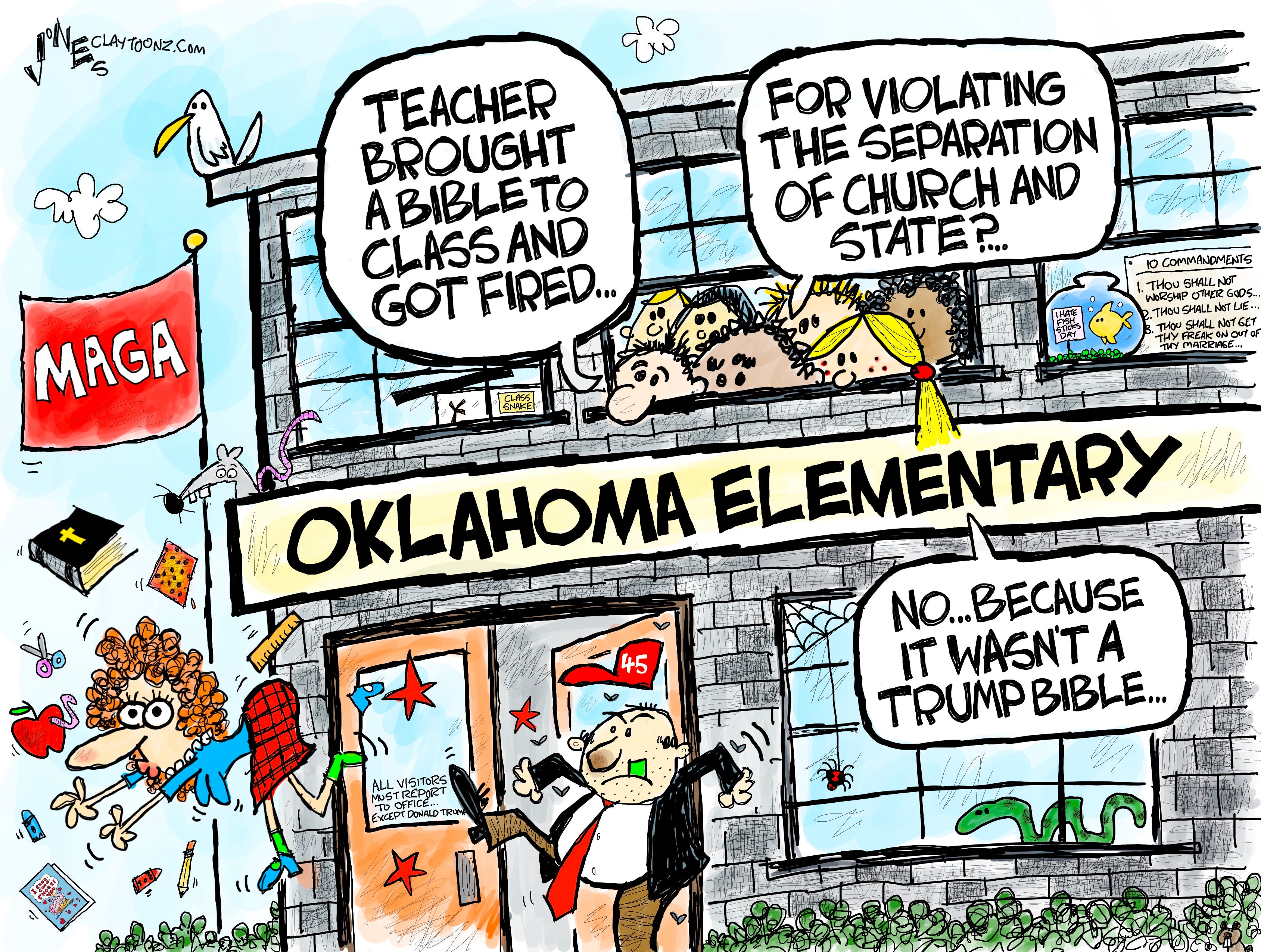
A knuckle-dragging religious troglodyte Trump cultist in Oklohama disguised as the state superintendent of schools has made Bibles in the classroom a statewide requirement. Oh, it gets worse. Initially, when the requirement was made, only one Bible fit the requirement. I’ll let you guess which one.
The initial requirement was that the Bibles be bound in “leather or leather-like material for durability,” and include the United States Constitution, the Bill of Rights, the Declaration of Independence, and the Pledge of Allegiance. The only Bible that fits that requirements cost $59.99 and puts the profits directly into the wallet of one Donald J. Trump.
Fortunately for Donald Trump, while the requirement was that the Bibles purchased for schools with state money contain the U.S. documents, there isn’t a requirement that they not be made in a factory using child labor in China.
Fun fact: The “God Bless the USA” Bibles, as they’re called and selling for $59.99, are only made at the cost of $3, and again, in China…the nation Trump claims is bribing President Joe Biden.
I never read the entire Bible but because of a mostly-Southern childhood where I was forced to attend church, Bible school, revivals, a Baptist Halloween, and even a Baptist private school against my will, I am pretty damn familiar with it. I know there’s no mention in the Bible of the Declaration of Independence, the United States Constitution, the United States, or Donald Trump. Also, how was I forced to attend all that Baptist stuff when I was born Catholic? Why?
What fucknut Ryan Walters is trying to do is force his religion on the children of Oklahoma while making a broad appeal to Donald Trump.
Donald Trump is the easiest politician to manipulate because he’s a corrupt narcissist. It’s why Republicans and foreign governments rented his hotel rooms while he was president (sic), even when they didn’t stay at his hotels. There are many ways to purchase Trump’s affection.
William Barr once rented the ballroom at Trump’s Washington hotel. Who the hell goes to a William Barr party? That sounds brutal. You could run into a Cory Lewandowsky or a Stephen Miller at one of those. Scott Pruitt, a member of Trump’s cabinet needed a new mattress and instead of buying a new one at an actual business that sells mattresses, tried to purchase a used one from Trump’s DC Hotel. Why would you want to buy a used mattress that thousands of people got funky on and could possibly contain bedbugs instead of, oh, I don’t know, purchasing a brand new one nobody’s ever shagged on? A mattress that MAGAts got busy on is the worst.
Here, Walters is appealing to Trump’s narcissism and corruption, possibly to win a spot in his administration. Bribing someone is so much easier than working to charm them. And here, Walters, who probably has zero charm, is bribing Trump with taxpayer money.
Just as Louisiana is forcing the Ten Commandments to be displayed in every public classroom in the state despite its abysmal literacy rate, Oklahoma is forcing Bibles in its classrooms when 45 percent of its fourth graders are below the basic reading level. That’s not OK (see what I did there?).
Maybe Oklahoma should use the textbooks it has now to teach its children how to read before sticking unnecessary zealotry bullshit on its walls that they can’t read.
It’s too bad “thou shall not grift,” “thou shall not bribe,” and “thou shall not force its religious fuckery on thy schoolchildren” aren’t part of the Commandments.
Also, Bibles should NOT be in any public school classrooms. The Bible should not be taught in schools. What should be taught in school is math, reading, and history. Maybe if we do a better job at teaching history, we’ll stop being so stupid to repeat it. Current events should also be taught in classrooms as well (not what Beyonce is wearing but news) so people in Oklahoma and Louisiana can see that their Republican officials are trying to turn their states into the Taliban. Don’t do that. Taliban bad.
Because of pressure, the state is backtracking and adjusting the requirements for the Bibles, which they’re taking bids for now. The Constitution, Declaration of Independence, etc, etc, don’t have to be a part of the Bible now, they just gotta come with it. They’ve also adjusted the requirements for Fruity Pebbles to be sold in Oklahoma as the Ten Commandments no longer have to be printed on the label and can now be the toy surprise inside. It’s gotta suck to be a kid in Oklahoma. I’d Sooner live in a blue state. See what I did there? Never mind.
Walters is upset about having to change the requirement and said, “The left-wing media hates Donald Trump so much, and they hate the Bible so much, they will lie and go to any means necessary to stop this initiative from happening.”
Hmmm….if it didn’t have anything to do with Donald Trump, then why are you bringing him up? Walters is having great difficulty in hiding that this was all about buying 55,000 Trump Bibles at $55.99 each.
But, you don’t have to hate Donald Trump or the Bible, which Trump has never read, to not want Bibles in public schools.
Instead of requiring that Bibles and the Ten Commandments be placed in schools, require that the Constitution be placed in schools. Or better yet, before you become the State Superintendent of schools, especially in a yee-haw state, there should be a requirement that you READ the Constitution…and take a test on it.
Ryan Walters would flunk on the First Amendment as it says, “Congress shall make no law respecting an establishment of religion or prohibiting the free exercise thereof.” Now, I know Walters is not Congress but I’m pretty sure the Constitution forbids any government from establishing a religion, which is what Walters is trying to do. He’s not trying to force the Koran or Torah in classrooms.
And by the way, is Walters requiring math and history books to be leather-bound or just the school’s Bibles? Maybe could they use that cheap “leather-like” material the $59.99 Trump Bibles come with.
Hey, shitweasels… When you guys pull this kind of crap, can you find a way to make it appear that it serves the betterment of society, the public, and the greater good instead of just serving Donald Trump and yourself? Hmmm?
Music note: I jammed to Verbena while coloring. (snip)
(Note from Ali: Jess wrote the anti-misogyny rant I was thinking of.)
“Do the best you can until you know better. Then when you know better, do better.”
~Maya Angelou
I go solo camping often. I head up to the North Shore in Minnesota or down to Northwest Arkansas and hang out a few days by myself or with my daughter. My husband is a big ole, corn-fed country boy who will not sleep on the ground, so we leave him at home.
I love to sleep outside, but the very thing I hate about camping is sleeping outside — exposed. As a woman, this is something I think about a lot. When I wake up for some unknown reason and wonder if I heard something in my sleep. Or, I wake up to actually hearing something or someone. I get scared. I get nervous. I wonder why in the hell I do the things I do and take the chances I take.
And then I go back to sleep and wake up on Lake Superior or Devil’s Den and hike to waterfalls and forget it all until it is time to go back to sleep outside. Love and hate.
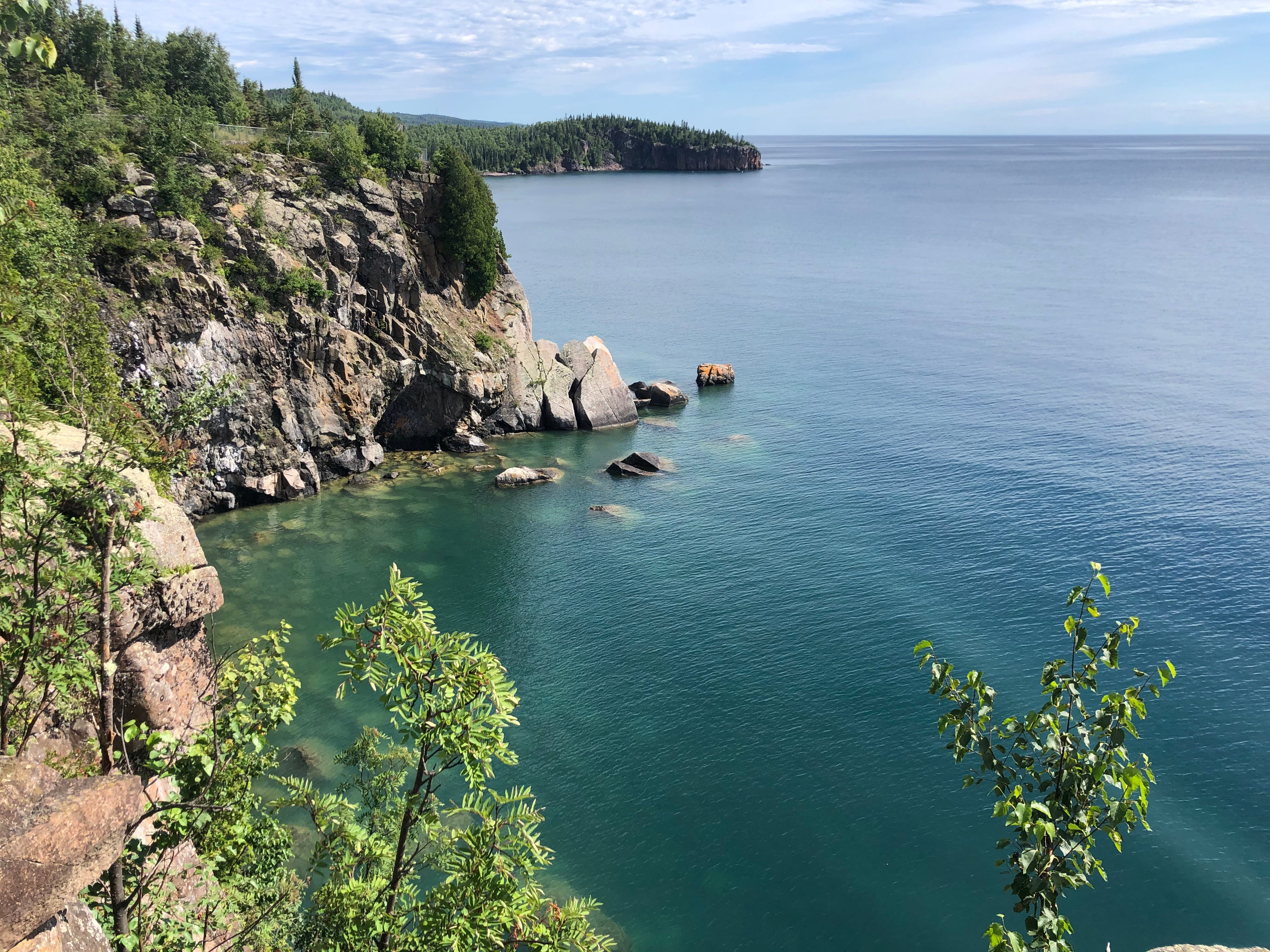
Lake Superior, Split Rock Lighthouse State Park.
I once asked my husband if he’s ever afraid when he is alone. He laughed out loud.
“Of what? Why would I be scared?”
I tend to be an overthinker, but I can’t tell you how many times I have wondered about his statement of fact. He is not scared. Of men or animals or most of the danger I intuitively see around me. He has nothing to be scared of — he is physically imposing and there is not one law on the books that will harm him.
He has never worried about walking at dark. Or encountering someone on a trail. Or sleeping outside. Or most of the things that take up a lot of my mental space.
He has lived his life completely unencumbered by his environment, even as a resident of a red state. A homegrown Missouri man.
Sure, the Missouri GOP trifecta, a supermajority, has defunded the schools and let our roads crumble and closed hospitals and generally made a nuisance of themselves, but that is exactly what they were to him. An inconvenience. Annoying. Turds in the punchbowl, but nothing to get too riled up about.
He was just living his life.
He didn’t see it. Not because he is not empathetic. Not even because he doesn’t pay attention to politics. It’s because he has lived his life with a privilege he didn’t know existed until I pointed it out. Because, until he saw the world through his daughters’ eyes, through my eyes, these things just never occurred to him. He didn’t deny privilege, he just didn’t see it. He isn’t uncaring or a dolt — he just had absolutely no experience being marginalized. I had to tell him.
Once he saw it, though, he couldn’t look away. He was disgusted. He understood.
This is where I should mention something that I have spoken of in front of safe men. When I tell them that I have been sexually assaulted as well as almost every woman I know, they are astounded. When I tell them of sexual harassment, they are amazed. And then, one day it clicked for me. These are good and safe men and the predators know it. They don’t hurt women while they are around. They don’t talk about it or joke about it, because these men wouldn’t put up with it. The good guys have often really not been a witness to the behavior we have endured because they are just that…good guys.
I am not making excuses for the menfolk.
The men in my life will attest to the fact that I constantly push them to see what we see. I am hard on them. I ask that they look beyond themselves and be an ally to others. To be a witness and bear witness.
We don’t need protectors, but we do need witnesses.
As a woman, as a mom of girls and granddaughters, I have no degree of safety in Missouri and I know all of my girls fall into the same category. They are not safe from sexual assault or rape. They are not safe after a sexual assault or rape. They will likely be dismissed, or worse, blamed. They would be forced to bear the child of their rapist. They would likely be forced to co-parent with their rapist.
Missouri has a total abortion ban with no exemptions for rape or incest. Not that it would matter…I am sure there is some process to that exemption as well and I really hate the notion that a woman or girl can’t have bodily autonomy unless she has first been violated.
Writing that sentence made me sick at my stomach.
Missouri women have been denied care because of the abortion ban. A Kansas OBGYN, Dr. Ahmed, shared a story last week about her Missouri patient who suffered a miscarriage:
“She came in for a follow-up still bleeding,” said Dr. Ahmed. “Turns out there was some tissue that was still there. Retained tissue in that setting can become infected, can cause a lot of bleeding, so I discussed with her the options.”
The patient decided on medication and Dr. Ahmed says she prescribed it. But the following morning, she received a fax from Walgreens on Stateline after prescribing Misoprostol or Cytotec for the miscarriage stating, “Under Missouri law medication abortion is now illegal. Please advise patient to fill across Kansas border”.
Missouri has also had a 25% decrease in OBGYN residency applicants willing to come to our state because of the ban. That decreases care for all women, not just pregnant women.
We aren’t safe in Missouri.
The good news is that Missourians will get to vote on Amendment 3 in a few weeks. This amendment will restore abortion rights in Missouri. We will be the first state to overturn a complete ban.
The bad news is that our bodily autonomy is even put to a vote. That geography dictates our rights. That random folks will get to decide if we are first or second-class citizens. That we have been treated as less than. That our rights have been up for debate.
This is red state shit. We are used to it. It is constant and it is something we live in fear of every day. It is the thing I point to when I am speaking to the men around me. I never let them daydream their way back into complacence. I don’t let them fade into the peace of not knowing…of not being engaged. I don’t let them forget the fear of the women around them. I keep them awake.
Woke. (Emphasis mine- Ali)
I don’t want to be scared of living in Missouri anymore. I don’t want anyone to be scared in their home state. This is why we have to speak on it. Say it.
The reality is that we cannot gain our rights back without involving men. I have such good men in my life. Would they have voted yes on Amendment 3 without me telling them? I’d say yes. Would they be as rabid in telling other men around them to vote yes if I had not worked on them for so long? Maybe not.
It’s not that we are dealing with self-centered jerks. It’s that they didn’t know what they didn’t know.
Superintendent Ryan Walters’ legal fees surpass $100,000 amid multiple lawsuits
by Tanya Modersitzki Thu, October 10th 2024 at 12:51 PM
Updated Thu, October 10th 2024 at 4:13 PM
OKLAHOMA CITY, OKLA — As Superintendent Ryan Walters sees the inside of a courtroom more with recent court dates piling up, he’s also racked up more than $100,000 in attorney fees in a five-month time span.
On Oklahoma State Court Network’s website, since last year, he’s named in eight lawsuits, not including the one involved with the State Grand Jury on alleged misspent pandemic money, and others related to the Oklahoma State Department of Education.
State Representative Mark McBride said he’s concerned how much Walters’ legal fees are costing taxpayers.
“I’m pretty confident there’s another investigation going on by the feds in the Department of Education. I think he’s 12 or 14 lawsuits,” McBride said. Walters most recent lawsuit came from the Bixby Public Schools Superintendent for alleged defamatory remarks.
From March of this year until July, records we received from Oklahoma Management and Enterprise Services show Walters averaging roughly $20,000 a month in lawyer fees. In March, OSDE paid an attorney invoice for more than $28,000.
In May, multiple invoices came out to cost more than $19,000.
In June, OSDE paid nearly another $28,000 for attorneys.
In that timespan, Walters’ attorneys cost the state more than $104,000. McBride said this is all at the cost of constituents.
“These things I think he’s going to lose at the end of the day and taxpayers foot the bill,” he said.
These totals don’t reflect charges for August, September, and October. NewsChannel 8 is working to get those numbers. Walters’ office did not respond for a comment.
Get ready for Donald Trump’s blue state extravaganza.
With less than four weeks until Election Day, Trump is scheduled to hold rallies in staunchly Democratic states he has virtually no chance of winning. It’s an unorthodox strategy campaign advisers say is designed to focus on areas where Democratic policies have failed, but it will also keep him away from the small handful of swing states almost certain to determine the election.
Over the next month, the former president has events scheduled in Colorado, California, Illinois and New York. President Joe Biden won those states by an average of 20 points in 2020, with his 13-point Colorado win the closest margin. Colorado is the only one of those states to vote for a Republican nominee for president this millennium, backing George W. Bush in 2004.
While each event will be held in slightly different venues, the most notable will be later this month in Madison Square Garden, a place where Trump has long said he wanted to hold political rally.
“Choosing high-impact settings makes it so the media can’t look away and refuse to cover the issues and the solutions President Trump is offering,” said a senior Trump campaign adviser of the strategy behind late-election cycle events in Democratic states. “We live in a nationalized media environment and the national media’s attention on these large-scale, outside-the-norm settings increases the reach of his message across the country and penetrates in every battle ground state.”
“President Trump is closing the campaign highlighting the problems the country faces as a result of Harris and Biden’s failed leadership and articulating his solutions to solve the problems they created,” the adviser added.
The decision to deviate from a traditional campaign playbook comes at a time when the race is almost certain to be decided in places like Georgia, Pennsylvania, Nevada, North Carolina, Wisconsin and Michigan, places that are within the margin of error in most public polling and considered winnable for both Trump and Vice President Kamala Harris.
“This does not seem like a campaign putting their candidate in critical vote rich or swing vote locations — it seems more like a candidate who wants his campaign to put on rallies for optics and vibes,” longtime Republican operative Matthew Bartlett said.
He called Trump the “most unorthodox candidate in modern history,” which means the off-script strategy could have some value.
“In 2016, Trump realigned the party to be much more rural and working class, now in 2024 he is trying to expand his voting base along certain cultural lines that may eat away at traditional Democratic voting blocs,” Bartlett said.
A second Trump adviser said that no matter where Trump holds rallies, he gets huge online viewership, including in swing states, and there is a confidence within the campaign about their chances, which in their estimation allows for some risk.
“Certainly we are bullish on our prospects writ large,” the adviser said.
Some Trump supporters argued that going into areas of the country traditionally not visited by Republican presidential candidates could have a sort-of coattail effect, helping boost down-ballot Republicans in tough races. None of the states where Trump is visiting has a competitive Senate race, but there are a handful of competitive House races in a year where the majority of that chamber will likely be decided on a razor-thin margin.
In California, House District 40 is represented by Republican Young Kim, and House District 41 is represented by Republican Ken Calvert, both of whom are in contested races in the Los Angeles media market along with Coachella, which is where Trump will be holding his rally.
In New York, Rep. Mike D’Esposito won Nassau County’s 4th district in 2022, but it is a seat that leans Democratic and was won by Joe Biden by 15 points in 2020. Flipping the seat played a big role in helping Republicans take the House majority in 2022.
“The fact that we can pickup down ballot seats with President Trump’s aggressive travel plan is a testament to the well orchestrated and effective campaign plan that focuses on unifying all Americans,” said Ed McMullen, a Trump donor who served as ambassador to Switzerland during the Trump administration.
“It is a well-planned effort to reach out and win key seats,” he added.
(Note from Ali: I’ve seen a couple of headlines that the Don’s campaign plans to run heavy anti-trans ads in the swing states. I’ve used all my free NYT articles for life, but they have a story about it. So this is of interest to All Women.)
Black trans women are a small subset of trans voters, who make up a small portion of the electorate — but they’re also longtime leaders of the LGBTQ+ rights movement who know what’s at stake.
Five years ago, Democratic presidential primary hopeful Kamala Harris stepped onto a stage at a CNN LGBTQ+ town hall in Los Angeles.
“My pronouns are she, her and hers,” Harris said in her introduction.
Offering her pronouns, which wasn’t nearly as commonplace in 2019 as it is now, showed solidarity with transgender and nonbinary Americans. It was a simple but impactful gesture for a community in the midst of an unprecedented homicide crisis, whose rights and humanity had been challenged by former President Donald Trump, who was in office at the time, and other Republicans
In standing shoulder to shoulder with transgender people, Harris began to shift a relationship that had been dogged by decisions of her past, like her support for bills cracking down on sex work during her time as a prosecutor in San Francisco and, while California’s attorney general, her state’s opposition to gender-affirming care for an incarcerated transgender woman in 2015.
Today, Black transgender women, some of the same people who questioned her candidacy five years ago, are supporting Harris on and off the campaign trail. One way they have shown up is by raising money and drumming up support, like a Zoom call in August that was joined by more than 1,000 transgender people, the brainchild of veteran Black trans activist Zahara Bassett.
“I felt that we need to let people know that our voices are at the ballot,” Bassett said. “When we speak to you about our rights, about our visibility of being here, that needs to be respected.”
Bassett enlisted the help of several trans luminaries, including Precious Davis, who had long heard criticism of Harris among her LGBTQ+ peers. Davis, chief strategy officer of Center on Halsted, Chicago’s largest LGBTQ+ community center, said she knew it would be critical for Black trans women to show up for Harris, in part as a way of signaling to Black trans women and queer communities they had permission to vote for the vice president.
“We are a part of a community who have the most to lose,” Davis said of Black trans women. “Our rights and freedom are at stake. We have seen Donald Trump’s attacks against the trans community time and time again.”
Many LGBTQ+ advocates have argued that even if Harris has room for growth on LGBTQ+ issues, it’s nearly impossible to compare her with Trump, who regularly misgenders trans women and refers to trans people as “insane.”
“I will say that I would rather have a fighting chance with her than have no chance at all with Trump,” said Hope Giselle-Godsey, executive director of the National Trans Visibility March, another organizer of the Zoom call for Harris.
While she was roundly criticized four years ago for mixing up language in referring to transgender women, overall, Harris’ record on LGBTQ+ rights is largely viewed positively. She provided some of the earliest support for marriage equality of any presidential hopeful when, as district attorney in San Francisco, in 2004 she officiated a same-sex wedding in California. She also opposed so-called gay and trans “panic defenses,” where perpetrators attempted to claim that fear or disgust of LGBTQ+ people was reasonable motivation for attacking them.
She lost significant ground going into 2020 after her support of FOSTA/SESTA, a 2018 package of bills that aimed to crack down on websites used by sex workers. Transgender people are disproportionately forced into underground economies like sex work due to a lack of employment opportunities.
Trump, however, has fared much worse. During his four years as president, the National Center for Transgender Equality labeled his cabinet the “Discrimination Administration” and the media advocacy group GLAAD logged 210 attacks on queer people. He also barred transgender people from serving in the military, banned Pride flag displays at embassies and gutted transgender health care protections under the Affordable Care Act, among other things.
Channyn Lynn Parker, CEO of the Brave Space Alliance, which serves trans and gender nonconforming youth on the south and west sides of Chicago, speaks about both candidates with resignation. She, too, helped organize the Zoom for Harris, though less enthusiastically than her peers.
Parker has worked with street-based and unhoused youth for more than 10 years and has seen Democratic candidates come and go, all of them with different promises for the community; for example, Biden pledged to trans kids that he “had their backs.”
Meanwhile, the kids she works with still face the same challenges. Many are still kicked out of their homes by their own parents and they’re particularly vulnerable to the anti-trans laws and hate that has also flourished across the country.
“I have never seen a candidate where I feel completely safe, and I’ve ever been able to breathe a full sigh of relief, never,” Parker said. “So, I don’t know if Kamala is going to be any different in that regard.”
Black trans women are a small subset of the transgender voters, who make up a small portion of the electorate. An estimated 825,100 transgender adults of all races will be eligible to vote in November, according to the Williams Institute at the UCLA School of Law. As of last year, 161 million Americans were registered to vote.
In recent years, advocates have invested heavily in giving credit to Black trans activists for leading the charge at the Stonewall uprising in 1969, where queer people famously fought back against homophobic policing in New York City.
At the same time, Black trans women have been overrepresented in the numbers of trans homicide victims and often underrepresented in the media.
At the 2019 LGBTQ+ Town Hall, where Harris introduced herself with her pronouns, Black trans women made headlines by interrupting the event repeatedly, noting that not a single Black trans woman had been invited to ask candidates a question.
The town hall also included a gaffe: Immediately after Harris shared her pronouns, CNN’s Chris Cuomo replied, “Mine too.” To transgender people, the moment highlighted how, even at an event centered on LGBTQ+ communities, transgender issues could become an afterthought. And in the four years since, Trump and his running mate, Ohio Sen. JD Vance, have repeatedly attacked transgender people; 176 anti-trans bills have become law; and none of the debates have delved meaningfully into LGBTQ+ issues.
The Black trans women backing Harris see the setbacks — and also an opportunity if Harris wins. Davis said she is ready to lobby Harris on trans issues the moment Harris takes the oath of office. Bassett has at the ready a wish list of policies that would make gender-affirming care more accessible and less stigmatized.
And Parker is clear about one thing: Supporting a candidate doesn’t mean agreeing with them unconditionally. It means challenging them to be better.
“We’re going to provide you with all the necessary tools and resources and individuals to help you to get this right,” she said. “If you don’t use those tools, meaning the individuals who are providing you with the level of access and education needed, then shame on you.”
To check your voter registration status or to get more information about registering to vote, text 19thnews to 26797.

 Scottie's Playtime