Observing Women’s History Month

Rose O’Neill’s Bonniebrook

“I love this place better than anywhere on earth”
-Rose O’Neill about Bonniebrook

Bonniebrook is a historic home and museum located in Walnut Shade, Missouri, just a short drive from Branson. Our museum is dedicated to preserving the life and legacy of artist, writer, and activist Rose O’Neill, best known for her creation of the Kewpie dolls.

​Bonniebrook Museum features Rose’s original drawings, paintings, and sculptures, artifacts from the O’Neill home, a large collection of Kewpies and other characters, the O’Neill family cemetery, and much more!

​As one of the only art museums and historical homes in the Branson area, Bonniebrook is a must-see destination for those looking for things to do in Branson, Missouri and the surrounding areas. Come visit this well-preserved piece of history!


Mission Statement:
Bonniebrook Historical Society (BHS) was founded in 1975. Its purpose is to collect, preserve, and make available for educational and historical purposes artifacts, documents, personal items, and any work or items directly relating to the history and life of Rose O’Neill. In addition, BHS accumulates research, materials that document, authenticate, explain, and provide detailed information about the character, personality, and accomplishments of the talented and generous Rose O’Neill.

https://www.roseoneill.org/


A Quick & Easy Women’s History Post

Another Women’s History Post

Short, sweet, and simple, by an artist I have adored since Jr. high and my own radio.

A Post for Women’s History Month

Women’s History Month: Celebrating Jayne Kennedy, The First Black Woman To Conquer Network Sports

Explore the multifaceted journey of the Emmy-winning trailblazer who transitioned from Hollywood to the NFL, changing the game forever.

By Tamara Brown March 9, 2026

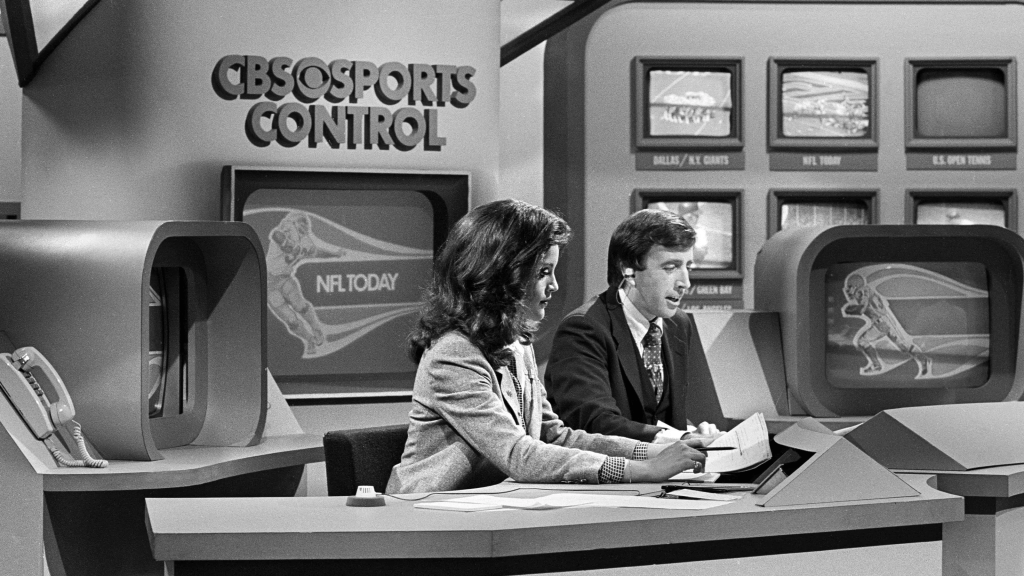
NEW YORK – JANUARY 1: Jayne Kennedy and Brent Musburger on “N.F.L. Today,” on the CBS Sports television network. Circa 1978.

In the late 1970s, the network TV sports was a club where the doors were mostly locked to anyone who wasn’t white and male. But Jayne Kennedy didn’t just knock; she blasted those doors off the hinges.

As we continue our Women’s History Month spotlight, we’re looking back at the woman who, in 1978, became the first Black woman to co-host a major national sports program. When Kennedy stepped into the anchor chair on CBS’s The NFL Today, she did more than just read highlights. 

Jayne Kennedy, now 74, held that ground-breaking role from 1978 to 1980, quickly becoming one of the most recognizable faces in the country. Before her history-making run at CBS, the former Miss Ohio USA was already a star. She got her start as a dancer on Rowan and Martin’s Laugh-In and spent years touring with legends like Bob Hope and Dean Martin.

While her Hollywood resume is long, her impact on the sports world is what truly changed the culture. Beyond the NFL, Kennedy remains the only woman to host the long-running series Greatest Sports Legends. She even stepped into the ring as the first female color commentator for men’s professional boxing.

Even now, Kennedy isn’t slowing down. She was a key player in the LA28 Foundation, helping secure the bid for the 2028 Olympic Games in Los Angeles. She’s also sharing her full story in her new memoir, Plain Jayne, which dives into the grit, faith, and ambition it took to navigate a career filled with hurdles.

By breaking that ceiling nearly 50 years ago, Kennedy didn’t just make a name for herself. She made sure that for the rest of us, the path was already paved with the excellence she brought to the screen every Sunday.

https://www.bet.com/article/kqmmay/womens-history-month-celebrating-jayne-kennedy-the-first-black-woman-to-conquer-network-sports

For Women’s History Month,

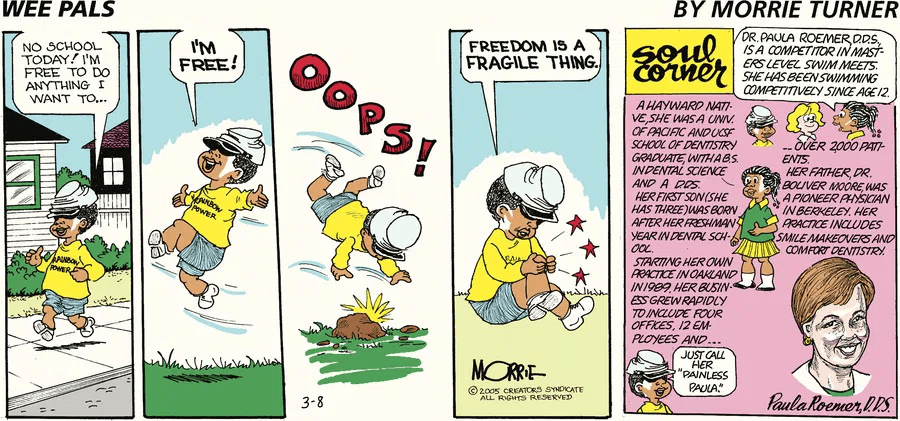
https://www.gocomics.com/weepals/2026/03/08

A Women’s History Month Entry

from Peace & Justice History, and the Jeannette Rankin Peace Center.

March 4, 1917
Montana elected Republican Jeannette Rankin as the first woman to sit in the U.S. House of Representatives three years before American women nationwide could legally vote.
A persistent advocate for women’s rights, particularly suffrage, Rankin voted in Congress against American entry into both world wars, and late in life led marches against the
Vietnam war.
Rep. Jeannette Rankin with her colleagues in the 61st Congress.
More about Jeanette RankinVisit the Jeanette Rankin Peace Center 

Who was Jeannette Rankin?

Jeannette Rankin was the first woman ever elected to the U.S. Congress, and a native of Missoula, Montana. She was elected in 1916, before women nationwide had the right to vote. In 1917 she joined a handful of representatives who voted against entry into World War I asserting, despite harsh criticism and certain damage to her career, that, “the first time the first woman had a chance to say no against war she should say it.” In 1941 she bravely stood alone in Congress in voting against entry into World War II, but she did not stand alone in society in her opposition to institutional violence and war. Her stand against war as a viable resolution to international conflicts provoked questions on the basic assumptions about peace, war, and conflict, which we continue to grapple with today. Rankin’s staunch opposition to war made her a spokesperson for veteran’s rights, as well, since she recognized them as pawns in the games of politicians. It was she who first introduced the GI Bill to Congress, which guaranteed post-discharge education and other benefits to those who served in the military. Her long career was also distinguished by her deep commitment to the country’s women, poor, and its children. She put forth an alternate vision for this country as one which championed peace and justice. She worked tirelessly in opposition to war and oppression by attending rallies, and by giving speeches in person and on television into her 90s.

The Jeannette Rankin Peace Center is proud to carry the name of this pioneer Montanan whose life’s work exemplified a steadfast devotion to peace, justice, and democratic equality. Jeannette Rankin was, in many ways, the first lady of U.S. politics. Her legacy lives on today through those who carry on her work and honor her memory. University of Montana’s Archives and Special Collections houses a collection of oral history interviews that were conducted by Dawn Walsh for the Jeannette Rankin Peace Center. The interviewees were former and current members of the Missoula Women for Peace and detail their interest and activities related to peace activism. These interviews are available in both audio and text format through University of Montana Scholar Works. (snip-MORE)