Texas Paul EXPOSES Radical Right’s BIG LIE on Global Oil Market

Gavin Newsom makes long-awaited announcement

FREEDOM?? Or Asleep? | Christopher Titus | Armageddon Update

An Irish politician puts America on blast for not being a functioning democracy

North Carolina Bill Would Destroy EV Chargers On Public Property Unless There’s Also A Free Gas Or Diesel Pump

What is this, pure hate for the future?   Hate for electric?   Love of gas and oil?   Just plain not wanting things better for anyone?  Hugs

The North Carolina Pilot reports:

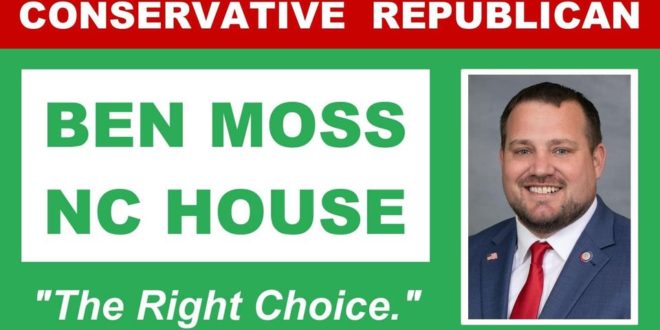
State Rep. Ben Moss, who won the GOP primary against Jamie Boles for the newly drawn District 52 seat, is one of four Republicans in the House co-sponsoring legislation that would add regulation to the state’s incipient electric vehicle infrastructure.

Moss’ bill, HB 1049, was filed May 25. Known as the “Equitable Vehicle Fuel Stations,” it would essentially eliminate any free electric vehicle charging stations on public property if a free gas pump is not similarly provided.

Also, the bill would prevent the state or local governments from funding free chargers if they don’t provide a gas pump as well. The bill would also require private businesses that offer free chargers to disclose to customers on receipts the pro rata fees they are paying to maintain the stations.

Car & Driver reports:

Moss decided that his animating principle is Being Mad at Electricity. To prove his animosity toward this invisible menace, he’s sponsoring House Bill 1049, which would allocate $50,000 to destroy free public car chargers. We’ve simply got to do something about these free public chargers, even if it costs us $50,000! Those things cost tens of cents per hour, when they’re being used.

That rule only comes into play if a town refuses to build free gas and diesel pumps next to the EV chargers. House Bill 1049 also decrees that all customer receipts will have to show what share of the bill went toward the charger out in the lot. That way, anyone who showed up for dinner in an F-150 (not the electric one) can get mad that their jalapeño poppers helped pay for a business expense not directly related to them.
https://twitter.com/davidgura/status/1545424566360702980?ref_src=twsrc%5Etfw%7Ctwcamp%5Etweetembed%7Ctwterm%5E1545424566360702980%7Ctwgr%5E%7Ctwcon%5Es1_c10&ref_url=https%3A%2F%2Fwww.joemygod.com%2F2022%2F07%2Fnorth-carolina-bill-would-destroy-ev-chargers-on-public-property-unless-theres-also-a-free-gas-diesel-pump%2F

BensNewLogin • an hour ago

Some one should check his donations from the oil industry

Rillion • an hour ago

Just have the free gas pump dispense an equal amount of gas in $ value to the cost of electricity dispensed from the electric charger. See how much demand there is for a pump that will give out 50 cents of gas every hour.

Buford Rillion • an hour ago

Also, we clearly need to crack down on people using taxpayer-funded outlets in public spaces to charge their electronic devices unless the location also hands out free batteries.
S_E_P • an hour ago • edited

This has been going on since the automobile was invented. The oil industry destroyed Los Angeles’ enviable trolly car system for their own profit gain.

Buford S_E_P • an hour ago

Remember when several states blocked Tesla from selling cars directly to the public, instead demanding that their laws required all new vehicles to be sold thru dealerships…?

This is exactly that stupid.

Uncle Mark eats the rainbow • an hour ago • edited

Besides sounding like someone owned by the oil companies, this has some of that “we’re gonna buy all them old-school light bulbs instead of those Obama lib LED ones” energy.

Abort Abbott • 2 hours ago

The clean coal & renewable fossil fuel industries are at work, AGAIN!

Adam Schmidt • an hour ago

As his bill is entitled “Equitable Vehicle Fuel Stations”, I assume that he is requiring that every location in the state that provides gas or diesel must also provide a similar number of electric charging stations as they have fuel pumps. Because that would be obvious, right?

How abortion bans make inequality worse

In 2008, researchers with the University of California San Francisco embarked on a study that compared the outcomes of two similar groups of women, each at a crucial juncture in their lives: a visit to an abortion clinic. The groups differed, though, in whether or not they were able to terminate an unwanted pregnancy. It was called the Turnaway Study, named for those who were turned away by the clinic because their pregnancies were past legal gestational limits, and it provides some of the best data we have on the impacts of abortion bans. Among the study’s findings is the severe financial impact of being forced to parent a new child when someone is already living in difficult financial circumstances. People who seek abortions, especially later-term abortions, are far more likely than the general population to be living in poverty, or otherwise financially unstable. That fact makes it unsurprising that, when researchers asked women about their reasons for seeking an abortion, not being financially prepared was the most common reason. This video offers a glimpse into the financial penalty of parenting under difficult circumstances. We interviewed several women who had similar experiences to the women in the study. We didn’t seek out interviewees who exactly reflected the circumstances of the study participants (i.e., the length of gestation when they sought an abortion, or their socioeconomic background) but their stories reveal some parallels: most people want an abortion because they don’t feel financially stable or don’t have a partner they want to co-parent with. The Turnaway Study also looked at mental health outcomes, relationship outcomes, and whether or not study participants chose adoption instead of parenting. Whether or not they chose adoption is relevant to common pro-life rhetoric, which encourages people to give unwanted children up for adoption rather than choose abortion. But the Turnaway Study found that 91% of women who were denied an abortion chose to parent, which indicates that adoption is not a feasible alternative for most people. We interviewed Gretchen Sisson, a researcher who looked at adoption rates and motivations among the Turnaway Study participants. For more coverage of the Turnaway Study: https://www.nytimes.com/2013/06/16/ma… For lead Turnaway Study researcher Diana Greene Foster’s book about her study: https://bookshop.org/books/the-turnaw… For links to further research using Turnaway Study data: https://www.ansirh.org/sites/default/… For Gretchen Sisson’s work on adoption: https://www.whijournal.com/article/S1… We also interviewed Katie Woodruff, who analyzed news coverage of abortion: https://pubmed.ncbi.nlm.nih.gov/30309…

How the “lost cities” of the Amazon were finally found

The Amazon has always been one of the most mysterious places on earth. When European colonizers arrived in the 16th century, they were captivated by rumors of a golden city, hidden somewhere in the rainforest. Their search for “El Dorado” lasted more than a century, but only resulted in disaster, death, and further conquest of the indigenous people there. Experts thereafter looked at the Amazon and saw only a desolate jungle; too harsh for extensive agriculture and therefore sparsely populated. They believed that it had always been this way. Until recently. Beginning in the late 20th century, archaeologists began looking more closely at the forest floor. Working with the indigenous people who still remained there, they excavated long ditches and mounds. After mapping them, they could see that these were the markings of large settlements; walls, moats, plazas, and roads that connected even more settlements. And they were all over the Amazon. Further reading: The Lost City of Z, David Grann Exploration Fawcett: Journey to the Lost City of Z, Percy Fawcett The works of Michael Heckenberger; https://anthro.ufl.edu/2013/09/29/hec… Lidar reveals pre-Hispanic low-density urbanism in the Bolivian Amazon https://www.nature.com/articles/s4158… The geoglyph sites of Acre, Brazil: 10 000-year-old land-use practices and climate change in Amazonia https://www.cambridge.org/core/journa… Predicting pre-Columbian anthropogenic soils in Amazonia https://royalsocietypublishing.org/do… The Lore of Lost Cities – Imagining The Lost City Of Z https://www.forbes.com/sites/davidand… Once Hidden by Forest, Carvings in Land Attest to Amazon’s Lost World https://www.nytimes.com/2012/01/15/wo…

Why shipping container homes are overrated

They’re fun. They’re also way more difficult to build than they seem. Subscribe and turn on notifications 🔔 so you don’t miss any videos: http://goo.gl/0bsAjO Shipping container homes have been a trend for a while, from reality TV shows to housing policy discussions. But the truth is that these homes are a lot more difficult to build than you might think. It’s easy to think that housing solutions are purely technological, but many obstacles to housing aren’t in construction but in the policies surrounding homebuilding. Moreover, many of the supposed advantages of shipping containers turn out to be more complicated in reality. Vox’s Phil Edwards spent a night in a shipping container home to see how the experience of staying in a shipping container compares with the reality of building one. Further Reading: Mark Hogan’s 2015 opinion piece about shipping containers is a great introduction to the topic: https://www.archdaily.com/773491/opin… Belinda Carr’s debunking of shipping containers gets into more building science detail: https://www.youtube.com/watch?v=i7yED… She’s also an even-handed critic and made a video about five shipping container successes: https://www.youtube.com/watch?v=xkG3g… You can check out Michael’s Airbnbs here: https://www.airbnb.com/users/show/329… Make sure you never miss behind-the-scenes content in the Vox Video newsletter, sign up here: http://vox.com/video-newsletter Vox.com is a news website that helps you cut through the noise and understand what’s really driving the events in the headlines. Check out http://www.vox.com

HUFFPOST: Biden’s Potential Federal Court Pick Would Be A Lot Like Clarence Thomas, Says Former Boss

Biden’s Potential Federal Court Pick Would Be A Lot Like Clarence Thomas, Says Former Boss
Anti-abortion lawyer Chad Meredith would be a “conservative asset to the federal judiciary for decades,” an ex-boss said in a letter HuffPost obtained.

Read in HuffPost: https://apple.news/AI1t9mxx2T0aciqMmUtdtaA

Shared from Apple News

Sent from my iPad,Best wishes and Hugs,
Scottie

Is America Really a Christian Nation?