I got this like from a blog that Ali introduced me to. She left the comment with the link and I checked it out. I like the content so I decided to follow the blog. Yes it stretches my time a bit more but also broadens my knowledge level. The blog can be found here. Hugs.
The world has been flooded with misinformation. Falsehoods and conspiracy theories bubble up on everything from the weather to vaccines to the shape of the Earth. Purveyors of this garbage may be motivated by attention, money, or simply the appeal of sticking it to the educated elite. For people who try to keep both feet planted in the real world, it’s enough to make you want to scream. Even if you spend 24 hours a day pushing back against the wrongness on the Internet, it seems impossible to make a dent in it.
I’ve been pondering this, and I’ve decided that we need a way to target the worst sources of misinformation—a way to identify the people who are both the most wrong and the most dangerous. So, as a bit of a thought experiment, I started playing with a simplified scoring system for misinformation merchants.
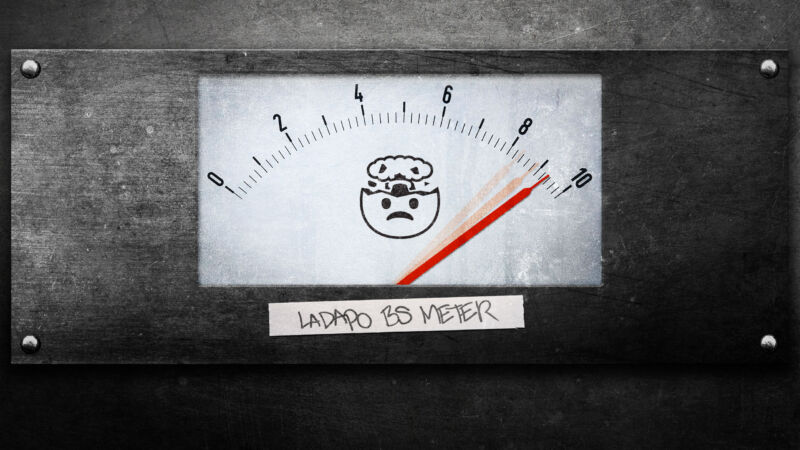
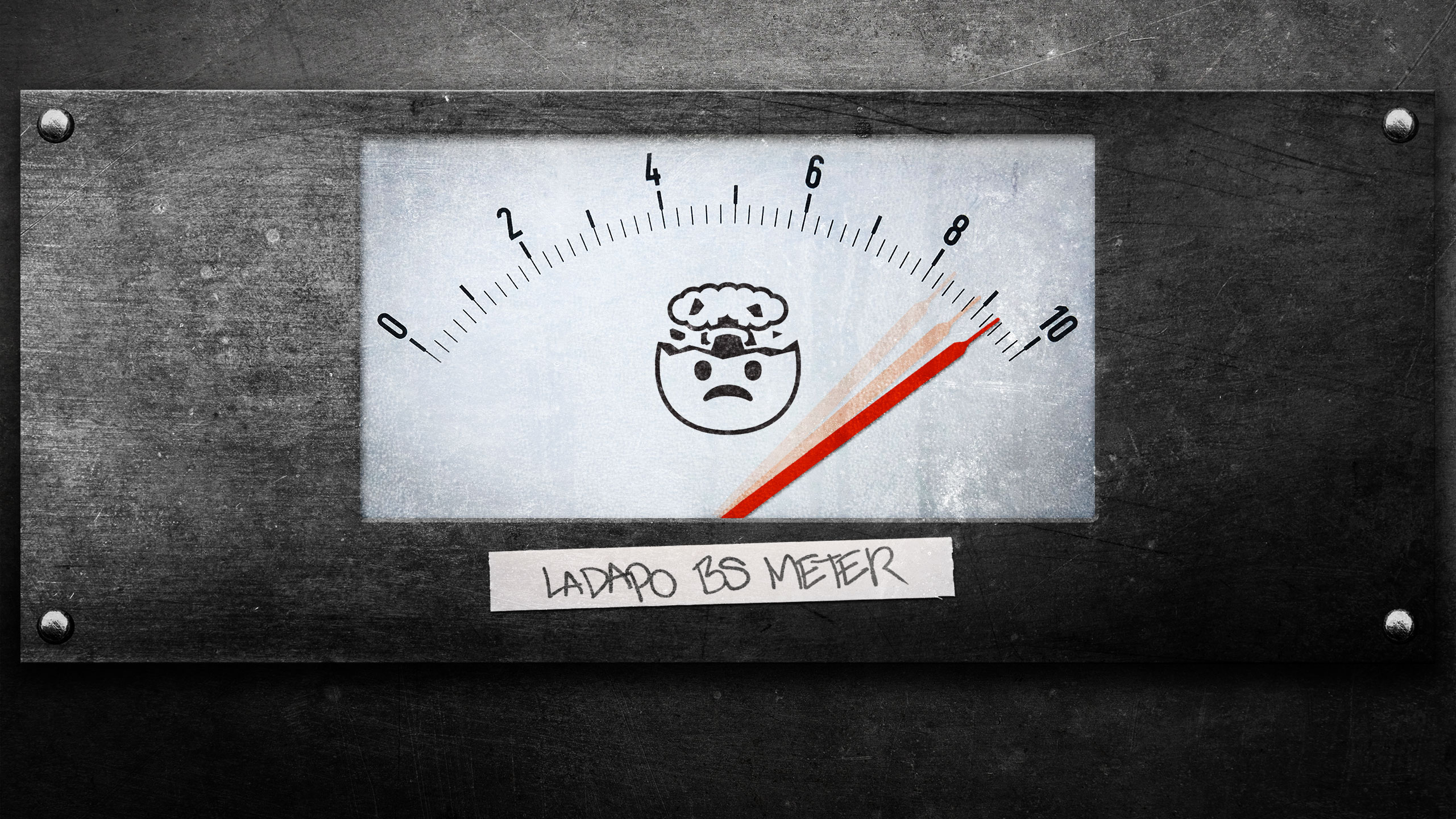
I’m calling it the 10-point Ladapo scale in honor of the surgeon general of Florida, for reasons I hope are obvious. Any person can be given a score of zero or one (fractions are discouraged) for each of the following questions; scores are then totaled to provide a composite picture of just how bad any source is. To help you understand how to use it, we’ll go through the questions and provide a sense of how each should be scored. We’ll then apply the Ladapo scale to a couple of real-world examples.
Is the person spreading misinformation where anyone will see it? A zero score here, representing a completely harmless individual, might be the person who keeps ranting to bots in an IRC channel that the last human left in 2012. Anybody who gives a press conference that the national media attends earns a one, as do people who find their place as talking heads or on the op-ed pages of The New York Times.
Does anyone care about the topic of the misinformation? If your conspiracy du jour somehow links the color of orange used on traffic cones to the sale of balsa wood model aircraft, congratulations, you pose no threat and rate a zero. If it involves who won the presidential election, you’re looking at a one here.
Is the subject easy to understand? Misunderstanding quantum chromodynamics, a subject many physicists fear, is not at all surprising. Getting things wrong about evolution, which is simple enough that textbooks explain its basics to pre-teens, is far less excusable and would thus get a one.
Is accurate information easy to find? Self-correction is only a possibility if the correct information is available. One can kind of understand holding false beliefs about a top-secret military technology. But when any search engine will pull up a dozen accurate FAQs on the topic you’re misinforming people about, you have earned your one.
Just how badly wrong is the argument? It continues to astonish me that there are people who apparently believe the greenhouse effect doesn’t exist. That level of detachment from reality should set the high end of the scale for wrongness. To get a zero (which is good here!), I’d allow even being mostly right but wrong about some details.
Is the misinformer promoting fake experts? Nobody can be an expert in everything, so we all find ourselves deferring to the expertise of others on some complicated topics. That makes assessing a source’s credibility critical. Unless you can tell an expert from a crackpot, you’re likely to find yourself relying on a climate “expert” who can’t reason scientifically. Like one who thinks dowsing works or one who happens to be a creationist or a former coal lobbyist. If so, you’ll have earned a point for relying on unreliable expertise—and increasing the reach of other serial misinformers.
Will people be harmed by the confusion created? If it turns out we’re living in a false quantum vacuum, everyone will die when the Universe finds a new ground state, and there would be nothing anyone could do about it. Misinforming people about the topic would have no influence on their ultimate fate, so you could lie to your heart’s content here and still earn a zero. That is very much not the case when it comes to issues like climate change or the pandemic. Putting people in danger earns you a one.
Should the individual know better? Anyone who is actually in the field they’re misinforming about, like Ladapo himself, obviously earns a one. But high scores also go to people who could easily access better information. It’s safe to say that every op-ed columnist at a major newspaper could easily call up scientists or other experts and have complicated topics explained to them. If someone refused to talk to experts because their feelings were hurt by people telling them they’re wrong, well, their score of one is probably best presented by a middle finger. Only the person who would struggle to access quality information truly earns their zero.
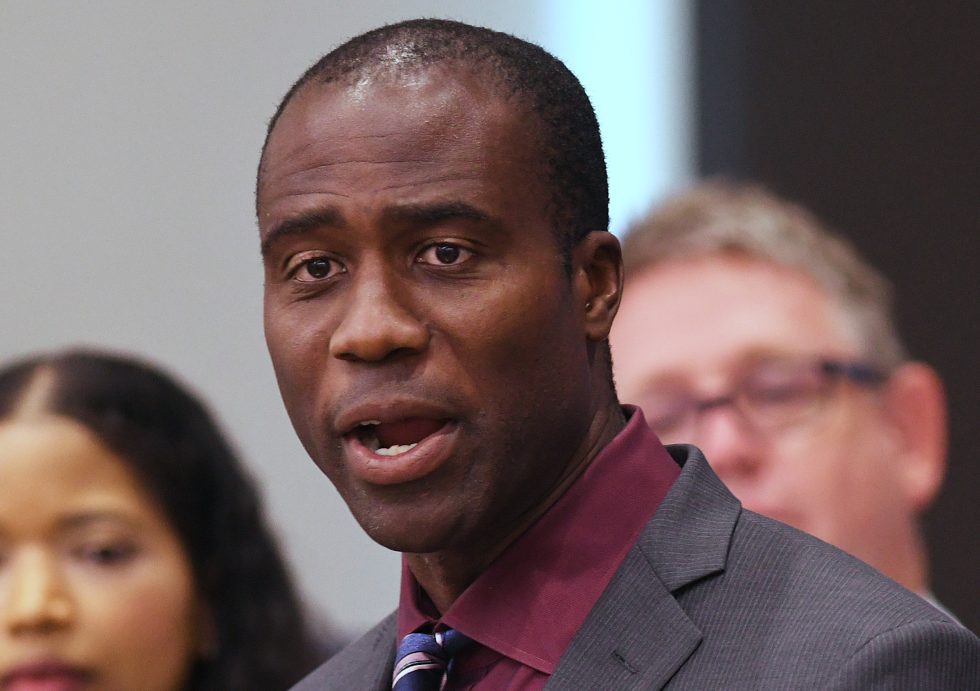
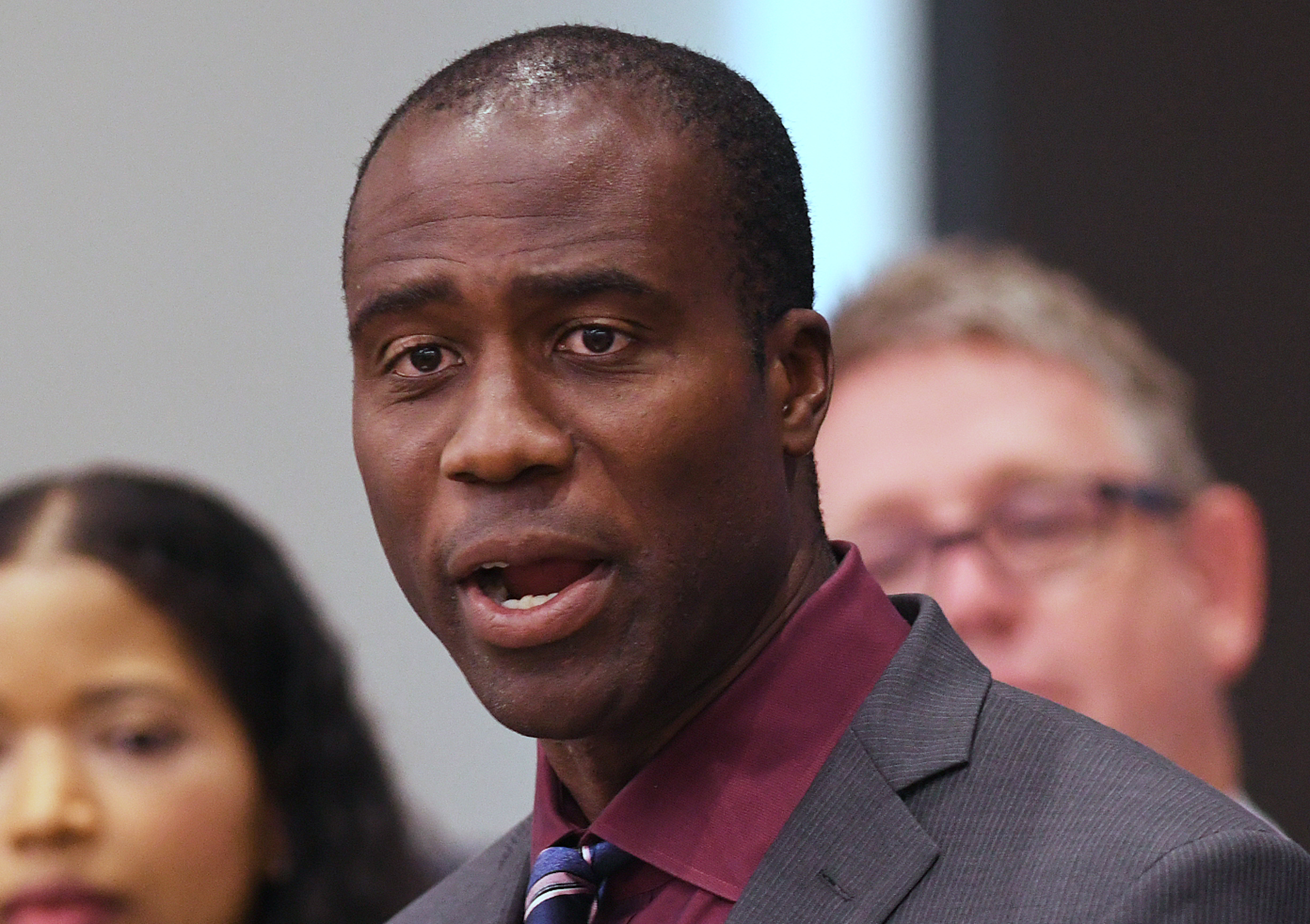
Enlarge/ Florida Surgeon General Joseph Ladapo speaks at a press conference in Rockledge, Florida, on August 3, 2022.
Is the person using their own authority to mislead? It’s one thing to rely on a fake expert like Nils-Axel Mörner to make bad arguments. It’s a different thing entirely to be Nils-Axel Mörner. Or Joseph Ladapo (who, if we allowed bonus points, would earn them for dragging down all the credentialed scientists at his agency with him). A point also goes to people who try to use their PhD in physics or similar subjects to intimidate anyone who disagrees with them. “I’ve done a lot of Googling” earns a score that is equal to the amount of respect it deserves: zero.
Is the misinformation effective? In Florida, COVID death rates were higher among Republicans after vaccines became available, which suggests that the anti-vaccine messaging from the state’s Republican leadership is doing exactly what it’s expected to do. Misinformation about the climate has been so pervasive that it took until the Biden administration for the US to have a climate policy that wasn’t predicated on making things worse. These are signs that the misinformation is working, and its purveyors deserve their ones.
Let’s look at how this works in practice. Ladapo earns a point for spewing misinformation in nationally televised press conferences, enabled by his credentials as a Surgeon General (+1 there). He gets another point for misinforming about vaccines, which people care about. Both vaccines and the protection offered by the COVID vaccines are easy to understand (“not dead” is a pretty clear concept) and easy to find, so two more points there. His argument is wrong enough that he may have violated his university’s research ethics guidelines, so another point there, plus one more for him being able to know better. Dead Floridians attest to the harm and effectiveness of his misinformation. About the only thing I haven’t seen him do is use fake experts.
A near-perfect 9 out of 10 tells us that Ladapo demonstrates an impressive combination of wrongness and risk. It raises so many questions about his judgment that he probably shouldn’t be trusted about any subject. (You may nitpick naming the scale after someone who doesn’t achieve a perfect score on it, but remember, the issue here is misinformation—it would be inappropriate for the name to be completely accurate.)
A test case
To get a better sense for the use of the scale, I’ll use it on a less obvious candidate: Washington Post opinion columnist George Will. Will is an interesting case because he has a reputation as an intellectual and deep thinker, and he remains generally popular within the establishment of what you might call traditional conservatives in the post-Trump environment. And he generally reserves his arguments for policy matters, which are more opinion-based than fact-based.
But Will has had a thing for climate change, revisiting it semi-regularly for over a decade and invariably spouting blatant misinformation when he has. Here he is back in 2009, belittling scientists for saying that an apparent pause in warming was something that’s both temporary and inevitable when you superimpose short-term randomness on a long-term trend. Despite Will claiming that “evidence of warming becomes more elusive,” it is now obvious that the scientists were right. And he was still going on in 2021, suggesting we can’t even manage to establish basic facts. “Science has limited ability to disentangle human and natural influences on climate changes,” he said at the time. He’s published a number of very stupid things in between.
But is that enough to qualify Will as laughably wrong and dangerous? Let’s find out.
First, a focus on climate change guarantees someone a substantial number of points. It’s a subject people care about, accurate information is just about everywhere, people will clearly be harmed as a result of the misinformation, and it’s painfully clear that the misinformation has helped delay any action to limit the damage. That’s four points right there.
But Will doesn’t stop grabbing points. He has published his errors in places like the Washington Post and Newsweek, ensuring that it will be widely read (another point). He’s relied on fake experts like Steve Koonin and Bjorn Lomborg, who have had their arguments widely criticized in places Will could easily find if he chose to. He could easily get scientists to explain where he’s making errors, but as noted above, he seems to be comfortable simply dismissing their statements—and apparently hasn’t learned anything from the fact that the scientists turned out to be right. So there’s another point for being in a position where he clearly should know better but can’t be bothered to learn. We’re up to seven.
How badly wrong is Will? He devoted an entire column to the idea that the climate has changed in the past without human influence, so we can’t be confident that it’s changing now because of human influence. That is mind-numbingly ignorant. It’s the equivalent of arguing that, since lakes have formed free from human intervention, we can’t be certain that dams are doing anything.
I wish I could award him more than one point for just how awful that argument is, but rules are rules. Still, it does lead to another point: it’s not difficult to understand that the argument is wrong. Nobody is likely to have any problem recognizing that some things can happen due to either natural or human causes and that we can generally tell the two apart. It should be easy to understand this, so Will earns the point for failing to do so.
That’s nine points. The only thing that keeps him from outscoring Ladapo himself is the fact that Will doesn’t seem to have any special credentials he’s using to give his misinformation added weight. He may have a reputation as an intellectual—although, given all this evidence, it astonishes me that he’s retained it—but there are no formal credentials for intellectualism.
Still, in the end, it’s hard to escape the conclusion that, like Ladapo, Will is spreading blatant misinformation about a topic that poses a great deal of danger to many people and that his arguments are so laughably bad that we should question whether he can provide quality information about anything. Yet people still give him a pass and treat his opinions as worthy of attention. It mystifies me.
There are limits
The fact that Ladapo and Will achieve the same score highlights the limits of this scale. It’s about misinformation alone, and there are factors beyond that that can be critical to understanding the threat someone poses. Ladapo is actually in a position where he can set policy, and for most people, the risks posed by COVID are more immediate than those from our changing climate. Will is just one voice in a large chorus of climate misinformers. So Ladapo is a much more dangerous figure at the moment.
Despite its limits, I think the scale is a helpful way to think about how context makes some sources of misinformation far more dangerous than others. And it reflects the finding that, in some cases, the most widely disseminated misinformation comes from a limited number of sources.
Still, I have little doubt this scoring system could be improved. Please feel free to suggest additional factors that should be considered in the comments.
I am an older gay guy in a long-term wonderful relationship. My spouse and I are in our 36th year together. I love politics and news. I enjoy civil discussions and have no taboo subjects. My pronouns are he / him / his and my email is Scottiestoybox@gmail.com
View all posts by Scottie
2 thoughts on “Our 10-point scale will help you rate the biggest misinformation purveyors”
Oh, I’m sorry, and I didn’t mean to make things harder, but I knew you had to see the Ladapo meter! Everyone needs to laugh more!
So now I duped you, too, because I put another personnelente link here just now, but you’ve probably already seen that, and enjoyed it, too. Ah, well. I’ll remember you get these, so I don’t do that anymore. 🌞



Oh, I’m sorry, and I didn’t mean to make things harder, but I knew you had to see the Ladapo meter! Everyone needs to laugh more!
So now I duped you, too, because I put another personnelente link here just now, but you’ve probably already seen that, and enjoyed it, too. Ah, well. I’ll remember you get these, so I don’t do that anymore. 🌞
LikeLiked by 1 person
Hello Ali. No problem, I enjoy the links you leave, I often find them worthy of posting. Hugs
LikeLiked by 1 person