The same-sex sexual activity recorded included courtship, mounting, genital contact, copulation (sexual intercourse) and pair bonding. Same-sex animals also raise young together.
The research revealed that same-sex sexual activity has been identified in more than 1,500 animal species, including spiders, fish, reptiles, birds and mammals.
Overall, same-sex contact was reported in 261 mammalian species, representing approximately four per cent, belonging to 62 families and 12 orders.
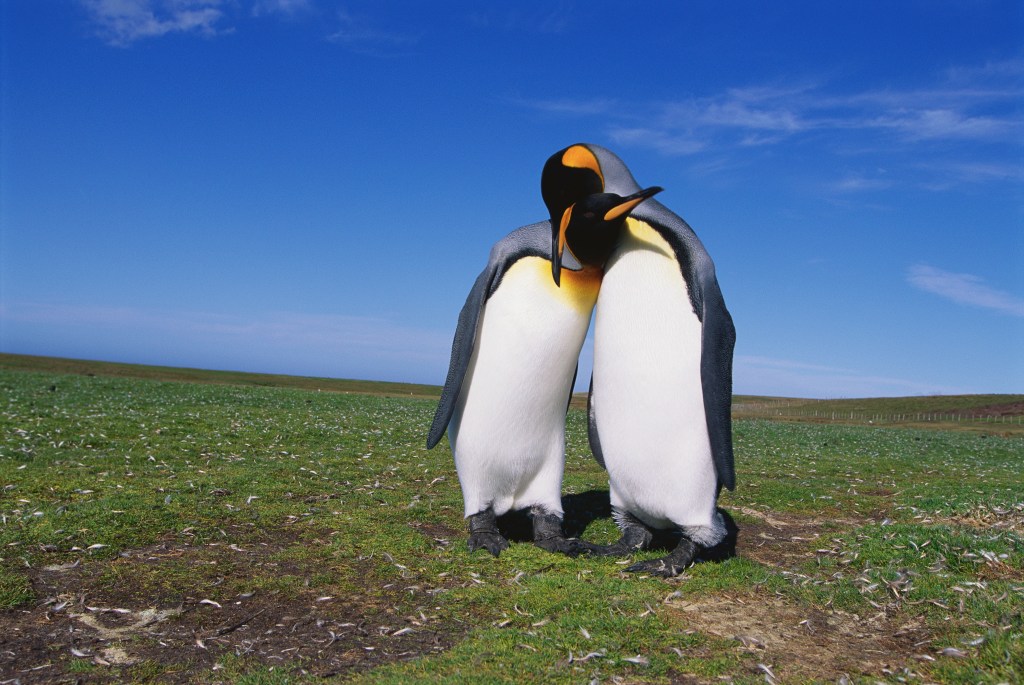
Some penguins are gay, get over it. (Getty Images)
The scientists found that it was more common in mammals than other species, such as birds or insects, with more than 80 per cent of mammal groups experiencing same-sex behaviour in a number of long-term field studies.
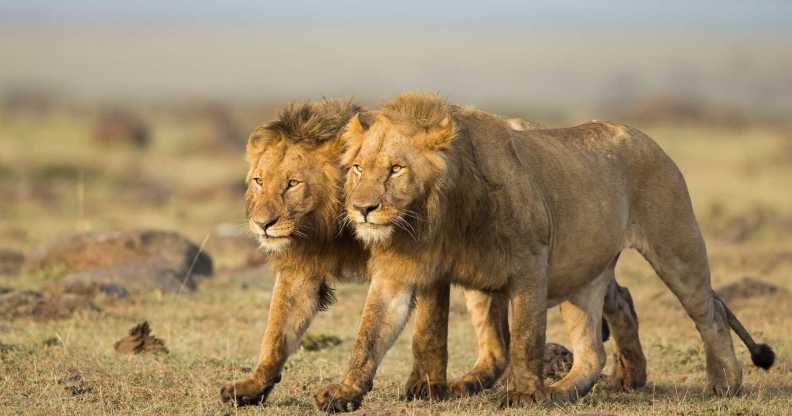
The behaviour was recorded slightly more in males, with male-on-male activity observed in 199 species, while for the females it was seen in 163 species.
There were a variety of explanations for this, with some hypotheses suggesting that animals might engage in same-sex relationships as a “consequence of mistaken identity”, “limited availability of individuals of the opposite sex” or “indiscriminate sexual behaviour.”
Same-sex interactions in animals an ‘evolutionary conundrum’
The authors of the study wrote: “Same-sex sexual behaviour is any behaviour that is usually performed at some stage during reproduction with a member of the opposite sex, but which is instead aimed towards members of the same sex.
“Same-sex sexual behaviour as it is used here does not denote sexual orientation (ie an overall pattern of sexual attraction/arousal over time), sexual orientation identity (the sexual orientation that individuals perceive themselves to have), categories of sexual beings (homosexuals, heterosexuals, etc), nor sexual preference.”
The scientists overwhelmingly concluded that same-sex activity can play an “adaptive role” in “maintaining social relationships and mitigating conflict”, but noted that since the relationships do not “contribute directly to reproduction”, it is considered an “evolutionary conundrum”.
However, they warned that their findings should not be used to analyse the evolution of sexuality in humans.
The study’s authors also argued that since the relationship between animals and sexuality has only recently been investigated by ecologists, it is likely to be under-researched, and could benefit from further investigation.
I am an older gay guy in a long-term wonderful relationship. My spouse and I are in our 36th year together. I love politics and news. I enjoy civil discussions and have no taboo subjects. My pronouns are he / him / his and my email is Scottiestoybox@gmail.com
View all posts by Scottie
2 thoughts on “Loads of animals are gay, experts find”
I guess it could be a conundrum for someone who has never mastubated. I’ve only 3.5 hrs of formal instruction in human sexuality but if you believe reproduction is the evolutionary driver for sex you are doing it wrong.


 Scottie's Playtime
I guess it could be a conundrum for someone who has never mastubated. I’ve only 3.5 hrs of formal instruction in human sexuality but if you believe reproduction is the evolutionary driver for sex you are doing it wrong.
LikeLiked by 2 people
😁😃😂😋 Hugs. Scottie
LikeLiked by 1 person