In The Republican War On Libraries

This came in email a few days ago. The email has a few stories in it that are pertinent to our interests. This was going to be a snippet post of those, but as I read this, I realized everyone needs to read it all, because there’s not much opinionating in it, but/and the actual information does not stop.


The Institute for Museum and Library Services Was Just Gutted

Kelly Jensen Mar 31, 2025

Today, members of the Department of Government Efficiency (DOGE) gutted the Institute for Museum and Library Services (IMLS). As of this afternoon, all staff members have been placed on administrative leave. They received a letter from the Director of Human Resources that the leave would be paid for 90 days and that no one will be allowed on IMLS property during that time.
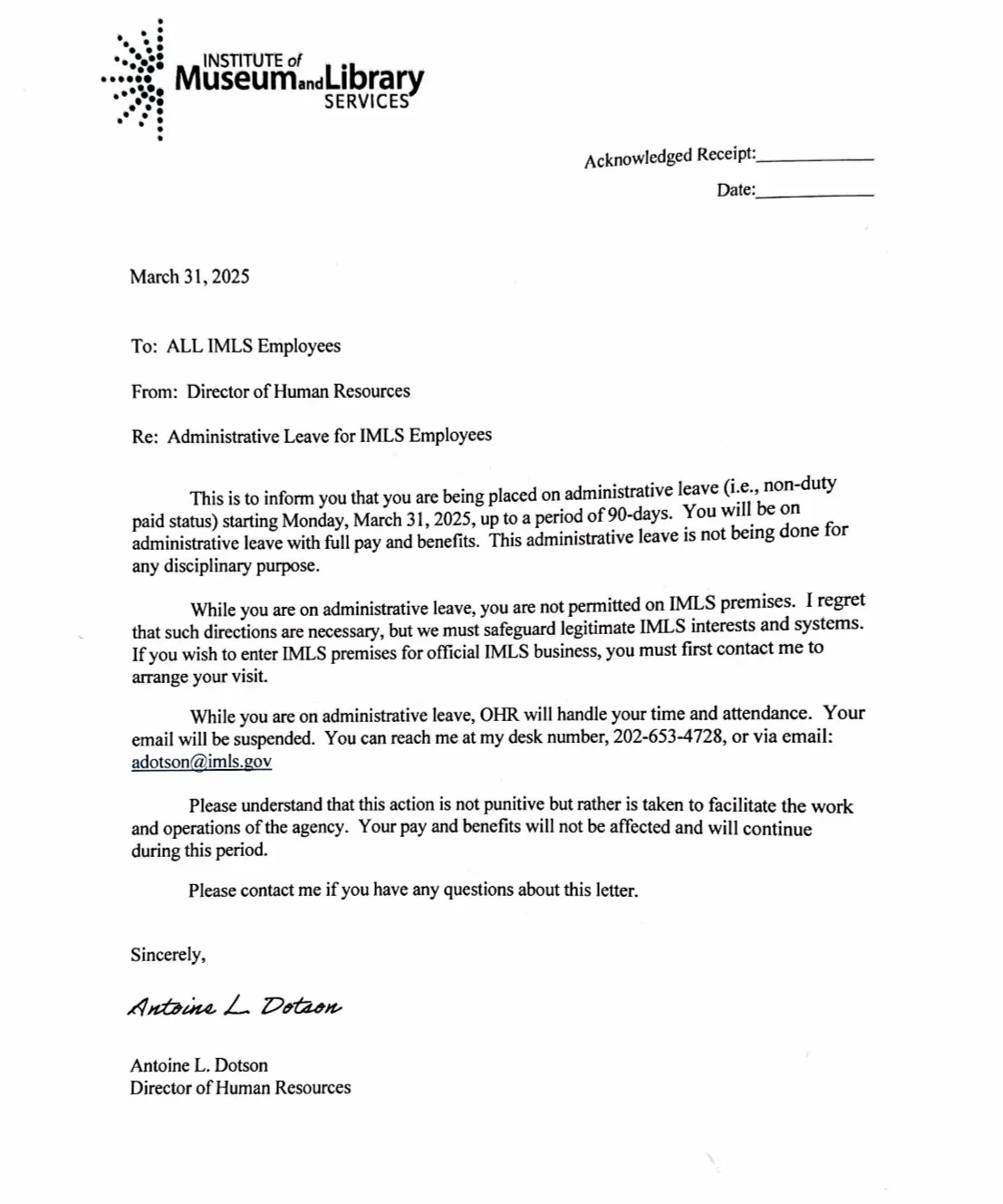
Image of the letter all IMLS staff received about administrative leave.

The union representing IMLS staff, AFGE Local 3403, indicated that the decision to fire staff came after a short meeting between DOGE and IMLS leadership. Everyone working at IMLS was required to return government property before exiting the workplace.

Email addresses for all IMLS staff were being disabled today. Those with questions or concerns over IMLS funding will no longer be able to reach the individual or individuals with whom they’d been working.
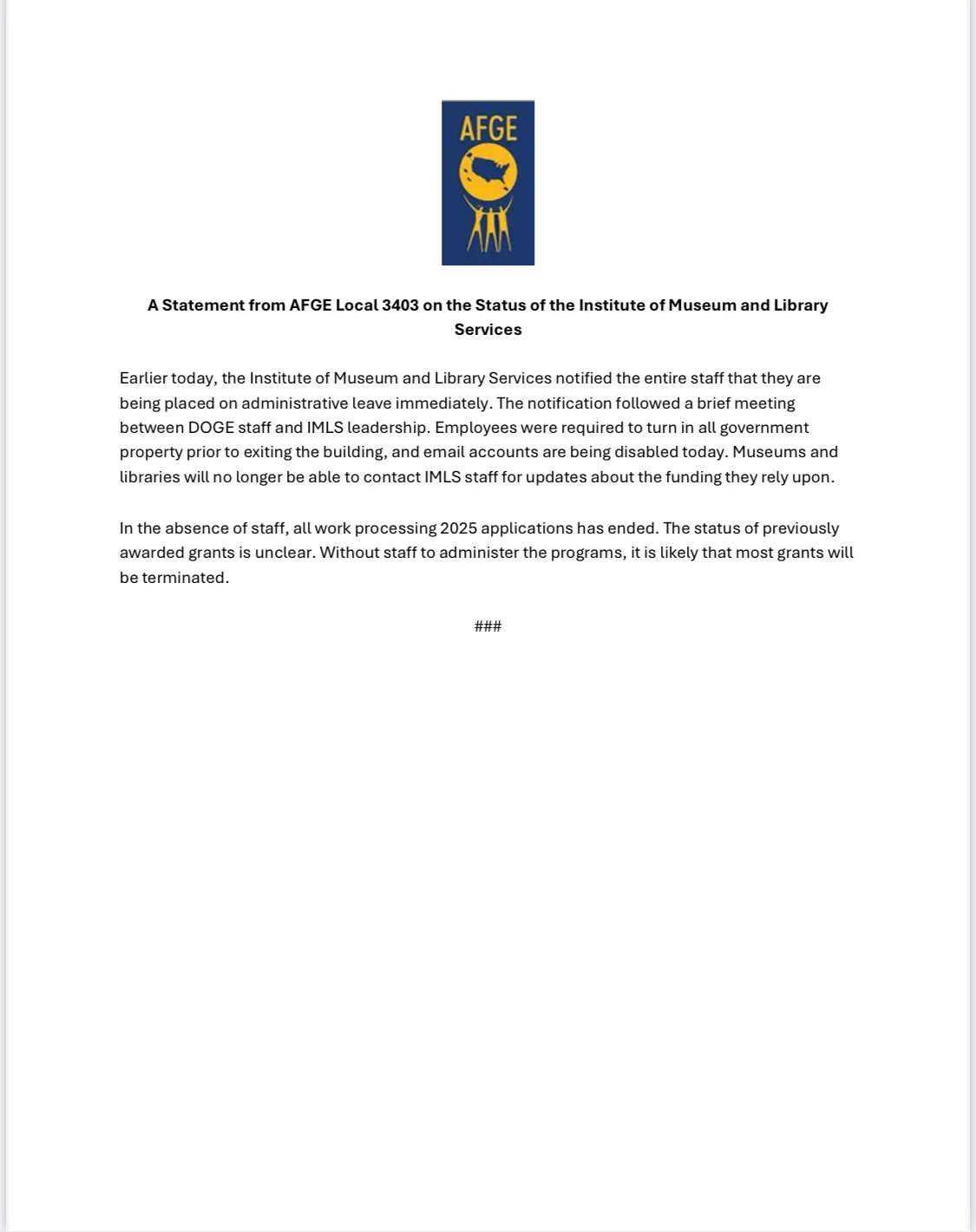
Letter from AFGE Local 3403 stating that IMLS staff were no longer in the building and their emails were being shut down.

Further, all processing work on 2025 funding applications is over and there is no information about the status of awards that have already been granted for the year. The union believes most grants will simply be terminated.

IMLS makes up .0046% of the federal budget.

Two weeks ago, President Trump issued an Executive Order targeting funds allocated to libraries and museums nationwide. The Institute of Museum and Library Services (IMLS) is a federal agency that distributes fund approved by Congress to state libraries, as well as library, museum, and archival grant programs. IMLS is the only federal agency that provides funds to libraries. The Executive Order states that the functions of the IMLS have to be reduced to “statutory functions” and that in places that are not statutory, expenses must be cut as much as possible.

One week later, the Department of Government Efficiency (DOGE) entered the IMLS offices. Many at IMLS were prepared to see their jobs disappear, but that didn’t quite happen. Instead, DOGE installed a new Acting Director of the agency, Deputy Secretary of Labor Keith E. Sonderling.

It wasn’t just a new Acting Director, though. The IMLS took on a new direction thanks to the Executive Order and DOGE. It would now operate “in lockstep with this Administration to enhance efficiency and foster innovation. We will revitalize IMLS and restore focus on patriotism, ensuring we preserve our country’s core values, promote American exceptionalism and cultivate love of country in future generations.”

The new goal of the administration with the IMLS is for it to function as a propaganda machine. This wouldn’t be the first nor the last federal cultural institution to see its mission shift from serving the needs and interests of all of America. On March 28, the administration would issue another Executive Order, this time demanding that the Smithsonian, the National Museum of African American History and Culture, and other federal museums stop the “revisionist movement” through displays and installations that showcase American history and culture as “racist, sexist, oppressive, or otherwise irredeemably flawed.”

Such institutions are now to engage in “igniting the imagination of young minds, honoring the richness of American history and innovation, and instilling pride in the hearts of all Americans.” The Executive Order specifically notes that the Independence National History Park see time and energy poured into these pro-patriotic efforts in order to be prepared for the 250th American anniversary events in 2026.

The defunding and gutting of the IMLS did not happen without strong support shown for public library and museum resources across the country, both on the ground and in congress.

On March 24, the board of the Institution of Museum and Library Services drafted a letter that went to Sonderling as their new Acting Director. The letter outlines the essential functions of the agency, making it clear that any cuts to the IMLS would have a direct and long-lasting impact on public museums and libraries nationwide. It emphasized that an Executive Order alone is not enough to change the functions or services provided by the IMLS.

From the letter:

All such statutory obligations may not be discontinued or delayed under an Executive Order or other executive action. Sections 9133 and 9176 of the Act affirm IMLS’s duty to obligate and disburse funds to grantees, subject only to the availability of appropriations, not to executive discretion. Any failure to fulfill these legal obligations or to reduce staffing or program operations below the minimum required to meet statutory mandates would place the agency in noncompliance with Congressional intent.

Several members of Congress also pushed back against the Executive Order. On March 26, a bipartisan coalition consisting of Senators Jack Reed, Kirsten Gillibrand, Susan Collins, and Lisa Murkowski sent a letter to Sonderling as well. The letter again defines the role of the IMLS and its obligation when it comes to funding institutions across the US.

From their letter:

Libraries and museums play a vital role in our communities. Libraries offer access for all to essential information and engagement on a wide range of topics, including skills and career training, broadband, and computing services. IMLS grants enable libraries to develop services in every community throughout the nation, including people of diverse geographic, cultural, and socioeconomic backgrounds, individuals with disabilities, residents of rural and urban areas, Native Americans, military families, veterans, and caregivers. Museums serve not only as centers for education but also as drivers of local economic development. The IMLS Office of Museum Services is the largest dedicated source of investment in our nation’s museums, which typically support more than 700,000 jobs and contribute $50 billion annually to the U.S. economy. IMLS funding plays a significant role in this economic impact by helping museums reach more visitors and spur community development.

While that letter circulated, another was passed around the House of Representatives. Led by Representatives Dina Titus (NV-01) and Suzanne Bonamici (OR-01), the letter was shared among House members. It urged them to sign on in asking for the administration to reconsider its Executive Order related to IMLS funding and structure.

Public libraries and public library associations nationwide have spoken loudly about how potential cuts to IMLS could impact state and local level services. Among the services that could most quickly and directly impact library users would be the end of digital resource availability through apps like Libby.

It is worth noting that despite some viral claims made online in the wake over fears of IMLS funding cuts, OverDrive’s Libby app and other similar digital resource programs are not funded by IMLS directly. They are, however, sometimes made available in individual states via funding received via IMLS. This is a crucial distinction. Libby and other eresources are not creations of libraries themselves by third-party systems that license access to materials. Libraries pay for that access.

Ebook and digital audiobook services are not funded by IMLS money in every state, and because of how many different types of ebook and digital audiobooks are available–indicative of how many different audiences and needs are being met–essential services without the Libby name recognition are being overlooked. In states where such services are made available through IMLS money, many times the apps and resources are not explicitly named by state funding, making it difficult to determine where such impact would be felt immediately. For example, Indiana libraries use IMLS funding for the Indiana Digital Library, which among its many databases and services provides access to Libby.

Find below a roundup of state library associations, local-level libraries, social media library workers/advocates, and/or local/regional news sources who have identified where and how IMLS cuts would directly impact their state libraries. This isn’t a comprehensive list, but you’ll see within the states here, many rely on IMLS funds to help acquire, fund, and maintain essential digital resources:

The future of IMLS remains uncertain, and with ongoing efforts to rewrite the truth of America via Executive Orders and whitewashing cultural institutions funded and respected by American taxpayers, it’s essential to continue speaking up on behalf of your local library, as well as one of your local library’s most crucial federal agencies.

Those which stand to be most devastated by potential cuts are rural and small libraries, who are also most impacted by the administration’s dismantling of the Department of Education and the United States Postal Service.

Whether or not Trump and his DOGE team have the legal authority to shut down the IMLS completely remains to be seen. Eliminating all staff and pausing all funding certainly defies the administration’s own order that only activities outside of “statutory requirements” be touched. Expect a lawsuit to be filed in the courts, much as we’ve seen with the other slash-and-burn efforts taken by an executive branch overstepping its constitutional authority.

Stuff I Ran Across Yesterday

How Crocodile Ancestors Survived The Dinosaur Extinction

Evrim Yazgin Cosmos science journalist

Crocodiles are often thought of as living fossils – unchanged over millions of years. New research has shown that their evolutionary history is a lot more complicated than that.

Crocodilia is the surviving family of a lineage which emerged about 230 million years ago (mya) called crocodylomorphs. This group split from other reptilian species including those that eventually became dinosaurs. Today, the crocodilia include crocodiles, alligators, caiman and gharials.

Ancestors of modern crocodilians survived through 2 mass extinctions, including the one which spelled the end of the “Age of Dinosaurs” 66 mya.

Crocodile skull teeth close up
The teeth of this fossil Borealosuchus skull typify the toothy grin of semi-aquatic generalist predators that survived the end-Cretaceous mass extinction. Credit: Jack Rodgers/Natural History Museum of Utah.

The new study, published in the journal Palaeontology, shows that the secret to success of crocodylomorphs was their adaptability to new food sources and habitats.

“Lots of groups closely related to crocodilians were more diverse, more abundant, and exhibited different ecologies, yet they all disappeared except these few generalist crocodilians alive today,” says lead author Keegan Melstrom from the University of Central Oklahoma.

Today’s crocodilians are semi-aquatic generalists. The thrive in different habitats and aren’t picky eaters.

It was a different story with ancient crocodylomorphs.

Two crocodile skulls on a desk
Skulls of Araripesuchus gomesii (left), a Late Cretacious terrestrial predator and Cricosaurus suevicus (right), a Late Jurassic aquatic predator. Credit: University of Central Oklahoma.

The palaeontologists visited museum collections in 7 countries, across 4 continents to understand the evolution of crocodilian ancestors. They examined the skulls of 99 extinct crocodylomorph species and 20 living crocodilians.

Crocodylomorphs exploded after the end-Triassic mass extinction 201 mya which killed off ancient lineages of hypercarnivores and land-based predators.

“After that, it goes bananas,” says Melstrom. “Aquatic hypercarnivores, terrestrial generalists, terrestrial hypercarnivores, terrestrial herbivores – crocodylomorphs evolved a massive number of ecological roles throughout the time of the dinosaurs.”

Toward the end of the time of the dinosaurs, however, crocodylomorphs started to decline.

Most of the specialised crocodylomorphs had died off by the end of the Cretaceous. Almost all 26 remaining species today are semi-aquatic generalists.

Upright crocodile sneaking on a small ancient mammal
Some 215 million years ago in what is now northwestern Argentina, the terrestrial crocodylomorph Hemiprotosuchus leali prepares to devour the early mammal relative Chaliminia musteloides. Credit: Jorge Gonzalez.

“When we see living crocodiles and alligators, rather than thinking of ferocious beasts or expensive handbags, I hope people appreciate their amazing 200+ million years of evolution, and how they’ve survived so many tumultuous events in Earth history,” says co-author Randy Irmis from the Natural History Museum of Utah. “Crocodilians are equipped to survive many future changes – if we’re willing to help preserve their habitats.”

“Extinction and survivorship are 2 sides of the same coin,” Melstrom says. “Through all mass extinctions, some groups manage to persist and diversify. What can we learn by studying the deeper evolutionary patterns imparted by these events?” (snip-More)

==============================================================

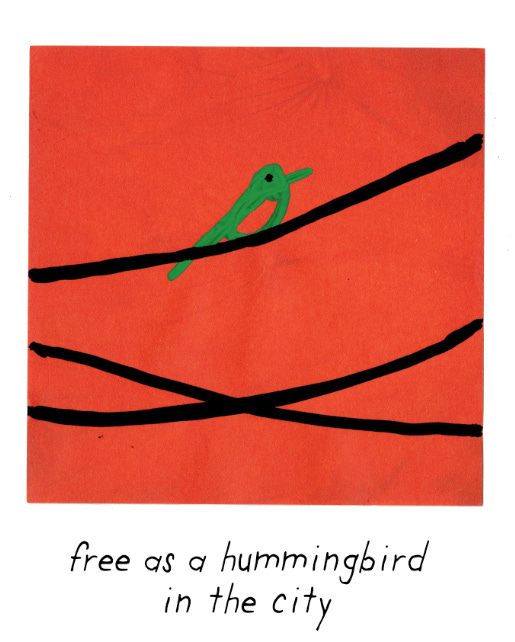
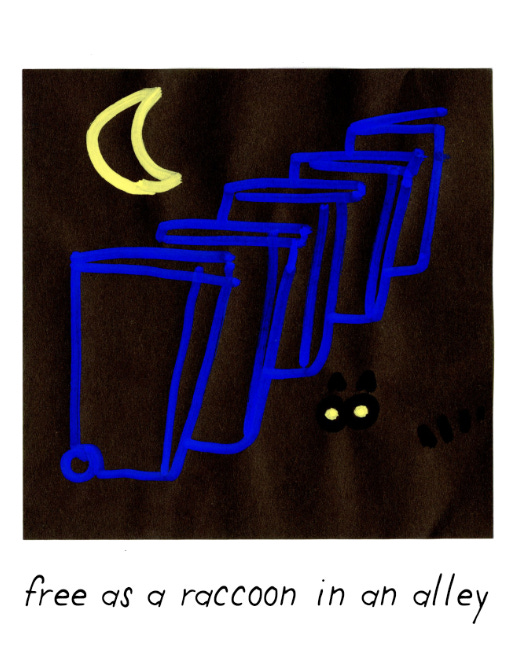
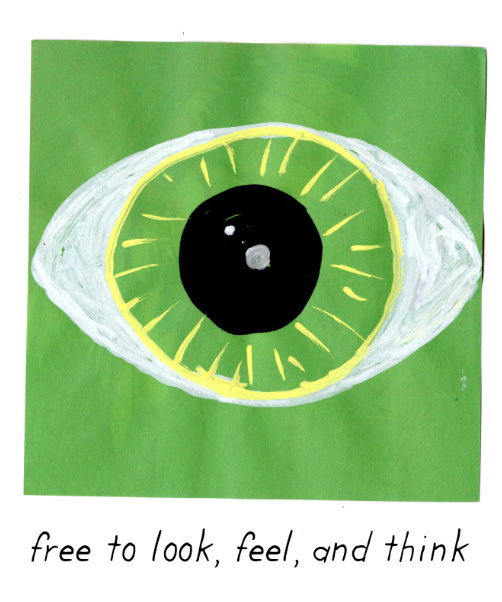
Free by Grant Snider

A poem in pictures Read on Substack

==============================================================

More Library Tidbits (+ a way to be an impediment to the strangling of libraries.)

US blocks Canadian access to cross-border library, sparking outcry

US officials claim move was to curb drug trafficking while Quebec town says it ‘weakens collaboration’ among nations

View image in fullscreen A young girl walks over the Canada-US border line from the Haskell Free Library and Opera House in Derby Line, Vermont, on Friday. Photograph: Christinne Muschi/The Canadian Press via AP

The US has blocked Canadian access to a library straddling the Canada-US border, drawing criticism from a Quebec town where people have long enjoyed easy entry to the space.

The Haskell Free Library and Opera House is located between Stanstead, Quebec, and Derby Line, Vermont. It was built deliberately to straddle the frontier between the two countries – a symbol of cooperation and friendship between Canada and the US. (snip)

Fairhope Public Library supporters raise money to replace funds state plans to withhold

By: Ralph Chapoco – March 25, 2025 11:49 am

A nonprofit says it has raised enough money for Fairhope Public Library to cover state funds that the Alabama Public Library Service Board cut off last week.

Read Freely Alabama, a grassroots free speech advocacy organization that has fought restrictions on library content, said it had collected almost $39,000 from about 550 donors through Tuesday morning. Read Freely is organizing the campaign with EveryLibrary, an Illinois-based organization that promotes library funding and fights restrictions.

“We were trying to figure out what was the amount that they were pausing,” said Cheryl Corvo, a member of Read Freely Alabama and Fairhope resident. “Then, we found out it was $42,000 that they were pausing, and how it would affect our library.”

The Fairhope Public Library said it will have access to funding without interference from the state or any outside groups.

“We had a meeting with EveryLibrary, which is the group that has control of this particular fundraiser, and they take 10% and 90% of it comes to us,” said Randal Wright, a board member of the Fairhope Public Library.

The amount was not enough to severely debilitate the library’s operations, Corvo said. But it is enough to affect “some very vital resources that the library provided.” Corvo said the campaign should also make APLS aware of the magnitude of local support  for the library.

Wright said that if the state continues to withhold money, the funds will go toward computers, books for the collection and paying for guest speakers. (snip)

Peace & Justice History for 4/18

April 18, 1912
Members of the United Mine Workers of America on Paint Creek in Kanawha County, West Virginia, demanded wages equal to those of other area mines. The operators rejected the wage increase and miners walked off the job. Miners along nearby Cabin Creek, having previously lost their union, joined the Paint Creek strikers and demanded:
• the right to organize
• recognition of their constitutional rights to free speech and assembly
• an end to blacklisting union organizers
• alternatives to company stores
• an end to the practice of using mine guards
• prohibition of cribbing
• installation of scales at all mines for accurately weighing coal
• unions be allowed to hire their own checkweighmen to make sure the companies’ checkweighmen were not cheating the miners.When the strike began, operators brought in mine guards from the Baldwin-Felts Detective Agency to evict miners and their families from company houses. The evicted miners set up tent colonies and lived in other makeshift housing. The mine guards’ primary responsibility was to break the strike by making the lives of the miners as uncomfortable as possible.


Striking miners and their families being evicted from company houses.
Deep background on the W. Virginia coal business and the strike 
April 18, 1941

Reverend Adam Clayton Powell, Jr.
Bus companies in New York City agreed to hire 200 black drivers and mechanics after a four-week boycott by riders led by Reverend Adam Clayton Powell, Jr. of Harlem’s Abysinnian Baptist Church, the largest Protestant congregation in the U.S. Powell ran and won a City Council seat later that year and became a member of Congress four years later.
A Bus Boycott Before Its Time 
April 18, 1955

Sukarno hosts Bandung conference
A conference bringing together government representatives from 29 Asian and African countries began in Bandung, Indonesia. The intention was to promote economic and cultural cooperation, and to oppose Western colonialism, then still prevalent on both continents. At the same time, many countries were worried about communism and the power of the Soviet Union.
The principal actors were Sukarno of Indonesia, one of the countries that organized the meeting; Jawahrlal Nehru, prime minister of recently independent India; Kwame Nkrumah, prime minister of the Gold Coast (now Ghana); Gamal Abdel Nasser, president of Egypt; Chou En Lai, premier of China; and Ho Chi Minh, prime minister of Vietnam.

Chou En-Lai and Jawaharlal Nehru at the Bandung Conference
Many concepts of international cooperation and mutual interest were discussed at the week-long conference, including Pan-Islam, Pan-Arabism, Pan-Asianism, and Pan-Africanism. The meeting was a precursor to what became known as the Non-Aligned Movement (aligned neither with Washington nor Moscow).
Bandung Conference background info 
April 18, 1958
The first march against nuclear arms in West Germany took place.
April 18, 1960

Tens of thousands of people marked the end of the Aldermaston “ban the bomb” march at a rally with at least 60,000 gathering in Trafalgar Square, the largest demonstration London had seen to date.
Read more 
April 18, 1989
Thousands of Chinese students from several universities took to the streets to protest government policies and issue a call for greater democracy in the communist People’s Republic of China (PRC). Mourning over the death of Hu Yaobang began on the 15th in Tiananmen Square. As Secretary General of the Chinese Communist Party, he had called for rapid reform in the PRC, but had been pushed out of office over the Democracy Wall protests. Students in the Square demanded response from government officials, and began a sit-in and other activities that persisted for weeks.
Timeline of the Beijing democracy protests 

https://www.peacebuttons.info/E-News/peacehistoryapril.htm#april18

Maryland Sen Van Hollen meets Kilmar Ábrego García in El Salvador

https://www.bbc.com/news/articles/cd6j7jjpgy6o

Best Wishes and Hugs,
Scottie

A Timely Resource from Janet

THE GUARDIAN: US judge finds probable cause to hold Trump officials in contempt over alien act deportations

US judge finds probable cause to hold Trump officials in contempt over alien act deportations
Judge also warned White House that if it stonewalled contempt proceedings he would appoint independent prosecutor

Read in The Guardian: https://apple.news/AnMCC_FFlRRu0TI75PuYcIw

Shared from Apple News

Best Wishes and Hugs,Scottie

THE GUARDIAN: US judge finds probable cause to hold Trump officials in contempt over alien act deportations

US judge finds probable cause to hold Trump officials in contempt over alien act deportations
Judge also warned White House that if it stonewalled contempt proceedings he would appoint independent prosecutor

Read in The Guardian: https://apple.news/AnMCC_FFlRRu0TI75PuYcIw

Shared from Apple News

Best Wishes and Hugs,Scottie

Push to shift the country hard right

https://www.cnn.com/2025/04/16/politics/harvard-trump-columbia-elite-universities-funding?cid=ios_app

Best Wishes and Hugs,
Scottie

Peace & Justice History for 4/17

April 17, 1959
22 were arrested in New York City for refusing to take shelter during a civil defense drill.
April 17, 1960
Inspired by the Greensboro sit-in of four black college students at an all-white lunch counter, nearly 150 black students from nine states formed the Student Nonviolent Coordinating Committee (SNCC). Meeting in Raleigh, North Carolina, with Ella Baker, James Lawson and Martin Luther King, Jr., the founders set SNCC’s initial goals as overturning segregation in the South.

They also considered it important to give young blacks a stronger voice in the civil rights movement, as many had participated in sit-ins that had proliferated to dozens of cities over the previous three months.
At the Raleigh conference Guy Carawan sang a new version of “We Shall Overcome,” an adaptation of an old labor song. This song would become the national anthem of the civil rights movement.

People joined hands and gently swayed in time singing “black and white together,” repeating over and over, “Deep in my heart, I do believe, we shall overcome some day.
History of SNCC  (It’s a Stanford.edu page, which “cannot be reached.” Take from that what you will. I’ve decided to note these things when they happen.)
What SNCC did to make change happen (This page is good.)
April 17, 1961

Cuban leader Fidel Castro during the Bay of Pigs invasion.
An army of 1500 anti-Castro Cuban exiles, mercenaries equipped and trained at a secret Guatemala base by the CIA, landed at Bahia de Cochinos (Bay of Pigs) in an attempt to “liberate” Cuba from Communist rule. Within three days, the invasion proved disastrous with nearly 1200 members of Brigade 2506 (who had been trained in the U.S.) taken prisoner. 
Known as Operation Zapata, it was conceived by Vice President Nixon, planned and approved by the Eisenhower administration, and executed shortly after President John Kennedy’s inauguration.

President Kennedy receives the Brigade 2506 flag in Miami in 1962 and declares: “I promise to return this flag in a free Havana.”

Soviet General Secretary Nikita Kruschev sent a telegram to President Kennedy:
“Mr. President, I send you this message in an hour of alarm, fraught with danger for the peace of the whole world. Armed aggression has begun against Cuba. It is a secret to no one that the armed bands invading this country were trained, equipped and armed in the United States of America. The planes which are bombing Cuban cities belong to the United States of America, the bombs they are dropping are being supplied by the American Government . . . .”
What actually happened 
April 17, 1965

The first national demonstration against the Vietnam War took place in the nation’s capital. Students for a Democratic Society (SDS), the organizers, had expected about 2000 marchers; the actual count was 15,000–25,000. This was the largest anti-war protest ever to have been held in Washington, D.C. up to that time. The number of marchers approximately equaled the number of U.S. soldiers in Vietnam. Several hundred students in the protest broke away from the main march and conducted a brief sit-in at the U.S. Capitol’s door.
An exam prepared by SDS about the Vietnam War (answers available) 
April 17, 1965

Gay rights advocate Jack Nichols
The first demonstration promoting equal treatment of homosexuals, Jack Nichols, Barbara Gittings and others picketed in front of the White House.
There were no media present..

Read more
April 17, 1986
Reverend Jesse Jackson, future congresswoman Maxine Waters and others co-founded the Rainbow Coalition, initially intended as a progressive public-policy think tank within the Democratic Party.

Representative Maxine Waters, Harry Belafonte, John Sweeney, President of the AFL-CIO, Reverend Jesse Jackson, and Willie Nelson August 6, 2005-Atlanta, Georgia.
Brief history of Rainbow Push Coalition
April 17, 1992
On Good Friday morning, about 50 people accompanied Fr. Carl Kabat and Carol Carson to Missile Silo Site N5 at Whiteman Air Force Base in Missouri, the same silo that Carl and other members of the Silo Pruning Hooks (see below) disarmed in 1984. They cut through a fence and, once inside, Carol used a sledgehammer on the concrete lid of the silo while Carl performed a rite of exorcism.
Eventually, the police arrived and arrested Carl and Carol. They were jailed and held until their court appearance. At that time, they made a preliminary agreement with federal prosecutors wherein they would plead “no contest” to trespass in exchange for the property destruction charge being dropped; they were sentenced to six and three months, respectively, in a halfway house.


Carl Kabat
A History of Direct Disarmament Actions 
About the Silo Pruning Hooks action 

https://www.peacebuttons.info/E-News/peacehistoryapril.htm#april17

Interesting That It’s Tech Magazines That Are Covering News We Can Use

Trump Admin Has a New Target: People Who Aggressively Believe in Nothing

The fight against extremism marches on.

By Lucas Ropek Published April 16, 2025 

Over the past decade, there’s been a lot of talk about “ideological extremism” on both the left and right, and the government has often claimed that warped political beliefs are encouraging Americans to commit violent acts. However, under the new Trump administration, the government now seems prepared to go after people who don’t believe in anything at all.

Independent journalist Ken Klippenstein writes that the government has a new target in its war on extremism: nihilists—more specifically, Nihilist Violent Extremists, or NVEs. The government has reportedly come up with this designation as a kind of catchall for the culprits behind various violent incidents, and the term has shown up in several recent court cases.

Who is a true NVE? That’s a good question, and the answer is: anybody. Klippenstein aptly notes that the term has a conveniently loose definition that could be applied to all sorts of different groups that the government considers undesirable. He writes that the NVE term…

…has the beauty of being elastic enough to apply to individuals and groups who are the focus of the administration’s war on all kinds of Americans. Nihilism also avoids all of the rusty and problematic words of the past: subversive, dissident, insurrectionist, revolutionary, or even “anti-government” (the Biden term).

Klippenstein writes that the term was recently used in the legal proceedings of Nikita Casap, a teen from Wisconsin who was arrested in February and charged with murdering his parents. Law enforcement claims Casap also planned to assassinate President Trump to spur a civil war in the U.S. But there are plenty of people who have been accused of committing violent crimes for vaguely anarchistic reasons, be it people like Luigi Mangione, or the gaggle of people of who have recently been arrested for vandalizing and firebombing Teslas, or the Zizians.

The road to this new low in law enforcement terminology has been long. While “ideological extremism” has always existed in the U.S., it became a political (and, eventually, policy) issue in the modern era during the Clinton years, when incidents like Ruby Ridge and the Oklahoma City bombing brought fears of the rightwing militia movement into the mainstream. During the Bush years, 9/11 spurred a war on Islamist extremism—both in the U.S. and all over the world. Then, during the Biden years, the specter of January 6th encouraged the government to declare a war on “domestic terrorism.”

In short, the government has always found reasons to justify its federal police powers, though few of them have ever been as sloppily constructed as the current government’s newest fearmongering buzzword. (snip)