
I’ve even made plans, presuming some of this becomes legal in the next 10 years where I live. I have high hopes for sky burials and terramation, at least those are my 2 favorites.) I have links to more info, but this is good for some who maybe haven’t thought of this aspect of the circle of life.
Think Outside the Coffin: Green Burials Gain Popularity
Green burials have been gaining favor for nearly 30 years, offering an eco-friendly way to say goodbye.
As Ben Franklin once said, “In this world, nothing can be said to be certain except death and taxes.” While the subject of taxes may be unpleasant, conversations about death don’t have to be.
“Most families are close enough to know what their loved ones want, [but] a lot of people don’t learn about death care until a loved one dies,” says B. Milton, a retired death care industry professional in Indiana. End-of-life discussions can be uncomfortable to broach — a lot of people don’t pre-plan, according to Milton — but having direction for your post-life care allows for peace of mind, both emotionally and financially.
As most people know, conventional burials — those that include options like a viewing, a funeral service, and burial in a casket — can be very expensive. The national median cost of a funeral with a burial in 2023 was $8,300, according to the National Funeral Directors Association. Caskets alone can cost thousands of dollars. Of course, the sentiment is wonderful; there is a true gift in being able to choose a beautiful vessel as a loved one’s final resting place. A growing number of people, however, prefer to keep funeral costs lower and more eco-friendly with green burial options, including burial shrouds, terramation, and aquamation.
Burial Shrouds
“Green burials are in their infancy,” says Russ Burns, director of All Saints Cemetery and The Preserve, a natural burial site in Michigan. “In 20 to 30 years, they’ll be up there with traditional burials,” noting that customers interested in green burial are well-informed and concerned less about themselves post-mortem and more about how the area where they will be interred will remain green.
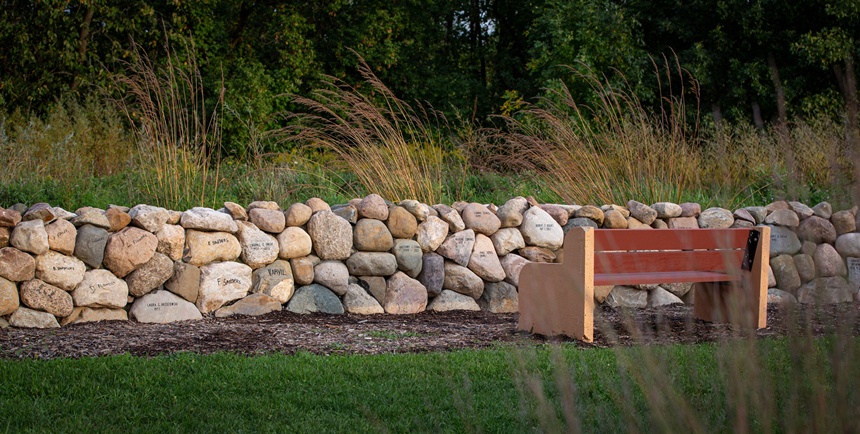
The use of a burial shroud is simple: The deceased is placed in a shroud made of a biodegradable material like canvas and committed to the earth about three feet underground. The shallower depth allows for more oxygen flow than the standard six-foot depth for coffins, which helps the body decompose and return to the soil. The process takes about a year and costs, at the lower end, around $1,800.
Burns cautions customers to do their research and make sure they work with an organization that is fully funded and has “more than good intentions.” Following burial, the land continues to require maintenance you would expect, like mowing and landscaping, but may also need an environmental impact study or a controlled burn to get rid of invasive plant species.
Terramation
Terramation, to put it simply, is human composting. If you’ve ever joked about having a green thumb, now you can have green everything and quite literally be turned into soil.
The first stage of terramation takes about a month. The deceased is placed in a vessel and covered in organic materials like straw, alfalfa, and wood chips. Families who attend the preparation of the body also known as a laying-in ceremony — sometimes bring garden clippings and assist in the process. The vessel is then closed and stored while microbes break the body down to roughly one cubic yard (or several hundred pounds) of soil. The material is examined for any remaining organic matter like bone or non-organic matter like surgical implants and then left to cure. Before being released to the family, the soil must pass safe compost regulations, including tests for the presence of arsenic or lead.
The process of composting people has only been around for about 10 years and is currently legal in 12 states, including Minnesota, Arizona, California, Colorado, New York, and Washington state. Cost can range from $5,000 to $7,000. In the video below, mortician and green death advocate Caitlin Doughty chats with Katrina Spade, the founder and CEO of Recompose, a green funeral home near Seattle that specializes in terramation.
(snip-some MORE)
https://www.saturdayeveningpost.com/2025/04/think-outside-the-coffin-green-burials-gain-popularity

 Scottie's Playtime
Sorry, but this reminds me on the dystopic movie “Soylent Green”. Best wishes, Michael
LikeLiked by 2 people
I’m sorry, Michael. I had no wish to upset anyone about these things; I ran across a mainstream article, thought I’d share it. I hope your day is bright, and you have no immediate worries!🌞
LikeLiked by 1 person
No problem, really not! I am thankful for the information you brought. Here in Germany the past years we are having the same discussion and i am getting always this horror movie in my mind. Thanks a lot, and have a wonderful weekend. xx Michael
LikeLiked by 2 people
You enjoy your weekend, too, Michael-thanks!
LikeLiked by 2 people
Thanks, Ali! xx Michael
LikeLiked by 2 people
There’s a big graveyard I drive past every time I drive that dates back hundreds of years and every time I drive by the same thought occurs: what a waste of a) farmable or b) buildable space
Roll me off in a ditch, feed the coyotes …
LikeLiked by 2 people
Agreed; that’s similar to a sky burial with the exception that I want to be up high in a tree for nature to take its course-I love the birdies! 😄
I wonder if that could ever be legal in the US? I’d heard it was getting somewhere over there in the Pacific NW, but haven’t heard anything in a while.
LikeLiked by 1 person
I’ll end up the same way most Kiwis do. About 90% of those who die are cremated. The last property my parents owned backed onto a river. After our mother died her ashes along with the ashes of our father who died a few years previously were scattered into the river from the jetty our father had built and fished from.
I’m not particularly fussed about where my ashes end up, though I hope my family thought sufficiently highly enough of me not to flush them down the toilet.
LikeLiked by 2 people
I’m certain that they have plenty of respect for you, Barry!
Here’s to everyone getting their wishes observed when the time comes.
I have much respect for Caitlyn Doughty, whose info I first ran across many years ago; she’s my first go-to on info regarding good death.
LikeLiked by 2 people
Hi. Ron and I have already decided to be cremated. We realize that as lower income we don’t have the money to have $10,000.00 funerals without taking a chunk of our savings. — We have been to friends funerals after they had been cremated and they scattered the ashes in preapproved spots. Because it is now illegal to just dump human ashes anywhere. Ron originally wanted to be cremated and his ashes scattered in a dozen places. But recently he now wants us to be cremated and our ashes buried in a plot set his parents bought. I really don’t care. If he wants I will give it to him. Because I feel that once I die then I am gone, and so my body means nothing. Not to be insensitive but I have dealt with dead bodies. I have washed them, and put them in body bags. During my training I had to deal with dead people because the Haitian workers there where I was getting trained were terrified of the dead body. Plus I dealt with them in the ICU I worked in. The church that saved me as a 17 told me that the bible says the dead know not anything. Not being religious or a believer I don’t know. Hugs
LikeLiked by 1 person