
Yes, Joy Reid has a Substack, bless her for doing it! Anyway, I’ve been watching/reading coverage of the Met Gala from various POVs. I’ve probably gotten the most substantive coverage from this post, so here it is, plus more generally topical (non-Gala) coverage, from our beloved Joy Reid! -A
The Daily Reid: the resistance is fly and dandy by Joy-Ann Reid
Art and fashion stood its ground at the Met Gala … while the warnings about the technofeudalist autocrats are ringing louder and louder Read on Substack
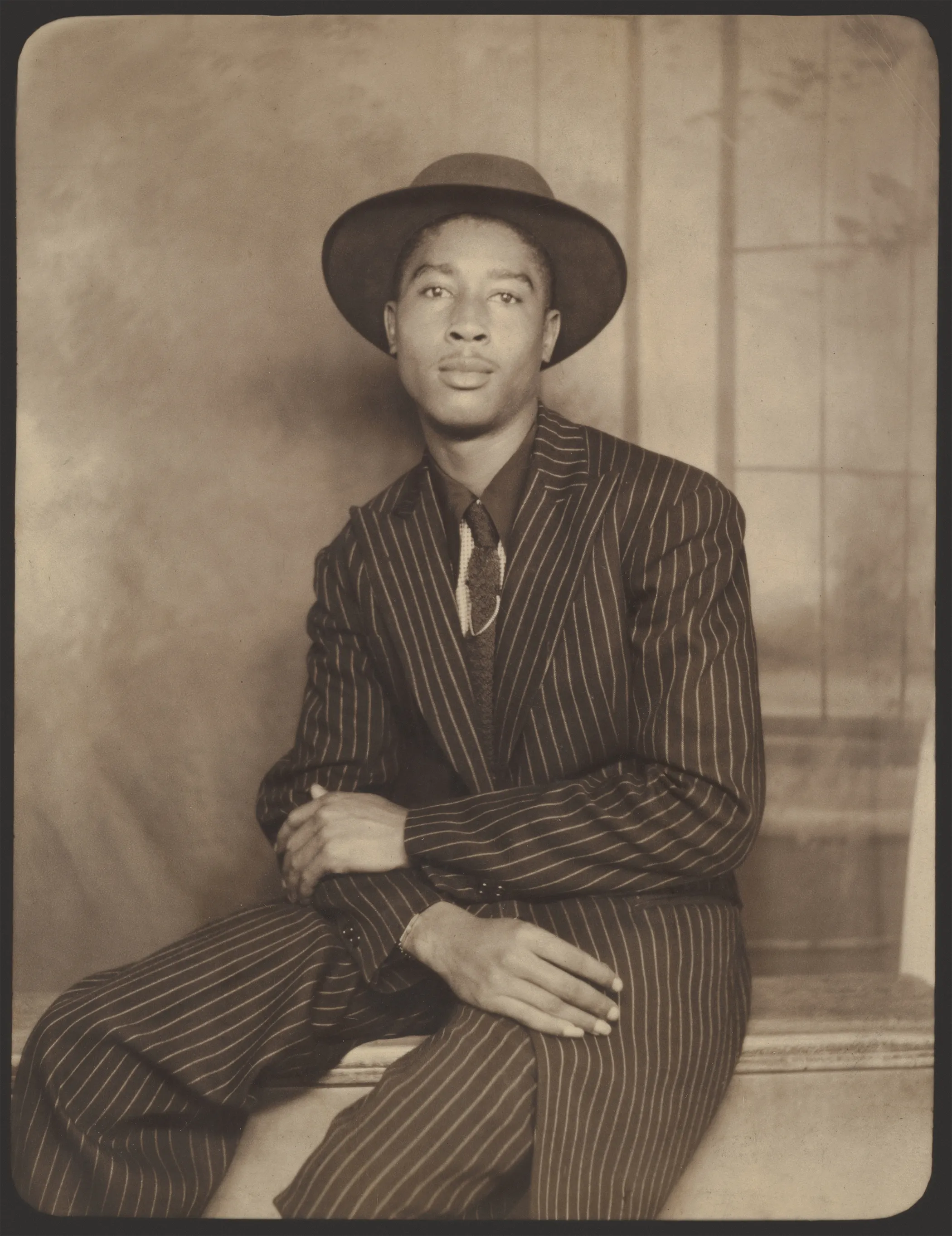
At its best, art is subversive and loud, even when it is silent and mainly visual. Fashion, at its best, is art that’s like that. The Met Gala 2025 was about that life. And while there was some criticism that not enough Black designers got to take part (too much Louis Vuitton, plenty of Sergio but not enough of everyone else… one wonderful exception being Hanifa…) and many of the looks were more elegant than Met Gala over-the-top, the overall impact of the night was deliciously subversive, in just the way art should be. From the Times:
Last October, when the Metropolitan Museum of Art’s Costume Institute announced its next fashion show, “Superfine: Tailoring Black Style,” the political landscape looked very different.
Kamala Harris, the first female vice president and the first Black woman ever to top a major-party ticket, was in the final weeks of her campaign for the White House. The show, the culmination of five years of work by Andrew Bolton, the Costume Institute’s curator in charge, to diversify the department’s holdings and shows in the wake of the racial reckoning brought about by George Floyd’s murder, seemed long overdue.
On Monday, however, when it finally opens to the starry guests at its signature gala, the splashiest party of the year, it will do so in a very different world. One in which the federal government has functionally declared war on diversity, equity and inclusion, as well as programming related to race — especially in cultural institutions.
In February, President Trump seized control of the Kennedy Center, promising to make its programming less “woke.” Then, in late March, he signed an executive order targeting what the administration described as “improper, divisive, or anti-American ideology” at the Smithsonian museums and threatened to withhold funds for exhibits that “divide Americans by race.”
Against that backdrop, the Met’s show, one devoted for the first time entirely to designers of color, which focuses on the way Black men have used fashion as a tool of self-actualization, revolution and subversion throughout American history and the Black diaspora, has taken on an entirely different relevance.
Suddenly the Met, one of the world’s wealthiest and most established museums, has begun to look like the resistance. And the gala, which in recent years has been criticized as a tone-deaf display of privilege and fashion absurdity, is being seen as what Brandice Daniel, the founder of Harlem’s Fashion Row, a platform created to support designers of color, called a display of “allyship.”
Especially because Anna Wintour, the Met Gala’s mastermind, a powerful Democratic fund-raiser and the chief content officer of Condé Nast, said on “The Late Late Show” in 2017 that the one person she would never invite back to the fete was Mr. Trump.
The collision of cultural and current events means the Met is now sitting at the red-hot “center of where fashion meets the political economy,” said Tanisha C. Ford, a history professor at the City University of New York Graduate Center.
“This feels way bigger than just fashion,” said Louis Pisano, a cultural critic and the writer of the newsletter Discoursted. “Putting Black style front and center sends a real message.”
And that it did. That Ms. Wintour and the the organizers didn’t shift course even a little bit, or invite the garish Trump gang or administration or maga people (unless you count Kim Kardashian) was a bold statement in itself. I think seeing J.D. Vance and his complicit wife or garish, lip-plumped Lara Trump on that blue carpet would end the credibility of the Met Gala forever. (Long live the memory of Andre Leon Talley!)
Instead, what we got was a feast of celebration, of classic Black elegance and style, of Black boldness in the face of social, economic and political catastrophe, and just a lot of fun. Made a little video about it, wanna see it? Here it goes!
There were a number of meaningful statements, reflecting the history of Black formality, which was subversive in its own way, in the early 20th century when Black men and women were socially discarded by white society as little more than servants and footstools to white lives. Black people in their church lives and social lives were often really dressy, and that’s a tradition that has lingered, particularly in Southern states, where even a trip to the supermarket or to the polls means getting fully dressed — and formality is seen as a sign of pride and regality, even in the face of discrimination. That’s the piece of Africa that stayed with every enslaved captive.
Not only was the Met Gala a visual blockbuster, it was also a record-setting fundraiser:
Five hundred people RSVP-ed to Monday morning’s media preview for “Superfine: Tailoring Black Style” at the Metropolitan Museum of Art; the majority appeared to show up to tour the show before it bows to the public on Saturday.
Beforehand, attendees got a primer about dandyism, the exhibition’s undercurrent. They also were reminded by the Met’s director and chief executive officer Max Hollein that the museum is “having a little party tonight aka the Met Gala.” And this year’s annual fundraiser for the Costume Institute is a record-breaker at $31 million.
That was “quite a jump” compared to last year’s total of $26 million, Hollein said after the program. As for how that happened in such economically and geopolitically shaky times, he said, “The level of support, enthusiasm and importance of what we do is significant, especially this show, which is not only a celebration of Black designers, but it’s also a statement. It’s an important exhibition about history. That all comes to the fore. That’s what a lot of our supporters felt — that it is meaningful and important.”
Because Black people, and Black Americans in particular, have always been fashion and cultural trendsetters. (I’d note that there is also a long Dandy tradition in my late father’s home country, the Democratic Republic of Congo, where dandyism is a whole thing…
Diasporic Black dandyism mirrors the Congolese sapeur movement—a fashion subculture that emerged in the 1920s when Congolese soldiers returned from World War I with foreign attire. These Congolese dandies, known as sapeurs, often inherit the tradition from parents and community role models. For them, dandyism resembles a religion. They revere style and derive power from being impeccably dressed.
Poverty, unemployment, and avant-garde exploitation from the superpowers of the West, East, and neighbouring nations, including Uganda and Rwanda imprison the Republic of Congo. Despite hardship and grim surroundings, Congolese dandies choose to live joyfully. They dance, celebrate, and express themselves with flair, as captured in Solange’s “Losing You” and Kendrick Lamar and SZA’s “All the Stars.”
Both movements grew out of the 1920s — the age of the Harlem Renaissance, when Black Americans were perfecting a unique post-enslavement culture that drew on the rich heritage of African music, ornamentation, dance and style, coupled with evocative literature — poetry, fiction and nonfiction — that spoke to the ache of being an African trapped in America, yet with little or no memory of where your people originally came from. Your timely reminder that some of us Black Americans are immigrants, but even most of us are immigrants whose people were unwilling workers in the so-called “new world.” Very few Black people in America are here by choice. Instead, it was grace, determination and sheer force of will that built a culture that has come to be globally dominant and largely determinative of what the world considers “American culture.”
Here’s Vogue’s piece on the history of Black Dandyism.
And here’s TheGrio’s take on which stars stole the show at last night’s gala and Kamala Harris’ Met Gala debut.
Great article here on some of the artists who capture the essence of Black Dandyism.
Also peep this article at BET.com on the Black designers who laid the groundwork.
A warning…
I came across this powerful TED Talk by investigative journalist Carole Cadwalladr of the Observer, best known for breaking the story in 2018 that Facebook was allowing a British tech company called Cambridge Analytica to steal millions of users’ data without their consent. Her new warning about the rising tech “broligarchy” that are using their global digital platforms and hijacking our data (including via “doge”) to amass unprecedented political power and dismantle our democracies in the U.S. and abroad and replace them with authoritarian rulers, is chilling. But she also reminds us that we have more power than we think to slow the tech bros down. This Talk recorded April 8th at TED2025 is well worth the 17 minute listen, to receive her bleak but powerful warning:
Set your cookies to “performance only.”
Another relatively long listen: on a very popular episode of Diary of a CEO, tariff expert, investor and bestselling author Morgan Housel explains not just the danger of tariffs, but succinctly lays out why we cannot rebuild the power manufacturing era of post World War II America. The podcast goes on for more than an hour after his excellent explanation but it’s worth diving into the first 20 minutes or so in the link below:
The tariff situation, and the futility of Trump’s “back to manufacturing” dream are important to unpack, because what’s happening beyond our shores ain’t good.
Everybody hates Trumpmerica…
In Europe, consumers are developing an aversion to U.S. products, or at minimum, they’re getting used to ignoring them. From the New York Times:
For motorcycle lovers in Sweden, Harley-Davidson is the hottest brand on the road. Jack Daniels whiskey beckons from the bar at British pubs. In France, Levis jeans are all about chic.
But in the tumult of President Trump’s trade war with Europe, many European consumers are starting to avoid U.S. products and services in what appears to be a decisive and potentially long-term shift away from buying American, according to a new assessment by the European Central Bank.
In April, Mr. Trump imposed a 10 percent blanket tariff on America’s trading partners, and threatened “reciprocal tariffs” on many of those, including the European Union. Companies like Tesla and McDonald’s are seeing customers in Europe put off by “Made in America.”
“The newly imposed U.S. trade tariffs on European products are causing European consumers to think twice about what’s in their shopping cart,” the E.C.B. wrote in a blog post about its research on consumer behavior. “Consumers are very willing to actively move away from U.S. products and services.”
Europeans had already begun testing grass-roots boycotts on American products, including Heinz ketchup and Lay’s potato chips, shortly after Mr. Trump took office. His threats to take over Greenland, part of Denmark, energized Danes to organize no-buy campaigns on Facebook. Tesla owners in Sweden slapped “shame” bumper stickers on their cars to distance themselves from Elon Musk, the Tesla chief executive who is one of Mr. Trump’s top advisers.
But Europeans’ anguish over Mr. Trump’s treatment of America’s longtime allies has hardened as he has moved to rewire world trade with steep global tariffs, the central bank found. …
… And even if a trade deal is reached, Europe’s newfound wariness of its longtime ally will not easily be unwound. The E.C.B. study found that even if a mere 5 percent tax were placed on American products sold in Europe, Europeans would still be inclined to shun them.
What is new, the central bank said, is a “preference” among European consumers “to move away from U.S. products and brands altogether,” no matter what the cost. That was the case even for households that could bear the brunt of higher prices.
“Even though they could afford more expensive U.S. products and services, they consciously choose alternatives,” the bank said. “This suggests that consumers’ reactions may not just be a temporary response to tariff increases, but instead signal a possible long-term structural shift in consumer preferences away from U.S. products and brands.”
In Germany and Italy, developers have created apps that scan grocery and clothing items for people who want to make sure they are not buying American. The top app, BrandSnap, even suggests European alternatives.
On a French-run “Boycott USA!” Facebook channel with 31,000 members, people boast about buying Adidas, a German brand, over Nike and New Balance, and post stories about avoiding travel to the United States.
In a Danish Facebook group with 95,000 members, people try to help each other figure out if products like Gillette Mach 3 razor blades or Schweppes soda are from the United States. One run from Sweden promotes alternatives to Airbnb and is calling for a European boycott on Meta platforms for a week in May.
Europeans have also posted online to say they have begun canceling subscriptions to U.S. streaming giants, including Netflix, Disney+ and Amazon Prime Video.
Some consumers who have boycotted Amazon have gone online to lament that delivery from alternate e-commerce platforms in their countries are slower or less reliable, but say that they are staying the course.
Millions of people still buy American goods and services worldwide, but U.S. companies and investors are keeping a close eye on international markets for signs of anti-American sentiment related to Mr. Trump’s policies.
Thanks a lot, Donald.
This as Europe is wooing our fired scientists…
As the Trump administration slashes support to research institutions and threatens to freeze federal funding to universities like Harvard and Columbia, European leaders are offering financial help to U.S.-based researchers and hoping to benefit from what they are calling a “gigantic miscalculation.”
“Nobody could imagine a few years ago that one of the great democracies of the world would eliminate research programs on the pretext that the word ‘diversity’ appeared in its program,” President Emmanuel Macron of France said on Monday.
He was speaking at the Sorbonne University in Paris during an event called Choose Europe for Science that was organized by the French government and the European Union.
It was unthinkable, Mr. Macron said, alluding also to the withdrawal of researchers’ visas in the United States, that a nation whose “economy depends so heavily on free science” would “commit such an error.”
Ursula von der Leyen, president of the European Commission, announced an investment of 500 million euros, or $566 million, at the conference to “make Europe a magnet for researchers” over the next two years.
Although that amount is not much compared to the billions in cuts American universities face, it comes on top of the $105 billion international research program called Horizon Europe that supports scientific breakthroughs, like genome sequencing and mRNA vaccines, Ms. Von der Leyen said.
She did not mention the United States by name, but she described a global environment where “fundamental, free and open research is questioned.”
“What a gigantic miscalculation!” she said.
In Europe, there is a widespread feeling that Mr. Trump has abandoned America’s traditional support for liberty, free speech and democracy through his embrace of autocrats and the assault on science and academia. That has created strains but also a sense of opportunity on the continent, where attracting the best scientific minds to vigorous and independent universities is seen as part of a broader campaign to “rearm” Europe as an independent power.
Over the longer term, the European Commission, the executive arm of the European Union, plans to double grants for researchers who relocate and to enshrine freedom of scientific research into a law called the European Research Area Act.
“The first priority is to ensure that science in Europe remains open and free. That is our calling card,” Ms. von der Leyen said.
Well it should certainly remain open and free somewhere…
Not invited to the Star Wars party
Another thing about culture — either you’re part of it, or you’re not. And the immigrant-hating Christofascists currently running are government certainly are NOT. They’re not even decent nerds. Item: whoever posted the latest AI Trump cosplay on the official White House social media in order to demonize immigrants (while creating hilarious maga entertainment) whiffed it … badly. Here’s the ridiculous AI image, posted on May 4th, AKA Star Wars Day, when actual franchise fans cry out: “may the Fourth be with you…” as a nod to that famous line about the “force…”

Note the color of the laser. Come on, magas… you’re so close to getting it … and not just the absolute absurdity of presenting your elderly, possibly senile, portly, big-bellied God-king as some kind of roided up demigod whom y’all really seem to have a creepy visual-almost-sexual fantasy life over … or the ginormous eagles hovering over him … The color of the laser … I’m just gonna let y’all figure it out on your own.
You can’t help everybody…

 Scottie's Playtime