
Or, whenever you read this. There are 4 snippets, all important to maintaining visibility of people through representation in history. Language alert, in case you’re at work.
Queer History 847: Sarah Orne Jewett – The Defiant Pen That Refused to Bow by Wendy🏳️⚧️🏳️🌈🌈
Read on Substack
Sarah Orne Jewett wasn’t just a writer—she was a goddamn literary revolutionary who told the world to fuck off while she lived her truth in broad daylight. Born in 1849 in South Berwick, Maine, this fierce woman carved out a life that would make modern queer folk weep with recognition and rage at how little has changed. Her “Boston marriage” with Annie Adams Fields wasn’t just a relationship; it was a middle finger raised high to a society that demanded women choose between intellectual fulfillment and emotional intimacy.
The term “Boston marriage” itself is a sanitized piece of historical bullshit that literary scholars use to avoid saying what everyone with half a brain knows: these women were lovers, partners, and soulmates who built lives together while the world pretended they were just “very close friends.” Jewett and Fields lived this reality for nearly three decades, creating a partnership that was more authentic and enduring than most heterosexual marriages of their era—or ours, for that matter.
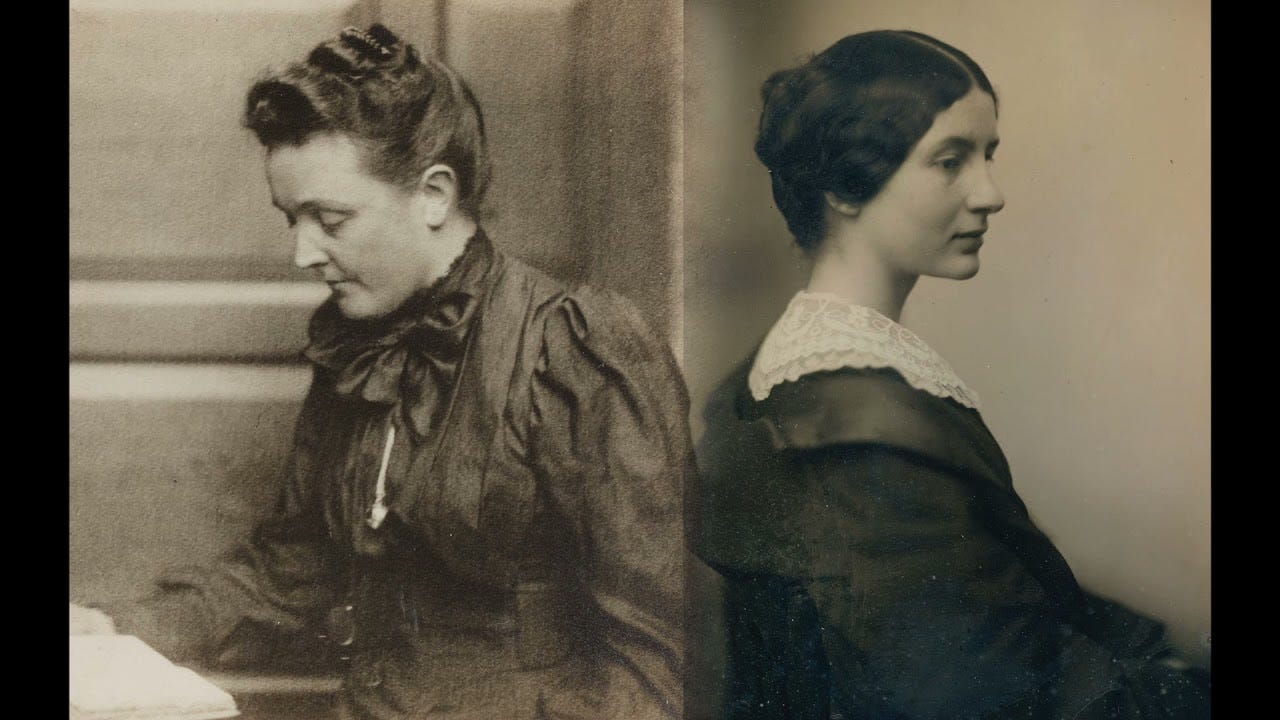
The Making of a Literary Badass
Sarah Orne Jewett emerged from a world that wanted to stuff women into corsets and drawing rooms, but she said “fuck that noise” and became one of America’s most celebrated regional writers. Her father, Theodore Herman Jewett, was a country doctor who took his daughter on his rounds through rural Maine, exposing her to the harsh realities of working-class life that would later infuse her writing with a authenticity that urban literary elites couldn’t fake if they tried.
This early exposure to real people living real lives—not the sanitized version of existence that polite society preferred—shaped Jewett’s understanding that truth was more important than propriety. She watched women struggle to survive in a world that offered them shit options: marriage to men who might abuse them, spinsterhood that meant poverty and social isolation, or the kind of life she would eventually choose—one that required courage, defiance, and the willingness to let people think whatever the hell they wanted. (snip-MORE)
Queer History 594: Alexander Hamilton – The Founding Father Who Loved Hard and Wrote Gay as Fuck Letters by Wendy🏳️⚧️🏳️🌈🌈
Read on Substack
In the pantheon of American mythology, Alexander Hamilton has been sanitized, straightened, and scrubbed clean of anything that might challenge the heteronormative fairy tale we tell ourselves about our founding fathers. But here’s the thing about historical whitewashing—it can’t erase the actual fucking words these men wrote to each other. And Alexander Hamilton, that brilliant, passionate, self-destructive bastard who helped birth a nation, wrote letters to John Laurens that were so goddamn romantic, so emotionally intimate, so clearly beyond the bounds of “normal” male friendship that historians have been performing Olympic-level mental gymnastics for centuries to explain them away.
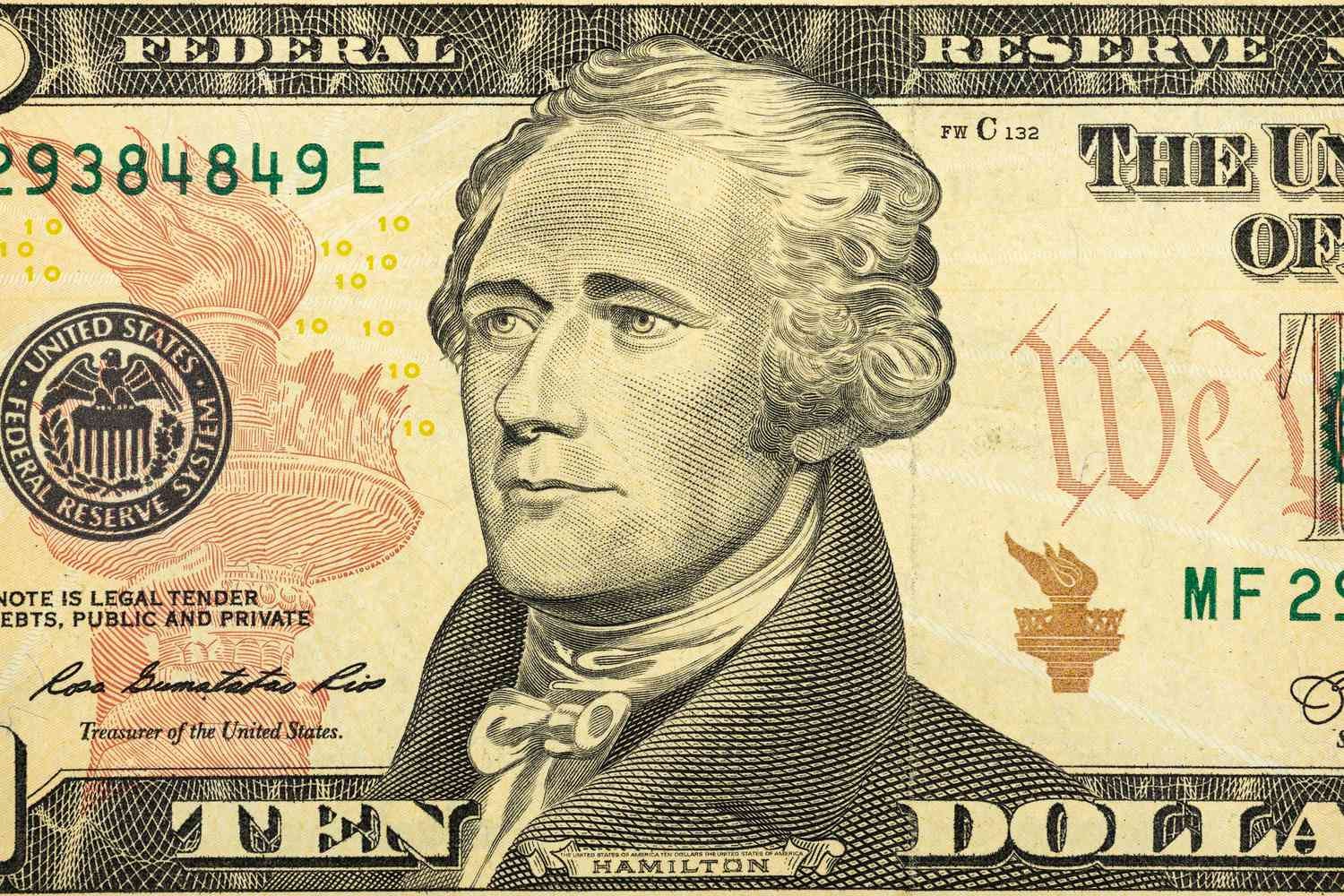
Born in 1755 on the Caribbean island of Nevis, Hamilton clawed his way from bastard orphan to the right hand of George Washington through sheer intellectual brilliance and an intensity that burned like a fucking supernova. But it was his relationship with fellow revolutionary John Laurens that revealed the depth of his capacity for love, passion, and the kind of emotional vulnerability that straight male mythology pretends doesn’t exist. Their correspondence reads like a love affair conducted through the medium of revolutionary politics, and anyone who thinks these men were just “very good friends” has clearly never read a love letter in their goddamn life.
The Making of a Revolutionary Heart
Alexander Hamilton’s early life was a masterclass in how trauma and abandonment can forge either a monster or a revolutionary—and sometimes both. His father abandoned the family when Alexander was ten. His mother died when he was thirteen, leaving him and his brother orphaned and destitute in a world that had no fucking patience for bastard children with no connections.
The psychological impact of this early abandonment cannot be overstated. Hamilton developed the kind of intense, desperate need for connection that would characterize all his relationships—romantic, political, and personal. He threw himself into every relationship with the fervor of someone who had learned early that love was scarce and could disappear without warning. (snip-MORE)
Queer History 673: Renée Vivien – The Sapphic Rebel Who Burned Bright and Fucking Died for Love by Wendy🏳️⚧️🏳️🌈🌈
Read on Substack
In the suffocating, corseted world of turn-of-the-century Europe, where women were expected to be seen and not heard, to marry well and breed often, and to suppress any hint of sexual desire that didn’t serve patriarchal ends, Renée Vivien said “fuck that” with every passionate verse she penned. Born Pauline Mary Tarn in 1877, this British-American poet didn’t just write love poetry to women—she set the goddamn literary world on fire with verses so erotically charged, so unapologetically sapphic, that they made Victorian sensibilities spontaneously combust.
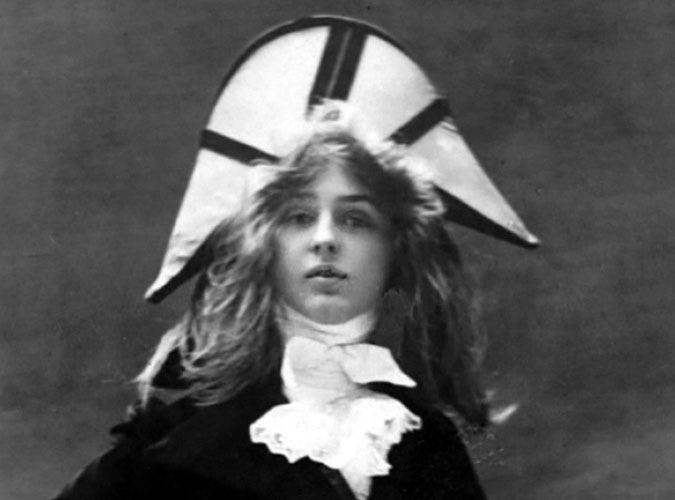
Vivien wasn’t just a poet; she was a fucking revolutionary who wielded language like a sword against the heteronormative assumptions of her time. She lived fast, loved hard, and died young at 32, leaving behind a body of work that would make contemporary lesbian poets weep with envy and recognition. Her life was a middle finger to every social convention that tried to cage women’s desires, a testament to the power of living authentically even when the world wants to crush you for it.
The Making of a Sapphic Goddess
Pauline Mary Tarn was born into privilege in London on June 11, 1877, but privilege couldn’t protect her from the psychological warfare that society wages against women who dare to love other women. Her father died when she was eleven, and her mother, perhaps recognizing something unconventional in her daughter, shipped her off to boarding school in Paris. It was there, in the City of Light, that Pauline would transform herself into Renée Vivien—a name that literally means “reborn” and “living,” because sometimes you have to kill your old self to become who you’re meant to be. (snip-MORE)
Queer History 847: Mary Glasspool – Holy Shit, She Actually Did It by Wendy🏳️⚧️🏳️🌈🌈
Read on Substack
In the grand fucking theater of religious hypocrisy, where LGBTQIA+ people have been told for millennia that they’re damned, broken, and unwelcome at the altar of God’s love, Mary Glasspool stood up in 2010 and said, “Bullshit.” Not with those exact words, mind you—she’s a bishop, after all—but with something far more powerful: her entire goddamn life.
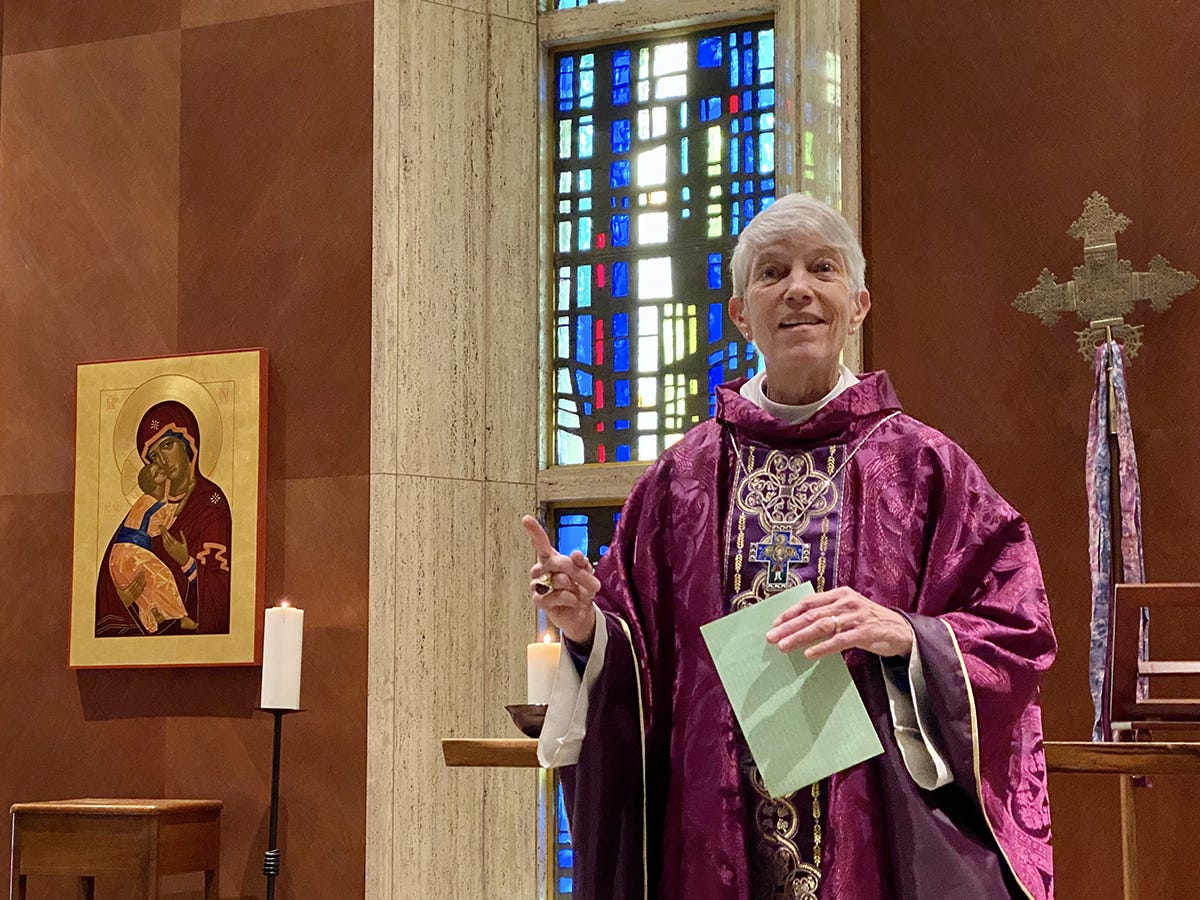
Born in 1954 in New York, Mary Douglas Glasspool didn’t just break the stained-glass ceiling of the Episcopal Church; she obliterated it with the force of a woman who refused to let anyone else define her relationship with the divine. When she was consecrated as the first openly lesbian bishop in the history of Christianity, she didn’t just make history—she rewrote the fucking rulebook on what it means to serve God while being authentically, unapologetically queer.
The Holy Shit Moment That Changed Everything
Picture this: It’s January 15, 2010, and the religious establishment is losing its collective mind. Conservative bishops are clutching their pearls, traditionalists are having actual conniptions, and somewhere in the background, you can practically hear the sound of centuries-old prejudices cracking like ice on a frozen pond. Mary Glasspool, a 55-year-old woman who had been serving her church and community with distinction for decades, was about to be consecrated as a bishop in the Episcopal Church—and she wasn’t hiding who she was or who she loved.
The consecration ceremony at Christ Cathedral in Los Angeles was a watershed moment that sent shockwaves through the Anglican Communion worldwide. Here was a woman who had spent her life in service to others, who had demonstrated exceptional leadership, theological acumen, and pastoral care, and the fact that she happened to love women was somehow supposed to disqualify her from serving God? Fuck that noise. (snip-MORE)

 Scottie's Playtime
I remember asking my history professor if he didn’t believe Alexander Hamilton was gay. and receiving disciplinary action for the question. I ended up in front of a “peer” review board and held firm to my belief …and told them the “proof” was in AH’s letters…they sent me on to the provost….who actually said “we do NOT discuss the sexuality of my forebears here”. I asked him what he thought and he completely failed to answer. End result was a action of my writing a paper on AH………..it was well written, had quotes from AH and even though the premise was AH was at a minimum Bi-Sexual, I failed the paper. I appealed……and was kicked out of college. Of course, it was a very small “Christian” college in NC….I used that same paper at George Mason University a year later and received an “A” on it.
LikeLiked by 2 people
Well, there, it just goes to show, … well, I don’t know what! I think you’re better off for standing your ground, though. I really appreciate all the things you’ve done in your life to make the world a better place, suze. It’s been a lot, and it’s meaningful.
LikeLiked by 1 person
Thanks for posting these. I’m sadly ignorant about too much. Cheers
LikeLiked by 1 person
Oh, I am, too! Two examples for me; I’d not heard about Alexander Hamilton before the last year or 2 or 3. I crushed hard on Johnny Mathis most of my life until 1992, when I found out from my then-boss’s wife that Johnny Mathis is gay. 🤷 I have no radar for people’s sexuality, especially if I’ve never met them in person. I’m glad the salty language in these is not too distracting, because I’m learning, as well!
LikeLiked by 1 person